
Review · JAPAN
Naha Makishi Public Market : Sushi making experience
Fresh fish, rolled by hand. This Naha activity pairs Makishi Public Market with a practical sushi lesson, giving you a closer look at the ingredients before you sit down to eat. I like the market visit because you see where the fish comes from, and I like that the class includes eight pieces of sushi, red soup stock, gari, green tea, and an original tenugui towel. The main concern is price: at $161 per person, this is a costly lunch or dinner, especially since beer and sake cost extra.
The 150-minute schedule is easy to follow, with a morning class from 11:00 to 14:00 and an evening class from 17:00 to 20:00. The friendly instructors and patient teaching are major strengths, but you should know that the class requires at least four participants and can take up to 20 people. Vegetarians and vegans cannot participate, and aprons are not provided.
Key points to know before booking
- Makishi Market comes first: You tour fresh fish shops before learning how to prepare sushi.
- Eight pieces are included: The fish may include local tuna, bonito, kubushimi, salmon, irabucha, red machi, stew machi, and other seasonal choices.
- Two daily start times: Choose 11:00 in the morning or 17:00 in the afternoon.
- The meal is part of the lesson: You eat the sushi you make, along with red soup stock, gari, and green tea.
- English and Chinese support is available: One interpreter is dispatched for each event.
- Plan for the price: Sake and beer are available, but they are sold separately, and the $161 fee is high for the amount of food provided.
Starting on the third floor of Makishi Public Market
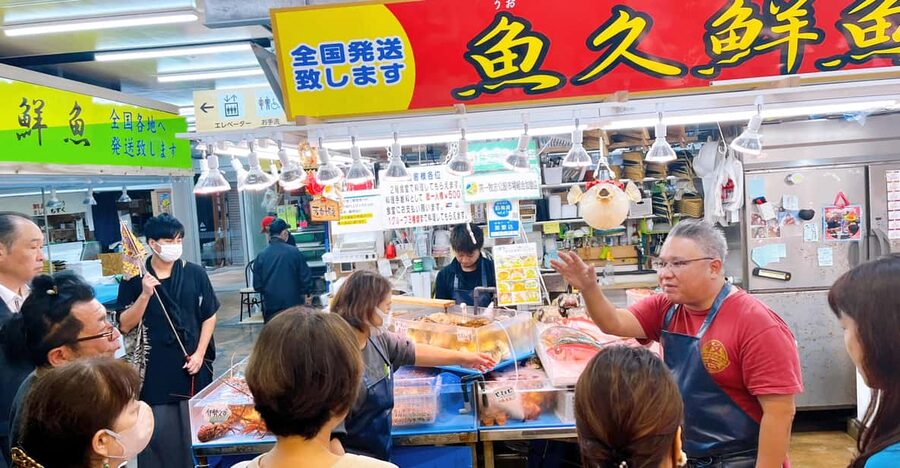
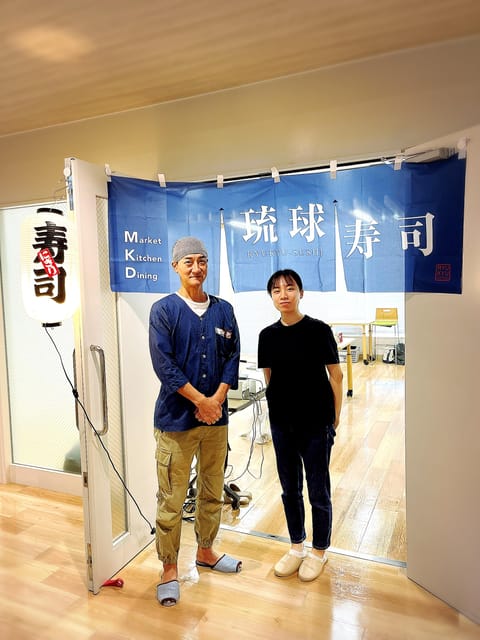
You meet on the third floor of Makishi Public Market in central Naha. Reception begins 30 minutes before the advertised start, and you should arrive 10 minutes before the event begins. That early arrival matters because the class has a fixed sequence, and latecomers may miss the opening instructions.
The day begins with registration and a short wait before the market walk. For the 11:00 class, reception runs from 11:00 to 11:30, followed by the market tour from 11:30 to noon. The evening version follows the same pattern, beginning at 17:00 and finishing at 20:00.
You do not need to find another restaurant before or after the class. The activity includes a full sitting where you eat what you have prepared. Still, the meal is not an all-you-can-eat spread. The included portion is eight sushi pieces, plus soup, pickled ginger, and tea.
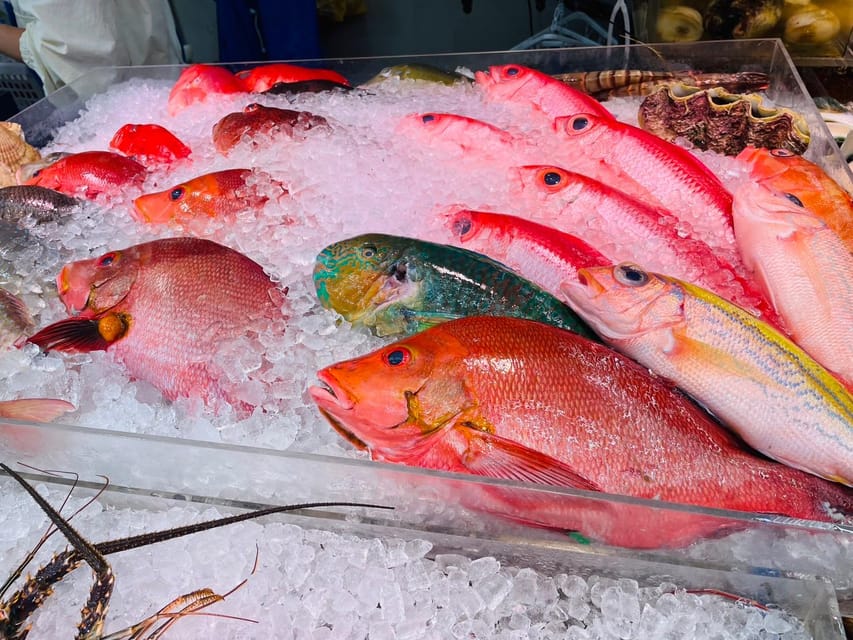
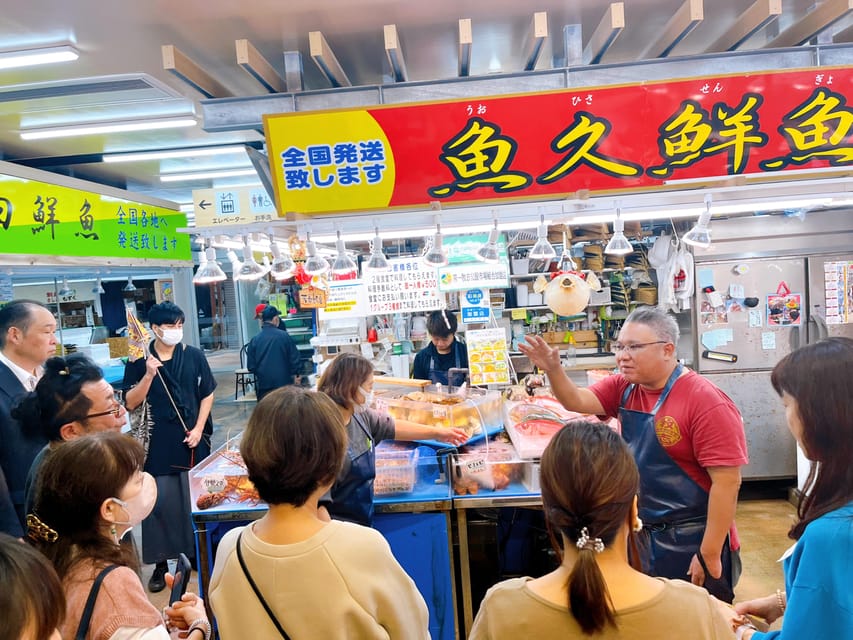
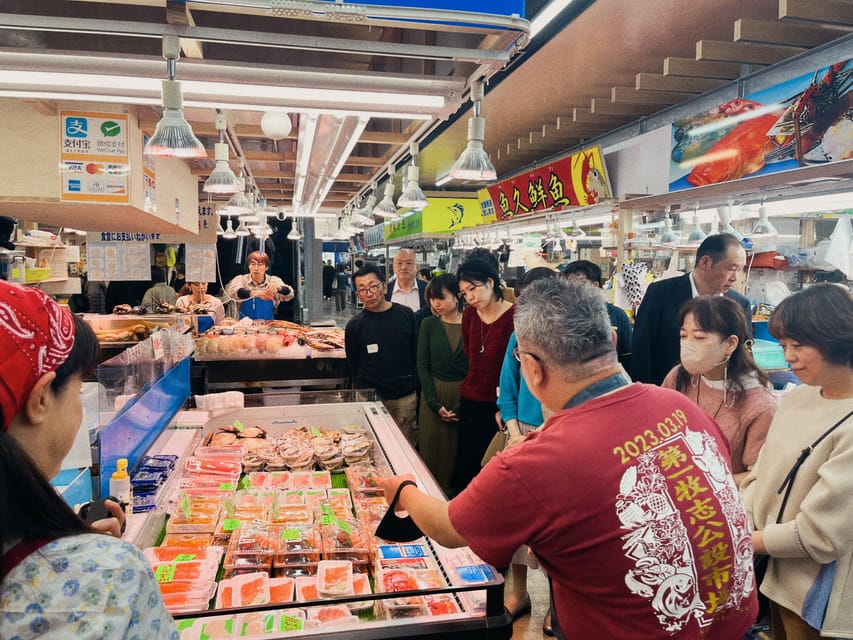
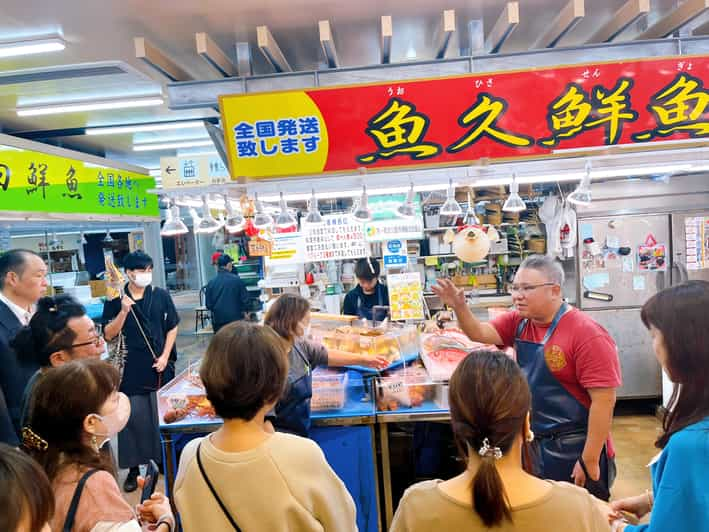
Makishi Public Market is a useful setting for this kind of lesson because the fish is purchased there for the activity. You are not simply shaping preselected ingredients in a classroom. You first see the market stalls where the seafood is sold, then work with fish connected to that market visit.
A few more market tours around Japan worth a look
- Tokyo Tsukiji Fish Market Food and Culture Walking Tour
★ 5.0 · 3,184 reviews - Tokyo: Tsukiji Fish Market Food and Walking tour
★ 5.0 · 1,724 reviews - Tokyo: Tsukiji Fish Market Guided Walking Tour
★ 4.9 · 1,397 reviews
Seeing the fish before making the sushi
The market walk is the most distinctive part of the schedule. Sushi classes are available in many Japanese cities, but a class that begins inside Naha’s public market is less common. You get to connect the finished food with the place where its ingredients are sold.
The available fish can include local tuna, local bonito, kubushimi, salmon, irabucha, red machi, and stew machi. The exact selection changes with the season. That uncertainty is worth accepting because it keeps the meal tied to current supply rather than promising the same fixed menu all year.
You should not expect a long culinary lecture or a private fish auction tour. The supplied schedule allows about 30 minutes for the market visit. Think of it as a focused introduction to the seafood used in the lesson, not a full market history tour.
This short walk also gives you useful context for Okinawan food. Local fish names may be unfamiliar, and the interpreter can help explain what you are seeing. The activity is offered in English and Chinese, with one interpreter assigned to each event. That makes the fish stalls more understandable for people who do not read Japanese.
Learning the basic sushi technique
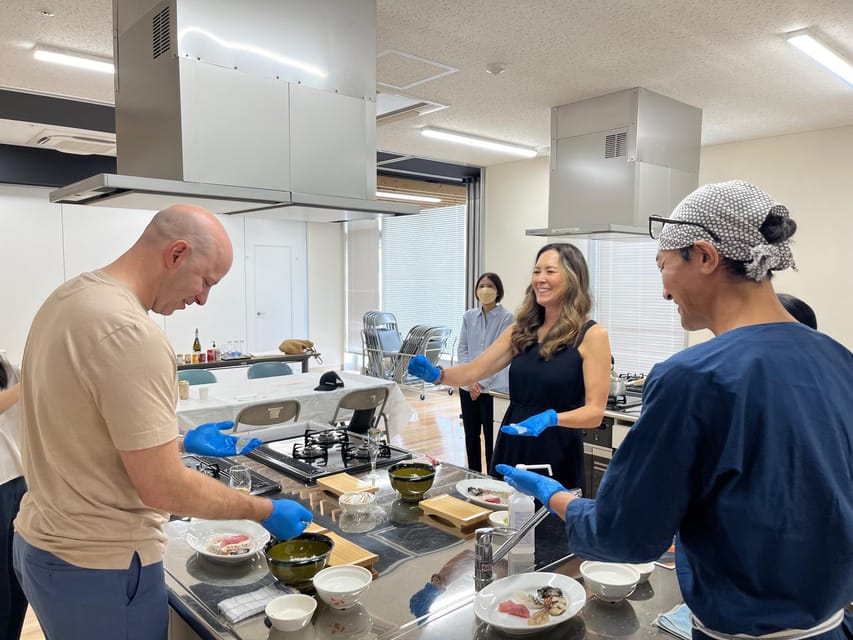
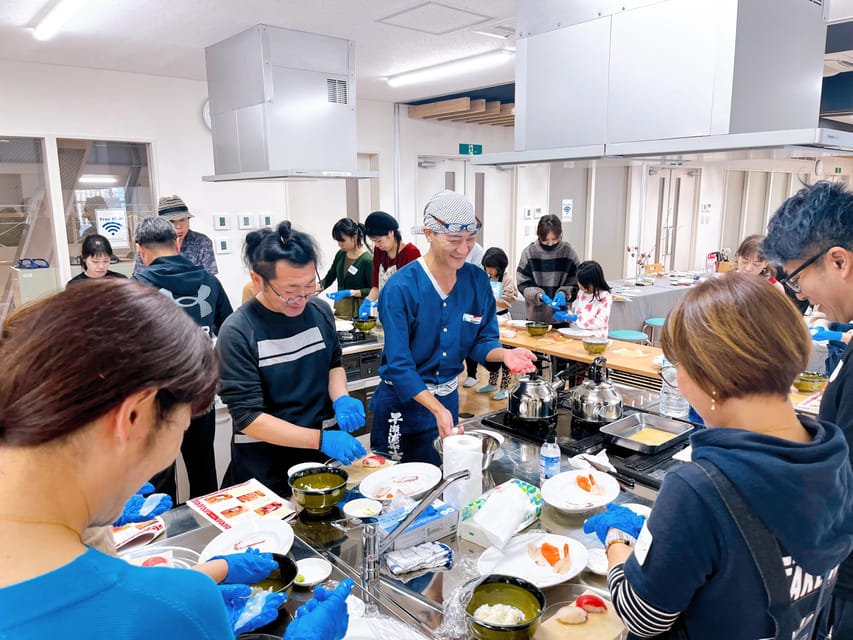
After the market tour, you have 45 minutes for the actual lesson. The instructor shows you how to make the sushi, then you make your own pieces with guidance. The class is designed for beginners rather than trained cooks, so you do not need prior sushi-making experience.
The teaching is one of the strongest parts of the activity. The instructor is described as kind, patient, and skilled at explaining how to handle the fish and form the sushi. Communication before and during the activity is also reported to be prompt and clear. That matters here because hand positioning, rice portions, and shaping are difficult to pick up from a quick demonstration alone.
The lesson is short enough to keep the pace moving. You will not spend half a day learning every traditional sushi style, but you should leave with a better sense of how much care goes into a small piece of nigiri. The real value is not only the food on the plate. It is the chance to handle the ingredients yourself and understand the steps between market counter and finished meal.
Bring a little patience. Your first pieces may not look like the instructor’s. That is part of the point. The setting is participatory, and the class encourages you to make the food rather than watch someone else do all the work.
One practical issue is clothing. Aprons are not provided, so wear something you do not mind getting a little messy. Smoking, littering, loud behavior, intoxication, and nudity are not allowed. Those rules are ordinary, but they matter in a shared food setting.
Eating eight pieces with the group
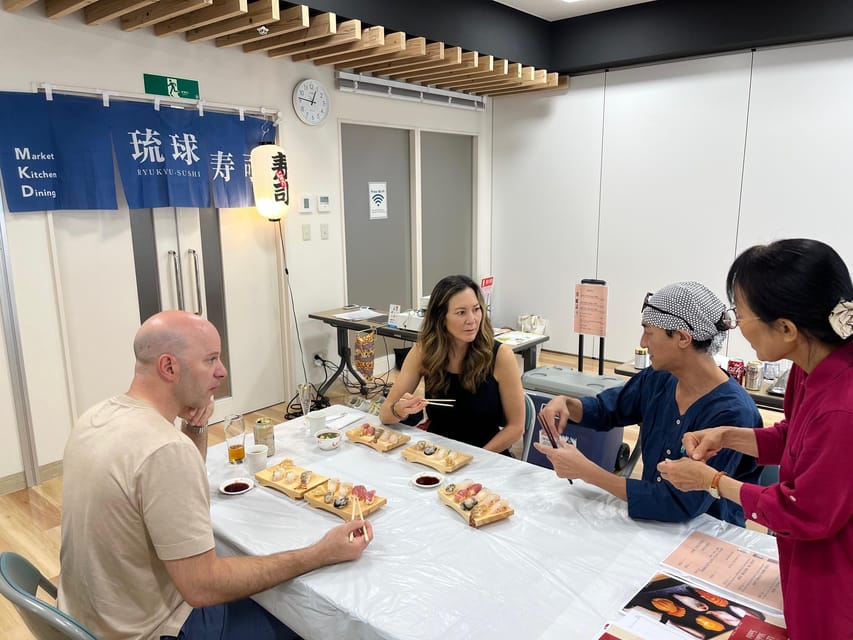
The final 75 minutes are set aside for eating. In the morning class, the meal runs from 12:45 to 14:00. In the evening class, it runs from 18:45 to 20:00.
You eat the eight pieces you made alongside the other participants. The meal includes red soup stock, gari, and green tea. Sake and beer are available for an additional fee, giving you the option of turning the class into a more social Japanese dining experience. Since drinks are not included, budget for them separately if you want one with your meal.
The shared table is part of the appeal. The class is intended to encourage conversation among people from different countries, and the interpreter helps bridge language gaps. If you enjoy meeting other participants, this format gives you time to talk after the hands-on portion. If you prefer a quiet, private meal, the group setting may feel less appealing.
Children can participate, which makes this a useful family option in Naha. The activity does not list a separate child program, so young children will need to follow the same food preparation and conduct rules as everyone else. Parents should also remember that the meal centers on fish and that the class is not suitable for vegetarians or vegans.
Same place, a different set of stalls:
- Nishiki Market Brunch Walking Tour (7 Tastings + Brunch)
★ 5.0 · 1,355 reviews - Tokyo Sushi Making Class in Tsukiji with Professional Chef
★ 5.0 · 1,177 reviews - Tsukiji Fish Market Guided Tour and Sushi Making with Pro Chef
★ 5.0 · 775 reviews - Tokyo: Tsukiji Fish Market Food and Culture Walking Tour
★ 4.7 · 757 reviews
Is $161 a fair price?
The price is the hardest part to judge. At $161 per person, the activity costs more than a casual sushi meal in Japan. One person found the instructor friendly and the class well taught but felt the price was too high for what was included. That is a reasonable concern.
The fee covers 150 minutes, the market tour, instruction, eight pieces of sushi, soup, gari, green tea, and the tenugui towel. You are also paying for language support and a structured activity in a central Naha location. For a visitor who wants a guided food experience rather than just a plate of sushi, those extras have real value.
Still, the quantity of food is modest. Eight pieces may satisfy you, but it is not a large feast. Alcohol is not included, and the class does not promise a wider menu of Okinawan dishes. If your goal is simply to eat excellent sushi at the lowest possible cost, this is not the right choice.
I would consider the fee easier to justify for someone who values market access, personal instruction, and cultural conversation. It makes less sense if you are traveling on a tight food budget, especially if you are comparing it with ordinary sushi restaurants or market counters.
The strongest case for the price comes from the teaching. The instructor’s patience and clear explanations have earned particular praise, and that can make a short class feel worthwhile. Even so, I would book it for the activity, not for the volume of food.
Choosing morning or evening
The morning schedule is practical if you want to use the rest of the day for Naha sightseeing. Reception starts at 11:00, the market tour begins at 11:30, and you finish lunch at 14:00. You can then continue exploring without planning another midday meal.
The evening schedule starts reception at 17:00, with the market walk at 17:30 and dinner from 18:45 to 20:00. This works well if you want a hands-on activity before an evening stroll or if your daytime schedule is already full.
The market may feel different at these two times, but the supplied details do not promise a specific difference in vendors, crowd levels, or fish selection. I would choose based on your wider Naha plans rather than assuming one time is better.
The activity runs every day, but it requires advance reservations. The information gives a one-week reservation and cancellation deadline, while also stating that free cancellation is available up to 24 hours in advance. Because those terms appear together, check the exact conditions at booking. Also note that the event is canceled if four or fewer people are booked, and the maximum group size is 20.
Who will enjoy this sushi class?
I would recommend it most strongly to:
- Families looking for a food activity children can join
- First-time visitors who want a guided introduction to Okinawan fish
- People who enjoy making their own meal
- English or Chinese speakers who want interpretation
- Couples or solo visitors who like shared tables and international conversation
- Anyone who values a market visit more than a large meal
I would be cautious if you are vegan or vegetarian, since the activity is not designed for you. I would also think twice if you dislike group dining, want a private lesson, or mainly care about getting the cheapest sushi in Naha.
The wheelchair-accessible format is a useful advantage for visitors who need it. The meeting point is on the third floor of Makishi Public Market, so confirm that the access arrangements suit your needs when you book.
My final take on the Makishi Market sushi class
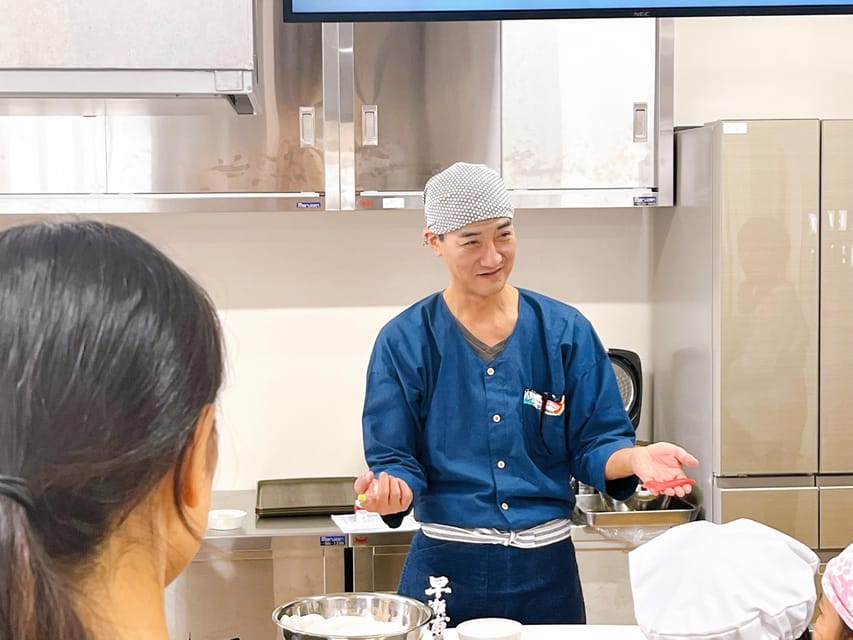
This is a specialized Naha food activity, not a bargain lunch. Its best features are the market connection, the patient instruction, the chance to prepare eight pieces yourself, and the language support. The local fish selection may change with the season, which adds a genuine Okinawan touch.
The price remains the central question. If you want a filling meal, $161 is difficult to defend. If you want a guided, social lesson that connects Makishi Market with the food on your plate, the cost becomes easier to understand.
I would book it if you are curious about sushi technique, comfortable with seafood, and willing to pay for the experience around the meal. I would skip it if you are watching every yen, need a private setting, or would rather spend the same money sampling several local restaurants.
FAQ
Where does the sushi-making experience meet?
Meet on the third floor of Makishi Public Market in Naha, Okinawa.
How long does the activity last?
The full activity lasts 150 minutes. The morning session runs from 11:00 to 14:00, and the evening session runs from 17:00 to 20:00.
What fish might be used?
The fish may include local tuna, local bonito, kubushimi, salmon, irabucha, red machi, and stew machi. The ingredients can change according to the season.
How many sushi pieces are included?
Eight pieces of sushi are included, along with red soup stock, gari, and green tea.
Are drinks included?
No. Sake, beer, and similar drinks are sold separately for an additional fee.
Is the class available in English?
Yes. English and Chinese support are available, with one interpreter dispatched for each event.
Just added around Japan
- Nagoya Super Market Tour & Home Cooking Class with a Local, Akiko★ 5.0 · 10 reviews
- Tokyo: Private Tsukiji Street Food & Sake with Local Guide★ 5.0 · 3 reviews
- Tokyo: Tsukiji Market Guided Tour & Sushi-Making Experience★ 4.4 · 11 reviews
- 【Family pack】Tokyo: Tsukiji fish market food tour★ 5.0 · 3 reviews
- Tokyo: Tsukiji Market and Hama-rikyu Gardens Guided Tour★ 4.8 · 73 reviews
- Tokyo: Tsukiji Fish Market Culture Tour with Sashimi Tasting★ 4.6 · 54 reviews
- Tokyo’s Kitchen: Tsukiji Market Food & Culture Walk★ 4.7 · 74 reviews
- Tokyo: Tsukiji Fish Market Foodie and Educational Tour★ 5.0 · 4 reviews
Market Tours, compared.
Damnoen Saduak Market and Maeklong Railway Market
Read our review →
The Old Siam: Damnoen Saduak and Maeklong Railway Market
Read our review →
Old Town, Creek, Museums, Souks, & Street Food Tour
Read our review →Train Market & Floating Market with Boat Ride
Read our review →
Old Town, Souks, Street Food, Guided Tour & Abra Ride
Read our review →
Ayutthaya & Ayothaya Floating Market Day Trip
Read our review →
Frame Tickets, Creek, Souks & Blue Mosque Guided Tour
Read our review →
Hanoi Cooking Class: Culture, Local Market & Meaning CSR Impact
Read our review →Browse the lists this tour appears in