Review · SOUTH WEST REGION, NIGERIA, NIGERIA
Lagos, Nigeria: Nigerian Cooking Class and Market Visit
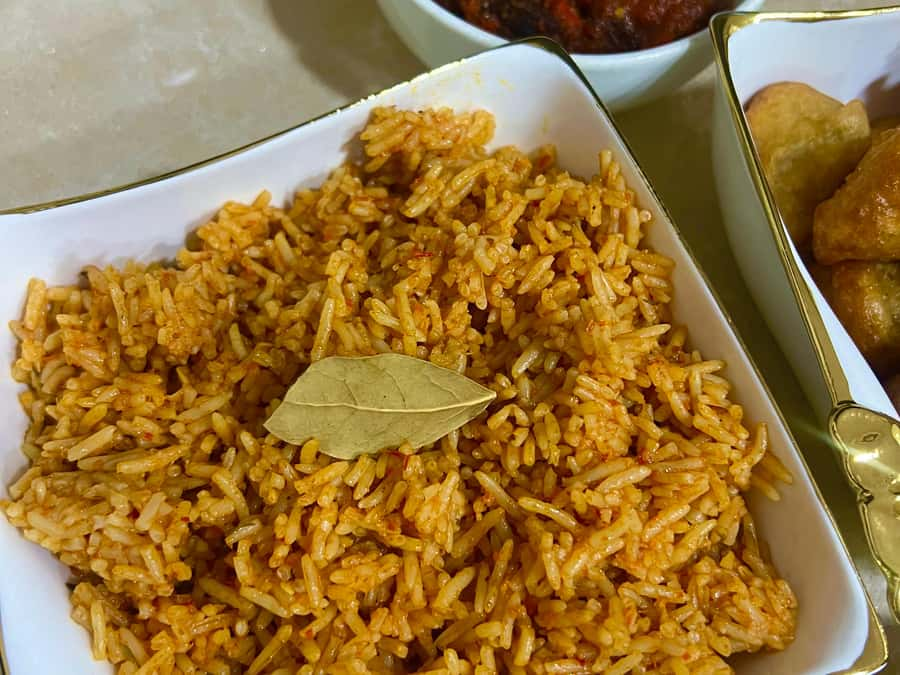
Food is the quickest way into a culture. This five-hour Lagos experience begins at a local market in Oniru, where you shop for ingredients, learn about spices, and see everyday Nigerian life at close range. Back in Aisha’s home kitchen, you cook popular dishes such as jollof rice, egusi soup, fufu, puff puff, meat pie, stew, and pepper soup.
I love the small private format, which gives you real time with Aisha instead of a place in a crowded demonstration. I also like the useful take-home extras: your locally made Adire apron and a PDF recipe book. The main consideration is that this takes place in a home and includes a busy market, so it suits curious food lovers who are comfortable with an active, informal setting.
The price is $175 per private group of up to two people. That is not a cheap meal, but it can be good value if you want personal instruction, a market visit, cooked food to take home, and recipes you can use later. The experience has a perfect rating from two verified bookings, including strong praise for Aisha’s patience and the success of the finished dishes.
Key points to know before booking
- Market shopping comes first: Visit the Oniru area market, learn about Nigerian spices, select fresh meat, and try bartering.
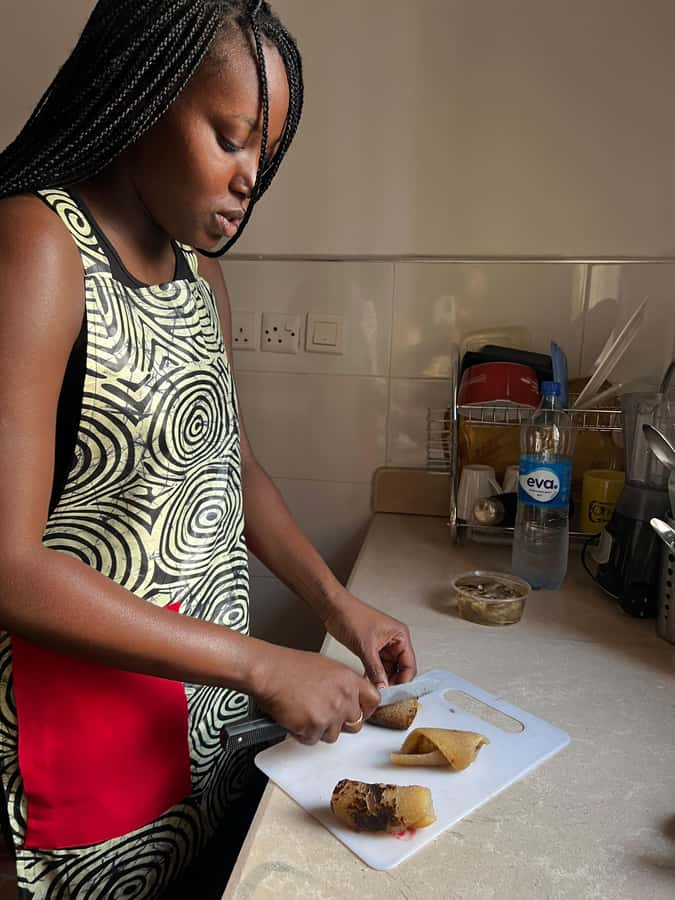
- Aisha teaches in her home kitchen: Expect a personal, hands-on lesson in English rather than a large group demonstration.
- The menu covers Nigerian favorites: Possible dishes include jollof rice, stew, egusi, fufu, puff puff, meat pie, and pepper soup.
- You receive useful take-home gifts: Keep the Adire tie-dye apron and a PDF recipe book with measurements and instructions.
- Plan for five active hours: Wear comfortable shoes, bring water and sun protection, and carry your passport or a copy for identification.
Starting at the Oniru market
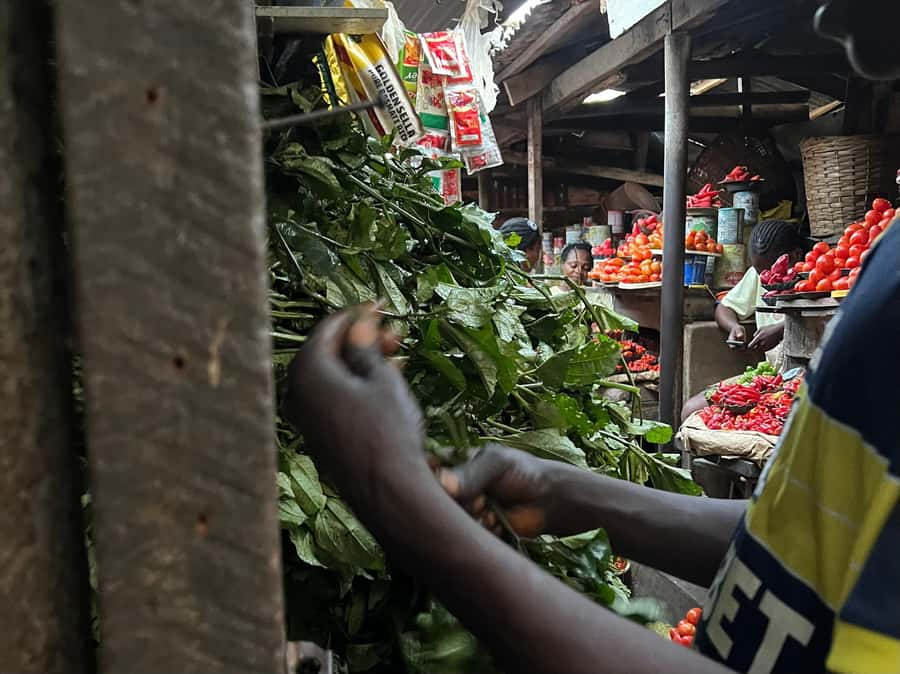
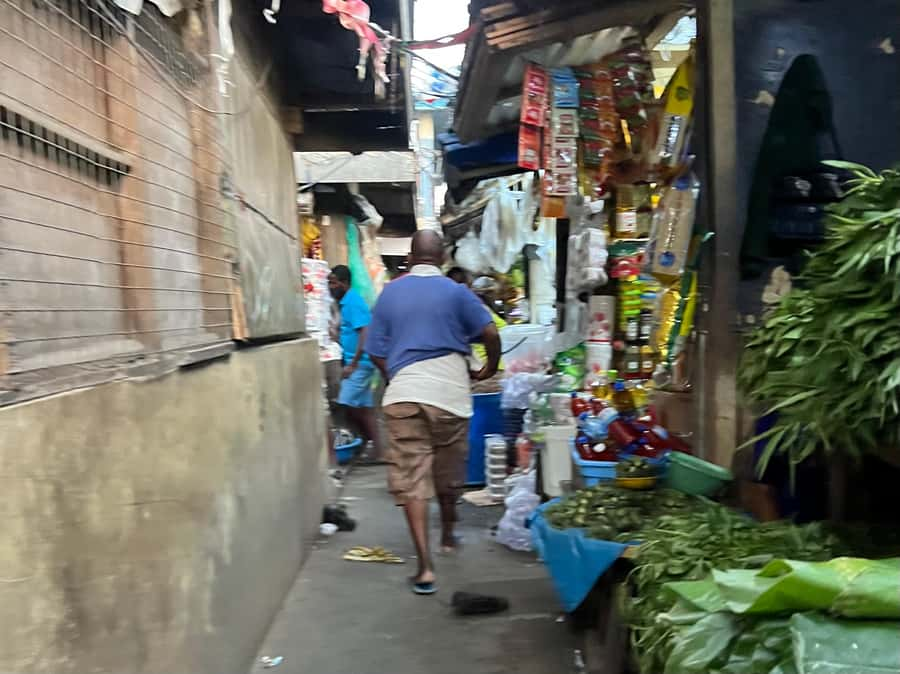
The experience opens with a visit to a local market in the beach neighborhood of Oniru. This is more than a quick ingredient stop. You get a look at how food is selected, discussed, priced, and carried into the kitchen before you cook it.
Market visits can tell you things a restaurant never will. You learn which spices are common in Nigerian cooking, see fresh ingredients up close, and get a better sense of the daily rhythm of Lagos. The market is also where the class connects food with ordinary life rather than treating Nigerian cuisine as a list of exotic dishes.
Aisha guides you through the shopping, including the selection of fresh meats. You may also have a chance to barter, which gives the visit a more active role than simply following someone through the stalls. Keep your phone secure while taking photos, since the market is active and crowded.
The market is likely to be the less polished part of the day, and that is part of its value. You should expect movement, noise, heat, and the organized disorder that comes with a working food market. It is not a quiet sightseeing stop. Wear shoes that can handle several hours on your feet, and bring water, sunscreen, and a sun hat.
The activity description refers to the market as being in Oniru and also describes the ingredient visit in relation to Lagos Island. If the exact meeting or market point matters to you, confirm the precise location before the day of the class.
More Cooking Classes in the world:
- Hanoi Cooking Class: Culture, Local Market & Meaning CSR Impact
★ 5.0 · 5,147 reviews - 5 Traditional Dishes Hanoi Cooking Class with Market Trip
★ 5.0 · 4,890 reviews - Cooking Class and Lunch at a Tuscan Farmhouse with Local Market Tour from Florence
★ 5.0 · 4,831 reviews
Learning the building blocks of Nigerian food
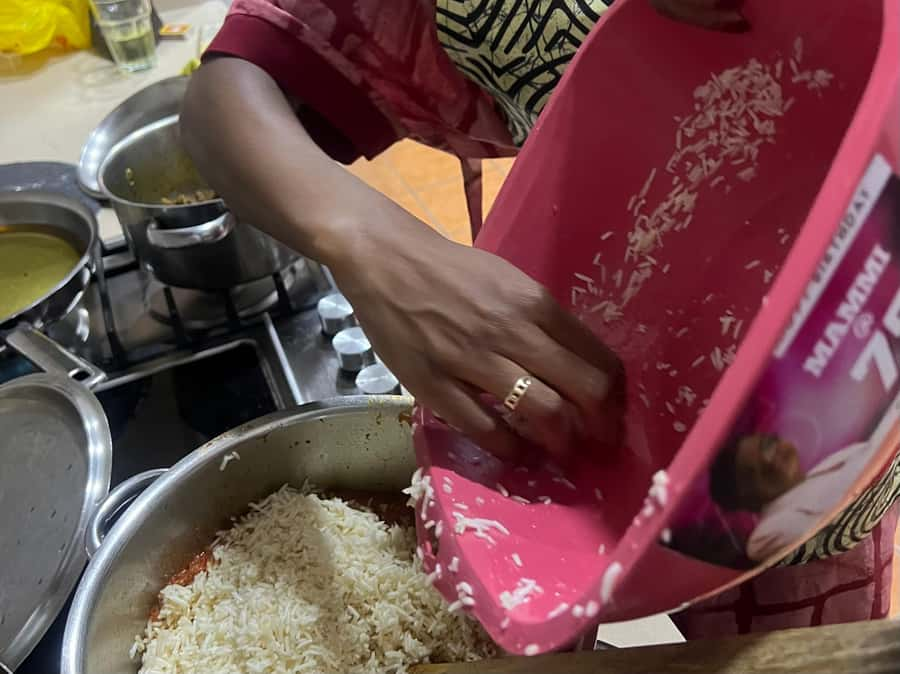
Once you return to Aisha’s kitchen, the pace changes. The market gives you the ingredients and setting; the kitchen gives you the explanation and practice. Aisha teaches step by step, with an emphasis on preparation methods you can repeat at home.
The focus is not only on copying a recipe. You learn how spices are used and how different ingredients contribute to familiar Nigerian flavors. That matters because dishes such as egusi and pepper soup can look simple on paper but depend on preparation, seasoning, and timing.
You should expect to take part rather than sit and watch. The class is described as hands-on, and the private format makes it easier to ask questions or request help when a technique feels unfamiliar. If you have cooked very little before, Aisha’s patience will be useful. Lade, who attended in February 2025, specifically praised her patience and said the meals turned out well.
The cooking is also a good chance to talk about the place of food in Nigerian culture. The lesson is designed as cultural education as much as kitchen practice. You are not just learning what goes into a dish. You are getting context for how Nigerian food is bought, prepared, shared, and remembered.
Jollof rice, egusi, fufu, and more
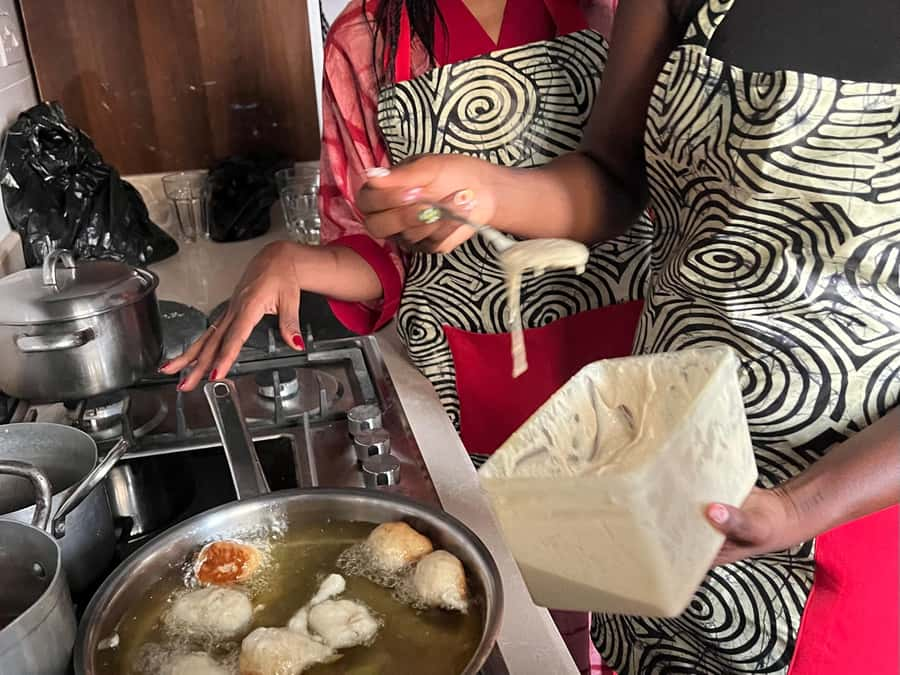
The dishes named for the class cover several different parts of Nigerian cooking. Jollof rice is a familiar starting point for many people, but it is only one part of the lesson. You may also work with egusi, a soup made with ground melon seeds, and fufu, a staple accompaniment that is eaten with soups and stews.
Puff puff brings a sweet, fried element to the menu. Meat pie adds a savory baked option, while pepper soup offers a spiced broth. Stew rounds out the list with a sauce that can become a useful part of future home meals.
The wording presents these as dishes such as, so do not assume every named dish will be prepared during every booking. The exact selection may depend on the class plan, ingredients, or time. Ask Aisha what your session will cover if one particular dish is the main reason you want to book.
That small uncertainty is worth keeping in proportion. The point is not a fixed restaurant menu. It is the chance to learn Nigerian preparation methods with guidance and then eat what you have made. Eleanor, who attended in January 2025, singled out jollof rice, puff puff, and egusi soup as dishes she learned to prepare. She also praised the fresh ingredients and said the explanations made complex recipes feel manageable.
Why the private format matters
This is a private group experience for one or two people. That makes a real difference in a cooking class. You can ask about unfamiliar ingredients, slow down for a tricky step, or spend more time on a dish that interests you.
The format is especially useful if you are cooking for the first time with Nigerian ingredients. In a large class, it is easy to miss a measurement or watch someone else do the important part. Here, you are promised one-to-one cooking, which suggests a more direct role at the counter.
There is also a personal quality to learning in Aisha’s home. She presents herself as a home cook who enjoys eating, cooking, and teaching Nigerian food. That gives the class a less formal feel than a professional culinary school. You are likely choosing this experience for contact and conversation, not for restaurant-style presentation.
The tradeoff is that a home setting may not have the space or equipment of a commercial cooking studio. The information provided does not specify the kitchen layout or equipment, so you should choose this with the understanding that it is a personal home lesson rather than a polished production.
A few more market tours around the world worth a look
- Bangkok: Damnoen Saduak Market and Maeklong Railway Market
★ 4.5 · 26,723 reviews - The Old Siam: Damnoen Saduak and Maeklong Railway Market
★ 4.5 · 10,992 reviews - Dubai: Old Town, Creek, Museums, Souks, & Street Food Tour
★ 4.8 · 10,816 reviews - Bangkok: Train Market & Floating Market with Boat Ride
★ 4.7 · 9,547 reviews
Food you can take home
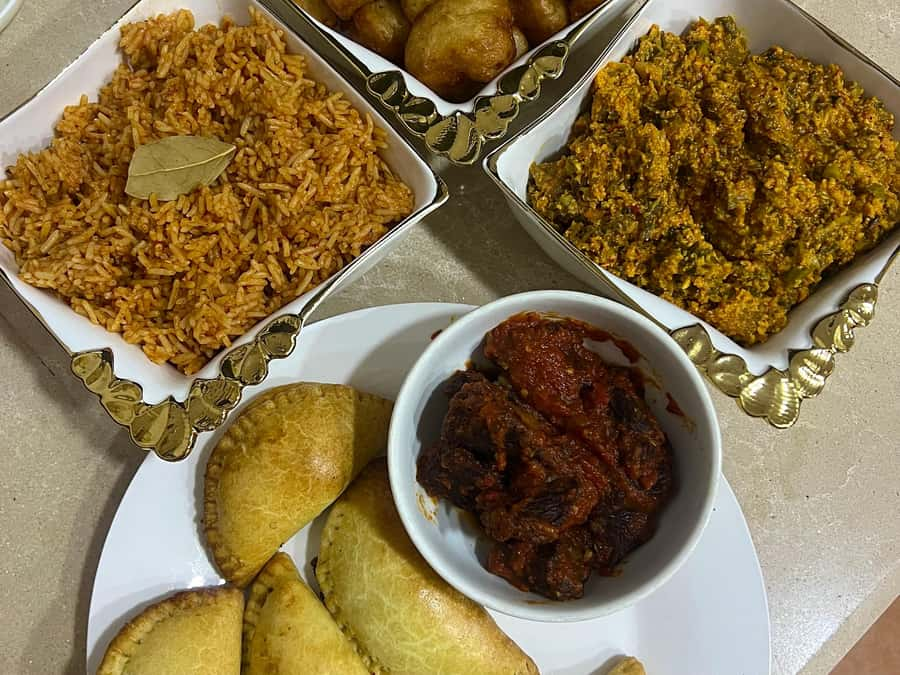
A practical benefit is that you can take your cooked food home after the lesson. That extends the experience beyond the final tasting and gives you a chance to enjoy the results later.
The food is not just a sample portion eaten at the end. Since you helped prepare it, the meal becomes a reminder of the methods you practiced. It also gives you something to share, assuming your accommodation and plans make that practical.
The two strongest comments about the class focus on the food turning out well. Lade described the meals as delicious, while Eleanor praised the fresh ingredients and the final dishes. That is important for a cooking class: good instruction should lead to food you actually want to eat, not just notes you never use.
You should still allow for the possibility that the food you prepare will be unfamiliar in flavor, spice, or texture. The experience is designed around Nigerian cuisine, not adjusted automatically to international tastes. If you have dietary restrictions or strong dislikes, ask about them before booking. No specific dietary accommodation is stated in the available information.
The Adire apron and recipe book
The locally made Adire apron is one of the most distinctive extras. Adire is a Nigerian tie-dye textile tradition, so the apron is more meaningful than a generic souvenir. You use it during the class and then take it home.
You also receive a PDF recipe book with measurements and instructions for the dishes made in the class. This is the part that can turn a pleasant afternoon into a skill you keep using. Without written amounts and steps, it is easy to forget what happened once you leave the kitchen.
The two items serve different purposes. The apron is a physical reminder of Lagos and the cooking lesson. The PDF is the practical tool that helps you repeat the food in your own kitchen.
Price, timing, and who gets the best value
The cost is $175 per group of up to two people, with a five-hour duration. For two people, that works out to $87.50 each. For one person, it is the full private-group price, so solo visitors should decide how much they value personal instruction.
The price includes the market tour, cooking lesson, cultural education, food to take home, Adire apron, and recipe book. It does not read like a basic demonstration followed by a small tasting. You are paying for time, attention, ingredients, a private setting, and a local product to keep.
I think the value is strongest for couples, friends, or family members who will cook together and later use the recipes. It is also a sensible splurge if Nigerian food is a main reason for your Lagos visit. If you only want a quick meal or a short market walk, five hours and $175 may feel like too much.
The class is taught in English. It is wheelchair accessible, and smoking, smoking indoors, alcohol, and drugs are not allowed. The activity is not suitable for children under 13, with the information also specifying that children under five are not suitable.
Because the class is hosted in Aisha’s home, you must present an international passport for identification. A copy is accepted. Bring comfortable shoes, water, sunscreen, and a hat. A second hat is listed among the suggested items, but one suitable sun hat should cover the practical need.
Free cancellation is available up to 24 hours before the experience for a full refund. You can also reserve now and pay later, which helps if your Lagos schedule is still shifting.
What the praise tells you
The two verified ratings are both five out of five, so the sample is small but consistently positive. The praise is specific rather than vague. Lade focused on Aisha’s patience and the fact that the dishes came out well. Eleanor highlighted Aisha’s warm welcome, fresh ingredients, clear explanations, and the hands-on format.
Those details point to the experience’s main strength: personal teaching. Aisha is not simply showing you a finished plate. She is helping you understand the steps well enough to repeat them.
The comments also suggest that beginners can feel comfortable here. Eleanor said complex dishes seemed easier to master after Aisha explained them. That does not mean the cooking requires no effort, but it does suggest that you do not need advanced kitchen skills to take part.
Still, two excellent ratings cannot answer every question. They do not tell you the exact dish combination for each date, how much market time is spent walking, or how the class handles dietary needs. Those are sensible points to confirm before you pay.
Should you book Aisha’s Lagos cooking class?
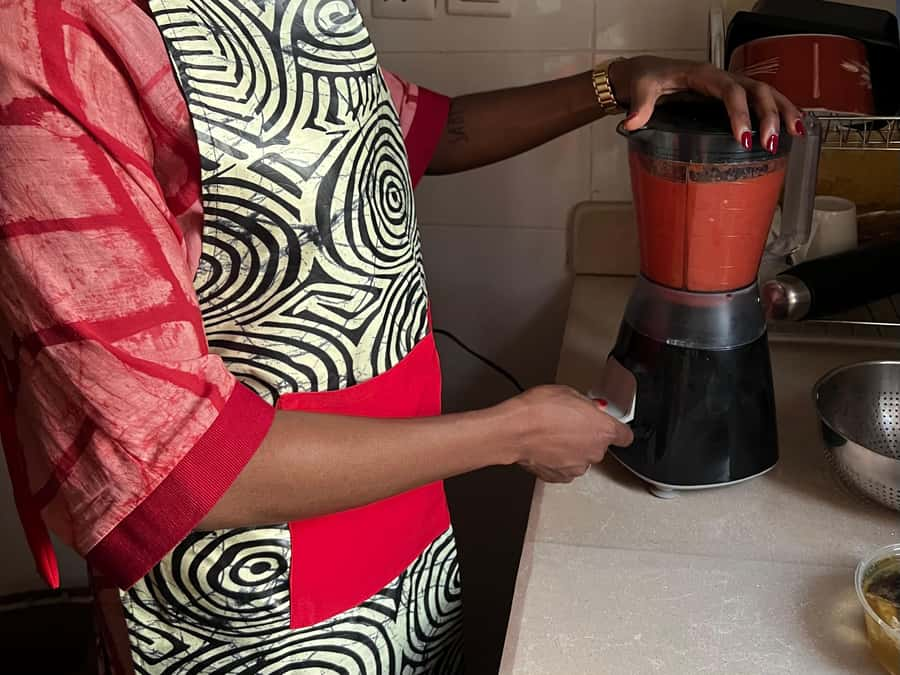
Book it if you want to connect Lagos food with the place where it is bought and prepared. The market visit gives the day local context, while the kitchen session lets you practice instead of simply observing. Aisha’s patient teaching, fresh ingredients, cooked food to take home, Adire apron, and recipe PDF add real value.
I would especially recommend it to couples and pairs who enjoy private activities, want to learn Nigerian cooking from a home cook, and have five hours to give the experience. It is also a good fit for anyone who wants a meaningful souvenir rather than another mass-produced keepsake.
Think twice if you dislike markets, prefer a formal cooking school, need a guaranteed menu, or are looking for a low-cost meal. For everyone else, this offers a thoughtful way to meet Nigerian food on its own terms, with enough guidance to bring part of the experience home.
FAQ
How long does the Nigerian cooking class and market visit last?
The experience lasts five hours.
Where does the market visit take place?
The market visit takes place in the Oniru beach neighborhood of Lagos. The experience information also refers to shopping for ingredients in relation to Lagos Island, so confirm the exact meeting and market point before booking.
How much does the experience cost?
The price is $175 per private group of up to two people.
Is this a private cooking class?
Yes. It is listed as a private group experience, with one-to-one cooking available for a small group.
What language is the class taught in?
The instructor teaches in English.
Which Nigerian dishes might be included?
The dishes listed include jollof rice, stew, egusi, fufu, puff puff, meat pie, and pepper soup. The description presents these as examples, so confirm the exact menu for your date.
Do I get to keep the food I cook?
Yes. The cooked food can be taken home after the class.
What do I receive besides the food?
You receive a locally made Adire tie-dye apron and a PDF recipe book with measurements and instructions for the dishes prepared.
Do I need to bring my passport?
Yes. Since the class takes place in Aisha’s home, you must present an international passport for identification. A copy is accepted.
Can I cancel for a full refund?
Yes. You can cancel up to 24 hours in advance for a full refund. You can also reserve now and pay later.
Just added around the world
- Half-day Dandan Noodles Cooking Class with a Local Market Visit★ 5.0 · 8 reviews
- Three-Hour Private Chengdu Tea Wholesale Market Tour★ 5.0 · 4 reviews
- 3-Hour Herbal Wholesale TCM Market and a Local Wet Market Tour★ 5.0 · 4 reviews
- Moroccan Cooking Class with a Local Family & Market Visit★ 5.0 · 16 reviews
- Chania: Old Town, Public Market, Hill of Prophet Elias, Agia Triada★ 5.0 · 35 reviews
- Charleston International Sweet Treats & Historic City Market Tour★ 5.0 · 22 reviews
- Chania Old Town, Public Market and Chrisopigi Monastery Tour★ 4.5 · 6 reviews
- Cesarine: Market Tour & Home Cooking Class in Catania★ 4.0 · 6 reviews
Cooking Classes, compared.
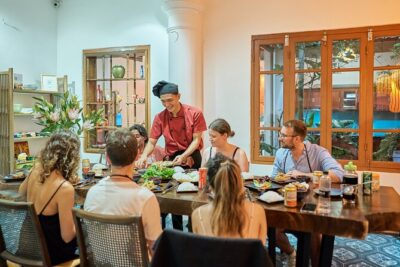
Hanoi Cooking Class: Culture, Local Market & Meaning CSR Impact
Read our review →
5 Traditional Dishes Hanoi Cooking Class with Market Trip
Read our review →
Cooking Class and Lunch at a Tuscan Farmhouse with Local Market Tour from Florence
Read our review →
Cooking Class, Market & Thai Herbs Garden Tour
Read our review →
Authentic Cooking Class with Market & Farm Visit
Read our review →
Paella Cooking Experience & Boqueria Market Tour
Read our review →
Cooking Class Hoi An:Local Market, Basket Boat, Fishing & Cooking
Read our review →