
Review · GEORGIA
Tbilisi: Street Art & Dezerter Bazaar Tour w/ Tastings
Tbilisi has a wonderfully offbeat side. This walking tour takes you from Fabrika and painted side streets to Dezerter Bazaar, showing how art, food, architecture, and ordinary city life fit together. I especially like the mix of street art and local history, followed by tastings of Georgian wine, chacha, churchkhela, dried fruit, and cheese. I also like that guides such as Giorgi and George add personal stories about growing up in Georgia, rather than simply reciting dates.
The main consideration is the flexible duration, listed as 1.5 to 4 hours. The walking portion covers about 2 to 3 miles, and time at the market can depend on your pace and interest in shopping. You should also wear comfortable shoes, since this is a real city walk rather than a quick series of stops.
Key points at a glance
- Fabrika sets the tone: Start with one of Tbilisi’s best-known creative spaces, then move into less polished streets filled with legal and illegal street art.
- Giorgi and George bring local context: Their stories connect murals, artists, Soviet-era buildings, family memories, and modern Georgian life.
- Dezerter Bazaar is the grand finale: This is Tbilisi’s oldest and largest farmers market, with cheese, fruit, sweets, wine, and plenty of local noise and movement.
- The tastings are more than a snack: You get traditional wine, a shot of chacha, Georgian sweets, dried fruit, tklapi, churchkhela, and cheese.
- It covers a different part of town: The route includes Tbilisi Railway Station and side streets that many standard city walks skip.
- The $30 price is sensible: Hotel pickup and drop-off, a guide, and several tastings make this good value, especially for first-time visitors with limited time.
Why this Tbilisi walk feels different
Tbilisi is often introduced through its old town, sulfur baths, fortress, and grand views over the Mtkvari River. Those places deserve your time, but they do not tell the whole city’s story. This tour shifts the focus toward neighborhoods where people shop, work, create, and meet friends.
I like that the experience does not treat street art as decoration alone. Your guide explains how murals and painted walls relate to the city’s artistic life and changing identity. You also pass the former residence of one of Georgia’s best-known painters, which adds a useful link between older artistic traditions and today’s informal wall art.
The route also has a good rhythm. You begin with the social and creative atmosphere around Fabrika, walk through streets with legal and illegal works, pause at lesser-known spots, and finish at Dezerter Bazaar. It feels less like checking off monuments and more like learning how Tbilisi works from street level.
The strongest praise has gone to the guides, especially Giorgi and George. Giorgi is described as relaxed, patient, funny, and full of stories. He paused for photographs and rest when needed, and he talked easily about art, music, family, Georgian culture, and daily life. George receives similar praise for his energy, clear explanations, and personal connection to the city.
That matters here. Street art can be hard to understand without context, and a market can feel confusing if you do not know what you are seeing. A good local guide turns both places into a conversation instead of a quick walk past painted walls and food stalls.
More Street Art Walks in the world:
- 2-Hour Food, History and Street Art Tour of Ponce City Market
★ 5.0 · 159 reviews - Phnom Penh’s Morning Market and Street Art Tour by Tuk tuk
★ 5.0 · 128 reviews - Naples: The Spanish Quarters, Street Art and Local Market
★ 4.7 · 59 reviews
Fabrika: a creative starting point
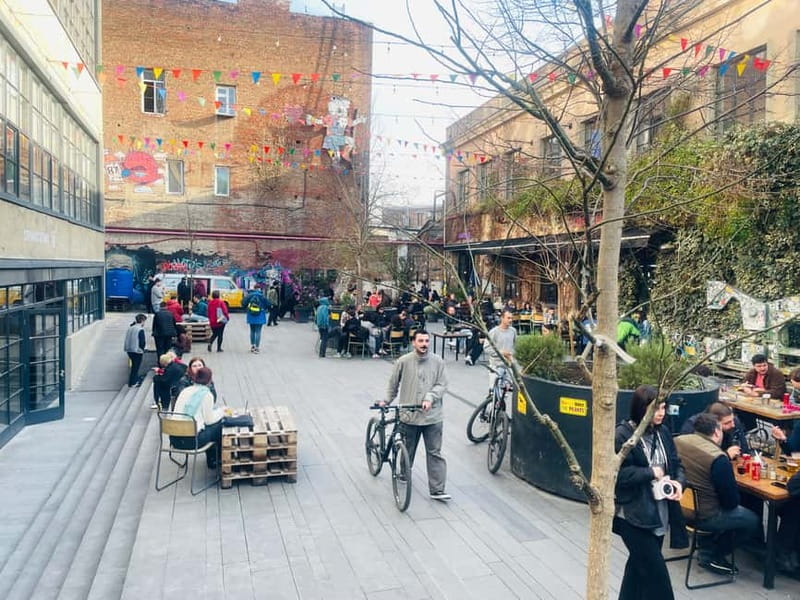
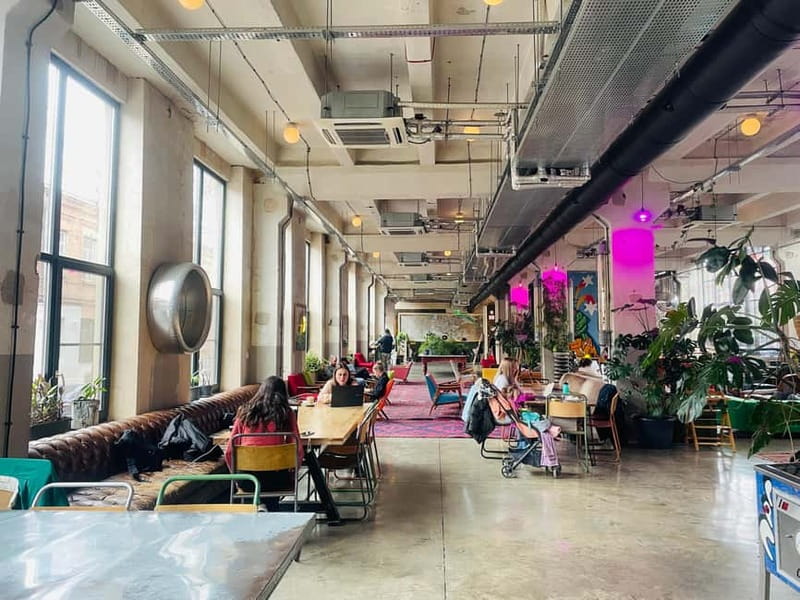
The tour includes a stop at Fabrika Tbilisi, a former Soviet sewing factory turned hostel and social space. It is one of the city’s best-known places for design, cafés, courtyards, and creative activity.
You have time for photographs, sightseeing, and possibly coffee or tea. Fabrika is a useful first stop because it gives you an easy introduction to Tbilisi’s modern creative culture. The setting is more polished than many of the streets that follow, but that contrast is part of the point.
This is not simply a café stop. Your guide uses Fabrika to explain how old industrial spaces are being reused and how the neighborhood has become associated with young artists, visitors, and new businesses. You will likely see a mix of renovated surfaces and older city details nearby.
I would not book the tour only for Fabrika. You can visit it independently. Its value here comes from the explanation and from seeing it as the opening chapter of a larger walk. The guide helps you understand why this place matters before taking you into quieter corners.
Street art, side streets, and the city behind the postcard
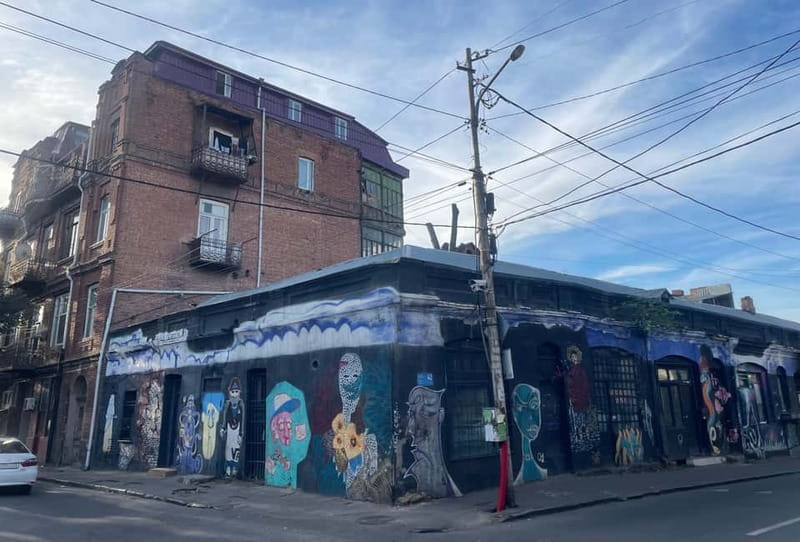
After Fabrika, the tour moves through streets lined with painted walls and other forms of street art. Some works are legal, while others are not, giving you a view of the city’s informal art scene as well as its approved projects.
The route includes a secret stop, described as a place for photographs, walking, and guided commentary. Since the exact location is not fixed in the details provided, you should expect a less obvious corner rather than a major landmark. That uncertainty is part of the appeal, but it also means you should not expect a carefully staged attraction.
The guide explains the artists and the ideas behind the work, then places those works in the setting of present-day Tbilisi. You might hear about local artists from both the current period and the past. Several people particularly enjoyed learning how the street art connected to Georgia’s artistic development.
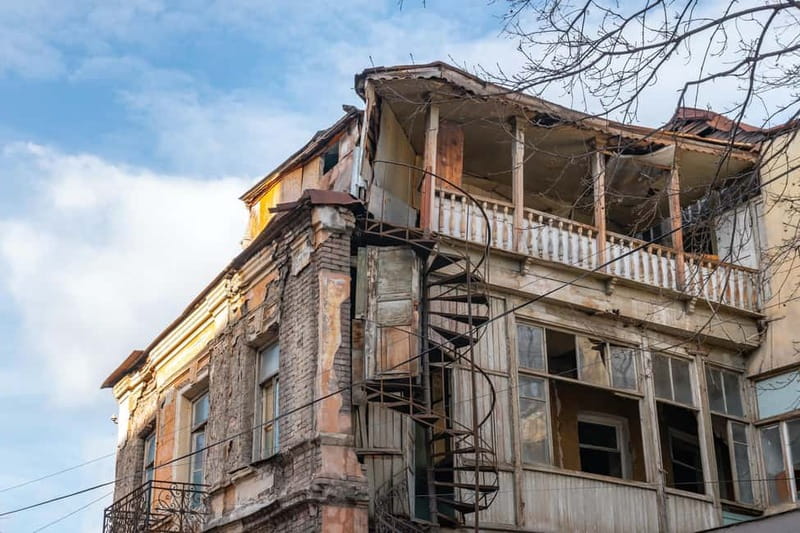
Look closely as you walk. The interest is not limited to large murals. The route also reveals alleys, worn façades, unexpected architectural details, and ordinary scenes of city life. You get a better sense of the city’s variety than you would from a bus window or a standard old-town loop.
There is a practical limit. Street art changes. Paint fades, walls are covered, and some works may not look exactly as expected on the day you go. The experience is strongest if you treat the art as part of a changing city rather than as a permanent museum collection.
Tbilisi Railway Station and the city’s changing edges

The route includes Tbilisi Railway Station, another useful contrast with the creative spaces around Fabrika. Here, your guide provides sightseeing and historical context while you walk and stop for photographs.
The station helps widen the story. Tbilisi is not only cafés, galleries, and restored streets. It is also a transport hub, a place of movement, and part of the everyday city. The stop gives you a look at a more practical side of the capital.
You should expect sightseeing rather than a formal station tour. The information emphasizes an exterior stop and a walk through the surrounding area, so anyone hoping to explore railway facilities in depth may find this part brief.
For me, its value is in the transition. The route gradually moves away from the fashionable image of Fabrika and toward Dezerter Bazaar, where shopping and local trade take center stage. The change makes the final market feel earned, not simply added as a food stop.
A few more market tours around the world worth a look
- Bangkok: Damnoen Saduak Market and Maeklong Railway Market
★ 4.5 · 26,723 reviews - The Old Siam: Damnoen Saduak and Maeklong Railway Market
★ 4.5 · 10,992 reviews - Dubai: Old Town, Creek, Museums, Souks, & Street Food Tour
★ 4.8 · 10,816 reviews - Bangkok: Train Market & Floating Market with Boat Ride
★ 4.7 · 9,547 reviews
Dezerter Bazaar: where the tour comes alive
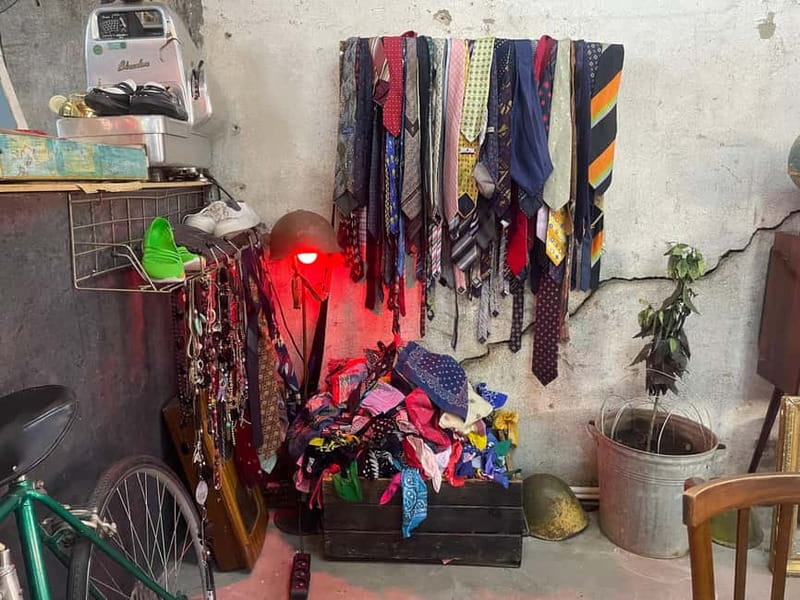
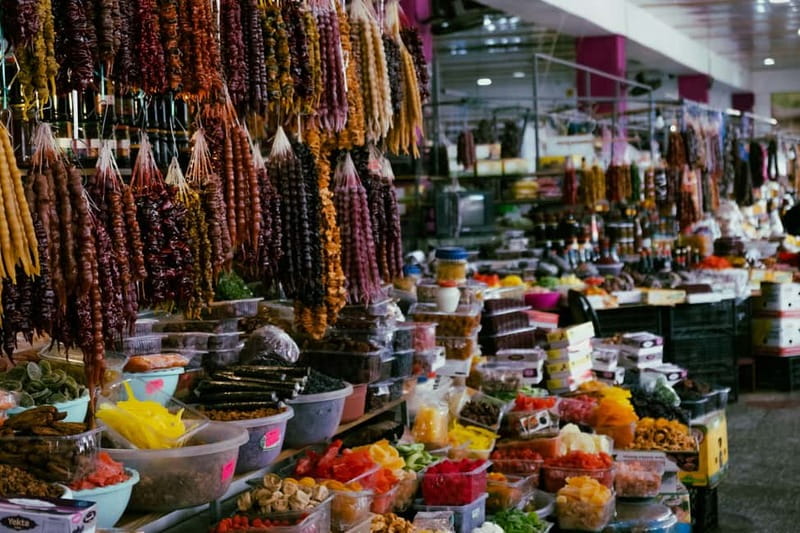
Dezerter Bazaar is the big finish. It is described as Tbilisi’s oldest and largest farmers market, and it gives you a direct look at local shopping, regional food, and the sensory side of the city.
This is where the tour becomes especially useful. A market can be hard to read on your own. You may recognize fruit or cheese, but not know what to taste, how a sweet is made, or which dried products are particularly Georgian. Your guide explains the foods and helps you try things you might otherwise pass by.
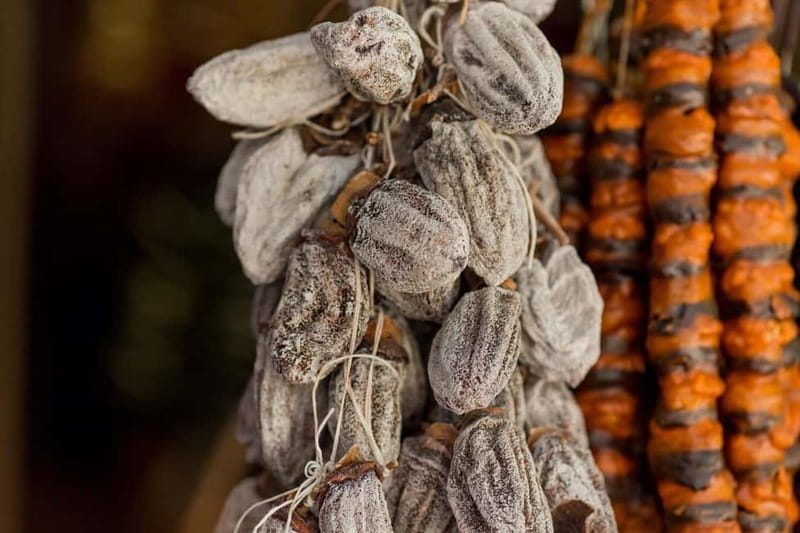
The tasting includes churchkhela, tklapi, dried fruit, Georgian cheese, traditional wine, and a shot of chacha. Churchkhela is a chewy sweet made by coating nuts in thickened fruit mixture. Tklapi is a dried fruit sheet. Both are easy to carry while exploring the market, though you should check customs rules before taking food home.
The wine and chacha add another layer. Georgian wine is central to the country’s food culture, while chacha is a strong grape spirit. The tasting is modest, but it gives you a starting point for deciding what you might want to seek out later. Extra food and drinks are not included, so budget a little more if you want to purchase products or try additional items.
The market can be noisy, crowded, and visually busy. That is not a flaw, but it is worth knowing before you arrive. If you prefer quiet tastings in a calm restaurant, this will feel rough around the edges. If you want to see food in its working setting, it is one of the best parts of the experience.
You can continue shopping after the guided portion ends. That flexibility is useful because some people will want to browse slowly, while others will have had enough after the tastings. You may also return to your accommodation with the guide, depending on the drop-off arrangement.
What the $30 price really includes
At $30 per person, this is a strong value for a private or small-group experience. The price includes a live guide, hotel pickup and drop-off, traditional wine, chacha, local sweets, and the guided market visit.
A self-guided walk would cost less, of course. You can visit Fabrika and Dezerter Bazaar without paying for a tour. The difference is the interpretation. You are paying for someone to connect the places, identify foods, explain street art, and share practical advice about where to go and what to skip.
The value is even better if you are in Tbilisi for a short stay. One booking gives you an introduction to creative neighborhoods, local commerce, Georgian food, and parts of the city outside the standard sightseeing circuit.
It is less compelling for someone who wants a long, formal history tour or a full meal. The food provided is a tasting, not lunch. You also pay separately for extra drinks and purchases at the market.
The tour can last from 1.5 to 4 hours, depending on the available start time and how the visit develops. That range is unusually wide, so check the scheduled duration before booking. A shorter version may suit you if you want a quick orientation. A longer version gives you more time for conversation, photos, and market browsing.
Walking distance, pickup, and useful preparation
The walk covers about 2 to 3 miles. That is manageable for most people who are comfortable walking around a city, but the distance comes through streets and market areas rather than a smooth sightseeing path.
Wear comfortable shoes and dress for the weather. The activity operates in all weather conditions, so rain or cold can change the feel of the walk. A small bag is more practical than a large one, since oversize luggage and large bags are not allowed.
Hotel pickup and drop-off are included. The listed pickup options include 10 Dodo Abashidze Street, 26 Ramaz Davitashvili Street, and Tbilisi. You should wait in the lobby five minutes before pickup because the vehicle will wait no more than five minutes after the designated time.
English and Russian are available. Private and small-group options are offered, which can make a real difference on a market visit. A smaller group lets you ask more questions and gives the guide room to adjust the pace for photographs, rest, or shopping.
The activity has free cancellation up to 24 hours before the start time, and you can reserve now and pay later. Those policies are handy if your Georgia plans are still shifting.
Who will enjoy this most

I would recommend this tour to first-time visitors who want an introduction to Tbilisi beyond the old town. It is also a good fit if you enjoy food markets, murals, local stories, and informal conversations more than grand monuments.
It suits curious solo visitors, couples, and small groups. Families with older children may also enjoy the food samples and street art, provided everyone is comfortable with the walking distance and market atmosphere.
The tour is particularly useful at the beginning of a Tbilisi stay. Your guide can point you toward places to visit later and offer practical advice about where to go and where not to go. Several people valued that local guidance as much as the scheduled stops.
I would think twice if you dislike strong spirits, crowded markets, or loosely timed walks. You should also avoid bringing large luggage, and you should not assume the tour is a sit-down food experience. It is a walking tour with tastings, not a culinary class.
Should you book the Street Art and Dezerter Bazaar Tour?
Book it if you want to see Tbilisi from the pavement up: painted walls, old buildings, railway surroundings, creative spaces, and a real farmers market. The strongest reason to go is the guide. Giorgi and George are praised for warmth, personal stories, patience, and the ability to explain both art and everyday Georgian life.
At $30, the combination of pickup, guiding, tastings, and small-group flexibility makes good sense. Just allow for 2 to 3 miles of walking, prepare for all weather, and keep your schedule flexible because the experience may last anywhere from 1.5 to 4 hours.
FAQ
How much does the tour cost?
The tour costs $30 per person.
How long does the experience last?
The stated duration is between 1.5 and 4 hours. Check the available start time and duration when booking.
What places are included?
The route includes Fabrika Tbilisi, a secret stop, Tbilisi Railway Station, and Dezerter Bazaar.
What food and drinks are included?
You receive a traditional Georgian wine tasting, one shot of chacha, and tastings of local sweets. Market samples include items such as churchkhela, tklapi, dried fruit, and Georgian cheese.
Is hotel pickup and drop-off included?
Yes. Pickup and drop-off are included, with listed locations at 10 Dodo Abashidze Street, 26 Ramaz Davitashvili Street, and Tbilisi.
What languages are available?
The live tour guide is available in English and Russian.
How far do you walk?
The tour covers approximately 2 to 3 miles.
Can I cancel the booking?
Yes. You can cancel up to 24 hours in advance for a full refund. You can also reserve now and pay later.
Just added around the world
- Half-day Dandan Noodles Cooking Class with a Local Market Visit★ 5.0 · 8 reviews
- Three-Hour Private Chengdu Tea Wholesale Market Tour★ 5.0 · 4 reviews
- 3-Hour Herbal Wholesale TCM Market and a Local Wet Market Tour★ 5.0 · 4 reviews
- Moroccan Cooking Class with a Local Family & Market Visit★ 5.0 · 16 reviews
- Chania Old Town, Public Market and Chrisopigi Monastery Tour★ 4.5 · 6 reviews
- Chania: Old Town, Public Market, Hill of Prophet Elias, Agia Triada★ 5.0 · 35 reviews
- Charleston International Sweet Treats & Historic City Market Tour★ 5.0 · 22 reviews
- Cesarine: Market Tour & Home Cooking Class in Catania★ 4.0 · 6 reviews
Market Tours, compared.

Damnoen Saduak Market and Maeklong Railway Market
Read our review →
The Old Siam: Damnoen Saduak and Maeklong Railway Market
Read our review →
Old Town, Creek, Museums, Souks, & Street Food Tour
Read our review →Train Market & Floating Market with Boat Ride
Read our review →
Old Town, Souks, Street Food, Guided Tour & Abra Ride
Read our review →
Ayutthaya & Ayothaya Floating Market Day Trip
Read our review →
Frame Tickets, Creek, Souks & Blue Mosque Guided Tour
Read our review →
Hanoi Cooking Class: Culture, Local Market & Meaning CSR Impact
Read our review →Browse the lists this tour appears in