
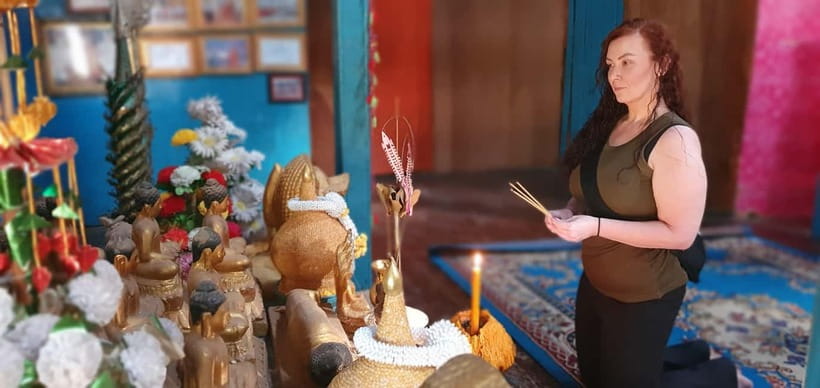
Review · CAMBODIA
Siem Reap Cambodian Buddhist Water Blessing and Local Market
Sacred water, simple rituals, real Cambodia. This two-hour Siem Reap experience takes you by tuk-tuk to a countryside pagoda for a Buddhist blessing, then continues to a local market. I like the personal blessing ritual and the chance to learn about Cambodian beliefs from an English-speaking guide. I also like that the price includes transport, a sarong, and a donation to the pagoda. The main consideration is time: the listed stops and tuk-tuk rides add up to slightly more than the advertised two hours.
This is not a grand temple tour, and that is part of its appeal. You come for a quiet cultural encounter rather than another sweep through Angkor’s famous monuments. Be ready to follow local customs, listen during the chanting, and treat the blessing as a religious act, not a photo performance.
Key points at a glance
- Two forms of blessing: Choose a shorter sprinkling of blessed water or a longer ritual with water poured over your head.
- A countryside pagoda: The ceremony takes place south of Siem Reap, away from the main temple circuit.
- Sarong provided: You receive one if you choose the longer blessing, helping keep your clothes dry.
- Red wrist ties: The ritual ends with red ties placed around your wrist as a sign of the blessing.
- Tuk-tuk transport included: The package covers pickup in Krong Siem Reap, local transfers, and return.
- Market visit included: You finish with about 40 minutes at a local market, including time to look around and take photographs.
Why this short Siem Reap experience feels different
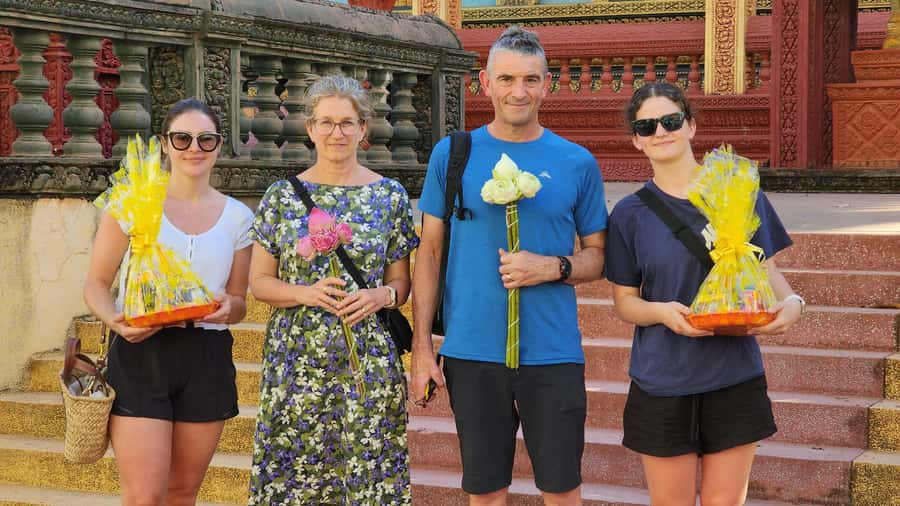
Siem Reap is known for Angkor Wat, but the city’s spiritual life does not stop at the temple gates. A Buddhist water blessing offers a brief look at a living Cambodian tradition, one connected to beliefs about good fortune, safe travel, health, and long life.
I like the scale of this experience. You are not being rushed through a large religious complex with a long list of dates and names. Instead, the focus stays on one ritual, one pagoda, and the meaning behind what is happening.
The experience costs $45 per person. That is not the cheapest way to reach a pagoda or market, but the fee covers an English-speaking guide, tuk-tuk transport, the sarong, the pagoda donation, and the market visit. If you value explanation and help with local etiquette, the price is reasonable. If you only want a quick blessing, you could find the cost harder to justify.
The strongest part is the guide’s role. The English guidance has received very high praise for explaining history, spirituality, Cambodian culture, and local life in clear terms. One guide named in the feedback is Mia Jorge Mia Jorge, whose English and ability to explain the ideas behind the ritual were singled out. Another comment praised the guide as prepared and especially good at explaining local culture.
More Farmers Market Tours in Cambodia
- Siem Reap: Morning Bike Tours with Local Market & Lunch
★ 5.0 · 52 reviews - Siem Reap Cambodian Buddhist Water Blessing and Local Market
★ 5.0 · 13 reviews - Siem Reap Cambodian Buddhist Water Blessing and Local Market
★ 4.8 · 11 reviews
The tuk-tuk ride south of Siem Reap
Pickup is from your hotel in Krong Siem Reap. You should wait in the lobby 10 minutes before the scheduled time, since the experience begins with a roughly 15-minute tuk-tuk ride.
That short ride matters. It shifts the setting from the central tourist zone toward the countryside and gives you a little time to settle into the pace of the morning or afternoon. You are not spending hours on the road, but you are leaving the usual hotel and restaurant circuit behind.
Tuk-tuks are open to the air, which suits a short ride in Siem Reap. You will hear and see more of the road than you would from a closed vehicle. The tradeoff is that the ride is less sheltered, so dress for Cambodia’s heat and keep loose belongings secure.
The experience is designed around a small amount of movement rather than a full day of sightseeing. That makes it easy to fit around other plans, especially if you are visiting Angkor on a separate day.
At the pagoda: preparing for the water blessing
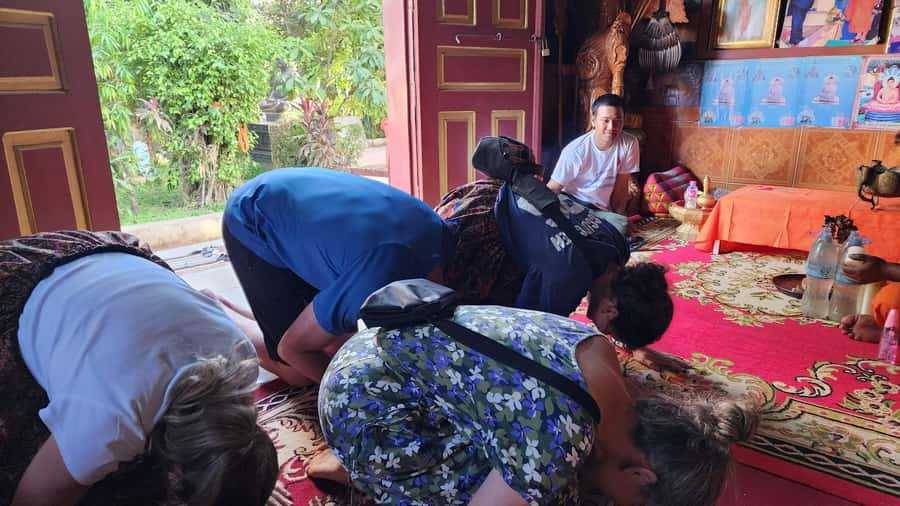
The pagoda visit is the heart of the experience. The supplied details identify the ceremony as taking place at Wat Arang Pagoda, while the route also names Wat Athvear Temple as the one-hour visit. Because those names do not match, I would confirm the exact pagoda with the operator when booking.
That point is worth checking, but it does not change the basic nature of the activity. You will visit an old Buddhist site in the countryside, meet monks living there, and take part in a blessing that has roots in ancient Cambodian practice.
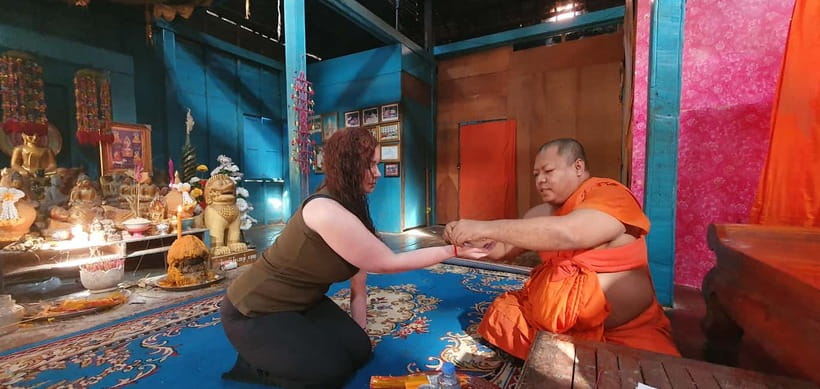
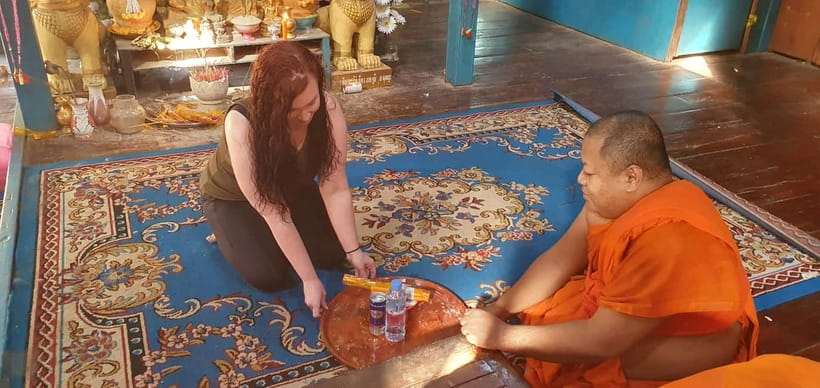
Your guide should explain what is happening before the ritual begins. This is important because the ceremony is not simply a water spray for tourists. The monks chant wishes connected with good luck, safe travel, and a long life. Listening first helps you understand why each part matters.
You can choose between two forms of blessing. The shorter option involves chanting and a light sprinkling of water. It is a good choice if you want the ceremony without changing clothes or spending much time in the ritual.
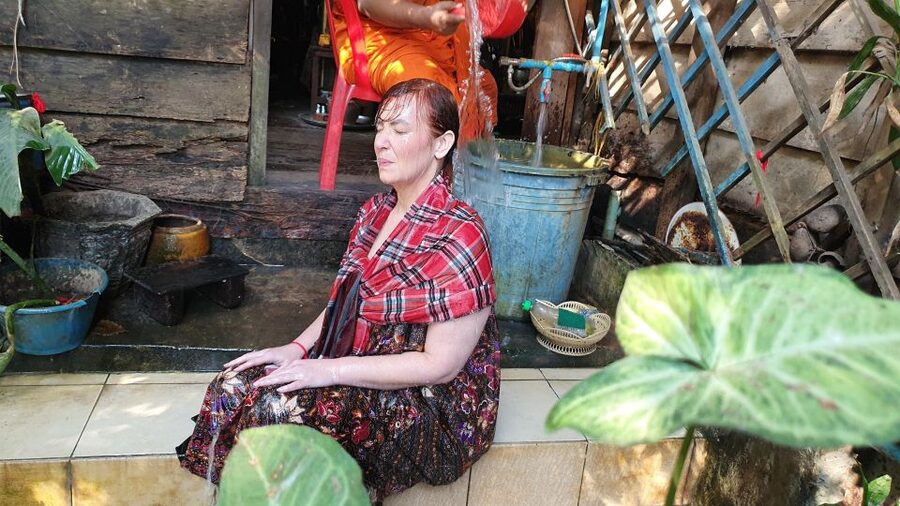
The longer option involves blessed water being poured over your head while the monks chant. You receive a sarong so your own clothes remain dry. This form is more involved, and it asks you to take a more active part in the ceremony.
I would choose based on comfort and interest, not on which option sounds more impressive. If you want a quick spiritual moment before returning to sightseeing, the sprinkling may be enough. If you want to participate in the fuller ritual, the sarong makes the longer blessing practical.
What the chanting and water ritual mean
The water is not treated as ordinary water. It has been blessed, and the ceremony uses it as a symbol of good wishes and spiritual protection.
The first ritual is gentle. The monks chant in unison while lightly sprinkling water over you. The sound of the chanting is a central part of the experience, so try not to treat the ceremony as background noise while taking photographs.
The second ritual is more physical. Blessed water is poured over your head as the chanting continues. The provided sarong is an important detail because it lets you participate without worrying about ruining your clothing.
At the end, red ties are placed around your wrist. These ties mark the blessing and give you a small physical reminder to take away. They are not a souvenir in the usual shop-bought sense. Their value comes from the ritual that placed them there.
You should dress modestly and follow your guide’s instructions inside the pagoda. The supplied information does not set out a detailed dress code, so your guide is the best source for local expectations on the day.
Same place, a different set of stalls:
- Kampot: Tuk Tuk Trip to Pepper Farm, Kep, Crab Market & More
★ 4.9 · 143 reviews - Phnom Penh’s Morning Market and Street Art Tour by Tuk tuk
★ 5.0 · 128 reviews - Phnom Penh Morning Market & Food Tour by Tuktuk – Includes All Food & Drinks!
★ 5.0 · 99 reviews - KAMPOT TRAVEL-Pepper farm. Cave.Secret lake-Crab market & Salt…
★ 5.0 · 87 reviews
A one-hour stop with a living religious tradition
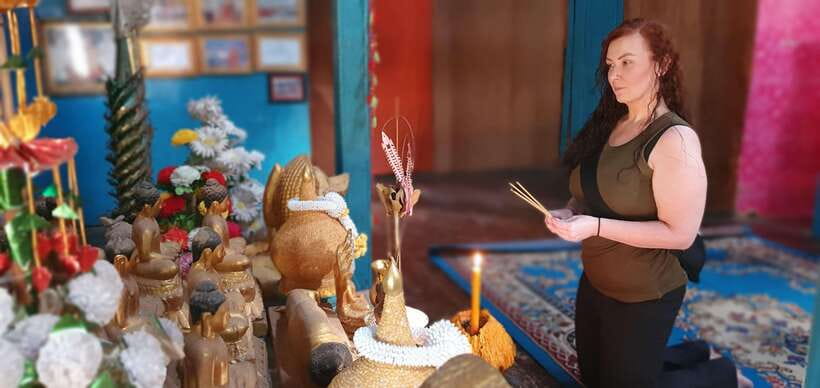
The pagoda visit is planned for about one hour. That should give you time for the explanation, the blessing, and a little space to take in the setting.
I like that the experience does not reduce Buddhism to a list of temple facts. You hear about beliefs and then take part in a ritual connected to those beliefs. That combination makes the visit more meaningful than simply looking at an old building from the outside.
At the same time, you should keep your expectations in check. This is not a long meditation retreat or a full religious study session. One hour can introduce the practice, but it cannot explain every part of Cambodian Buddhism.
The experience will suit you best if you approach it with respect and curiosity. If you want nonstop sightseeing, the ceremony may feel slow. If you enjoy understanding how local traditions still shape daily life, this is likely to be the most memorable part of the outing.
The local market adds an everyday Cambodian view
After the pagoda, the tuk-tuk ride continues for about 10 minutes to a local market. The market visit lasts around 40 minutes and includes a guided tour, a visit, and time for photographs.
This is a useful change of scene. The blessing shows a formal spiritual practice, while the market offers a more ordinary view of local life. You can look at the kinds of goods being sold, watch the movement of daily commerce, and ask your guide about what you see.
The guide matters here as much as at the pagoda. Without context, a market can become a quick walk past unfamiliar products. With clear English explanations, it can help you understand local habits and food culture at a basic, practical level.
Do not expect a large shopping session. The timing is limited, and personal expenses are not included. Bring money only if you want to buy something, and remember that the market stop is part of the cultural visit rather than a dedicated shopping trip.
The market also gives photographers a different subject from stone temples. You may find the strongest images in small details, displays, colors, and everyday activity, but always follow your guide’s advice before photographing people.
Timing, transport, and the small schedule wrinkle
The advertised duration is two hours. The route lists a 15-minute tuk-tuk ride to the temple, a one-hour visit, a 10-minute ride to the market, a 40-minute market stop, and another 10-minute return ride.
Added together, those sections total about two hours and 15 minutes. The difference is modest, but you should avoid booking another activity immediately afterward. Cambodia’s roads and pickup timing can also make a tightly packed schedule uncomfortable, even on a short tour.
Pickup and return are both in Krong Siem Reap. Tuk-tuk transfers are included, so you do not need to arrange separate transport to the pagoda or market.
The activity is offered in English, and the guide’s explanations are a major part of its value. If you want the full benefit, give yourself time to ask questions about the blessing, the monks, and the local customs.
Free cancellation is available up to 24 hours before the experience for a full refund. You can also reserve now and pay later, which helps if your Siem Reap schedule is still changing.
Is $45 a fair price?
At $45 per person, the cost sits above a simple tuk-tuk ride and a self-guided market visit. You are paying for the guide’s interpretation, the organized religious encounter, the pagoda donation, the sarong, and all the local transfers.
That makes the price easier to defend if you are interested in meaning and context. The guide helps you understand the ritual rather than simply showing you where to sit. The donation also means part of the cost supports the pagoda visit, according to the supplied inclusions.
The value is weaker if you already have a local guide, speak Khmer, or only want to visit the market. In that case, the packaged experience may include more help than you need.
For a first visit to Cambodia, I think the combination works well. You get a spiritual tradition, a rural stop, local transport, and an everyday market in a compact outing. It is not a bargain activity, but it offers more than a basic sightseeing transfer.
Who should book this experience?
I would recommend it to you if you want a cultural activity that takes less than half a day and goes beyond the usual temple photographs. It is especially suitable if you enjoy learning from guides and want a respectful introduction to Buddhist customs.
It also works well for people who have already seen Angkor’s main monuments and want a different side of Siem Reap. The pagoda and market provide a contrast to the monumental architecture of the temple circuit.
Families and first-time visitors may appreciate the short travel time and clear structure. The ritual itself requires quiet attention, so children should be able to follow instructions and behave respectfully during the chanting.
You may want to skip it if your schedule is packed with major temples, or if you are uncomfortable with water being poured over your head. The shorter sprinkling option gives you a less involved alternative, but the activity still centers on a religious ceremony.
My booking verdict
Book this experience if you want a personal introduction to Cambodian Buddhist practice, not just another stop for photographs. The best reasons are the choice of two blessings, the thoughtful English guidance, the included tuk-tuk transport, and the chance to connect a pagoda visit with ordinary market life.
Before booking, confirm whether your route is going to Wat Arang Pagoda or Wat Athvear Temple, since both names appear in the supplied details. Also allow a little more than two hours, rather than scheduling your next plan immediately at the advertised end time.
At $45, it is best for you if explanation and cultural contact matter more than keeping costs to the bare minimum. If that sounds like your kind of Siem Reap afternoon, this compact experience is a worthwhile addition to an Angkor visit.
FAQ
Where does the Buddhist water blessing take place?
The blessing takes place at an ancient countryside pagoda south of Siem Reap. The experience details name Wat Arang Pagoda, while the route names Wat Athvear Temple, so confirm the exact location with the operator before departure.
How long does the experience last?
The advertised duration is two hours. The listed visits and tuk-tuk rides add up to about two hours and 15 minutes, so allow a little extra time.
What types of blessings can I choose?
You can choose a shorter blessing with chanting and a light sprinkling of water, or a longer ritual in which blessed water is poured over your head while the monks chant.
Is a sarong provided?
Yes. A sarong is provided for the longer water ritual so your clothing remains dry.
What happens at the end of the blessing?
Red ties are placed around your wrist to signify the blessing.
Is transportation included?
Yes. Tuk-tuk transfer is included from Krong Siem Reap to the pagoda, from the pagoda to the local market, and back to Krong Siem Reap.
Can I cancel the booking?
Yes. You can cancel up to 24 hours in advance for a full refund. The experience also offers a reserve-now, pay-later option.
Just added around Cambodia
- Phnom Penh: Morning Foodie, Market Walking & Street Art Tour★ 5.0 · 3 reviews
- Siem Reap Morning Market & Food Tour by Tuk Tuk★ 5.0 · 2 reviews
- Siem Reap: Morning Cooking Class & Market Tour★ 5.0 · 7 reviews
- Siem Reap: FREE Market & Local Temple Tour★ 4.8 · 3 reviews
- Siem Reap: Angkor Wat Sunrise and Market Tour by Jeep★ 5.0 · 5 reviews
- Siem Reap Khmer Cooking Class and Local Market Tour★ 4.1 · 4 reviews
- Phnom Phnom: Local Market & Culture Walking of City Tour★ 5.0 · 3 reviews
- Phnom Penh: Morning Market & Guided Breakfast Tour by Tuktuk★ 5.0 · 7 reviews
Local & Farmers Market Tours, compared.
Hanoi Cooking Class: Culture, Local Market & Meaning CSR Impact
Read our review →
Cooking Class and Lunch at a Tuscan Farmhouse with Local Market Tour from Florence
Read our review →
Cooking Class Hoi An:Local Market, Basket Boat, Fishing & Cooking
Read our review →
London Bridge & Borough Market Food Tour with 7 Authentic Dishes
Read our review →
Hoi An Cooking Class(Local market,Basket Boat,Fishing & Cooking)
Read our review →
Browse the lists this tour appears in