
Review · CAMBODIA
Siem Reap: Angkor Wat Sunrise and Market Tour by Jeep
Sunrise makes Angkor Wat worth the alarm. This private eight-hour outing pairs the temple’s famous reflection with Ta Prohm, Ta Nei, Bayon, Victory Gate, a local breakfast, and a Siem Reap market. I like the open-air jeep and the small private group, which make a long temple morning feel more personal and less like a parade.
I also like the food stops. Khmer noodle soup, palm cakes, steamed rice dumplings, fresh fruit, and coconut give you a useful taste of everyday Cambodia, not just temple photography. The main drawback is the early start, and the $109 price does not include the required $37 Angkor pass or anything you buy at the market.
This tour suits you best if you want one carefully planned morning covering the major Angkor sights without arranging several separate rides. Guides such as Mr. Raman and Mr. David have been praised for clear English, temple knowledge, thoughtful service, and taking good photos. Just remember that the most famous sunrise view comes with darkness, crowds, and a very early hotel pickup.
Key points at a glance
- Sunrise at Angkor Wat: Arrive early for the temple’s reflection across the water and a prime photo position.
- Private jeep transportation: Ride between the sites in an original army jeep, with hotel pickup, drop-off, water, towels, fruit, and fresh coconut included.
- Local Cambodian breakfast: Stop for Khmer noodle soup with palm cake and steamed rice dumplings filled with palm sugar.
- Two jungle temples: See Ta Prohm and the less familiar Ta Nei, where roots, vines, and plants press into the old stonework.
- Bayon’s stone faces: Walk among the serene carved faces at the center of Angkor Thom.
- Market tasting: Browse produce, clothing, handicrafts, and Cambodian snacks, with adventurous options such as fried spiders and scorpions.
Why the jeep makes this Angkor morning different
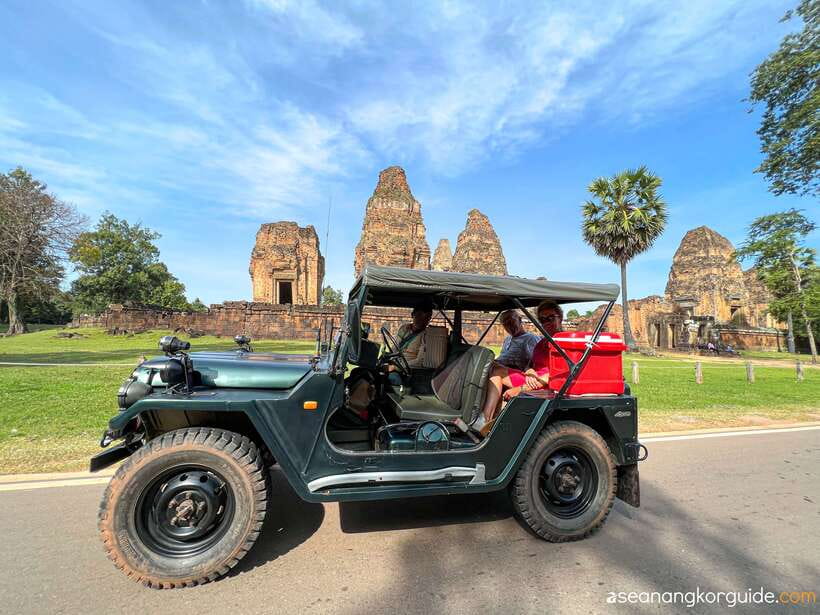
A standard car gets you from one temple to the next. A jeep makes the transport part of the day part of the experience. You sit in an open-air vehicle, feel the morning air, and get a more direct sense of the roads between the monuments.
The vehicle has been described as an original army jeep, a detail that adds character without changing the practical side of the trip. This is not luxury transport. You choose it for atmosphere, not plush seats or quiet isolation. Dust, heat, and road bumps are possible considerations, though the included cool water and towels help.
The tour is set up as a private group, which matters at Angkor. You are not tied to the pace of a large bus party or waiting for a long list of hotel pickups. The guide can spend more time explaining a carving, help with photographs, and adjust the rhythm of the morning within the planned route.
The schedule is long for a sunrise outing, but the order makes sense. You see Angkor Wat before the heat builds, visit the jungle temples while the day is still manageable, and reach the market later as a final change of scene. Hotel pickup and drop-off are included, so you only need to be ready in the lobby or at the entrance.
More Morning Departures in Cambodia:
- Phnom Penh’s Morning Market and Street Art Tour by Tuk tuk
★ 5.0 · 128 reviews - Phnom Penh Morning Market & Food Tour by Tuktuk – Includes All Food & Drinks!
★ 5.0 · 99 reviews - Siem Reap: Morning Bike Tours with Local Market & Lunch
★ 5.0 · 52 reviews
Angkor Wat before breakfast
The morning begins with a direct ride from your Siem Reap hotel to Angkor Wat. The central moment is the sunrise view, with the temple towers reflected on the water in front of the monument.
Bring your camera, but keep your expectations practical. A famous sunrise is rarely a private one, and the best viewing area can become busy. The early pickup is still worthwhile because it gives you the chance to arrive in time for a good position rather than rushing in after the color has already changed.
After sunrise, you have about an hour and a half to explore Angkor Wat. That is enough time to see the main areas included in the visit, listen to explanations, and take photographs, though it is not enough for every corner of the enormous complex.
Your guide helps connect the stonework to the temple’s purpose and construction. Angkor Wat dates from the 12th century and is the world’s largest religious monument. The scale can be hard to grasp from a photograph, so use the walking time to look beyond the famous towers. Notice the long galleries, carved surfaces, and the way the monument is arranged around its central sanctuary.
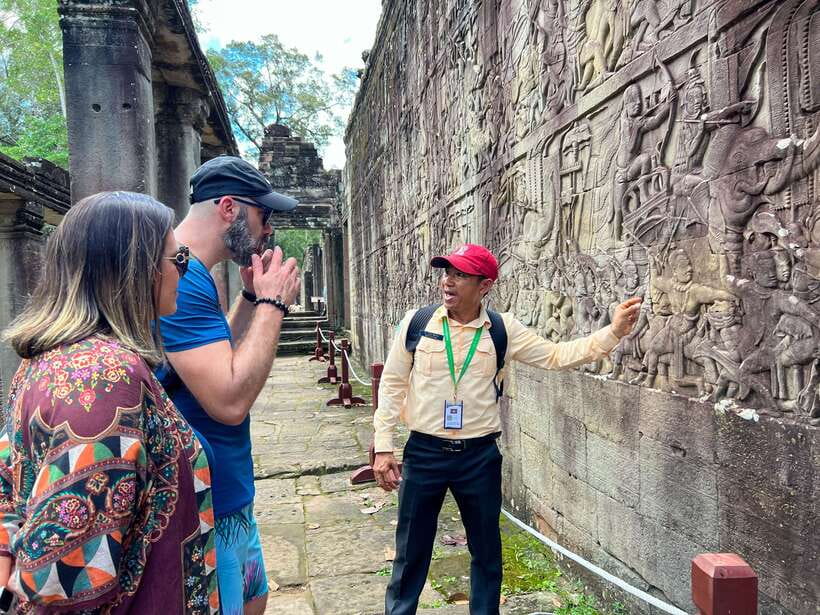
The guide-led format is particularly useful here. Angkor Wat can feel like a huge set of walls and courtyards if you arrive without context. An English-speaking guide can explain why the site matters culturally and point out construction details that are easy to miss while you chase the perfect reflection.
Khmer noodle soup and palm cake
After Angkor Wat, the group stops at a local restaurant for breakfast. This is one of the strongest parts of the outing because the food is not treated as an afterthought.
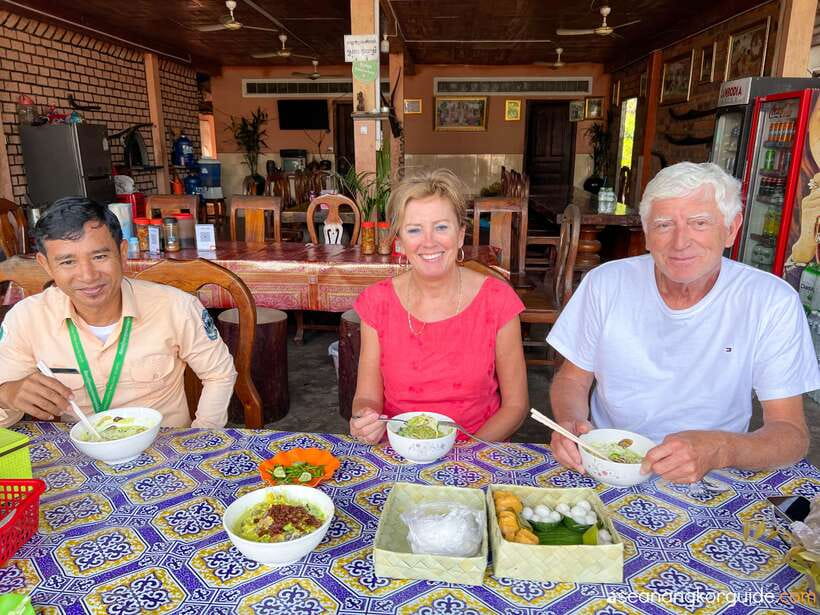
You can expect Khmer noodle soup, followed by traditional sweets such as palm cake and steamed rice dumplings with palm sugar. Fresh fruit is also included during the day, along with a fresh coconut. The breakfast gives you a chance to try familiar Cambodian flavors in a simple local setting instead of eating a hotel meal before heading out.
The palm cakes are a memorable detail. One previous guest particularly enjoyed seeing how they were made, which adds a useful connection between the food and the people preparing it. You do not just receive a plate and move on. The stop can help you understand how palm products appear in Cambodian cooking.
Breakfast is included, but food and drinks at the later market are not. If you want to sample several snacks there, bring cash. The tour information specifically advises bringing a camera and cash, and both are sensible choices.
Ta Prohm and Ta Nei under the trees
The jeep next takes you to Ta Prohm and Ta Nei. These temples offer a different mood from Angkor Wat. Instead of broad, formal spaces and towering symmetry, you get stone corridors, trees, roots, and a sense that the forest is pressing back into the ruins.
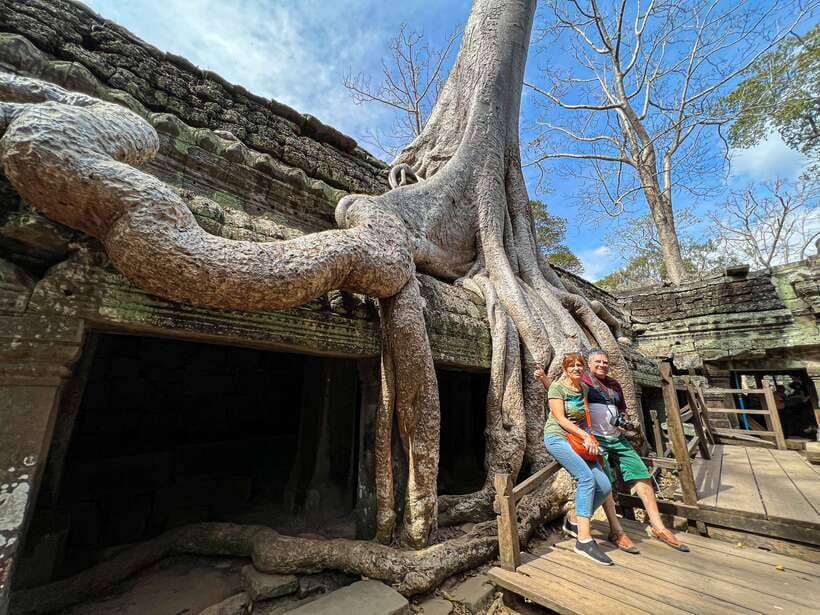
Ta Prohm is the better-known stop, partly because it appeared in the 2001 film Lara Croft: Tomb Raider. Its fame means it can be one of the busier places on the route, but the appeal is easy to understand. Huge roots spread over the walls, vines run through gaps, and the boundary between temple and jungle feels uncertain.
You should give yourself time to look at the stonework beneath the roots. The trees are the obvious photo subject, but the carved details and narrow passages reward a slower pace. Good footwear will help, since the itinerary involves walking through several temple sites and the surfaces may not always feel even.
Ta Nei is less familiar to many visitors and keeps the jungle-temple theme going on a quieter scale. The description of both temples as being in their original state means you should expect a more overgrown setting rather than a polished monument. That is the attraction, but it also means you should not expect the same ease of movement or broad open spaces found at Angkor Wat.
The guide is useful at these two stops because it is easy to focus only on roots and forget that you are looking at a constructed religious complex. The trip gives you both the dramatic forest photographs and an explanation of the temple sites.
A few more market tours around Cambodia worth a look
- Kampot: Tuk Tuk Trip to Pepper Farm, Kep, Crab Market & More
★ 4.9 · 143 reviews - KAMPOT TRAVEL-Pepper farm. Cave.Secret lake-Crab market & Salt…
★ 5.0 · 87 reviews - Battambang: Cooking Class and Market Touring
★ 4.8 · 80 reviews - 3 Hour Morning Market and Art Tour
★ 5.0 · 45 reviews
Bayon and Angkor Thom’s Victory Gate
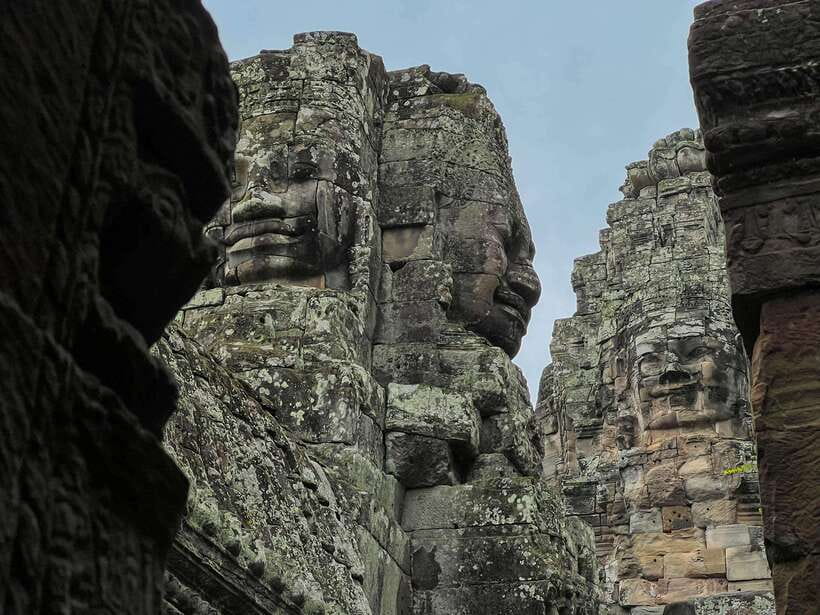
Bayon changes the visual language again. Its most famous feature is the group of serene stone faces carved into the temple walls. You will find strong photo opportunities as you move around the structure, with faces appearing from different angles and levels.
This stop works well after Angkor Wat because the two temples feel so different. Angkor Wat gives you grand balance and long views. Bayon feels more enclosed, intricate, and slightly mysterious. Listen closely as your guide explains the design, since the many faces can otherwise become a quick photograph followed by a quick exit.
The route also includes Victory Gate, one of the entrances to Angkor Thom. It was built by Jayavarman VII to help protect the city from neighboring invaders. The gate has survived for centuries, and its placement gives you another way to understand the scale of the former city.
Do not think of Victory Gate as a full temple visit. It is a short but worthwhile stop, especially because it helps connect Bayon to the larger Angkor Thom complex. You see how monuments, roads, and gates worked together rather than treating each ruin as an isolated attraction.
A real Siem Reap market stop
The final major part of the route is a local market in Siem Reap. This is where the tour shifts from ancient monuments to present-day daily life.
You can watch people buy and sell produce, clothing, handicrafts, and food. The market stop is not just a souvenir break. It gives you a chance to see the ordinary trade that continues around the great temple sites and to compare Cambodian shopping habits with the more visitor-focused areas of Siem Reap.
Food is available to buy separately. You might try sticky rice, cakes, fruit, or egg noodles. If you are feeling adventurous, fried spiders and scorpions are also mentioned as common local snacks in markets across Southeast Asia. You are not required to try them, and there is plenty of less dramatic food available.
Bring small enough amounts of cash for tasting and shopping, but remember that market purchases are not covered by the tour price. Since you have already eaten breakfast, you can approach this stop without needing to make it a full meal.
The market is a good final stop because it keeps the day from becoming only a procession of old stones. You get temple history, Cambodian breakfast, and a look at modern local commerce within one outing.
Guides, photographs, and small comforts
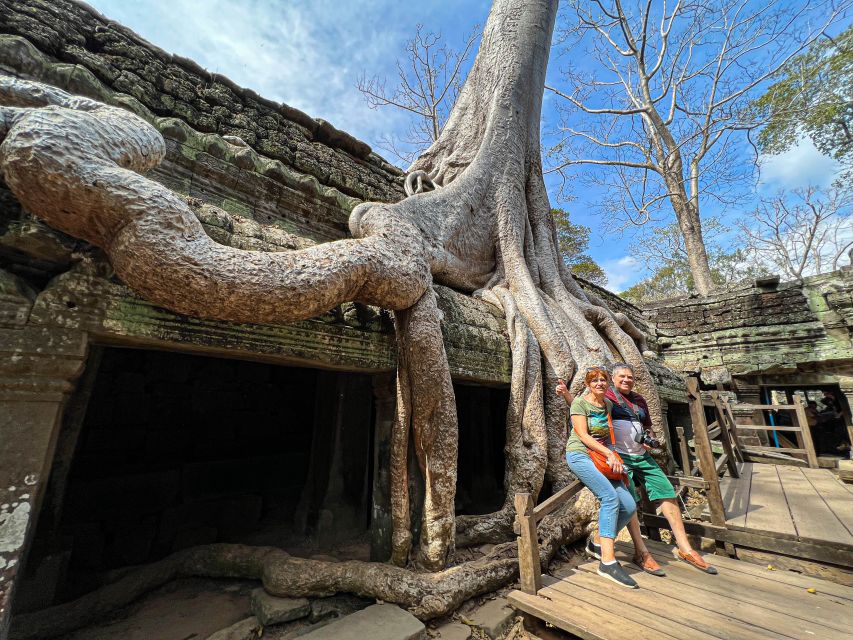
The strongest personal touches come from the guide and driver. Mr. Raman has been praised for being friendly and helpful, while Mr. David has been praised for his temple explanations and for taking plenty of photographs. Another guide was affectionately identified as Mr. Handsome in one account, but guide assignments can change.
Photography help is more useful than it may sound. Sunrise at Angkor Wat is a high-pressure photo moment, and you may want pictures of yourself rather than only the temple. A guide who knows where to stand can save time and help you get a better record of the morning.
The practical extras are simple but welcome. Cool bottled water, towels, seasonal fruit, and a fresh coconut are included. Cold towels were also provided later in the day on one outing, which can be a relief after walking around the temples in Cambodia’s heat.
The English-language guiding has received especially strong praise. The useful distinction here is not just speaking English, but explaining the history and construction in clear terms. That helps you get more from the 1.5-hour Angkor Wat visit and the later temple stops.
Is $109 a fair price?
The listed cost is $109 per person, and the required one-day Angkor pass adds $37 per person. That brings the known total to $146 per person before market food or shopping.
That is not a cheap temple transfer. It is a private full-day-style experience with hotel transportation, an English-speaking guide, a driver, breakfast, drinks, fruit, and a carefully arranged route through several major sites. If you would otherwise hire a vehicle, pay for a guide, arrange breakfast, and organize the temple sequence yourself, the price becomes easier to justify.
The value is strongest for couples and small private groups. Several positive accounts describe just two people with the guide, which allows more personal attention and less waiting. Solo visitors should consider the per-person cost carefully, since the private format may be less economical alone.
The price is less appealing if you only want sunrise photographs and a quick look at Angkor Wat. In that case, a shorter arrangement could suit you better. This tour earns its cost through the range of stops, the food, and the local market visit.
Who should book this jeep tour?
I would choose this outing if you want to see the major Angkor highlights in one organized day and care about local food as much as temple photographs. It is especially suitable for couples, families with older children, and first-time visitors who want a guide to explain what they are seeing.
It also suits people who dislike large group tours. The private format, jeep transport, hotel pickup, and guide photography make the day feel more attentive.
You should think twice if you dislike early mornings, open-air vehicles, uneven temple walking, or market food. The sunrise requires an early alarm, and the schedule covers a lot of ground. You may also prefer a slower temple visit if you want extended time at each monument.
Cancellation is flexible up to 24 hours before the start for a full refund, and you can reserve now and pay later. Check the available start time when booking, since the exact pickup time is not specified in the tour details.
Should you book the Angkor sunrise jeep tour?
Book it if you want an efficient, personal introduction to Angkor with more than the standard temple circuit. The best reasons are the sunrise timing, the original army jeep, the local breakfast, and the mix of Angkor Wat, Ta Prohm, Ta Nei, Bayon, Victory Gate, and a market.
The extra $37 temple pass and market spending should be included in your budget. You also need to accept the early start and a busy sunrise setting.
For many visitors, the combination of excellent guiding, fresh food, private transport, and small personal touches makes this a strong value. If those details matter more to you than sleeping late or keeping costs to a minimum, this is a smart way to begin your Siem Reap visit.
FAQ
How long does the Angkor jeep tour last?
The tour lasts eight hours. It includes hotel pickup and drop-off, sunrise at Angkor Wat, the major temple visits, breakfast, and a local market stop.
Is the Angkor temple pass included?
No. The one-day Angkor pass costs USD 37 per person and is not included in the tour price.
What food is included?
Breakfast includes Khmer noodle soup and traditional desserts such as palm cake and steamed rice dumplings with palm sugar. Seasonal fruit and a fresh coconut are also included.
Are market food and drinks included?
No. Food and drinks purchased at the local market are not included. You can buy items such as sticky rice, cakes, fruit, egg noodles, fried spiders, and scorpions if you wish.
Is the tour private?
Yes. The experience is offered as a private group tour with an English-speaking guide and jeep transportation.
What should I bring?
Bring a camera and cash. Cash is useful for market food, drinks, handicrafts, clothing, and other purchases.
Just added around Cambodia
- Phnom Penh: Morning Foodie, Market Walking & Street Art Tour★ 5.0 · 3 reviews
- Siem Reap Morning Market & Food Tour by Tuk Tuk★ 5.0 · 2 reviews
- Siem Reap: Morning Cooking Class & Market Tour★ 5.0 · 7 reviews
- Siem Reap: FREE Market & Local Temple Tour★ 4.8 · 3 reviews
- Siem Reap Khmer Cooking Class and Local Market Tour★ 4.1 · 4 reviews
- Siem Reap Cambodian Buddhist Water Blessing and Local Market★ 4.8 · 3 reviews
- Phnom Phnom: Local Market & Culture Walking of City Tour★ 5.0 · 3 reviews
- Phnom Penh: Morning Market & Guided Breakfast Tour by Tuktuk★ 5.0 · 7 reviews
Market Tours, compared.
Damnoen Saduak Market and Maeklong Railway Market
Read our review →
The Old Siam: Damnoen Saduak and Maeklong Railway Market
Read our review →
Old Town, Creek, Museums, Souks, & Street Food Tour
Read our review →Train Market & Floating Market with Boat Ride
Read our review →
Old Town, Souks, Street Food, Guided Tour & Abra Ride
Read our review →
Ayutthaya & Ayothaya Floating Market Day Trip
Read our review →
Frame Tickets, Creek, Souks & Blue Mosque Guided Tour
Read our review →
Hanoi Cooking Class: Culture, Local Market & Meaning CSR Impact
Read our review →Browse the lists this tour appears in