
Review · SOUTH KOREA
Seoul: Colonial History Tour with Prison&Palace, Market Food
History can make lunch taste different. Seoul’s four-hour tour links Seodaemun Prison, Dilkusha, Deoksugung Palace, and Namdaemun Market in one tightly planned outing. I like the honest balance of painful modern history and everyday Korean food, and I like that entrance fees, transport, and market tastings are included. The main drawback is the pace: four hours and moderate walking leave little room to linger.
I also appreciate the English-speaking guides, with guides such as Janice and Ron praised for answering questions well and adding context beyond the basic facts. The food finish is a strong touch, especially handmade knife-cut noodles in Kalguksu Alley. Still, Seodaemun Prison can feel emotionally heavy, and this may not be the right choice if you prefer a light sightseeing morning.
Key points at a glance
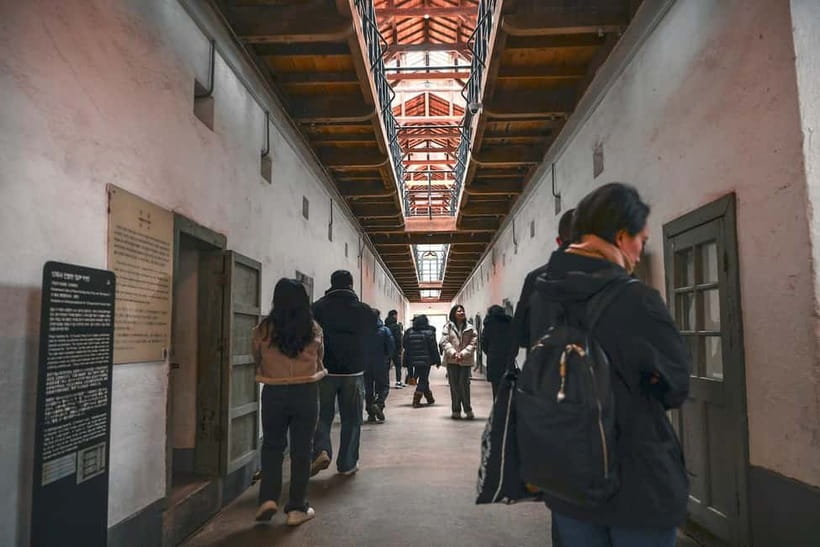
- Seodaemun Prison sets the tone: An 80-minute guided visit explains the suffering of Korean independence fighters under Japanese colonial rule.
- Dilkusha adds an international angle: Albert W. Taylor’s former home shows how an American journalist helped share Korea’s independence cause abroad.
- Deoksugung mixes old and new: Traditional Korean buildings sit beside Western-style architecture in a royal compound shaped by political change.
- Namdaemun brings history to the table: The tour ends with food tastings and a meal in Kalguksu Alley, known for handmade knife-cut noodles.
- The route is efficient but active: You visit several major sites in four hours, with moderate walking and possible changes between vehicle and walking sections.
- The price covers the essentials: At $58 per person, admission, transport, a guide, and food tastings make the cost easy to assess.
Why this Seoul tour works as a history lesson
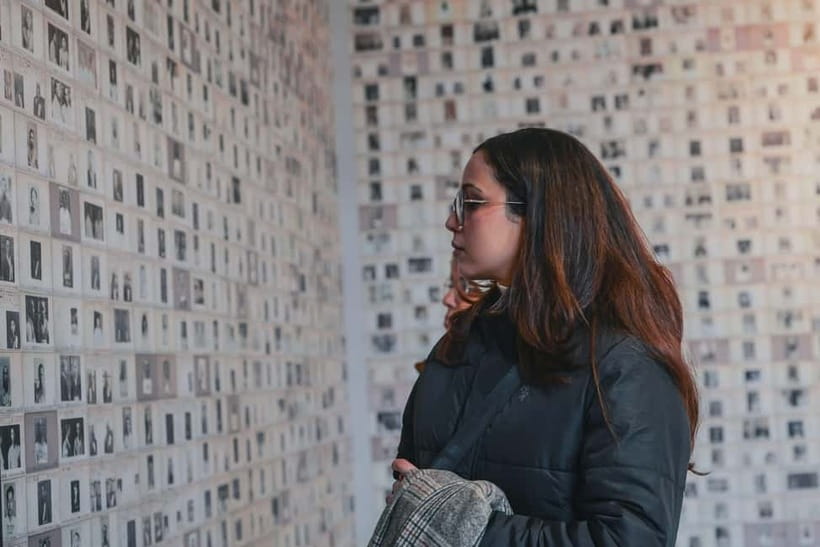
Many Seoul tours focus on royal palaces, shopping, or polished city views. This one follows a more thoughtful path. It asks you to look at Korea through occupation, resistance, modernization, international support, and daily food culture.
That order matters. You begin with the scars of Japanese rule, then visit a house linked to foreign reporting, move into a royal palace shaped by modernization, and finish among market stalls where ordinary life carries on. I like that the tour does not treat Korean history as a collection of old buildings. It connects political events with real places and then gives you time to talk about the country over a bowl of noodles.
The guide is important here. A good explanation can help you understand why the prison matters, why Deoksugung looks different from other palaces, and how Korea moved from monarchy and occupation toward modern democracy. The experience has received especially warm praise for guides Janice and Ron, who were described as friendly, passionate, and happy to answer questions about history, food, and Korean culture.
You should expect a serious tone at the beginning. This is not a casual sightseeing loop with a few historical facts added along the way. The visit to Seodaemun Prison deals with hardship and repression. If you want a tour that helps you understand modern Korea, that seriousness is part of its value.
More Food and Drink Trips in Seoul:
- Seoul Street Food Market Tour
★ 5.0 · 1,226 reviews - Seoul: Night Market Food Tour with Local Guide
★ 4.9 · 943 reviews - Seoul: Guided Food & Market Tour with 8+ Tastings
★ 4.9 · 342 reviews
Starting at Dongnimmun Station
The meeting point is Dongnimmun, or Independence Gate, Station Exit 5. Look for the guide holding a Tripper sign. Starting here is practical because the first stop is Seodaemun Prison History Hall, so you do not waste time crossing the city before the main subject begins.
The tour ends back at the same meeting point. That makes planning easier if you have an afternoon reservation, although you should leave some breathing room since city traffic or a route change could affect the timing.
The route involves a moderate amount of walking. Comfortable shoes are a must, not a minor suggestion. You will move through a prison complex, a historic house, a palace area, city streets, and a large traditional market. The tour is not suitable for wheelchair users, according to the activity information, and anyone who finds extended walking difficult should think carefully before booking.
Tour information is sent through WhatsApp one or two days before the activity. Make sure the phone number you provide can receive WhatsApp messages. On-site conditions may also cause a planned vehicle section to become a walking section, so keep your schedule and footwear practical.
Seodaemun Prison History Hall: the difficult first stop
You spend about 80 minutes at Seodaemun Prison History Hall, making it the longest stop of the day. That is appropriate. This is not a quick photo stop, and rushing through it would miss the point.
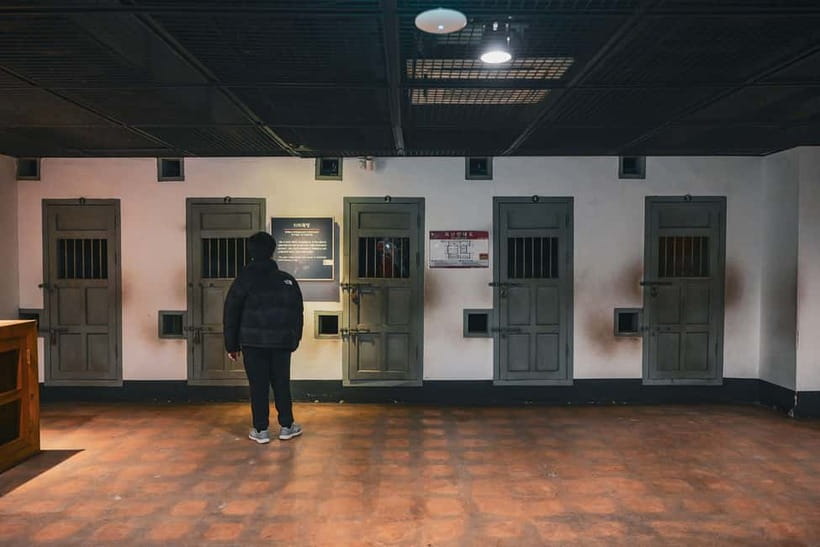
The prison was used during Japanese colonial rule, and the tour focuses on Korean independence fighters who were imprisoned and suffered there. The site gives physical shape to a period that can otherwise feel remote when read in a textbook. Rooms, halls, and prison spaces make the subject more immediate.
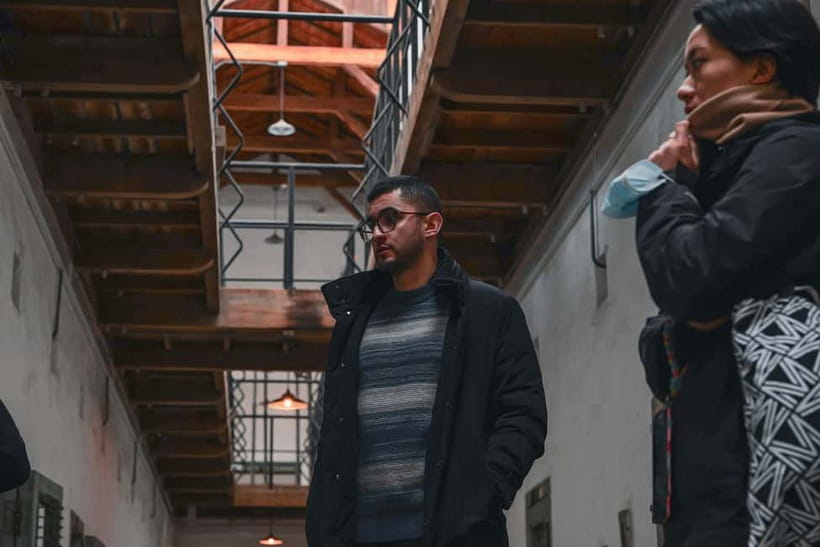
Your guide leads the visit and explains the setting, the independence movement, and the hardship faced by people who resisted Japanese control. The value of the stop depends heavily on listening. You will get more from the stories and context than from simply walking through the buildings.
I would plan your expectations carefully. Seodaemun Prison is emotionally intense. One review described the overall tour as a combination of great food, history, and a touch of emotional damage, which is a fair warning delivered with humor. The difficult mood is not a flaw, but it may surprise anyone expecting a cheerful morning.
The 80-minute length gives you time to ask questions. This is one place where an English-speaking guide can make a real difference. You can ask about the independence movement, the colonial period, or how the site is remembered in Korea. The tour’s focus is not only on dates. It is on the people who endured the period and the meaning of resistance.
Dilkusha and Albert W. Taylor’s unusual role
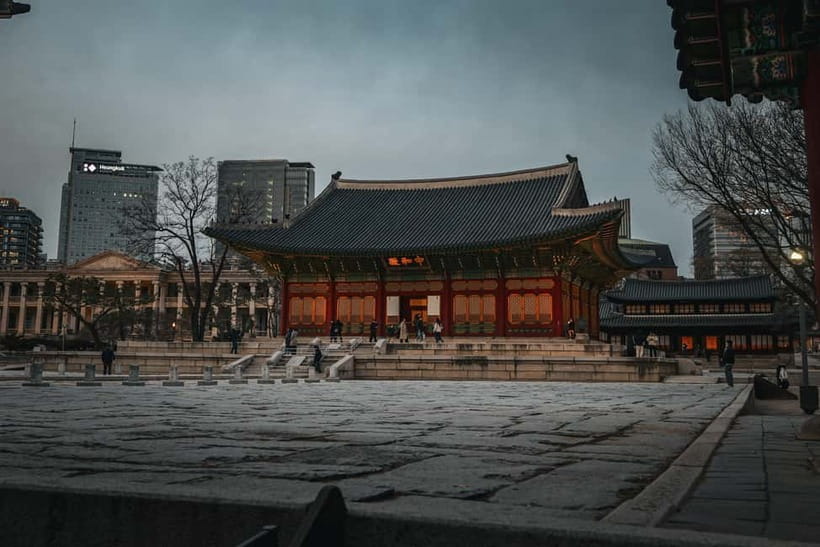
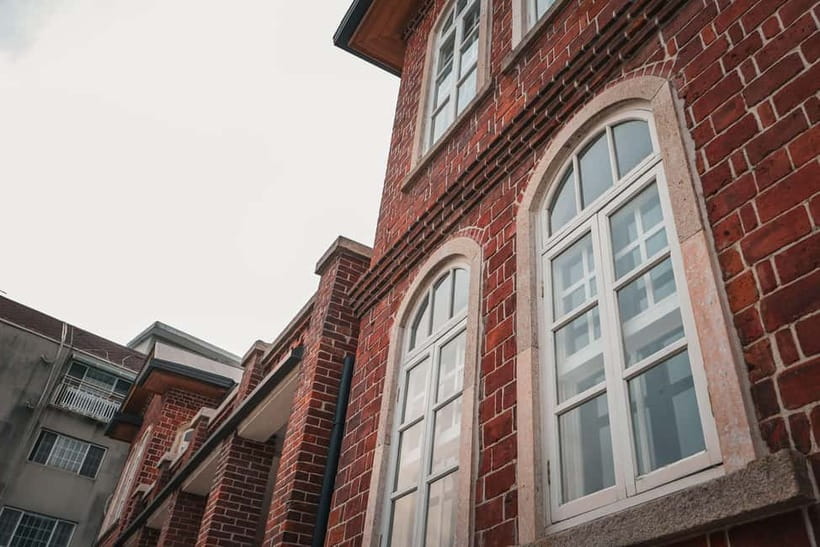
After the prison, the tour visits Dilkusha, the former home of American journalist Albert W. Taylor. The guided portion lasts about 15 minutes, so this is a compact stop rather than a long house tour.
Its importance comes from Taylor’s role in reporting on Korea’s independence cause and helping share the country’s story with an international audience. After the prison’s focus on Korean resistance from inside the country, Dilkusha adds an outside perspective. It shows how foreign residents and journalists could help carry news beyond Korea’s borders.
Fifteen minutes is enough to introduce the house and Taylor’s connection to the independence movement, but it will not provide the same depth as the prison visit. Think of Dilkusha as a link in the historical chain. It connects local resistance with international awareness.
I like this stop because it prevents the story from becoming too narrow. Korea’s struggle was not isolated from the rest of the world. The house also gives the day some architectural variety before you reach Deoksugung Palace.
More Food Trips in Seoul:
- Seoul: Palace, Temple and Market Guided Foodie Tour at Night
★ 4.9 · 750 reviews - Seoul Night Palace & Market Food Tour with Vehicle
★ 5.0 · 275 reviews - Seoul: Namdaemun Market Food Tour
★ 4.9 · 34 reviews - Seoul: Gwangjang Market Netflix Food Tour
★ 4.7 · 31 reviews
Deoksugung Palace and Korea’s changing direction
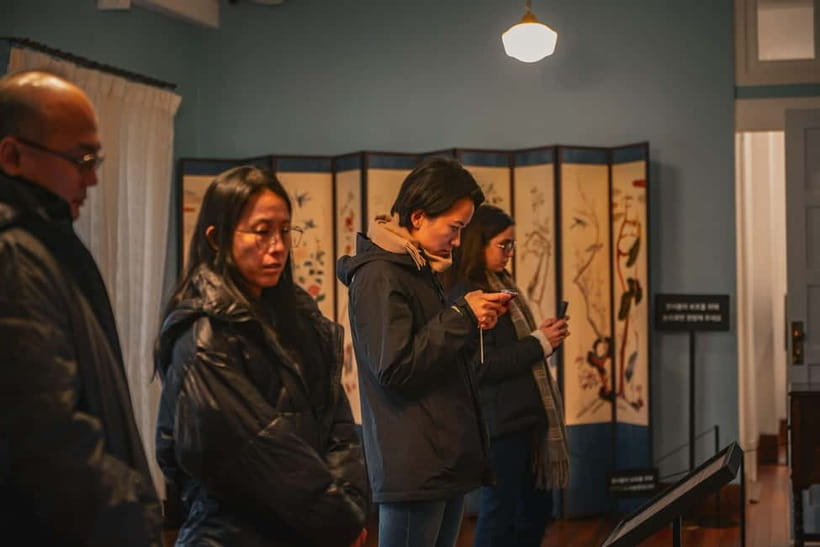
The tour spends about one hour at Deoksugung Palace, where Korean and Western architectural styles meet within a royal setting. This contrast is one of the clearest visual lessons of the day.
Deoksugung is useful for understanding modernization during political turbulence. You are not only looking at palace buildings. You are seeing how Korea adapted to new pressures and outside influence while trying to preserve older royal traditions.
The blend of styles gives the guide plenty to explain. Traditional Korean palace design and Western-style structures do not appear as random decoration. Together, they reflect a country dealing with a changing political world. After hearing about colonial rule and independence at Seodaemun Prison, the palace helps place those events within a longer period of national change.
The one-hour visit should give you enough time to appreciate the setting without turning the tour into a full palace study. If you are passionate about architecture or Korean royal history, you may wish for more time. For a four-hour route that also includes food, the allocation is reasonable.
This is also the most visually restful part of the tour. Seodaemun asks you to pay attention to painful stories. Deoksugung gives you space to look at courtyards, buildings, and the meeting of Korean and Western forms. I like that change of mood.
City Hall and Sungnyemun Gate on the way south
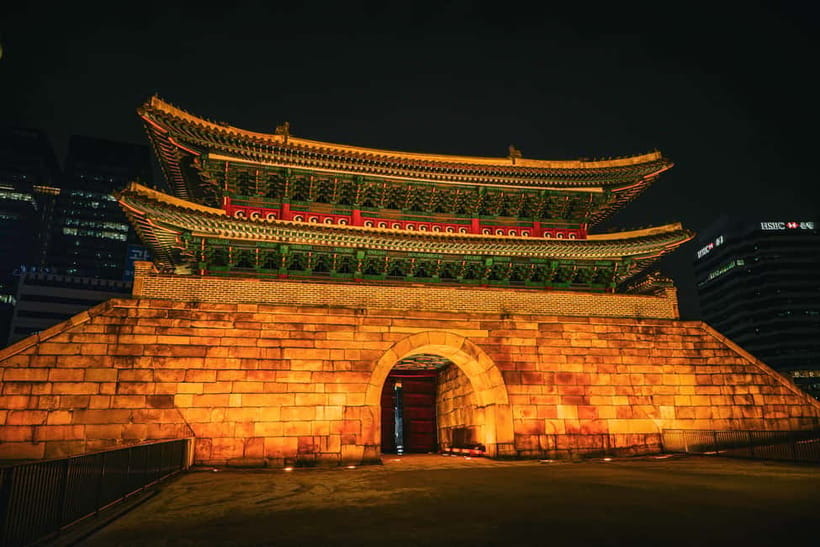
The route also includes visits to Seoul City Hall and Sungnyemun Gate, commonly called Namdaemun. The listed time for each is about 10 minutes, so expect brief stops or guided looks rather than long explorations.
City Hall represents Seoul’s change from a colonial past to a modern democracy. It is a useful urban marker because it places the historical discussion in the middle of the working capital. You see how the city’s political identity continues to change rather than treating history as something sealed away in museums.
Sungnyemun Gate offers a different kind of time scale. It is a 600-year-old national treasure and once marked Seoul’s southern entrance during the Joseon Dynasty. The gate broadens the tour beyond the colonial period and reminds you that the city’s story began centuries earlier.
Ten minutes is enough for orientation and photos, but not for detailed architectural study. If you want to explore these sites at length, return on your own. On this tour, their purpose is to connect the historical stops and lead you toward Namdaemun Market.
Namdaemun Market and the reward of Kalguksu Alley
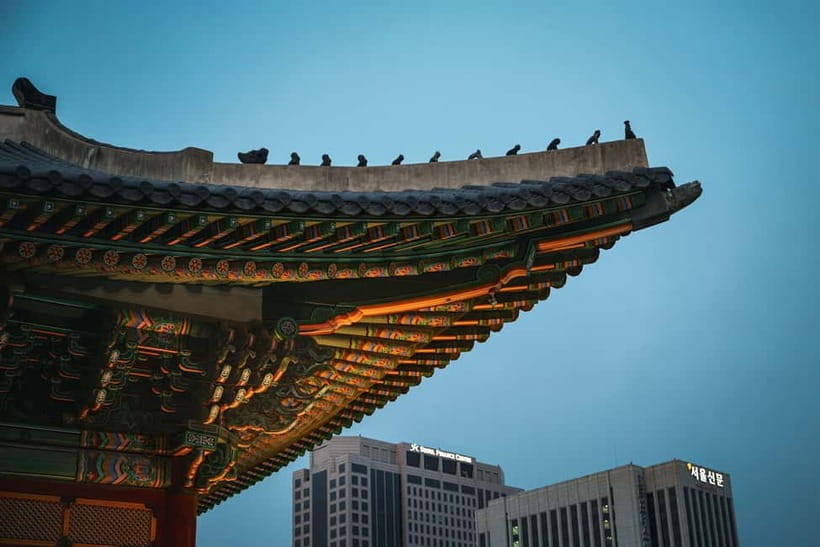
The final hour takes place at Namdaemun Market, one of Seoul’s oldest and largest traditional markets. Vendors have sold goods here for more than 600 years, and the market gives the tour a lively finish after its serious opening.
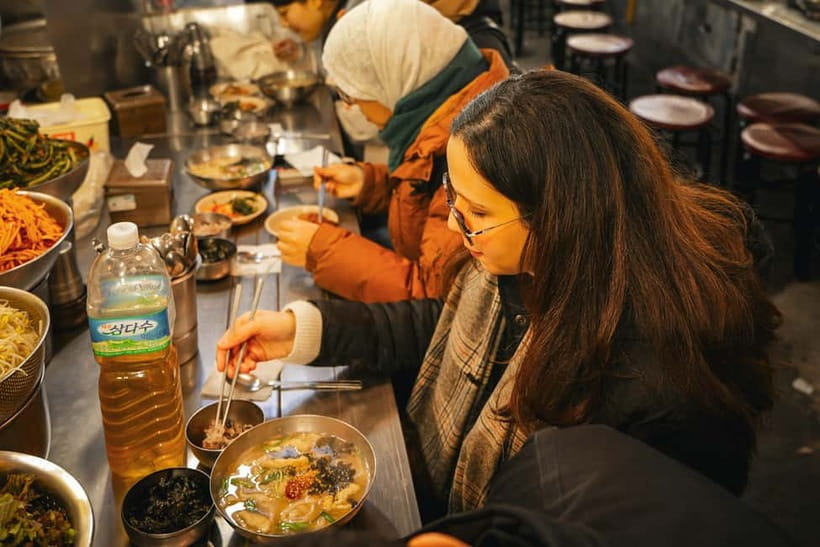
The food portion includes tastings and a meal. The key stop is Kalguksu Alley, where small stalls serve steaming bowls of handmade knife-cut noodles. Kalguksu is comforting, filling food, and it fits the day well. After several hours of walking and listening, a hot bowl makes a better ending than a rushed snack.
You also get the chance to try street foods such as hotteok and gimbap. These foods give you a useful introduction to familiar Korean flavors without requiring you to choose a stall or decipher a menu on your own.
The market section is not just a reward. It shows another side of Seoul’s history. Palaces and prison halls explain major events, while food stalls show how people eat, work, and socialize in the city today. I like that the tour ends in a normal place rather than at another formal monument.
You should remember that market food is part of a shared guided experience, not a private food crawl with unlimited ordering. The included tastings cover the planned portion. Any extra food or drinks cost more, so carry some Korean won if you want to continue eating after the official tastings.
What $58 includes and how much value it offers
The price is $58 per person. That includes an English-speaking professional guide, all entrance fees, transportation costs, and food tastings at Namdaemun Market.
For a four-hour tour, the value is strongest if you want structure. You do not need to arrange separate tickets for Seodaemun Prison History Hall, Dilkusha, and Deoksugung Palace. You also avoid the work of building a route between western Seoul, central palace areas, and Namdaemun.
The food helps the calculation. A meal in Kalguksu Alley plus street food tastings gives the final hour real substance, rather than treating lunch as an extra expense after the tour ends. The guide is another major part of the cost. On a topic as complex as colonial rule and Korean independence, good explanations are worth more than a simple transport pass.
The value is less clear if you prefer to move slowly or spend an entire afternoon at one palace. Four hours is efficient, but efficiency means trade-offs. You will see several places, yet the 10-minute visits at City Hall and Sungnyemun are necessarily brief.
Extra fees are not included, so budget for anything beyond the listed tastings. The tour offers free cancellation up to 24 hours before the start time and reserve-now, pay-later booking, which is useful if your Seoul schedule is still shifting.
Who should book this experience?
I would choose this tour if you want modern Korean history explained in clear English and you also want a real market meal. It suits first-time Seoul visitors who need context, as well as returning visitors who have already seen the main royal palaces and want a more serious subject.
It is especially good for:
- History-focused visitors who want to understand Korean independence movements.
- People who enjoy guided discussion rather than only taking photos.
- Food lovers who want noodles, hotteok, and gimbap in a traditional market setting.
- Visitors who appreciate a planned route with admission, transport, and tastings handled together.
- Anyone curious about the relationship between Korean events and international reporting.
I would hesitate if you dislike difficult historical sites, have trouble with moderate walking, or want a slow and flexible day. Families should also consider the emotional weight of Seodaemun Prison before booking for young children, since the tour is built around hardship and political repression.
Final call: book it for context, not just sightseeing
Book this tour if you want Seoul to make more sense. The strongest elements are the 80-minute prison visit, the thoughtful link through Dilkusha, the old and Western forms at Deoksugung, and the satisfying market finish.
The tour packs a lot into four hours, so go in ready to walk and keep moving. If you want the most from it, wear comfortable shoes, read the WhatsApp message before meeting at Dongnimmun Station Exit 5, and save room for noodles.
At $58, I consider it a good buy for visitors who value explanation, included admissions, transport, and food. It is not the best choice for a relaxed palace day. It is a strong choice for anyone who wants a clear look at Korea’s struggles, outside support, changing architecture, and everyday table.
FAQ
Where does the tour begin?
It begins at Dongnimmun, or Independence Gate, Station Exit 5. The guide will be holding a Tripper sign.
Where does the tour end?
The tour ends back at the meeting point at Dongnimmun Station.
How long does the tour last?
The experience lasts four hours. Starting times vary, so you need to check availability for the date you want.
What language is the tour conducted in?
The live tour guide speaks English.
Are entrance fees included?
Yes. All entrance fees are included in the tour price.
Is transportation included?
Yes. Transportation costs are included, although the vehicle route may change to a walking route depending on conditions at the time.
What food is included?
Food tastings at Namdaemun Market are included. The experience includes a meal in Kalguksu Alley, along with street foods such as hotteok and gimbap.
How much walking is involved?
The tour involves a moderate amount of walking. Comfortable shoes are recommended, and participants should have a reasonable level of fitness.
Can I cancel for a refund?
You can cancel up to 24 hours in advance for a full refund. You can also reserve now and pay later.
More History Tours in Seoul
- Private Excursion to Floating Market and Ayutthaya World Heritage
★ 5.0 · 515 reviews - Palermo: Walking Tour of Historic Markets and Monuments
★ 4.9 · 478 reviews - Discover Palermo in 3 hours. Art, history, markets and street food
★ 5.0 · 352 reviews - Private Heritage Walking Tour in Jaisalmer Fort and Old Bazaar
★ 5.0 · 306 reviews
Just added around Seoul
- Seoul: The Biggest Sea-food Noryangjin Market Tour★ 4.3 · 30 reviews
- Seoul: Sokcho beach, market, hot spring and Seorak Cable Car★ 4.8 · 5 reviews
- Seoul Gwangjang Market Foody Walking Tour★ 4.1 · 7 reviews
- Seoul: Namdaemun Market Food Tour★ 4.9 · 34 reviews
- Seoul: Gyeongbokgung Palace Tour & Lunch at Authentic Market★ 4.5 · 2 reviews
- Seoul: Gwangjang Market Vegan & Vegetarian Food Tour★ 5.0 · 16 reviews
- Seoul: Fearless Foodie Gwangjang Market Food Adventure★ 5.0 · 10 reviews
- Seoul: Guided Street Food Tour at Namdaemun Market★ 5.0 · 10 reviews
Food & Drink, compared.
Old Town, Creek, Museums, Souks, & Street Food Tour
Read our review →
Old Town, Souks, Street Food, Guided Tour & Abra Ride
Read our review →
Bangkok by Night: Temples, Markets and Food Tuk-Tuk Tour
Read our review →
Tokyo Tsukiji Fish Market Food and Culture Walking Tour
Read our review →
Markets, Temples and Food Night Tour by Tuk Tuk
Read our review →
London Bridge & Borough Market Food Tour with 7 Authentic Dishes
Read our review →
Browse the lists this tour appears in