
Review · ITALY
Palermo: Half-Day Cooking Class & Market Tour
Taste Palermo from the inside out. This half-day cooking class starts at Porta Carini and leads you through Capo Market before bringing you into a local apartment kitchen. I like the small groups, capped at eight, and the way market shopping becomes part food lesson, part neighborhood walk. The meal also comes with Sicilian wines, so you are not just watching a demonstration.
The strongest part is the personal welcome from Patrizia, often joined by her daughter Giuliana. Past classes have felt relaxed and friendly, with room for beginners and experienced home cooks alike. One consideration: this is an active food experience, not a formal culinary school, and one past participant wanted more hands-on technique and cooking instruction.
Key points to know before booking
- Start at Capo Market: Meet by Porta Carini, the old gate at the market entrance, then shop for the day’s fresh ingredients.
- Small group setting: The class takes no more than eight people, with private options available on request.
- A real Sicilian menu: Prepare a starter, pasta primo, meat or fish second course, caponata, and a typical Sicilian dessert.
- Patrizia is the heart of the class: Her warm, informal teaching style makes the kitchen feel like a friend’s home.
- Wine is part of lunch: Sicilian wines are selected for the meal, with a wide choice available for tasting.
- Plan for walking and standing: Wear comfortable shoes. The experience is not suitable for people with mobility impairments.
Starting at Porta Carini and Capo Market
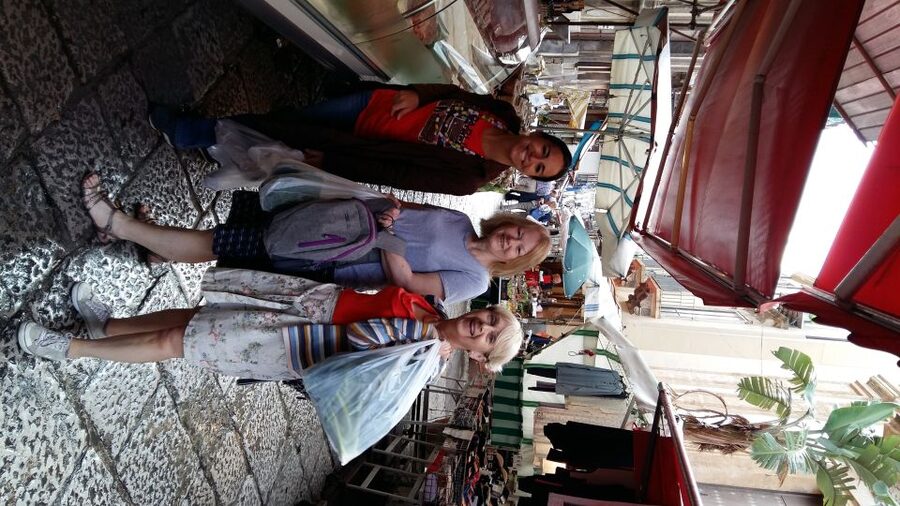
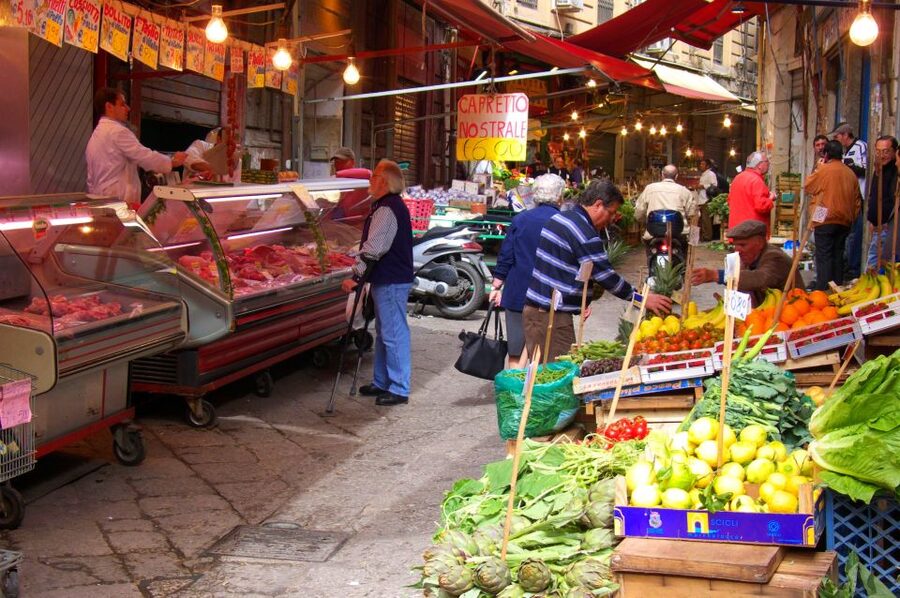
Your meeting point is Porta Carini, the entrance gate to Palermo’s Capo Market. That makes sense for this class. You begin where Sicilian cooking begins, among produce stalls, food shops, and everyday market life, rather than in a polished cooking studio.
The market visit is not simply a quick ingredient pickup. Patrizia uses the shopping trip to explain local products, traditional food customs, and the role of the market in Palermo life. You might stop at several shops as the group gathers what is needed for lunch. The exact menu can vary, since the ingredients depend on what is fresh and available.
That flexibility is a plus. Sicilian cooking is closely tied to the season, and a market meal should not feel like a fixed restaurant menu pulled from a freezer. You may see beautiful vegetables, local cheeses, olives, bread, fish, meat, or other foods used in the day’s recipes. The supplied experiences specifically mention local cheese, olives, bread, olive oil, and street food tastings during the market walk.
The market is also a good place to ask questions. If you want to know how a product is used at home, what makes a Sicilian ingredient different, or where locals shop and eat, this is the moment. The class has a cultural side that makes it useful even if you already know how to cook.
One practical note: Capo is a working market, not a quiet museum. You should expect a lively setting, uneven walking conditions, and time on your feet. Comfortable shoes are required, and the activity is not designed for people with mobility impairments.
More Cooking Classes in Italy
- Cooking Class and Lunch at a Tuscan Farmhouse with Local Market Tour from Florence
★ 5.0 · 4,831 reviews - Small Group Cooking Class & Market Food Tour in Florence
★ 5.0 · 1,574 reviews - Seaview Cooking Class & Taormina local flavors with Chef Mimmo
★ 5.0 · 665 reviews
The walk back through old Palermo
After shopping, you return to the apartment where the cooking takes place. The walk back offers views of old Palermo, including ancient and Baroque parts of the city. It is a small but worthwhile detail because you get a bit of neighborhood context between the market and the meal.
This portion is not presented as a separate sightseeing tour, so you should not book the class expecting a full city walk. Still, it gives the experience a stronger sense of place than a class held in an anonymous kitchen. You are moving through the city, buying food from local sources, then preparing it in a home-style setting.
I especially like this rhythm. Palermo can be overwhelming during a first visit, with grand churches, dense streets, and a lot of visual noise. A short walk tied to food helps you understand the city in a more ordinary way. You see where ingredients come from and how a market fits into daily life.
Cooking in Patrizia’s Palermo kitchen
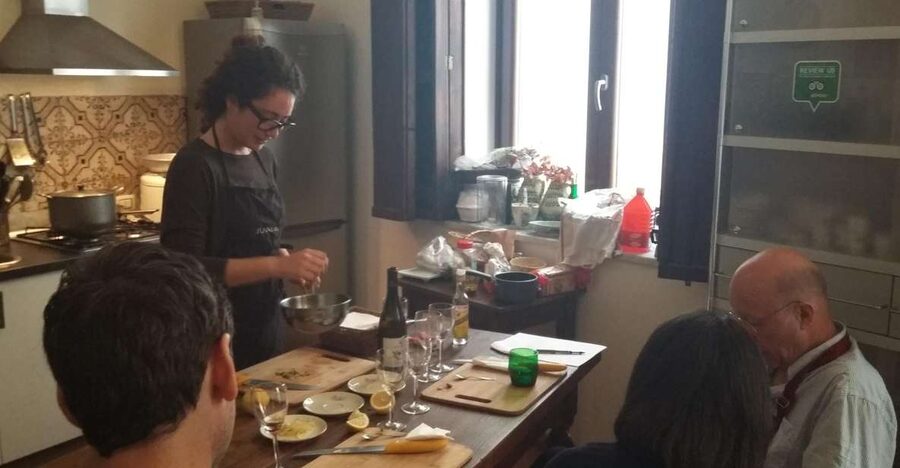
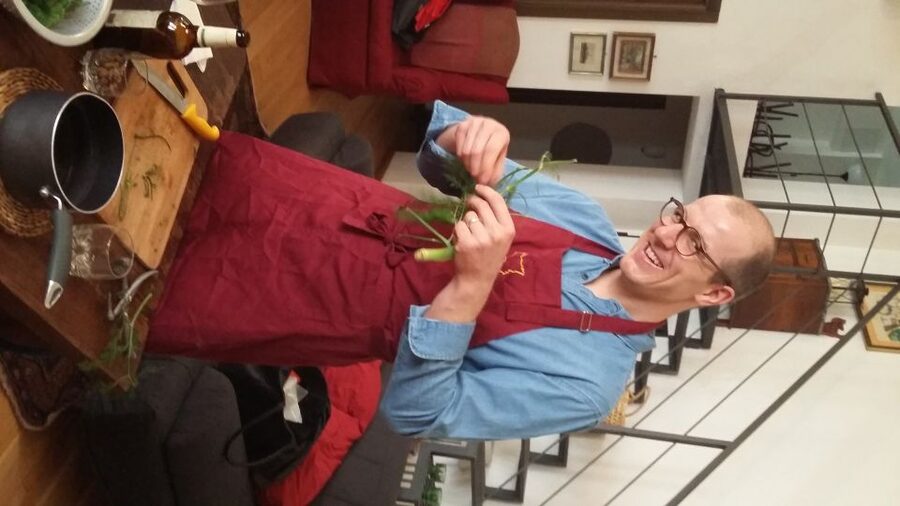
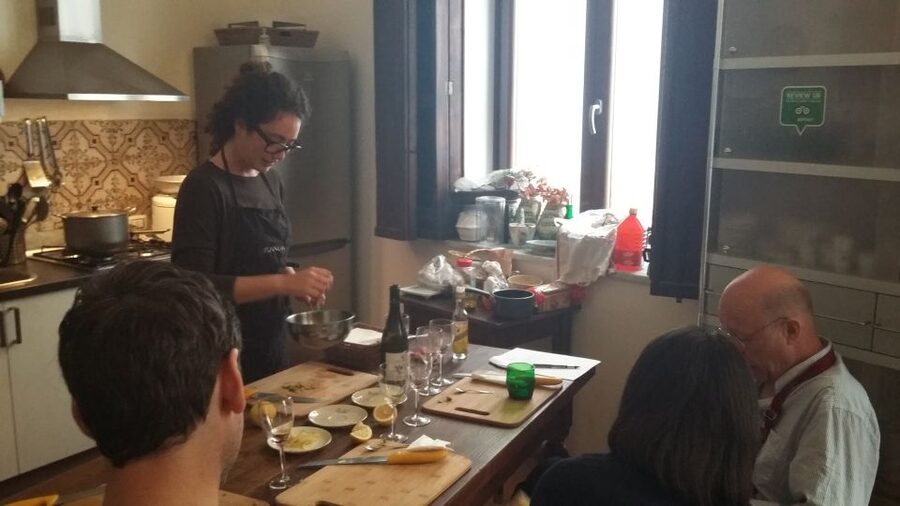
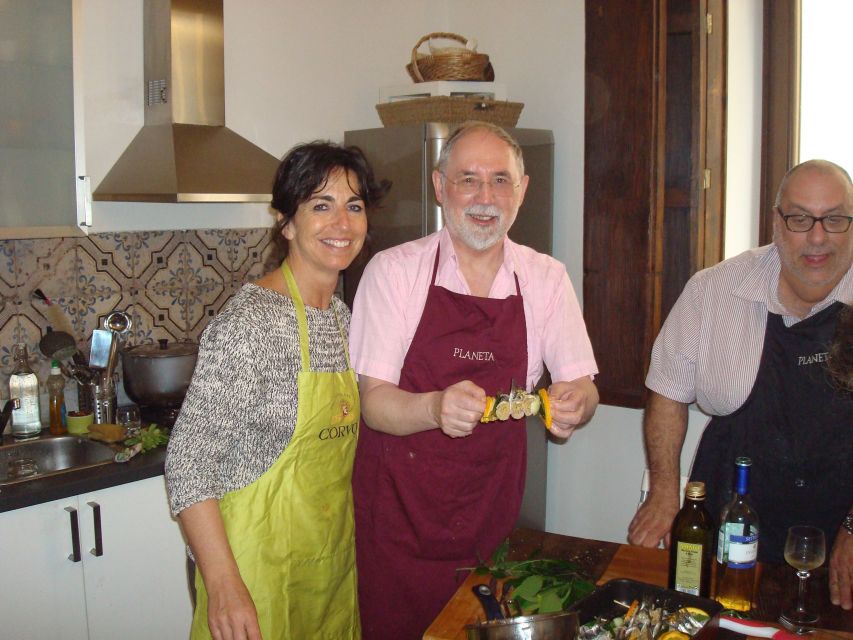
The kitchen is the main event. Patrizia guides the group through the recipes and supervises the work, helping as much or as little as you want. That last point matters. The class can be active if you want to chop, mix, shape, and cook, but it also allows a more relaxed approach if you prefer to watch, talk, and enjoy the wine.
Her style is informal rather than stern. The setting has been described as a lovely apartment with authentic Sicilian tiles, and the mood is closer to helping a friend prepare lunch than attending a strict professional lesson. Patrizia’s patience makes the class suitable for first-time cooks, while experienced cooks can ask about ingredients and local methods.
Do not expect a recipe lecture filled with technical terms. This is about preparing recognizable Sicilian food in an approachable way. You learn by doing, tasting, and watching how Patrizia handles each step.
That relaxed format has one limitation. If you are already a serious cook and want advanced knife skills, exact culinary theory, or a long period of independent practice, you may find the teaching lighter than expected. One person specifically wanted more cooking tips and more hands-on time for the better cooks in the group. The class works best when you value food, conversation, and local contact as much as technical instruction.
What you may cook: pasta, caponata, and dessert
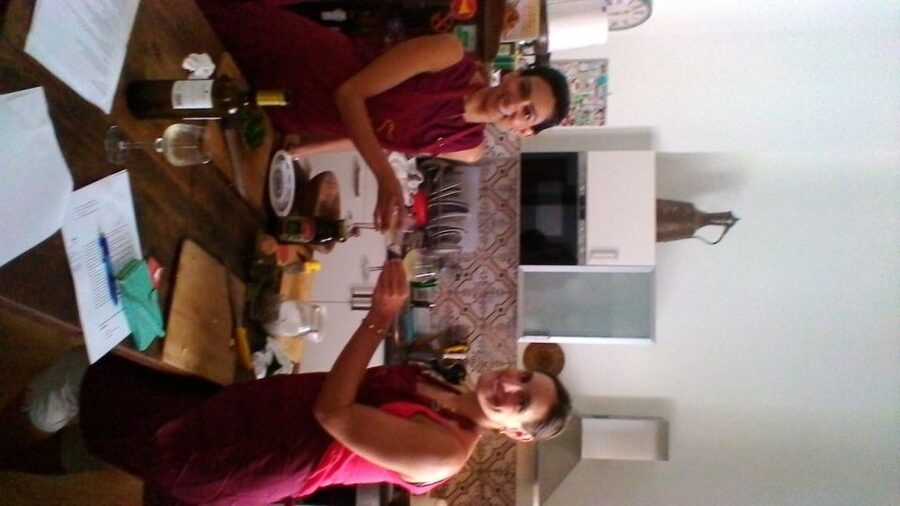
The meal is described as four courses, with a traditional Sicilian structure. You begin with a starter, then prepare a primo, usually pasta, followed by a second course featuring fish or meat. Caponata and a typical Sicilian cake are also part of the menu.
The precise recipes are not fixed in the information provided, and that is likely connected to the market shopping. One class prepared pasta with red pesto, breaded chicken, and cannoli with handmade filling. Another meal included local cheese, olives, bread, and olive oil while the group cooked.
Same place, a different set of stalls:
- Rome: Colosseum, Roman Forum & Trajan’s Market Exterior Tour
★ 4.3 · 2,038 reviews - Taste of Testaccio: Special 15 Year Anniversary Edition
★ 5.0 · 1,658 reviews - Bologna Food & Market Tour with 6 Tastings, Pasta, Wines & More
★ 5.0 · 1,328 reviews - Venice Street Food Tour with Local Guide with Local Food Market Visit
★ 5.0 · 822 reviews
The starter
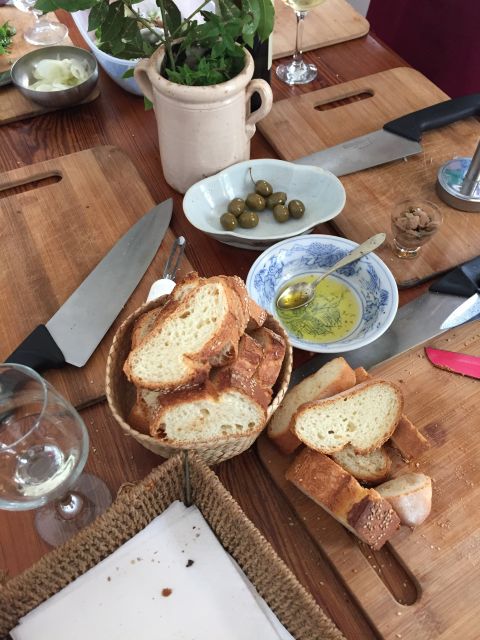
The opening course introduces you to simple Sicilian ingredients. Local cheese, olives, bread, and olive oil may appear as part of the meal or as something to enjoy while cooking. These foods are not fancy, but they show how much of Sicilian eating depends on good basic products.
This also gives you a gentle start while Patrizia organizes the kitchen. You can taste, ask questions, and settle into the group before the more involved cooking begins.
The pasta primo
Pasta is the central lesson for many people, and the class makes it part of a larger meal rather than a stand-alone demonstration. The red pesto mentioned in one menu gives you an idea of the kind of dish that may appear, though you should not assume that exact recipe on your date.
The useful lesson here is adaptability. You shop first, then cook what suits the ingredients. That approach is more faithful to home cooking than following a rigid menu regardless of the market.
The meat or fish second course
The second course can include fish or meat, depending on the day’s plan. A breaded chicken dish has been prepared during one class. Since the menu can change, ask ahead if you have a strong preference or dietary concern.
This part of the meal helps show the range of Sicilian cooking. The class is not only about pasta and pastries. You also work with a main protein and learn how it fits with the other courses.
Caponata
Caponata is a Sicilian vegetable dish made with eggplant, celery, green olives, and capers. It has a sweet-sour character and is one of the most useful recipes to take home because it works as a side dish, starter, or light meal.
The ingredients also tell a story about the island’s cooking. Vegetables, briny foods, and contrasting flavors come together in one dish. If you have only eaten caponata in restaurants, preparing it with Patrizia gives you a better sense of its texture and balance.
The Sicilian dessert
Dessert is typically a Sicilian cake, though cannoli with handmade filling has also appeared. That is a nice finish to the class because pastry and sweets are central to Palermo’s food culture.
The hands-on filling is especially appealing if you enjoy learning how familiar foods are assembled. You leave with more than a full stomach, since the recipes can be shared with you for use at home.
Sicilian wine with the meal
Wine is included, and it is not treated as an afterthought. You taste Sicilian wines chosen to suit the courses, with a wide selection available. Specific tasting notes and wineries are not fixed, but the class includes explanations about the wines and their production.
The wine adds to the meal, but it also changes the pace. This is a four-hour experience, not a rushed cooking demonstration. You cook, sit down, eat, and talk. House-made limoncello has also been served during a class, though it should not be treated as a guaranteed inclusion.
If you do not drink alcohol, the supplied information does not state what nonalcoholic options are available, so ask before booking. Smoking is not allowed during the activity.
Why the small group matters
With a maximum of eight people, the class has a better chance of feeling personal. Patrizia can answer questions, adjust the pace, and include both beginners and confident cooks without turning the kitchen into a crowd.
The experience can also work well for families and mixed-age groups. One booking included parents in their seventies, and the relaxed format suited the family. That said, the walking and standing requirements still matter, especially for anyone with limited mobility.
Solo participants may also find the format welcoming. One person attended alone and described a warm experience with food, wine, and conversation. Private cooking classes for smaller groups are available on request, with different starting times possible.
Price, timing, and practical value
The listed price is $203.91 per person for four hours. That is not a bargain cooking lesson, but it includes more than instruction. You receive the market visit, ingredients, lunch, wine tasting, a small group setting, and a local host who also provides cultural context.
I would judge the value by what you want from the morning or afternoon. If you only want to learn one pasta recipe, the price may feel high. If you want a meal, a market visit, a neighborhood walk, wine, and a personal connection with Palermo, the cost is easier to justify.
The experience lasts four hours, with starting times shown according to availability. It begins and ends at the meeting point by Porta Carini. Drop-off is not included, though it can be requested.
Vegetarian and gluten-free menus are available. Tell the provider about your needs before the class so the menu can be planned properly. The supplied information does not list other dietary restrictions, so ask about anything beyond those two options.
Cancellation is free up to 24 hours before the activity for a full refund. You can also reserve now and pay later, which helps if your Palermo plans are still shifting.
Who will enjoy this Palermo food class
I would recommend it most strongly if you:
- Want to meet a local host rather than attend a large demonstration
- Enjoy markets, home cooking, and long lunches
- Are new to Sicilian food and want context for the ingredients
- Like learning at a relaxed pace
- Are comfortable walking and standing
- Want a social activity for a couple, family, or small group
- Prefer recipes you can recreate after the trip
It is less suitable if you want a highly technical cooking school, a fixed menu, or a tour built around major monuments. It may also disappoint anyone hoping to spend most of the time cooking independently. Patrizia is there to guide the process, and the experience leaves room for conversation and wine.
The menu is flexible, which is a strength for seasonal cooking but a weakness if you need to know the exact dishes in advance. Contact the provider if a particular ingredient, course, or dietary requirement matters to you.
Should you book the Capo Market cooking class?
Yes, if you see food as a way to understand Palermo. The best features are the market-to-kitchen route, the small group size, Patrizia’s friendly instruction, and the chance to sit down afterward with dishes you helped prepare.
Book it early in your stay if possible. The market orientation and conversations about Sicilian food can help you make better choices for the rest of your time on the island. You will also have recipes and ideas to carry into later meals.
Skip it if your main goal is advanced culinary training or a quick activity with no walking. For everyone else, especially couples, families, solo food lovers, and curious first-time visitors to Palermo, this is a generous four hours of cooking, eating, and local life.
FAQ
Where does the cooking class meet?
Meet by Porta Carini, the entrance gate to Palermo’s Capo Market. The activity ends back at the meeting point.
How long does the experience last?
The cooking class and market tour last four hours. Starting times depend on availability.
What languages are available?
The live guide is available in English, Italian, and French.
Is lunch included?
Yes. Ingredients are included, and you eat the meal prepared during the class.
Is wine included?
Yes. The experience includes a tasting of Sicilian wines, with a wide selection available to pair with the courses.
Are vegetarian and gluten-free menus available?
Yes. Vegetarian and gluten-free menus are available. Make your dietary needs known when arranging the class.
Is the class suitable for people with mobility impairments?
No. The activity is listed as unsuitable for people with mobility impairments. Comfortable shoes are recommended because the experience includes the market visit and walking through Palermo.
More Half-Day Trips in Italy
- Taormina Half-Day Sicilian Cooking Class & Market Tour
★ 5.0 · 82 reviews - Half-Day Railway Market and Floating Market Tour in Thailand
★ 4.5 · 3,924 reviews - Dubai: Half-Day City Tour with Blue Mosque, Creek, and Souks
★ 4.8 · 3,059 reviews - Dubai Half-Day City Tour with Visit to Dubai Gold Souk
★ 4.0 · 1,741 reviews
Just added around Italy
- Cesarine: Market Tour & Home Cooking Class in Catania★ 4.0 · 6 reviews
- Small Group Market tour and Dining Experience at a Cesarina’s home in Brindisi★ 4.5 · 6 reviews
- Small Group Market tour and Cooking class in Brindisi★ 4.5 · 8 reviews
- Cesarine: Market Tour & Cooking Class at Local’s Home in Bologna★ 5.0 · 19 reviews
- Private Market Tour and Cooking Class in Bologna with Giovanna C★ 5.0 · 20 reviews
- One day tour Christmas markets Innsbruck – Bressanone – Vipiteno★ 4.5 · 11 reviews
- Food markets tour with a local!★ 4.5 · 39 reviews
- Cesarine: Market Tour & Home Cooking Class in Bari★ 5.0 · 5 reviews
Cooking Classes, compared.
Hanoi Cooking Class: Culture, Local Market & Meaning CSR Impact
Read our review →
5 Traditional Dishes Hanoi Cooking Class with Market Trip
Read our review →
Cooking Class and Lunch at a Tuscan Farmhouse with Local Market Tour from Florence
Read our review →
Cooking Class, Market & Thai Herbs Garden Tour
Read our review →
Authentic Cooking Class with Market & Farm Visit
Read our review →
Paella Cooking Experience & Boqueria Market Tour
Read our review →
Cooking Class Hoi An:Local Market, Basket Boat, Fishing & Cooking
Read our review →
Hoi An Cooking Class(Market,BasketBoat Crabfishing&Cooking Class)
Read our review →Browse the lists this tour appears in