
Review · BAGMATI ZONE, NEPAL
Oldest Local Market Walking Tour With Living Goddess Kumari
A living goddess in the middle of Kathmandu? This two-hour walk links Ason Market with Kathmandu Durbar Square and the Kumari Ghar, giving you a close look at daily commerce, Hindu and Buddhist traditions, and one of Nepal’s most unusual religious customs. I like the clear focus on local life, and I like that an English-speaking guide explains what you are seeing instead of leaving you to guess. The main consideration is cost: the $39 tour does not include the 1,000 Nepali rupee entry fee for Kathmandu Durbar Square.
The walk begins at the main gate of Chhaya Devi Complex in Thamel and returns there, so you do not need to arrange transport between the stops. Guide Santos has been praised for clear communication and detailed explanations, while the overall feedback points to a friendly, informative experience. Keep your expectations respectful and practical: seeing Kumari is a special opportunity, but the visit centers on observing a sacred tradition, not on a staged performance.
Key things to know before you book
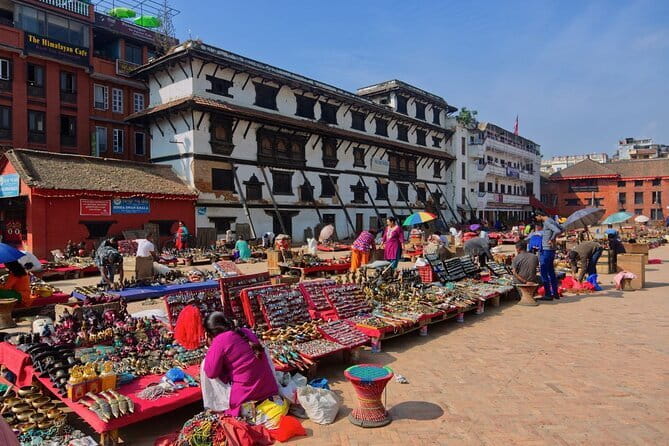
- Ason is the local-life highlight: Shop for spices, textiles, and souvenirs while walking through one of Kathmandu’s oldest market areas.
- Kumari Ghar offers a rare religious encounter: The Kumari is a prepubescent girl regarded as the living form of the goddess Taleju.
- Kathmandu Durbar Square adds major cultural context: Palaces, temples, and courtyards show how royal, Hindu, and Buddhist traditions meet.
- The tour lasts two hours: That makes it a useful introduction, though the schedule is too short for a slow, detailed exploration of every corner.
- The guide is part of the value: English commentary explains customs and buildings that can otherwise seem confusing.
- Budget for the entrance fee: Your $39 price includes taxes and bottled water, but not the 1,000 Nepali rupee Durbar Square admission.
A short walk with a large cultural story
This tour works because it connects three different sides of Kathmandu in a small area. Ason shows you the city as a place where people shop, work, and move through their day. Kathmandu Durbar Square brings in royal architecture and religious monuments. Kumari Ghar introduces a living tradition that may be unfamiliar even to well-traveled visitors.
I like this combination more than a tour that only points at famous buildings. You get a sense of how the old city functions, then learn why its religious sites matter. The walk is not only about taking photographs. It gives you a basic framework for understanding Hinduism, Buddhism, and the close ties between faith and public life in the Kathmandu Valley.
The $39 price is reasonable if you value a guide. It covers the English-speaking guide, government taxes, VAT, and a bottle of mineral water. You still pay separately for the 1,000 Nepali rupee entrance fee, and meals and drinks are not included. For a two-hour introduction, the cost is less attractive if you prefer to wander independently, but it makes better sense if you want explanations and a fixed route.
More Farmers Market Tours in the world:
- Hanoi Cooking Class: Culture, Local Market & Meaning CSR Impact
★ 5.0 · 5,147 reviews - Cooking Class and Lunch at a Tuscan Farmhouse with Local Market Tour from Florence
★ 5.0 · 4,831 reviews - Chef Guided Food Tour of Pike Place Market
★ 5.0 · 3,733 reviews
Starting at Chhaya Center in Thamel
The meeting point is the main gate side of Chhaya Devi Complex at Thamel, also referred to as Chhaya Center. This is useful for anyone staying in Thamel because the tour begins in a familiar, central part of Kathmandu rather than requiring a long transfer.
You should arrive with enough time to locate the main gate. The supplied information does not give an exact meeting time, so you need to check the available starting slots when booking. The route returns to Chhaya Center, which keeps the outing simple and avoids figuring out a separate ride back after the walk.
Because transportation is not listed as part of the experience, you should think of this as a walking tour from start to finish. Wear comfortable shoes and expect the most value from paying attention to the guide rather than rushing from one photo stop to the next.
Ason Market: Kathmandu in working clothes

Ason is the most everyday part of the route. This old market area is known for shops, stalls, traditional buildings, and goods used by local people. You can expect to see spices, textiles, and souvenirs among the many small businesses.
I like Ason because it gives you a practical look at Kathmandu. A monument can tell you about a city’s past, but a market shows how the city operates now. The goods on sale also help explain Nepal’s trading culture and the daily importance of household, religious, and personal items.
Do not expect a quiet open-air museum. Ason is a market area, and the streets are active. That is part of its appeal, but it can also make the walk feel crowded or quick. The two-hour schedule means you are likely to see the market as part of a guided route, not spend long periods comparing spices or shopping for textiles.
If you want souvenirs, this is the place to pay attention. Still, the experience is not presented as a dedicated shopping tour. Your guide’s explanations are more important than finding the lowest price on an item. Ask questions if you want help understanding what you are seeing, but keep the group moving and respect the daily work of the shopkeepers.
Kathmandu Durbar Square and its royal setting
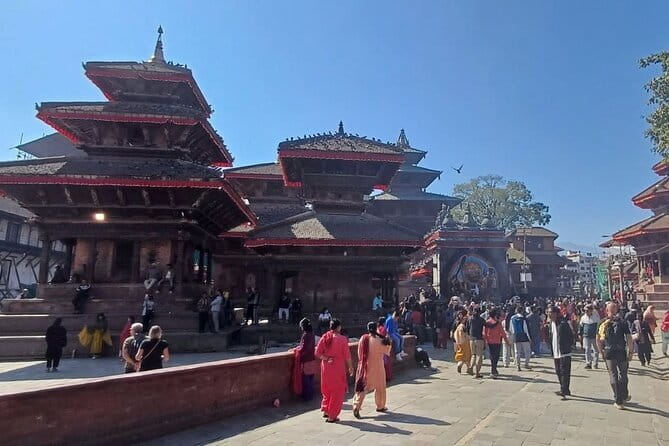
Kathmandu Durbar Square is the main historical stop. It sits in the heart of Kathmandu and contains palaces, temples, and courtyards. Together, these buildings reflect the political and religious importance of the Kathmandu Valley.
The square is useful for putting Nepal’s culture into context. You are not simply looking at old walls. The palaces point to royal power, while the temples and courtyards show how public spaces were shaped by religious practice. The tour also presents Hinduism and Buddhism together, which is important in understanding Kathmandu’s sacred places.
The entrance fee is 1,000 Nepali rupees and is not part of the tour price. Include that in your budget before you book. The separate fee may feel inconvenient, but it supports access to one of Kathmandu’s best-known heritage areas.
Two hours is enough for a guided introduction to the square, especially when Ason and the Kumari visit are included. It is not enough for an unhurried examination of every temple, palace, and courtyard. If you enjoy architecture and want extensive time for photographs, you may wish to return on your own after the tour.
The guide’s role matters most here. Kathmandu’s religious buildings can be hard to read without background. A carving, courtyard, or temple may look decorative at first, while a guide can explain its place in Hindu or Buddhist practice. The strongest praise for this experience focuses on detailed explanations and clear communication, which is exactly what you need at a complex site like this.
More Market Walking Tours in the world:
- Bangkok: City Highlights Temple and Market Walking Tour
★ 4.5 · 3,990 reviews - Tokyo Tsukiji Fish Market Food and Culture Walking Tour
★ 5.0 · 3,184 reviews - Marrakech: Ben Youssef, Secret Garden, & Souks Walking Tour
★ 4.6 · 2,802 reviews - Marrakech: Colorful Medina Souks Guided Walking Tour
★ 4.7 · 2,470 reviews
Meeting the Kumari at Kumari Ghar
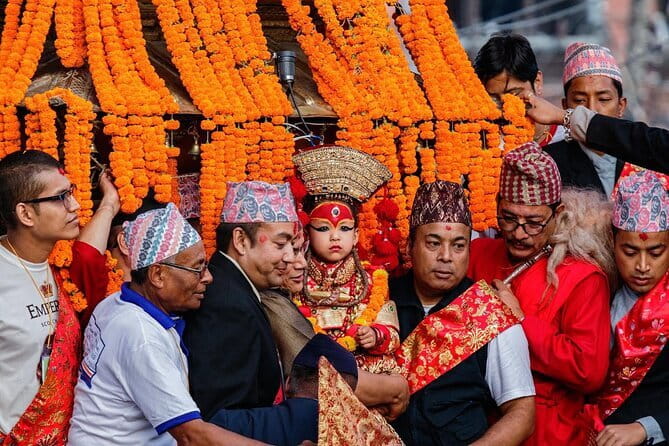
The Kumari is the central reason many people choose this walk. In Nepalese tradition, the Kumari of Kathmandu is a prepubescent girl regarded as the living embodiment of Taleju, a goddess with an important place in the country’s religious beliefs. She resides in the Kumari Ghar, located in the Kathmandu Durbar Square area.
For you, this is not a standard museum visit. The subject is a living person and a sacred role, so the right attitude is quiet attention and respect. The point is not to treat the Kumari as an oddity. The value lies in seeing how a centuries-old religious tradition continues to shape a place in modern Kathmandu.
One visitor described the Kumari’s gaze as especially impressive and felt honored by the encounter. That reaction helps explain why this stop can be memorable even though it may be brief. You may see the Kumari from a designated area rather than interact with her directly. Follow the guide’s instructions and any rules about viewing or photography.
The information provided promises the opportunity to witness the Living Goddess, but it does not give a guaranteed viewing duration or explain exactly how long she appears. That is worth keeping in mind. The visit should be approached as a chance to observe a sacred tradition, not as a scheduled show with a predictable performance.
Hinduism and Buddhism in one compact route
One of the best features of the walk is its religious range. Ason introduces the practical side of local life, while Durbar Square and Kumari Ghar bring you into Nepal’s Hindu and Buddhist setting.
You do not need prior knowledge to benefit. An English-speaking guide explains the sites in context, and the comments from past bookings point to careful, detailed instruction. One guest specifically described the tour as very informative, while another praised Santos as an excellent communicator with strong subject knowledge.
That matters because Kathmandu’s religious traditions do not always fit into simple categories. This tour does not promise an academic course, but it gives you a starting point for noticing how temples, palaces, courtyards, markets, and living customs connect. I would choose this experience early in a Kathmandu stay, since the explanations can help you make better sense of later independent visits.
What the guide adds for your two hours
The tour is offered in English, with a live guide rather than an audio system or printed route. That gives you the chance to ask questions and adjust your attention as the walk progresses.
Santos is the only guide named in the supplied information, and his clear communication receives specific praise. Other comments also focus on friendly service and detailed explanations. Feedback came from people writing in English, Spanish, Japanese, and other languages, yet the common point was that the guide made the cultural material understandable.
You should not expect a private guide unless that is confirmed separately. No group size is provided, so the exact pace and amount of individual attention may vary. The two-hour limit also means the guide must balance Ason, Durbar Square, and Kumari Ghar carefully.
For me, that is the main reason to book rather than walk the route alone. You can find the market and square without assistance, but understanding the Kumari tradition and the religious setting is harder without explanation. The guide turns a collection of old buildings and busy streets into a connected story.
What is included, and what you still pay
The tour includes:
- An English-speaking guide
- Government taxes and VAT
- One bottle of mineral water
You pay separately for Kathmandu Durbar Square entry, listed at 1,000 Nepali rupees. Meals, other drinks, and personal expenses are also excluded.
The included water is a small but useful touch during a walking tour. Do not expect lunch or refreshments to be arranged, so eat beforehand or plan food after returning to Thamel. The route itself is short, but Ason and the square are places where you may want time to browse or pause, and the tour price does not cover anything you buy.
The reserve now and pay later option can help if your Kathmandu plans are still changing. You can also cancel up to 24 hours in advance for a full refund. These terms make the booking less risky, though you still need to check available starting times before committing.
Who will get the most from this tour
I would recommend this experience to you if you want a compact first look at Kathmandu’s old center and prefer having cultural details explained as you walk. It is especially suitable for first-time visitors, people interested in religion and architecture, and anyone curious about the Kumari tradition.
It also works well if you are staying in Thamel and want a short outing that begins and ends nearby. The two-hour length leaves room for other plans, though you should not expect a full-day study of the city.
You may want to skip it if you dislike guided walks, have already spent substantial time at Ason and Kathmandu Durbar Square, or want a slow shopping trip. The separate Durbar Square fee also makes the total cost higher than the headline price.
Should you book the Kumari and Ason walk?
Book it if you want clear cultural interpretation in a short format, especially if the Kumari is a major reason for visiting Kathmandu. The combination of Ason Market, Kathmandu Durbar Square, and Kumari Ghar gives you more range than a single monument tour, and the guide’s explanations are the strongest part of the experience.
Before booking, budget the extra 1,000 Nepali rupees for entry and accept that the Kumari viewing may be brief. If those conditions suit you, this is a practical, focused way to begin understanding Kathmandu’s markets, sacred places, and living traditions.
FAQ
Where does the tour begin?
It begins at the main gate side of Chhaya Devi Complex, also called Chhaya Center, in Thamel, Kathmandu.
Where does the tour finish?
The tour returns to Chhaya Center in Thamel.
How long does the tour last?
The tour lasts two hours.
What language is the tour offered in?
The live tour guide speaks English.
Is Kathmandu Durbar Square entry included?
No. The entrance fee is 1,000 Nepali rupees and must be paid separately.
Is bottled water included?
Yes. One bottle of mineral water is included.
Are meals and drinks included?
No. Meals, beverages, and personal expenses are not included.
Can I cancel for a full refund?
Yes. You can cancel up to 24 hours in advance for a full refund.
Can I reserve now and pay later?
Yes. The reserve now and pay later option lets you hold a place without paying at the time of booking.
Just added around the world
- Half-day Dandan Noodles Cooking Class with a Local Market Visit★ 5.0 · 8 reviews
- Three-Hour Private Chengdu Tea Wholesale Market Tour★ 5.0 · 4 reviews
- 3-Hour Herbal Wholesale TCM Market and a Local Wet Market Tour★ 5.0 · 4 reviews
- Moroccan Cooking Class with a Local Family & Market Visit★ 5.0 · 16 reviews
- Charleston International Sweet Treats & Historic City Market Tour★ 5.0 · 22 reviews
- Chania Old Town, Public Market and Chrisopigi Monastery Tour★ 4.5 · 6 reviews
- Chania: Old Town, Public Market, Hill of Prophet Elias, Agia Triada★ 5.0 · 35 reviews
- Cesarine: Market Tour & Home Cooking Class in Catania★ 4.0 · 6 reviews
Local & Farmers Market Tours, compared.
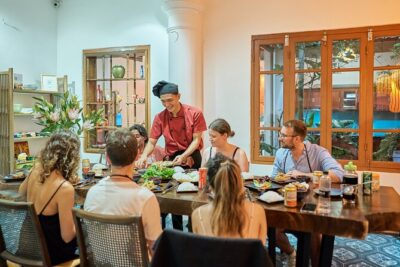
Hanoi Cooking Class: Culture, Local Market & Meaning CSR Impact
Read our review →
Cooking Class and Lunch at a Tuscan Farmhouse with Local Market Tour from Florence
Read our review →
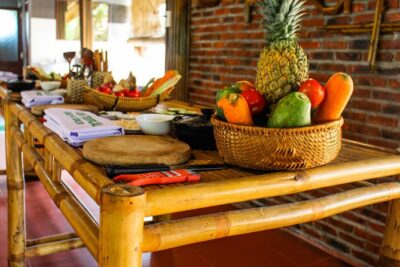
Cooking Class Hoi An:Local Market, Basket Boat, Fishing & Cooking
Read our review →
London Bridge & Borough Market Food Tour with 7 Authentic Dishes
Read our review →
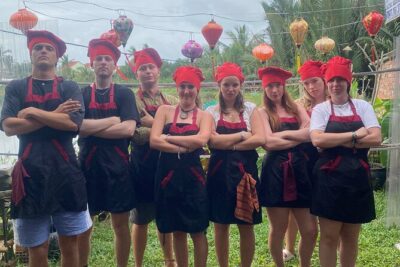
Hoi An Cooking Class(Local market,Basket Boat,Fishing & Cooking)
Read our review →
Browse the lists this tour appears in