
Review · MOROCCO
Essaouira: Sqala du Port, Medina Ramparts & Fish Market Tour
Essaouira rewards curious walkers. This three-hour tour links the UNESCO-listed Medina, old Jewish Quarter, port, and sea walls while a local guide explains the city’s Arab, Berber, Jewish, Portuguese, and European influences. I especially like the mix of major sights and small workshops, plus the chance to see thuja wood carving and silver work without wandering blindly through the lanes. The main drawback is that the tour involves plenty of walking on uneven streets and is not suitable for people with mobility impairments.
I also like the relaxed pace and personal feel. Guides such as Aziz and Zaid are praised for answering all kinds of questions, adjusting the walk to suit a group, and giving practical advice about food, shopping, and places to return later. The fish market depends on conditions, too, so poor weather may affect that part of the visit.
Key points at a glance
- Port fortifications first: See the cannons and Atlantic views from Sqala du Port, an 18th-century bastion.
- A useful first-day orientation: The route covers the Medina, Mellah, markets, ramparts, and harbor in one compact walk.
- Real craft demonstrations: Watch artisans work with thuja wood, marquetry, and silver, with no stated pressure to buy.
- Personal guiding: English and French-speaking guides, including Aziz, Zaid, Rachid, Ahmed, and others, are known for answering questions and adapting the pace.
- A less familiar side of Essaouira: The old Jewish Quarter and Gnaoua musical tradition add context beyond the postcard views.
- Good value for couples and small groups: At $22 per person, the price is especially attractive when several people share the booking.
Why this walk makes sense in Essaouira
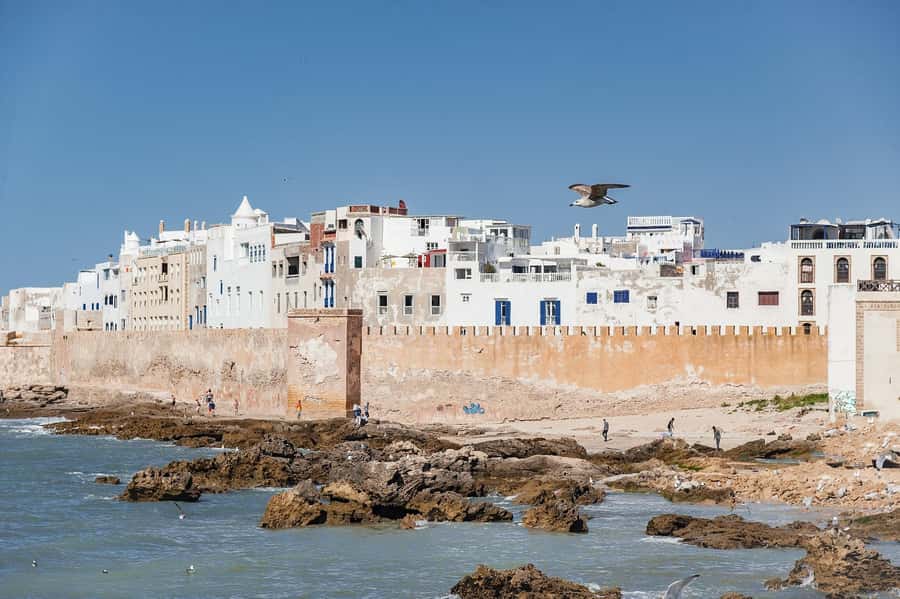
Essaouira is easy to enjoy and surprisingly easy to misunderstand. Its white walls, blue shutters, sea air, and calm streets make it feel simple at first glance. A guide helps you read the details: the shape of the fortifications, the position of the port, the old trading connections, and the way several communities shaped the town.
The route is not just a march from one photo stop to another. You move between the seafront, the Medina, the Mellah, artisan lanes, a market gate, and the working harbor. That variety gives you a practical sense of how Essaouira fits together.
I would book this near the beginning of a stay. Several people who enjoyed the walk later returned to shops, streets, and restaurants they had first discovered with the guide. That is the real value of a good orientation tour: it helps you feel at home in town instead of merely passing through it.
More Fish Market Tours in Morocco:
- Essaouira: Sqala du Port, Citadel, Fish Market & Medina Tour
★ 4.6 · 73 reviews - Tokyo Tsukiji Fish Market Food and Culture Walking Tour
★ 5.0 · 3,184 reviews - Tokyo: Tsukiji Fish Market Food and Walking tour
★ 5.0 · 1,724 reviews
Starting at Bab Sbaa and finding your guide
The standard meeting point is in front of Bab Sbaa Gate, one of the Medina entrances. The activity provider contacts you a day or two before the walk with the guide’s name, meeting details, and useful reminders.
If you stay in a riad inside the Medina, pickup can be arranged at the riad reception. This is handy because finding a specific doorway in the old lanes can be harder than finding the gate itself. Pickup is optional, and transportation is not part of the tour, so you should arrange your own journey to Essaouira and confirm the exact meeting plan before setting out.
The walk finishes at Bab Sbaa, which makes the ending convenient for anyone staying inside or near the old town. The supplied details also refer to two drop-off locations, but the clear standard endpoint is Bab Sbaa.
The Medina: 75 minutes among white walls and blue shutters
The longest part of the walk takes place in Essaouira’s Medina. Allow about 75 minutes for this section, though the exact pace can change if your group stops for photographs or asks many questions.
The Medina is the heart of the experience. Whitewashed façades and blue shutters give the streets their familiar look, but the guide adds the detail you cannot get from a quick stroll. You hear about the town’s trade, its changing rulers, its maritime role, and its mix of Arab, Berber, Jewish, and European traditions.
I like the way this portion leaves room for questions. Zaid is repeatedly praised for explaining both major events and small architectural details, while Aziz is described as warm, patient, and proud of his home city. Rachid and Ahmed have also been praised for adjusting the walk around individual interests.
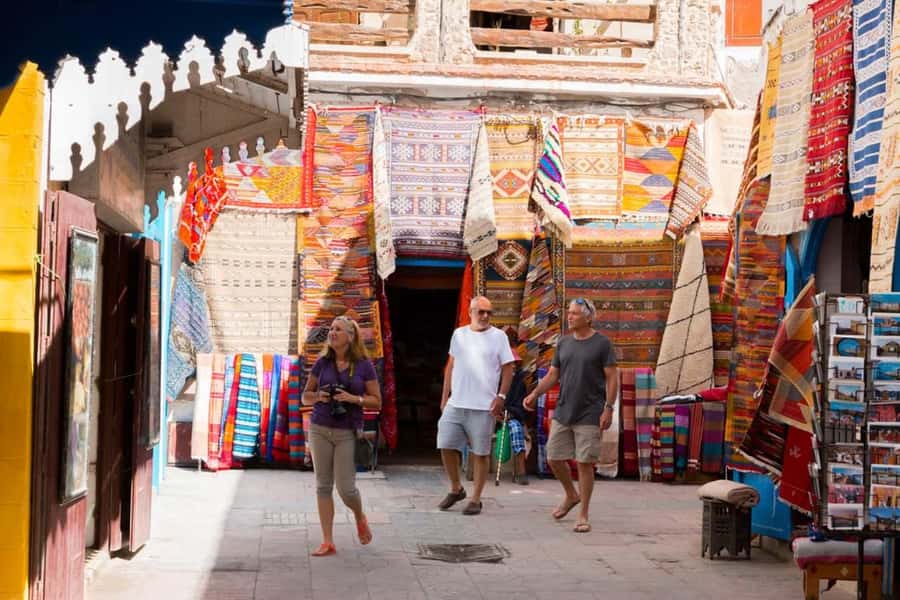
The lanes contain workshops selling or displaying carved wood, marquetry, textiles, and other crafts. The strongest part is not simply seeing finished objects on shelves. You may also be introduced to the work itself, including the cutting, shaping, and decoration of thuja wood and the making of silver pieces.
You should remember that artisan visits can naturally lead to shopping opportunities. The feedback supplied for this experience repeatedly notes that guides did not force purchases, but you should still decide in advance how much browsing and buying you want to do. The guide can help you compare quality and understand what you are seeing, which is more useful than simply being led to a shop.
The Mellah: a quieter chapter of the city
The old Jewish Quarter, known as the Mellah, receives about 30 minutes. This is one of the most worthwhile stops because it adds a social layer to the tour.
Here, the guide explains how Jewish and Muslim communities lived alongside one another for centuries and points out the remains of that shared past in the area’s architecture and stories. The visit helps correct the idea that Essaouira is only a seaside resort with a photogenic harbor.
Some tours pass through this neighborhood quickly. On this walk, it has a defined place in the route, and guides have taken visitors to a synagogue and explained local customs, religious history, and daily life. The exact interior access may vary, so treat the synagogue visit as something that may be included rather than a guaranteed formal admission.
This stop is especially good for anyone interested in Morocco’s different communities and the way trade towns develop through contact between cultures. It also gives the walk a calmer rhythm before the market and port sections.
A few more market tours around Morocco worth a look
- Marrakech: Bahia Palace, Saadian Tombs, Souk and Medina Tour
★ 4.7 · 4,974 reviews - Marrakech: Ben Youssef, Secret Garden, & Souks Walking Tour
★ 4.6 · 2,802 reviews - Marrakech: Colorful Medina Souks Guided Walking Tour
★ 4.7 · 2,470 reviews - Marrakech: Traditional Moroccan Cooking Class & Market Visit
★ 4.8 · 1,861 reviews
Bab Doukkala Marketplace and the craft tradition
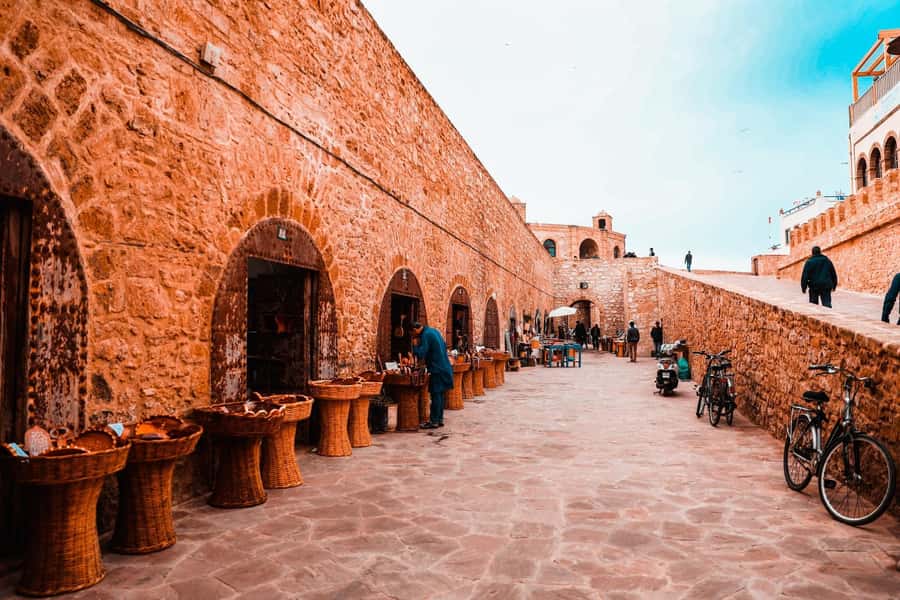
The route then reaches the Marketplace at Bab Doukkala for roughly 30 minutes. This is a useful place to watch ordinary local activity rather than only set-piece sights.
A market visit with a local guide can save you from missing the point of what you are seeing. The guide can explain which products are local crafts, how woodwork fits into Essaouira’s identity, and where silver and carved goods are made. Several guides have taken groups to workshops where artisans demonstrate their skills.
Thuja wood is one of the city’s signature crafts. You might see furniture, boxes, panels, and detailed carvings, with marquetry used to create patterned surfaces. The attraction is the labor and precision behind the object, not just the finished souvenir.
I appreciate that the walk leaves free time for places that catch your eye. If you are buying, ask about the material, how the item was made, and how to pack it safely. Do not feel obliged to purchase simply because a workshop is part of the route. The best use of this stop is learning what makes a piece distinctive.
Sqala du Port: cannons, Atlantic air, and film connections
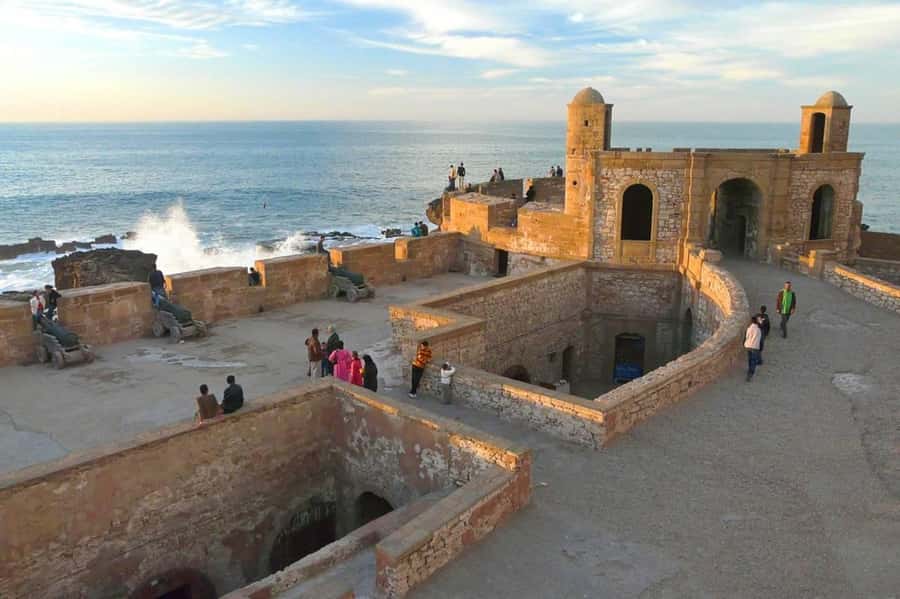
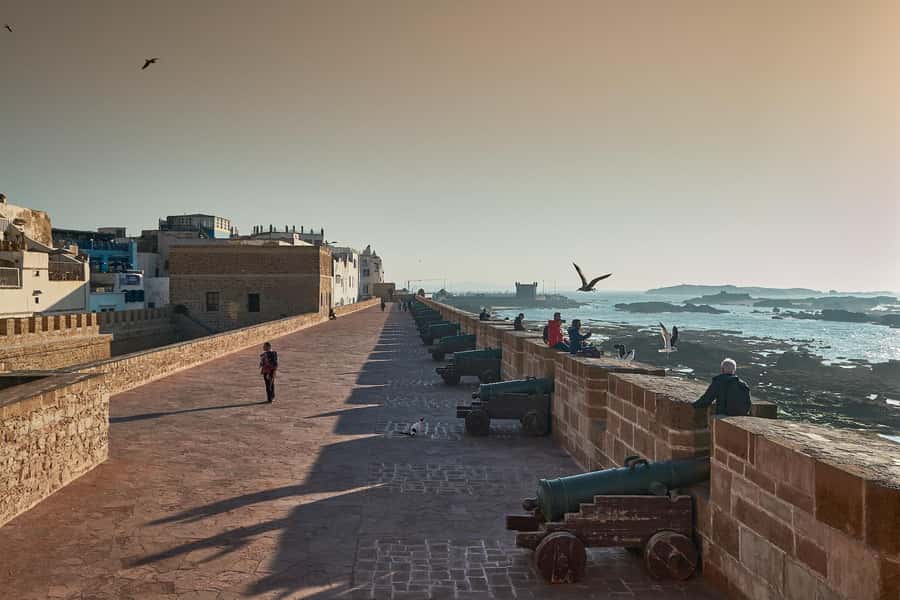
The Sqala du Port receives about 40 minutes and provides the tour’s strongest set of sea views. This 18th-century bastion is lined with cannons and looks across the Atlantic from the edge of the harbor.
The fortification makes more sense when you hear why Essaouira needed it. The town’s position gave it strategic importance, and its port connected the city to wider maritime trade. From the ramparts, you can see how the defensive walls and harbor worked together.
Bring water, sunglasses, and shoes that feel secure on stone surfaces. The ocean air can make the waterfront feel cooler than expected, and the light is strong. You will want time for photographs, but do not spend the entire stop looking through your phone. The value here is the combination of view, defensive design, and the guide’s explanation of the city’s past.
The walk also includes stories about productions filmed in Essaouira, including Game of Thrones and Othello. These details are a pleasant extra rather than the main reason to book. They give familiar scenes a local setting, but the fortifications and port matter even if you have never watched either production.
The fish market and the working harbor
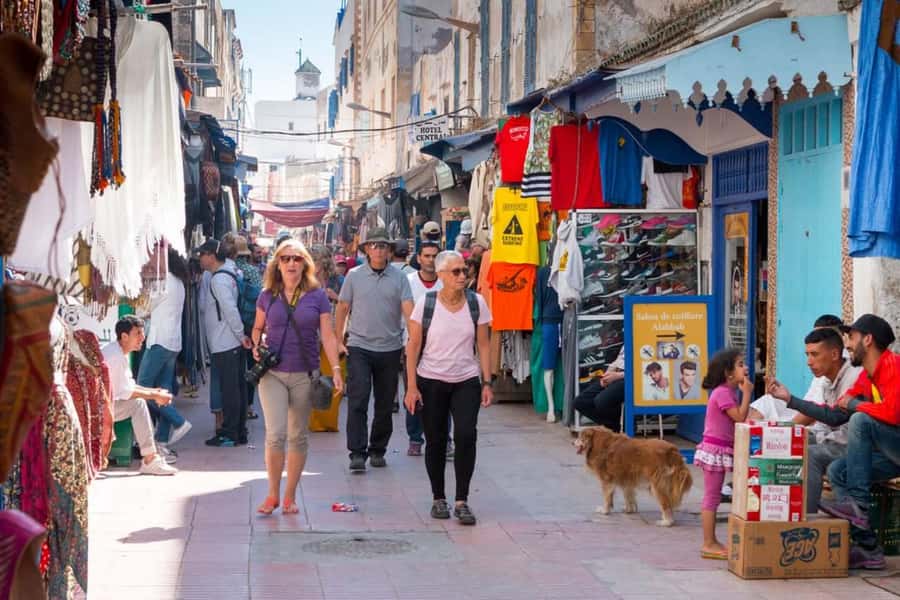
The final major stop is the fish market, planned for about 30 minutes. This is where the polished Medina gives way to a more practical view of coastal life.
You can expect to see the day’s catch being sold close to where it arrives from the sea. The surrounding port activity gives you a chance to observe local routines, seafood traditions, and the working side of Essaouira rather than only its crafts and architecture.
The fish market is also the least certain part of the day. Bad weather has caused this portion to be cancelled, and one visitor felt the reason was not explained clearly enough. If the market is important to you, ask your guide early in the walk if conditions will allow the visit.
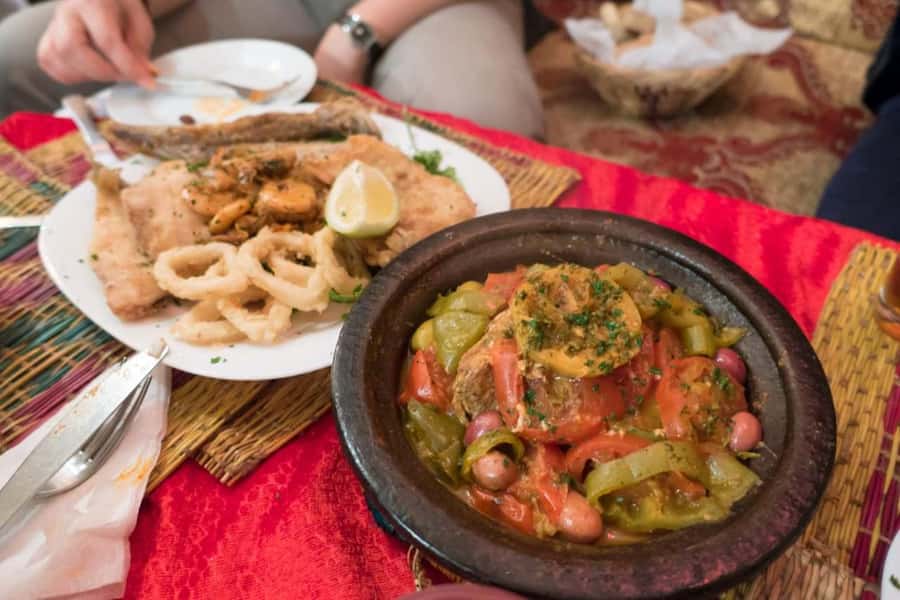
You may also get advice about local seafood restaurants. The tour does not include a meal, so any lunch or fish purchase is your own expense. Still, practical food recommendations can save you from choosing a restaurant only because it is closest to the port.
What the guides do particularly well
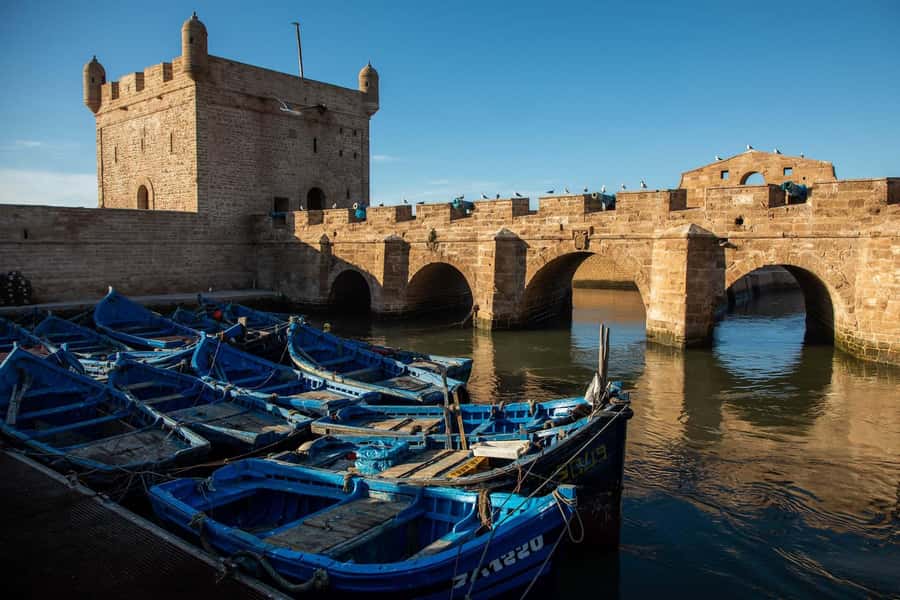
The strongest theme in the feedback is the quality of the guiding. Aziz is often described as warm, attentive, and proud of Essaouira. Zaid is praised for his patience, humor, English, and ability to explain everything from city history to everyday customs.
Other named guides include Rachid, Ahmed, Abdelaziz, Roshida, and Ian. The guide assigned to you may vary, but the service is offered in English or French. Some guides are local to Essaouira, and that local connection can make the walk feel more personal.
A good example of the approach comes from the way guides handle different walking speeds. One guide kept a slower pace for an older family member, while others adjusted the route around children, solo visitors, or specific interests. That flexibility matters because a three-hour city walk is much better when it does not feel like a race.
The tour can be private, and small bookings may sometimes feel private if other people do not join. That is not guaranteed, but it explains why the experience can feel unusually personal for a standard walking tour.
Price, timing, and who gets the best value
At $22 per person, this is strong value if you want history, orientation, and local context in one session. You are paying for a licensed local guide, free time at points of interest, and a route that covers several parts of the city. You are not paying for transportation, food, or entrance fees unless separately arranged.
Solo visitors should look closely at the final booking price. One person reported paying double and felt the cost was high for a solo booking, while the same price works better for two or more people. Couples, families, and small groups get the clearest value.
The advertised duration is three hours. One private walk ran longer, but you should plan around the stated time rather than assume an extension. Start times depend on availability, and the route may slow down for photographs, shopping questions, weather, or a group member who needs more time.
The tour is not suitable for people with mobility impairments. Even without a formal accessibility requirement, comfortable shoes are essential. Bring water and sunglasses, and consider the weather before relying on the fish market portion.
Should you book the Essaouira walking tour?
I would book it if this is your first day in Essaouira, if you want more than pretty streets, or if you prefer learning from a local person rather than reading signs alone. The combination of Medina, Mellah, workshops, ramparts, port, and fish market gives you a useful picture of the city in a short time.
I would hesitate only if you dislike walking, want a completely self-directed afternoon, or are booking alone and find the final solo price too high. I would also keep your expectations flexible about the fish market in poor weather.
For most visitors, this is a practical and friendly introduction. Ask for the guide’s name when you receive the WhatsApp reminder, mention your interests at the start, and tell the guide if you prefer more history, more craftwork, or a slower pace. That small bit of communication can turn a standard route into a much better personal tour.
FAQ
How long does the Essaouira walking tour last?
The tour is scheduled for three hours. The exact pace can vary depending on photographs, questions, group size, and the time spent at each stop.
Where does the tour meet?
The standard meeting point is in front of Bab Sbaa Gate. If you are staying in a riad inside the Medina, optional pickup can take place at the riad reception.
Is transportation included?
No. Transportation is not included. Pickup from a Medina riad may be arranged, but you need to confirm the meeting details with the activity provider.
Which languages are available?
The live tour is offered in English and French.
Is a private group available?
Yes. A private group option is available, and some small bookings may operate with only the booked party if other people do not join.
What should I bring?
Bring comfortable shoes, water, and sunglasses. The route includes walking through the Medina, markets, ramparts, and port area.
Can people with mobility impairments join?
The experience is listed as unsuitable for people with mobility impairments. The tour involves a substantial amount of walking through the old city and waterfront areas.
Just added around Morocco
- Moroccan Cooking Class with a Local Family & Market Visit★ 5.0 · 16 reviews
- Market Tour & Moroccan Cooking Class in Casablanca with Transfers★ 5.0 · 18 reviews
- Private Market Tour & Cooking Class in Casablanca with Transfers★ 5.0 · 20 reviews
- 5 am in Casablanca: Mosque, Medina, Beach , Souks , Coffee and more★ 5.0 · 11 reviews
- Casablanca Market and Street Food Walking Tour★ 5.0 · 3 reviews
- Half day tour : Agadir Goats in argan trees & Souk El Had Market★ 3.5 · 6 reviews
- Agadir city Tour with big Souk Elhad★ 5.0 · 5 reviews
- Paradise Valley & Gorge Adventure with Souk & Transfer★ 4.0 · 5 reviews
Fish Market Tours, compared.
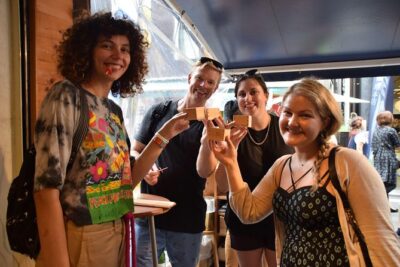
Tokyo Tsukiji Fish Market Food and Culture Walking Tour
Read our review →

Tokyo Sushi Making Class in Tsukiji with Professional Chef
Read our review →
Tsukiji Fish Market Guided Tour and Sushi Making with Pro Chef
Read our review →Tsukiji Fish Market Food and Culture Walking Tour
Read our review →
Tsukiji Fish Market: Street Food & Culture Walking Tour
Read our review →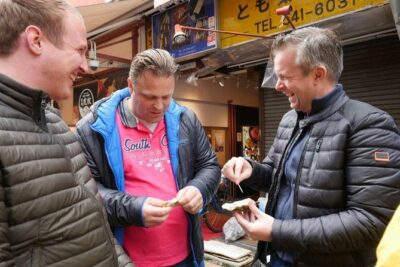
Tsukiji Fish Market Small-Group Food Walking Tour
Read our review →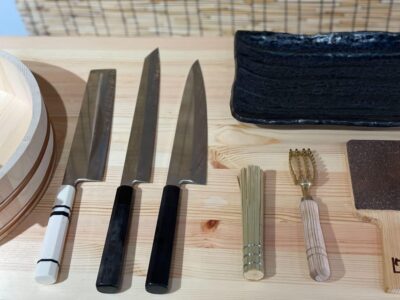
Tsukiji Fish Market Sushi Making Class with Pro Chef
Read our review →Browse the lists this tour appears in