
Review · BUCHAREST-ILFOV, ROMANIA
Bucharest: Hidden Markets Walking Tour with Tastings
Bucharest tastes better away from Old Town. This five to five and a half hour outing combines Romanian food and drink with overlooked neighborhoods, a tram ride, and stories about the city’s past. I like the generous tastings, especially mici, local cheeses, tuica, beer, and the warm Wallachian doughnut. I also like the small group, capped at 12, which gives guides such as Angelica, Alex, Daniel, and Michaela room to answer questions. The one drawback is the length: if you want a quick market visit, this is far more food, walking, and history than you need.
The tour is a particularly good fit for your first or second day in Bucharest. You get your bearings beyond the central sights, see how locals shop and eat, and travel by public transport instead of staying in a sightseeing bubble. Come hungry, though. Several people made the same mistake: eating a full breakfast before meeting the guide.
Key points at a glance
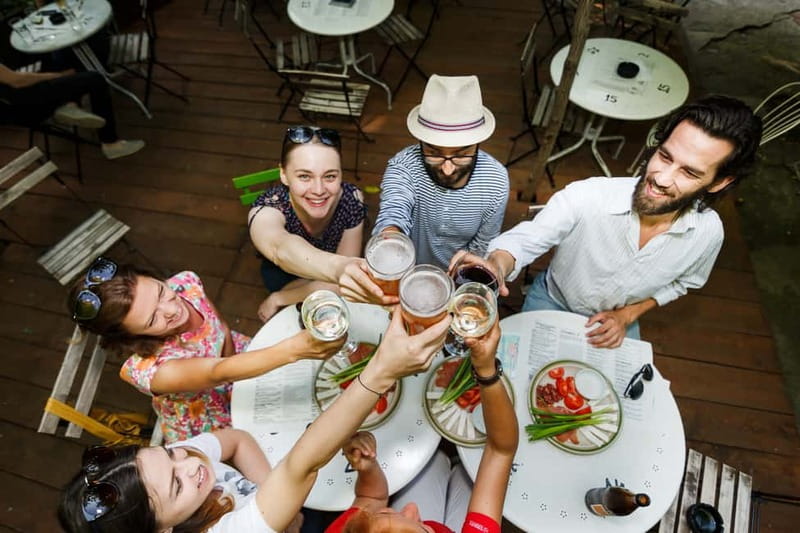
- Obor Market is the food centerpiece: Expect Romanian cheeses, sausages, seasonal produce, bread, dips, and the city’s classic mici with mustard.
- The history comes between the bites: The route links the National Theatre, Strada Batistei, the Armenian Quarter, Calea Moșilor, and Obor.
- Public transport adds local flavor: The tram ride through Communist-era Bucharest lets you see ordinary streets and neighborhoods from street level.
- The portions are generous: The platter, two mici, three beers or nonalcoholic drinks, fruit, and doughnut can easily replace lunch.
- Guides make the difference: Angelica, Alex, Daniel, Michaela, Bogdan, Elena, and others are praised for clear explanations and friendly conversation.
- Plan for a relaxed half-day: The route is generally flat, but you will be walking, standing, eating, and riding transit for several hours.
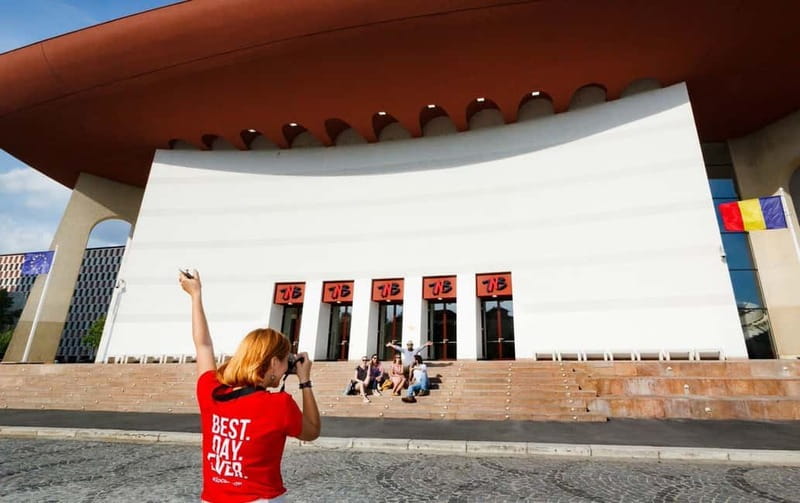
Starting at the National Theatre
The meeting point is on the stairs in front of the National Theatre, at Nicolae Bălcescu 2. If you use Uber, enter Bd. Nicolae Bălcescu 2 rather than relying on the venue name alone. That small detail can save you a short but annoying hunt around a busy central area.
The National Theatre gives the tour a useful starting point. You are not simply meeting at a random street corner. The guide begins with Bucharest’s wider story, helping you place the city’s modern center within Romania’s political and architectural past.
I like this opening because it avoids making food the whole point. You start with context, then walk into districts where the city’s history is visible in the buildings and street pattern. Guides are also happy to take questions, so this is a good time to ask about Romanian customs, the Communist period, or what you will be eating later.
More Market Walking Tours in the world:
- Bangkok: City Highlights Temple and Market Walking Tour
★ 4.5 · 3,990 reviews - Tokyo Tsukiji Fish Market Food and Culture Walking Tour
★ 5.0 · 3,184 reviews - Marrakech: Ben Youssef, Secret Garden, & Souks Walking Tour
★ 4.6 · 2,802 reviews
Strada Batistei and a forgotten embassy
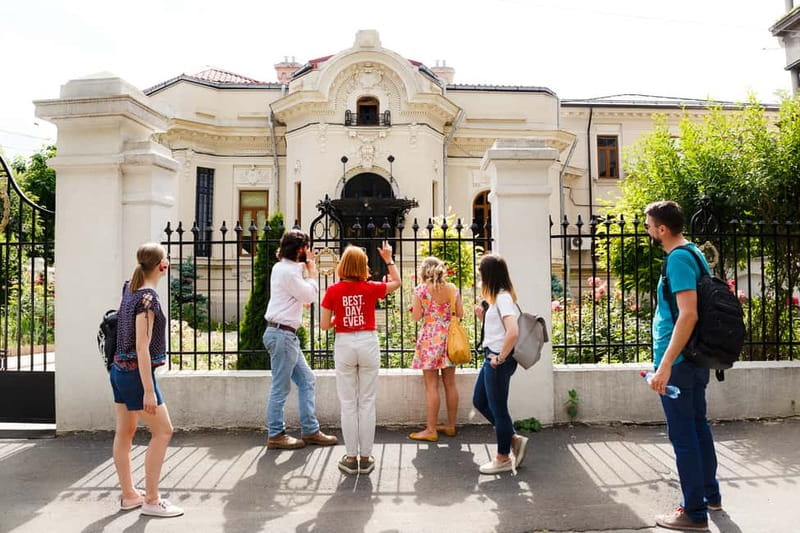
A short walk takes you toward Strada Batistei and Biserica Batiștei. This area was once compared with Paris’s Saint-Germain district, a reference that hints at Bucharest’s old taste for European culture, cafés, and cosmopolitan life.
The route also passes the former American embassy. Today it is a forgotten landmark rather than a grand visitor attraction, and that is part of its appeal. You get a reminder that cities often preserve history in awkward, overlooked places, not only in polished museums.
This stop is less about entering a major sight and more about learning to read Bucharest’s streets. The guide connects buildings, political changes, and everyday city life. Alex and Daniel are praised for making that kind of material easy to follow, while Angelica is especially appreciated for adding personal stories and answering unexpected questions.
Do not expect a formal museum tour at each stop. You are walking through an active city, with explanations delivered outdoors and along the route. Good weather will make this portion more pleasant, but the tour can still work in poor weather if you bring suitable clothing. One outing took place in terrible weather and was still described as enjoyable because the guide kept the pace comfortable.
The Armenian Quarter’s unusual mix
The Armenian Quarter brings one of the most interesting architectural changes on the route. Around the Armenian Church, European and Ottoman influences appear close together, giving you a more layered view of Bucharest than the usual central walking circuit.
This is where the tour’s food and history pairing makes sense. You are not just being told that Bucharest has several cultural influences. You are seeing those influences in the streets, then later tasting a cuisine shaped by Romanian traditions and neighboring cultures.
The church and surrounding streets are also a useful pause from the city center. You can look up at facades, notice changes in building style, and hear how neighborhoods developed. The route does not promise a long interior visit or a dedicated church service, so think of this as a guided neighborhood walk rather than a church tour.
Calea Moșilor and the tram ride
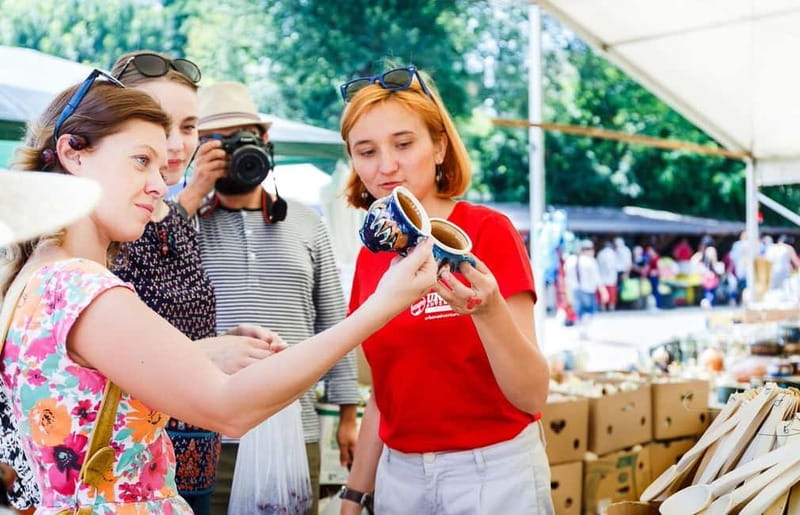
From the older neighborhoods, the tour moves toward Calea Moșilor and public transport. The tram ride is one of the strongest parts of the experience because it turns Bucharest itself into the moving backdrop.
You will see a side of the city that is easy to miss from a taxi or a standard center-only walking tour. The tram connects the historic streets with the more ordinary districts on the way to Obor. It also gives your feet a break after the first section.
The tram is not a luxury sightseeing vehicle. It is public transport, which means the experience depends on the day, the route, and the ordinary rhythm of the city. That is precisely why I like it. You are watching Bucharest as it functions, not as a staged attraction.
The supplied tour includes tram tickets, and some outings have included more than one public transport ride. Your guide handles the route and timing, so you do not need to work out the ticket system while keeping track of the group.
A few more market tours around the world worth a look
- Bangkok: Damnoen Saduak Market and Maeklong Railway Market
★ 4.5 · 26,723 reviews - The Old Siam: Damnoen Saduak and Maeklong Railway Market
★ 4.5 · 10,992 reviews - Dubai: Old Town, Creek, Museums, Souks, & Street Food Tour
★ 4.8 · 10,816 reviews - Bangkok: Train Market & Floating Market with Boat Ride
★ 4.7 · 9,547 reviews
Arriving at Obor Market
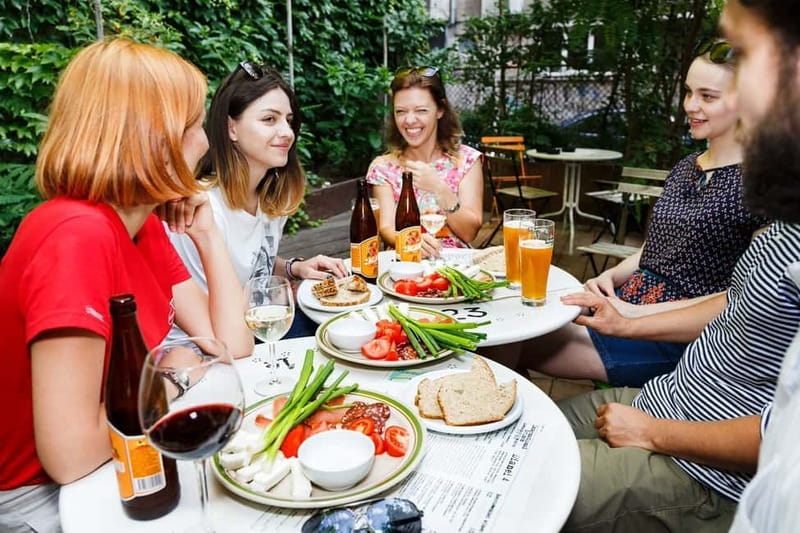
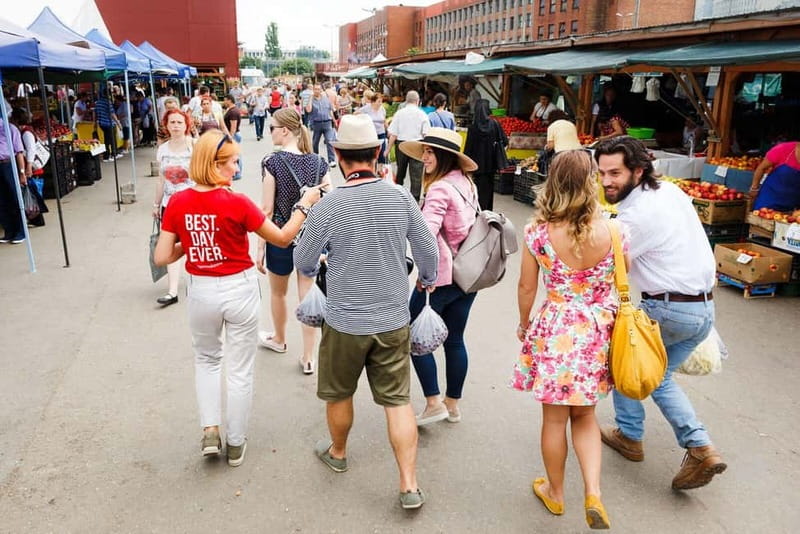
Obor Market is the culinary heart of the tour. It is Bucharest’s largest peasant market, and the atmosphere changes from architectural storytelling to shopping, sampling, and watching local trade in action.
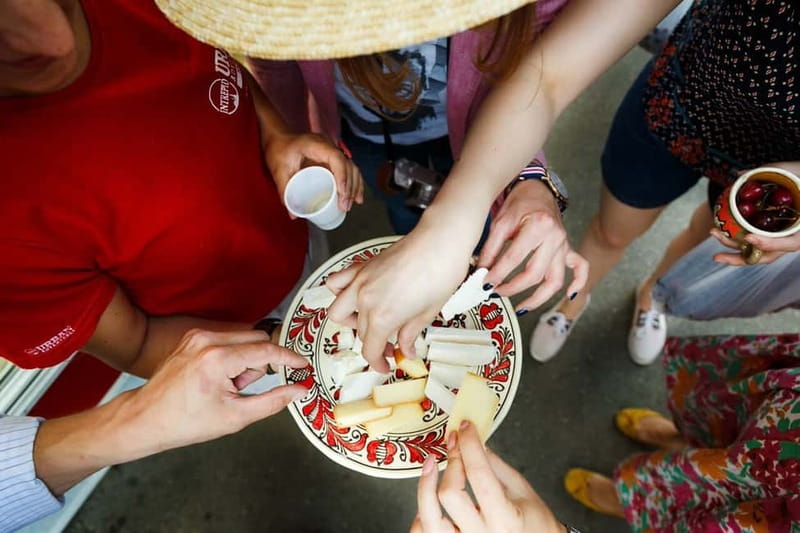
The first substantial tasting includes a shot of tuica, the Romanian fruit brandy, along with a peasant platter. Expect dips, sausages, local cheeses, seasonal vegetables, and homemade bread. The platter gives you a broad first taste rather than a single dish, which is helpful if Romanian food is new to you.
Tuica is strong, and the tour is clear about including only a shot. You can choose soft drinks, coffee, or tea instead of alcohol where offered. The same applies to the beer tasting later, so you do not need to drink alcohol to enjoy the food portion.
The market itself is worth attention between tastings. Look at the produce, cheeses, and other goods around you. Guides choose seasonal fruit and market items based on what looks best that day, so the exact selection may change. That flexibility is a good thing: it keeps the food connected to the actual market rather than a fixed display.
Mici, mustard, and cold beer
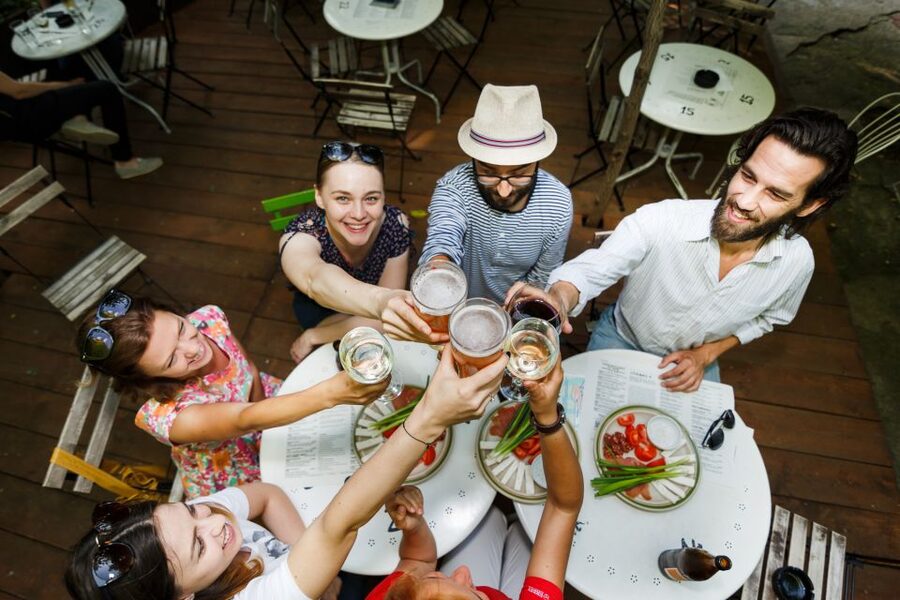
The famous Romanian mici are the next major bite. These are small grilled sausages, served here as two pieces with bread and mustard, alongside cold beer or a nonalcoholic drink.
For many people, this is the best food stop. The mici are simple, smoky, and filling, and the mustard supplies the sharp contrast they need. You are not receiving a tiny decorative sample. Combined with the earlier platter and cheese tasting, two mici make this a real meal.
Three beers are included overall, although the exact serving pattern can depend on the stops. If you do not drink, soft drinks, coffee, or tea are available. It is worth telling the operator about allergies or dietary needs at least 24 hours ahead. Vegetarian, vegan, and gluten-free needs can be accommodated according to the tour information.
There is one minor limitation to keep in mind. Market food is not a carefully controlled restaurant tasting menu, so preferences will vary. One dish mentioned in a tasting, paprika chicken with noodles, was less impressive than the other foods. The core offerings, especially the cheeses, mici, and doughnut, receive the strongest praise.
Finishing with a Wallachian doughnut
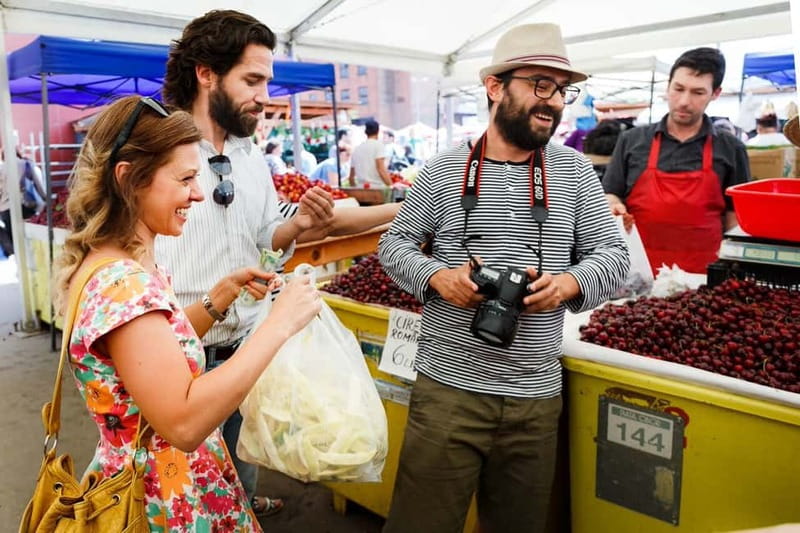
The final food stop is a warm Wallachian doughnut. It is a welcome sweet finish after the savory platter, cheeses, sausage, and drinks.
This is also where the generous nature of the tour becomes clear. You are unlikely to finish wishing there had been more food. Several people specifically advise skipping a large breakfast, and I agree. A small snack before the meeting point is sensible, but a full meal will dull your appetite before the market stops begin.
The ending location is Piața Unirii, which is useful for continuing your day. You can walk onward, use the city’s transport network, or simply stop for a rest after the long food crawl. The tour does not end back at the National Theatre, so note the finish point when planning your next activity.
How much walking and eating to expect
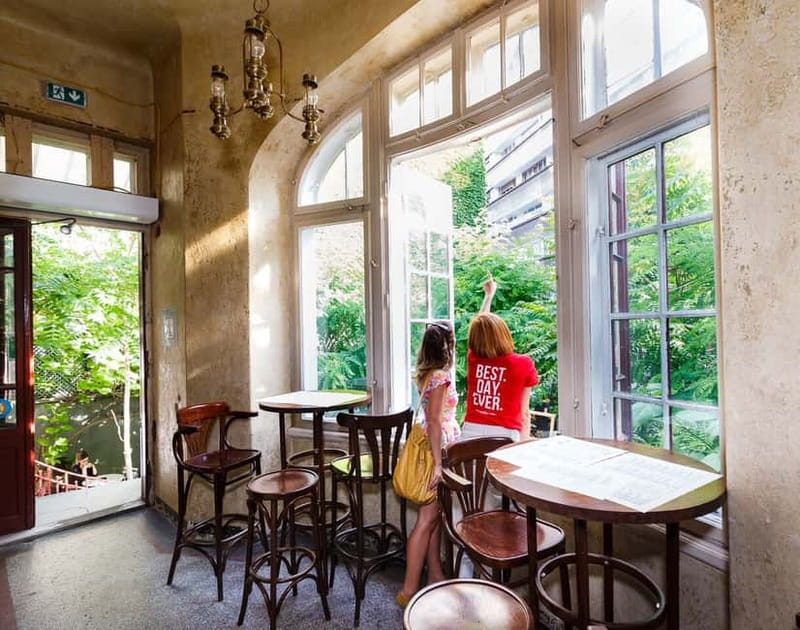
This is a walking tour, but the route is generally flat and has been described as manageable rather than strenuous. You will still be on your feet for a good part of five hours, with tram travel providing a break.
The pace is usually relaxed. Guides such as Michaela and Angelica are praised for handling timing well without rushing people through food or questions. That matters because a food tour can become unpleasant if every stop feels like a countdown.
The main physical challenge is not hills. It is the combination of walking, standing in market areas, boarding public transport, and eating steadily over a long stretch. Wear comfortable shoes and leave room in your schedule afterward.
Children under six are not permitted. The tour is also better suited to adults and older children who can manage a long outing with several food stops. Private groups are available if you want a more personal arrangement.
The value of $100 per person
At $100 per person, this is not Bucharest’s cheapest way to find lunch. The value comes from the combination of services rather than from any one food item.
Your price includes a live English-speaking guide, the walking tour, tram tickets, the market visits, the platter, local cheeses and produce, two mici, a street snack, a Wallachian doughnut, a shot of tuica, and three beers or nonalcoholic alternatives. You are also paying for five to five and a half hours of route planning and local explanation.
If you only want to eat mici and visit Obor, you can spend less on your own. You would then need to arrange the neighborhoods, identify the right foods, manage public transport, and understand what you are looking at. For a first visit, I think the price is reasonable if you value history, conversation, and a ready-made route.
The small group strengthens the value. With a maximum of 12, the guide can hear questions from everyone and keep the group together on public transport. Some departures have been much smaller, including one with only two customers and the guide, though you should not assume that will happen on your date.
The guides shape the experience
The food is important, but the guide is what turns this from a list of tastings into a useful introduction to Bucharest. The strongest praise goes to guides who combine city history with personal stories and practical answers.
Angelica is repeatedly described as warm, clear, and attentive. Alex is praised for explaining architecture and Romanian history in an engaging way. Daniel is known for a friendly manner and lively answers, while Michaela receives credit for handling logistics and timing smoothly. Bogdan and Elena are also singled out for local insight and approachable conversation.
Guide quality can vary from one departure to another, as it does on any group tour. The consistent pattern here is positive: the guides are English-speaking, friendly, and ready to explain both past events and present-day life. That makes the tour suitable if you want more than a food checklist.
Who should book this Bucharest tour
I would choose this tour if you want to see beyond the central old town, eat a proper spread of Romanian food, and learn how Bucharest’s neighborhoods fit together. It is especially useful early in a stay because the guide can help you understand where you are and suggest ideas for later.
It suits solo visitors too. The small group creates an easy setting for meeting people, and several outings developed a friendly group mood by the end. Couples and friends will also appreciate the mix of walking, public transport, food, and conversation.
You may want another type of activity if you dislike alcohol, market settings, long walking tours, or shared food stops. Nonalcoholic choices are available, but alcohol is part of the advertised tasting structure. Likewise, this is not a polished restaurant meal. It is a local food route tied to a working market.
Book with dietary needs in mind. Vegetarian, vegan, and gluten-free requests can be handled when given at least 24 hours ahead. Also remember the age limit: children below six cannot join.
Should you book it?
Yes, if you want a generous, practical introduction to Bucharest rather than a quick Old Town stroll. The strongest reasons are the excellent food quantity, the ride through ordinary city districts, the Armenian Quarter’s architecture, and the guides’ ability to connect small details with Romania’s larger story.
I would book it near the start of your visit and avoid a heavy breakfast. Choose a day with decent weather if you can, since outdoor walking and market time are more enjoyable in the sun. For $100, you receive a full half-day of food, transport, and local explanation, making this a good choice for anyone who wants to eat well and understand more of Bucharest at the same time.
FAQ
Where does the tour begin?
It begins on the stairs of the National Theatre in front of the main entrance, at Nicolae Bălcescu 2 in Bucharest. For Uber, use Bd. Nicolae Bălcescu 2.
Where does the tour finish?
The tour finishes at Piața Unirii.
How long does the tour last?
It lasts approximately five to five and a half hours.
What food and drinks are included?
Included items are a platter with local cheeses, meats, seasonal vegetables, homemade bread, and dips; two mici with bread and mustard; local cheeses and produce; a street snack; one Wallachian doughnut; a shot of tuica; and three beers. Soft drinks, coffee, and tea are available as nonalcoholic options.
Can dietary requirements be accommodated?
Vegetarian, vegan, and gluten-free needs can be accommodated. You should notify the operator at least 24 hours in advance about allergies or sensitivities.
Is the tour suitable for young children?
Children below the age of six are not permitted. The group size is limited to a maximum of 12 people, and private groups are available.
Just added around the world
- Half-day Dandan Noodles Cooking Class with a Local Market Visit★ 5.0 · 8 reviews
- Three-Hour Private Chengdu Tea Wholesale Market Tour★ 5.0 · 4 reviews
- 3-Hour Herbal Wholesale TCM Market and a Local Wet Market Tour★ 5.0 · 4 reviews
- Moroccan Cooking Class with a Local Family & Market Visit★ 5.0 · 16 reviews
- Charleston International Sweet Treats & Historic City Market Tour★ 5.0 · 22 reviews
- Chania Old Town, Public Market and Chrisopigi Monastery Tour★ 4.5 · 6 reviews
- Chania: Old Town, Public Market, Hill of Prophet Elias, Agia Triada★ 5.0 · 35 reviews
- Cesarine: Market Tour & Home Cooking Class in Catania★ 4.0 · 6 reviews
Walking Tours, compared.

City Highlights Temple and Market Walking Tour
Read our review →
Tokyo Tsukiji Fish Market Food and Culture Walking Tour
Read our review →
Ben Youssef, Secret Garden, & Souks Walking Tour
Read our review →
Air Raid Shelter + St. Nicholas Market Walking Tour
Read our review →
Nishiki Market Brunch Walking Tour (7 Tastings + Brunch)
Read our review →Tsukiji Fish Market Food and Culture Walking Tour
Read our review →Browse the lists this tour appears in