
Review · GREECE
Athens: Greek Food Tasting and Market Walking Tour
Athens tastes best one small bite at a time. This four-hour walk through Psyrri and the central market turns Greek food into a moving lesson, with more than 18 tastings ranging from coffee and koulouri to sardines, moussaka, cheese, olives, and meze. I like the way it connects everyday food with Athens street life, rather than keeping you inside one formal restaurant.
I also like the Varvakios market stop, where you see the meat, fish, and poultry trade up close, and the chance to visit small specialty shops that you might otherwise pass by. Guide Anna earned especially warm praise for her friendly personality and ability to make the experience fun. The main concern is reliability: one verified booking in September 2025 reported that the guide did not arrive, so I would confirm the meeting details before setting out.
Key points at a glance
- More than 18 tastings: Try Greek coffee, koulouri, spanakopita, stuffed vegetables, sardines, moussaka, cheeses, cured meats, olives, nuts, and meze.
- Psyrri at an easy pace: Begin among cafés, food shops, and traditional eateries in one of central Athens’ most appealing neighborhoods.
- Varvakios market: See the working market’s meat, fish, and poultry stalls before eating homemade Greek dishes nearby.
- Mastic products: Stop at a small shop to learn about organic goods made with Greek mastic.
- Four hours on foot: Wear comfortable shoes and expect a food-focused walk with no hotel pickup or drop-off.
- Good booking flexibility: You can cancel up to 24 hours before the start for a full refund and reserve without paying immediately.
Starting with coffee and koulouri in Psyrri
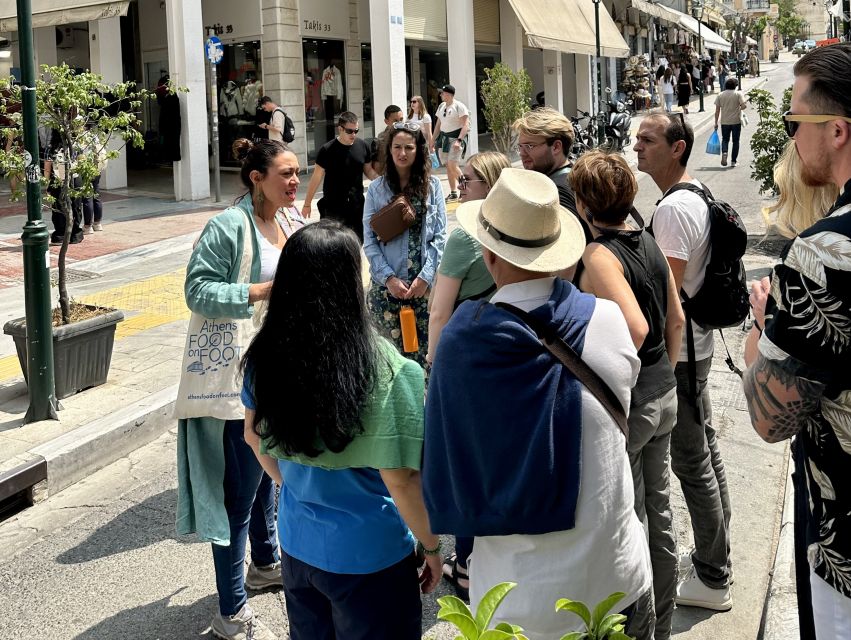
The tour begins with a gentle walk through Psyrri, a central Athens neighborhood known for its food, small shops, and lively streets. This is a sensible starting point because Greek food is not just about sitting down to a large meal. It is also about quick snacks, coffee breaks, bakery counters, and the pleasure of eating a little as you go.
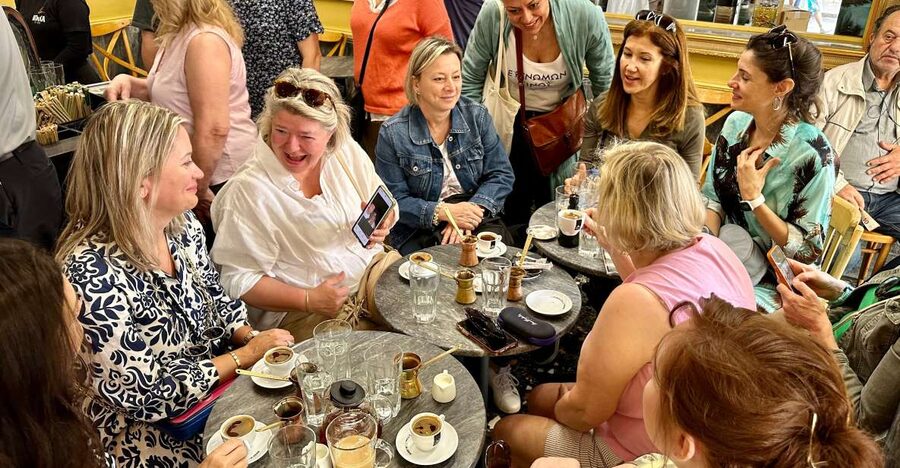
Your first tasting is Greek coffee with koulouri. Greek coffee is thick, strong, and traditionally served in a small cup. Koulouri is a ring-shaped bread snack covered with sesame seeds. It is simple food, but it gives you a useful first taste of daily Greek eating habits: inexpensive, portable, and easy to find around town.
I like this opening because it gives you time to settle into the pace. You are not rushed straight into a long list of dishes. At the same time, coffee may not be a perfect fit for everyone, especially if you avoid caffeine or prefer a large breakfast. The koulouri helps, but this is still only a light beginning.
More Street Food Market Tours in Greece
- Athens, Greek food tour including market visit
★ 5.0 · 618 reviews - Classic Athens Food Tour with Local Drink & Market Visit
★ 4.9 · 99 reviews - Classic Athens Food Tour with Local Drink & Market Visit
★ 5.0 · 34 reviews
Greek pies, phyllo, and specialty food shops
The next part moves through Greek delis and pie shops. You sample traditional foods in places that focus on particular products, which makes the experience feel more connected to local shopping than to a standard restaurant meal.
A key tasting is spanakopita, the familiar spinach pie made with flaky phyllo pastry, spinach, and feta cheese. The pastry matters here. Good phyllo should be thin and crisp, with enough filling to give the pie substance without making it heavy. It is a useful introduction to the balance of greens, salty cheese, and pastry found in many Greek dishes.
You may also sample other traditional foods at the specialty shops. The exact selection can vary, so I would not expect every bite to be identical on every departure. That flexibility is normal for a market-based food walk, where shop stock and daily preparation influence what is available.
This stop suits you if you enjoy trying small portions and asking questions about ingredients. It may be less appealing if you prefer a single large meal or have serious food allergies. More than 18 tastings can sound generous, but many are likely to be small samples, which is helpful because the full route continues for several hours.
Seeing the working Varvakios market
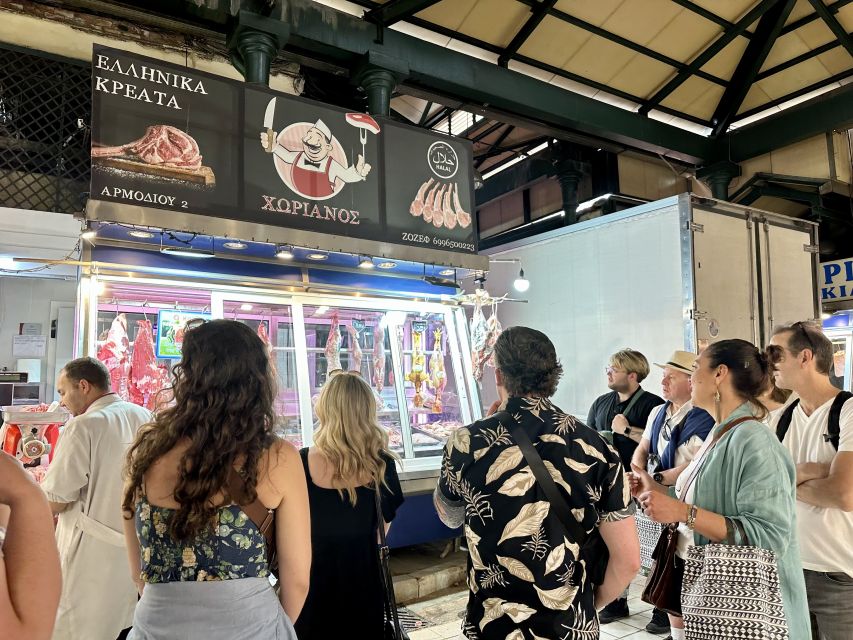
The Varvakios market is the tour’s strongest cultural stop. It is a working food market rather than a decorative attraction, with stalls selling meat, fish, and poultry. The sights and smells can be intense, especially for anyone unaccustomed to traditional markets.
I value this part because it shows the supply side of Greek cooking. Before you taste prepared dishes, you see the raw ingredients that support them. This gives context to the fish, stuffed vegetables, cheese, and other foods served later. It also gives you a glimpse of how central Athens shops for food, beyond the polished café areas most visitors see.
You should come prepared for a real market environment. There is no promise of a quiet, carefully staged visit. You might find it crowded or strongly scented, and the floor may not feel as smooth as a museum walkway. Comfortable shoes are important, and the suggested hat, sunscreen, and light clothing are useful during warmer months.
The route takes place in rain, so poor weather does not automatically cancel the walk. Bring suitable clothing if the forecast is wet. The market visit remains worthwhile in that case, but a waterproof layer will make the experience much easier.
Homemade dishes inside the market
After exploring Varvakios, you stop at an eatery inside the market for homemade Greek dishes. The listed examples include stuffed tomatoes and peppers, fresh sardines, and moussaka.
Stuffed tomatoes and peppers show how Greek cooking makes vegetables the center of a meal. They are commonly filled with a seasoned mixture, and the combination gives you a taste of the slow, home-style side of Greek food. Sardines bring a different character, with a fresh seafood flavor that fits the market setting particularly well.
Moussaka is likely to be the most familiar dish for many people. It is a layered baked dish associated with Greek cooking, and tasting it in the middle of the market gives the meal a more grounded feel than ordering it from a tourist menu near the Acropolis.
The word homemade is important, but you should keep your expectations sensible. This is not presented as a private cooking class or a full restaurant meal with unlimited choices. It is a tasting stop designed to let you try several foods while keeping room for what comes next.
More Street Food Market Tours in Athens:
- Athens Street Food Markets and Hidden Gems Experience
★ 5.0 · 18 reviews - Street food tasting in the locals favorite hidden places
★ 5.0 · 15 reviews - Athens: Street Food Tour Market & City Centre
★ 4.8 · 4 reviews - Athens: Food Tasting Tour in Plaka with Central Market Visit
★ 3.6 · 3 reviews
Cheese, olives, cured meats, and Greek pantry staples
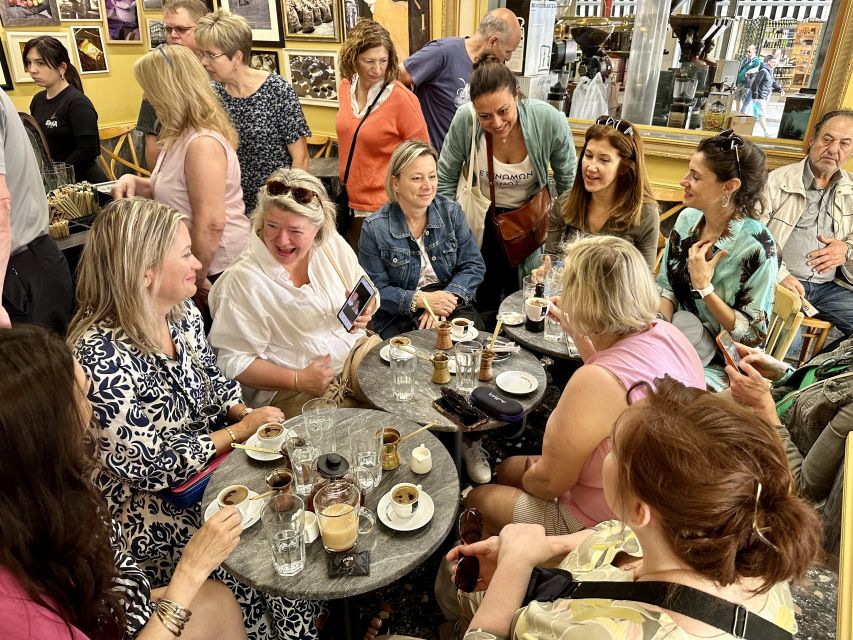
The tour then broadens from cooked food to the ingredients that fill Greek tables and shops. You sample cheeses, cured meats, olives, natural olive oil, dried fruits, and mixtures of nuts.
This section is useful because it lets you compare flavors rather than simply collect famous dish names. Greek food can be salty, earthy, fruity, sharp, and pleasantly bitter, often within the same sitting. Olives and olive oil are central to that style, while cheese and cured meats add stronger, denser flavors.
The dried fruits and nuts also help break up the savory foods. By this point, your appetite may be changing from one tasting to the next, so the mix of textures is welcome. If you have dietary restrictions, pay close attention here. Cheese, cured meats, and nuts are all specifically part of the tasting, and the experience does not promise a special dietary menu.
I would also treat the olive oil tasting as a chance to ask questions rather than assume every oil will taste the same. The experience includes natural olive oil, but no specific producer or tasting style is provided. Your guide can offer useful context, yet the exact brands and samples may vary.
A small lesson in Greek mastic
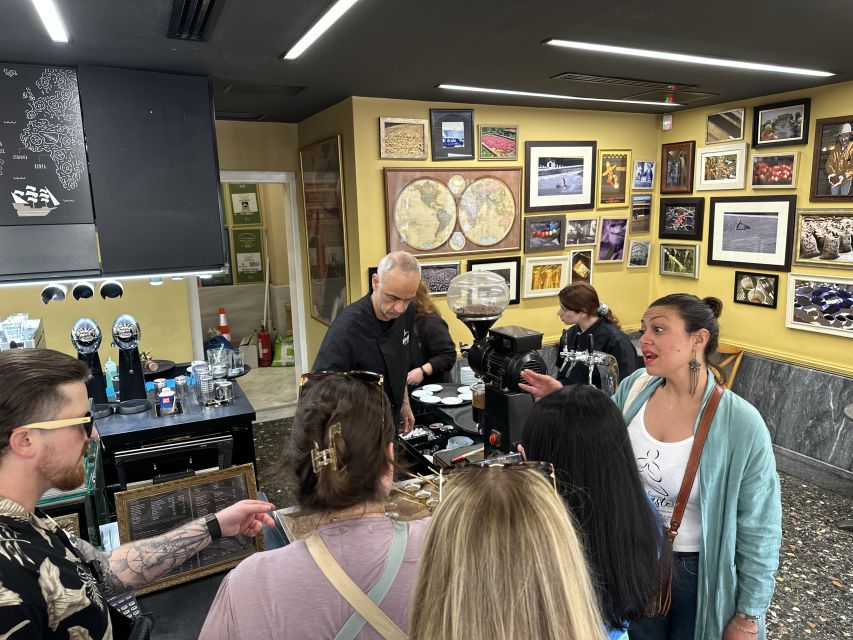
One of the more unusual stops is a quaint mastic shop. Here you learn about organic products made with mastic, a resin associated with Greece and used in food and other goods.
This is a nice change of pace from eating. Mastic is not as familiar to many visitors as olives, feta, or oregano, so the stop adds a less obvious piece of Greek food culture. It also gives you a chance to see how a local ingredient can become part of a wider range of products.
Do not expect this stop to be a full factory tour or a long workshop. The information promises an introduction to mastic products at a small shop. The value is in discovering something you may not encounter during a standard Athens sightseeing route.
If you like bringing home edible souvenirs, this may be one of the most practical stops. You can ask about the products, ingredients, and uses before deciding if anything suits your suitcase. No purchase is required as part of the tour.
Ending with spirit and meze
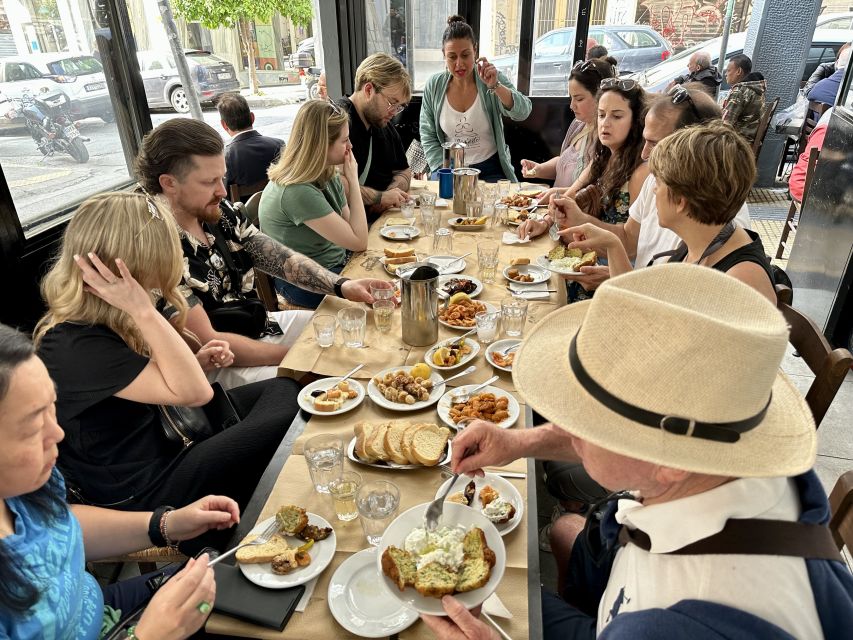
The final stop takes you to a quiet, traditional Greek restaurant for a popular Greek spirit and meze. Meze means small dishes served as appetizers or accompaniments, often meant to be shared and enjoyed slowly.
This ending fits the social side of Greek eating. Instead of finishing with a large dessert or a rushed last sample, you get a chance to sit down, sip, and talk about the food you have tried. The spirit adds a distinctly local note, though you should remember that alcohol is part of the experience.
The exact spirit is not named, so I would not book this expecting a particular drink. If you do not drink alcohol, ask your guide what alternatives are available. The supplied details do not promise a nonalcoholic replacement, so it is best to clarify before booking if this matters to you.
The meze stop is also a good chance to ask for restaurant suggestions and food tips for the rest of your time in Athens. The tour is built around practical local guidance, so come with questions about dishes you see elsewhere, ingredients you want to buy, or places to eat after the walk.
What the four-hour format means for you
Four hours is long enough to cover many foods without turning the experience into a rushed checklist. You get time for walking, tasting, and hearing explanations, though the exact pace will depend on the group, the guide, and how busy the shops and market are that day.
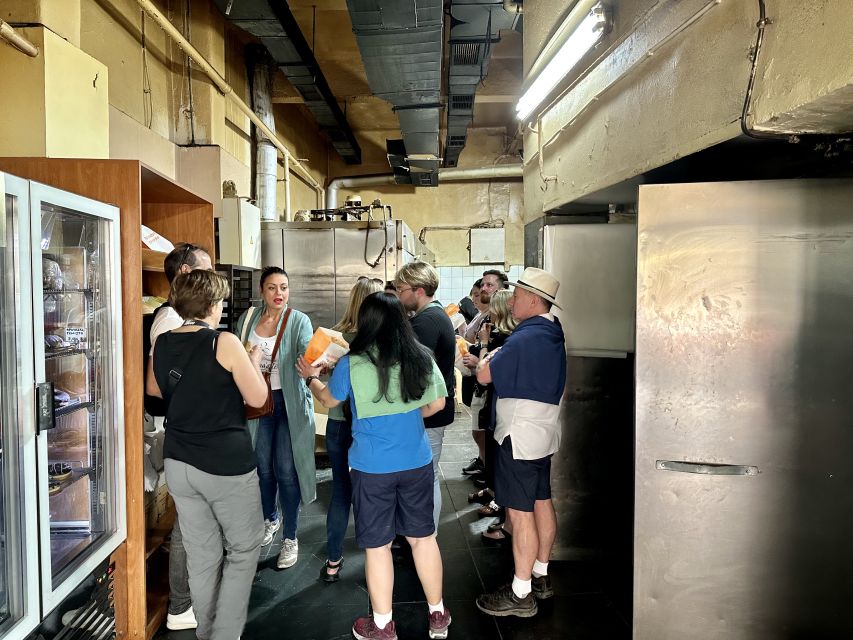
There is no hotel pickup or drop-off. You need to reach the meeting point yourself, and the meeting point can change depending on the option booked. On a bank holiday, it may move to Acropolis metro station, so check the final instructions closely rather than heading automatically to a familiar location.
The tour is offered in English and German, and it is described as wheelchair accessible. Since the route includes a traditional market and several food shops, I would still confirm the exact route and meeting point if you use a wheelchair and need detailed information about surfaces, entrances, or restroom access.
Wear comfortable shoes, a hat, sunscreen, and comfortable clothes. You are walking for four hours, and this is not the place for stiff shoes or a heavy outfit. Carrying a small bottle of water may also be sensible, although water is not listed as an included item.
Is $93 a fair price?
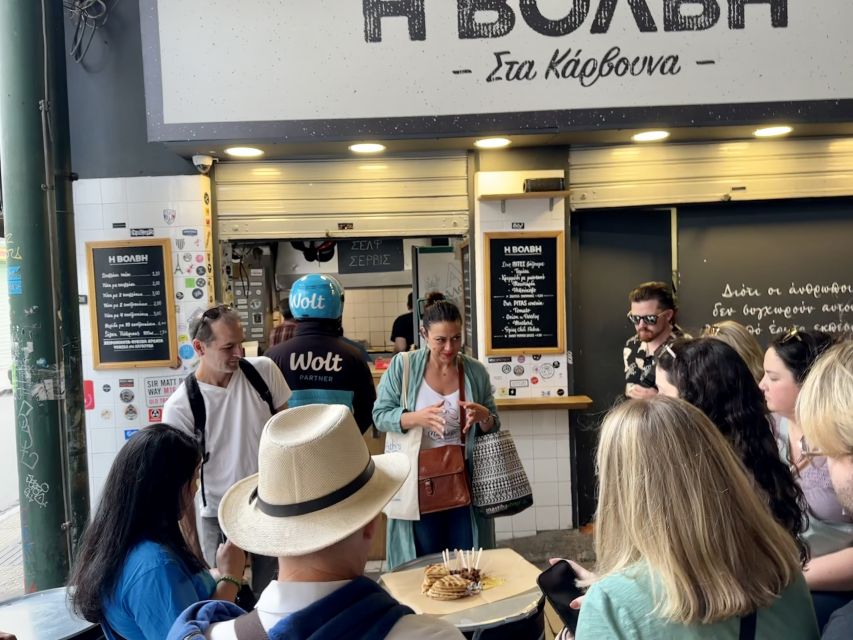
At $93 per person, this is not a cheap snack walk. It can be good value if you would otherwise pay for several meals and want a guide to explain what you are eating, where it comes from, and how it fits Greek culture.
The price includes the walking tour, guide, and food tastings. It does not include transportation to the meeting point or a hotel transfer. The value depends heavily on how much you appreciate guided access to small food shops and the central market. If you only want a quick plate of moussaka, you can spend much less at a restaurant.
I see the price as reasonable for someone who wants a first-day orientation to Greek food. More than 18 samples can replace several separate food purchases, and the route covers both prepared dishes and pantry products. It is less compelling for a repeat Athens visitor who already knows the markets and has a clear list of places to eat.
The guide also matters greatly. Anna was praised for her personality and for making the outing enjoyable, which is exactly what you want on a food walk. Still, one serious report described a guide failing to appear, so I would confirm the departure details and keep the provider’s contact information available on the day.
Who will enjoy this food walk most?
I would recommend it to first-time Athens visitors who want food to guide their sightseeing. It is also a good fit for curious eaters who prefer small portions, market visits, and conversation over a formal cooking lesson.
You will get the most from it if you are open to seafood, meat, cheese, nuts, alcohol, and unfamiliar products. The route includes a wide range of foods, so it rewards flexibility.
Families may appreciate the variety, but parents should consider the four-hour length and market setting. The walk is wheelchair accessible according to the activity details, though the traditional market environment is worth confirming in advance for your particular needs.
I would be more cautious if you have multiple allergies, avoid animal products, do not drink alcohol, or need a fixed meal schedule. The available information does not promise substitutions, a vegan route, or a precise tasting menu.
Should you book it?
Book this tour if you want a broad first taste of Athens, especially if the central market, small food shops, and local eating habits interest you as much as the famous monuments. The mix of coffee, pastry, market food, mastic products, pantry staples, spirit, and meze gives you a useful picture of Greek food in four hours.
Skip it if you want a quiet sit-down meal, a cooking class, or a guaranteed menu tailored to dietary needs. I would also confirm the meeting point shortly before departure because it may change, and I would treat the reported no-show as a reason to verify the booking rather than ignore the risk.
FAQ
How long does the Athens food tour last?
The tour lasts four hours.
How many Greek foods can I taste?
The experience includes more than 18 Greek dishes and food samples.
What foods are included?
Samples may include Greek coffee, koulouri, spanakopita, stuffed tomatoes and peppers, fresh sardines, moussaka, cheese, cured meats, olives, olive oil, dried fruits, nuts, and meze.
Does the tour visit a food market?
Yes. The route includes Athens’ historic Varvakios market, where meat, fish, and poultry are sold.
Does the tour include hotel pickup?
No. Hotel pickup and drop-off are not included.
Where does the tour meet?
The meeting point depends on the option booked. It may change to Acropolis metro station on a bank holiday.
What languages are available?
The live guide is available in English or German.
Is the tour wheelchair accessible?
The activity is described as wheelchair accessible.
What should I bring?
Bring comfortable shoes, a hat, sunscreen, and comfortable clothing.
What happens if it rains?
The tour takes place in rainy weather, so bring suitable clothing if rain is forecast.
More Food and Drink Trips in Athens
- Athens: Food Market Visit and Cooking Class with Wine
★ 4.9 · 1,087 reviews - Traditional breakfast in markets with olive oil and honey tasting
★ 5.0 · 6 reviews - Athens: Tasting workshop and Food Market tour
★ 5.0 · 3 reviews - Athens: Market Tour with Food Tastings
★ 5.0 · 2 reviews
More Market Walking Tours in Athens
- Athens: Local Markets with Artisanal Crafts Walking Tour
★ 5.0 · 3 reviews - Bangkok: City Highlights Temple and Market Walking Tour
★ 4.5 · 3,990 reviews - Tokyo Tsukiji Fish Market Food and Culture Walking Tour
★ 5.0 · 3,184 reviews - Marrakech: Ben Youssef, Secret Garden, & Souks Walking Tour
★ 4.6 · 2,802 reviews
Just added around Athens
- Classic Athens Food Tour with Local Drink & Market Visit★ 5.0 · 34 reviews
- Athens Street Food Markets and Hidden Gems Experience★ 5.0 · 18 reviews
- Cooking Class in Athens with Shopping in Central Market & Lunch★ 5.0 · 55 reviews
- Street food tasting in the locals favorite hidden places★ 5.0 · 15 reviews
- Traditional breakfast in markets with olive oil and honey tasting★ 5.0 · 6 reviews
- Athens Central Market Tour and Greek Cooking Class with Penelope★ 5.0 · 4 reviews
- Athens Markets Exploration Tour: From Ancient to Modern Times★ 5.0 · 2 reviews
- Private Athens Walk: Ruins, Markets & Local Stories★ 5.0 · 41 reviews
Street Food Market Tours, compared.

Old Town, Creek, Museums, Souks, & Street Food Tour
Read our review →
Old Town, Souks, Street Food, Guided Tour & Abra Ride
Read our review →

London Bridge & Borough Market Food Tour with 7 Authentic Dishes
Read our review →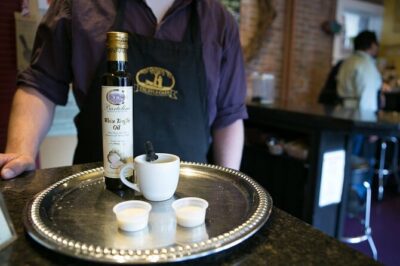
Old Town, Souks, Street Food, Guided Tour & Abra Ride
Read our review →
Small Group Cooking Class & Market Food Tour in Florence
Read our review →
Browse the lists this tour appears in