
Review · TANZANIA
Zanzibar: 3 Hours Private Stone Town walking Tour with Guide
Stone Town rewards curious walkers. This three-hour private tour brings you through Zanzibar’s narrow lanes, grand doors, old palaces, markets, and places tied to the slave trade. I like the way it joins major sights with everyday city life, especially the Darajani Market and a local coffee stop. I also like the flexible pace, with guides such as Khameez, Mau, Kassim, and Maulid praised for clear explanations and warm conversation.
The main consideration is that the advertised $24 per-person price does not cover every major attraction. You pay about $8 for the Freddie Mercury Museum and $10 for the former slave market if you choose to enter. Some buildings are weathered and partly worn, so you should come for the stories, streets, and atmosphere as much as for polished interiors.
Five things to know before you book
- The tour takes three hours on foot: You cover a lot of Stone Town, so comfortable shoes matter.
- The slave-trade story is central: The former market and Anglican Cathedral offer a serious, sometimes upsetting look at East Africa’s past.
- The market visit feels practical and local: Darajani Market brings fruit, vegetables, spices, fish, meat, and shopping into the day.
- Your guide shapes the experience: Khameez, Mau, Kassim, Maulid, and others have been praised for history, humor, patience, and flexible pacing.
- The group is private: You can ask questions, request a slower pace, and adjust the route around photos, shopping, or a museum visit.
- Stone Town pickup is included: Hotel pickup outside Stone Town can be requested, but it is not part of the standard included service.
Why a guide helps in Stone Town
Stone Town is easy to enter but harder to understand. Its lanes twist around one another, and a short walk can take you from an ornate Indian-style door to a former palace, a Catholic cathedral, a market, or a fort built for defense.
You can wander alone and enjoy the carved doors and old walls. With a guide, those details gain context. The tour explains how Arabian, Indian, European, and Portuguese influences shaped Zanzibar’s Swahili culture. That mix appears in the buildings, religious sites, food, language, and trade traditions.
I especially value the human scale of this walk. You are not sealed inside a vehicle looking at Stone Town through glass. You move through its narrow streets, stop for questions, watch daily commerce, and see how the old city still functions.
The private format makes this more useful than a large group tour for many people. You can ask why a doorway is designed a certain way, pause for photographs, or request more time in the market. Several guides have also adjusted their pace for families, tight schedules, and visitors who wanted to browse for souvenirs.
More Market Walking Tours in the world:
- Bangkok: City Highlights Temple and Market Walking Tour
★ 4.5 · 3,990 reviews - Tokyo Tsukiji Fish Market Food and Culture Walking Tour
★ 5.0 · 3,184 reviews - Marrakech: Ben Youssef, Secret Garden, & Souks Walking Tour
★ 4.6 · 2,802 reviews
The former slave market and Anglican Cathedral
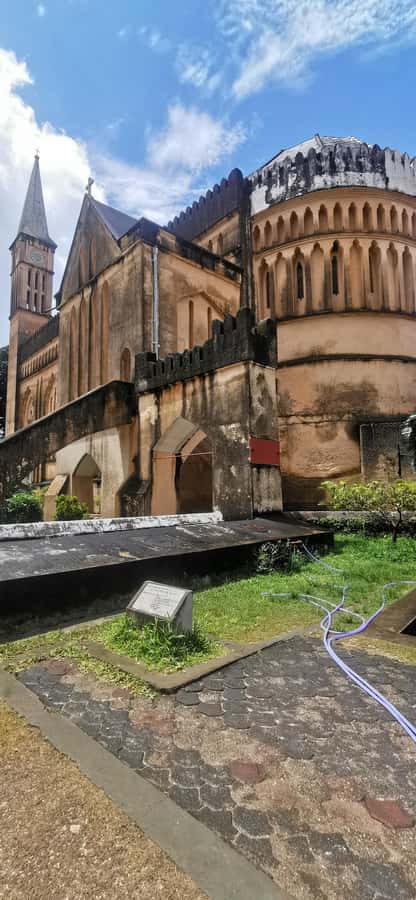
The most difficult stop is also one of the most important. The former East Africa Slave Market now includes the Anglican Cathedral, and the visit traces Zanzibar’s role in the slave trade.
You should not expect a light sightseeing stop. The subject is painful, and the underground chambers and related displays can be emotionally heavy. That is precisely why the stop matters. A walk through Stone Town should not show only handsome doors and palace walls while ignoring the human cost of the trade that helped shape the island.
The former market admission costs about $10 per person and is separate from the tour price. If you want to enter, tell your guide early enough to protect time for the rest of the route.
A guide can help connect this place to the wider story of East Africa, missionaries, explorers, and Zanzibar’s position in Indian Ocean trade. The commentary is not limited to dates. It also touches on the people and institutions that changed the city.
I would plan this visit when you have enough time to listen rather than rush through it for a photograph. The market is not an attraction to tick off quickly. It gives the rest of Stone Town a more honest frame.
Darajani Market, where the city gets practical
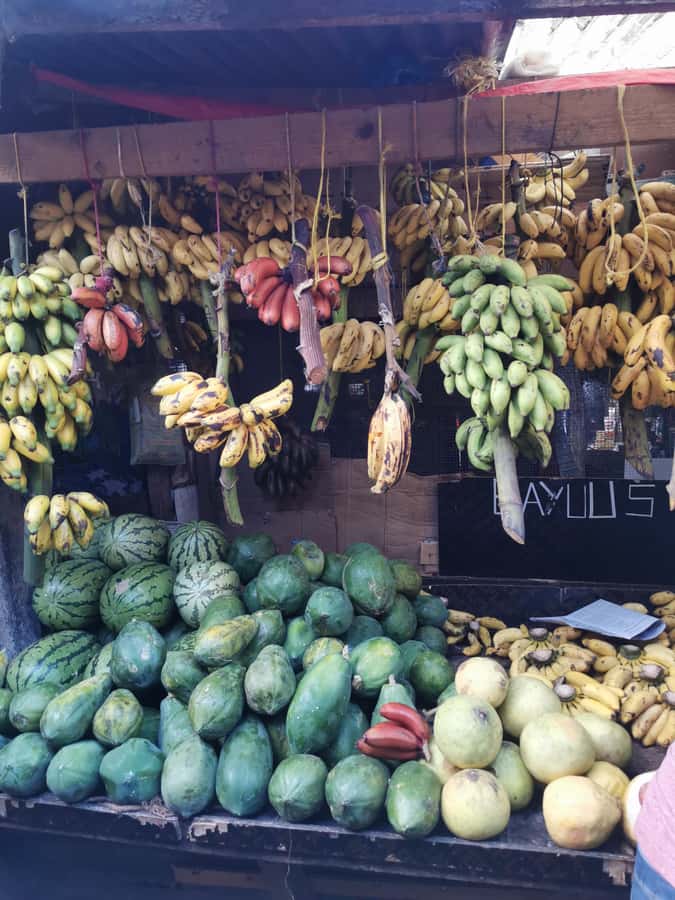
Darajani Market is one of the best parts of the route for seeing Stone Town as a working city. You can expect stalls and trading areas filled with fresh fruit, vegetables, spices, fish, and meat. The tour also points toward the day’s catch from the Indian Ocean and produce grown by local Zanzibari farmers.
This is a good place to use your senses. Look at the colors, notice the smells, and watch the quick movement of buying and selling. If you want photographs, ask before taking close-up pictures, particularly in crowded food areas.
The market also offers a chance to shop. Guides have helped people find spices, coffee, and specific items in less familiar parts of the market. I like that this is more useful than being led only to souvenir shops. You see what local commerce looks like, then decide what you actually want to buy.
Still, market conditions can be crowded and messy. This is not a tidy food hall. Wear shoes that can handle uneven streets, keep your belongings secure, and follow your guide through the tighter sections.
Narrow lanes, carved doors, and Jaws Corner coffee
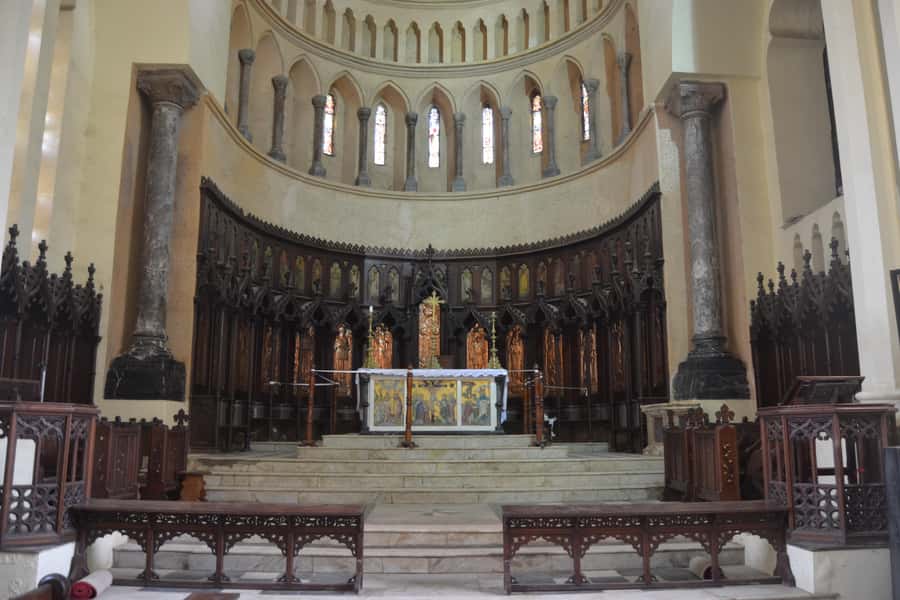
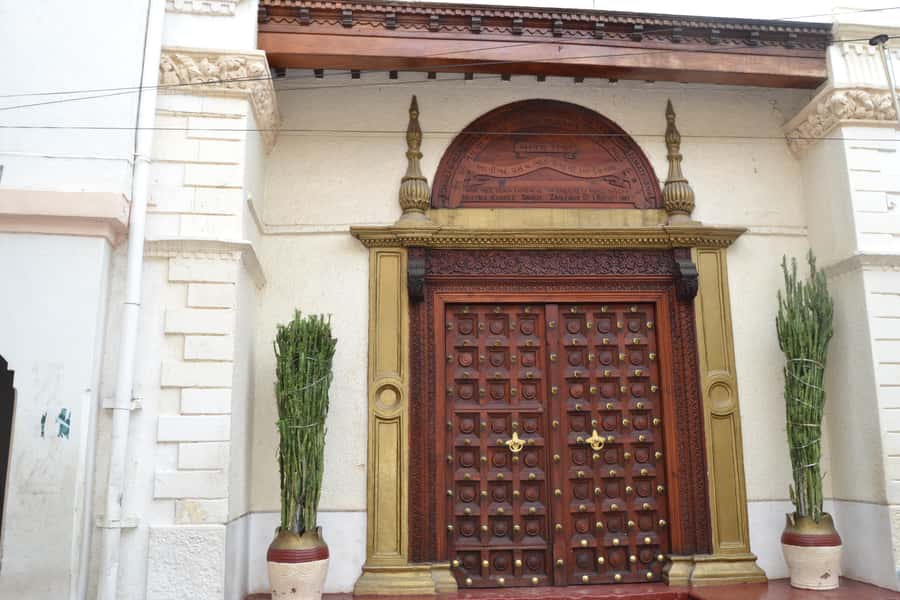
Stone Town’s narrow streets are the visual heart of the tour. The lanes are part of the city’s design, not simply a shortcut between attractions. Along the way, you will see carved Zanzibar doors, balconies, old walls, small boutiques, and souvenir shops.
The doors deserve time. Their decoration reflects the wealth, taste, and cultural connections of the people who built or commissioned them. A good guide can point out details you might otherwise pass without noticing.
The route includes a coffee break at Zanzibar Coffee House, and some schedules also include coffee with locals at Jaws Corner. This is a welcome pause after walking in the heat. One visitor particularly enjoyed sitting with locals at Jaws Corner, where the stop became a chance to observe ordinary social life rather than just take a break indoors.
Do not think of the coffee stop as wasted sightseeing time. It gives you a chance to ask questions in a relaxed setting and reset before the palace and waterfront sights. Coffee, conversation, and a narrow lane can tell you plenty about a city.
The itinerary mentions taking a short rest and enjoying a coffee of your choice. The exact stop may depend on the guide and the day, so it is sensible to confirm your preference at the start.
More Private Market Tours in the world:
- Cairo 8 Hour Private Tour of Pyramids, Egyptian Museum and Bazaar
★ 5.0 · 2,931 reviews - Private Excursion to Maeklong Railway and Floating Markets
★ 5.0 · 850 reviews - Floating and Railway Market (Optional Waterfall): Private Tour
★ 5.0 · 827 reviews - Cairo: Private Pyramids, Museum & Bazaar Tour with Lunch
★ 4.6 · 744 reviews
Sultan Palace and the old ruling dynasty
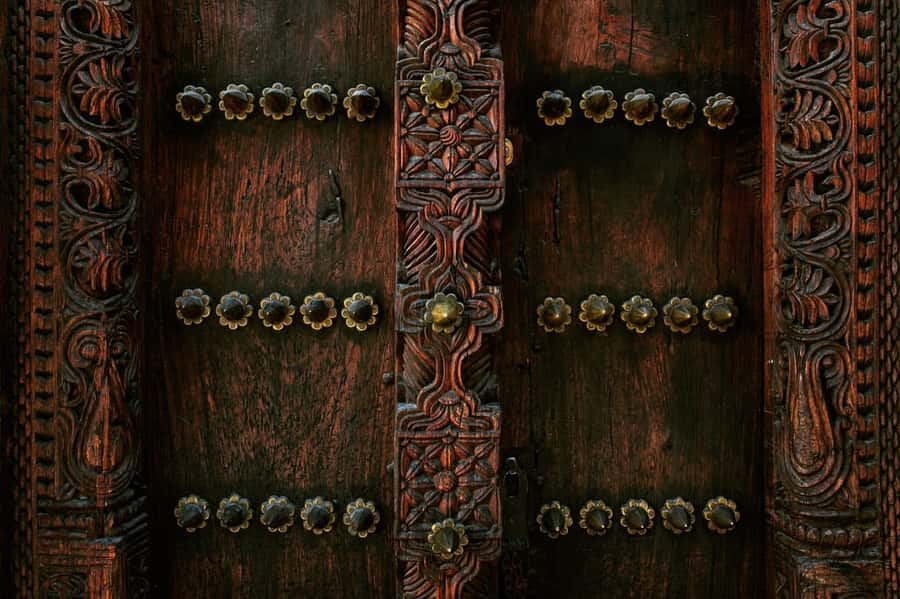
The Sultan Palace introduces Zanzibar’s royal past. The building carries the story of the sultan dynasty and offers a look at the setting in which Zanzibar’s rulers lived and governed.
This stop works best when your guide explains the people behind the rooms and walls. Without context, an old palace can feel like another faded building. With context, it helps explain Zanzibar’s links with Arabia, trade, politics, and the changing power of the island.
You will have opportunities for photographs, but the value is mainly historical. The palace is one part of a larger story about how Stone Town developed as a center of trade and government.
Some historic buildings in Stone Town are worn or partly dilapidated. That can disappoint anyone expecting a fully restored royal complex. I see the weathering as part of the city’s present reality, but you should set your expectations accordingly.
House of Wonders and Forodhani Gardens
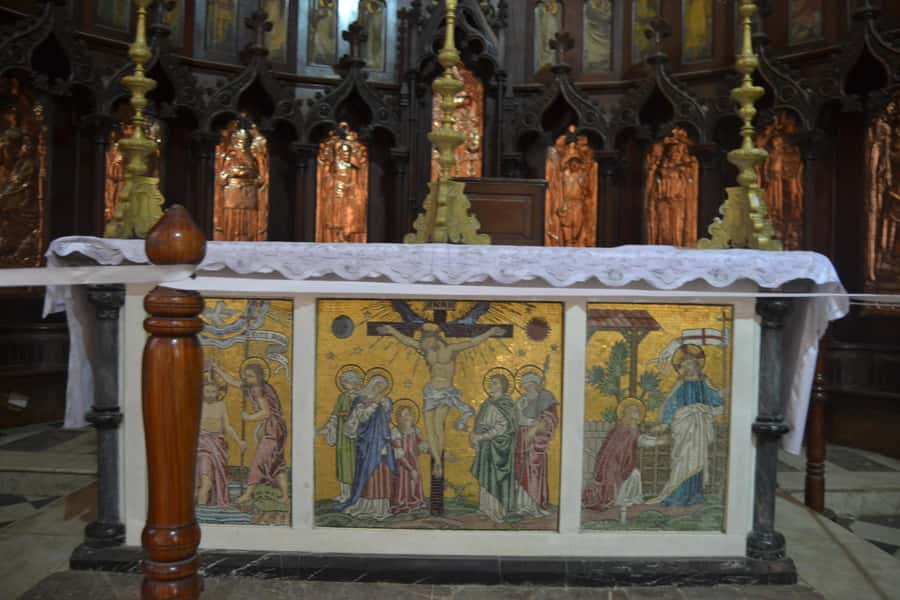
The House of Wonders, or Bait el-Ajab, is described as a ceremonial palace and the tallest building in East Africa. It is one of Stone Town’s best-known landmarks, with stories connected to the sultanate and Zanzibar’s public life.
The building is especially useful as a talking point about changing technology, royal ceremony, and the city’s ambitions. Your guide can place it beside the palace, fort, cathedral, and market so the old center feels like one connected city rather than a list of separate sights.
Forodhani Gardens adds another side of Stone Town. It is famous as an evening gathering place where local sellers offer seafood, barbecued food, sugarcane juice, Zanzibar pizza, and other snacks.
The tour may pass through the gardens during the daytime, so do not assume the full evening food-market atmosphere will be present. If you want to return later for food, ask your guide about timing and location. The tour gives you an introduction, not necessarily a complete dinner experience.
Old Fort and the waterfront
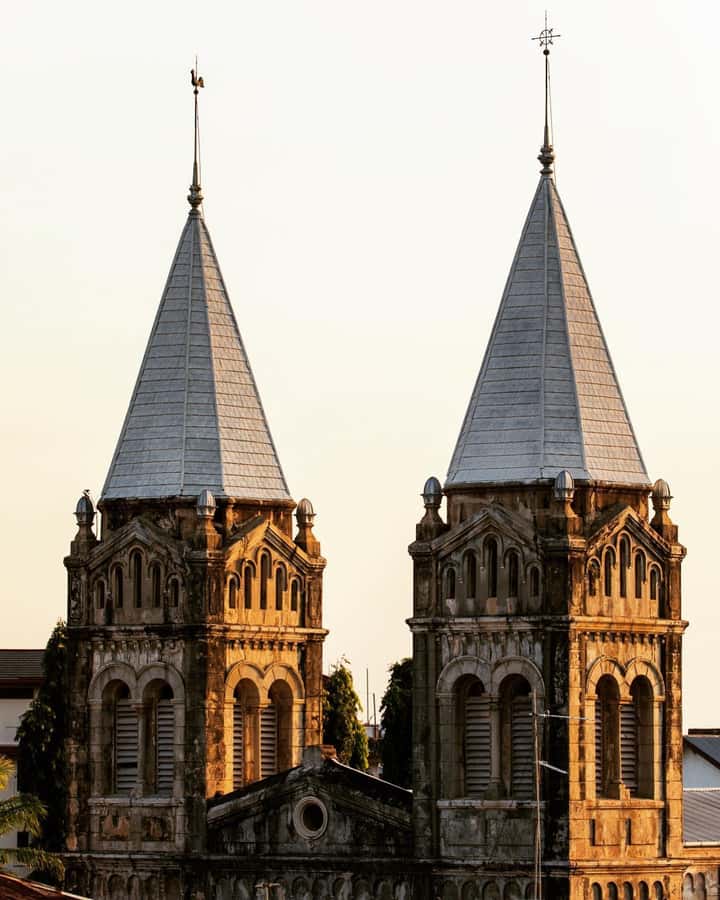
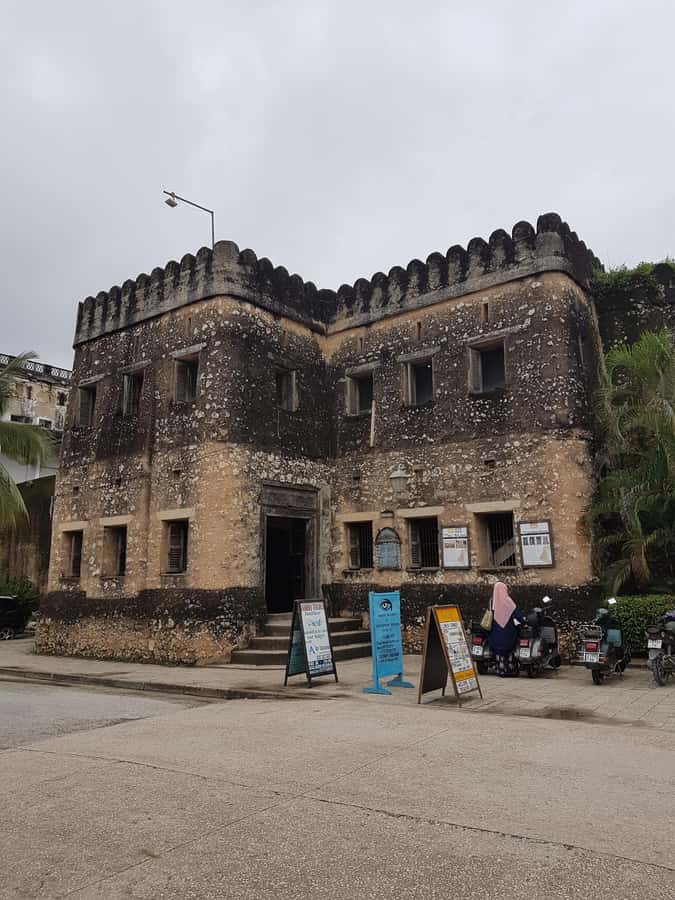
The Old Fort, also called the Old Arabic Fort, is a sturdy reminder that Stone Town was shaped by conflict as well as commerce. It has served as a defensive structure and later as a gathering place, including a battle arena and a former railway setting.
The fort is a useful contrast with the carved doors and palace rooms. Its thick walls and open spaces show a more practical side of the city. You can take photographs here and listen as the guide explains how the building fits into Stone Town’s changing use over time.
This stop does not require a long visit to be worthwhile. The bigger benefit is the connection between fort, waterfront, House of Wonders, Forodhani Gardens, and Sultan Palace. Together, they show how the edge of Stone Town functioned as a public and political center.
Freddie Mercury’s birthplace and French Catholic cathedral
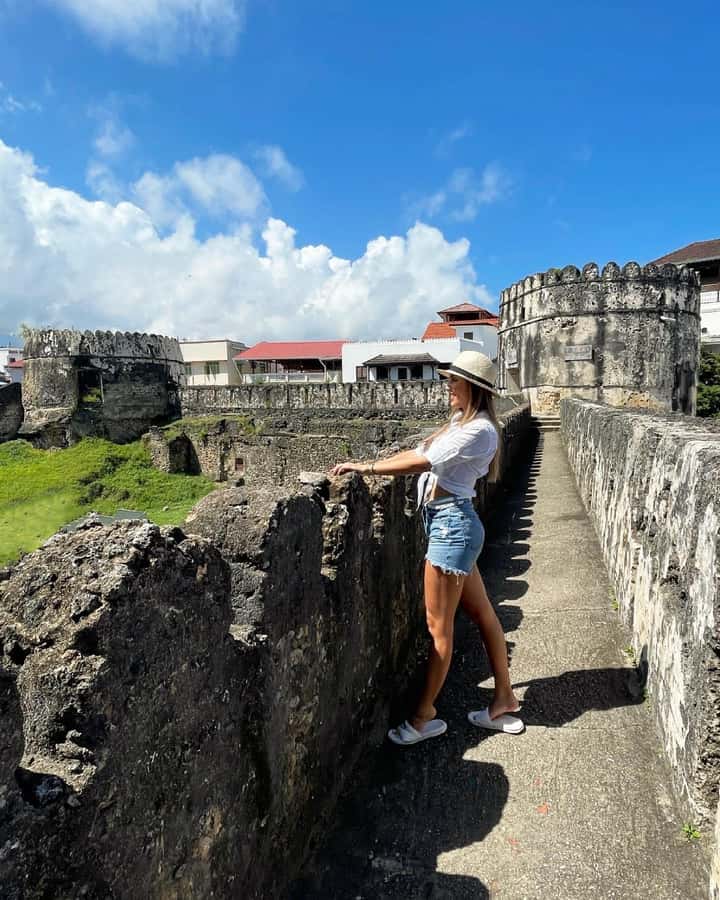
The Freddie Mercury stop adds a modern cultural thread to a tour otherwise focused on older history. You visit the area associated with the Queen singer and songwriter’s birthplace and can take photographs near the house.
Entry to the Freddie Mercury Museum costs about $8 per person and is not included. You may choose to see the exterior only, or add the museum if music history is a priority. Tell your guide what you prefer, since museum time affects the rest of the three-hour walk.
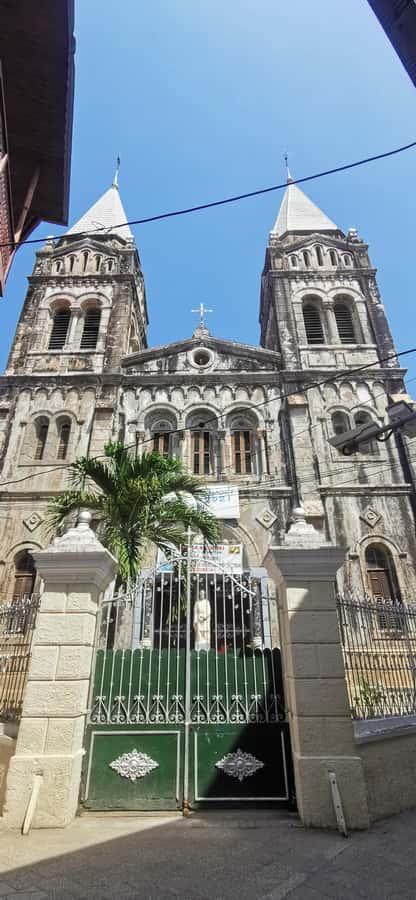
The French Catholic cathedral, also known as Notre Dame of Zanzibar, provides another sharp change in style. It is a carefully sculpted church in the center of Stone Town, with its own stories and connections to the city’s religious mix.
These two stops show why Stone Town cannot be reduced to one culture or one period. The same compact city holds sultanate history, Christian institutions, Swahili traditions, Indian Ocean commerce, and modern popular culture.
The guides and the value of the private format
The strongest part of this experience is the guide. Names attached to especially strong tours include Khameez, Mau or Maulid, Kassim, Kasim, Sahin, Suleman, and Hassan. The most praised qualities are clear English, strong local knowledge, patience, humor, and pride in Zanzibar.
Khameez has been especially useful for visitors who wanted detailed history, French-language guiding, or help fitting the walk into a tight schedule. Mau has been praised for explaining Stone Town, Zanzibar, Tanzania, and East Africa in a friendly, easy-to-follow way. Kassim has adapted routes around timing, interests, and preferred stops.
Language choice is broad. Guiding is offered in German, English, French, Italian, Spanish, Arabic, Polish, Portuguese, and Chinese. If language matters to your experience, select it when booking and confirm it before the walk begins.
The private group setup lets you make the tour your own. You can ask for more architecture, more history, more market time, or time for the Freddie Mercury Museum. Families may appreciate the ability to pause for an ice cream stop or slow the pace for a child.
The walk is not ideal for people with back problems. You will be on foot for about three hours, and the narrow streets can make the route feel more tiring than the distance suggests.
Price, timing, and what you actually receive
At $24 per person, this is good value if you want a proper introduction to Stone Town rather than a quick orientation. The price includes a private guide and one bottle of mineral water per person.
The major extra costs are clear: about $8 for the Freddie Mercury Museum and $10 for the former slave market. Hotel transfers are not included in the standard price, although pickup and return from areas outside Stone Town can be requested.
Stone Town pickup is included, and the tour returns you to Stone Town after the walk. The advertised duration is three hours, though the exact pace and route can vary. Some people have spent closer to three and a half hours, while others completed the main route in about two hours.
You should wear comfortable shoes, carry sun protection, and bring modest clothing for religious or historic sites. Alcohol, drugs, weapons, sharp objects, littering, fire, fireworks, explosives, nudity, and touching exhibits are not allowed.
Free cancellation is available up to 24 hours before the tour for a full refund. You can also reserve now and pay later, which helps if your Stone Town plans are still shifting.
Who should book this Stone Town walk?
I would choose this tour if you have only one afternoon in Stone Town and want the main historical sights explained in a sensible order. It also suits first-time visitors who want to return later and explore independently with a better sense of direction.
Families can benefit from the private format, especially if they need short breaks. History lovers will appreciate the slave-market stop, palace stories, and connections between Zanzibar and East Africa. Music fans may want to add the Freddie Mercury Museum.
I would think twice if you dislike walking, have back problems, or want a quiet tour focused only on restored buildings. Stone Town is old, active, crowded in places, and visibly weathered. The reward is the city itself, not a polished theme park.
Should you book it?
Book it if you want a well-priced, private introduction to Stone Town with real attention to history, markets, architecture, and local life. The guides are the key reason to choose it, and Khameez, Mau, Kassim, and Maulid have shown the kind of warmth and flexibility that can turn a basic walk into a memorable one.
Before you go, decide which paid entries matter to you. If the slave-trade history is important, budget for the former market. If you are a Queen fan, reserve extra time and money for the Freddie Mercury Museum. With those choices made, this three-hour walk gives you a strong first look at Zanzibar’s old capital.
FAQ
How long is the Stone Town walking tour?
The advertised duration is three hours. The exact length can vary with the route, museum visits, shopping, questions, and the pace of the private group.
What is included in the price?
The $24 price includes guiding services and one bottle of mineral water for each person during the tour.
Is hotel pickup included?
Free pickup is included from areas in Stone Town. Pickup from outside Stone Town can be requested, but it is not part of the standard included service.
Are attraction entry fees included?
No. Entry to the Freddie Mercury Museum costs about $8 per person, and entry to the former East Africa Slave Market costs about $10 per person.
What languages are available?
Guiding is available in German, English, French, Italian, Spanish, Arabic, Polish, Portuguese, and Chinese.
Is this a private tour?
Yes. The activity is arranged for a private group, allowing you to ask questions and discuss the route or pace with your guide.
Can I cancel the booking?
You can cancel up to 24 hours in advance for a full refund. Reserve-now, pay-later booking is also available.
More Three-Hour Tours in the world
- Marrakech Monuments & Souks 3-Hour Tour
★ 3.8 · 1,540 reviews - Discover Palermo in 3 hours. Art, history, markets and street food
★ 5.0 · 352 reviews - 3h Private Walking Tour in Tangier Kasbah Medina & Colorful Souks
★ 5.0 · 148 reviews - Marrakech: 3-Hour Monuments, Souks & Old Medina Walking Tour
★ 4.7 · 133 reviews
Just added around the world
- Half-day Dandan Noodles Cooking Class with a Local Market Visit★ 5.0 · 8 reviews
- Three-Hour Private Chengdu Tea Wholesale Market Tour★ 5.0 · 4 reviews
- 3-Hour Herbal Wholesale TCM Market and a Local Wet Market Tour★ 5.0 · 4 reviews
- Moroccan Cooking Class with a Local Family & Market Visit★ 5.0 · 16 reviews
- Charleston International Sweet Treats & Historic City Market Tour★ 5.0 · 22 reviews
- Chania Old Town, Public Market and Chrisopigi Monastery Tour★ 4.5 · 6 reviews
- Chania: Old Town, Public Market, Hill of Prophet Elias, Agia Triada★ 5.0 · 35 reviews
- Cesarine: Market Tour & Home Cooking Class in Catania★ 4.0 · 6 reviews
Private Market Tours, compared.
Cairo 8 Hour Private Tour of Pyramids, Egyptian Museum and Bazaar
Read our review →
Private Excursion to Maeklong Railway and Floating Markets
Read our review →
Floating and Railway Market (Optional Waterfall): Private Tour
Read our review →
Shopping in the Souks of Marrakech Private Tour
Read our review →
Local Markets & Khan el Khalili Private Shopping Tour
Read our review →
Private Excursion to Floating Market and Ayutthaya World Heritage
Read our review →
Private Heritage Walking Tour in Jaisalmer Fort and Old Bazaar
Read our review →Browse the lists this tour appears in