
Review · SINGAPORE
Singapore Market to Table Culinary Experience (Wet Market Tour included)
Singapore tastes better when you know where the ingredients begin. This three-hour experience combines a wet market visit, coffee shop breakfast, and hands-on cooking class, giving you a useful look at everyday food culture beyond the polished downtown streets. I especially like the small class size, capped at 10 people, and the chance to cook several dishes instead of watching one demonstration.
The wet market visit adds real context to the meal. You learn about ingredients, Singapore’s blend of Chinese, Malay, Indian, and other food traditions, then practice ordering coffee in a neighborhood coffee shop. I also like that the hosts are licensed guides and working chefs, including Denise, Colin, Vivian, and Vidhya, who have been praised for their warmth and clear instruction.
The main caution is that the market can feel quiet, and the cooking space has drawn criticism for being cramped and cluttered. The menu may also change, and recipes are not always provided. If you need a polished cooking studio or a fixed menu, this may not be the best fit.
Key Details Before You Book
- The morning begins at a real wet market, where you learn how Singaporean dishes start with everyday ingredients rather than restaurant menus.
- Breakfast includes local coffee shop culture, including help ordering a cup to suit your taste.
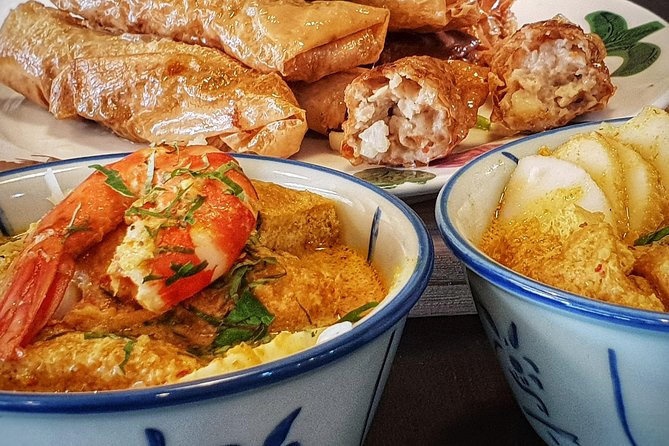
- You cook and eat several dishes, with past menus including Hainanese chicken rice, Ngoh Hiang, shrimp rolls, and Kueh Dadar.
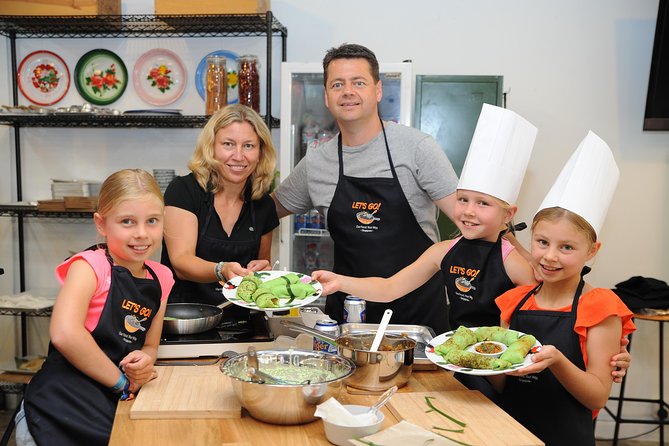
- The group is limited to 10 people, which allows more direct help than a large demonstration class.
- Chef guides bring cultural context, explaining how Singapore’s many communities shaped its food.
- Plan on roughly three to three and a half hours, even though the stated duration is approximately three hours.
Meeting the Chefs at Crawford Lane
The experience starts at 9:00 am at Let’s Go Cook Singapore, at Crawford Lane, #01-57 Block 462. You make your own way there, since transportation to and from the meeting point is not included. The location is near public transportation, which helps, but you should allow enough time to arrive before the group leaves for the market.
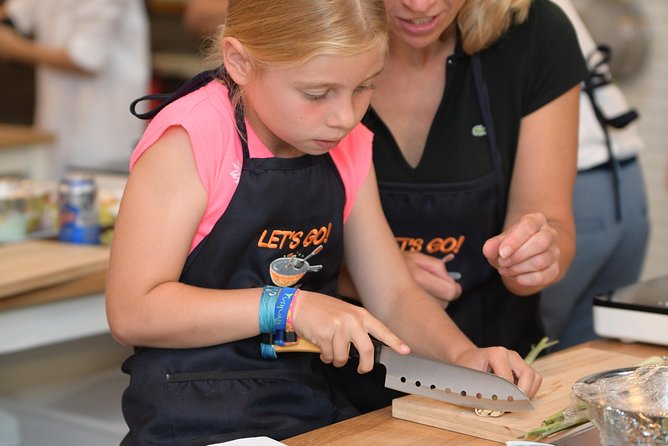
The class has a maximum of 10 people. That number matters here. Cooking several dishes from scratch requires chopping, mixing, seasoning, and timing, so a small group gives you a better chance to handle the food instead of standing behind someone else.
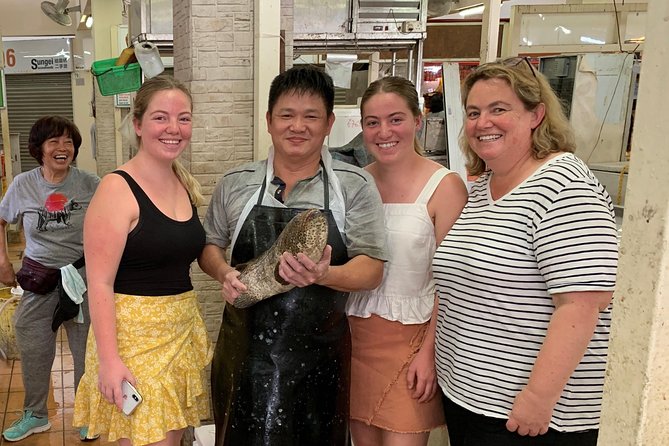
The chefs are central to the experience. Denise has been praised for her warmth, historical stories, and ability to guide both adults and children. Colin has earned strong marks for step-by-step demonstrations and practical cooking advice. Vivian has been described as friendly and well prepared, while Vidhya has received praise for her cultural explanations and cooking skills.
The quality of the session may depend partly on which chef leads your group. That is not unusual for a hands-on class, but it is worth knowing. Some sessions appear carefully paced, while one unhappy participant felt the class needed more assistance. If you are a complete beginner, speak up when you need help rather than waiting for the chef to notice.
More Wet and Camel Market Tours in the world:
- Immersive Cooking Class & Wet Market Tour by Local Chef +Cookbook
★ 5.0 · 367 reviews - Chef Samuel’s Private Malaysian Cooking Class with Wet Market Tour
★ 5.0 · 92 reviews - Cairo Unusual Day Tour Visit Camel Market in Birqash
★ 4.5 · 9 reviews
The Wet Market: Singapore Before the Restaurant Table
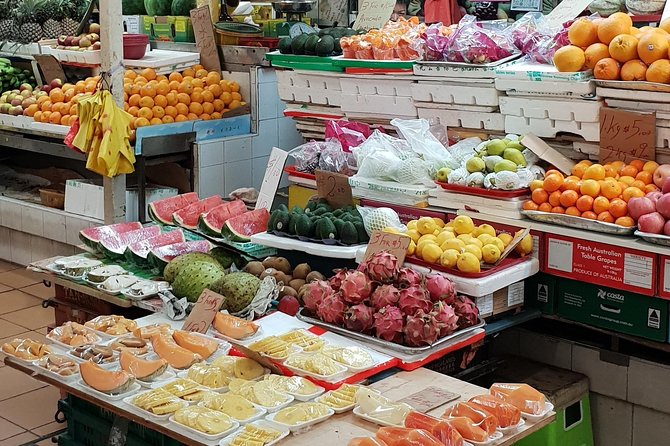
The first major stop is a local wet market. This is not just a quick shopping trip for ingredients. The point is to understand the food at its starting point and to see a part of Singaporean life that is easy to miss if you spend your whole visit around hotels, shopping centers, and famous attractions.
Your guide explains ingredients and discusses how the country’s food reflects its mixed population. Singaporean cooking is not one single tradition. Chinese techniques, Malay flavors, Indian spices, and other regional influences have shaped the food you will prepare. The market gives those ideas a practical setting.
You may learn why certain ingredients matter, how to select them, and how they connect to the dishes in class. That makes the cooking later more useful. Instead of adding an unfamiliar ingredient because a recipe says so, you get some sense of its place in the meal.
The market is also a neighborhood rather than a staged attraction. One session found many vendors closed and described the area as an older, quiet community. That can be disappointing if you expect a crowded food hall with every stall operating. At the same time, the quieter setting may give you a more ordinary view of Singapore.
I would think of the market visit as a cultural walk with food lessons, not a grand market spectacle. Go with curiosity, and you are more likely to enjoy it.
Coffee Shop Breakfast and a Small Singapore Ritual
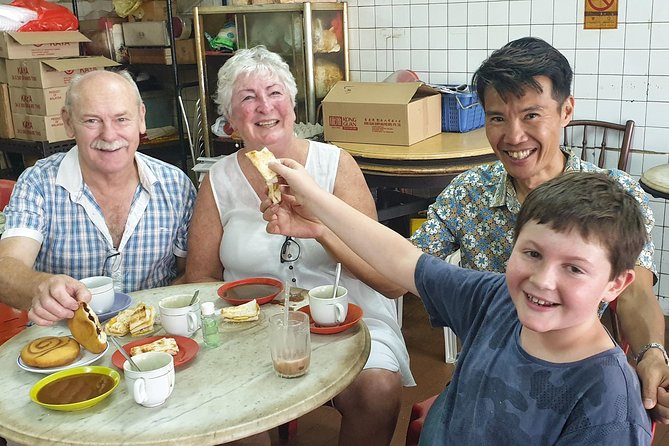
After or during the market visit, you stop at a traditional coffee shop for a simple breakfast. This is one of the most distinctive parts of the experience because the lesson is not only about eating. You also learn how to order local coffee according to your preference.
That small exercise can be surprisingly useful. Singaporean coffee orders have their own vocabulary and conventions, and the guide helps you place the order yourself. You get a taste of how everyday food culture works in practice, rather than simply being handed a drink.
The breakfast is modest, not a large brunch. Toast and local snacks have been part of the experience, and the stop is intended to introduce you to coffee shop habits before the main cooking session. If you want a substantial breakfast, keep that in mind and plan accordingly.
The coffee stop also helps connect the class to ordinary life. You are not only learning restaurant dishes. You are seeing how people eat in a neighborhood setting and how a basic coffee order can carry its own local customs.
Cooking Hainanese Chicken Rice and Other Favorites
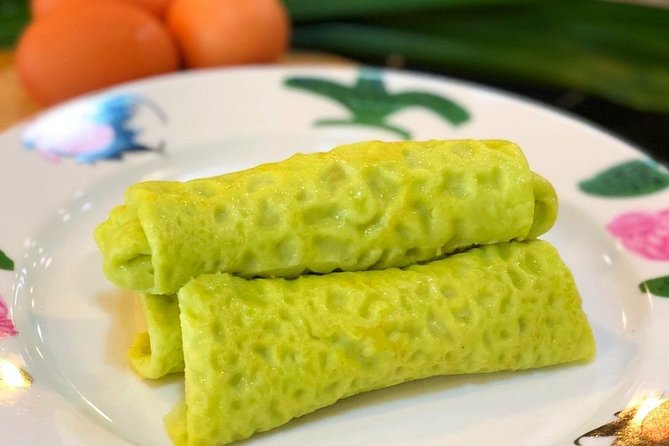
Back at the cooking school, you prepare several dishes with the chef. Menus can vary, so do not treat any single dish list as guaranteed. Past sessions have included Hainanese chicken rice, Ngoh Hiang, shrimp rolls, stir-fried dishes, and Kueh Dadar, a sweet pandan-style crepe dessert.
Hainanese chicken rice has received especially warm praise from people who had previously tried it at hawker centers or well-known restaurants but did not understand its appeal. Preparing the rice, chicken, and sauces yourself helps explain why the dish depends on more than plain boiled chicken. The cooking method and seasoning work together, and the final result can be far more flavorful than its simple appearance suggests.
Ngoh Hiang, described in one session as a large fried chicken roll, gives you another technique to practice. Dessert adds balance to the class and keeps the meal from becoming a parade of savory dishes. Preparing multiple courses also makes the class feel like a real meal rather than a single recipe lesson.
The cooking is hands-on. You learn techniques from the chef, prepare the ingredients, and eat what you make. That format suits families, couples, and friends who want an activity with something to show for it at the end. A 13-year-old who loved cooking enjoyed the class with a parent, which suggests the session can work well for older children who are comfortable following kitchen instructions.
The food is not guaranteed to come out perfectly. One participant felt the finished dishes needed more guidance, while many others praised the flavor and clear demonstrations. Your experience may depend on your group’s cooking ability, the chosen menu, and how actively you ask questions.
A few more market tours around the world worth a look
- Bangkok: Damnoen Saduak Market and Maeklong Railway Market
★ 4.5 · 26,723 reviews - The Old Siam: Damnoen Saduak and Maeklong Railway Market
★ 4.5 · 10,992 reviews - Dubai: Old Town, Creek, Museums, Souks, & Street Food Tour
★ 4.8 · 10,816 reviews - Bangkok: Train Market & Floating Market with Boat Ride
★ 4.7 · 9,547 reviews
The Food Matters, But the Stories Matter Too
The strongest part of this class is the link between food and culture. The chefs explain why Singapore is a meeting point of different culinary traditions and connect ingredients to the country’s communities and past.
That context gives the dishes more meaning. You are not just learning how to make chicken rice or a fried roll. You are learning why these foods became part of Singapore’s shared table and how separate traditions influenced one another.
Denise has been praised for turning the history of Singapore into a food lesson. Colin has also offered suggestions for other foods to try and places to visit. Those side conversations can be valuable early in a trip, when you can still use the advice for later meals.
The class is also a good choice if you want to see Singaporean life away from its luxury hotels and famous shopping streets. One person particularly appreciated seeing everyday Singaporeans in a less polished setting. That is an important strength: the experience feels connected to daily routines, not just to dishes prepared for tourists.
How Much Food and Help Should You Expect?
You prepare several dishes and then sit down to eat them. The amount can be generous. One group found there was too much food to finish, which is a pleasant problem, especially after the market walk and cooking work.
Bottled water and the ingredients and equipment needed for the class are included. Still, water service during the full session may not be constant, so bringing practical expectations is wise. Breakfast is included, but other personal expenses are not.
The class earns a 4.9 rating from 479 reviews, with 99 percent recommending it. Those numbers suggest a very strong overall experience, but they should not hide the practical weaknesses. The menu may differ from what you expected, written recipes may not arrive, and the cooking room has been criticized as small and untidy.
One participant with a seafood allergy had informed the operator but still found prawns on the menu. If you have an allergy or strict dietary need, contact the operator again before booking and confirm what substitutions are possible. Do not assume that a written request guarantees a changed menu.
Is the Three-Hour Schedule Realistic?
The stated duration is about three hours, starting at 9:00 am and ending back at the meeting point. In practice, some sessions have taken about three and a half hours. The extra time can come from the market walk, coffee stop, preparation, cooking, and the final meal.
That matters when planning the rest of your day. I would not book a timed attraction immediately afterward. Give yourself room for the class to run long, especially if the group is enjoying a conversation with the chef or needs extra time in the kitchen.
The schedule works well as a morning activity because it ends with lunch. It is also a smart first or second day choice if you want food advice for the rest of your stay. You can use what you learn when choosing hawker dishes later.
Value at $112.33 Per Person
At $112.33 per person, this is not the cheapest way to eat in Singapore. You can have a delicious hawker meal for far less. The price is easier to justify if you value instruction, a guided market walk, breakfast, ingredients, equipment, and a meal you help prepare.
The small group improves the value. A class of up to 10 gives you more access to the chef than a large demonstration, and the experience combines several activities in one morning. You are paying for food, but also for explanations, local orientation, and a practical skill you can take home.
The value is weaker if your main goal is simply to eat. It is also weaker if you expect a modern culinary studio, a fixed menu, printed recipes, or guaranteed dietary substitutions. In that case, you may feel the price is high for the setting and organization.
Group discounts may be available, which could make the activity more appealing for families or friends booking together. Free cancellation is allowed up to 24 hours before the start time. If the minimum number of participants is not met and the experience is canceled, you are offered another date or experience, or a full refund.
Who Will Enjoy This Experience Most?
I would recommend this class to people who like to understand what they are eating. It suits couples, families with older children, and friends who enjoy active mornings rather than simply following a guide from one sight to another.
It is especially good for:
- First-time visitors who want food and cultural orientation early in their stay
- Home cooks who want to recreate Singaporean dishes
- People who enjoy markets and neighborhood walks
- Families with older children who like hands-on activities
- Anyone curious about how different cultural traditions shape one national cuisine
You may want to skip it if you dislike shared cooking, need a spotless professional kitchen, or want a guaranteed recipe list. It may also disappoint you if your image of a wet market is a packed, noisy hall with every stall open.
Should You Book the Singapore Market to Table Experience?
Book it if you want a personal food lesson rather than a simple meal. The wet market, coffee ordering practice, cultural stories, and hands-on dishes give the morning real substance. The best sessions seem to come from the chef’s personality, and Denise, Colin, Vivian, and Vidhya have all been praised for making the experience friendly and informative.
Go in with flexible expectations. The menu can change, the market may be quiet, and the cooking room may feel cramped. Confirm allergy concerns in advance, allow at least three and a half hours, and ask about recipes if taking them home matters to you.
For most food-focused visitors, the chance to cook Hainanese chicken rice and learn how Singaporeans shop, order coffee, and eat is worth more than the cost of another restaurant meal. If you want Singapore on a plate, with a little work required before you taste it, this is a strong choice.
FAQ
Where does the Singapore Market to Table experience begin?
It begins at Let’s Go Cook Singapore, Crawford Lane, #01-57 Block 462, Singapore 190462.
What time does the experience start?
The start time is 9:00 am.
How long does the experience last?
The stated duration is approximately three hours, though some sessions have lasted about three and a half hours.
How many people can join the class?
The maximum group size is 10 participants.
Is breakfast included?
Yes. The experience includes a simple breakfast at a local coffee shop near the wet market, along with guidance on ordering local coffee.
Are transportation and personal expenses included?
No. Transportation to and from the meeting point and other personal expenses are not included. Bottled water, the market tour, cooking ingredients, equipment, and the guided class are included.
Can I cancel for a full refund?
Yes. You can cancel at least 24 hours before the start time for a full refund. Changes or cancellations made less than 24 hours before the start time are not accepted for a refund.
Just added around the world
- Half-day Dandan Noodles Cooking Class with a Local Market Visit★ 5.0 · 8 reviews
- Three-Hour Private Chengdu Tea Wholesale Market Tour★ 5.0 · 4 reviews
- 3-Hour Herbal Wholesale TCM Market and a Local Wet Market Tour★ 5.0 · 4 reviews
- Moroccan Cooking Class with a Local Family & Market Visit★ 5.0 · 16 reviews
- Charleston International Sweet Treats & Historic City Market Tour★ 5.0 · 22 reviews
- Chania Old Town, Public Market and Chrisopigi Monastery Tour★ 4.5 · 6 reviews
- Chania: Old Town, Public Market, Hill of Prophet Elias, Agia Triada★ 5.0 · 35 reviews
- Cesarine: Market Tour & Home Cooking Class in Catania★ 4.0 · 6 reviews
Wet & Camel Market Tours, compared.
Immersive Cooking Class & Wet Market Tour by Local Chef +Cookbook
Read our review →
Chef Samuel’s Private Malaysian Cooking Class with Wet Market Tour
Read our review →

Cairo Unusual Day Tour Visit Camel Market in Birqash
Read our review →

4-Hr Shanghai Layover Tour: Maglev, Wet Market, Food, Landmarks
Read our review →
3-Hour Herbal Wholesale TCM Market and a Local Wet Market Tour
Read our review →
Hangzhou Insider Mini-Hike: TCM, Hill Views and Wet Market
Read our review →Browse the lists this tour appears in