Review · MOROCCO
Marrakesh: Private Cooking Class & Local Market Shopping
Food opens doors here. This four-hour Marrakesh experience combines a local souk visit with hands-on Moroccan cooking, then lets you eat the meal you helped prepare. I especially like the chance to learn Arabic names for ingredients and the practical way the class connects market shopping with the finished tagine. The private format also makes it easier to request a vegetarian meal or ask questions. The main caution is timing: some bookings have lasted closer to three or three and a half hours, and not everyone may get equal time at every cooking task.
The experience costs $81 per person, which is fair if you value the market visit, guide, cooking lesson, meal, photographs, and recipes afterward as one package. I would book it for the personal contact and useful cooking tips, not simply for a restaurant-style lunch. The market portion may feel less satisfying if an interpreter handles most of the conversation and does not explain the quality, price, or purpose of each ingredient.
Key points before you book
- Meet outside Café France: Find the three-story café on the right side of Djemaa El-Fna as you enter through the square’s main entrance.
- Shop before you cook: Choose meat, vegetables, herbs, and spices at a Marrakesh souk, with local produce linked to places such as Taliouine, Meknes, and Fez.
- Prepare a real Moroccan meal: The central lesson is a traditional tagine, with additional practical tips on Moroccan salads and bread reported by past participants.
- Ask for dietary preferences early: A vegetarian menu was accommodated during one booking, so tell the organizer before cooking begins.
- Expect a private group: The format is private rather than a large class, with Arabic, English, or French support.
- Plan for a flexible time frame: The stated duration is four hours, but the actual experience may run shorter depending on the cooking and meal service.
Starting at Djemaa El-Fna
Your meeting point is outside Café France in Djemaa El-Fna, Marrakesh’s famous central square. The café is easy to identify: enter the square through its main entrance and look to the right for the three-story building.
This is a sensible place to begin. Djemaa El-Fna can be confusing, especially when you are watching for a guide while also keeping an eye on the square’s constant activity. Arrive with enough time to locate the café rather than wandering through the crowd at the last minute.
From there, you head into the local market with your guide. The aim is not just to admire stalls. You help select the ingredients that will become your meal later, including meat, vegetables, herbs, and spices.
The private format matters here. You can ask why one herb is chosen over another, how much saffron is needed, or what a particular ingredient is called in Arabic. The guide speaks Arabic, English, or French, so choose the language that lets you ask detailed questions comfortably.
More Cooking Classes in Marrakech
- Marrakech: Traditional Moroccan Cooking Class & Market Visit
★ 4.8 · 1,861 reviews - Marrakech: Moroccan Cooking Class with Market Visit and Meal
★ 4.9 · 347 reviews - Edgy 8 Dish Private, Fusion Cooking Class, Menu Plan, Market
★ 4.9 · 31 reviews
Shopping for Moroccan ingredients in the souk
The market visit gives the class a useful sense of place. Instead of receiving a tray of premeasured ingredients, you see where the meal begins and learn how Moroccan cooking depends on fresh produce and carefully used seasoning.
The lesson includes Arabic names for common ingredients and spices. That small detail is genuinely helpful if you plan to shop on your own later. Even remembering a few words can make a return visit to the market more practical and less passive.
You also hear about Moroccan products associated with different parts of the country. The experience highlights Taliouine saffron, mint from Meknes, olives from Meknes, and oranges and lemons from Fez. The point is not a formal food lecture. It is a way to connect familiar kitchen items with the places that produce them.
The guide also explains how spices reached Morocco through trade over thousands of years. That context helps you understand why Moroccan cooking can use a long list of seasonings without tasting muddled. The class focuses on how herbs and spices work together, rather than simply handing you a premixed blend.
Still, keep your expectations realistic about the shopping section. The quality of this part depends heavily on how much direct explanation you receive. If an interpreter handles the conversation, you may not learn why a certain tomato, onion, herb, or spice was selected, or what a fair price should be. Ask directly as you shop: What are we buying? How do I judge its quality? How much will we need? Those questions can turn a quick market stop into a useful lesson.
Cooking tagine with a local chef
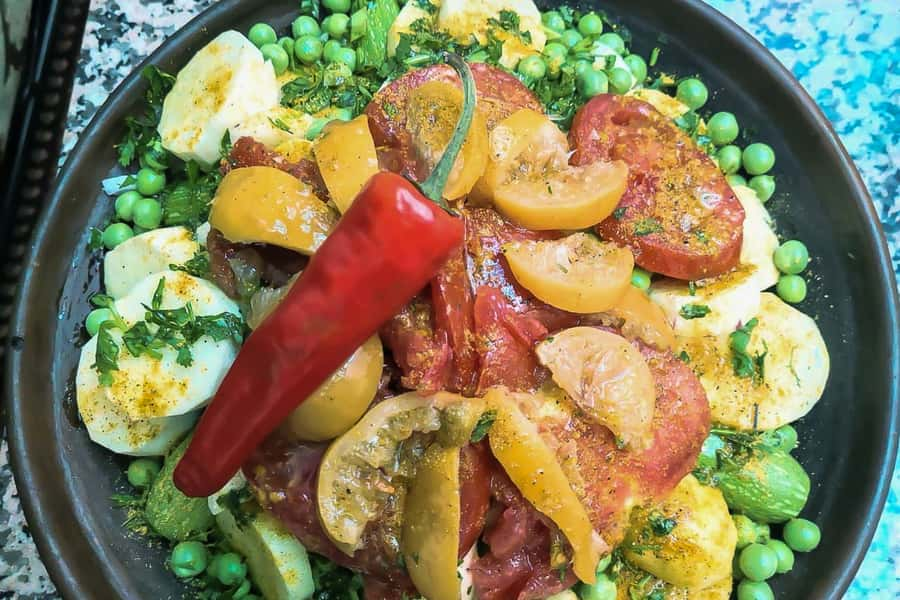
After shopping, you move to the cooking setting, described as a charming riad in the heart of Marrakesh. The cooking workshop is hands-on, with a professional chef showing you how to prepare a traditional Moroccan tagine.
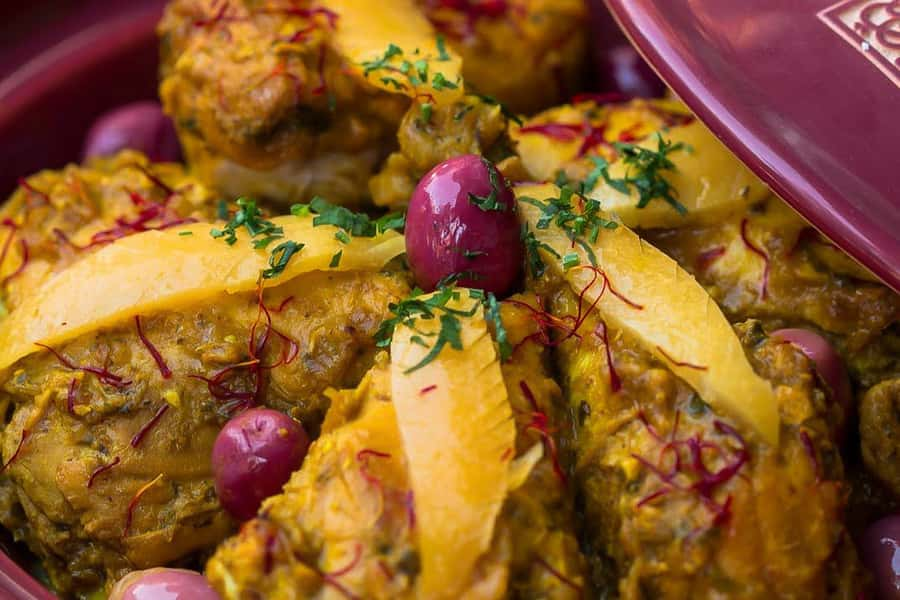
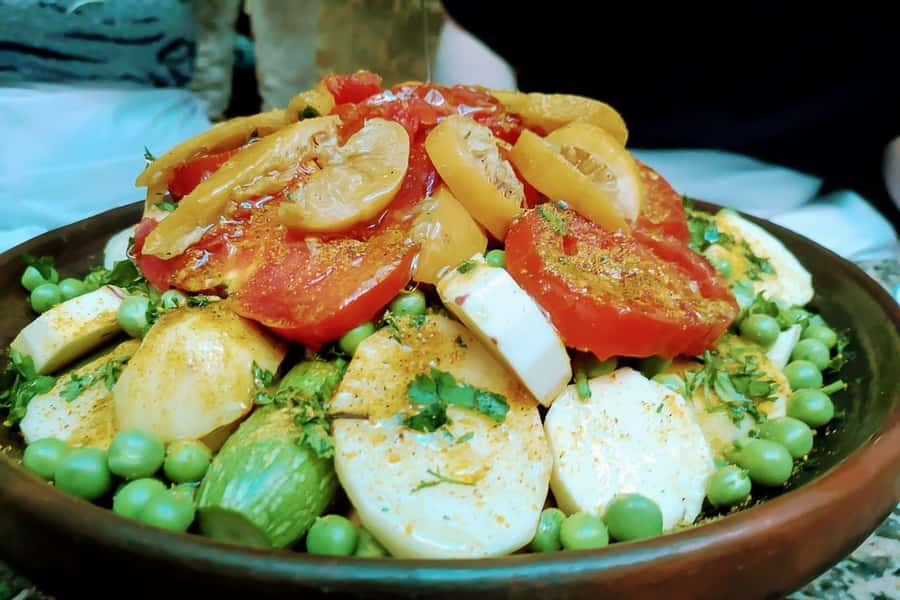
Tagine is both the name of the dish and the distinctive cooking vessel used for it. The important lesson is not only which ingredients go into the pot. You learn how to season the dish, arrange the ingredients, and cook them in a way that lets the flavors develop slowly.
You may also learn extra Moroccan dishes during the session. Past participants have specifically learned to make Moroccan salad and bread, along with tips for seasoning and cooking tagine. The exact menu can vary, so ask what you will prepare when the class starts.
I like this practical approach better than a demonstration where you only watch the chef. You get a chance to handle ingredients and see how the dish changes during cooking. Recipes are sent after the workshop, which makes it easier to recreate at home instead of relying on memory.
There is one limit to the hands-on format. Even in a private booking, several people may not get equal time with every task. One person might chop, another might mix spices, and someone else might handle the cooking. If you want a particular job, say so early. The chef may be able to share the work more evenly.
Dietary needs should also be discussed before the lesson begins. A vegetarian request was accommodated during one booking, which is encouraging, but you should not wait until the market or kitchen to raise the subject. The ingredients are chosen at the beginning, so early notice gives the class a better chance to adapt.
Sitting down to eat the tagine
The best payoff comes at the end, when you eat the food prepared during the class. This turns the lesson into a complete meal rather than a short cooking demonstration.
Lunch or dinner is included, depending on the starting time. The meal takes place after the cooking, in the riad setting. That order matters: you can taste the tagine with a clear sense of what went into it and how it was made.
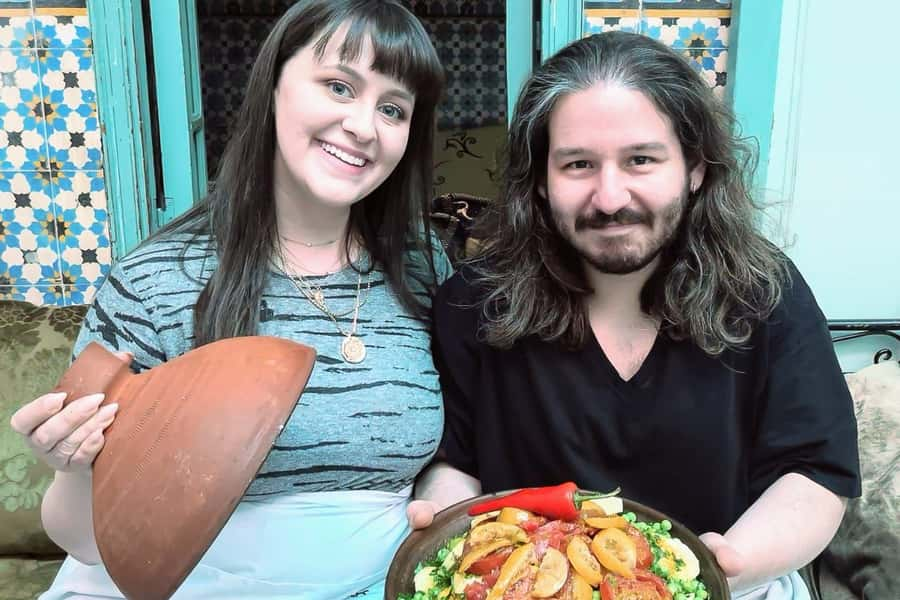
The atmosphere can be warm and personal. The cooking takes place with local women, and one participant described the kitchen hosts as especially welcoming. Another enjoyed being in a family home, with the family present and generous cooking advice shared along the way. The exact setting may vary, but the experience is designed to feel more personal than a standard restaurant meal.
The social side can also be unpredictable. During one booking, the cooking period felt relaxed and friendly, but the mood changed when the owner joined the meal and took over the conversation. That does not make the experience a bad choice, but it is a reminder that a home-style meal includes real personalities, not a carefully staged dining performance.
If you hope to eat alongside the cooks, ask politely before the meal. The local hosts may finish their work and leave when the food is served. The class can still be rewarding, but the amount of conversation at the table is not guaranteed.
More Cooking Classes in Morocco
- Marrakech: Cooking Class and Market Visit
★ 4.4 · 5 reviews - Moroccan Cooking Class & Marrakech Market Visit with Chef Khmisa
★ 5.0 · 1,504 reviews - Moroccan Cooking Class with Market Visit and Meal
★ 5.0 · 196 reviews - Fez: Souk Tour and Traditional Home Cooking Class
★ 4.9 · 186 reviews
What $81 buys you in Marrakesh
At $81 per person, this is not the cheapest way to eat in Marrakesh. You are paying for more than a plate of tagine, though. The fee covers a private guide, the market visit, the cooking instruction, lunch or dinner, photographs, and recipes sent afterward.
That package makes the price reasonable for someone who wants an activity with a meal attached. You receive direct instruction, local shopping context, and a recipe collection you can use later. The private group also gives you more control than a large class, especially if you want to ask about ingredients or request vegetarian cooking.
The value is weaker if your main goal is simply a filling meal. You can eat for less elsewhere, and the actual time may be shorter than expected. The advertised duration is four hours, but one booking lasted three to three and a half hours, while another comment suggests that the expected time should be clarified depending on whether the menu is tagine or couscous.
Ask about the exact menu and schedule before you pay. Find out whether the market shopping, cooking, eating, and photographs are all included within the four-hour window. That one question can prevent a mismatch between your expectations and the day itself.
The free cancellation policy adds useful flexibility. You can cancel up to 24 hours in advance for a full refund, and the reserve-now, pay-later option means you do not need to pay at the time of booking. These terms are helpful when your Marrakesh plans are still shifting.
Who will enjoy this Marrakesh cooking class?
I would recommend this experience to you if you like food lessons that include cultural context. You will get more from it if you want to know what you are buying, why Moroccan cooks use certain spices, and how to reproduce the meal at home.
It also suits couples, families, or a small private group that wants a slower activity away from sightseeing. The class offers a break from monuments and shopping, while still keeping you connected to the city through its market and food.
It is a good choice for curious cooks, including beginners. You do not need to arrive with advanced kitchen skills. The appeal is learning through simple tasks, tasting the result, and receiving recipes afterward.
You may want another activity if you dislike uncertain timing or prefer a polished professional kitchen. This is a personal, local experience, and that can mean uneven participation, changing conversation, or a shorter session than expected. It is also not ideal if you want a detailed market lesson but are uncomfortable speaking up when an interpreter is doing most of the talking.
Practical advice for a smoother visit
Start by arriving at Café France early enough to identify the meeting point. Djemaa El-Fna is a busy place, and a few extra minutes will make the start less stressful.
Tell the guide about dietary needs before the shopping begins. Vegetarian cooking has been handled successfully, but the market choices shape the meal, so early notice is important.
Ask for a clear plan at the start:
- Which dishes will we make?
- How long will we spend at the market?
- Will everyone get a cooking task?
- Are we making tagine, couscous, bread, or salad?
- When will the meal be served?
These questions are not fussy. They help you understand how the four hours will be divided.
Use the language support actively. Ask for the Arabic names of ingredients, then repeat them back. If you are interested in spices, ask where they come from, how much to use, and what each one contributes to the dish.
Finally, treat the class as a shared activity rather than a private chef service. You may not control every part of the kitchen, and the hosts may have their own rhythm. A little patience will help you appreciate the local contact that makes this experience different from a cooking school designed only for tourists.
Should you book it?
Book this Marrakesh cooking class if you want a private, food-focused encounter that combines a market visit, practical cooking, and a meal in a local setting. The warm hosts, enthusiastic guide, useful recipes, and tasty tagine make it a strong pick for food-minded visitors.
I would hesitate only if you need a precise five-hour schedule, equal participation in every task, or a carefully managed dining experience. Before booking, confirm the exact menu and expected duration. If those details suit you, $81 is a fair price for a personal cooking lesson that gives you more than a meal and leaves you with skills to use after Morocco.
FAQ
Where does the cooking class meet?
Meet outside Café France in Djemaa El-Fna. Enter the square through its main entrance and look for the three-story café on the right.
How long does the experience last?
The stated duration is four hours. Starting times vary, and the actual session may be closer to three or three and a half hours depending on the schedule.
What languages are available?
The guide and language support are available in Arabic, English, and French.
Is this a private experience?
Yes. The activity is offered as a private group experience.
What food will I learn to cook?
The main lesson focuses on a traditional Moroccan tagine. The cooking may also include Moroccan salad or bread, but you should confirm the exact menu before the class.
Is a meal included?
Yes. Lunch or dinner is included, depending on the starting time, and you eat the food prepared during the class.
Can I request vegetarian food?
A vegetarian meal has been accommodated during a previous booking. Tell the organizer about your preference before the market shopping begins.
What is included in the price?
The $81 price includes a local English- or French-speaking guide, lunch or dinner, photographs, and recipes sent after the workshop.
More Private Market Tours in Morocco
- Marrakech Private Souks Shopping Tour
★ 4.4 · 4 reviews - Shopping in the Souks of Marrakech Private Tour
★ 5.0 · 620 reviews - Marrakech Shopping Tours : Private Souks Tour
★ 5.0 · 345 reviews - Marrakech: Exclusive Private Shopping Adventure in The souks
★ 5.0 · 200 reviews
More Private Market Tours in Marrakech
- Marrakech: Exclusive Private Shopping Adventure in The souks
★ 4.9 · 77 reviews - Marrakech: Hidden Souks Shopping Tour with Private Guide
★ 4.1 · 53 reviews - Marrakech: Private Souks Tour with Tea and Traditional Snack
★ 4.6 · 33 reviews - Marrakech: private Guided tour Of Vibrant Souks
★ 3.8 · 24 reviews
Just added around Marrakesh
- Souks tour of Marrakech ( 3 hours )★ 5.0 · 5 reviews
- Marrakech: Hidden Souks Shopping Tour with Private Guide★ 4.1 · 53 reviews
- Marrakech: Half-Day Medina Markets Tour★ 4.5 · 11 reviews
- Edgy 8 Dish Private, Fusion Cooking Class, Menu Plan, Market★ 4.9 · 31 reviews
- Marrakech: Bahia Palace, Madrassa & Souks Guided Tour★ 4.8 · 47 reviews
- Marrakech: Vibrant Souks, Local Artisans & Medina Experience★ 4.5 · 66 reviews
- Marrakech: Private Souks Tour with Tea and Traditional Snack★ 4.6 · 33 reviews
- Marrakech: private Guided tour Of Vibrant Souks★ 3.8 · 24 reviews
Local & Farmers Market Tours, compared.
Hanoi Cooking Class: Culture, Local Market & Meaning CSR Impact
Read our review →
Cooking Class and Lunch at a Tuscan Farmhouse with Local Market Tour from Florence
Read our review →
Cooking Class Hoi An:Local Market, Basket Boat, Fishing & Cooking
Read our review →
London Bridge & Borough Market Food Tour with 7 Authentic Dishes
Read our review →
Hoi An Cooking Class(Local market,Basket Boat,Fishing & Cooking)
Read our review →