
Review · VIETNAM
Hanoi: Maya Traditional Cooking Class & Market Tour
Market smells tell you what Hanoi cooks. This three to four-hour cooking class begins at Yen Thai Market, where you see the fresh produce behind Vietnamese food before preparing four local dishes and egg coffee. I like the market visit because it gives the recipes a real setting, and I like the small groups, limited to 10 people, which leave room for questions and hands-on practice. The main drawback is that afternoon markets may not be open, and you may spend more time cooking than browsing.
The price is a strong point. At $22 per person, you get the market tour, ingredients, instruction, the full meal, fruit, drinks, local wine tasting, water, and recipes to take home. Guides such as Iris, Ruby, Stephanie, Evelyn, and Devin are repeatedly praised for their patience, clear English, warm manner, and cultural explanations.
Plan around the meal, though. You prepare the dishes first and eat afterward, so this is not a quick snack stop. Allergy and dietary requests can be accommodated, but tell the team ahead of time. The class takes place at the Maya kitchen, reached from the Crossing Vietnam Tour office, and hotel pickup is not included.
Key points to know before booking
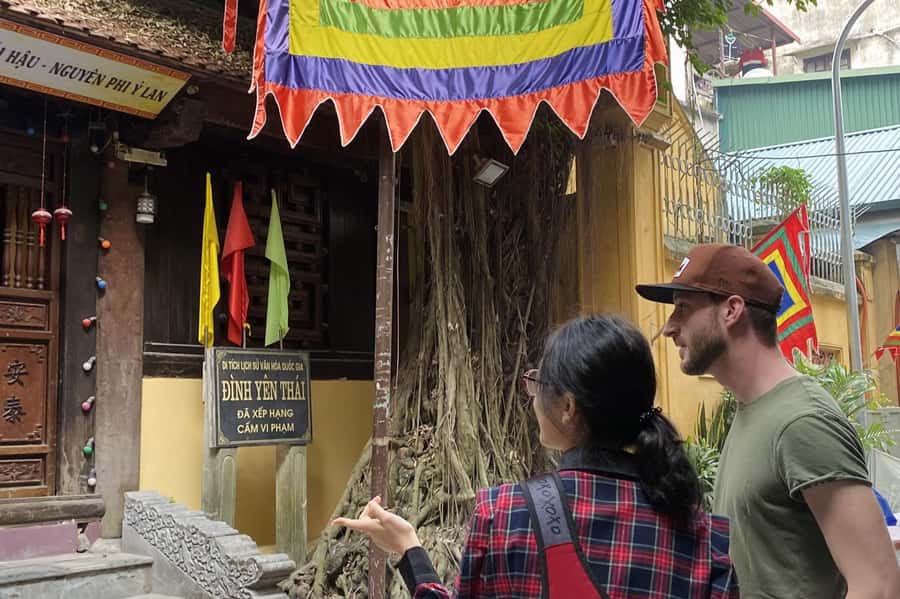
- Yen Thai Market comes first: You see local ingredients, seasonal fruit, and everyday food buying before entering the kitchen.
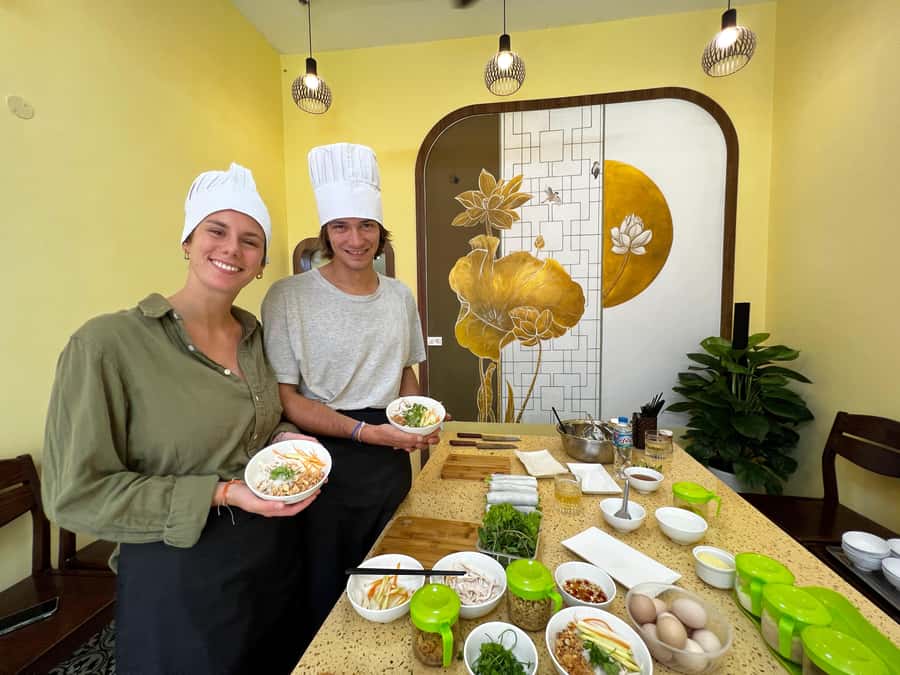
- Four dishes are prepared from scratch: The menu includes fried spring rolls, papaya salad, pho rolls, and mixed pho.
- Egg coffee is part of the lesson: You learn Hanoi’s famous sweet, creamy coffee specialty, not just the savory dishes.
- The food is served at the end: Plan breakfast or a light meal around the class, especially for an early or afternoon session.
- Small groups make the class hands-on: With no more than 10 people, you should get time at the cutting board and stove.
- Recipes go home with you: The class is useful beyond Hanoi because the dishes are designed to be repeated in your own kitchen.
Starting at Yen Thai Market in Hanoi
The class begins with a welcome at the Crossing Vietnam Tour office, followed by a walk or short transfer to nearby Yen Thai Market. This is not presented as a grand sightseeing stop. Its value is simpler: you get to see the ingredients in the place where local people buy them.
Your guide introduces fruits, vegetables, herbs, and other items used in Vietnamese cooking. Several participants have particularly enjoyed trying unfamiliar fruit and choosing fresh produce for the meal. That makes the market visit more than a shopping chore. It helps you connect a finished dish with the raw ingredients that give Vietnamese food its fresh taste.
I like this order. If you visit the market after cooking, you may recognize a few things, but you will not understand why they matter. Going first gives the class a useful food vocabulary. You can ask what a particular herb does, which ingredients can be replaced, and how Vietnamese cooks balance sour, sweet, salty, and spicy flavors.
Keep your expectations in check. The market visit is described as a quick introduction, not a long food tour. One participant wanted more time there and felt most of the session took place in the kitchen. If the market is your main interest, choose a morning class when it is more likely to be operating and ask about the schedule before booking an afternoon session.
The market also adds a bit of Hanoi reality. You are not simply being handed premeasured ingredients in a classroom. The food begins with a local shopping stop, seasonal produce, and a look at the daily business of buying and preparing food.
More Cooking Classes in Hanoi
- Hanoi Cooking Class: Culture, Local Market & Meaning CSR Impact
★ 5.0 · 5,147 reviews - 5 Traditional Dishes Hanoi Cooking Class with Market Trip
★ 5.0 · 4,890 reviews - Vietnamese Food Cooking Class in Hanoi with Market Experience
★ 5.0 · 778 reviews
The Maya kitchen and the small-group format
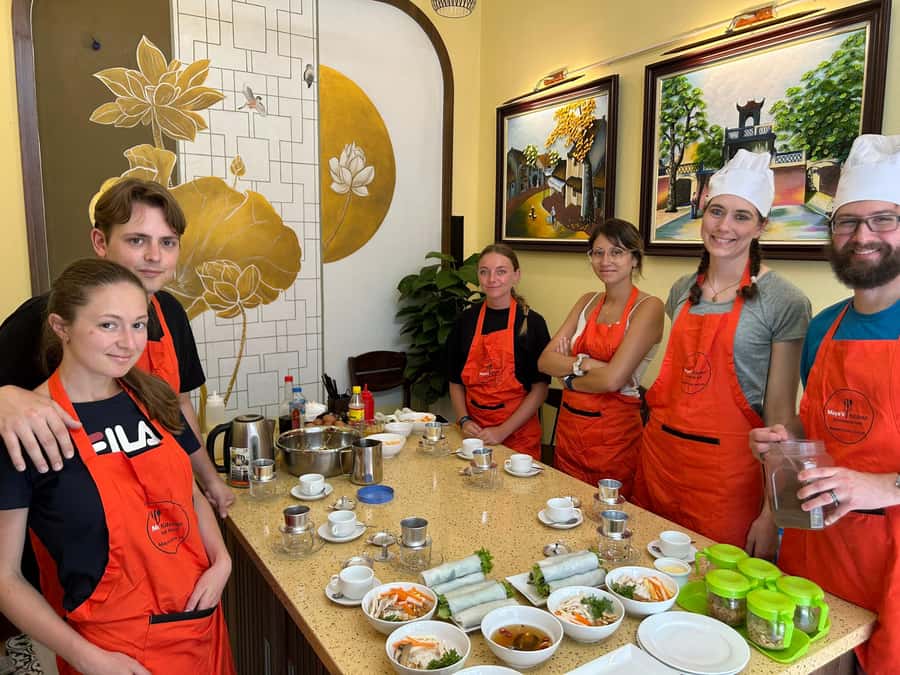
After the market, you head to the Maya kitchen for the practical part of the class. The group can include up to 10 participants, though some sessions are much smaller. Couples have sometimes found themselves in a nearly private lesson, while larger groups still remain compact enough for individual help.
That size matters. Cooking classes can become demonstrations where you watch one person chop while everyone else waits. Here, the stated format is hands-on, and the strongest feedback focuses on patient step-by-step guidance. Guides including Iris, Ruby, Stephanie, Evelyn, and Devin are praised for keeping people involved and answering questions as the food comes together.
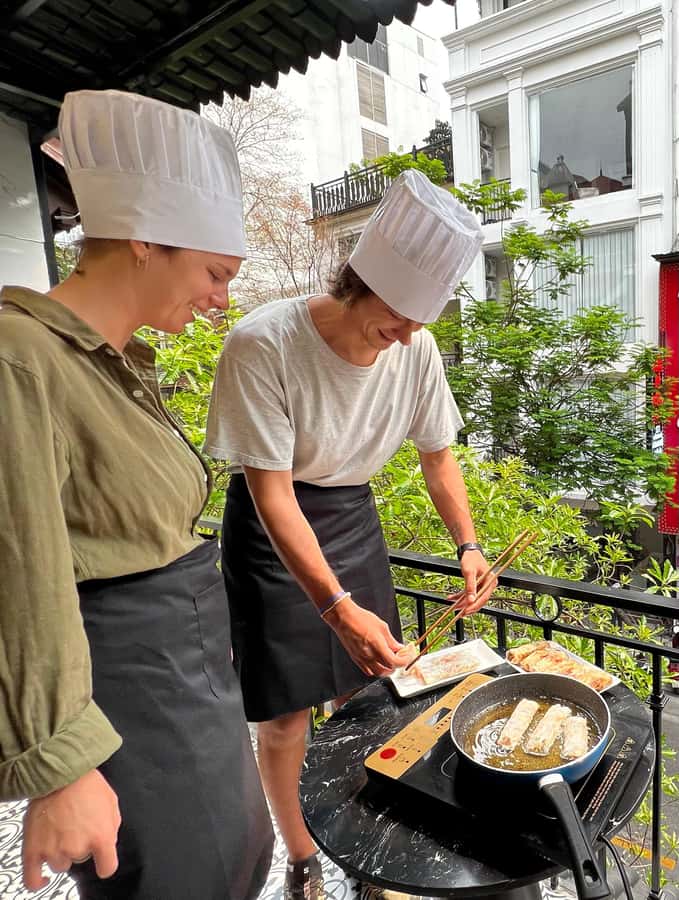
The cooking room is air-conditioned, which is a welcome detail in Hanoi. One participant also enjoyed frying spring rolls on a balcony while rain fell and the street carried on below. That kind of setting gives the class a local feel without asking you to cook in uncomfortable heat.
The staff also handles much of the background preparation and cleaning. That lets you focus on the food rather than spending the whole session washing dishes. You should still expect a working kitchen, not a polished restaurant demonstration. You will handle ingredients, shape rolls, mix salads, and take part in the process.
English and Vietnamese are offered. The guides praised by name are not identical for every departure, but the pattern is clear: the experience depends heavily on the person leading it. Iris is frequently described as patient and detailed, Ruby as friendly and engaging, Stephanie as warm and easy to follow, and Evelyn as helpful with both recipes and city information.
Four Vietnamese dishes, each with a different lesson
The menu gives you a good spread of Vietnamese cooking methods. You are not making four versions of the same noodle dish. You work with wrapping, frying, fresh herbs, raw vegetables, and noodles.
Nem ran, fried spring rolls
The class begins with fried spring rolls, also called nem ran. This is a useful first dish because it teaches a basic Vietnamese kitchen skill: shaping a neat, even roll that will hold together in hot oil.
The instructor guides your hands through the process. The shape matters, and the class treats rolling as more than a quick assembly task. You learn how firm the filling should be and how to make the finished rolls look tidy. It is a small lesson, but one you can repeat at home.
Fried spring rolls are also tied to holiday meals and family gatherings in Vietnam. That cultural context gives the dish more meaning than simply calling it a popular appetizer. You learn why it appears on special tables and why the technique is worth practicing.
This is one of the more popular parts of the class, and it is easy to see why. Frying produces an immediate result, and the crisp rolls are a satisfying reward later in the meal. Take care around the hot oil and let your instructor manage any step that feels uncomfortable.
More Cooking Classes in Vietnam
- Hanoi: 5 Local Dishes Cooking Class with Meal & Market Visit
★ 5.0 · 420 reviews - Hanoi Cooking Class and Market Tour in Ancient House
★ 5.0 · 379 reviews - Rose Kitchen Hanoi: Market, Cooking & Culture Tour + Free PickUp
★ 5.0 · 342 reviews - Hanoi: Cooking Class in a Local Villa with Market Tour
★ 4.9 · 320 reviews
Nom du du, papaya salad
Next comes papaya salad, built around sour and sweet flavors. This dish shows how Vietnamese food can feel bright and light even when the meal includes fried food.
The class uses the salad to explain balance. The final taste should not be only sour or only sweet. Your guide helps you adjust the mixture, and this is where questions are especially useful because small changes can alter the whole dish.
Papaya salad is also a good choice for a class because it requires less cooking than the spring rolls. You get to focus on cutting, mixing, dressing, and tasting. It breaks up the heat and gives the meal a fresh element.
Pho cuon, fresh pho rolls
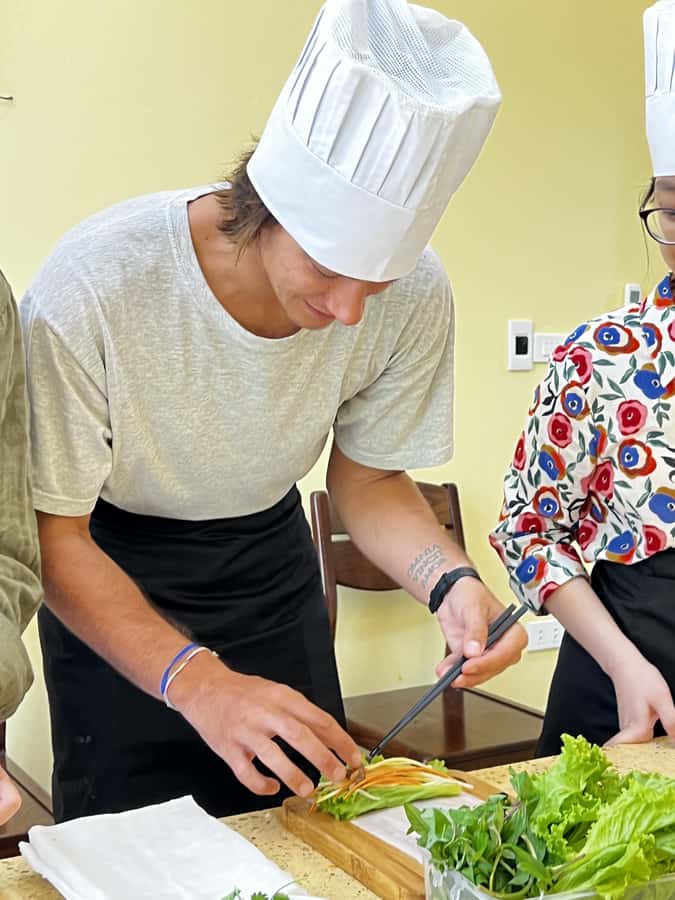
Pho cuon turns familiar pho ingredients into rolls rather than a bowl of soup. You work with soft rice noodles or sheets, herbs, and filling, then assemble them into a fresh handheld dish.
This is a nice reminder that Vietnamese food is not limited to the pho most people know abroad. The dish has the recognizable flavors of pho but a different texture and presentation. It also rewards careful handling. The rolls need to be filled without tearing and cut or served neatly.
The class is a good place to learn the technique because you can make mistakes without wasting an entire restaurant order. Your instructor can show you how to handle the soft wrapper and how much filling is practical.
Pho tron, mixed pho
Pho tron is mixed pho, a dry version in which the noodles and other ingredients are combined rather than served in broth. It is a useful contrast to the soup-based pho that many first-time visitors expect.
You learn how the seasoning is distributed through the noodles and how fresh additions change the final bite. The dish helps explain why Vietnamese cooking often depends on several modest components working together: noodles, herbs, vegetables, sauce, and protein or filling.
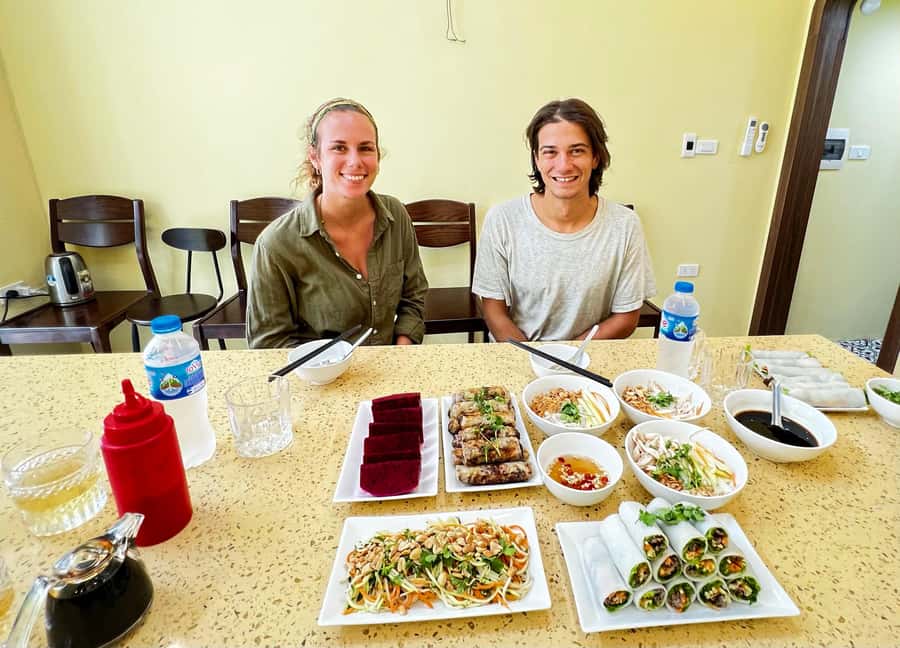
Together, these four dishes create a well-paced lesson. Fried spring rolls teach shaping and frying. Papaya salad teaches balance. Pho rolls teach assembly. Mixed pho shows a different way to build a noodle dish.
Making Hanoi egg coffee
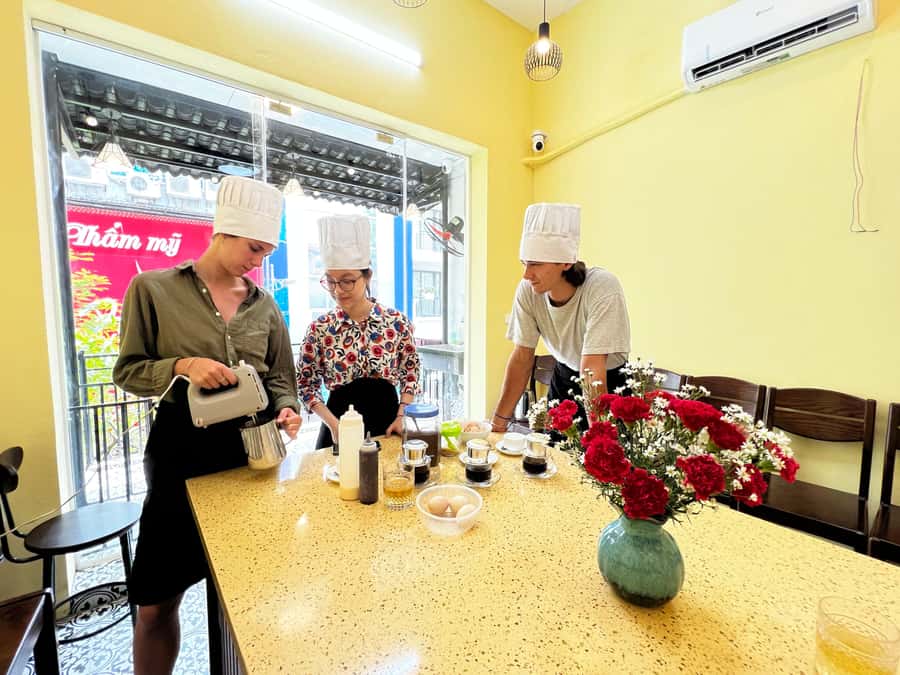
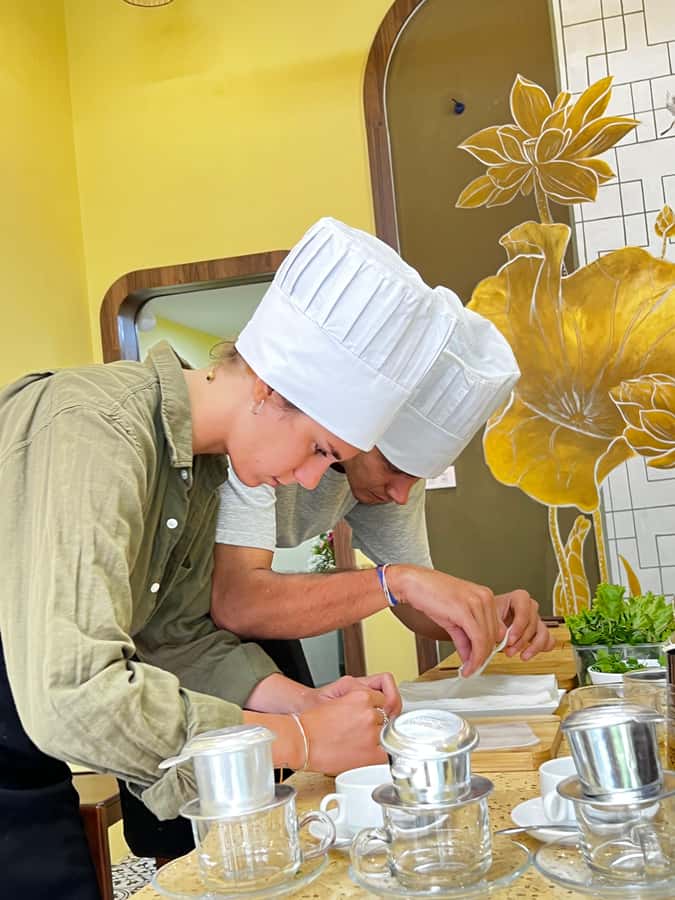
The final special item is ca phe trung, or Vietnamese egg coffee. This is Hanoi’s signature drink and one of the most memorable parts of the menu.
The preparation uses a sweet, creamy egg mixture with coffee. It is very different from a standard black Vietnamese coffee, so the class gives you a chance to understand the drink before ordering it elsewhere in Hanoi.
Making egg coffee also adds a useful local touch to the session. You are not only learning lunch dishes. You are learning a Hanoi specialty that belongs to the city’s café culture.
The drink is sweet and rich, so it works well as a final course alongside seasonal fruit. If you prefer savory food, do not mistake it for a small coffee break. It is part of the meal and a dessert-like finish.
Eating everything you make
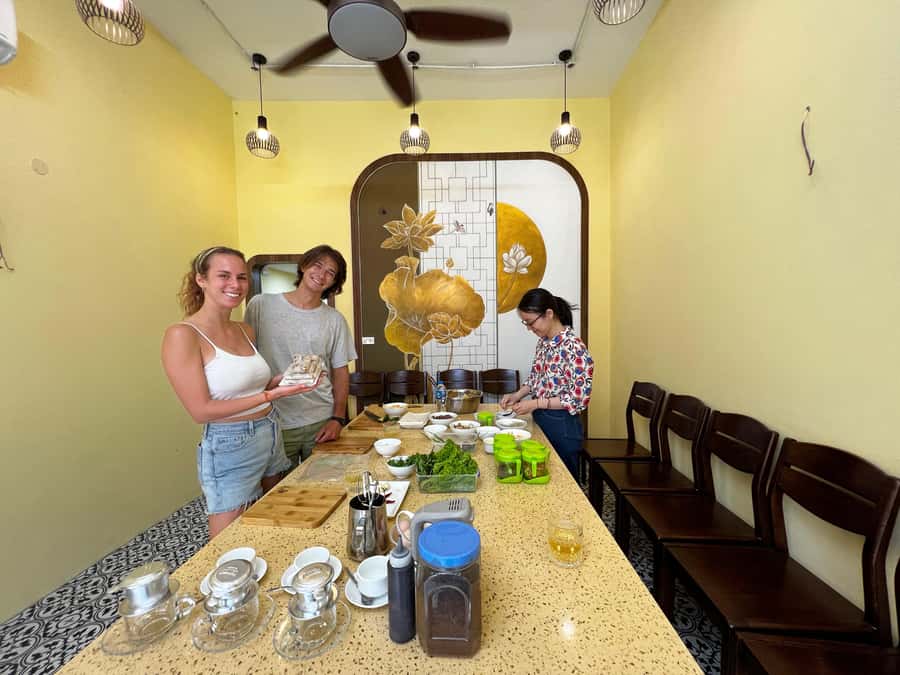
You sit down to eat after the cooking is complete. This order is important. You do not snack through the class, so you should not arrive extremely hungry, particularly for a morning session.
The portions are described as manageable, with enough food to taste each preparation without making the meal uncomfortably large. Some sessions produce enough extra food for the guide to pack leftovers to take away. That will depend on the group and the amount prepared, but it is worth asking if you have more than you can eat.
Seasonal fruit is included for dessert, and the market visit may give you a chance to choose or try fruit you have not encountered before. Drinking water is provided, and local wine tasting is included in the package.
The meal is one of the class’s strongest features because you can judge the results immediately. A recipe can look simple on paper and still be difficult to balance. Sitting down with the finished dishes helps you remember the technique and decide what you would change at home.
The food is prepared with fresh ingredients bought for the class. One participant specifically appreciated that the produce was washed with drinking water. If you have an allergy, mention it before cooking. A nut allergy was handled successfully in one session, and other dietary changes may be possible, but the team needs advance notice.
What the $22 price really buys you
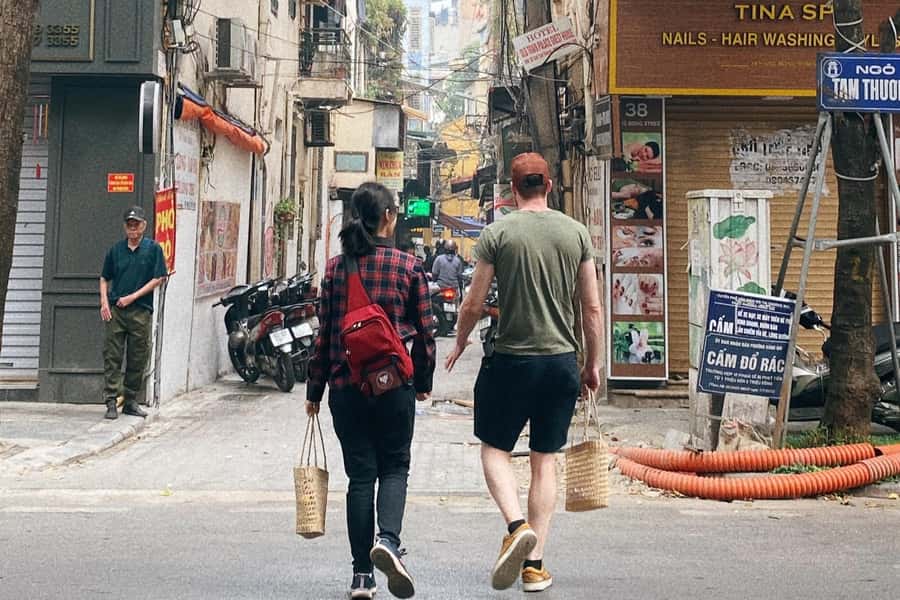
At $22, this is good value for a three to four-hour activity in Hanoi. You are paying for more than a recipe sheet. The price includes the market visit, the market purchases, the instructor, all food and drinks, seasonal fruit, water, local wine tasting, and the recipes.
A Hanoi meal can cost very little, so it would be wrong to judge this only by the amount of food. The better comparison is a guided food lesson plus a market introduction and a full meal. If you want to understand how local dishes are made, the cost is modest.
The recipe handout adds lasting value. Several participants have used the instructions to recreate the dishes at home, and guides sometimes send the recipes digitally as well. That makes the class a better choice than a meal you simply finish and forget.
The main cost is time. You give up half a day, and the experience is not designed for someone rushing between major sights. I would schedule it on a day when you can take your time and enjoy the meal afterward.
Timing, meeting point, and practical limits
The activity lasts about three to four hours. You meet at the Crossing Vietnam Tour travel agency, and hotel pickup and drop-off are not included. Plan your route to the office rather than assuming transport will be arranged.
Morning sessions are the safer choice if the market matters to you. Local markets usually operate in the morning, and the afternoon market stop may not be available on some days. The cooking portion still takes place, but the market experience can be reduced or changed.
Free cancellation is available up to 24 hours before the activity for a full refund. You can also reserve now and pay later, which helps if your Hanoi plans are still shifting.
The class is offered in English and Vietnamese. Group size is capped at 10, and the food can be adjusted for dietary needs when the team knows in advance.
Who should book this Hanoi cooking class?
I would choose this class if you want a practical introduction to Vietnamese food rather than a formal chef lesson. It suits first-time visitors, couples, solo participants, families with older children, and anyone who enjoys eating but does not consider themselves an expert cook.
It also works well for people who want a manageable activity in Hanoi. You get a short market visit, a comfortable kitchen, a meal, and cultural explanation in one block of time.
The class is especially useful for you if you want to cook Vietnamese food at home. The dishes use recognizable techniques, and the guides explain each step clearly enough for beginners. You should not expect professional culinary training or a long market walk.
I would be more cautious if your priority is a full market tour, a quiet private lesson guaranteed for your group, or a menu built entirely around one dietary restriction. The class is small, but not always private, and the market portion is brief.
Should you book it?
Yes, if you want a friendly, affordable, hands-on introduction to Hanoi’s food culture. The mix of Yen Thai Market, four dishes, egg coffee, fruit, and take-home recipes gives the $22 price real value.
Choose a morning departure if the market is important, and arrive ready to cook before eating. Tell the team about allergies early, and allow the full three to four hours.
Skip it only if you want to spend most of your time at the market or prefer a restaurant meal with no preparation. For everyone else, this is a practical way to understand the food on your plate and leave Hanoi with skills you can use again.
FAQ
How long does the Hanoi cooking class last?
The activity lasts approximately three to four hours, including the market visit, cooking lesson, and meal.
Where does the experience meet?
You meet at the Crossing Vietnam Tour travel agency. Hotel pickup and drop-off are not included.
What dishes will I cook?
You prepare fried spring rolls, papaya salad, pho rolls, and mixed pho. You also make Vietnamese egg coffee and receive seasonal fruit for dessert.
Is the market open for afternoon sessions?
The market may not be available on some afternoons because local markets usually operate in the morning. Choose a morning session if visiting the market is important to you.
What languages are available?
Instruction is offered in English and Vietnamese.
How many people are in each group?
The class is limited to 10 participants, although some sessions may have fewer people.
What happens if I need to cancel?
You can cancel up to 24 hours in advance for a full refund. You can also reserve your place and pay later.
Just added around Hanoi
- Weekend Hanoi Night Market & Street Food Tour★ 4.5 · 47 reviews
- Hanoi: Vietnamese Cooking Class- Market Tour with Local Chef★ 5.0 · 2 reviews
- Hanoi’s Culinary: Authentic Cooking Class and Local Market★ 4.8 · 5 reviews
- Hanoi Cooking Class: Market Tour, Free Recipe & Beverages★ 5.0 · 10 reviews
- Hanoi Food Adventure: Vietnamese Market Tour & Cooking Class★ 4.8 · 5 reviews
- 2 Day Sapa-Bac Ha Market: Night Train& Homestay-Bus Ha Giang★ 5.0 · 2 reviews
- Mini Hanoi Coffee Workshop: Pick Any Signature Coffee You Like★ 5.0 · 160 reviews
- Hanoi: Old Quarter Market Tour and Cooking Class with Meal★ 4.8 · 192 reviews
Cooking Classes, compared.
Hanoi Cooking Class: Culture, Local Market & Meaning CSR Impact
Read our review →
5 Traditional Dishes Hanoi Cooking Class with Market Trip
Read our review →
Cooking Class and Lunch at a Tuscan Farmhouse with Local Market Tour from Florence
Read our review →
Cooking Class, Market & Thai Herbs Garden Tour
Read our review →
Authentic Cooking Class with Market & Farm Visit
Read our review →
Paella Cooking Experience & Boqueria Market Tour
Read our review →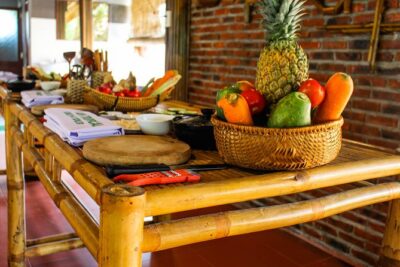
Cooking Class Hoi An:Local Market, Basket Boat, Fishing & Cooking
Read our review →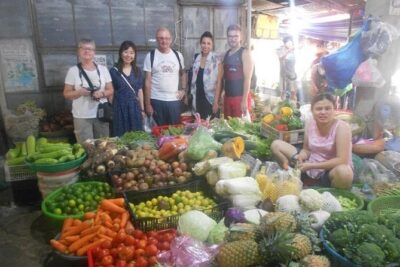
Hoi An Cooking Class(Market,BasketBoat Crabfishing&Cooking Class)
Read our review →Browse the lists this tour appears in