
Review · VIETNAM
Hanoi: 5 Local Dishes Cooking Class with Meal & Market Visit
Fresh food tells Hanoi’s story. This 3.5-hour class combines a local wet-market visit with hands-on cooking, so you do more than watch a chef work. You choose ingredients, learn practical techniques, and sit down to eat five dishes you helped prepare. I especially like the market shopping lesson and the chance to choose between two very different menus. I also like that vegetarian versions can be arranged. The main drawback is the pace: making five dishes in one session keeps things moving, but it leaves little room for a slow, relaxed cooking lesson.
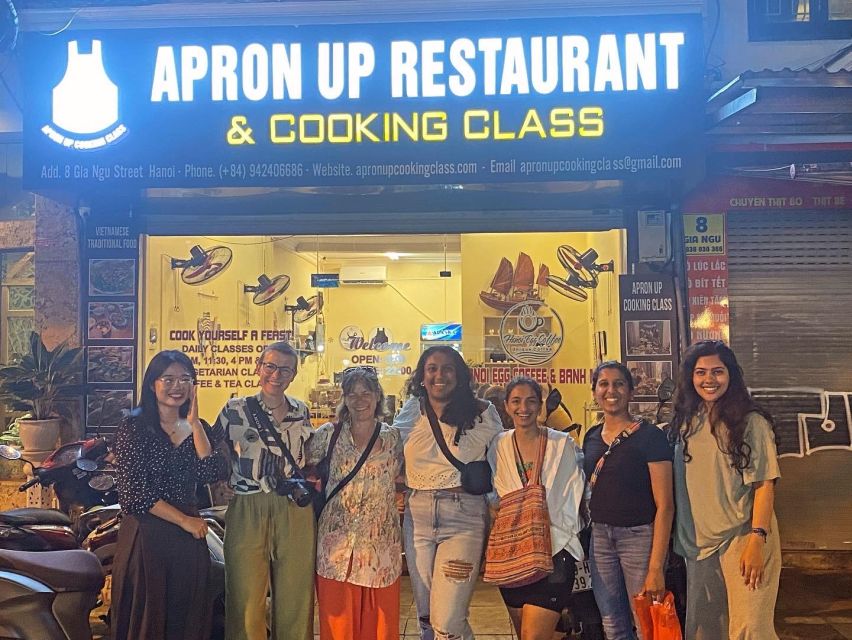
The class meets at Apron Up Cooking Class in Hanoi’s Old Quarter. Look for the large Apron Up sign. There is no included transportation, so you need to make your own way there and return to the same point afterward. At $40 per person, the price is fair for a meal, ingredients, instruction, market visit, tea, rice whisky, fruit, a cookbook, and a certificate.
Key points to know before booking
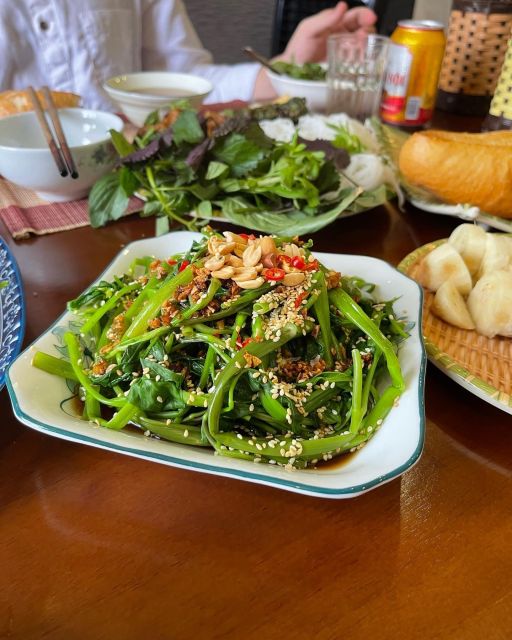
- You visit a real local wet market: Watch the chef choose fresh ingredients and learn what to look for when shopping in Hanoi.
- You make five dishes: The menu choices include pho, bun cha, spring rolls, salads, pancakes, noodle soup, and egg coffee.
- You eat what you cook: The class ends with a shared lunch or dinner, plus seasonal fruit and a small taste of rice whisky.
- Vegetarian cooking is possible: Both set menus can be adapted, so tell the class in advance if you do not eat meat.
- The instructors get strong praise: Winnie, Vy, Bella, Ruby, Kim, Perla, Ashley, and Vi are among the teachers singled out for clear help and friendly teaching.
- You leave with useful souvenirs: The cookbook is more practical than a simple souvenir, and the certificate confirms that you completed the class.
Meeting the chef in Hanoi’s Old Quarter
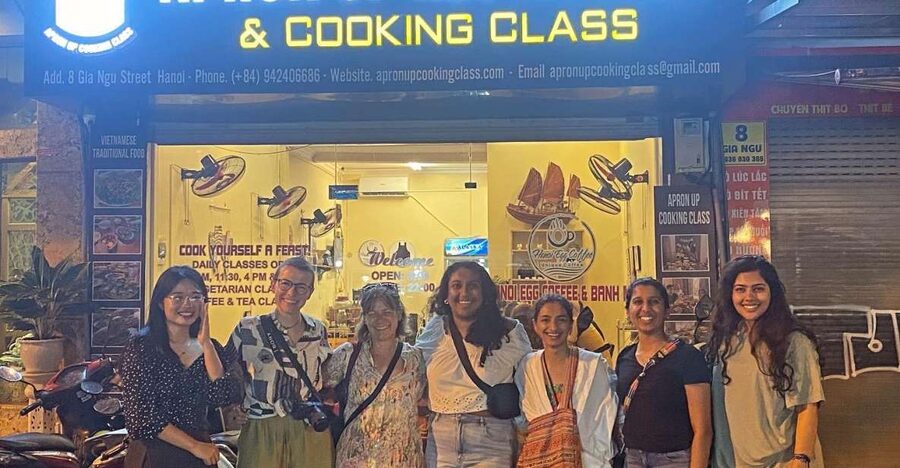
Your class begins at Apron Up Cooking Class, in or near Hanoi’s Old Quarter. The meeting point is simple to identify: look for the big Apron Up sign in front of the venue. Since transport is not included, allow enough time to reach the meeting point on your own.
The class lasts about three and a half hours. Starting times vary, so check the available session when you book. You finish back at the same meeting point, which makes it easy to plan around a morning walk, an afternoon visit, or an evening meal.
The English-speaking instructor welcomes you and explains how the session will work. This is a group class, but the size can vary. On quieter dates, the session may feel almost private. That can be a real advantage if you want more personal guidance, though you should not assume every departure will have the same group size.
The setup suits a wide range of cooking abilities. One participant who had only recently started cooking found the instructions easy to follow, while more experienced cooks appreciated the small tips on seasoning and technique. The teachers are used to working with people who have different skill levels.
More Cooking Classes in Hanoi
- Hanoi Cooking Class: Culture, Local Market & Meaning CSR Impact
★ 5.0 · 5,147 reviews - 5 Traditional Dishes Hanoi Cooking Class with Market Trip
★ 5.0 · 4,890 reviews - Vietnamese Food Cooking Class in Hanoi with Market Experience
★ 5.0 · 778 reviews
Shopping for ingredients at a Hanoi wet market
The market visit gives the class its local character. Instead of arriving to find every ingredient already measured, you follow the chef into a nearby wet market and watch the shopping process.
You see how the instructor selects fresh produce and other ingredients for the dishes. This is useful because Vietnamese cooking depends on freshness, balance, and the right combination of herbs, vegetables, sauces, and noodles. The market stop also gives you a better sense of how ordinary food shopping works in Hanoi.
Pay attention to the chef’s practical advice. You may learn how to judge freshness and how particular ingredients are used in different dishes. The market is not simply a photo stop. It prepares you for the cooking by showing you the raw materials before they reach the worktable.
There is one thing to keep in mind. A wet market is an active food-shopping place, not a polished sightseeing attraction. You may find narrow walkways, strong smells, and plenty of movement. If you want a calm, staged introduction to Vietnamese food, this may feel busy. If you want a more direct look at daily food culture, it is one of the best parts of the morning or afternoon.
The market visit also helps explain why Vietnamese food tastes fresh rather than heavy. Herbs, vegetables, noodles, grilled meat, seafood, and sauces each play a clear role. Even if you never recreate the recipes at home, you come away with a better idea of how Hanoi cooks think about a meal.
Choosing between two five-dish menus
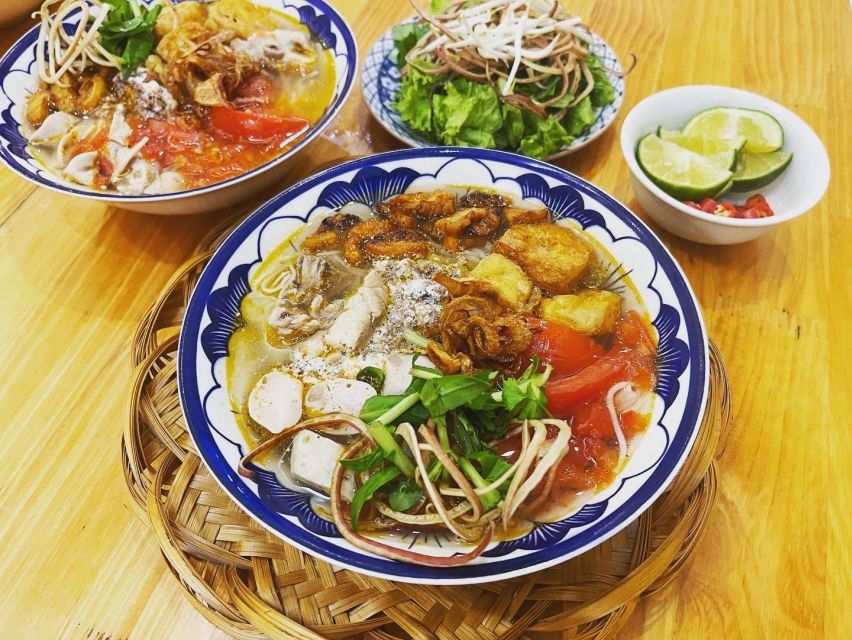
You choose one of two set menus. If you take the class twice, you can learn both. That is worth considering if Vietnamese food is a main reason for your Hanoi visit, since the menus cover different styles of cooking.
The first menu includes:
- Banh xeo pancakes
- Bun cha, grilled pork with noodles
- Pork rib noodle soup
- Beef fresh rolls
- Chicken salad
- Banana ice cream
The description presents five dishes, although the menu list includes several items and combinations that may be organized by the instructor during the session. Confirm the exact menu arrangement at the time of booking if you want to plan around a particular dish.
The second menu includes:
- Pho
- Bun cha
- Fried spring rolls
- Papaya salad
- Egg coffee
This menu gives you a particularly recognizable taste of Hanoi. Pho introduces you to one of Vietnam’s best-known noodle dishes. Bun cha is closely tied to Hanoi’s food culture, with grilled pork and noodles. Fried spring rolls teach a useful technique, while papaya salad adds a crisp, fresh contrast.
Egg coffee is the most unusual finish. It is a Hanoi specialty with a sweet, creamy topping over coffee. Making it yourself gives the class a local detail that goes beyond the usual spring rolls and noodle dishes.
The first menu offers more variety in form. You work with pancakes, soup, rolls, salad, and dessert. It may suit you if you want to learn several different preparation styles. The second menu is a strong pick if pho and egg coffee are high on your list.
Vegetarian adaptations are available for both menus. The class can replace meat-based dishes with vegetable versions, allowing you to cook and eat the full meal rather than sit out while others prepare the main course. Tell the class about your diet before the session so the ingredients can be planned properly.
Learning by doing, not just watching
This is a hands-on class. You roll up your sleeves, prepare ingredients, follow demonstrations, and help cook each dish. The instructor gives step-by-step guidance, then lets you take part.
That balance matters. A demonstration-only class can be pleasant, but it does not always teach you what to do when the apron is off and you are cooking at home. Here, you get to practice the basic movements and see how each dish changes as it comes together.
The instructors are praised for patience and clear direction. Vy is described as especially good at explaining basic methods, adjusting to different skill levels, and sharing useful tips for home cooking. Ruby gives clear demonstrations and is happy to repeat a step when needed. Kim has guided both complete beginners and solo participants with a calm, personal approach.
Other teachers receive similar praise. Winnie is valued for explaining ingredients at the market and keeping the class relaxed. Bella brings humor and energy while also discussing where dishes come from. Perla made the class accessible for a young teenager, including teaching Vietnamese words for the ingredients being used. Vi is noted for getting everyone involved and explaining the steps in a straightforward way.
English is the teaching language. Most participants find the explanations clear, though accents can vary, and one person found some of Bella’s speech difficult to understand at times. If you are unsure about a step, ask the instructor to demonstrate it again. That is part of the point of a practical class.
You also learn useful food vocabulary. Knowing the Vietnamese names for ingredients can help when you shop, order food, or read a menu later in your trip. It is a small detail, but it makes the class more useful after you leave Hanoi.
More Cooking Classes in Vietnam
- Hanoi Cooking Class and Market Tour in Ancient House
★ 5.0 · 379 reviews - Rose Kitchen Hanoi: Market, Cooking & Culture Tour + Free PickUp
★ 5.0 · 342 reviews - Hanoi: Cooking Class in a Local Villa with Market Tour
★ 4.9 · 320 reviews - Hanoi Maya Kitchen: Traditional Cooking Class & Market Tour
★ 5.0 · 287 reviews
Sitting down to eat your own Hanoi meal
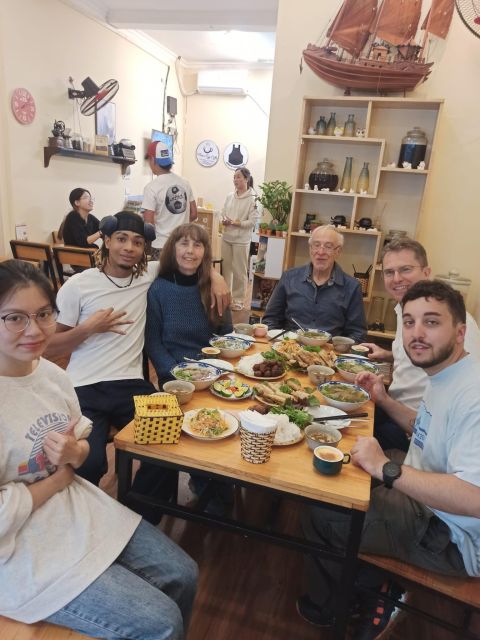
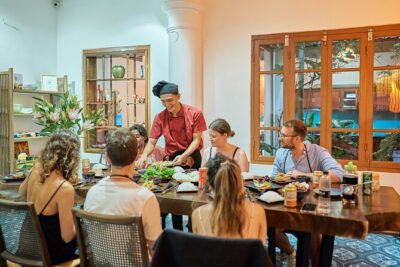
After the cooking, you sit down for lunch or dinner and eat the dishes prepared during the class. This shared meal is where the activity pays off. You see how separate ingredients become a full Vietnamese table, then taste the results while the techniques are still fresh in your mind.
The food is served as the group completes the cooking. That creates a social rhythm: prepare, cook, share, and try the finished dish. You work alongside people from different countries, and the meal gives everyone a natural reason to talk.
Tea, seasonal fruit, and rice whisky are included. The rice whisky is served as a sample rather than the main event, so you can try a local drink without turning the class into a drinking activity. If you do not drink alcohol, you can simply skip it.
The final meal is also a useful test of the teaching. The dishes are not just decorative examples. You eat what you helped make, and the cooking guidance is intended to produce food that tastes good. Participants particularly praise the pho, spring rolls, and the overall meal.
The five-dish format means the meal should feel generous. Still, keep in mind that the class is designed around shared preparation. You may not personally handle every task for every dish, especially in a larger group. The advantage is that you get a broad introduction to Vietnamese food without spending a full day in the kitchen.
The cookbook and certificate make the class more useful
The cookbook is one of the better take-home items included with the class. A certificate is a pleasant reminder, but the recipes are what give the experience lasting value.
Use the cookbook as a prompt to recreate one dish soon after returning home. The memory of the market, the smell of the ingredients, and the instructor’s small tips will still be fresh. Wait several months and the recipe may become another booklet in a drawer.
You also leave with a better understanding of how to adjust Vietnamese food to your own kitchen. The class may not reproduce every detail of cooking in Hanoi, but it gives you a workable starting point. You learn which ingredients matter, how the dishes fit together, and what kind of preparation is involved.
The cookbook is especially useful for people who enjoy food souvenirs but cannot bring fresh ingredients home. It takes up little space and gives you something more practical than a souvenir magnet.
Is $40 a fair price?
At $40 per person, this is a solid value for a three-and-a-half-hour activity. The fee covers the instructor, market trip, all ingredients and tools, five dishes, a full meal, tea, rice whisky, fruit, a cookbook, and a certificate.
The market visit adds value because it gives context before the cooking begins. The meal adds another layer because you are not paying for a short demonstration and then finding lunch elsewhere. You get instruction and food in one booking.
The price is also reasonable if you want an activity that works in poor weather. Hanoi can be hot, damp, or rainy, and a cooking session gives you a useful indoor plan while still connecting you with local food culture.
There are cheaper ways to eat in Hanoi. Street food and local restaurants will cost less, and they may offer a more spontaneous taste of the city. This class makes sense when you want to understand how the dishes are made, not just order them.
If you want a private class, check the booking details carefully. A quiet departure may result in a near-private session, but that is not guaranteed. There may also be premium options at a higher price, so compare what is included before paying extra.
Who should book this cooking class?
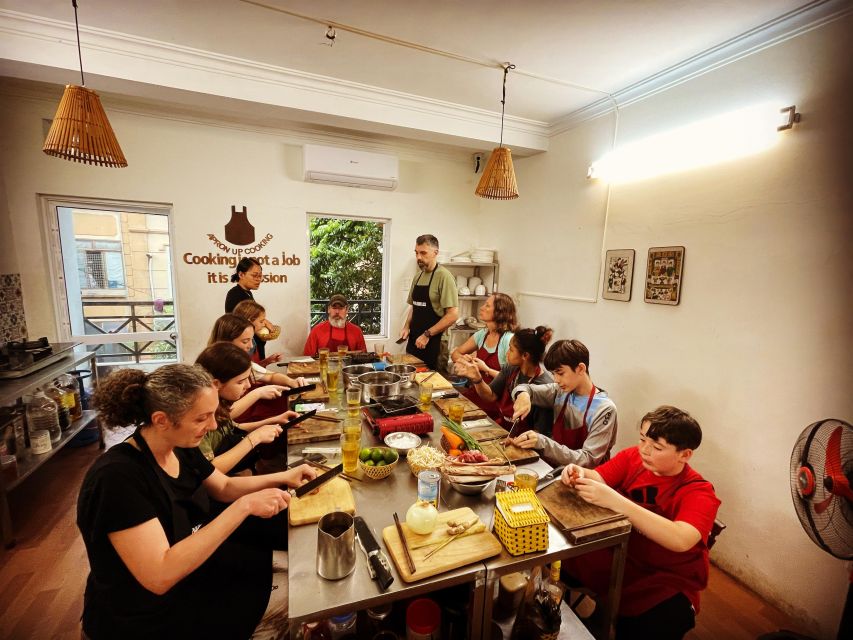
I would recommend it to first-time visitors who want a friendly introduction to Hanoi food. It is also a good choice for solo visitors, couples, families with older children, and anyone who enjoys meeting people through a shared meal.
The class suits beginners particularly well. You do not need advanced cooking skills, and the teachers are used to repeating steps and helping people at different levels. Food lovers who already know Vietnamese cuisine can still enjoy the market visit and the chance to learn local methods.
Vegetarians should consider it because the menus can be adapted. Families should note that children under four are not accepted. The activity is not suitable for wheelchair users or people with mobility impairments, and it is not suitable for people over 95.
The pace may not suit you if you want a long, quiet market visit or detailed time with every single dish. Five dishes in three and a half hours is a lot. You get variety and momentum, but not an unhurried professional chef course.
Should you book Apron Up Cooking Class?
Book this class if you want to do more than eat Hanoi food. The market visit, practical instruction, shared meal, and cookbook form a useful package, and the $40 price is reasonable for what is included.
Choose the menu with pho, bun cha, fried spring rolls, papaya salad, and egg coffee if you want classic Hanoi flavors and a local coffee specialty. Pick the other menu if you prefer pancakes, soup, fresh rolls, salad, and dessert. Vegetarians should request adaptations ahead of time.
I would skip it only if you dislike group activities, cannot manage a three-and-a-half-hour session on your feet, or want a private, highly detailed culinary course. For most visitors who enjoy food and want a hands-on Hanoi memory, Apron Up is an easy activity to recommend.
FAQ
Where does the cooking class begin?
Meet at Apron Up Cooking Class in Hanoi’s Old Quarter. Look for the large Apron Up sign in front of the venue.
Where does the class end?
The activity ends back at the meeting point.
How long does the experience last?
The cooking class and market visit last about 3.5 hours. Starting times depend on availability.
What language is the class taught in?
The instructor teaches in English.
How many dishes will I make?
You take part in preparing five traditional Hanoi dishes from one of two set menus.
Can the menus be adapted for vegetarians?
Yes. Both set menus can be adapted for vegetarian diets.
Is food included?
Yes. Lunch or dinner, all ingredients, cooking tools, tea, rice whisky, and seasonal fruit are included.
Do I receive anything to take home?
Yes. You receive a cookbook and a certificate confirming that you completed the class.
Is transportation included?
No. You need to arrange your own transportation to the meeting point and from the venue afterward.
Just added around Hanoi
- Weekend Hanoi Night Market & Street Food Tour★ 4.5 · 47 reviews
- Hanoi: Vietnamese Cooking Class- Market Tour with Local Chef★ 5.0 · 2 reviews
- Hanoi Cooking Class: Market Tour, Free Recipe & Beverages★ 5.0 · 10 reviews
- Hanoi Food Adventure: Vietnamese Market Tour & Cooking Class★ 4.8 · 5 reviews
- Hanoi’s Culinary: Authentic Cooking Class and Local Market★ 4.8 · 5 reviews
- 2 Day Sapa-Bac Ha Market: Night Train& Homestay-Bus Ha Giang★ 5.0 · 2 reviews
- Mini Hanoi Coffee Workshop: Pick Any Signature Coffee You Like★ 5.0 · 160 reviews
- Hanoi: Old Quarter Market Tour and Cooking Class with Meal★ 4.8 · 192 reviews
Cooking Classes, compared.
Hanoi Cooking Class: Culture, Local Market & Meaning CSR Impact
Read our review →
5 Traditional Dishes Hanoi Cooking Class with Market Trip
Read our review →
Cooking Class and Lunch at a Tuscan Farmhouse with Local Market Tour from Florence
Read our review →
Cooking Class, Market & Thai Herbs Garden Tour
Read our review →
Authentic Cooking Class with Market & Farm Visit
Read our review →
Paella Cooking Experience & Boqueria Market Tour
Read our review →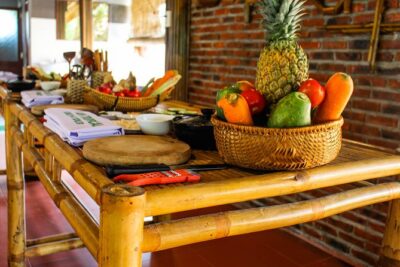
Cooking Class Hoi An:Local Market, Basket Boat, Fishing & Cooking
Read our review →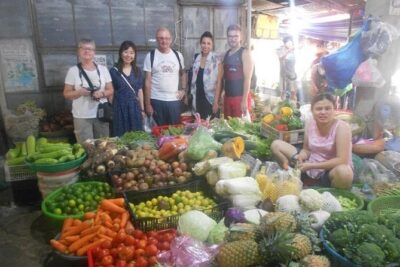
Hoi An Cooking Class(Market,BasketBoat Crabfishing&Cooking Class)
Read our review →Browse the lists this tour appears in