
Review · THAILAND
Sukhumvit: Hands-on Thai Cooking Class & Market Tour in BKK
Make Bangkok your kitchen for a morning. This 210-minute class combines a local market visit with hands-on cooking, so you learn not only how Thai food tastes, but also how its ingredients come together. I especially like the fresh-market start and the chance to pound curry paste yourself. The main consideration is timing: only the morning class includes the market tour.
The menu changes by day, which gives you a useful reason to choose your class carefully. I also like that you eat each dish while it is hot, receive the recipes afterward, and can request vegetarian, halal, kosher, or allergy-friendly substitutions with advance notice. The school can be a little hard to spot, so bring the meeting details and arrive with comfortable shoes.
Key points at a glance
- A real market visit in the morning: Meet near BTS Asoke and MRT Sukhumvit, then explore a local market with your guide before cooking.
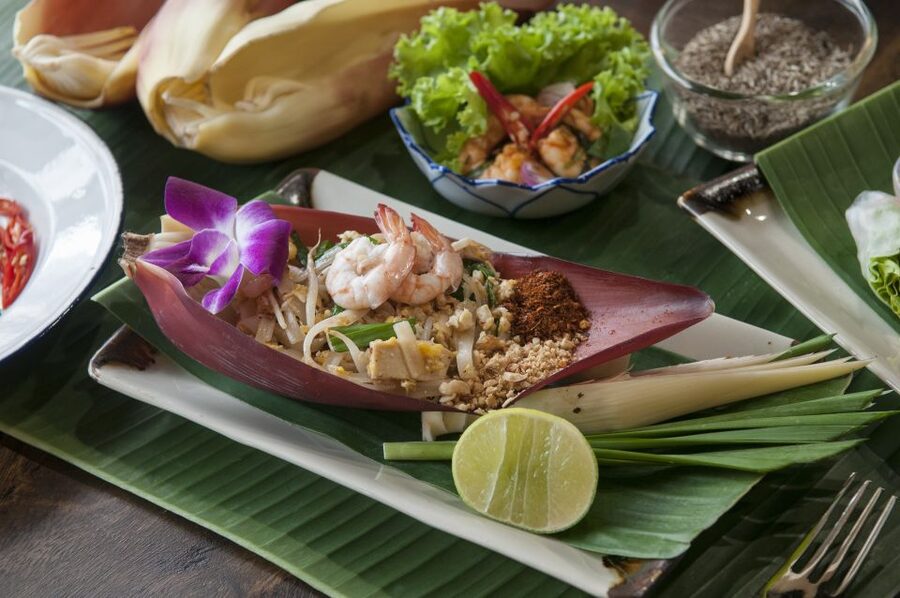
- Four dishes, made by you: Each class includes a soup or salad, a stir-fried dish, curry, and mango sticky rice, depending on the day.
- Curry paste from scratch: You work with herbs and spices rather than simply opening a packet.
- A different menu each day: Monday through Sunday offer different combinations, so your chosen day matters.
- Recipes sent after class: You leave with practical instructions for recreating the meal at home.
- A social, beginner-friendly format: Clear demonstrations, organized ingredient trays, and good-humored instructors make the class easy to follow.
Starting near Asoke: the morning market makes the difference
For the morning class, meet at street level near BTS Asoke Exit 3 and MRT Sukhumvit Exit 3. The nearby station area is convenient, but the exact school entrance can be easy to miss. One useful map pin is Hey! Coffee MRT Sukhumvit, and you should keep the meeting instructions handy rather than assuming the school will be obvious from the street.
The class begins with a guided market visit. This is more than a quick shopping stop. You see the vegetables, herbs, spices, rice, sauces, and other ingredients that shape Thai cooking, then learn what they are used for before handling them in the kitchen.
That context matters. Thai recipes often look short on paper, but the flavor depends on small choices: which herb you use, how a curry paste is built, and how coconut milk changes a dish. Seeing the ingredients first gives the recipes a practical foundation.
The market is also the most local part of the experience. You are not only sitting in a polished classroom and following premeasured instructions. You get a glimpse of how everyday Thai ingredients are selected and sold.
The walk does require comfortable shoes. Bangkok heat, station areas, and market floors are not ideal for sandals that slip or shoes that pinch. The market portion is available only for the morning class, so choose that time if browsing produce matters to you.
More Cooking Classes in Bangkok
- Bangkok: Hands-on Thai Cooking Class and Market Tour
★ 4.9 · 1,614 reviews - Bangkok: Maliwan Thai Cooking Class with Market Tour
★ 4.9 · 1,133 reviews - Hands on Thai Cooking Class and Market Tour
★ 5.0 · 660 reviews
Afternoon and evening classes trade the market for mango carving
The afternoon and evening sessions begin at the school in Sukhumvit 4 rather than at the Asoke and Sukhumvit station meeting point. For these classes, there is no market tour. Instead, the program includes mango carving, while the introduction to Thai ingredients takes place at House of Taste Thai Cooking School.
This is an important distinction when you book. The morning session gives you the fuller food experience, with a market visit and a short transfer to the kitchen. The later sessions may suit you better if you want a relaxed cooking activity after sightseeing, but they do not include the market portion.
Mango carving adds a light, decorative skill to the later sessions. It is not the same as shopping for ingredients, so I would select the morning class if your main aim is to understand Thai produce. Choose afternoon or evening if the class time fits your Bangkok plans better.
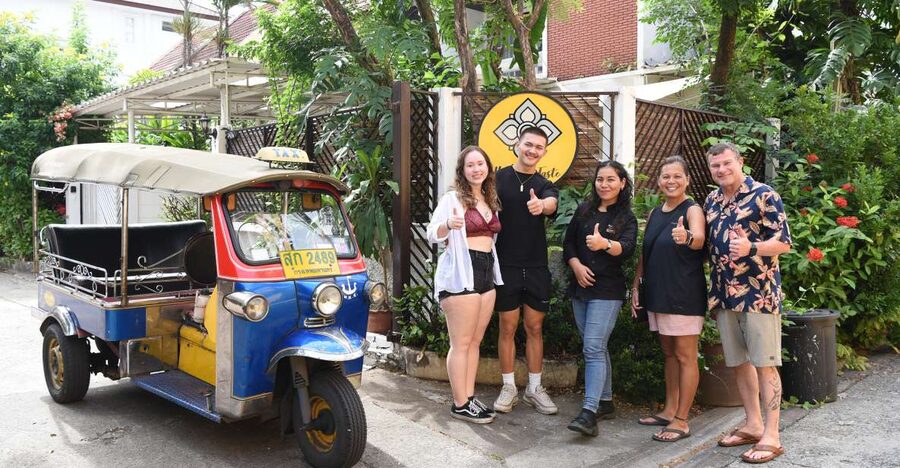
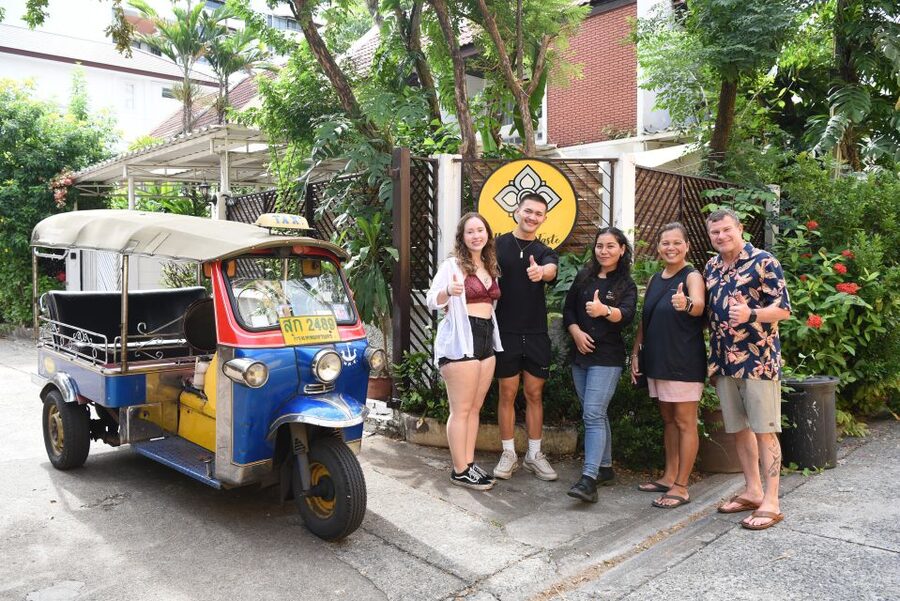
Some morning groups have included a short tuk-tuk ride from the market area to the kitchen. This is a fun local touch when it occurs, though you should not treat it as the main feature of the class. The cooking, rather than the transport, is where the value lies.
Two hours of cooking, with every ingredient ready
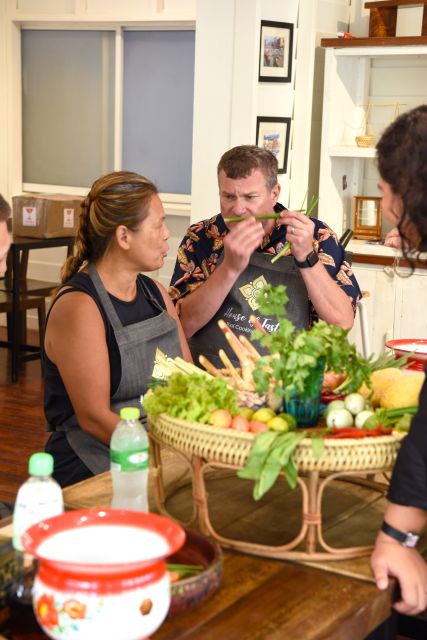
Once you reach the school, the cooking takes about two hours within the three-and-a-half-hour experience. The kitchen is described as clean, modern, and well organized, with equipment and ingredients supplied for you.
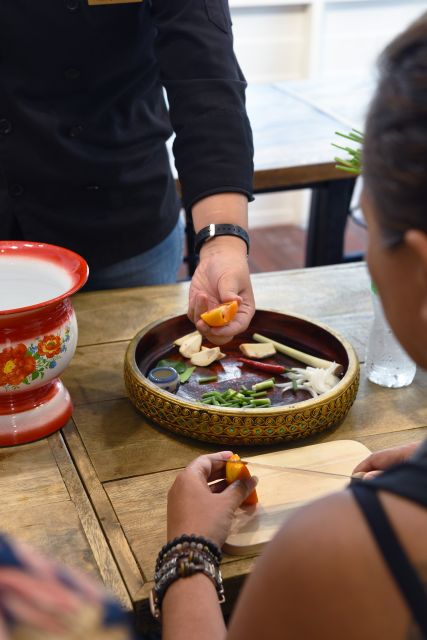
The setup helps beginners. Ingredients for each dish are arranged on trays, and the instructor guides the group through each stage. You do not need to arrive with cooking experience, special tools, or a list of Thai pantry items.
The class is hands-on, but it is not chaotic. You watch a demonstration, prepare your part, then cook and taste the result. The pace leaves room for questions and gives you time to notice how the flavors change as ingredients are added.
The instructors are a major part of the experience. April is frequently praised for her humor, clear explanations, and ability to keep everyone involved. Jay and May are also noted for patient teaching and friendly instruction. The exact instructor depends on the session, but the teaching style appears to be warm, practical, and suitable for first-time cooks.
You also eat each dish separately while it is fresh. That is better than preparing four plates and waiting for everything to finish, especially with stir-fries and soups. You can taste the effect of your own work while the food is still hot.
Making curry paste explains Thai flavor better than a demonstration
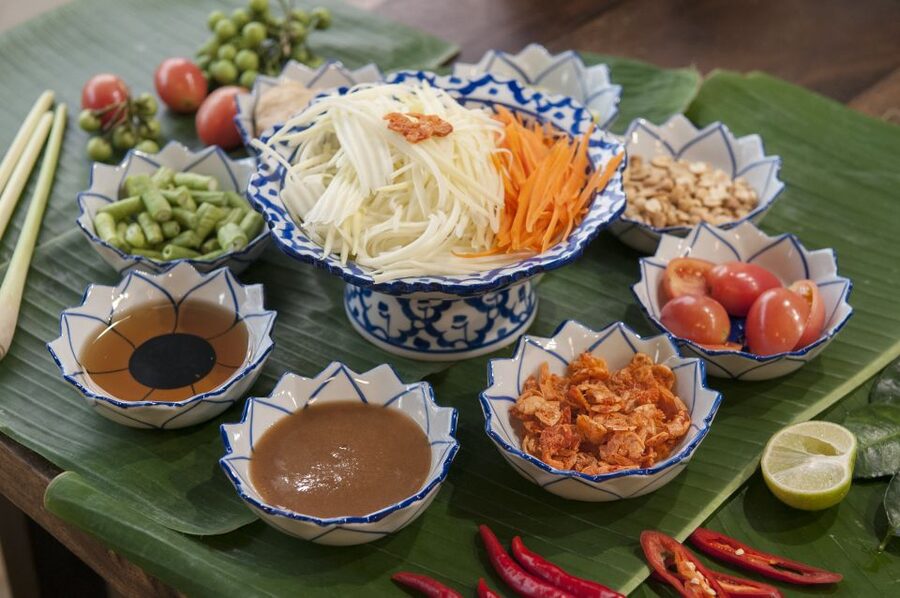
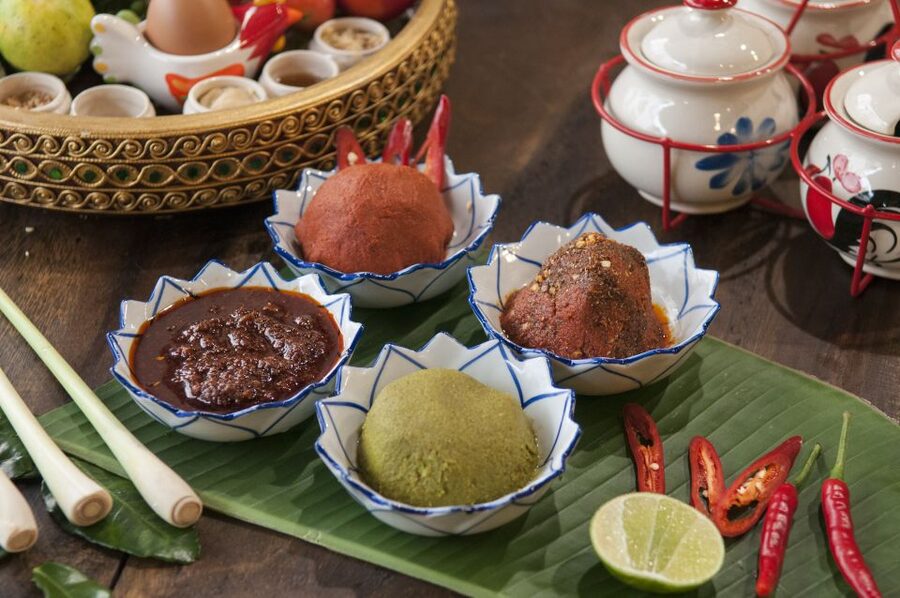
The curry paste section is the heart of the class. You do not simply receive a spoonful of prepared paste and stir it into a pot. You help make the paste from scratch, working with herbs and spices and learning how these ingredients form the base of a curry.
This hands-on step gives you a better sense of Thai food than a standard cooking demonstration. You can smell the fresh ingredients, see their texture, and understand why a curry tastes layered rather than merely hot.
The class also covers the preparation of coconut milk. Coconut milk is central to several Thai curries and soups, and learning its role helps you understand the balance between spice, salt, sweetness, and creaminess.
No MSG is used in the cooking. That may matter if you prefer to know exactly what goes into the dishes. The food still depends on herbs, curry paste, sauces, coconut milk, and fresh produce for its flavor.
The recipes are designed to be repeated at home. They are not only showpiece dishes that require a professional kitchen. You may still need to find Thai ingredients after returning home, but the class gives you a workable method rather than just a finished meal.
More Cooking Classes in Thailand
- Tingly Thai Cooking Class with Morning Market Tour
★ 5.0 · 589 reviews - Hands-on Thai Cooking Class & Market Tour in Sukhumvit
★ 5.0 · 571 reviews - Pink Chili – Thai Cooking Class and Market Tour in Bangkok
★ 5.0 · 416 reviews - Authentic Thai Cooking with the Largest market visit &TukTuk ride
★ 5.0 · 350 reviews
Choose your day by the dishes you want to eat
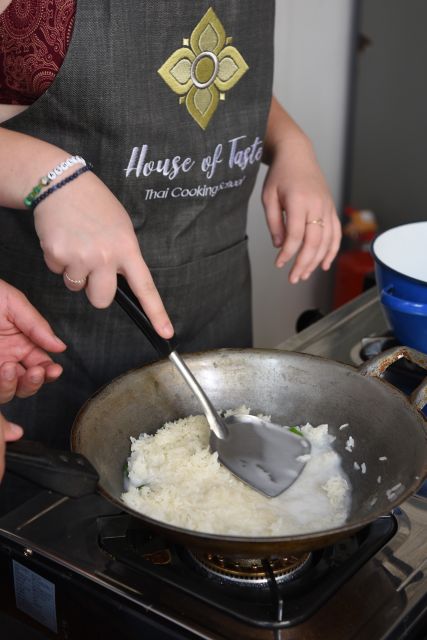
The weekly menu is one of the best planning tools for this experience. Each day includes four dishes, but the combination changes.
Monday
You make Thai papaya salad, stir-fried noodles with shrimp, green curry with chicken, and mango sticky rice. This is a good choice if you want the classic combination of Som Tum and Pad Thai, with a green curry to round out the meal.
Tuesday
The menu includes spicy coconut soup with chicken, stir-fried Thai basil chicken, red curry with chicken, and mango sticky rice. Tom Kha Gai gives you a creamy, aromatic soup, while Pad Krapow Gai brings a sharper basil and chili profile.
Wednesday
You prepare hot and sour soup with shrimp, stir-fried flat rice noodles with chicken, green curry with chicken, and mango sticky rice. Tom Yum Goong and Pad See Ew offer a useful contrast between bright soup and wider, softer noodles.
Thursday
The dishes are spicy minced chicken salad, stir-fried noodles with shrimp, Panang curry with chicken, and mango sticky rice. Larb Gai is a lighter, herb-focused dish, while Panang curry is generally thicker and gentler than some other Thai curries.
Friday
You make papaya salad, stir-fried Thai basil chicken, red curry with chicken, and mango sticky rice. This is a strong choice if you enjoy bold savory flavors and want three very recognizable Thai dishes.
Saturday
The menu includes spicy coconut soup with chicken, stir-fried noodles with shrimp, green curry with chicken, and mango sticky rice. It offers a familiar mix of soup, noodles, curry, and dessert without repeating every weekday combination.
Sunday
You prepare hot and sour soup with shrimp, stir-fried flat rice noodles with chicken, Panang curry with chicken, and mango sticky rice. The menu gives you a mix of sour soup, noodles, a milder curry style, and the standard sweet finish.
The pattern is useful: every session includes mango sticky rice, but the main dishes change. If you have one favorite, such as Pad Thai, Som Tum, Tom Yum Goong, or Panang curry, book around that dish rather than choosing the first available date.
Four courses means come hungry
This is not a small tasting class. You make and eat four traditional dishes, and the portions add up. Several instructors have advised arriving with an empty stomach, and that is sensible advice.
The sequence also makes the meal feel substantial. You move from soup or salad to a noodle or rice dish, then curry, then mango sticky rice. Because you taste each course while it is fresh, you may eat more than you expect before reaching dessert.
One practical tip is to bring a small food container if you are comfortable doing so. Leftover food may be available, and a container is more useful than trying to carry extra portions in disposable wrapping. This is not a formal part of the included equipment, so treat it as a personal convenience.
Drinking water is included. Alcohol is not included, though alcoholic drinks are available for purchase. If you are planning a larger Bangkok night afterward, remember that the class itself is a full meal.
Dietary requests are possible, but tell the school early
Vegetarian, halal, kosher, and allergy-related substitutions can be arranged with advance notice. Non-meat substitutions have included tofu in place of chicken, so the class can work well for people who do not eat meat.
You should provide your requirements when booking rather than waiting until you arrive. Thai cooking often uses sauces, shrimp, fish-based ingredients, curry pastes, and shared preparation areas, so clear communication is important.
The daily menu remains the same basic structure, but substitute ingredients may change the final dish. That is a fair trade for being able to take part in the cooking and eat a meal that suits your needs.
The school works well for groups and solo participants
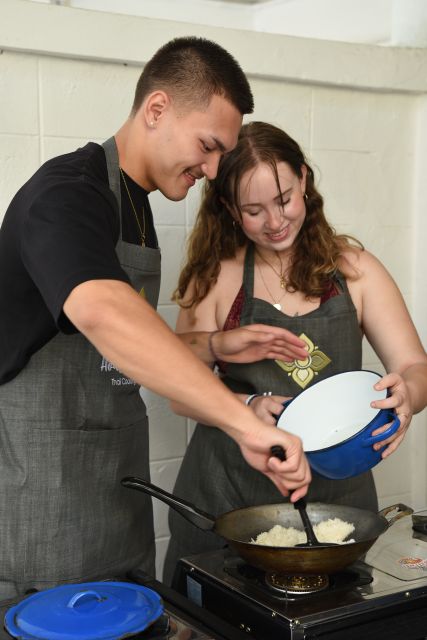
The class has a social feel without requiring you to arrive with a group. You cook beside people from different countries, share the meal, and have natural conversation around the workstations.
It also suits families with older children and teenagers. A 13-year-old and a 16-year-old have taken part successfully, and the hands-on format gives younger cooks something real to do rather than asking them to sit through a long food lecture.
Couples can enjoy it too. The activity gives you a shared task, and the food provides an easy subject for conversation. Solo participants should also feel comfortable, since the class format encourages interaction.
The instructors use humor and keep the mood light. That helps if you are nervous about cooking in front of others. At the same time, this is still a class, not simply a social meal. You will be expected to chop, mix, pound, stir, and taste.
What could be better
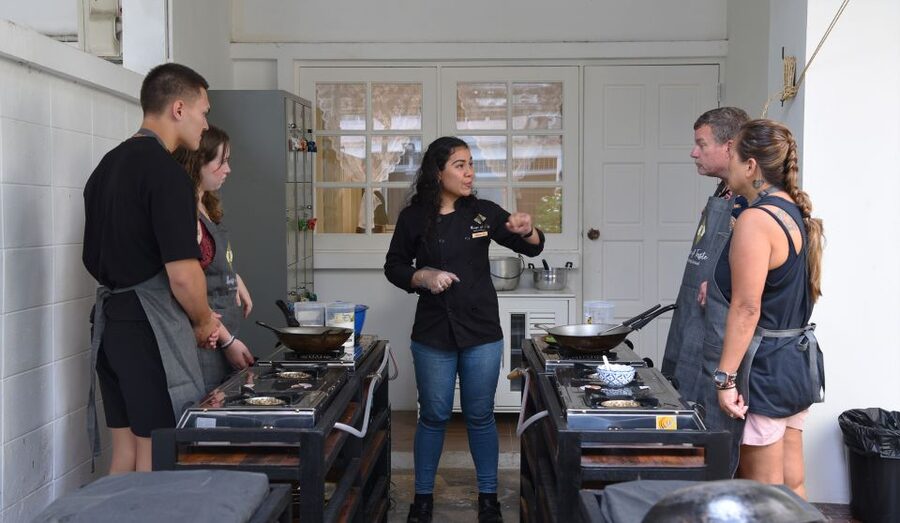
The market tour could use more time and explanation if you are especially interested in food culture. You see the ingredients and learn what they are, but the emphasis is on preparing for the cooking class rather than giving a long lesson on Thai food traditions or market history.
There can also be a small arrival problem at the school. One participant arrived early and found no clear sign showing where to enter, while another taxi passenger had difficulty locating the building. The staff helped when contacted, but a visible welcome sign or person outside would make the first few minutes easier.
The experience information also lists wheelchair accessibility while separately warning that it may not suit people with mobility impairments. Because the market walk, station meeting point, and possible tuk-tuk transfer may involve movement, you should confirm the current access arrangements directly before booking if mobility is a concern.
These are manageable issues, but they affect the experience. The cooking itself is well organized, while the street-level arrival details may require a little extra attention.
Is $45 a fair price in Bangkok?
At $45 per person, the class is good value if you want more than a meal. The price covers the market tour for morning participants, ingredients, equipment, water, a four-course meal, a personal locker, and standard recipes sent by email after class.
A Bangkok restaurant meal can be cheaper, especially at a casual local spot. But a restaurant does not teach you how to make curry paste, explain the ingredients, or give you a method to repeat the dishes at home.
The value is strongest for people who will use the recipes afterward. If you enjoy cooking, the class can keep paying off when you recreate Pad Thai, curry, soup, or mango sticky rice in your own kitchen.
The class is also a reliable rainy-day or hot-afternoon plan. You get food, instruction, and a social activity in one booking. The market tour adds even more value to the morning session, so I would choose that option unless your schedule strongly favors later in the day.
Who should book this Sukhumvit cooking class?
I recommend it for first-time Thai cooks, food-focused visitors, couples, families with teenagers, and anyone who wants a break from sightseeing. The step-by-step instruction is clear enough for beginners, and the four dishes make the activity feel substantial.
It is especially useful if you have been eating Thai food throughout your trip and want to understand how the flavors are built. You will leave with more than a full stomach. You will know how curry paste, coconut milk, herbs, noodles, and sauces fit together.
I would be less enthusiastic if your only goal is an in-depth market study or a serious culinary history lesson. The market visit is useful but fairly practical, and the class puts its energy into cooking and eating.
Should you book it?
Book the morning session if you want the best version of the experience: a guided market visit, ingredient introduction, hands-on cooking, curry paste from scratch, four dishes, and recipes to take home.
Choose your date according to the menu, and notify the school early about dietary needs. Bring comfortable shoes, arrive with an empty stomach, and allow extra time to find the entrance.
At $45, this is a strong Bangkok activity for anyone who wants to do something with Thai food rather than simply order it. The polished kitchen and occasional arrival confusion are small trade-offs for friendly teaching, fresh ingredients, generous food, and skills you can use long after leaving Sukhumvit.
FAQ
How long does the Thai cooking class last?
The experience lasts 210 minutes, or three and a half hours. About two hours are spent making the four dishes.
Where does the morning class meet?
Meet at street level near BTS Asoke Exit 3 and MRT Sukhumvit Exit 3. You can also use the map pin for Hey! Coffee MRT Sukhumvit.
Where do afternoon and evening classes meet?
Afternoon and evening participants meet at House of Taste Thai Cooking School in Sukhumvit 4.
Does every class include a market tour?
No. The market tour is available only with the morning class. Afternoon and evening classes include mango carving instead, with the ingredient introduction held at the school.
What dishes will I cook?
The menu changes by day. Every class includes four dishes, with combinations such as Som Tum, Pad Thai, Tom Kha Gai, Tom Yum Goong, Pad Krapow Gai, Pad See Ew, green curry, red curry, Panang curry, and mango sticky rice.
Are ingredients and cooking equipment included?
Yes. Ingredients and equipment are provided, along with drinking water, a personal locker, and standard recipes sent by email after class.
Can the class accommodate dietary requirements?
Vegetarian, halal, kosher, and allergy-related substitutions can be arranged with advance notice. Tell the school about your needs before the class.
Is alcohol included?
No. Alcoholic drinks are not included, but they are available for purchase.
Just added around Bangkok
- Morning Buddhist Almsgiving, Grand Palace and Flower Market Tour in Bangkok★ 3.5 · 9 reviews
- Private 4 days : Bangkok, Floating market and Ayutthaya★ 5.0 · 2 reviews
- Floating & Railway Markets and Erawan Waterfall [Optional Luxury]★ 5.0 · 43 reviews
- Bangkok Udomsuk Thai Cooking Class with local market tour★ 5.0 · 5 reviews
- Floating Market & Railway Market near Bangkok★ 4.0 · 5 reviews
- Train & Floating Market Food Adventure + Scenic train ride★ 5.0 · 102 reviews
- Discover Ayutthaya at Sunset: Historic Temples & River Cruise★ 4.5 · 29 reviews
- Hands On Thai Cooking Class & Market Tour in Sathon, Bangkok★ 5.0 · 87 reviews
Cooking Classes, compared.
Hanoi Cooking Class: Culture, Local Market & Meaning CSR Impact
Read our review →
5 Traditional Dishes Hanoi Cooking Class with Market Trip
Read our review →
Cooking Class and Lunch at a Tuscan Farmhouse with Local Market Tour from Florence
Read our review →
Cooking Class, Market & Thai Herbs Garden Tour
Read our review →
Authentic Cooking Class with Market & Farm Visit
Read our review →
Paella Cooking Experience & Boqueria Market Tour
Read our review →
Cooking Class Hoi An:Local Market, Basket Boat, Fishing & Cooking
Read our review →
Hoi An Cooking Class(Market,BasketBoat Crabfishing&Cooking Class)
Read our review →Browse the lists this tour appears in