
Review · ITALY
Rome: Temples, Squares & Markets Guided Walking Tour
Rome rewards curious walkers. This three-hour private tour links famous squares, ancient temples, markets, and quiet corners with a local guide who can adjust the route to suit you. I especially like the combination of major sights such as the Pantheon and Piazza Navona with less obvious stops including the Jewish Ghetto, Largo di Torre Argentina, and Tiber Island. The included taste of Roman street food gives the walk a useful local flavor rather than turning it into a parade of monuments.
I also like the personal format. You get the guide’s full attention, and past guests gave particularly strong praise to Juan and Daniele for their warmth, timing, route planning, and willingness to add places that mattered to the group. The main drawback is the pace: fitting this many sites into three hours means most stops are outdoor visits or short guided looks, and entrance tickets are not included.
What makes this Rome walk worth considering

- A private route through central Rome: You visit the Pantheon, Piazza Navona, Campo de’ Fiori, the Jewish Ghetto, ancient temples, and Tiber Island without joining a large group.
- One Roman food tasting included: You try traditional street food, including supplì, while learning how Romans think about everyday Italian food.
- A strong mix of famous and lesser-known sights: The route pairs headline stops with Largo di Torre Argentina, Portico d’Ottavia, the Temple of Portunus, and the Mouth of Truth.
- Guides can shape the walk: The experience is designed to be customized, and Juan reportedly added places his guests had missed elsewhere in Rome.
- A lively history lesson outdoors: Obelisks, talking statues, Julius Caesar, Roman temples, the Imperial Palace, and Audrey Hepburn all get a place in the story.
- Useful local advice at the end: Your guide can recommend places to eat, shop, and explore during the rest of your stay.
Starting beneath Sant’Ignazio’s painted ceiling

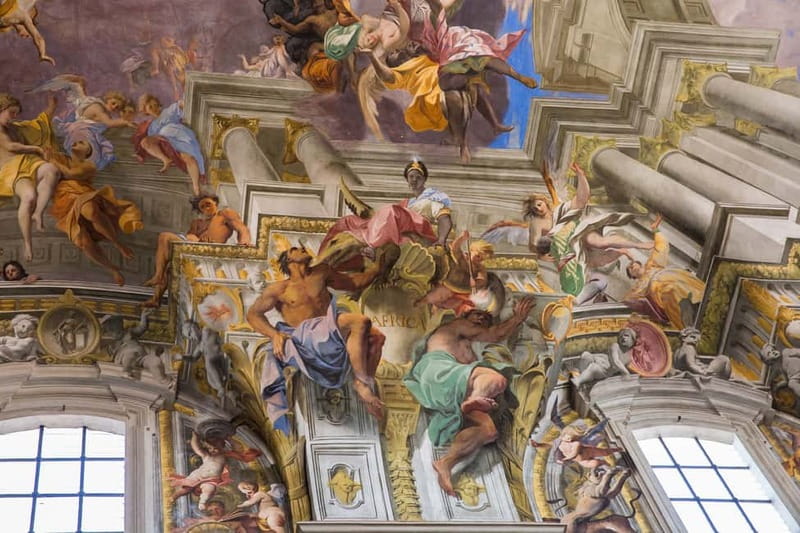
You meet at the entrance of the Church of Sant’Ignazio di Loyola. This is a smart starting point because the church offers an immediate glimpse of Rome’s Baroque style before the walk moves into ancient Rome and busy public squares.
The church receives a guided visit of about 15 minutes. You can expect attention on its frescoed ceiling and the dramatic Baroque interior. It is a good first stop for understanding Rome’s habit of placing grand art inside working churches, often along streets that look fairly ordinary from the outside.
I like this beginning because it eases you into the city. You are not starting with a long explanation beside a traffic-heavy road. You begin indoors, looking upward, with time to get oriented and meet your guide.
More Market Walking Tours in Italy
- Palermo: Walking Tour of Historic Markets and Monuments
★ 4.9 · 478 reviews - Palermo: Markets and Monuments City Center Walking Tour
★ 4.9 · 238 reviews - Markets and monuments: walking tour and street food in Palermo
★ 5.0 · 159 reviews
The Pantheon and Rome’s ancient obelisks
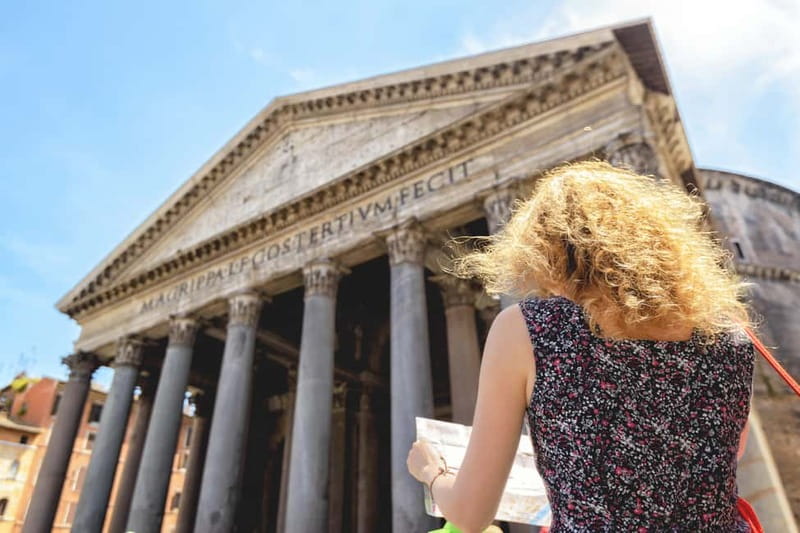
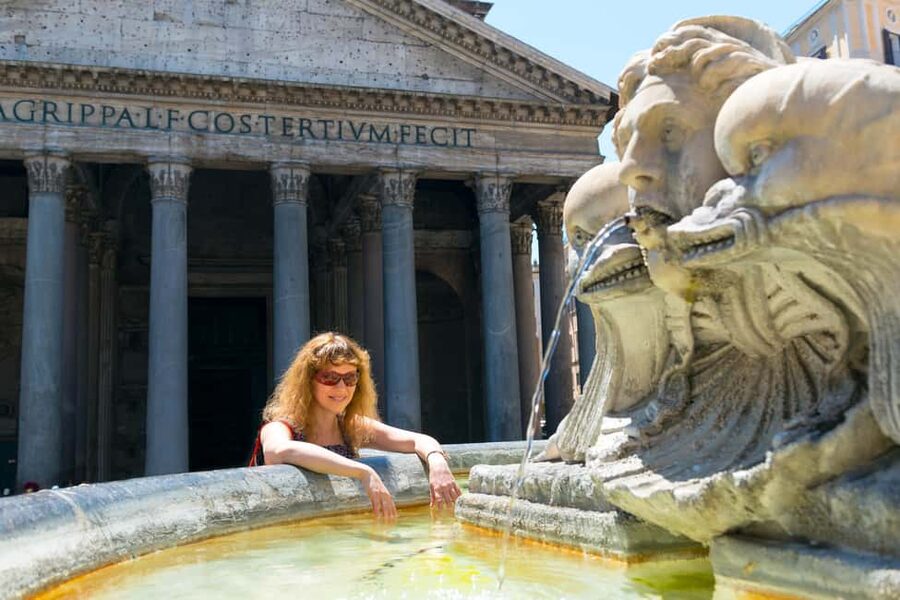
From Sant’Ignazio, the route continues to the Pantheon, one of the essential stops in central Rome. The planned guided visit is about 15 minutes, so you should expect an explanation of the building and its setting rather than an extended architectural study.
The Pantheon is also a useful place to hear about Rome’s obelisks. Some of these monuments are thousands of years old and were brought from Egypt. Your guide can connect the obelisks you see around Rome with the city’s long practice of collecting, reusing, and repositioning monuments from earlier civilizations.
Take note of the ticket policy here. Attraction tickets are not included, so the tour’s value comes from the private guiding and route rather than bundled admission. If you want to enter a site that requires a ticket, confirm the plan and cost before the walk begins.
Piazza Navona and the city’s talking statues
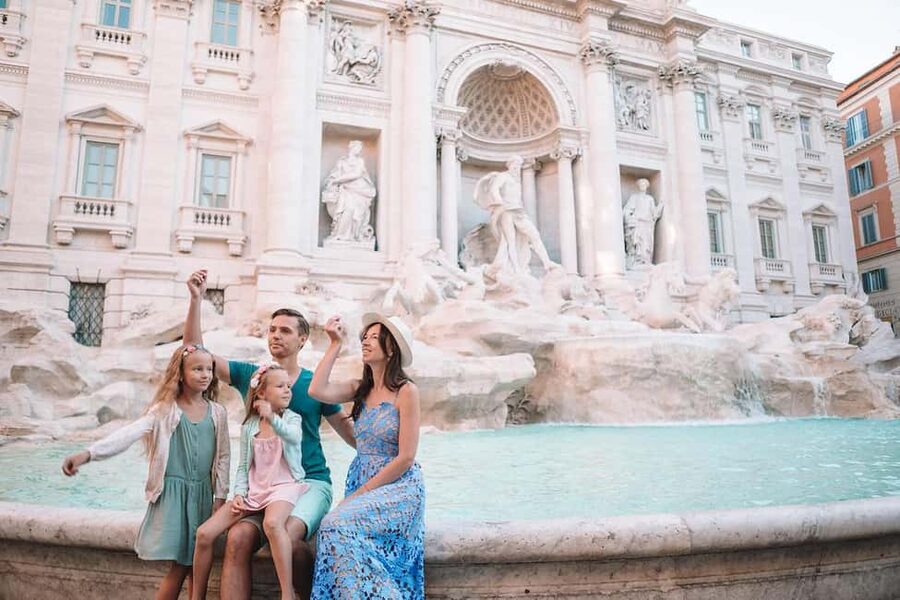
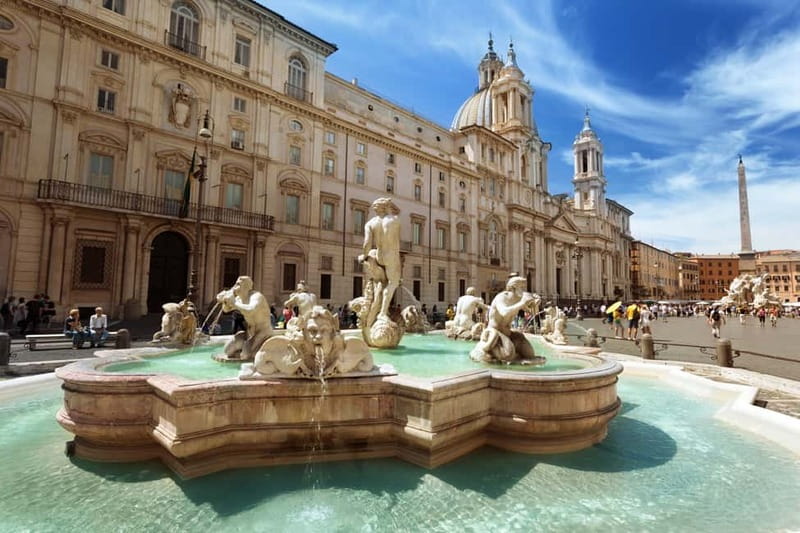
Piazza Navona gets another 15-minute guided stop. This grand square is a natural place for your guide to explain Rome’s public art, fountains, and street life, but the unusual subject here is the city’s talking statues.
These statues became places where Romans posted anonymous political comments and satirical messages. That detail helps you see Rome as more than an open-air museum. Its monuments have long been part of public argument, jokes, complaints, and daily social life.
The square can be crowded, so keep your attention on the guide and your surroundings. A private group helps here because you do not have to keep up with a large crowd, and your guide can adjust the exact stopping point if the square is packed.
Campo de’ Fiori, market food, and supplì
The walk then reaches Campo de’ Fiori, where you receive about 15 minutes of guided attention. The square is known for its local food market, making it the natural point for the included street-food tasting.
You are expected to try traditional Roman food, with supplì specifically mentioned. Supplì is a fried rice croquette, usually associated with Roman casual eating. It is simple, filling food, and a useful way to connect the tour’s historical subjects with what people eat between errands.
The food tasting is one of the better-value parts of the experience, though you should keep your expectations sensible. Only one street-food tasting is included, not a full food tour or a meal. If you have allergies, dietary restrictions, or strong dislikes, tell your guide early so the tasting can be handled as well as possible. The supplied information does not promise substitute dishes.
Your guide also discusses authentic Italian food products. I like that this adds context instead of treating the snack as a quick photo opportunity. You hear how food fits into Italian life, then continue through nearby lanes and learn about the unusual street names in the area.
More Market Walking Tours in Rome:
- Bangkok: City Highlights Temple and Market Walking Tour
★ 4.5 · 3,990 reviews - Tokyo Tsukiji Fish Market Food and Culture Walking Tour
★ 5.0 · 3,184 reviews - Marrakech: Ben Youssef, Secret Garden, & Souks Walking Tour
★ 4.6 · 2,802 reviews - Marrakech: Colorful Medina Souks Guided Walking Tour
★ 4.7 · 2,470 reviews
Largo di Torre Argentina and the Ides of March
Largo di Torre Argentina is scheduled for another 15-minute guided stop. The archaeological ruins here give the route a sharp historical turn, especially when your guide explains the place connected with Julius Caesar and the Ides of March.
You do not need a long museum visit to understand why this stop matters. The ruins are visible reminders that major political events took place in ordinary urban spaces. Rome repeatedly puts ancient foundations beside modern streets, and this is one of the clearest examples along the walk.
The short timing is both useful and limiting. You get a focused explanation without spending an hour at one archaeological site, but anyone wanting a detailed study of the ruins will need to return on a separate visit.
The Jewish Ghetto and Portico d’Ottavia
The route continues into Rome’s Jewish Ghetto, described as a neighborhood that has retained a strong sense of authenticity. A guided stop at Portico d’Ottavia lasts about 20 minutes, making it one of the longer visits on the route.
This section gives the walk a different mood. Instead of moving from one famous monument to another, you explore a district with its own story, street pattern, and identity. Your guide can point out how the area differs from the grand squares earlier in the walk and explain the remains of ancient Rome within the neighborhood.
Portico d’Ottavia is also a good example of Rome’s layers. Ancient ruins, later buildings, religious history, food traditions, and present-day life all occupy the same small area. The tour does not include a separate food meal in the Jewish Ghetto, so treat this stop as a neighborhood and history visit rather than a dedicated culinary tour.
The so-called fake Colosseum and ancient temples
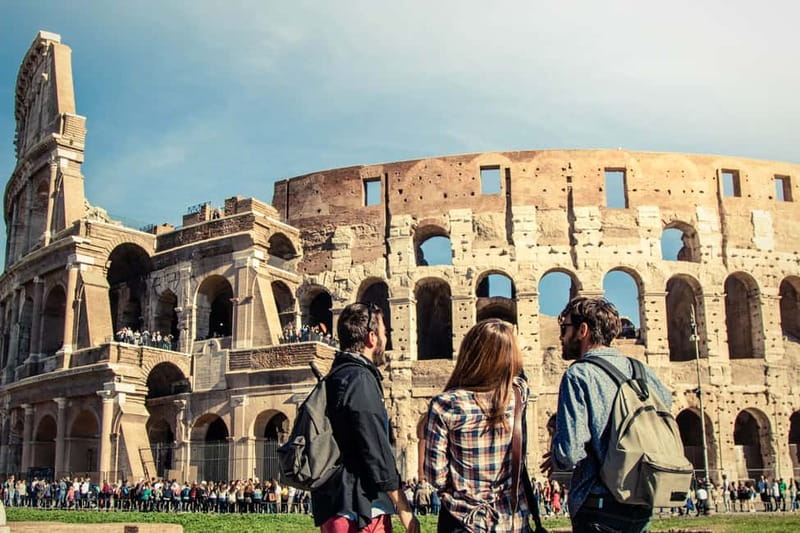
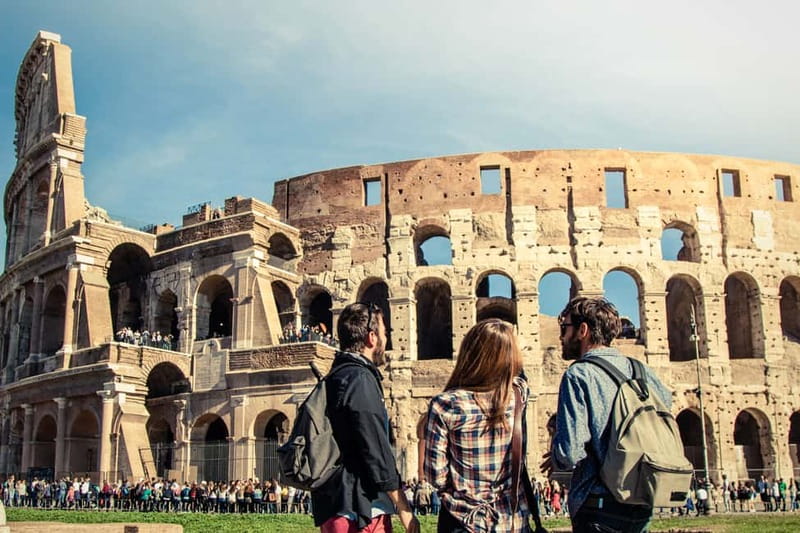
The description of the route includes a fake Colosseum, a charming ancient ruin that resembles the better-known amphitheater. This is exactly the sort of detail that helps a private walking tour feel different from a standard checklist of Rome’s biggest monuments.
The route also passes ancient temples, including the Temple of Portunus, which receives about 15 minutes of guided attention. You can expect your guide to explain the temple’s place in the ancient city and help you distinguish it from the many later structures built around it.
For me, this is where the route earns its title. You are not only crossing squares. You are seeing temples and ruins in their urban setting, with modern Rome continuing around them. The tradeoff is that these are viewing stops rather than full archaeological-site visits. Entrance tickets remain your responsibility, and no separate admission is included.
The Mouth of Truth and the Roman Holiday connection
The Mouth of Truth receives its own 15-minute stop. This famous stone face is closely linked with the scene from Roman Holiday in which Audrey Hepburn encounters it.
Your guide can explain the story and the film connection, giving the stop an easy cultural hook. It is a lighter moment after the discussions of Caesar, imperial power, and religious history. You may find the area busy, and the visit is brief, so this is best treated as a photo and storytelling stop rather than a major monument visit.
I appreciate the variety. A good Rome walk needs room for humor and popular culture, not only dates and ruins. This stop gives you that change of pace.
Circus Maximus, Palatine Hill, and imperial power
The route then moves toward the Circus Maximus and Palatine Hill. These stops help you picture Rome at the height of its power, when rulers used this part of the city and the Imperial Palace occupied the Palatine.
The Circus Maximus is viewed as part of the walking route, with a planned explanation of about 15 minutes. Your guide can help you imagine the scale of the ancient site, even though the walk does not include admission to a major archaeological attraction.
Palatine Hill receives a guided visit, but no exact duration is given. Do not assume that this means an extended archaeological tour or entry into every area. The supplied information says attraction tickets are excluded, so confirm with the guide how much of the hill you will see from the route.
This section may appeal most to you if you enjoy seeing how geography and power connect. The Palatine was associated with Rome’s rulers, while the Circus Maximus shows how public entertainment could operate on a huge scale. The guide’s job is to make the remains readable, since ruins without context can look like a pile of old stone.
Crossing to Tiber Island
The walk finishes at Tiber Island after a final guided stop of about 15 minutes. Along the way, you cross the bridge and view the island, another spot where Rome’s ancient city and modern streets meet.
The end point requires a small note of caution. The information gives Tiber Island as the finish, while the meeting-point section also says the activity ends back at the meeting point. Since those descriptions do not perfectly match, confirm the final drop-off point with LocalCoolTour before the day of the tour.
Your guide is also expected to offer recommendations for the rest of your stay. This can be especially useful after a broad orientation walk. You can ask about authentic places to eat, shopping, and other activities, then use the advice to shape the next few days.
What the private format changes
The private-group setup is a major part of the value. You are not sharing the guide’s attention with a large bus group, and the route can be adjusted around your interests. One guest praised Juan for adding places that had not yet been visited, which is exactly the kind of flexibility that helps a three-hour tour fit your trip instead of someone else’s schedule.
Daniele also received praise for confirming the tour the day before, arriving on time, planning a visually strong route, and ending as close as possible to a guest’s hotel. Those details are not guaranteed for every booking, but they show the practical benefits a good local host can bring.
You should still tell the guide what you want at the beginning. If you care most about food, ask for extra local eating advice. If you have already seen the Pantheon, say so. If you want more ancient ruins or more neighborhood walking, the private format gives you a better chance of shaping the balance.
Is $79.30 a fair price?
At $79.30 per person, this is not the cheapest way to walk around Rome. The price makes more sense if you value a private guide, a customized route, a food tasting, and a single walk that connects several parts of central Rome.
The tour covers a lot in three hours: a Baroque church, the Pantheon, Piazza Navona, Campo de’ Fiori, Largo di Torre Argentina, the Jewish Ghetto, Portico d’Ottavia, the Temple of Portunus, the Mouth of Truth, Circus Maximus, Palatine Hill, and Tiber Island. That range would take effort to organize alone, especially if you want historical explanations rather than simple directions.
The value is weaker if you want long interior visits or included admission. Since tickets are extra, budget separately for any attraction you hope to enter. I would see this experience as an orientation and storytelling walk, not a replacement for a full day at Rome’s major archaeological sites.
The 4.8 rating from 26 reviews supports the idea that the personal guiding is the strongest feature. Juan and Daniele were praised for warmth, preparation, route planning, and flexibility. Those qualities matter more here than a fancy vehicle or a long list of inclusions.
Who should book this walk?
I would recommend it to a first-time Rome visitor who wants a fast but meaningful introduction to the center. It also suits returning visitors who have seen the biggest monuments and want neighborhood details, food context, and lesser-known ruins.
Families and private groups may appreciate the ability to customize the route, while solo visitors can benefit from having a local host focused on their questions. The tour is listed as wheelchair accessible, which is useful, though you should still confirm the exact route conditions and any access needs before booking.
I would hesitate if you want a slow food tour, extensive museum time, or detailed entry into every archaeological site. The route covers many stops, and the short timings mean the experience favors breadth and local explanation over long visits.
The tour is offered in English, Italian, and Spanish. Free cancellation is available up to 24 hours before the start time, and you can reserve now and pay later, which gives you some flexibility while planning a Rome trip.
Should you book it?
Book this walk if you want Rome explained by one local host rather than pieced together from guidebooks and map pins. The best reasons are the private format, the mix of grand sights and ancient remains, and the chance to ask for recommendations that fit your own trip.
Skip it if your main goal is guaranteed entry to the Pantheon, Palatine Hill, or other attractions, since tickets are not included. For most first-time visitors who want a three-hour orientation with a Roman snack and plenty of stories, the price is reasonable, provided you understand that this is a brisk outdoor tour rather than a series of lengthy site visits.
FAQ
How long does the Rome walking tour last?
The tour lasts three hours. Starting times depend on availability.
Where does the tour begin?
You meet at the entrance of the Church of Sant’Ignatius of Loyola.
Where does the tour finish?
The itinerary identifies Tiber Island as the finish. Another meeting-point note says the activity ends back at the meeting point, so confirm the exact endpoint with the provider.
Is the tour private?
Yes. It is offered as a private group experience with a local guide.
Which languages are available?
The live guide can conduct the tour in English, Italian, or Spanish.
Is food included?
One traditional Roman street-food tasting is included. Supplì is specifically mentioned as a tasting option.
Are attraction tickets included?
No. Tickets to attractions are not included in the tour price.
Does the tour visit the Pantheon?
Yes. The Pantheon is included as a guided stop of about 15 minutes.
Is the tour wheelchair accessible?
Yes, the activity is listed as wheelchair accessible.
Can I cancel the tour for a refund?
You can cancel up to 24 hours in advance for a full refund. You can also reserve now and pay later.
Just added around Rome
- Testaccio Experience: Street Food, Market and Traditions★ 5.0 · 4 reviews
- Rome: The Vatican Market Experience Tasting and Class★ 4.7 · 10 reviews
- Rome: Testaccio Food & Market Tour with Pasta & Wine★ 5.0 · 38 reviews
- Rome: Taste of Testaccio Food & Market Tour★ 4.9 · 38 reviews
- Rome: Trajan’s Markets & Museum of The Imperial Fora Tour★ 4.8 · 4 reviews
- Rome: Market and Cooking Class at a Local’s Home★ 4.0 · 3 reviews
- Farmers Market Shopping and Roman Full Course Class – SHARED★ 5.0 · 12 reviews
- Rome: Prati Food & Wine Market Tour with St. Peter Square★ 5.0 · 7 reviews
Walking Tours, compared.

City Highlights Temple and Market Walking Tour
Read our review →
Tokyo Tsukiji Fish Market Food and Culture Walking Tour
Read our review →
Ben Youssef, Secret Garden, & Souks Walking Tour
Read our review →

Air Raid Shelter + St. Nicholas Market Walking Tour
Read our review →
Nishiki Market Brunch Walking Tour (7 Tastings + Brunch)
Read our review →Tsukiji Fish Market Food and Culture Walking Tour
Read our review →Browse the lists this tour appears in