
Review · MOROCCO
Marrakech: Medina Souks Guided Walking Tour
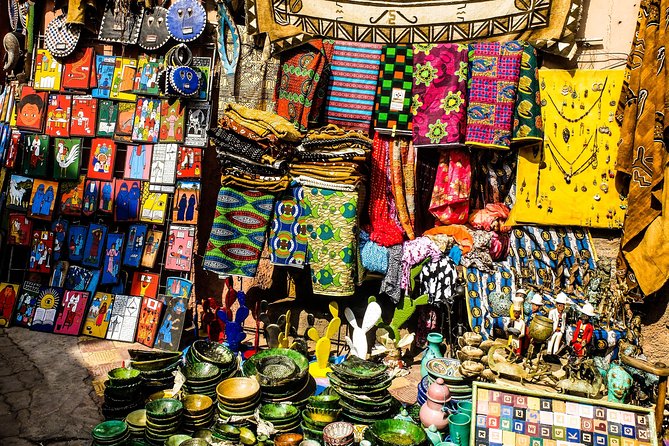
Here is where Marrakech makes you work. The three-hour souk walk takes you from Jemaa el-Fnaa into the Medina’s twisting lanes, where a local guide helps you find metalworkers, dyers, spice sellers, fountains, baths, and shops you could easily miss alone. I like the route’s mix of shopping and cultural detail, and I like that you can choose a small-group or private format. The main caution is that some stops may feel sales-focused, especially at shops selling spices, oils, rugs, or other goods.
This is a useful first activity in Marrakech. Guides such as Ali, Mohammed, Osama, Ismail, Abdul, Cherif, and Yahya Lotfi have been praised for finding their way through the lanes, explaining local customs, and helping with prices. The meeting point at Café de France can be crowded with guides and groups, so arrive ready to identify your guide clearly.
Key points before you book
- Jemaa el-Fnaa start: Meet at Hôtel Restaurant Café de France in the main square before entering the Medina.
- Six distinct souk areas: The route includes spice sellers, metalworkers, fabric dyers, traditional shops, and the broad Souk Semmarine.
- A guide solves the maze: You get help reaching parts of the Medina that are easy to miss or awkward to find alone.
- Shopping help is part of the value: Some guides assist with bargaining, though certain stops may include a sales pitch.
- Morning or afternoon choices: Private bookings offer more flexibility with the departure time.
- Good value at $25: The price is modest for a roughly three-hour walk, especially if you want orientation before shopping independently.
Starting at Jemaa el-Fnaa with a clear meeting plan
The tour begins at Hôtel Restaurant Café de France, on Rue des Banques beside Jemaa el-Fnaa. This is a sensible place to start because the square is easy to recognize, central to the Medina, and close to the souk entrances.
It can also be chaotic. Several guides may be looking for their groups at the same time, so do not simply follow the first person holding a sign. Have your booking details ready and confirm the guide’s name before setting off. This small bit of preparation can save you an uncertain start.
Jemaa el-Fnaa itself is more than a meeting point. It is Marrakech’s main square, used by local people as well as visitors, and it gives you an immediate sense of the city’s public life. The tour only allows about 10 minutes here, so treat the stop as an orientation rather than a full visit.
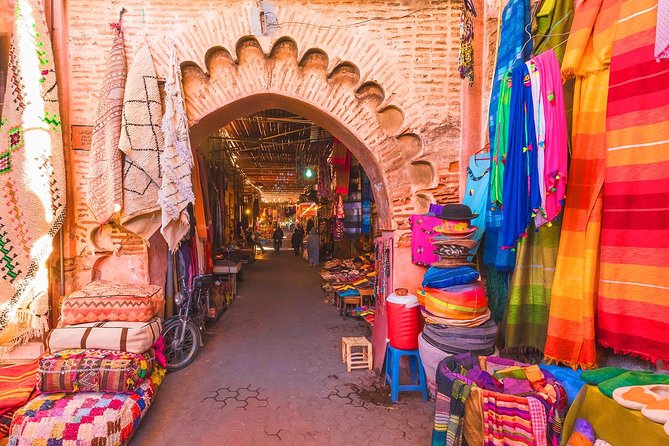
The guide then leads you into the Medina. That transition is the heart of the experience. The lanes narrow, signs become less useful, and the shops and workshops seem to blend together. I find a local guide most valuable at this point, not because you cannot walk through the souks alone, but because it is easy to wander without understanding what you are seeing.
More Market Walking Tours in Marrakech
- Marrakech: Ben Youssef, Secret Garden, & Souks Walking Tour
★ 4.6 · 2,802 reviews - Marrakech: Colorful Medina Souks Guided Walking Tour
★ 4.7 · 2,470 reviews - Guided walking tour in Marrakech Medina and Souks
★ 5.0 · 210 reviews
Rahba Kedima and the meaning behind the spice stalls
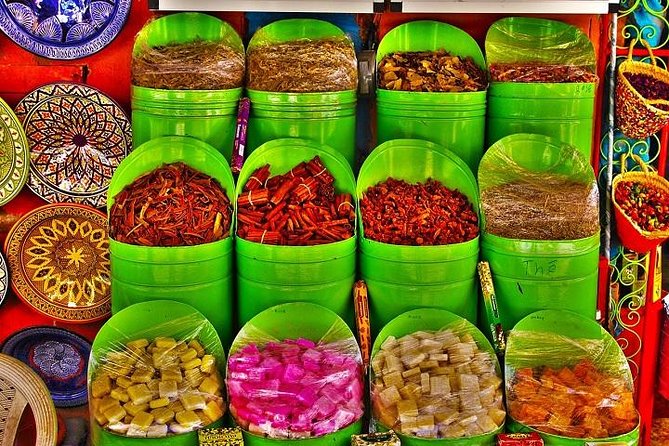
After leaving the main square, the walk reaches Rahba Kedima, also called Spice Square. The planned stop lasts about 15 minutes.
This is a good place to ask questions about Moroccan customs, spices, herbal products, and the role of market squares in daily life. The colors and displays make it one of the most photogenic sections of the walk, but the real benefit comes from having someone explain what the products are used for and how the shops operate.
A number of guides take groups into herbalist shops or similar stores. That can be interesting if you want to learn about local products, but it can also be the point where the commercial side of the tour becomes more obvious. You are not required to buy anything, and you should feel free to listen, ask questions, and leave without purchasing.
If you are looking for spices or oils, ask your guide to explain quality, use, and price before you decide. Help with bargaining can be useful, but it is still your responsibility to agree to a price only when you are comfortable with it.
Souk Haddadine and the sound of traditional metalwork
Souk Haddadine is the metalworkers’ market, with about 15 minutes set aside for the stop. This area offers a welcome change from stalls filled with clothing, leather, or food.
Here you can watch traditional craft work and see the trade carried out in small workshops. The attraction is not only the finished lamps, trays, or decorative objects. It is the sight and sound of the work itself, with tools, metal, and close-set stalls making the market feel like a working quarter rather than a simple shopping arcade.
A guide adds context by pointing out what is being made and how the craft fits into the Medina. Without that explanation, you might pass through quickly and see only another row of shops. With a guide, you have a better chance of noticing the difference between a shop selling finished goods and a workshop producing them.
The short stop may feel too brief if you are especially interested in craft. At the same time, a three-hour walk needs to keep moving, and spending too long at every market would leave little time for the rest of the route.
Medina courtyards, fountains, baths, and everyday life
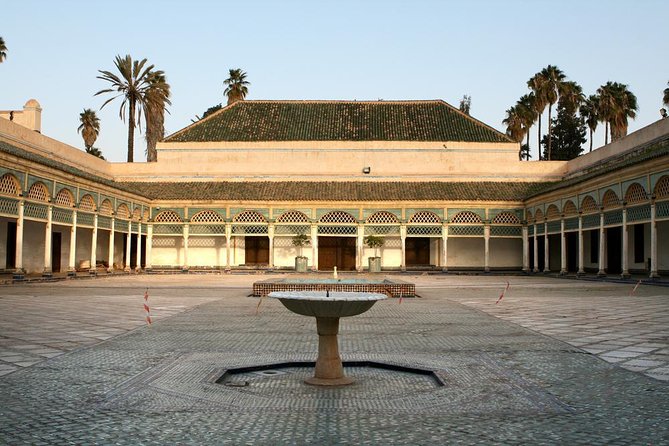
The longest cultural stop comes inside the Medina of Marrakech, with roughly 30 minutes for sights such as fountains, hammams, and other local features.
This part matters because the souks are not only commercial spaces. The Medina contains places connected with washing, water, baking, worship, work, and neighborhood life. Some guides have taken groups to communal bakeries and baths, giving the walk more substance than a simple tour of shop fronts.
You should ask questions here. Which buildings are still used? What was the original purpose of a fountain? How did people use a communal bakery? What is the difference between a hammam and an ordinary bath? The answers can turn a fast walk through old streets into a clearer picture of how the quarter functions.
The exact sights can vary with the guide and the route. The supplied details promise hammams, fountains, and more, but they do not guarantee entry into every site. Think of this section as a look at the Medina’s daily structure, not as a formal monument tour.
More Market Walking Tours in Morocco
- Marrakech: Monuments, Souks and Medina Guided Walking Tour
★ 4.8 · 208 reviews - Marrakech: 3-Hour Monuments, Souks & Old Medina Walking Tour
★ 4.7 · 133 reviews - Marrakech: Medina and Souks Walking Tour
★ 4.4 · 67 reviews - 3h Private Walking Tour in Tangier Kasbah Medina & Colorful Souks
★ 5.0 · 148 reviews
Souk des Teinturiers and Marrakech’s fabric trade
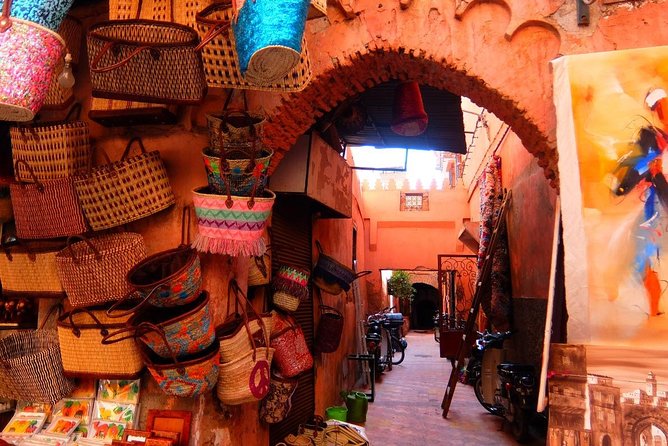
The route continues to Souk des Teinturiers, also known as Souk Sebbaghine. This is the fabric-dyeing quarter, with about 15 minutes planned here.
The stop helps explain why Marrakech’s market is not one single souk. Different trades have traditionally gathered in different areas, and the dyeing quarter has its own character and purpose. You may see fabrics, color, tools, and shop displays connected with the trade.
The short timing is enough for an introduction, but it may not satisfy anyone hoping for a long demonstration. The value is in learning how the market is organized and seeing a working craft district that you might not locate on your own.
This is also a useful point to think about purchases. Fabric can look very different under shop lighting and daylight, so examine colors carefully before buying. If you are shopping, ask about size, material, washing, and whether the price is for the item as shown or for a larger piece.
Souk Semmarine, the broad shopping finale
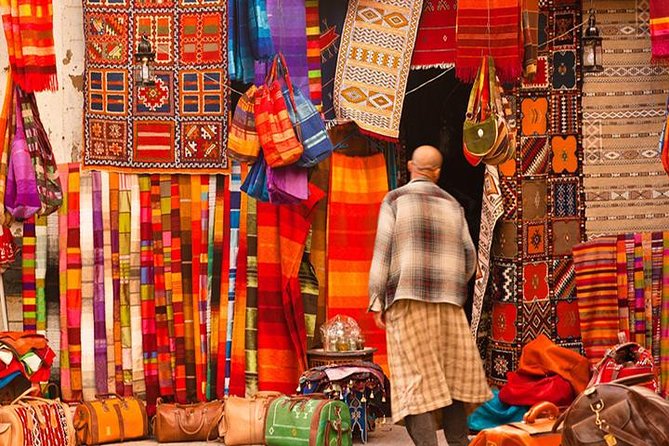
Souk Semmarine receives about 30 minutes, making it one of the longer stops. It is the major shopping stretch, with clothing, fabrics, antiques, food, and spices.
This is where the tour becomes most useful for people who already know what they want. A guide can point you toward the right type of stall, help you avoid wasting time, and assist with bargaining. Yahya Lotfi was especially praised for taking a group to the stalls they wanted and helping with prices. That kind of practical help can make a difference if you are unsure how to begin.
You should still keep control of the shopping. A guide may recommend particular shops, and some stops can have a sales-pitch feel. Listen to advice, but compare prices and do not confuse friendly service with an obligation to buy.
The best approach is to treat the walk as an introduction, not a shopping assignment. Make notes about products you like, return later if you wish, and avoid buying the first version of an item unless you are certain. The guide’s help is most valuable when it gives you confidence, not when it rushes your decision.
What the $25 price really buys you
At $25 per person, this tour offers solid value if you want orientation, cultural explanation, and a route through several parts of the Medina. You are paying for a local guide, navigation, and access to craft areas that can be difficult to understand when you walk alone.
The price is especially fair for a first visit or a short stay. You can spend hours in the souks and still see only the most obvious lanes. A guide gives those hours structure and helps you make better use of your energy.
Value depends on your goal. If you simply want to browse shops at your own pace, a guided walk may feel restrictive. If you want to understand the trades, reach less obvious areas, and feel less nervous about getting lost, the fee is easier to justify.
Group and private formats change the experience. A small group may lower the cost and add company, while a private tour should give your party more room to shape the route and departure time. The tour information also identifies the activity as private, with only your group participating, so confirm the exact format when booking if the distinction matters to you.
How the three hours feel on foot
The tour is listed at about three hours, though one account describes it as closer to two hours in practice. Allow the full three hours, but understand that the pace and length can depend on the guide, shopping stops, and the needs of your group.
You will be walking through narrow passages and busy market lanes. Comfortable footwear is sensible, and you should keep your belongings close in crowded areas. The information provided does not list a meal, transportation, or drinks, so plan for the walk as a walking activity rather than a food tour.
Morning and afternoon departures are available. A morning start can be a good way to orient yourself before more independent exploring. An afternoon time may suit you if you prefer a slower start or want to combine the walk with other plans earlier in the day.
If someone in your group becomes tired or unwell, tell the guide promptly. One guide helped a group return safely to its hotel when a child became ill, which suggests that reasonable adjustments may be possible, though the tour details do not promise hotel transport.
Guides who shape the experience
The guide is the biggest variable here. Several names appear repeatedly in positive accounts, including Mohammed, Ismail, Ali, Osama, Abdul, Cherif, Hussain, and Yahya Lotfi.
Ali was praised for taking photographs and explaining culture and history. Mohammed was appreciated for local knowledge, help with purchases, and showing areas that were hard to find independently. Hussain speaks Portuguese, which may be useful for Brazilian Portuguese speakers.
Abdul led a small group of eight, while another booking intended as a group tour ended up with only two people. That tells you group size can vary. Do not expect every departure to feel identical.
The strongest guides do three things well: they navigate confidently, explain what you are seeing, and listen to your interests. If you care more about textiles than spices, or craft than shopping, say so early. Private bookings should offer more flexibility, but even a group guide may adjust the route when practical.
Who should book this Medina walk?
I would recommend it to first-time visitors, short-stay visitors, nervous navigators, and anyone who wants context before shopping. Families can participate, provided children are accompanied by an adult. Service animals are allowed, and most people can take part according to the supplied accessibility information.
It is also a good choice if you want a gentle introduction rather than a formal lecture. The stops are short, the route covers several trades, and the guide can explain details as you walk.
Independent shoppers may prefer to explore alone after using this tour as an orientation. You may also want to skip it if your only aim is to buy goods quickly, since some cultural stops and sales-oriented visits may not match that goal.
Free cancellation is available if you cancel at least 24 hours before the local start time. Changes or cancellations inside that period are not refunded, so check your plans before committing.
Should you book the Marrakech souk tour?
Book it if the Medina feels confusing, if you want to see working craft areas, or if you value help with bargaining and local customs. At $25, it is a practical way to get your bearings and learn how the souks fit together.
Go in with clear expectations. This is not a silent photography walk, and some stops may lead toward shopping. Ask questions, state what you want to see, and remember that buying is optional.
For most first visits, I think the small cost is worthwhile. Choose a private format if you want flexible timing and a route shaped around your interests. Choose the group option if you mainly want guidance at a lower price.
FAQ
How long does the Marrakech Medina souk tour last?
The tour lasts approximately three hours, although the exact length may vary with the guide and the group.
How much does the tour cost?
The listed price is $25 per person.
Where does the tour start?
It starts at Hôtel Restaurant Café de France, at J2G7+G2G, Jamaa el-Fnaa, Rue des Banques, Marrakech.
Where does the tour end?
The activity ends back at the meeting point.
Are morning and afternoon departures available?
Yes. You can choose between morning and afternoon departures.
Is a private tour available?
Yes. Private and small-group options are available. Private tours include flexible departure times.
What is included in the price?
A local guide and a professional guide are included.
Are drinks included?
No. Drinks are not included.
Can children join the tour?
Yes. Children may join, but they must be accompanied by an adult.
What is the cancellation policy?
You can receive a full refund if you cancel at least 24 hours before the experience start time. Cancellations or changes made less than 24 hours before the start time are not accepted or refunded.
Just added around Marrakech
- Souks tour of Marrakech ( 3 hours )★ 5.0 · 5 reviews
- Marrakech: Hidden Souks Shopping Tour with Private Guide★ 4.1 · 53 reviews
- Marrakech: Half-Day Medina Markets Tour★ 4.5 · 11 reviews
- Edgy 8 Dish Private, Fusion Cooking Class, Menu Plan, Market★ 4.9 · 31 reviews
- Marrakesh: Private Cooking Class & Local Market Shopping★ 4.7 · 15 reviews
- Marrakech: Bahia Palace, Madrassa & Souks Guided Tour★ 4.8 · 47 reviews
- Marrakech: Vibrant Souks, Local Artisans & Medina Experience★ 4.5 · 66 reviews
- Marrakech: Private Souks Tour with Tea and Traditional Snack★ 4.6 · 33 reviews
Walking Tours, compared.

City Highlights Temple and Market Walking Tour
Read our review →
Tokyo Tsukiji Fish Market Food and Culture Walking Tour
Read our review →
Ben Youssef, Secret Garden, & Souks Walking Tour
Read our review →
Air Raid Shelter + St. Nicholas Market Walking Tour
Read our review →
Nishiki Market Brunch Walking Tour (7 Tastings + Brunch)
Read our review →Tsukiji Fish Market Food and Culture Walking Tour
Read our review →Browse the lists this tour appears in