Review · INDIA
Jaipur: Spice Market and Street Food Walking Tour
Spice, smoke, chai, and a little chaos. This 2.5-hour Jaipur tour gives you a close look at the Pink City through its old spice market, working shops, short tuk-tuk rides, and local food stalls. It is less about checking off monuments and more about seeing how Jaipur cooks, shops, moves, and eats.
I like the way the tour connects several small experiences into one useful introduction to the old city. The market walk shows spices being ground by hand, while the food stops let you taste vegetarian snacks instead of simply hearing about them. I also like that guides such as Harshit, Harshita, and Lacey have been praised for clear English, good local knowledge, and friendly care.
The main drawback is the setting itself: crowds, traffic, noise, and uneven walking conditions are part of the deal. The tour is not suitable for wheelchair users or people with mobility impairments, and anyone hoping for a quiet food class or a relaxed monument tour may find the pace and surroundings demanding.
Key Points to Know Before You Go
- The tour begins at Shri Chandpol Hanuman Ji Temple, just outside the temple entrance in Jaipur’s Pink City.
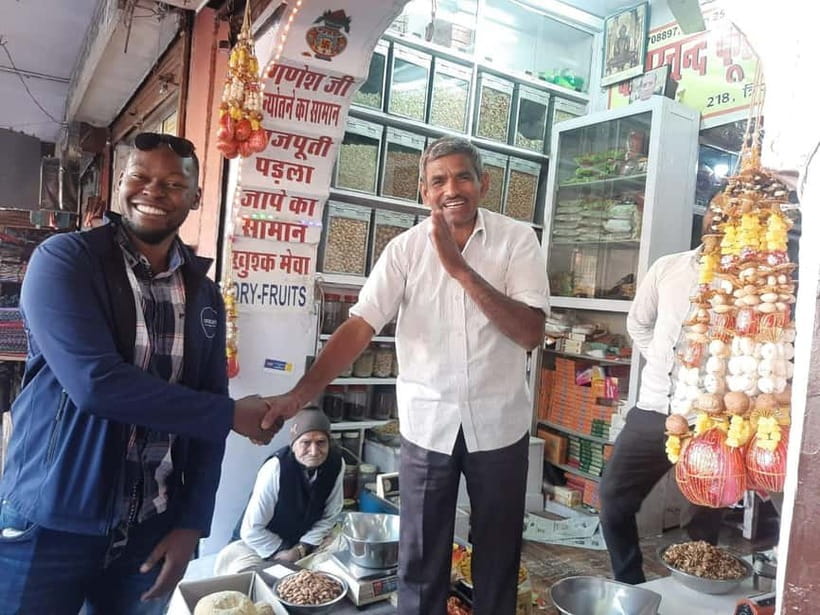
- The spice market is the main event, with local workers grinding and selling spices amid strong smells and constant activity.
- You taste food at five or six local shops, followed by chai and snacks at a famous street food stop.
- Two short tuk-tuk rides break up the walking and give you a quick look at Jaipur’s old-city traffic.
- The tour costs $21 per person, which is good value if you want both a guided market visit and several tastings.
- You finish near Raj Mandir Cinema and Chaura Rasta Street, not at your hotel, so plan your next ride from there.
Starting at Chandpol Temple in Jaipur’s Pink City
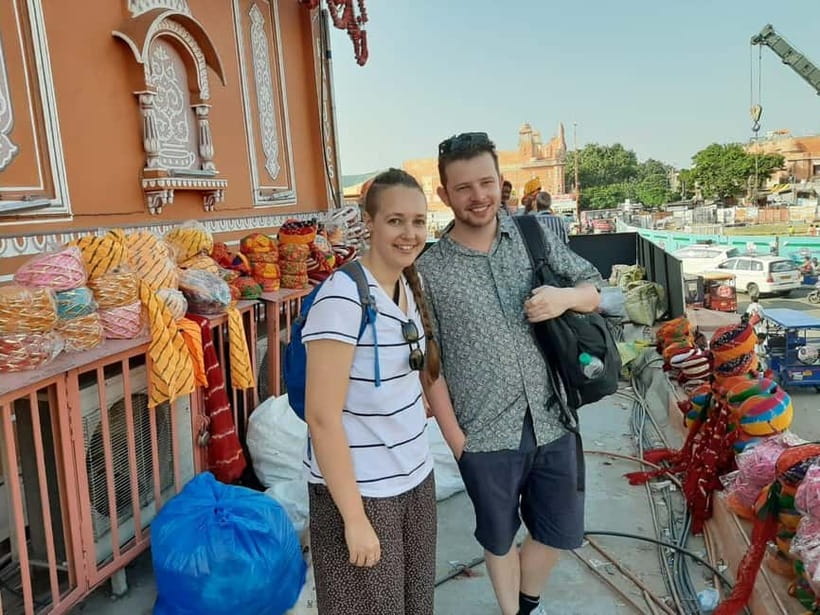
Your meeting point is Shri Chandpol Hanuman Ji Temple. You meet the guide just outside the temple, so it helps to arrive with the temple clearly marked on your phone and a few minutes to spare.
This is a practical starting place because the tour moves straight into the old city rather than spending time on hotel pickups. The tradeoff is that hotel transport is not included. You need to reach the temple yourself and arrange your own ride after the tour.
The opening walk introduces you to Jaipur at street level. You will pass historic sites while the guide explains what you are seeing, but this is not designed as a full palace or fort tour. The focus stays on the old city as a working place, with shopkeepers, pedestrians, carts, scooters, and food sellers sharing narrow routes.
You should expect plenty of noise. Horns, conversation, shop activity, and tuk-tuk traffic form the soundtrack. If you enjoy taking photographs, this is a productive part of the tour, but you need to ask before photographing people closely and avoid blocking doorways or stalls.
More Market Walking Tours in India
- Private Heritage Walking Tour in Jaisalmer Fort and Old Bazaar
★ 5.0 · 306 reviews - Jaipur Bazaar & Food Walking Tour
★ 5.0 · 281 reviews - Old Delhi: Spices, Heritage and Bazaars Walking Tour
★ 5.0 · 173 reviews
Inside Jaipur’s Old Spice Market
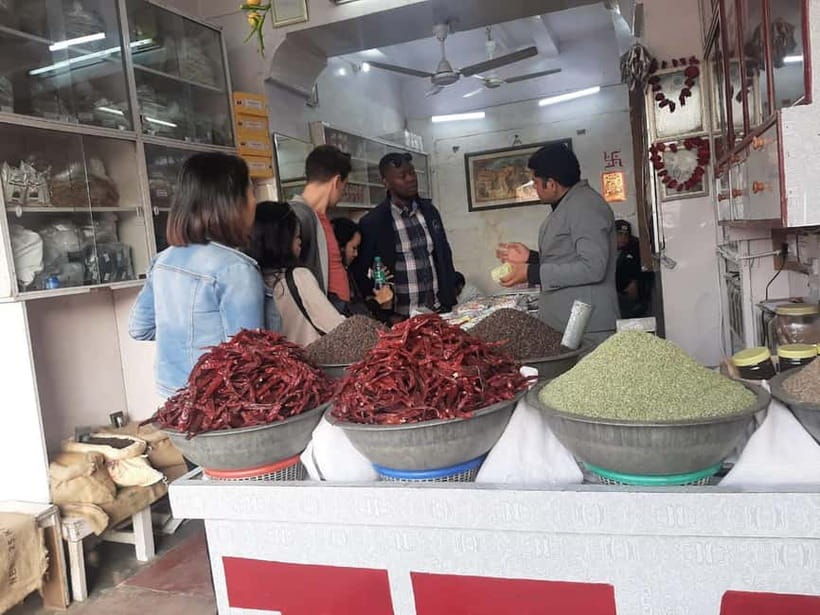
The spice market is the heart of the experience. It is described as Jaipur’s oldest and biggest spice market, and the attraction is not just the number of shops. You see spices being handled, ground, prepared, and sold by local workers.
This makes the market useful for anyone who wants to understand Indian cooking beyond the familiar labels of curry, chili, and turmeric. Your guide can explain how different spices are used in food and discuss their medicinal and Ayurvedic associations. Harshit was specifically praised for explaining spice use in cooking and their medicinal properties, while another guide helped a visitor notice the surprising variety of rice, including more than five kinds.
The market also works well for photographers and food writers. You get color from sacks and displays, texture from piles of dried ingredients, and movement from the people working around you. The smells shift from warm and earthy to sharp and pungent, sometimes within a few steps.
Do not expect a polished market designed for sightseeing. This is a working commercial area. The organized chaos is part of its charm, but it also means you may be jostled, need to watch your footing, and have only a moment to frame a photograph.
Two Short Tuk-Tuk Rides Through the Pink City
After part of the market walk, you take a short tuk-tuk ride of about 10 minutes. There are two short tuk-tuk rides included overall, with one route taking you toward Tripolia Gate.
These rides matter because they give your feet a break and let you see the old city from a different angle. A tuk-tuk is also a fitting way to move through Jaipur’s crowded streets. You are not simply being transported between attractions; you are getting a brief taste of how the city functions in real time.
The rides are short, so do not book this expecting a long sightseeing drive. You may spend more time watching traffic squeeze through busy streets than admiring broad city views. Still, the change from walking to riding keeps the 2.5-hour program from feeling like one long march.
Traffic and crowds can affect timing. During major celebrations such as Diwali, meeting a guide may take extra patience, although one guide managed to locate the group despite festival crowds. Keep your phone charged, stay close to the guide, and do not wander off while the vehicle is being arranged.
Five or Six Food Stops in the Old City
The food portion is where the tour becomes more than a market walk. You stop at five or six authentic food shops and try vegetarian dishes in the old city. The exact foods are not specified in advance, so you should think of this as a guided tasting route rather than a fixed menu.
That flexibility is useful. A local guide can choose places that are operating that day, and you can try foods you might otherwise walk past without understanding. It also means the experience may be more interesting for a curious eater than for someone who wants a carefully planned restaurant meal.
The food is served in local settings rather than formal dining rooms. One stop is described as a local Indian cafe, where you can sit for a while and talk after the walking and tastings. This pause matters. Jaipur’s old city can be intense, and a seated snack break gives you time to ask questions about ingredients, cooking, and daily life.
Food safety is a reasonable concern in any street food tour. The supplied details do not promise special dietary arrangements or list every dish, so tell the guide about allergies, restrictions, or foods you avoid before tasting. The tour is centered on vegetarian food, but that does not automatically answer every dietary question.
The strongest praise for this part concerns both taste and access. The guide takes you to places that would be difficult to identify on your own, and the food recommendations can remain useful after the tour. Paul specifically valued the guide’s restaurant advice, while several people described the snacks as delicious and genuinely local.
More Spice Market and Bazaar Tours in India
- Old Delhi Food-Spice Market-Temples Tour Soon Featured on NETFLIX
★ 5.0 · 304 reviews - Old Delhi Odyssey: A Tour of Religion, Spice Market, & Best Food
★ 5.0 · 284 reviews - Agra: Street Food Walking Tour, Spice Market, & Tuk-tuk Ride
★ 4.9 · 102 reviews - Old Delhi & Spice Market Tour
★ 5.0 · 98 reviews
Chai, Snacks, and the Final Stop
Near the end, you stop at a famous street food stall for chai and snacks. Chai is a small thing, but it gives the tour a fitting finish: you sit or pause, taste something warm, and talk through what you have seen.
This is also a good moment to ask the guide for food suggestions elsewhere in Jaipur. Guides such as Harshit were praised for being professional and making people feel safe, while Harshita was described as friendly and helpful. Those qualities matter in a crowded market, where clear directions and a calm manner make the experience easier.
The advertised finish is at Raj Mandir Cinema, with the tour also described as ending on Chaura Rasta Street near Tripolia Gate. Treat that area as your practical exit point. You will need to arrange your own onward transport, and hotel drop-off is not included.
Raj Mandir Cinema is a recognizable city landmark, but the tour does not include a cinema visit or ticket. The value of the endpoint is that it places you near a well-known part of Jaipur rather than returning you to the temple.
What the $21 Price Really Gets You
At $21 per person, this is a strong-value experience if you want a guide, tastings, and local transport in one short outing. The price includes the guided spice market walk, food at five or six shops, two short tuk-tuk rides, and a bottle of water.
You are paying for access and interpretation as much as for food. Without a guide, you might see spice stalls but miss the details about grinding, cooking uses, Ayurveda, or the differences among ingredients. You might also pass food shops without knowing which ones fit the route.
The tour does not include hotel pickup, hotel drop-off, personal expenses, or a full meal at a sit-down restaurant. Bring some money for anything beyond the included tastings, and do not assume every snack or drink you notice is covered.
The option to cancel up to 24 hours ahead for a full refund and reserve without paying immediately adds useful flexibility. Availability and starting times should be checked before booking, since the supplied details do not give one fixed departure time.
How Difficult Is the Walking?
The tour lasts 2.5 hours, with around two hours described as guided touring and a short tuk-tuk ride included. It is not a mountain hike, but the old city can be physically tiring because you are walking through crowded public areas and stopping repeatedly.
Wear comfortable walking shoes. This is the clearest practical advice given for the experience, and it matters more here than smart clothes or special equipment. Carrying a small bag is easier than bringing bulky luggage through a market.
The tour is not suitable for people with mobility impairments or wheelchair users. The combination of walking, crowded streets, market conditions, and tuk-tuk access makes that limitation important rather than a minor footnote.
Photography is encouraged, which will appeal to photographers, filmmakers, bloggers, chefs, and food lovers. Be respectful with people and businesses. Ask before taking close portraits, especially when workers are concentrating on grinding or preparing products.
The Guide Makes the Difference
A good guide is central to this experience because the market can otherwise become a blur of sacks, smells, and traffic. The most praised qualities are clear English, punctuality, friendliness, and the ability to explain how spices are used in cooking and traditional health practices.
Several guide names appear in recent bookings, including Harshit, Harshita, and Lacey. Guide assignment can vary, but the repeated pattern is useful: you should expect a live English-speaking guide who explains the market and food rather than simply leading you from stop to stop.
The best guides also help you feel at ease in a busy area. That was especially important during Diwali, when the streets were more crowded than usual. You still need to pay attention to your belongings and surroundings, but a calm guide can make the city feel much easier to read.
Who Will Enjoy This Jaipur Food Tour?
I would recommend this tour to first-time visitors who want a quick introduction to Jaipur’s everyday food culture. It is also a good fit if you have already seen major monuments and want something more street-level.
Food lovers will get the most from the five or six tastings and the chance to ask about ingredients. Photographers will appreciate the market’s colors, textures, and human activity. Writers and filmmakers can gather plenty of visual material, provided they work respectfully.
This is less suitable for you if you dislike crowds, strong smells, traffic, or uncertain food choices. It is also a poor fit if your priority is a detailed history tour of Jaipur’s palaces and forts. The guide may point out historic sites, but the market and food remain the main subjects.
The tour can work well early in a Jaipur stay because it gives you useful food ideas and helps you understand the old city’s layout. It can also work late in your trip if you want one final taste of local snacks before moving on.
My Verdict: Book It If You Want Jaipur at Street Level
I would book this tour for the price, especially if you value local explanation more than polished presentation. The spice market, hand-ground products, tuk-tuk rides, chai, and several vegetarian tastings create a varied half-day without taking over your schedule.
Go with comfortable shoes, an open mind, and realistic expectations about crowds. If you need easy access, quiet streets, a fixed menu, or hotel-to-hotel service, choose something else. If you want to understand what Jaipur smells like, sounds like, and eats like, this is a smart $21 introduction.
FAQ
Where does the Jaipur spice market tour begin?
It begins at Shri Chandpol Hanuman Ji Temple in Jaipur’s Pink City. You meet the guide just outside the temple.
Where does the tour finish?
The tour finishes at Raj Mandir Cinema, with the ending area also described as Chaura Rasta Street near Tripolia Gate.
How long does the experience last?
The experience lasts 2.5 hours. The guided tour portion is described as about two hours, with a short tuk-tuk ride included.
How much does the tour cost?
The listed price is $21 per person.
What food is included?
You receive tastings at five or six authentic food shops in Jaipur’s old city, followed by chai and snacks at a famous street food stall.
Is the food vegetarian?
The food tasting is described as vegetarian food in the old city of Jaipur.
Are tuk-tuk rides included?
Yes. The tour includes two short tuk-tuk rides. One listed ride lasts about 10 minutes.
Is hotel pickup included?
No. You must reach Shri Chandpol Hanuman Ji Temple yourself, and hotel drop-off is not included.
What language is the tour conducted in?
The tour is conducted in English with a live guide.
Is the tour suitable for wheelchair users?
No. The experience is not suitable for wheelchair users or people with mobility impairments. Comfortable walking shoes are recommended.
More Food and Drink Trips in India
- Experience Bangalore – City Tour, Authentic Food & market (Food/Culture/History)
★ 5.0 · 156 reviews - Food Trail Through Sowcarpet Market: A Taste of Chennai
★ 5.0 · 38 reviews - Bangalore : Evening Food Street Walk and Market Visit
★ 5.0 · 34 reviews - Bangalore Evening Food Street Walk and Market Visit
★ 5.0 · 32 reviews
More Street Food Market Tours in India
- Mumbai: Street Food and Night Markets Tour
★ 4.9 · 719 reviews - Mumbai Street Food & Night Markets
★ 5.0 · 225 reviews - Mumbai Street Food and Evening Bazaar Tour
★ 5.0 · 172 reviews - Mumbai Street Food Tour with Evening Bazaar Walk
★ 4.9 · 79 reviews
Just added around India
- Shopping and Bazaar Trail in Bangalore★ 4.5 · 5 reviews
- Bangalore Walking Tours – Flower Market, PETE and more★ 5.0 · 5 reviews
- KR Market Photo Walk★ 5.0 · 12 reviews
- Bangalore: Walk in Historic Ulsoor – Landmarks, Bazaar & Culture★ 5.0 · 9 reviews
- Lalbagh+Bull Temple+Tipu Palace+Market+Lunch=Bangalore City Tour★ 5.0 · 9 reviews
- Experience Bangalore Evening City Walk Tour and Market Visit★ 5.0 · 9 reviews
- Private Walking Tour into the Oldest Local Market in Bengaluru★ 5.0 · 5 reviews
- Bangalore Evening Food Street Walk and Market Visit★ 5.0 · 32 reviews
Street Food Market Tours, compared.

Old Town, Creek, Museums, Souks, & Street Food Tour
Read our review →
Old Town, Souks, Street Food, Guided Tour & Abra Ride
Read our review →

London Bridge & Borough Market Food Tour with 7 Authentic Dishes
Read our review →
Old Town, Souks, Street Food, Guided Tour & Abra Ride
Read our review →
Small Group Cooking Class & Market Food Tour in Florence
Read our review →