Review · DUBAI, UNITED ARAB EMIRATES
Dubai Old Town Walking Tour with Abra ride, Spice and Gold Souk
Old Dubai rewards slow walking. This private tour takes you through Al Fahidi’s narrow lanes, past old religious and trading sites, across Dubai Creek by traditional abra, and into the Spice and Gold Souks. I like the small private format and the way the route combines local history with everyday shopping. I also like that the tour includes the abra crossing, snacks, drinks, and a guide who can help you make sense of a part of Dubai that is easy to miss among the skyscrapers.
The main consideration is timing. Two to three hours is enough for a useful introduction, but not enough for a long museum visit or leisurely shopping at every souk. The route also ends in Deira, so you should be ready for a fair amount of walking, warm weather, crowded market lanes, and persistent sales pitches.
Key points to know before booking
- Private tour for your group: You are not placed with strangers, and the guide can respond to your questions and adjust the pace.
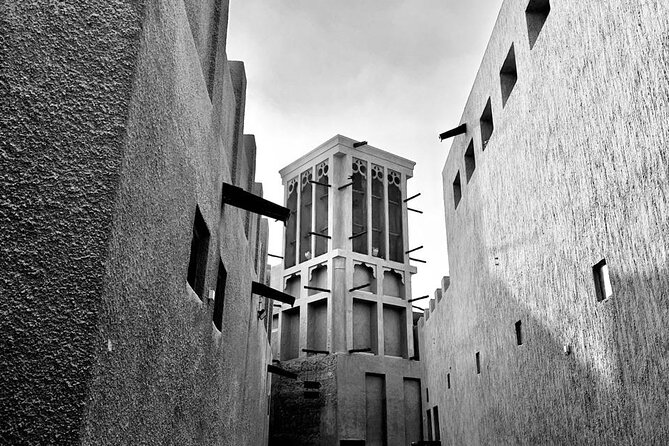
- Al Fahidi gives you old Dubai in one glance: Wind towers, palm wood, gypsum, stone, and narrow passageways replace the glass towers of modern Dubai.
- The abra crossing is simple but memorable: This short boat ride across Dubai Creek is one of the most authentic parts of the outing.
- Bargaining matters in the souks: The Textile and Spice Souks are shopping stops, not just photo stops, so bring patience and a clear idea of what you want.
- Guides are a major strength: Guides named in the feedback include Tamur, Mansoor Ali, Sarfaraz, and Ali Kumail, praised for cultural explanations, city tips, photographs, and help with shopping.
- The tour ends at the Gold Souk: Your guide can point you toward the nearest metro station or taxi stop after the final visit.
Starting in Al Fahidi, where Dubai slows down
The meeting point is Local House Restaurant on Al Fahidi Street in the Historical Neighbourhood. This is a practical start because you begin in the middle of the old quarter rather than spending part of your tour getting there from a modern hotel district.
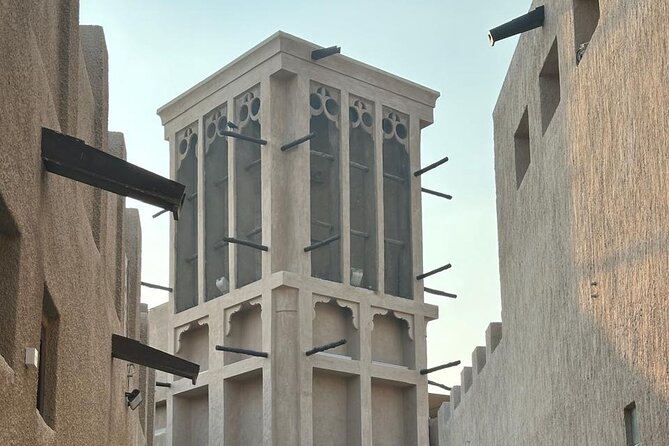
Al Fahidi Historical Neighbourhood is the best setting for understanding what Dubai looked like before its oil wealth and high-rise boom. The buildings use materials such as stone, gypsum, teak, sandalwood, palm wood, and fronds. Their narrow lanes and small public squares create shade and make the district feel far removed from the broad roads and giant malls elsewhere in the city.
Look up at the barjeel, or traditional wind towers. These towers helped move air through homes before modern cooling systems. The tour allows about 20 minutes here, so you should expect an introduction rather than a detailed architectural study. I would listen closely to the guide, ask questions, and take photographs early, because the route has several more stops to cover.
The value of this first stop is the context. Without it, the souks can feel like a collection of shops aimed at visitors. With it, you begin to see how Dubai developed around homes, courtyards, trade, and the creek.
More Market Walking Tours in Dubai
- Historic Old Dubai & Souk Small Group Walking Tour
★ 5.0 · 156 reviews - Dubai Souks, Food & Culture Walking Tour
★ 5.0 · 132 reviews - Private Old Dubai Walking Tour: Forts, Souks, and Boats
★ 5.0 · 116 reviews
Al Fahidi Fort and the story of old power
The itinerary also includes Dubai’s oldest building, dating from the 1780s. Built as a fortress, it served as a center of political power in earlier Dubai. The stop is listed separately from the neighborhood, although the exact time allotted is not stated.
You should treat this as a short historical pause rather than a full fort visit unless your guide confirms otherwise. The important point is the contrast between Dubai’s former scale and its present one. A fortress that once represented the city’s authority now sits within a much larger urban area, yet it helps explain the need to protect and govern a settlement built around the creek.
Temple Lane and the Shiva Temple
The route continues toward the Shiva Temple, part of the Dubai Hindu Temple complex in Bur Dubai. The complex was first established in 1958 and includes the Shiva Mandir, Krishna Mandir, and a Gurudwara.
You have about 10 minutes here. That makes the stop brief, but it adds an important part of Dubai’s cultural picture. The city has long connected communities from across the region and beyond, and this place of worship reflects the presence of the large Hindu community in the United Arab Emirates.
Follow your guide’s instructions about respectful behavior and photography. The value here is not sightseeing in the usual sense. It is a chance to see a functioning religious site within the old quarter and to understand that Dubai’s story includes more than forts, merchants, and royal buildings.
Textile Souk: color, bargaining, and salesmanship
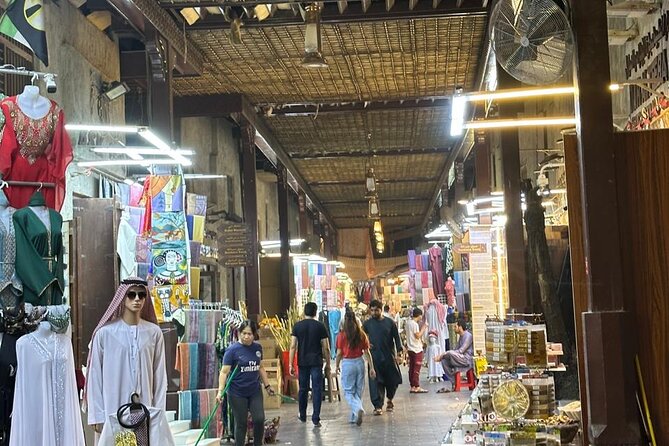
The Textile Souk is scheduled for about 20 minutes. You will find fabrics, shawls, embroidery, and souvenir items in a range of colors and textures. It is one of the better places on this route to buy something small and portable.
This is also where you should expect the most direct sales approach. The advice is simple: bargain politely, compare items, and do not feel obliged to buy because a shopkeeper has spent time showing you products. Your guide may help explain prices or suggest how to handle the exchange, but you should still decide what an item is worth to you.
I would avoid trying to make a major purchase in a hurry. Twenty minutes is enough to browse and perhaps buy a scarf or textile, but not enough for careful comparison across many shops. If shopping is your main reason for visiting Old Dubai, you may want to return independently after the tour.
The Textile Souk works well as a bridge between the historic quarter and the trading side of Dubai. You move from restored lanes and old homes into a market where commerce is still the main event.
More Market Walking Tours in the UAE
- walking tour in old dubai, souks, abra boat, old town
★ 5.0 · 89 reviews - Private Historic Old Dubai and Souks Walking Tour featuring Hidden Gems
★ 5.0 · 27 reviews - Walking Tour in Dubai. Souks, museums, Local Food Testing
★ 5.0 · 11 reviews - Dubai Old Town, Creek, Abra boat, Souks Guided walking Tour
★ 4.7 · 3 reviews
The abra ride across Dubai Creek

At Bur Dubai Abra Station, you board a traditional wooden ferry called an abra. The crossing takes about 10 minutes as listed for the stop, and it connects Bur Dubai with Deira on the opposite side of Dubai Creek.
This is not a luxury cruise, and that is exactly why it works. The abra is a working form of local transport, not a staged attraction. From the water, you get a different view of the creek, the waterfront buildings, and the movement between the two historic districts.
The ride is included in the tour price. That matters because it removes one small bit of planning and lets the guide lead you directly from the old quarter to the Deira markets. The boat may be brief, but it gives the walking route a clear sense of place. Dubai’s older trading life was organized around this waterway, and crossing it makes that geography easier to understand.
The tour also includes bottled water, coffee or tea, and snacks. The description specifically mentions dates chocolates, dry fruits, nuts, and oil perfumes during the experience. These tastings and introductions add a local shopping angle, although you should not confuse them with a full meal.
The Spice Souk, where your nose does the work
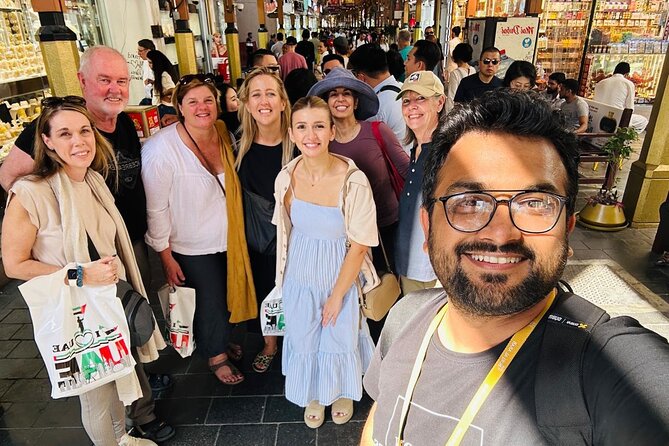
After the abra crossing, you reach the Dubai Spice Souk. The scheduled time is about 20 minutes. Here the air carries the strongest impression of the entire route, with spices and other ingredients displayed for browsing and purchase.
Use this stop to ask questions. You can learn about different spices, see how they are presented, and compare prices. The advice to bargain applies here too. A friendly price discussion is part of the market experience, but you should make sure you understand what you are buying and how much you are paying before accepting a package.
The Spice Souk is more interesting when you treat it as a working market rather than a colorful backdrop. Smell the products, notice the displays, and ask your guide about unfamiliar items. A good guide can turn a quick shopping stop into a useful lesson in local food traditions and trade.
The drawback is time. Twenty minutes passes quickly, especially if you stop to examine products or consider purchases. If you want to shop at length, keep your first visit focused and return later.
The Gold Souk and a practical finish
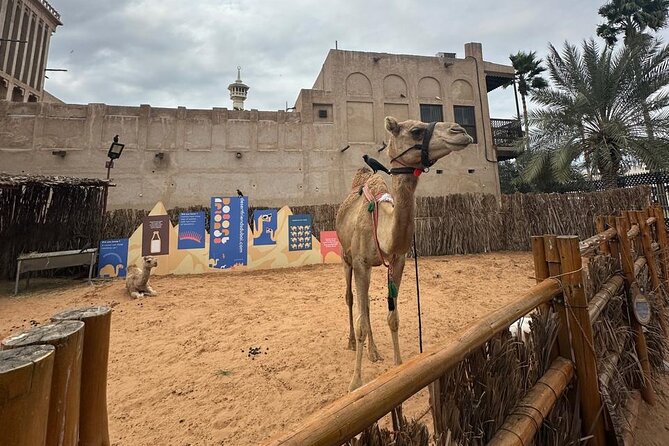
The final stop is the Dubai Gold Souk, with about 20 minutes planned. It is one of the world’s largest gold markets, with a large collection of jewelry shops and a wide range of designs.
You do not need to buy jewelry to enjoy the visit. The scale, window displays, and concentration of gold make the market worth seeing on its own. If you are shopping, take your time, compare several stores, and ask clear questions about the piece, price, and terms. The tour information emphasizes reasonable prices, but that does not mean every first offer is the best one.
A guide can be especially useful here. Mansoor Ali was praised for helping with jewelry prices, while other guides were appreciated for explaining the city and helping visitors navigate. That does not guarantee the same guide or the same shopping assistance on every departure, but it shows how much the quality of your experience depends on who leads the walk.
The tour ends at the Gold Souk in Deira’s Al Ras area. Your guide can assist with directions to the nearest metro station or taxi stop. This is convenient, but remember that you will not finish where you started, so plan the rest of your day around Deira.
Why the private format matters
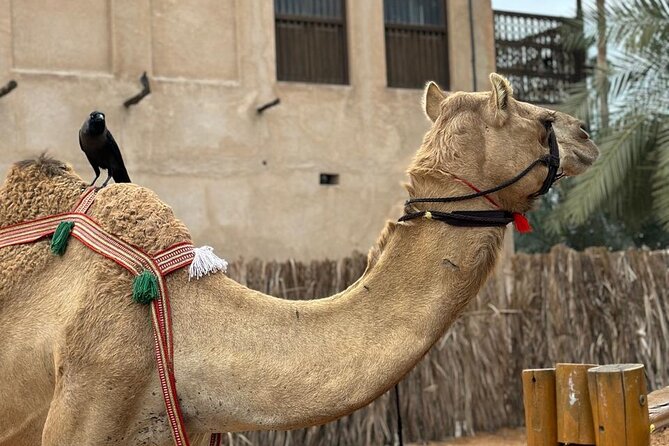
This is a private activity, meaning only your own group participates. That is a major advantage for a history and culture walk because you can ask questions without waiting for a large group to catch up.
Several guides have been praised for being friendly, flexible, and easy to talk with. Tamur was described as helpful with city tips, stories, photographs, and navigation. Sarfaraz was especially praised for engaging conversation with a solo visitor and explaining cultural details. Mansoor Ali was described as courteous and helpful around historical sites and jewelry shopping, while Ali Kumail was praised for clear explanations and a well-organized route.
Guide names can vary, so you should not book solely for one person unless the operator confirms that person in advance. Still, these comments point to the experience’s strongest feature: the human explanation. You can walk the same lanes alone, but you will miss much of the context about why they matter.
The private format also makes a late start possible. One visitor found a 5 p.m. departure useful because the tour took place in cooler temperatures before dinner. Availability and exact start times need to be confirmed when booking, but a later start may suit you better than a midday walk.
Is $86.53 good value?
At $86.53 per person, this is not the cheapest way to see Old Dubai. You are paying for a private guide, a planned route, the included abra ride, bottled water, coffee or tea, snacks, and help at a series of historic and commercial stops.
The value improves if you are new to Dubai, have limited time, or want a guide who can explain cultural details and help you find your way afterward. A private group also makes the price more reasonable for families or friends who prefer not to join strangers, especially since group discounts may be available.
The value is weaker if you only want to ride an abra and wander through the souks. You can visit the markets independently, and the tour’s short stop lengths limit how much shopping you can do. I would choose this tour for interpretation and convenience, not as a dedicated shopping excursion.
The experience is booked, on average, 57 days ahead. That suggests you should plan early if the private format and a particular date matter to you.
Who will enjoy this Old Dubai walk?
I would recommend it to first-time visitors who want a readable introduction to Dubai beyond the modern skyline. It also suits solo visitors who want conversation, families who appreciate help with directions, and couples who prefer a private pace.
It is a good choice if you like short historical stops followed by real markets. You get architecture, religion, local transport, food-related tastings, shopping, and city orientation in a single outing.
I would be more cautious if you dislike bargaining, warm outdoor walking, or sales-focused markets. The tour has no long indoor museum segment listed, and several stops allow only about 20 minutes. It is also not designed for serious gold, textile, or spice shopping.
Wear comfortable shoes, carry the bottled water provided, and keep your belongings secure in crowded market lanes. If you want the most pleasant walking conditions, ask about a late afternoon start.
Booking, changes, and basic planning
Confirmation is provided when you book, and the route is near public transportation. Most people can participate, and the experience is described as suitable for everyone, although the supplied information does not give specific accessibility details.
Free cancellation is available if you cancel at least 24 hours before the local start time. Cancellations or changes made within 24 hours are not refunded or accepted. Keep the end point in mind when planning dinner or another activity, since you finish at the Gold Souk rather than returning to Al Fahidi.
Should you book it?
Book this tour if you want a private introduction to Old Dubai with a guide who can explain the culture, manage the route, and help you make sense of the souks. The abra crossing, Al Fahidi lanes, Temple Lane, and market visits make a varied two to three hours.
Skip it if your goal is simply to shop or if you prefer to explore at your own speed. For most first visits, though, the price buys more than transport between sights. It buys structure, local context, and a smoother first encounter with the older side of Dubai.
FAQ
How long does the Dubai Old Town Walking Tour last?
The tour lasts approximately two to three hours.
Where does the tour start?
It starts at Local House Restaurant, 65 Al Fahidi Street, in the Al Fahidi Historical Neighbourhood of Bur Dubai.
Where does the tour end?
The tour ends at the Dubai Gold Souk in Deira, in the Al Ras area.
Is the abra ride included?
Yes. The traditional abra ride across Dubai Creek is included in the tour.
Is this a private tour?
Yes. Only your own group participates in the private activity.
What is included besides the guide and boat ride?
The tour includes bottled water, coffee or tea, snacks, and a professional licensed local guide.
Which places does the tour visit?
The route includes Al Fahidi Historical Neighbourhood, Dubai’s old fort area, the Shiva Temple, Textile Souk, Bur Dubai Abra Station, Dubai Spice Souk, and Dubai Gold Souk.
Does the tour include shopping?
The tour visits the Textile, Spice, and Gold Souks, where you can shop. Bargaining is recommended, but purchases are not listed as included.
Can most people participate?
The experience states that most travelers can participate and recommends it to everyone. Specific accessibility details are not provided.
What is the cancellation policy?
You can cancel at least 24 hours before the local start time for a full refund. Cancellations or changes made less than 24 hours before the start are not accepted and are not refunded.
More Spice Market and Bazaar Tours in Dubai
- Cairo: Local Markets & Khan el Khalili Private Shopping Tour
★ 4.6 · 614 reviews - Cairo VIP Guided Tour to Khan El-Khalili Market with Lunch
★ 5.0 · 431 reviews - Istanbul Grand Bazaar: From Rooftops to the Secret Passages
★ 4.8 · 337 reviews - Old Delhi Food-Spice Market-Temples Tour Soon Featured on NETFLIX
★ 5.0 · 304 reviews
More Spice Market and Bazaar Tours in the UAE
- Dubai Half-Day City Tour with Visit to Dubai Gold Souk
★ 4.0 · 1,741 reviews - Old Dubai Gold Souk and Water Taxi
★ 4.0 · 26 reviews - Dubai City Tour Old Town, Abra Taxi Boat, Gold & Spice Market
★ 4.5 · 8 reviews - Dubai: Guided City Walking Tour to Spice and Gold Souk
★ 5.0 · 3 reviews
Just added around Dubai
- Walking Tour in Dubai. Souks, museums, Local Food Testing★ 5.0 · 11 reviews
- Old Dubai Heritage Tour: Souks, Mosques & more hidden gems!★ 4.3 · 72 reviews
- Old Dubai Guided Tour With Photographer: Souks & Street Food★ 4.9 · 74 reviews
- Dubai Tour: Haritage Walking Guide, Gold & Spice Souq, Creek★ 4.5 · 11 reviews
- Dubai:Private Frame Entry, Mosque, Souks, Tastings& transfer★ 4.8 · 9 reviews
- Dubai Old Town, Creek, Abra boat, Souks Guided walking Tour★ 4.7 · 3 reviews
- Dubai: Discover Dubai Old Town, Souks, Museum & Street Food★ 4.9 · 25 reviews
- Dubai: Guided City Walking Tour to Spice and Gold Souk★ 5.0 · 3 reviews
Grand Bazaar & Spice Market Tours, compared.
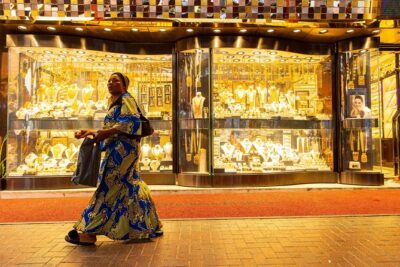
Dubai Half-Day City Tour with Visit to Dubai Gold Souk
Read our review →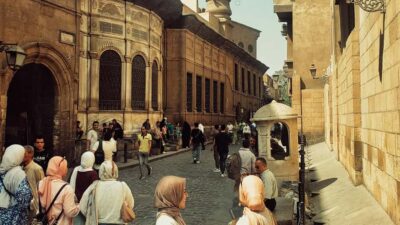
Local Markets & Khan el Khalili Private Shopping Tour
Read our review →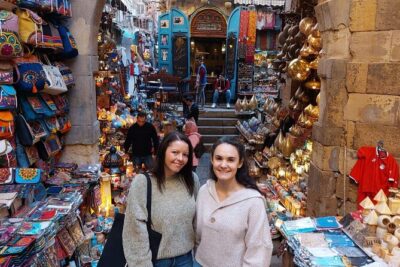
Cairo VIP Guided Tour to Khan El-Khalili Market with Lunch
Read our review →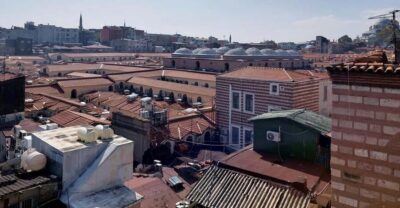
Istanbul Grand Bazaar: From Rooftops to the Secret Passages
Read our review →
Old Delhi Food-Spice Market-Temples Tour Soon Featured on NETFLIX
Read our review →Old Delhi Odyssey: A Tour of Religion, Spice Market, & Best Food
Read our review →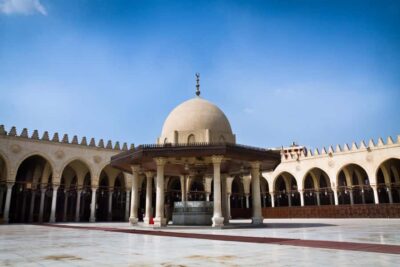
Old Cairo and Khan El Khalili Bazaar: Private Half-Day Tour
Read our review →