
Review · GREECE
Chania: Morning Bites & Market Delights Food Tour
Come hungry, leave with local tips. This four-hour walk through Chania turns breakfast into a cultural lesson, with stops for koulouri, kalitsounia, Cretan cheeses, olive oil, honey, Greek coffee, and a full mezze meal. I especially like the small group size, limited to 10 people, and the way guides such as Elena and Kostas connect each food stop with local customs and family traditions. The main consideration is that this is not a light tasting stroll. By the final restaurant, you should expect to be very full, and the food selection is not suitable for vegans or people with several common food allergies.
I also like the route’s mix of eating and sightseeing. You pass through Chania’s old streets, pause beside the Venetian harbor, stop near Agios Nikolaos Church, and return to 1866 Square without needing a taxi. The drawback is practical: the tour includes frequent walking, stairs or uneven surfaces may be possible, and the operator says it is not suitable for wheelchair users or people with mobility problems.
Key details before you book
- Four hours on foot: The tour begins and ends at Platia 1866, with food stops spread around Chania’s Old Town.
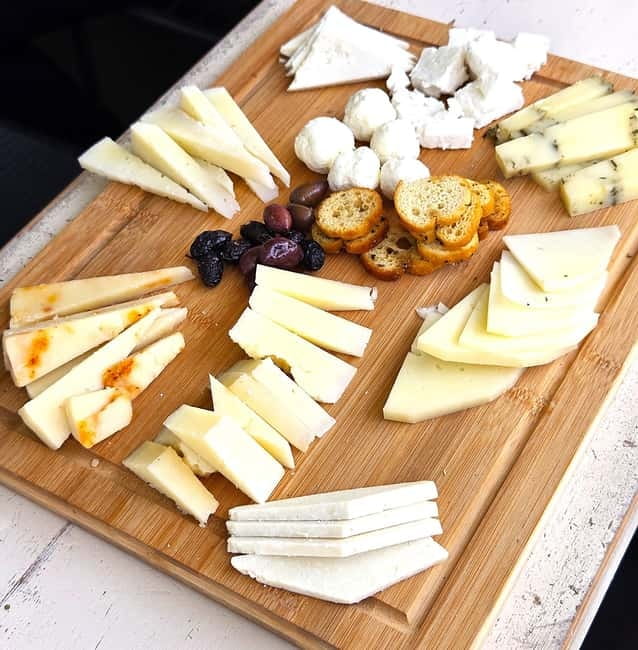
- A proper Cretan breakfast: Expect koulouri, cheese pies, local cheeses, lychnaraki, olive oil, honey, and other regional tastes before lunch.
- Coffee beside the harbor: The 30-minute stop at the Old Venetian Harbour gives you time for Greek coffee, photographs, and a short talk about the city.
- A generous final meal: The last stop is a traditional restaurant with mezze plates, regional dishes, and alcoholic drink samples.
- Small groups matter: The limit of 10 people allows room for questions and makes it easier for the guide to adjust the pace.
- Food restrictions are a serious issue: Gluten, lactose, nuts, high blood pressure, alcohol, and several dietary needs may make this a poor fit.
Starting at 1866 Square with a Cretan breakfast
Meet your guide beside the Ottoman Fountain in the center of Platia 1866. Arrive 15 minutes early, because the group moves out after gathering and the tour does not include hotel pickup.
The square is a useful starting point. It is central, easy to find, and a good place to begin noticing how Chania works in the morning. From here, you set off through the Old Town on foot. The first stop comes after about three minutes at a local bakery.
Your opening bite is koulouri, the sesame-covered bread ring sold across Greece. It is simple, portable, and a sensible first taste before the sweeter and heavier foods arrive. You then have time to learn about the bread and local eating habits rather than simply grabbing something and moving on.
A second bakery stop follows after another short walk. Here, the focus shifts to handmade kalitsounia, small Cretan cheese pies. These are one of the island’s signature foods, and the handmade character is important. You are tasting the kind of food tied to home cooking and family recipes, not just a generic pastry chosen for tourists.
The morning includes lychnaraki too, a sweet pastry filled with cheese. That contrast between salty cheese pies and sweet cheese pastries helps explain how central dairy is to Cretan food. If you enjoy trying several versions of a familiar ingredient, this part should be one of the strongest sections of the tour.
More Street Food Market Tours in Greece
- Athens, Greek food tour including market visit
★ 5.0 · 618 reviews - Thessaloniki: Open Market Food Tour with Tasting
★ 4.8 · 186 reviews - Classic Athens Food Tour with Local Drink & Market Visit
★ 4.9 · 99 reviews
Cheese, dairy, and the food culture of Crete
After the bakery visits, the route continues to a cheese tasting lasting about 20 minutes. This is where the tour moves beyond snack sampling. Cretan food is often described through its olive oil and vegetables, but dairy products are just as important in everyday cooking.
You can expect a selection of local cheeses and an explanation of how they fit into Cretan meals. The guide’s role matters here. Elena and Kostas have both been praised for explaining food alongside Chania’s customs and past, and the small group format gives you a better chance to ask about what you are eating.
The tour leaders also bring a local connection to the stops. One guide, Elena, has been especially appreciated for sharing family links to the places visited and for giving practical restaurant suggestions for the rest of a stay in Chania. That is useful because a food tour should not end when the final plate is cleared. The best result is a short list of places you can return to on your own.
The pace is another strength. The walk between stops is usually only five minutes, though one section takes about 15 minutes. That breaks up the eating and gives you a chance to look around rather than spending four hours seated at tables.
Olive oil, honey, and a market-style stop
The next food stop takes place at a specialty shop, where you sample premium Cretan olive oil, raw honey, and other local products. This part gives you context for ingredients you may see throughout Crete.
Olive oil is not just a dip on the side of a plate here. It is a daily staple and one of the clearest ways to understand Cretan cooking. A guided tasting can help you notice the difference between simply eating oil with bread and paying attention to its flavor and texture.
Raw honey adds a sweet counterpoint. It is also a useful stop for anyone planning to buy food gifts, although shopping during the tour is discouraged because the schedule is tight. If you want to purchase products, make a note of what you like and return later rather than holding up the group.
The route also includes a small food market visit and a stop described as a local favorite. The exact product selection can vary, which is normal for a market-based experience. That uncertainty is part of the appeal, but it means you should not book this expecting a fixed checklist of every item.
Greek coffee at the Old Venetian Harbour
The longest sightseeing pause comes at Chania’s Old Venetian Harbour. You spend about 30 minutes here for photographs, coffee, and a guided look at the waterfront.
This is a well-judged break. After several food stops, you need time to sit, sip, and let the morning settle. The coffee is Greek coffee, brewed in the old-fashioned way, with a strong flavor and a thick sediment at the bottom of the cup. If you have never had it, follow the simple rule: drink slowly and stop before reaching the grounds.
The harbor also gives the tour visual variety. The earlier stops focus on bakeries and food shops, while this pause opens onto one of Chania’s best-known public spaces. You are not simply being taken from one tasting to the next. You get a short introduction to the city as a place shaped by trade, food, religion, and different periods of rule.
For photographers, this is one of the easiest chances to use your camera. Bring one, along with sunscreen and a hat. Morning light can be pleasant, but the tour is outdoors for much of its four hours.
Same place, a different set of stalls:
- Athens: Classic Cooking Class with Market Visit and Wine
★ 5.0 · 1,101 reviews - Athens: Food Market Visit and Cooking Class with Wine
★ 4.9 · 1,087 reviews - Day Trip To Heraklion City Center & Market & CretAquarium
★ 4.5 · 205 reviews - Crete: Knossos Palace, Heraklion City, Market Guided Tour
★ 4.2 · 164 reviews
Agios Nikolaos Church and the walk to lunch
After the harbor, the group walks for about 20 minutes to the Church of Agios Nikolaos. The stop itself is brief, around five minutes, with time for a photograph and a short explanation.
It is a small pause, but it helps prevent the route from feeling like a restaurant crawl. You see another piece of Chania’s built character and get a moment to stretch your legs before lunch. The longer walk also makes comfortable shoes essential. High heels are specifically discouraged, and large bags or luggage are not allowed.
The final walk to the restaurant takes about five minutes. By this stage, you will already have eaten a substantial amount, so lunch is best approached as a shared tasting rather than a single main course.
The final mezze meal with Cretan drinks
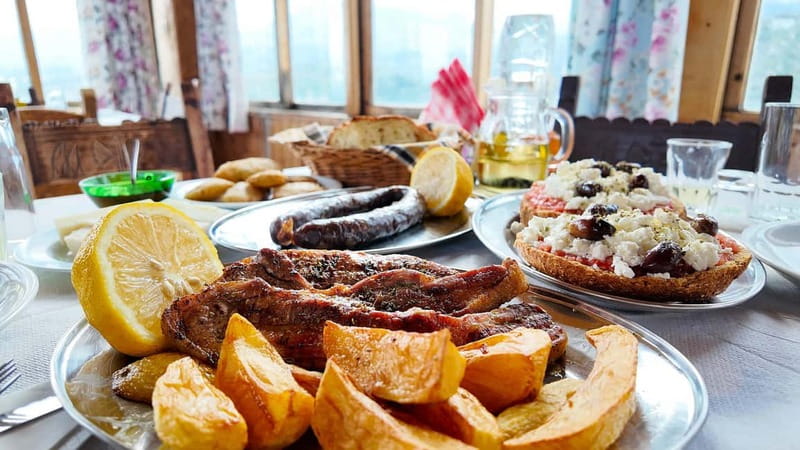
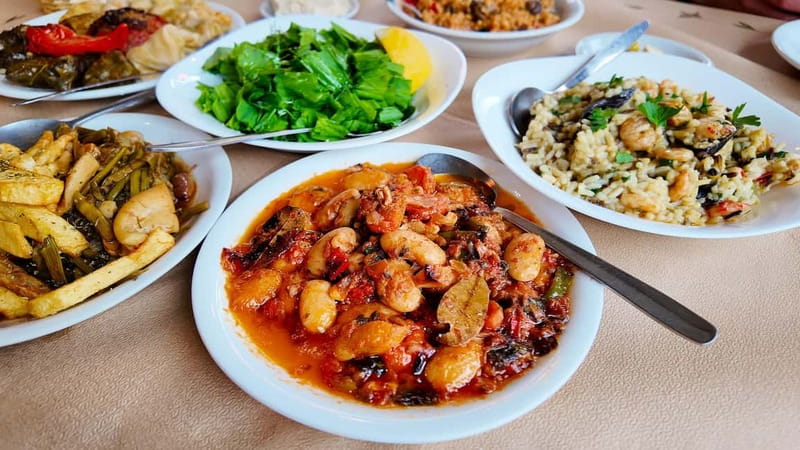
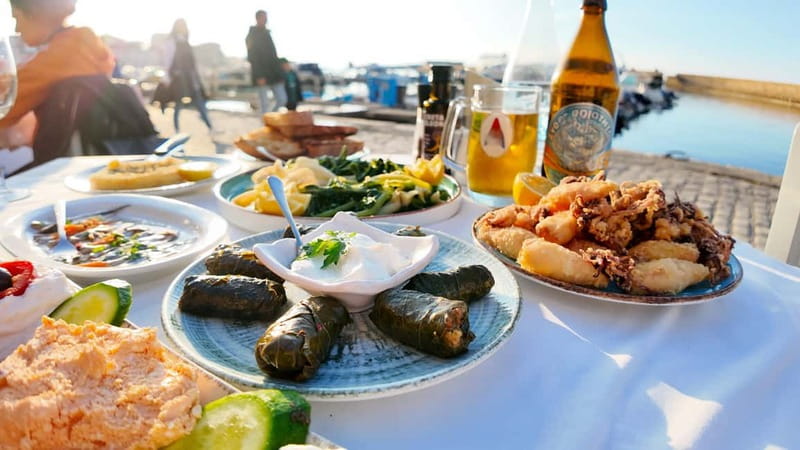
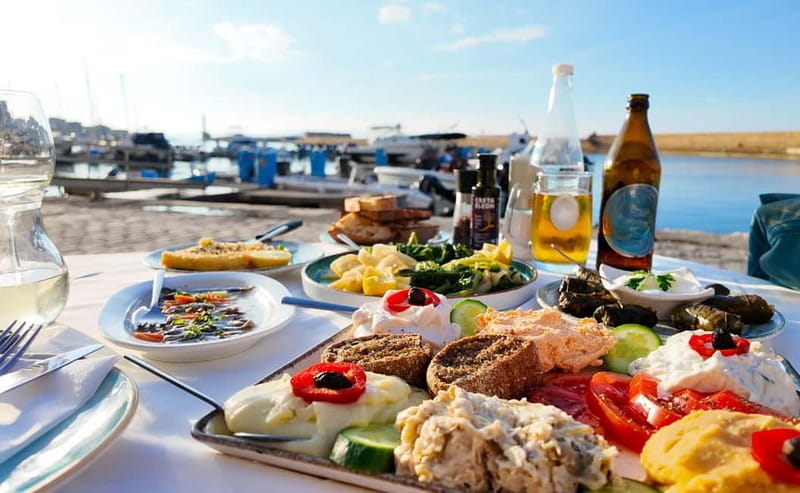
The traditional restaurant stop lasts about 45 minutes and brings together the foods introduced earlier. Expect a generous spread of mezze plates and regional dishes, with choices that may include vegetables, cheeses, breads, and other seasonal Cretan preparations.
This is the part that turns a series of samples into a meal. Mezze is social food, built for sharing and comparing. You can try a little of several dishes, listen to the guide explain what is on the table, and see how the ingredients from the morning fit into a larger Cretan meal.
Drink samples are included. Depending on the service, that can involve wine, beer, or spirits such as raki. Raki is closely tied to Cretan hospitality, and a small toast helps explain why it appears so often at local meals. You do not need to drink alcohol to take part, but the tour’s stated restrictions make clear that intoxication, drugs, and excessive drinking are not acceptable.
One useful detail is that you should not expect a separate dessert course. The total food quantity is already substantial. One person suggested that a dessert would have been welcome, but also noted being very full by the end. If you have a strong sweet tooth, the earlier lychnaraki may be the closest thing to a dedicated dessert stop.
How the guides shape the experience
The food is important, but the guide makes the difference between a list of tastings and a useful introduction to Chania.
The strongest guide feedback centers on Elena and Kostas. Elena has been praised for making people feel welcome, explaining local food and customs, and offering restaurant suggestions for later in the trip. Kostas has been described as attentive, engaging, and strong on both the city and its food.
That combination matters. You want a guide who can explain what you are eating without turning the morning into a lecture. You also want someone who notices the group’s needs, keeps the pace comfortable, and includes everyone in the conversation. The small group limit of 10 supports that kind of exchange. Groups may be smaller, sometimes only a few people, but the exact size depends on the date.
The tour is offered in English and Greek. If you want to ask detailed questions about recipes, family traditions, or places to eat later, the language you choose at booking is worth checking carefully.
Is $106 good value?
At $106 per person, this is not the cheapest way to eat breakfast in Chania. You could buy pastries, coffee, and lunch for less if you handle everything yourself.
The value comes from what the price combines. You get four hours of guiding, several food tastings, a cheese session, olive oil and honey samples, Greek coffee, drink sampling, a harbor stop, local history, and a final mezze meal. You also avoid the guesswork of finding places that are open in the morning and figuring out what to order.
I think the price makes the most sense at the start of a Chania stay. You get a meal, a walk through the Old Town, and a set of ideas for later meals. The practical restaurant tips can save you from relying only on the most obvious waterfront spots.
The value is weaker if you have strict dietary limits, do not drink, dislike dairy, or prefer to explore independently. The operator specifically lists vegans, people with gluten or lactose intolerance, people with nut allergies, people with high blood pressure, and people with heart problems among those for whom the tour is not suitable.
Who should book this morning food walk?
I would recommend it most strongly to first-time visitors who want an easy introduction to Chania’s food culture. It also suits couples, friends, and solo visitors who enjoy conversation and do not want to plan every meal themselves.
It is a good match if you like:
- Eating many small portions rather than ordering one dish
- Local bakeries and family-run food stops
- History explained through everyday food
- Walking through old streets
- Greek coffee, olive oil, cheese, honey, and raki
- A small group with time for questions
I would think twice if you have mobility challenges. The route includes several walking sections, including one of about 20 minutes, and the operator says it is not suitable for wheelchair users or people with mobility impairments.
You should also bring water, sunscreen, a hat, and comfortable shoes. Leave luggage behind, arrive early, and do not count on shopping during the route. The experience is designed around a fixed morning schedule.
Should you book the Chania Morning Bites and Market Delights Food Tour?
Book it if you want a food-first introduction to Chania with enough sightseeing to give the meal stops context. The combination of pastries, cheeses, olive oil, honey, coffee, harbor views, and mezze offers a broad look at Cretan eating in one morning.
Skip it if you need a fully flexible schedule, have serious dietary restrictions, or want a slow restaurant meal with plenty of free time. For everyone else, $106 is a fair price for the amount of food, guiding, and local orientation included, especially when booked near the beginning of your stay.
The best reason to choose this tour is not one particular pastry or drink. It is the chance to leave 1866 Square with a better sense of what to order, where to eat, and how Cretan food fits into daily life.
FAQ
Where does the Chania food tour start?
It starts at Platia 1866, beside the Ottoman Fountain. Look for the guide holding the company sign.
How long does the tour last?
The tour lasts four hours and returns to Platia 1866 at the end.
What languages are available?
The tour is offered in English and Greek.
Is hotel pickup included?
No. Hotel pickup and drop-off are not included, so you need to reach the meeting point yourself.
What food is included?
The tour includes koulouri, handmade kalitsounia, local cheeses, lychnaraki, Cretan olive oil, raw honey, Greek coffee, other local tastes, and a final mezze meal with regional dishes.
Are drinks included?
Yes. Drink sampling is included. The route may include coffee, wine, beer, and spirits such as raki.
Is the tour suitable for vegans or people with gluten intolerance?
No. The tour information specifically lists vegans and people with gluten intolerance among those for whom it is not suitable.
What should I bring?
Bring comfortable shoes, a hat, a camera, sunscreen, and water. Do not bring luggage or large bags, and high-heeled shoes are not allowed.
More Food Trips in Greece
- Chania: Morning Bites and Market Delights Food Tour
★ 5.0 · 11 reviews - Athens: Greek Food Tasting and Market Walking Tour
★ 4.1 · 7 reviews - Athens: Street Food Tour Market & City Centre
★ 4.8 · 4 reviews - Athens: Food Tasting Tour in Plaka with Central Market Visit
★ 3.6 · 3 reviews
More Food and Drink Trips in Greece
- Thessaloniki: Walking Open Market Food Tour and Tasting
★ 5.0 · 75 reviews - Classic Athens Food Tour with Local Drink & Market Visit
★ 5.0 · 34 reviews - Athens Street Food Markets and Hidden Gems Experience
★ 5.0 · 18 reviews - Street food tasting in the locals favorite hidden places
★ 5.0 · 15 reviews
Just added around Greece
- Chania Old Town, Public Market and Chrisopigi Monastery Tour★ 4.5 · 6 reviews
- Chania: Old Town, Public Market, Hill of Prophet Elias, Agia Triada★ 5.0 · 35 reviews
- Chania: Morning Bites and Market Delights Food Tour★ 5.0 · 11 reviews
- Cooking Class in Athens with Shopping in Central Market & Lunch★ 5.0 · 55 reviews
- Classic Athens Food Tour with Local Drink & Market Visit★ 5.0 · 34 reviews
- Athens Street Food Markets and Hidden Gems Experience★ 5.0 · 18 reviews
- Street food tasting in the locals favorite hidden places★ 5.0 · 15 reviews
- Traditional breakfast in markets with olive oil and honey tasting★ 5.0 · 6 reviews
Street Food Market Tours, compared.
Old Town, Creek, Museums, Souks, & Street Food Tour
Read our review →
Old Town, Souks, Street Food, Guided Tour & Abra Ride
Read our review →

London Bridge & Borough Market Food Tour with 7 Authentic Dishes
Read our review →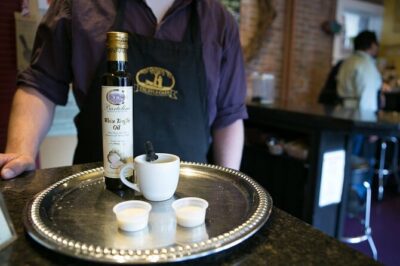
Old Town, Souks, Street Food, Guided Tour & Abra Ride
Read our review →
Small Group Cooking Class & Market Food Tour in Florence
Read our review →
Browse the lists this tour appears in