Review · ITALY
Rome: Street Food, Local Market and Hidden Gems Tour
Rome tastes better around Testaccio. This 3.5-hour walk links street food, local history, and a sit-down Roman lunch in one well-paced outing. I especially like the stop at Mercato di Testaccio, where you taste several traditional foods instead of simply watching a market, and the small maximum of 10 people, which gives your guide room to answer questions.
The route also benefits from a guide with a personal connection to the neighborhood. Giulia, who grew up in Testaccio, has been praised for her warm manner and clear explanations. The main consideration is the $119.48 price: it is fair if you want a full meal and several tastings, but high if you are mainly looking for a short market visit.
Key points to know before you book

- A full food itinerary: Start with a maritozzo, sample supplì, cheese, meatballs, and other Roman bites, then sit down for pasta, dessert, and three wines.
- Testaccio beyond the menu: The walk covers the former slaughterhouse, Monte Testaccio, the river bridge, and the Rome War Cemetery.
- Small group limit: No more than 10 people makes it easier to hear the guide and ask about food or local life.
- A real neighborhood focus: This is not a greatest-hits tour of central Rome. It concentrates on Testaccio and nearby Trastevere.
- Vegetarian and pescatarian friendly: The experience is listed as suitable for both, though you should share your needs when booking.
- Easy finish by transit: The tour ends a few steps from Piramide Metro Station, useful for continuing your day.
Why Testaccio makes a good food base
Testaccio is one of Rome’s best areas for connecting food with everyday city life. The tour begins near Stazione Trastevere, then crosses toward Testaccio over Ponte Testaccio. That opening gives you a quick sense of how the neighborhood fits into Rome’s urban layout.
The bridge stop is brief, only about five minutes, but the guide uses it to explain Roman urban development. Do not expect a long architectural lecture here. Think of it as a useful introduction before the walk turns toward the district’s food stalls and older landmarks.
Testaccio is a practical choice for a food walk because its identity is tied to working life, markets, and traditional cooking. You are not simply sampling dishes in isolation. You are hearing why certain foods belong to Roman kitchens and seeing the neighborhood where those food habits took shape.
More Farmers Market Tours in Italy
- Farmers’ Market Shopping with Cooking Class and Pasta Making
★ 5.0 · 91 reviews - Tasty Trionfale Farmers Market Food Tour and Local Wines Tasting
★ 5.0 · 43 reviews - Rome: Vatican Street Food and Wine Tour with Farmers Market
★ 5.0 · 37 reviews
Starting at Stazione Trastevere at 10:30 a.m.
The meeting point is Piazza Flavio Biondo, 7, beside Stazione Trastevere. The tour starts at 10:30 a.m., so plan your route carefully and arrive with enough time to find the guide. Pickup by car or van is not included, so you make your own way to the starting point.
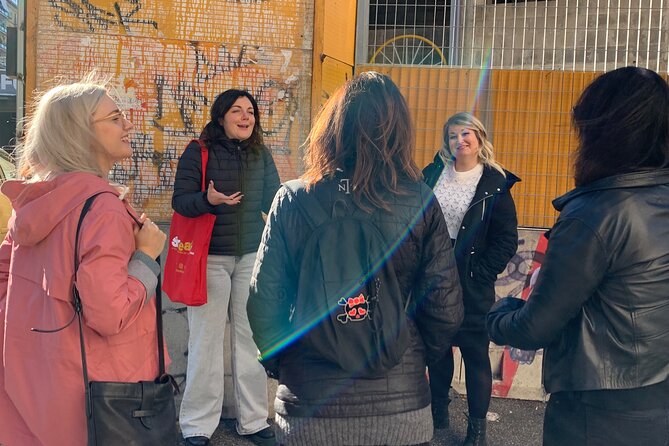
The first 15 minutes are for meeting your local guide and the rest of the group. With a maximum of 10 people, this should feel more personal than a large food procession. That size matters in a market, where everyone needs to gather around a food counter and still hear what is being explained.
Giulia has received especially warm praise for her friendly style and her knowledge of the area. Since she grew up in Testaccio, her perspective can add something a standard city guide may not offer. Guides can change, so you should not assume she will lead every departure, but her name is worth noting when checking the available date.
Mattatoio and the changing face of Testaccio
After crossing Ponte Testaccio, the group stops at Mattatoio, the former main slaughterhouse of Rome. Today, the site serves as a cultural center for exhibitions and academic studies. The contrast is useful: Testaccio’s food culture is not frozen in the past, and the district continues to find new uses for old spaces.
The stop lasts about 15 minutes. You will not have time for a full visit to every exhibition, and admission is not listed as part of the tour. The value here is the setting and the explanation, not an extended museum visit.
From Mattatoio, the walk continues through Testaccio for about 1 hour and 10 minutes. This is the broadest part of the route. Your guide points out older and newer sights while explaining the area’s story and its place in Rome.
I like this section because it keeps the food from becoming a string of disconnected samples. You get context first, then the market makes more sense. You can also ask about local customs, dishes, and neighborhood life while the group is still walking rather than trying to talk over a crowded food counter.
Maritozzo starts the day sweetly
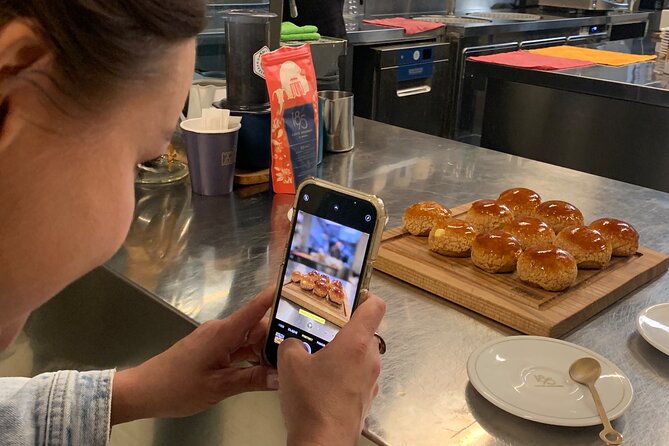
The food portion begins with a traditional Roman breakfast featuring maritozzo. This soft, sweet bun is associated with Rome and is usually served with cream. It is an early taste rather than a full course, but it gives the tour a local starting point before the savory market stops.
The itinerary includes several street food samples at Mercato di Testaccio. These include supplì, country cheese, old-school dishes, and other traditional bites. The exact selection can change with the season and what the guide orders, so you should think in terms of a tasting range rather than a fixed restaurant menu.
Supplì is one of the foods to pay attention to. This fried Roman rice snack is often filled with tomato and cheese, and it is a good example of food meant to be eaten casually, not ceremonially. Cheese and meatballs add a different texture and flavor, while the old-school dishes give you a taste of cooking that may not appear on every tourist menu.
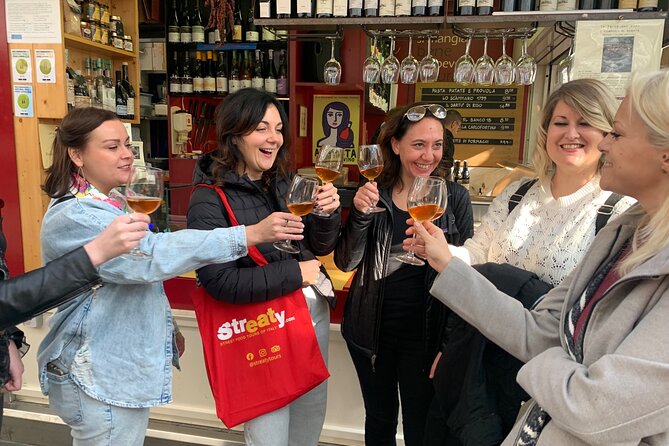
Three wines are included. That is a useful extra if you want to understand how Roman food is paired with local drinking habits, but it also means this is not an ideal tour for someone avoiding alcohol. The listing does not specify the wine pours or whether nonalcoholic substitutions are available, so ask before booking if that matters to you.
More Farmers Market Tours in Rome
- Farmers Market Shopping and Roman Full Course Class – SHARED
★ 5.0 · 12 reviews - Eat Like a Roman – Traditional Food, Local Market & History
★ 5.0 · 3 reviews
Mercato di Testaccio is the main event
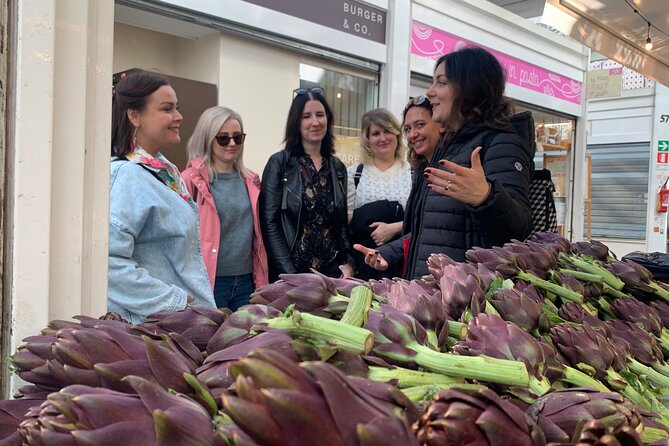
The market visit lasts about an hour, making it the longest single stop on the route. Your guide walks you around the food stalls, explains Roman cuisine, and orders the tastings. This is where the small group limit has its clearest benefit: you can gather around the stalls without being part of a huge crowd.
The market is more than a backdrop for lunch. You get to see how food is sold and discussed in a Roman neighborhood, then try several items in the same setting. If you enjoy asking questions about ingredients or preparation, this is likely to be your favorite part.
The food lineup can include maritozzo, supplì, polpette, cheese, and cacio e pepe. These examples cover sweet breakfast food, fried street food, meat, dairy, and one of Rome’s best-known pasta dishes. You should arrive hungry, but not desperate. The tour includes enough food that you are unlikely to need another meal immediately afterward.
The market can also be the least predictable part of the experience. Stalls may be busy, selections can shift, and the group may need to pause while food is collected. That is normal for a market-based tour. If you want a quiet, seated tasting with a fixed menu, choose a restaurant meal instead.
A proper Roman lunch at a century-old trattoria
After the market, you sit down for pasta at a traditional trattoria described as a century-old establishment. This is an important part of the value. Street food gives you quick tastes, but a seated pasta course lets you slow down and enjoy a more complete Roman meal.
Cacio e pepe has been included on some departures, and it is a fitting dish for the setting. The recipe appears simple, but the balance of cheese, pepper, and pasta is the point. You can use this course to compare the market snacks with the food served in a traditional dining room.
A seasonal dessert follows lunch. Because it changes with the time of year, you should not book this expecting one specific sweet. The changing dessert is a plus if you like local produce and seasonal cooking, but less useful if you have a particular dessert in mind.
The experience includes three wines along the food route. Seconds and extra food or drinks ordered beyond what the guide provides are not included. Keep that rule in mind if you tend to order additional plates or another bottle once you sit down.
Monte Testaccio reveals the quieter side
The walk then reaches Monte Testaccio, a striking artificial hill made from ancient pottery fragments. The tour gives you about 40 minutes here and focuses on the lesser-known features of the mound. This is the point where the experience shifts from eating to archaeology and local history.
The stop adds depth to the district. Rome can sometimes feel like one famous monument after another, but Monte Testaccio offers a more unusual story tied to trade, storage, and the city’s long relationship with food. Your guide’s explanation is likely to be more useful than simply seeing the hill from a passing bus.
Wear comfortable shoes. The tour lasts about three and a half hours and combines streets, market surfaces, and historic areas. The supplied information does not describe difficult terrain, and most people can take part, but you should still expect to walk continuously rather than spend the day seated.
A short stop at the Rome War Cemetery
The final historical stop is the Rome War Cemetery, where you learn about the Allied disembarkation in World War II. The visit lasts only about five minutes, so it is a brief point of reflection rather than a full cemetery tour.
That short pause broadens the day’s subject. You have seen food, urban change, ancient trade, and modern cultural use. The cemetery adds a twentieth-century layer to Testaccio and nearby Rome. It also keeps the walk from treating the district as only a place to eat.
The tour ends at Piramide, just a few steps from the Metro station. That is a practical finish, especially if you want to continue sightseeing elsewhere. No transportation back to your accommodation is included, but the metro location makes the next move simple.
Is $119.48 a fair price?
At $119.48 per person, this is not a cheap snack walk. The price makes more sense when you count the included food: a maritozzo, multiple market tastings, a pasta lunch, seasonal dessert, and three wines. You are also paying for three and a half hours with a local guide and a group capped at 10.
I would consider it good value for someone who wants lunch included and prefers a guided introduction to Testaccio. The food alone may not justify the price for a light eater, especially if you would normally spend less at a market and trattoria on your own.
The tour also saves you from choosing what to order in an unfamiliar market. That has real value in Rome, where a guide can explain what you are eating, help you move between stops, and connect each dish to the neighborhood.
The price is less attractive if your main goal is a central Rome sightseeing tour. This route does not focus on the Colosseum, Trevi Fountain, or Vatican City. You are paying for a local district, not a list of Rome’s headline monuments.
Who should book this Testaccio food walk?
I would recommend it to you if food is one of the main reasons you visit Rome and you want more than a restaurant reservation. It suits curious eaters who enjoy walking, small groups, neighborhood stories, and a full midday meal.
It is also a strong choice for a first day in Rome if you want a friendly orientation outside the busiest center. The combination of Trastevere, Testaccio, the market, and Piramide gives you several useful bearings for later independent exploring.
Vegetarians and pescatarians can participate, according to the tour details. Still, food offerings can vary, so state your dietary needs when booking and confirm how the included courses will be adjusted.
You may want to skip it if you dislike wine, need a highly predictable menu, or prefer a private tour. The maximum group size is 10, not one-on-one. Also, the outing depends on good weather and a minimum number of bookings, so a cancellation or date change is possible if those conditions are not met.
Free cancellation is available up to 24 hours before the 10:30 a.m. start time. Changes or cancellations inside that window are not accepted for a refund. Confirmation arrives when you book, and the tour operates near public transportation.
Should you book it?
Book this tour if you want a generous lunch, several Roman tastings, and a close look at Testaccio rather than another pass by the famous sights. The market, the century-old trattoria, and Giulia’s personal connection to the district are its strongest features.
Skip it if you only want a quick food stop or if $119.48 feels too high for a group outing. For the right eater, though, the combination of food, wine, local stories, and a small group makes this one of the more useful ways to spend a Roman morning and early afternoon.
FAQ
How long does the Rome food tour last?
The tour lasts approximately 3 hours and 30 minutes.
What time and where does the tour begin?
It begins at 10:30 a.m. at Piazza Flavio Biondo, 7, near Stazione Trastevere in Rome.
Where does the tour end?
It ends at Piramide, a few steps from Piramide Metro Station.
What food and drinks are included?
The tour includes a traditional maritozzo breakfast, market tastings such as supplì and cheese, a sit-down pasta lunch, a seasonal dessert, and three wines.
Is the tour suitable for vegetarians and pescatarians?
Yes. The experience is listed as suitable for vegetarians and pescatarians.
What is the cancellation policy?
You can cancel up to 24 hours before the start time for a full refund. Cancellations or changes made less than 24 hours before the start are not accepted for a refund. The tour may also be rescheduled or refunded if poor weather or insufficient bookings cause cancellation.
More Street Food Market Tours in Rome
- Rome: Testaccio Market Food Tour with Street Food & Wine
★ 5.0 · 8 reviews - Testaccio Experience: Street Food, Market and Traditions
★ 5.0 · 4 reviews - Rome: Guided Testaccio Market Food Tour with Tastings
★ 5.0 · 3 reviews
More Street Food Market Tours in Italy
- Roman Food Tour with Visit to the Trionfale Food Market
★ 5.0 · 471 reviews - Rome: Food Tour with Market Visit
★ 4.9 · 200 reviews - Devour Rome Testaccio Market Food Tour
★ 5.0 · 180 reviews - Rome E-Bike Tour: Ultimate Street Food and Market Feast
★ 4.9 · 50 reviews
Just added around Rome
- Testaccio Experience: Street Food, Market and Traditions★ 5.0 · 4 reviews
- Rome: The Vatican Market Experience Tasting and Class★ 4.7 · 10 reviews
- Rome: Testaccio Food & Market Tour with Pasta & Wine★ 5.0 · 38 reviews
- Rome: Taste of Testaccio Food & Market Tour★ 4.9 · 38 reviews
- Rome: Temples, Squares & Markets Guided Walking Tour★ 4.8 · 26 reviews
- Rome: Trajan’s Markets & Museum of The Imperial Fora Tour★ 4.8 · 4 reviews
- Rome: Market and Cooking Class at a Local’s Home★ 4.0 · 3 reviews
- Farmers Market Shopping and Roman Full Course Class – SHARED★ 5.0 · 12 reviews
Street Food Market Tours, compared.
Old Town, Creek, Museums, Souks, & Street Food Tour
Read our review →
Old Town, Souks, Street Food, Guided Tour & Abra Ride
Read our review →

London Bridge & Borough Market Food Tour with 7 Authentic Dishes
Read our review →
Old Town, Souks, Street Food, Guided Tour & Abra Ride
Read our review →
Small Group Cooking Class & Market Food Tour in Florence
Read our review →