
Review · THAILAND
Chiang Mai: Local Food and Markets Guided Walking Tour
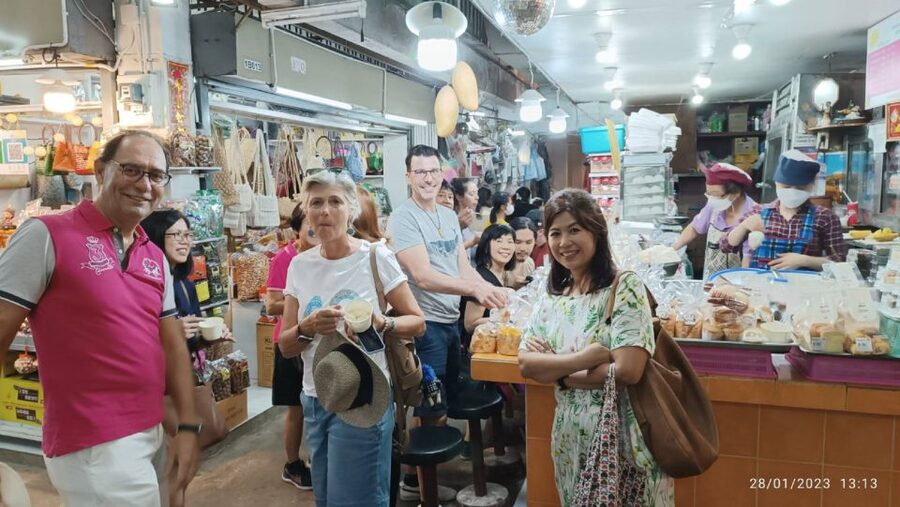
Food is the fastest way into Chiang Mai. This 150-minute walking tour links small local eateries with Warorot Market and Ton Lamyai Flower Market, giving you a tasty introduction to the city beyond the old walls. I especially like the chance to try Khao Kriab Pak Moh, sweet steamed rice skin dumplings, and the final bowl of Hakka-style noodles with stuffed tofu, fish sausage, and wontons. The flower market adds a welcome visual break between food stops.
I also like the flexible start times, the English and Thai-speaking guides, and the short route that fits neatly into a morning or afternoon. Guides such as Koi, Patty, Banana, Nom, and Sunny have been praised for explaining local customs and helping with orders. The main drawback is that food is not included in the $48 price, so you need cash and should budget extra. The later 2:30 pm departure can also miss some listed restaurants before they close.
Key points at a glance
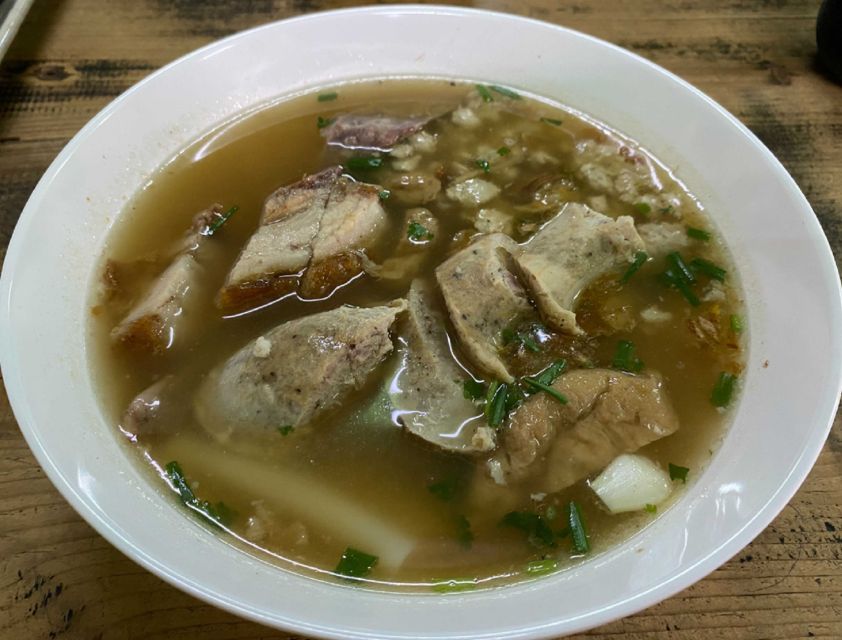
- Four distinctive food stops: Try steamed rice skin dumplings, Chinese-style fried dough, mango sticky rice, and Hakka noodles.
- A useful first-day tour: The markets and food advice can help you choose where to eat for the rest of your Chiang Mai stay.
- A real walking route: You move between Chansom Memorial Bridge, Ton Lamyai Flower Market, Warorot Market, and nearby food stalls.
- Morning is the best choice: Earlier departures give you the strongest chance of following the advertised food route.
- Food costs extra: Bring cash for each tasting, since the guide fee does not cover what you eat.
- Good guide service: Guides are often praised for clear English, local food knowledge, flexibility, and help ordering unfamiliar dishes.
Why this food walk works well in Chiang Mai
Chiang Mai has plenty of food tours, but this one keeps its sights close together and focuses on places used by local shoppers. You are not simply seated at one restaurant for a long meal. Instead, you walk, taste, watch market life, and hear how Thai and Chinese food traditions meet in this part of the city.
The route begins near the Chansom Memorial Bridge, also called Khua Khaek, opposite Ton Lamyai Flower Market. That location places you beside the Ping River area and close to two of Chiang Mai’s best-known markets. From there, your guide leads you through food stalls and market lanes rather than leaving you to guess what the unfamiliar dishes are.
I would consider this a useful first activity in Chiang Mai. You get names, flavors, and practical eating advice in one short outing. Several people who joined early in their stay found it helped them choose restaurants and night markets later. That is a real benefit, especially if you are unsure how to order or do not know which stalls are aimed at local customers.
The experience has a rating of 4.3 from 175 bookings, which suggests strong satisfaction but not universal perfection. The praise centers on the guides and the quality of the food. The less favorable comments focus on the short length, quick walking pace, limited number of stops, and extra payment at every food stall.
More Market Walking Tours in Chiang Mai:
- Bangkok: City Highlights Temple and Market Walking Tour
★ 4.5 · 3,990 reviews - Tokyo Tsukiji Fish Market Food and Culture Walking Tour
★ 5.0 · 3,184 reviews - Marrakech: Ben Youssef, Secret Garden, & Souks Walking Tour
★ 4.6 · 2,802 reviews
Starting with Khao Kriab Pak Moh at Lung Khajohn Wat Ket
Your first food stop is Lung Khajohn Wat Ket, known for Khao Kriab Pak Moh. These are delicate steamed rice skin dumplings, generally filled with peanuts. They are sweet rather than savory, so this first taste may surprise you if you expect a standard dumpling.
This is a smart opening stop because the dish is small, distinctive, and easy to sample. Your guide can explain how it is made and how it fits into the local snack scene. The dumplings have received particular praise as one of the best tastings on the route.
Food portions are not described as fixed, and the tour does not promise a full meal at every location. Still, the overall amount can be substantial. One guide even advised a group not to eat a large breakfast before the midday tour. If you are treating this as lunch, arrive hungry.
The food is purchased separately, so carry small Thai notes if possible. The cost of each item is generally described as reasonable, but handling your wallet at every stop can feel less convenient than paying one food supplement in advance.
Ton Lamyai Flower Market adds color between bites
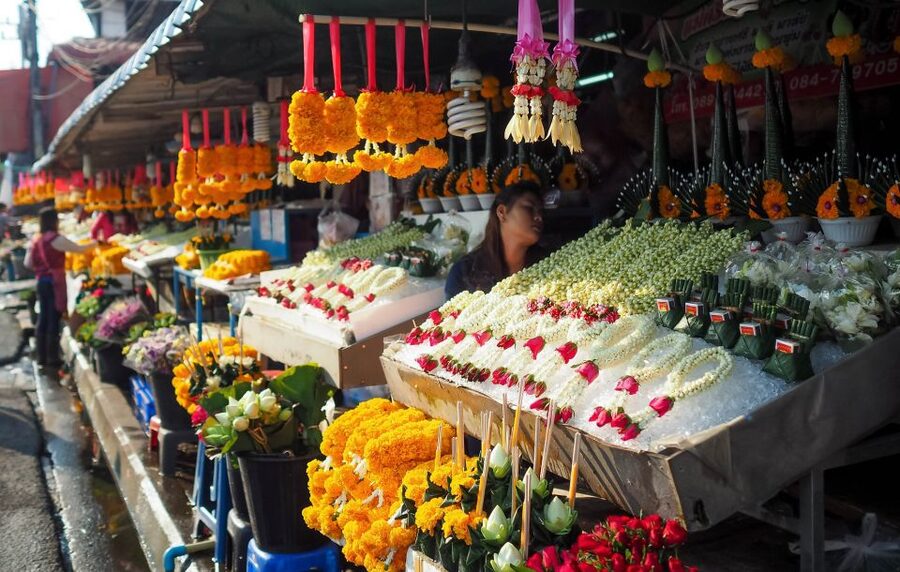
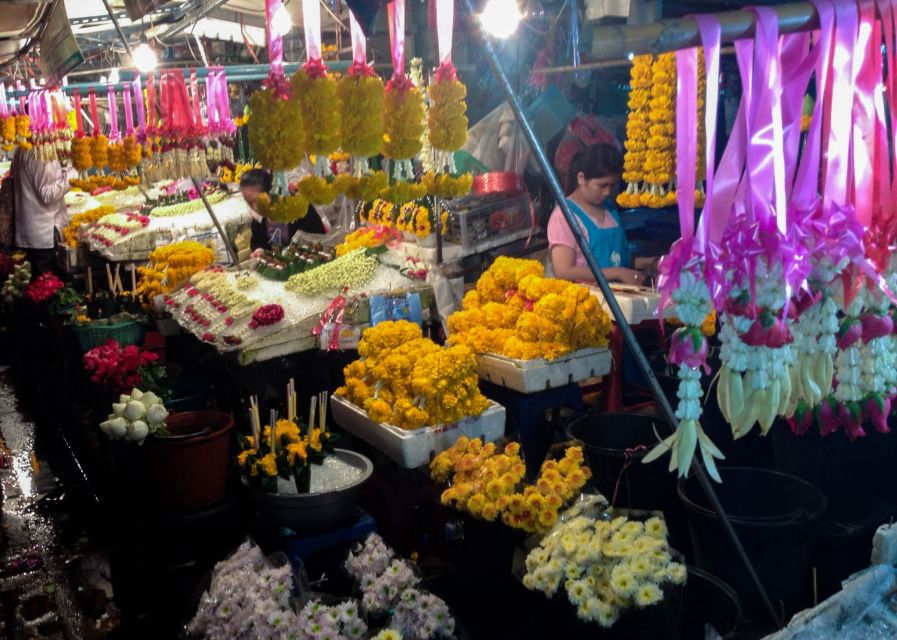
After the dumplings, you pass through Ton Lamyai Flower Market. This is not just a quick photo stop. The market gives you a look at the flowers and herbs used in daily life, religious offerings, cooking, and decoration.
The visit also breaks up the eating. A food tour can become a parade of plates, but the flowers add scent, color, and a little breathing room. Bring your camera, but be considerate around sellers and shoppers. Your guide may point out items you would miss if you wandered through alone.
The official route finishes at Ton Lam Yai Market, while the meeting point is at the bridge opposite the flower market. The exact order or endpoint can change with market activity, weather, or stall availability. That is worth understanding before you go, since this is a working market area rather than a fixed museum visit.
Go Neng and the famous dinosaur-shaped fried dough
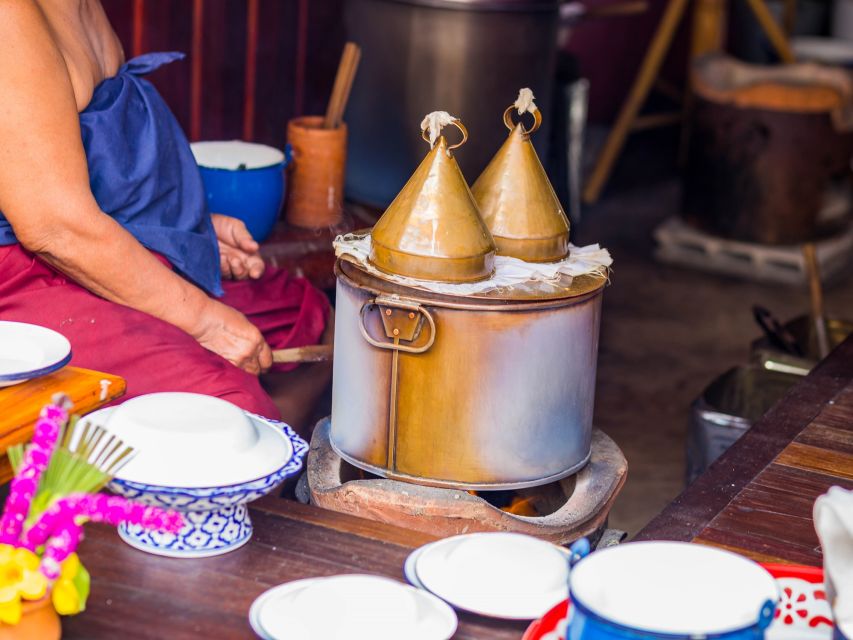
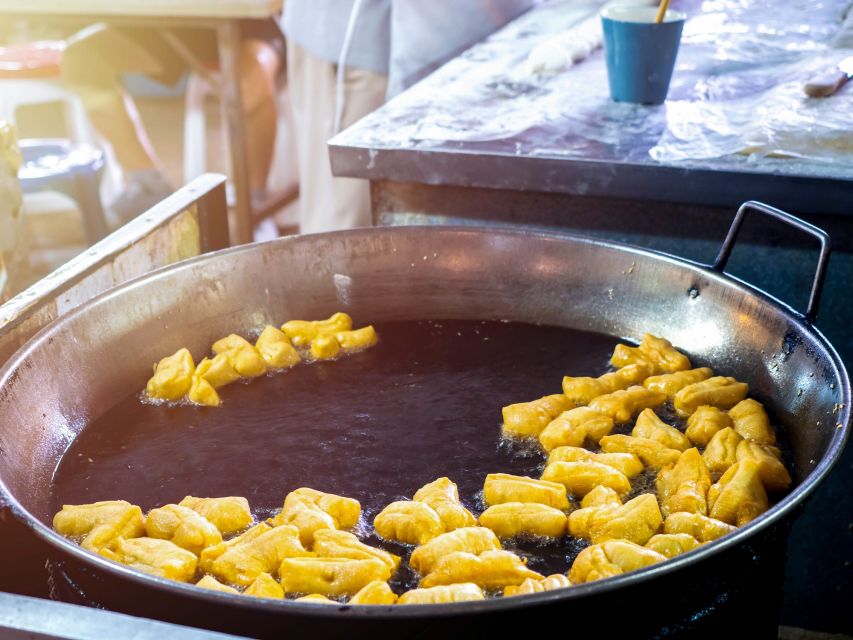
Next comes Go Neng, known for pa thong go, Chinese-style deep-fried dough sticks. Some pieces are shaped in odd forms that resemble dinosaurs, which explains the playful reputation of this stop.
The shape is part of the fun, but the taste is the main reason to try it. Pa thong go is a common local snack, crisp outside and soft inside. It is a useful example of how Chinese culinary traditions have become part of everyday Thai food.
One person found the dough shape less impressive than the other tastings, while still enjoying the novelty. That is a fair expectation. Do not book this tour solely for a novelty-shaped pastry. Think of it as a quick, light stop that adds variety to the sweeter dumplings and later noodles.
Morning timing matters here. Food stalls can be quieter as markets open, and the guide may have more room to explain what you are eating. The 2:30 pm option is less reliable for the original sequence because some food businesses close by early afternoon.
More Food and Drink Trips in Chiang Mai:
- Chiang Mai: Evening Local Street Food Market Tour
★ 4.8 · 604 reviews - Fresh Local Market Tour – Food tour in Chiang Mai
★ 5.0 · 113 reviews - Dubai: Old Town, Creek, Museums, Souks, & Street Food Tour
★ 4.8 · 10,816 reviews - Dubai: Old Town, Souks, Street Food, Guided Tour & Abra Ride
★ 4.9 · 7,170 reviews
Warorot Market is the main food-and-shopping stretch
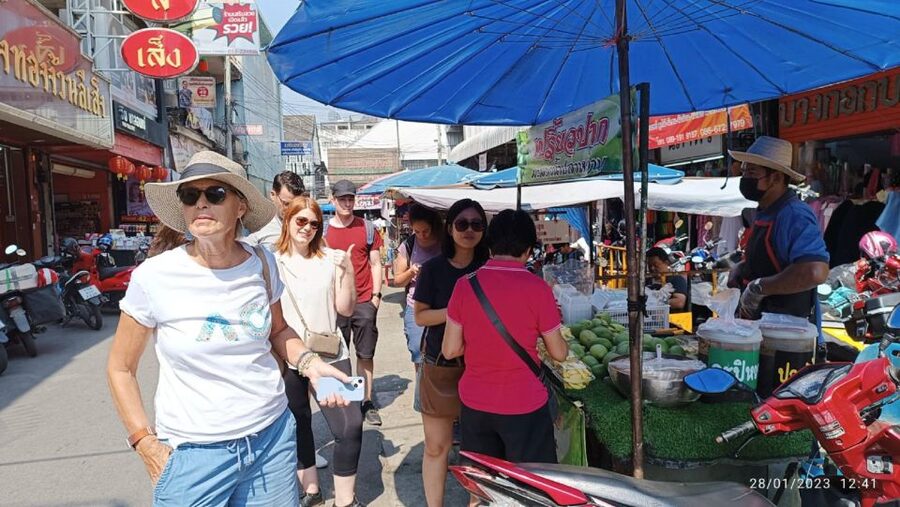
Warorot Market is the biggest part of the walk. It sells snacks, produce, clothes, and other everyday goods, so this is where the tour feels most like a market visit rather than a string of restaurant stops.
A guide makes a real difference here. The market has enough choices to overwhelm a first-time visitor, and many items are not labeled in a way that helps English speakers. Guides have explained spices, ingredients, customs, and preparation methods, while also helping people order and find seats.
Some guides have gone beyond the formal route. Koi has been praised for ordering food, checking that people had somewhere to sit, and explaining which spices to use. Other guides, including Patty and Banana, have been praised for discussing local eating habits and the cultural background of dishes and neighborhoods.
The market is also where you can buy things to take away. Bring a small bag, but remember that carrying purchases for the rest of the route may be inconvenient. One guide was even praised for helping carry shopping bags, though you should not assume every guide will do this.
The walking can be brisk. One person estimated covering about 2.5 miles, and another described a quick pace through the flower and food markets. Comfortable shoes are essential, especially if you want to focus on the food rather than your feet.
Mango sticky rice provides the sweet middle course
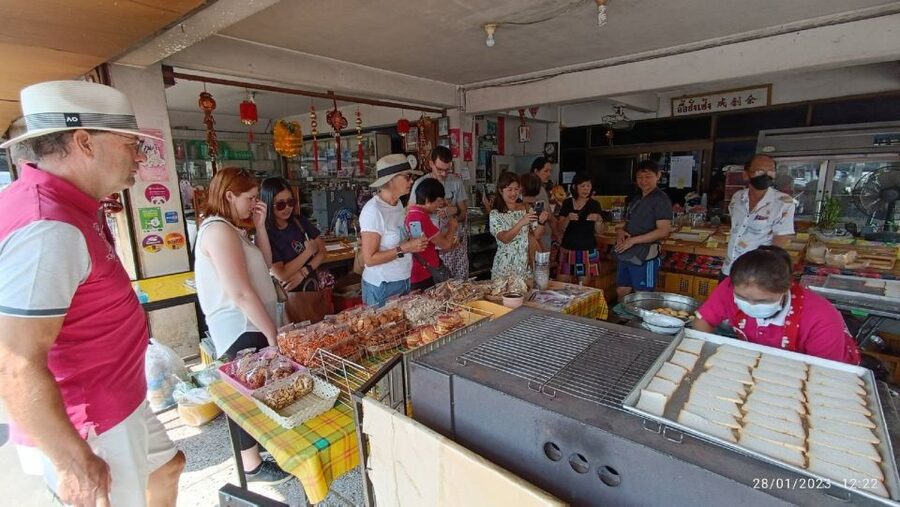
Inside or near Warorot Market, the guide takes you to a stall selling mango sticky rice. This is the most familiar dish on the tour for many people, but it still works well here because the guide can explain what to look for and where local shoppers buy it.
The balance is simple: ripe mango, sweet sticky rice, and coconut-based sauce. It gives you a soft, sweet pause before the final savory dish. If you have a strong sweet tooth, this may be one of your favorite stops.
The route can feel slightly indirect because dessert appears before the final meal. That is deliberate, since the foods come from different stalls and restaurants rather than from one planned tasting menu. If you prefer a tightly ordered meal, this may feel a little zigzagged. If you enjoy seeing how a market day unfolds, the loose order makes sense.
Thana Ocha finishes with Hakka-style noodles
The final listed stop is Thana Ocha, where you try Hakka-style noodles with Hakka stuffed tofu, fish sausage, and wontons. This is the most substantial and savory tasting on the route, and several food stops were praised for ending with this bowl.
The dish shows Chiang Mai’s Chinese influence clearly. It is not simply another version of familiar Thai street food. The combination of noodles, filled tofu, fish sausage, and wontons gives you several textures and flavors in one serving.
This is also the point at which the tour may feel like a full lunch rather than a snack walk. I would avoid booking it immediately after a large meal. The food is served in small portions across the route, but the total can fill you up.
Restaurant hours are the chief concern. Many of the named locations close early, so the morning departures are the safest choice if you want the advertised stops. With a 2:30 pm booking, the guide may switch to other street food stalls. That flexibility is useful, but the replacement route may not include every dish listed in the description.
What the guide adds to the experience
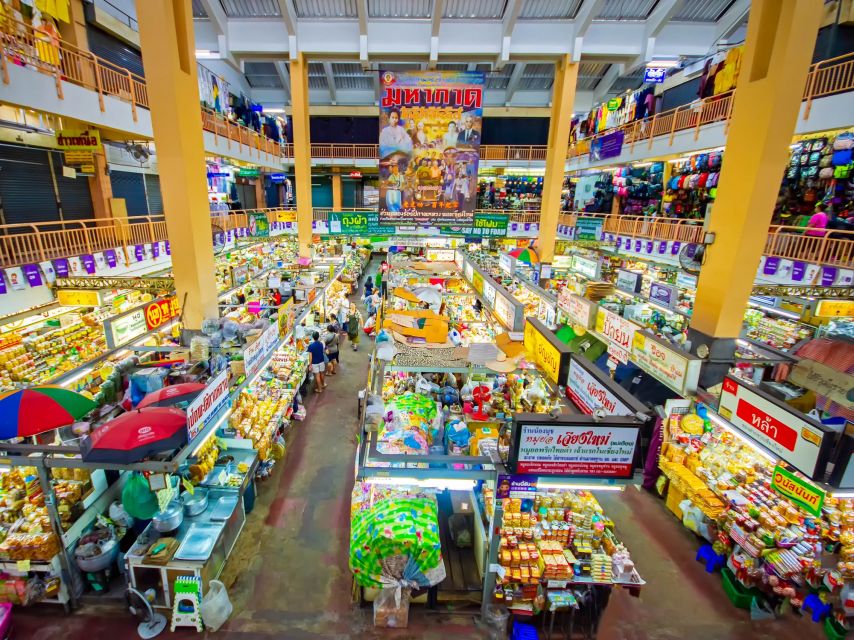
The guide is the tour’s strongest feature. You can walk through Warorot Market alone, but you may not know what to buy, how to eat it, or why one stall is more popular than another. A good guide turns unfamiliar food into a story and removes the pressure of ordering blind.
The strongest guide feedback describes friendly, patient service and clear English. Koi has helped families with a picky five-year-old, while other guides have adjusted the route when a restaurant was closed or too crowded. One guide pre-ordered at the first stop because the stall was busy, saving time for the group.
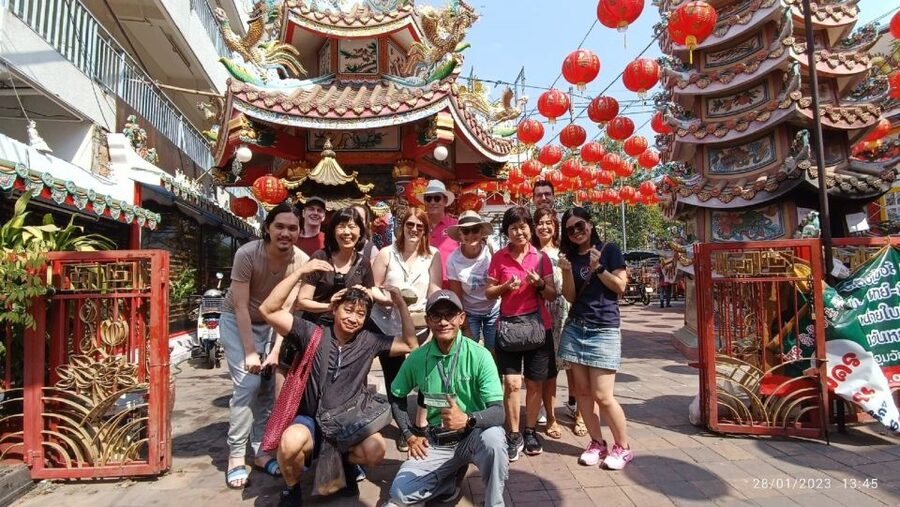
Guides have also added small sightseeing touches, including explanations of buildings, temples, local customs, and the Chinese influence on the area. The formal focus is food, but you receive a compact neighborhood tour as well.
Service can vary by guide. One person felt the guide moved from place to place without giving enough explanation. If cultural detail is especially important to you, say so early and ask questions. The tour works best when you treat it as a conversation, not just a food delivery service.
Price, timing, and what you really pay
At $48 per person, this is not the cheapest way to eat in Chiang Mai. The food itself is inexpensive, and you still pay for each tasting separately. For a confident market visitor who is happy to order alone, the price may feel high.
The value improves if you want help identifying dishes, navigating the market, and understanding what you are eating. You also pay for a local guide’s time, a planned route, and the chance to visit several places efficiently in two and a half hours. The short duration makes it easier to fit around temples, massage appointments, or an afternoon trip.
Start times are flexible, but I would choose a morning slot. The listed restaurants are more likely to be open, markets are less crowded, and the pace may feel more relaxed. Afternoon departures can still work, but you should accept that the guide may substitute other stalls.
The tour includes the guide, walking route, and carbon emissions offset credits. It does not include hotel pickup or drop-off. You need to reach the Chansom Memorial Bridge yourself and arrive 10 minutes early. Morning traffic can be unpredictable, and the guide can wait only 10 minutes after the scheduled time.
Free cancellation is available up to 24 hours before the activity, and you can reserve now and pay later. Those terms help if your Chiang Mai plans are still shifting.
Who should book this Chiang Mai food tour?
I would recommend it to first-time visitors who want a friendly introduction to local snacks without having to decode every stall. It also suits couples, small groups, and families who prefer a guided walk over a formal cooking class.
People who like markets, Chinese-Thai food, and small tastings will get the most from it. The route is also useful for anyone who wants restaurant and night market suggestions for later in the trip.
You should think twice if you need step-free access, have mobility limitations, or dislike walking in warm conditions. The experience is not suitable for pregnant people, people with heart or respiratory problems, or vegans. There is no vegan option.
Food allergies and dietary restrictions are not addressed in the provided details, so ask the operator before booking if you need careful ingredient control. Bring sunscreen, insect repellent, a hat, sunglasses, comfortable shoes, a camera, and cash.
Should you book it?
Book this tour if you want a guided taste of everyday Chiang Mai, not a long restaurant meal or an elaborate culinary class. The best reasons are the local-market setting, the unusual first and final dishes, and guides who often help with ordering, seating, explanations, and route changes.
Choose a morning departure, arrive hungry, and carry cash. Skip it if you want all food included, need a slow pace, or prefer a fully fixed itinerary. At $48 plus tasting costs, it is fair value for the guidance and access, but the experience depends heavily on your guide and on which stalls are open that day.
FAQ
How long does the Chiang Mai food and market tour last?
The tour lasts 150 minutes, or two and a half hours.
Where does the tour meet?
Meet at Chansom Memorial Bridge, locally called Khua Khaek, opposite Ton Lamyai Flower Market on Praisanee Road.
Where does the tour finish?
The stated finish point is Ton Lam Yai Market.
Is food included in the tour price?
No. Food and tasting expenses are not included, so bring cash to pay for the items you choose.
What foods can I try?
Possible tastings include Hakka-style noodles, mango sticky rice, pa thong go fried dough sticks, and Khao Kriab Pak Moh steamed rice skin dumplings. The exact stops can change.
Is there a vegan option?
No. The tour does not offer a vegan option.
Which tour language is available?
The live guide service is available in English and Thai.
What happens if I choose the 2:30 pm departure?
Some listed restaurants may close by early afternoon. For a 2:30 pm departure, the guide may take you to alternative street food stalls. Morning departures are recommended if you want the advertised itinerary.
More Food Trips in Chiang Mai
- Bangkok by Night: Temples, Markets and Food Tuk-Tuk Tour
★ 5.0 · 3,752 reviews - Chef Guided Food Tour of Pike Place Market
★ 5.0 · 3,733 reviews - Bangkok: Markets, Temples and Food Night Tour by Tuk Tuk
★ 4.9 · 2,371 reviews - London Bridge & Borough Market Food Tour with 7 Authentic Dishes
★ 5.0 · 1,972 reviews
Just added around Chiang Mai
- Chiang Mai: Half Day Morning Cooking Class with Market Tour★ 4.9 · 10 reviews
- Chiang Mai: Half Day Cooking Class at Organic Farm★ 4.8 · 96 reviews
- Full Day Thai Cooking Class in Organic Farm and Market★ 5.0 · 3 reviews
- Chiang Mai: Traditional Thai-Akha Cooking Class& Market Tour★ 5.0 · 25 reviews
- Chiang Mai: Morning Cooking Class with Market Visit★ 4.9 · 81 reviews
- Chiang Mai Light: Tuk Tuk Night Tour with Temples & Markets★ 5.0 · 7 reviews
- Chiang Mai: Half Day Evening Cooking Class with Market Tour★ 4.9 · 19 reviews
- Chiang Mai: Sticky Waterfall by Local Truck with Market Stop★ 4.8 · 26 reviews
Walking Tours, compared.

City Highlights Temple and Market Walking Tour
Read our review →
Tokyo Tsukiji Fish Market Food and Culture Walking Tour
Read our review →
Ben Youssef, Secret Garden, & Souks Walking Tour
Read our review →
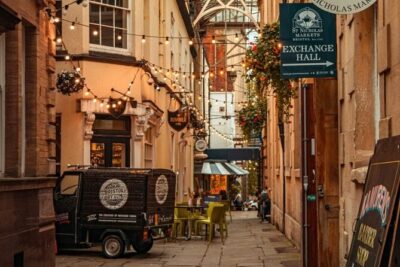
Air Raid Shelter + St. Nicholas Market Walking Tour
Read our review →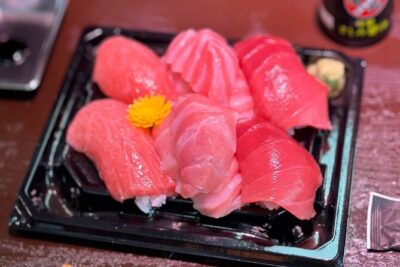
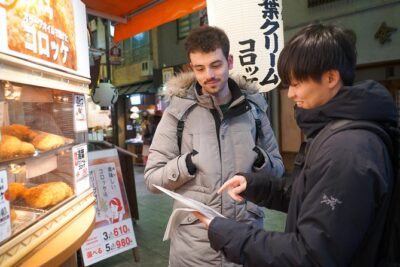
Nishiki Market Brunch Walking Tour (7 Tastings + Brunch)
Read our review →Tsukiji Fish Market Food and Culture Walking Tour
Read our review →Browse the lists this tour appears in