
Review · DALMATIA, CROATIA
Split: Private Roman History & Market Tour
Split starts with a story. This private two-hour walk links Diocletian’s Palace with the Green Market, so you get Roman monuments and everyday Dalmatian life in one compact outing. I especially like the local food tastings and the chance to explore with a guide born and raised in Split. The main consideration is the price: at $280 per person, this is a costly two-hour tour unless you value privacy, personal attention, and a food-focused introduction.
I also like the way the tour treats Split as a living town, not an open-air museum. You pass homes, cafés, old stones, and busy local routines while hearing why certain customs still matter. Guides such as Ted and Ivan have been praised for clear explanations and good pacing, while another guide impressed guests with polished English and plenty of local anecdotes.
Key points to know before booking
- Two major sides of Split in two hours: See Diocletian’s Palace and the Green Market without spending half a day on a large group tour.
- Food is part of the history: Taste seasonal produce, olive oil, rakija, cheese, or dried figs while learning how locals shop and entertain.
- Private guiding changes the pace: Your group can ask questions and spend more time on the subjects that interest you.
- The Palace is still home: Roman walls surround modern houses, cafés, shops, and daily life.
- Several famous sights are exterior visits only: Cathedral entry, the bell tower, museums, the Temple of Jupiter, and the Palace underground are not included.
- A low-impact choice: The tour is carbon neutral and operated by a B Corp certified company.
Why this short tour works in Split

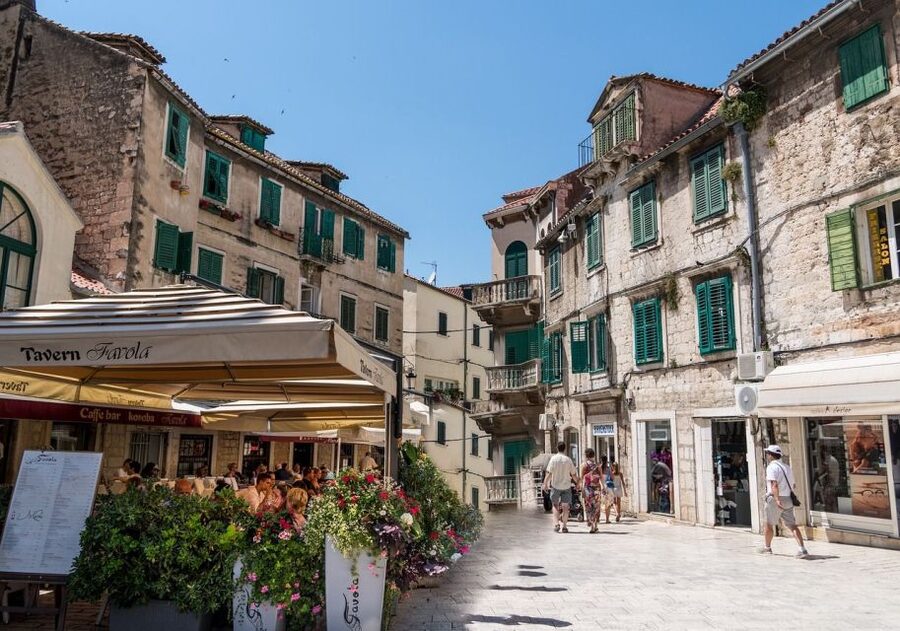
Split can feel confusing at first. Its old center is not a neat archaeological park with a gate at one end and an exit at the other. The remains of Diocletian’s Palace form the core of the modern city, and people still live inside and around the old Roman walls.
That makes a local guide useful. You are not simply shown a column and given a date. You hear how Splićani, the people of Split, use this old quarter, which customs they still respect, and how Roman, medieval, and modern life share the same streets.
The two-hour length is both a strength and a limit. It works well as an arrival-day orientation, a shore excursion, or a first look before you return later for museums and paid sights. It is not long enough to cover every major building in detail, so you should see it as an introduction rather than a complete archaeological study.
Because the group is private, the experience should feel more personal than a standard walking tour. You can ask about family customs, food, football, architecture, or the Roman emperor without waiting for a large crowd to catch up. That flexibility matters in narrow streets where a big group can quickly block the path.
More Private Market Tours in the world:
- Cairo 8 Hour Private Tour of Pyramids, Egyptian Museum and Bazaar
★ 5.0 · 2,931 reviews - Private Excursion to Maeklong Railway and Floating Markets
★ 5.0 · 850 reviews - Floating and Railway Market (Optional Waterfall): Private Tour
★ 5.0 · 827 reviews
Meeting at the Riva promenade
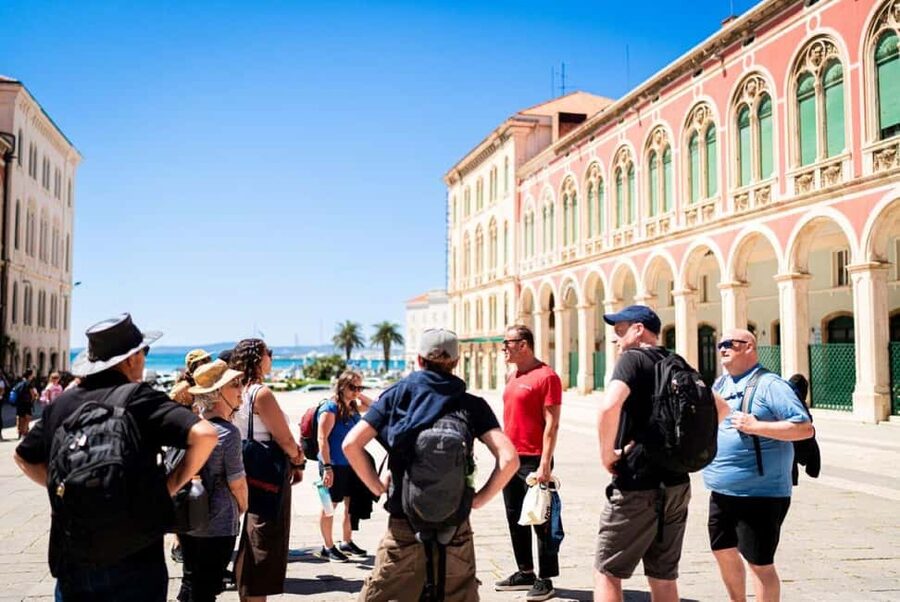
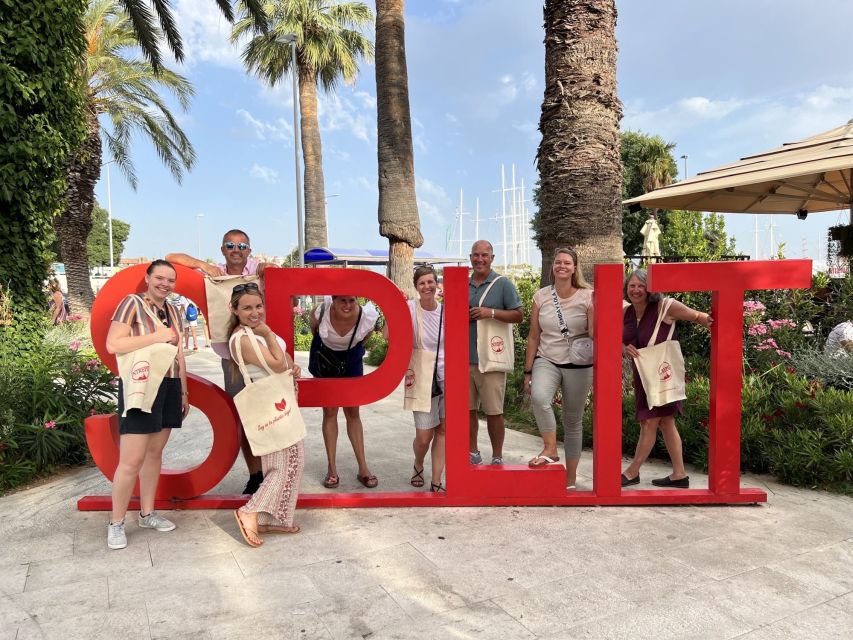
The tour begins at the start of the Riva, Split’s waterfront promenade, near the iron map showing the city. This is a practical meeting point because the Riva is easy to find and sits beside the old center.
Arrive with a few minutes to spare. The tour moves into pedestrian streets and old palace areas, where you may need to keep an eye on uneven paving and passing pedestrians. No transport is involved, and the entire experience is on foot.
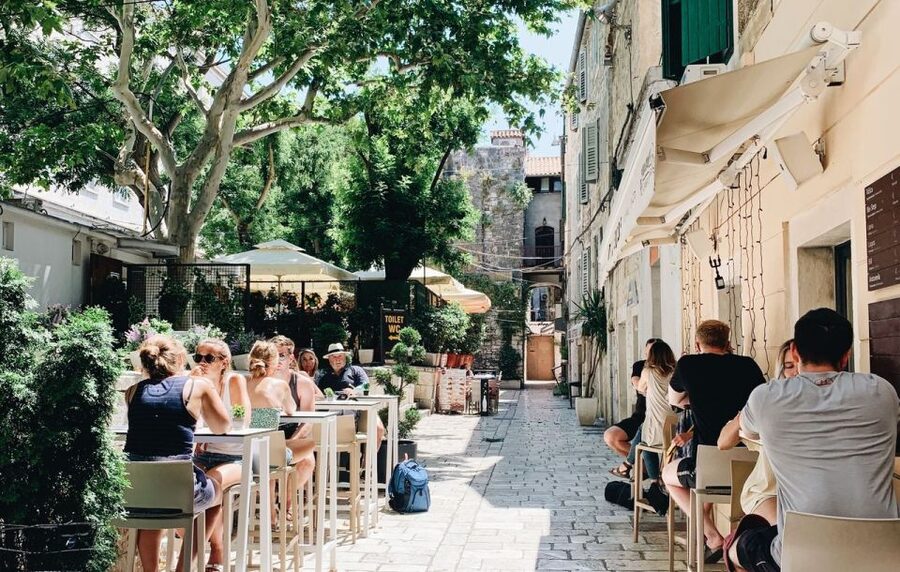
The Riva also gives you an immediate sense of Split’s social life. Locals use the waterfront for coffee, conversation, and evening walks. Your guide can point out favorite cafés and places for later Dalmatian food, which is useful if this is your first evening in town.
There is also a local attitude worth understanding. Many residents are fiercely proud of Split and expect visitors to appreciate its character. You do not need to pretend every stone is perfect, but showing respect for the city and its people will make the experience warmer.
Tasting Split at the Green Market
The Green Market is one of the best reasons to choose this tour over a purely architectural walk. Here, the focus shifts from emperors and stonework to the way people actually eat and shop.
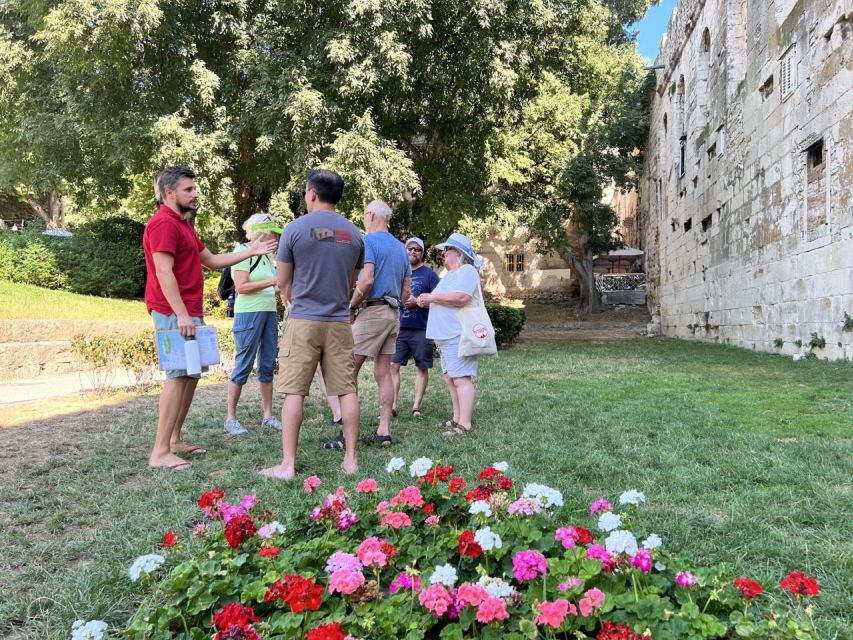
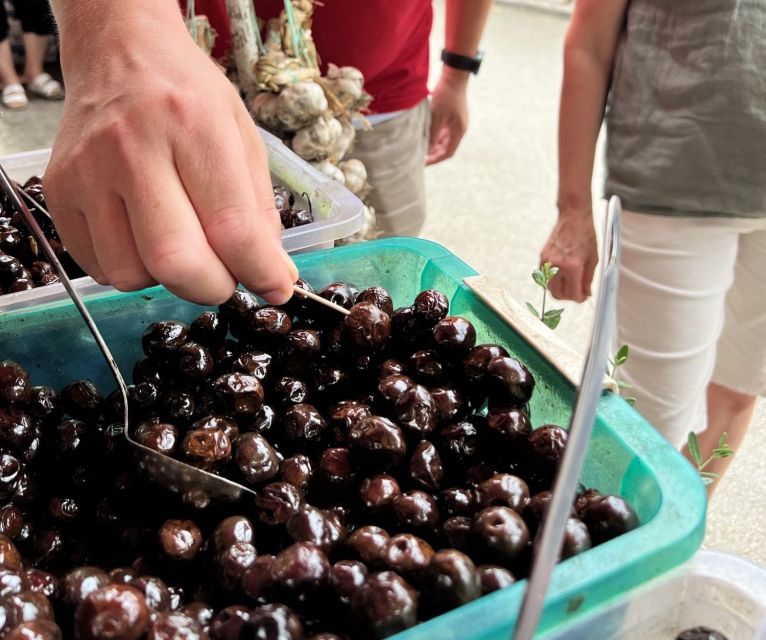
Your guide introduces local vendors and explains how residents choose produce at the market. Depending on the season and availability, tastings can include fruit, vegetables, olive oil, rakija, cheese, and dried figs. The selection is not fixed, so you should expect a sample of what is good at that time of year rather than a set menu.
That seasonal approach is important. Dalmatian food makes more sense when you connect it to local produce and the Mediterranean climate. A small taste of olive oil or a piece of cheese can tell you more about daily cooking than a long list of restaurant dishes.
The market stop also gives the guide a chance to explain why food is so central to Dalmatian hospitality. The local saying that the way to a Dalmatian’s heart is through the stomach is treated here as more than a joke. Sharing food is part of how people welcome one another.
Do not book this expecting a full lunch. The included tastings can make you feel pleasantly satisfied, but additional food and drinks are not included. If you are hungry, plan to eat afterward, perhaps using the guide’s suggestions along the Riva or in the old town.
Entering Diocletian’s Palace
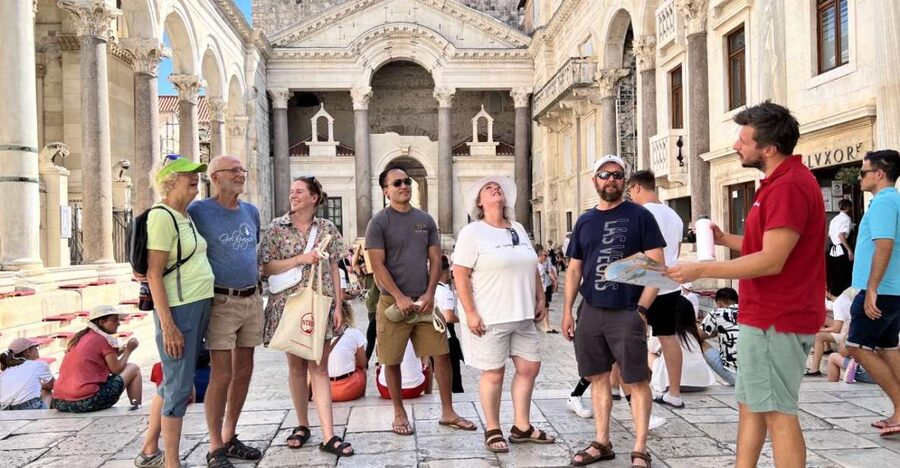
After the market, the tour turns toward the Palace, built for the Roman emperor Diocletian. The site is a UNESCO World Heritage monument and one of the best-preserved Roman palace complexes in the world.
The word palace can be misleading. Diocletian’s home was a huge fortified complex with military, religious, residential, and ceremonial functions. Today, its walls contain shops, cafés, apartments, and streets, so the setting feels like a working town built into an ancient shell.
The main square, Peristil, is the central stage of the tour. This is where the scale of the complex becomes clear. Look upward, across the stone surfaces, and at the surrounding buildings. Your guide explains how the emperor’s life and rituals shaped the space.
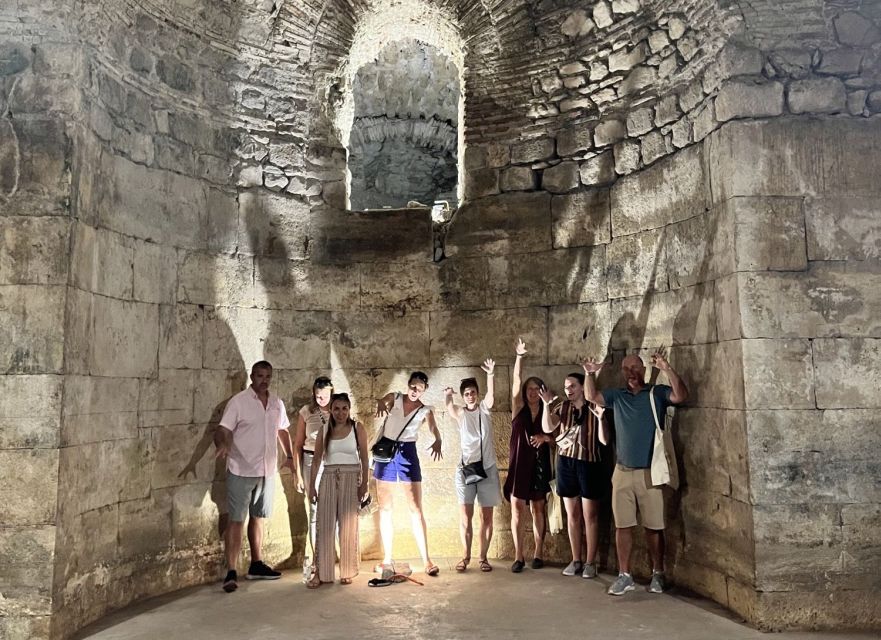
The tour includes the Vestibule and Golden Gates, along with a private section of the Palace. The Golden Gates were among the complex’s major entrances, while the Vestibule served as a formal approach to the imperial apartments. These places help you imagine how carefully visitors once moved through the Palace.
The guide also points out stories hidden in the walls. One unusual detail concerns Diocletian’s fondness for salad, a small human detail that helps soften the image of a powerful emperor. Another story involves the mythical White Stone, which is connected with good fortune.
These details are exactly where a local guide earns the fee. Without context, you might photograph an arch and move on. With the story, the stone becomes part of a larger picture of power, belief, and daily life.
More History Tours in the world:
- Private Excursion to Floating Market and Ayutthaya World Heritage
★ 5.0 · 515 reviews - Palermo: Walking Tour of Historic Markets and Monuments
★ 4.9 · 478 reviews - Discover Palermo in 3 hours. Art, history, markets and street food
★ 5.0 · 352 reviews - Private Heritage Walking Tour in Jaisalmer Fort and Old Bazaar
★ 5.0 · 306 reviews
Roman rituals and local customs
The tour is not limited to the emperor’s biography. It also explores rituals respected by Dalmatians from Iliryan times. The information provided does not set out every ritual in advance, so the precise stories will depend on the guide and the questions you ask.
That open format can work well if you are curious. Ask your guide which customs have survived, how local celebrations changed, and where Roman or older traditions appear in modern life. A private tour gives you room for these questions in a way a large group often cannot.
You will also hear about Gregory of Nin, or Grgur Ninski, and the famous golden toe. Touching the toe is linked with making a wish, so the statue offers one of those playful rituals that quickly becomes part of a first visit to Split.
Your guide may also explain Hajduk Split, the football club whose name appears throughout the city, from the suburbs to the old town. This is useful cultural context. In Split, football is not simply a sporting detail. It is tied to local identity, loyalty, and conversation.
The result is a tour that connects formal history with living customs. You learn about an emperor, then a market, then a football club, then a wish-making statue. That mix gives you a better sense of what the city means to its residents.
The private format and guide quality
A private group is the clearest advantage of this experience. You are not being moved along with dozens of people, and your guide can adjust the pace to your interests.
The guides are local and English-speaking. Ted has been praised for a well-paced, educational presentation, while Ivan is known for strong knowledge of Split and its past. A female guide was also singled out for excellent English, engaging anecdotes, and showing beautiful corners of the city.
Those comments point to the qualities that matter most here: clear English, a comfortable rhythm, and stories that go beyond memorized dates. On a short tour, a guide who can explain rather than simply recite makes a real difference.
Still, guide-led experiences vary by personality. One guide may focus more on Roman architecture, while another may spend more time on food, football, or local customs. If you have a particular interest, say so at the start.
The pace should suit most adults and older children, but you are walking for the full two hours. Children under six can join free of charge, though you should tell the operator in advance if you are bringing one.
What is not included inside the Palace
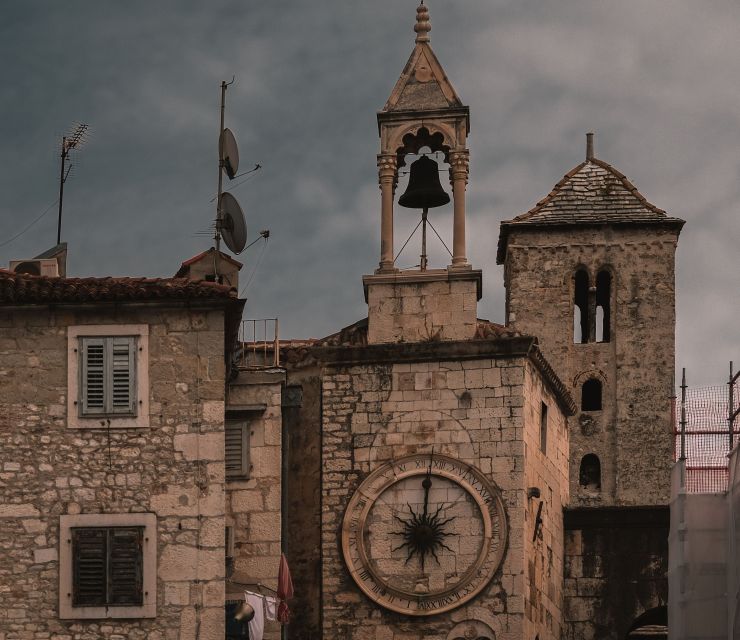
The Palace area contains several sights that require separate admission. The tour does not include entry to the cathedral in the former imperial mausoleum, the bell tower, the underground cellars, museums, or the Temple of Jupiter.
This is not necessarily a flaw. A two-hour introduction would become rushed if it tried to include every ticketed site. The guide can show you where these places are, explain their importance, and help you decide which deserves a return visit.
If you want to climb the bell tower or spend time in the Palace underground, budget extra time and money after the tour. You should also avoid assuming that the included Palace visit covers every interior. The main square, private section, Vestibule, and Golden Gates are included, while the named paid attractions are not.
This arrangement makes the tour a good first step for independent exploring. You get the layout and basic context, then choose your own follow-up visits.
Is $280 per person fair value?
At $280 per person, this is expensive for two hours. The cost makes most sense for couples, families, or small groups who want a private guide rather than a general walking tour.
The value comes from four things: the private format, the local guide, the food tastings, and the efficient combination of Roman history with modern Split. If you are traveling with several people, the price may feel easier to justify when compared with booking multiple individual tours or arranging a separate food experience.
For a solo visitor or budget-conscious couple, the cost is harder to defend. You could spend less on a standard group walk and use the savings for Palace admissions or a meal. You should book this tour when personal attention matters more to you than keeping the price low.
The food stop adds value, but it is not a full meal. Additional drinks and food are extra, so include that in your budget. The best return comes when you treat the tour as both an orientation and a way to gather ideas for the rest of your stay.
Carbon-neutral travel and practical booking
The operator describes the experience as carbon neutral and is B Corp certified, with a stated commitment to using travel as a force for good. That does not change the route, but it may matter if you prefer companies that address their environmental and social impact.
The tour runs in English and has a private group format. Starting times vary, so check availability for your date. You can cancel up to 24 hours in advance for a full refund, and the reserve-now, pay-later option allows you to keep plans flexible.
A morning start may help you understand the city before it gets warmer and more active, while an afternoon or early evening outing can lead naturally into dinner and drinks. Since the exact starting times vary, choose based on your wider Split schedule.
Who should book this Split tour?
I would choose this experience for a first visit to Split, especially if you want a quick, friendly introduction rather than a long academic lecture. It also suits families, couples, and anyone who prefers asking a guide direct questions.
Food-minded visitors will get more from it than people interested only in Roman architecture. The Green Market, seasonal tasting, Dalmatian customs, and restaurant suggestions give the tour a useful local angle.
History enthusiasts should book it only if they are comfortable with a selective overview. You will see important Palace spaces, but the tour does not include every museum, cellar, temple, cathedral interior, or bell tower visit.
Should you book it?
Book it if you want the most personal version of a short Split orientation, with local food and Roman history sharing equal billing. The praise for guides such as Ted and Ivan, along with the consistently positive comments about pacing, English, and anecdotes, supports the tour’s main promise.
Skip it if $280 per person feels too steep for two hours or if you want extensive time inside the Palace’s paid attractions. In that case, choose a less expensive group walk and spend the difference on individual admissions.
For the right visitor, this tour does something useful: it helps you understand why Split is not just an ancient monument. It is a city where people live among Roman walls, shop for seasonal food, follow Hajduk Split, honor old customs, and meet for coffee on the Riva.
FAQ
Where does the tour meet?
It meets at the beginning of the Riva promenade, near the iron map showing a model of the city.
How long does the tour last?
The tour lasts two hours.
What language is the tour offered in?
The tour is offered in English with a live English-speaking guide.
Is this a private tour?
Yes. The experience is organized for a private group.
What food tastings are included?
Depending on the season, tastings may include fruits, vegetables, olive oil, rakija, cheese, and dried figs.
Is a full meal included?
No. The tour includes Green Market tastings, but additional food and drinks are not included.
Which parts of Diocletian’s Palace are included?
The included areas are the main square within the Palace walls, a private section of the Palace, the Vestibule, and the Golden Gates.
Are Palace museums, the cathedral, and the bell tower included?
No. Entrance fees for the cathedral in the former emperor’s mausoleum, the Palace underground, the bell tower, museums, and the Temple of Jupiter are not included.
Can children join the tour?
Yes. The tour is child friendly, and children under six may join free of charge. You should inform the operator if you are bringing a child under six.
Just added around the world
- Half-day Dandan Noodles Cooking Class with a Local Market Visit★ 5.0 · 8 reviews
- Three-Hour Private Chengdu Tea Wholesale Market Tour★ 5.0 · 4 reviews
- 3-Hour Herbal Wholesale TCM Market and a Local Wet Market Tour★ 5.0 · 4 reviews
- Moroccan Cooking Class with a Local Family & Market Visit★ 5.0 · 16 reviews
- Charleston International Sweet Treats & Historic City Market Tour★ 5.0 · 22 reviews
- Chania Old Town, Public Market and Chrisopigi Monastery Tour★ 4.5 · 6 reviews
- Chania: Old Town, Public Market, Hill of Prophet Elias, Agia Triada★ 5.0 · 35 reviews
- Chania: Morning Bites and Market Delights Food Tour★ 5.0 · 11 reviews
Private Market Tours, compared.
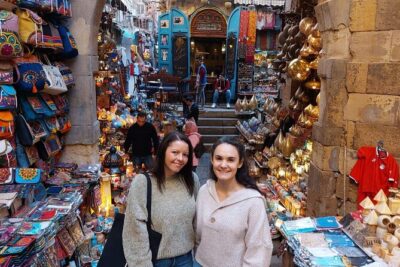
Cairo 8 Hour Private Tour of Pyramids, Egyptian Museum and Bazaar
Read our review →
Private Excursion to Maeklong Railway and Floating Markets
Read our review →
Floating and Railway Market (Optional Waterfall): Private Tour
Read our review →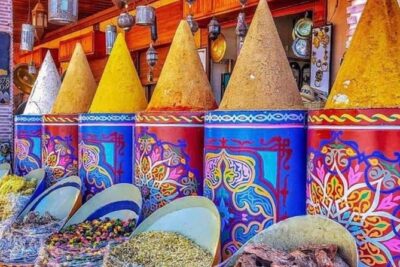
Shopping in the Souks of Marrakech Private Tour
Read our review →
Local Markets & Khan el Khalili Private Shopping Tour
Read our review →
Private Excursion to Floating Market and Ayutthaya World Heritage
Read our review →
Private Heritage Walking Tour in Jaisalmer Fort and Old Bazaar
Read our review →Browse the lists this tour appears in