
Review · SANTIAGO METROPOLITAN REGION, CHILE
Santiago: Markets Bike Tour
Markets tell Santiago’s story best. This gentle $45 bike tour links Bellavista’s murals, Pablo Neruda’s La Chascona, La Vega Central, Mercado Central, and Parque Forestal in one useful morning. I like the easy pace and the chance to taste sopaipilla and fresh juice while learning what Chileans actually eat. The main drawback is that about half the three hours is spent walking through markets, so serious cyclists may want more time in the saddle.
The small group, capped at 10 people, makes the ride feel personal rather than parade-like. Guides such as Isabella, Marti, Diego, and Adrin have earned praise for clear explanations and careful handling of crossings. Bring some Chilean pesos for market purchases, and remember that La Chascona is a stop at the famous property, not a stated house admission.
Key points at a glance
- Bellavista by bicycle: Ride through cobbled streets, colorful murals, and the neighborhood known for its nighttime scene.
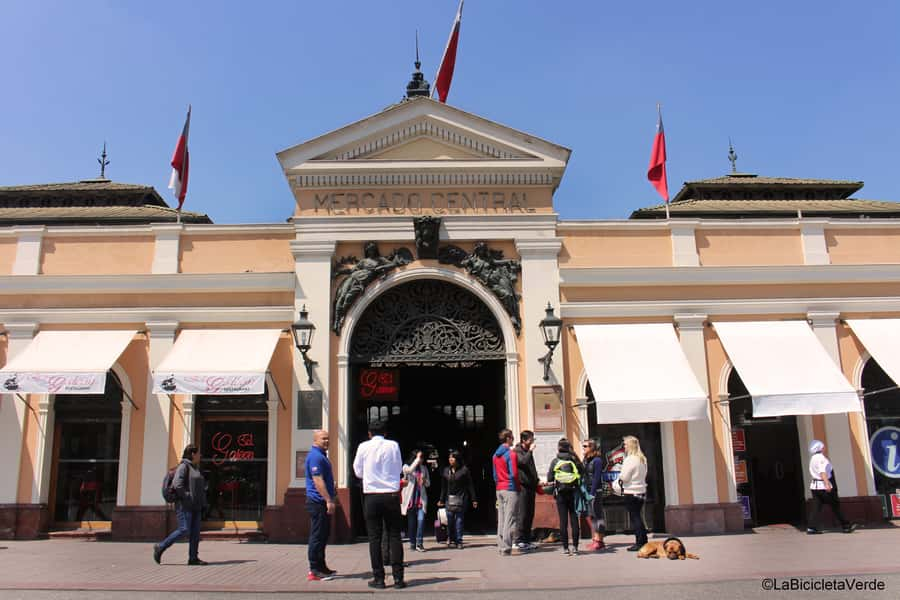
- Two very different markets: La Vega Central focuses on produce and local food, while Mercado Central is Santiago’s seafood center.
- Mostly easy riding: The route is described as gentle and largely flat, with bike lanes, parks, and some city streets.
- Food built into the morning: Sopaipilla, bottled water, sunscreen, and freshly squeezed juice are included.
- Small-group guidance: No more than 10 participants, with Spanish and English available.
- A city introduction, not a race: You spend meaningful time on foot inside the markets, so the tour suits first-time visitors more than cycling purists.
Why this three-hour route works
Santiago can feel spread out when you first arrive. Its neighborhoods, river, parks, museums, and food markets do not all sit in one compact sightseeing zone. This tour gives you a moving introduction, using a bicycle to connect places that would take more effort to reach on foot.
I like that the route does not focus only on grand civic buildings. Bellavista, La Vega, and Mercado Central show everyday Santiago: where people go out, shop for food, and talk about Chilean cooking. The ride also gives you a look at the Mapocho River and Parque Forestal, two useful pieces of the central city.
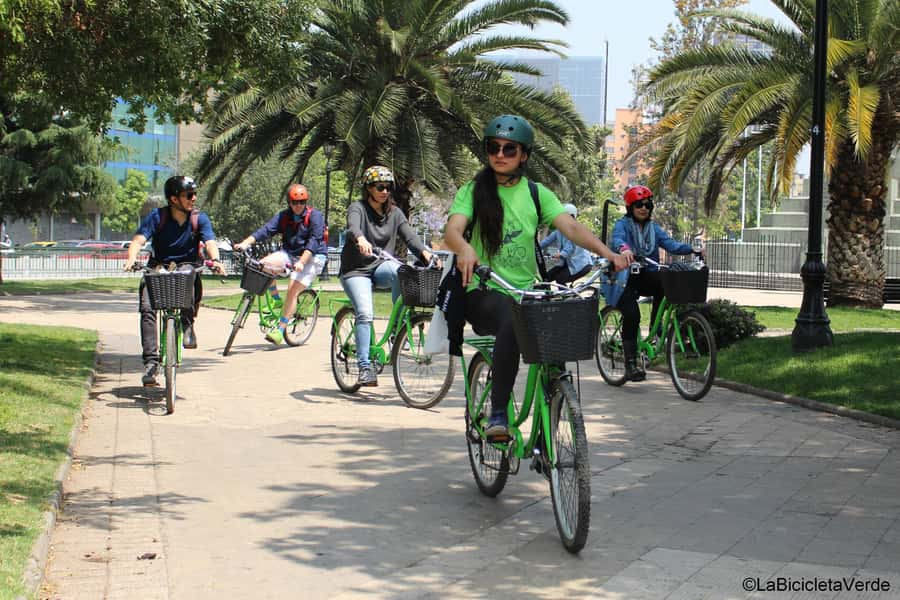
The pace is gentle. Past participants describe the route as easy enough for a range of cycling abilities, with much of it on bike paths and through parks. You still ride on city streets, but guides are reported to keep the group together and watch crossings closely. That matters in a capital city where a casual cyclist may not know which streets feel comfortable.
The tradeoff is simple. This is not three hours of continuous riding. Caroline’s useful observation is that the morning is roughly half cycling and half walking through markets and discussing food, customs, and local life. I see that as a strength for most first-time visitors, but it is worth knowing before you book.
More Bike and Tuk-Tuk Market Tours in the world:
- Bangkok by Night: Temples, Markets and Food Tuk-Tuk Tour
★ 5.0 · 3,752 reviews - Versailles Palace Bike Tour with Market & Marie-Antoinette hamlet
★ 5.0 · 2,680 reviews - Bangkok: Markets, Temples and Food Night Tour by Tuk Tuk
★ 4.9 · 2,371 reviews
Starting in Bellavista near Plaza Mori
The meeting point is Constitución 153, beside Plaza Mori and close to Baquedano Metro Station. From there, you begin in Barrio Bellavista, one of Santiago’s most expressive neighborhoods.
Bellavista is known for cobbled streets, colorful wall art, restaurants, bars, and a strong nightlife scene. The tour uses the neighborhood to explain both street art and nocturnal life, so you get more than a quick pedal past painted walls. The area helps you see how Santiago shifts character after dark, even though this tour itself is a morning or daytime activity depending on the departure time.
This is a good opening section because the streets offer plenty to look at without requiring hard cycling. You can settle onto the beach cruiser, check your brakes and seat, and get used to riding as part of a group. The bikes have small baskets, a handy detail if you buy something early or want a place for small personal items.
The guides provide helmets, which are mandatory under Chilean law. Bottled water and sunscreen are also included. I would still bring comfortable clothes, sunglasses, and extra sun protection if you burn easily. The supplied sunscreen is useful, but a three-hour outdoor outing can still feel bright and warm.
La Chascona and the Pablo Neruda connection
The route continues toward La Chascona, Pablo Neruda’s Santiago home. Neruda was a Chilean poet and Nobel Prize winner, and this property gives the guide a natural chance to explain his place in the country’s cultural life.
The important practical point is to understand the wording. You ride to the renowned property, but the tour information does not promise an interior house visit or museum admission. Think of La Chascona as a cultural stop along the route, with the value coming from the setting and the guide’s explanation rather than a separately included ticketed visit.
This section adds variety. Bellavista gives you modern street culture and nightlife; La Chascona shifts the focus to literature, personality, and Chilean public life. If Neruda is a major reason for your Santiago visit, you may want to arrange a dedicated visit to the house separately. On this bike tour, it is one piece of a wider city introduction.
The route also takes you near the entrance to Parque Metropolitano and San Cristóbal area, according to the route details shared by past participants. Do not expect a climb up the hill on this outing. The attraction here is seeing how the neighborhood, park access, and surrounding streets fit together while you ride.
Through Parque Forestal and across the Mapocho
Parque Forestal is one of the prettiest stretches on this itinerary. Its paths offer a calmer break from traffic and give you room to enjoy the ride itself. I like this part because it shows Santiago as a city with usable public green space, not just roads and buildings.
The route then heads over the Mapocho River toward Mercado Central. The river crossing helps tie the itinerary together geographically. You are not simply being driven between attractions. You see the changing streets, the parks, the bridges, and the relationship between the central neighborhoods.
Several people specifically describe the ride as mostly flat and comfortable. Others say they would have preferred more cycling, which is the fair criticism. The tour works best if you want a relaxed way to cover ground while stopping often. It is less suitable if you want a workout or a long, uninterrupted ride.
Safety is handled as a group matter. Guides have been praised for waiting at intersections and making sure nobody gets separated. That is especially helpful if you are not used to cycling in Santiago. Still, you should be comfortable riding a city bike and listening for instructions at crossings.
More Bike Rides in the world:
- Versailles Bike Tour with Market, Gardens & Guided Palace Tour
★ 5.0 · 1,121 reviews - Frida Kahlo VIP [Museum Tickets Included] Bike, Markets & Churros
★ 5.0 · 1,072 reviews - Bangkok: Night Bike Tour with Temples & Flower Market Visit
★ 4.8 · 751 reviews - London E-Bike tour & Borough market
★ 4.5 · 316 reviews
La Vega Central: Santiago’s food lesson
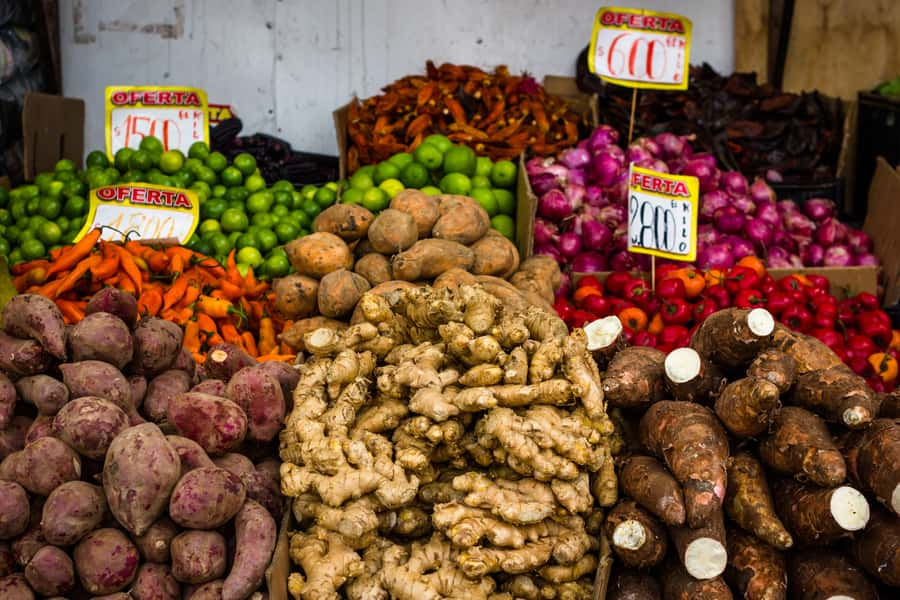
La Vega Central is the first major market stop and one of the best reasons to book this tour. It is Santiago’s largest local market, where the focus is on ingredients and daily food shopping rather than polished displays for tourists.
Here, your guide explains Chilean traditional foods and customs. You can ask about fruit, vegetables, prepared foods, and local dishes, then use the advice later in your trip. Isabella, one of the praised guides, was especially helpful with selecting fruit and negotiating for good prices. That sort of help is practical in a market where you may not know which stall to choose or how much something should cost.
Bring local currency. You are not required to buy anything, but Chilean pesos make small purchases much easier. If you see fruit, snacks, or other goods you want, you can act on the guide’s suggestions instead of standing around trying to work out payment.
The market portion also explains why the tour is not a pure cycling event. Bikes can be awkward in narrow market spaces, and one participant found that carrying or maneuvering a bicycle in parts of the market was inconvenient. The company appears to treat the market as a walking visit, but you should expect the morning to move back and forth between riding and walking.
A traditional sopaipilla is included. This Chilean snack is made from fried dough and is a fitting market taste, simple and filling rather than a formal meal. Freshly squeezed natural juice is included too, and several people enjoyed the strawberry drink in particular. These small food stops give the market visit a clear purpose. You are not just looking at produce. You are getting a first taste of how Santiago eats.
Mercado Central and Santiago’s seafood culture
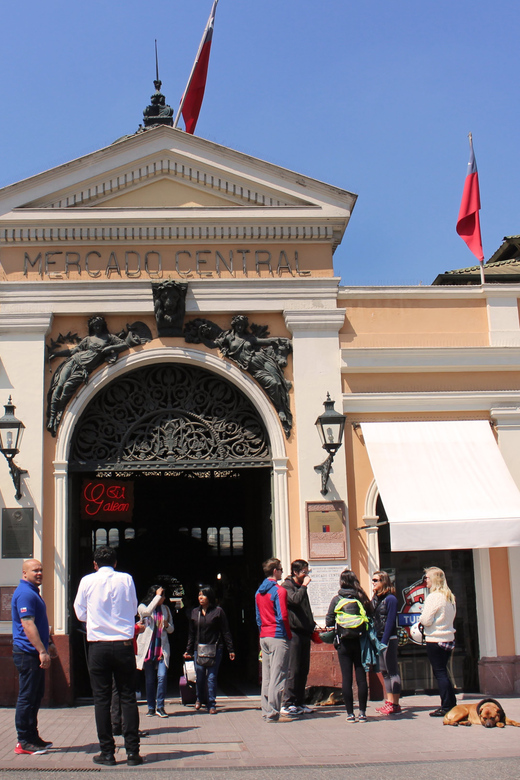
After La Vega, the route crosses the Mapocho River to Mercado Central, Santiago’s seafood market. Chile has more than 6,000 kilometers of coastline, so seafood is an important part of the country’s food identity. Mercado Central lets the guide connect that geography to dishes, ingredients, and local customs.
This market feels different from La Vega. La Vega is about broad daily shopping, especially produce and ingredients. Mercado Central is tied more closely to the sea and to the city’s seafood tradition. Seeing both in one morning gives you a better sense of Chilean food than visiting only a single market.
You can ask for dish recommendations and the guide’s personal must-tries. That advice is one of the tour’s strongest practical benefits. A short conversation about what to order can save you from choosing at random later, especially if you have limited time in Santiago.
Do not assume the tour includes a full restaurant meal. The included food is the sopaipilla and fresh juice, while market purchases and any restaurant order are your responsibility. The tour is best viewed as a guided introduction to the market, not a seafood lunch package.
The market can also be busy and tight for bicycles. That is another reason to expect a fair amount of walking here. If you enjoy food markets, you will likely appreciate the extra time. If you want to stay on two wheels, this may feel like the slowest part of the morning.
What the guides add to the experience
The guide can make or break a city ride. This tour is offered in Spanish and English, and the strongest comments focus on guides who combine city knowledge with warmth and active group care.
Isabella received praise for excellent English, a steady pace, and constant attention to the group. Marti was described as a strong guide for both the city ride and market visit. Diego was praised for making the route feel safe, especially on bike lanes and streets. Adrin was singled out for being engaging and welcoming, a useful quality if this is your first morning in Chile.
Other named guides include Ray, Joanna, Matilda, Stefano, Valentina, Nico, Felipe, Tammy, Phillipe, Carlos, and Gino. The repeated pattern is clear: people value guides who explain Santiago’s past and present, answer questions, and help with real market choices.
That personal element matters more than a long list of sights. You can find Bellavista, La Vega, and Mercado Central on a map. What you cannot get from a map is an explanation of why one food matters, how a neighborhood changes after dark, or which market stall may be worth your money.
Bikes, comfort, and group size
The beach cruiser city bikes are designed for easy urban riding rather than speed. Several people found the ride very manageable, with mostly flat sections and time on bike lanes and in parks. Helmets are supplied and required by law.
The group limit is 10 people. That is small enough for questions and for the guide to keep an eye on everyone, but you should still expect the normal rhythm of group cycling. You may stop to regroup at intersections, and the pace will be set by the least confident rider.
One person found the bikes adequate but noted rusted gears. Most comments about the equipment are positive, but this is not a high-performance cycling tour with advanced bikes. Before leaving, check that the seat, pedals, and gears feel comfortable. Tell the guide at once if something feels wrong.
The activity is described as inclusive for most participants because the route is gentle, but it is not suitable for wheelchair users. You need to be able to ride a city bike and walk through the markets. Comfortable shoes matter as much as cycling clothes.
Is $45 a good value?
At $45 per person, I consider this a solid value if you want several parts of Santiago tied together with local food context. The price includes the bike, helmet, bilingual guide, water, sunscreen, sopaipilla, and fresh juice. You also get a small group rather than a large bus tour.
The value is strongest for a first visit. You cover a bohemian neighborhood, a major cultural site, two important markets, a river crossing, and a central park in three hours. You also finish with ideas for what to eat and where to explore next.
The calculation changes if you want a long ride. The tour is only three hours, and some of that time is spent off the bike. Two people specifically wished the cycling portion were longer. If your priority is distance, exercise, or exploring far beyond central Santiago, you may find the tour too short.
There is also no hotel pickup or drop-off, and insurance is not included. The meeting point is near Baquedano Metro Station, so you need to make your own way there. That is not a serious burden for most visitors staying centrally, but it belongs in your planning.
Free cancellation is available up to 24 hours before departure, and you can reserve now and pay later. Starting times vary, so check the available schedule before committing your morning.
Who should book the Santiago Markets Bike Tour?
I would choose this tour for a first or second day in Santiago. It helps you get your bearings, introduces several central neighborhoods, and gives you food ideas you can use for the rest of your stay.
It is especially suitable for:
- First-time visitors who want a broad city introduction
- People who enjoy markets, local snacks, and informal food advice
- Casual cyclists who prefer a flat, easy route
- Couples, friends, and small groups who like a social morning
- Visitors who want to combine sightseeing with outdoor time
I would think twice if you want a demanding ride, dislike market crowds, or need a fully step-free activity. I would also plan a separate La Chascona visit if seeing the inside of Neruda’s house is important to you.
Should you book it?
Book it if you want a friendly, practical introduction to Santiago that mixes cycling with food and neighborhood life. The standout strengths are the easy route, careful guides, small group size, and time at La Vega and Mercado Central.
Skip it if your ideal bike tour means three continuous hours of riding. For everyone else, $45 buys a useful morning with enough local detail to shape the rest of your visit. Bring pesos, a camera, and an appetite for sopaipilla.
FAQ
How long is the Santiago Markets Bike Tour?
The tour lasts three hours.
How much does the tour cost?
The price is $45 per person.
Where does the tour meet?
The meeting point is Constitución 153, beside Plaza Mori and near Baquedano Metro Station.
Which languages are available?
The live guide is available in Spanish and English.
What places does the tour visit?
The route includes Barrio Bellavista, La Chascona, La Vega Central, Mercado Central, Parque Forestal, and a crossing of the Mapocho River.
Is the cycling difficult?
The tour is described as a gentle ride through the city, with mostly flat sections, bike lanes, parks, and some city streets. You should still be comfortable riding a city bike.
What is included in the price?
The tour includes a beach cruiser city bike, helmet, professional bilingual guide, bottled water, sunscreen, a traditional Chilean sopaipilla, and freshly squeezed natural juice.
Do I need to bring money?
You are advised to bring local currency if you want to purchase goods at the markets. Market purchases are not listed among the included items.
Is the tour suitable for wheelchair users?
No. The activity is not suitable for wheelchair users.
Just added around the world
- Half-day Dandan Noodles Cooking Class with a Local Market Visit★ 5.0 · 8 reviews
- Three-Hour Private Chengdu Tea Wholesale Market Tour★ 5.0 · 4 reviews
- 3-Hour Herbal Wholesale TCM Market and a Local Wet Market Tour★ 5.0 · 4 reviews
- Moroccan Cooking Class with a Local Family & Market Visit★ 5.0 · 16 reviews
- Charleston International Sweet Treats & Historic City Market Tour★ 5.0 · 22 reviews
- Chania Old Town, Public Market and Chrisopigi Monastery Tour★ 4.5 · 6 reviews
- Chania: Old Town, Public Market, Hill of Prophet Elias, Agia Triada★ 5.0 · 35 reviews
- Cesarine: Market Tour & Home Cooking Class in Catania★ 4.0 · 6 reviews
Bike & Tuk-Tuk Market Tours, compared.
Bangkok by Night: Temples, Markets and Food Tuk-Tuk Tour
Read our review →
Markets, Temples and Food Night Tour by Tuk Tuk
Read our review →
Versailles Bike Tour with Market, Gardens & Guided Palace Tour
Read our review →Night Bike Tour with Temples & Flower Market Visit
Read our review →
Chef Vu Cooking Class Plus Market Trip in Saigon Center (Pick up by Cyclo)
Read our review →
Bike / E-bike tour : Plateau, Mile-End, Jean-Talon Market by Fitz
Read our review →
Versailles Full-Day Electric Bike Tour : Market, Picnic & Palace
Read our review →Browse the lists this tour appears in