
Review · ITALY
Rome: Trajan Markets Experience with Multimedia Video
Rome’s shopping mall still has sharp edges. This experience gives you two things I especially like: a 25-minute reconstruction video that makes the Imperial Forums easier to picture, and entry to the Trajan Markets and Fori Imperiali Museum for $37. The main drawback is that this is not a guided tour, and much of the archaeological area can be seen from the street.
You begin at the Touristation Aracoeli office near Piazza Venezia, then use your phone, headphones, and the downloadable audio app to set your own pace. I also like the flexible cancellation and reserve-now, pay-later terms. Still, allow extra time at the office: one visitor reported a 15-minute wait while tickets were printed and collected.
Key points to know before you go
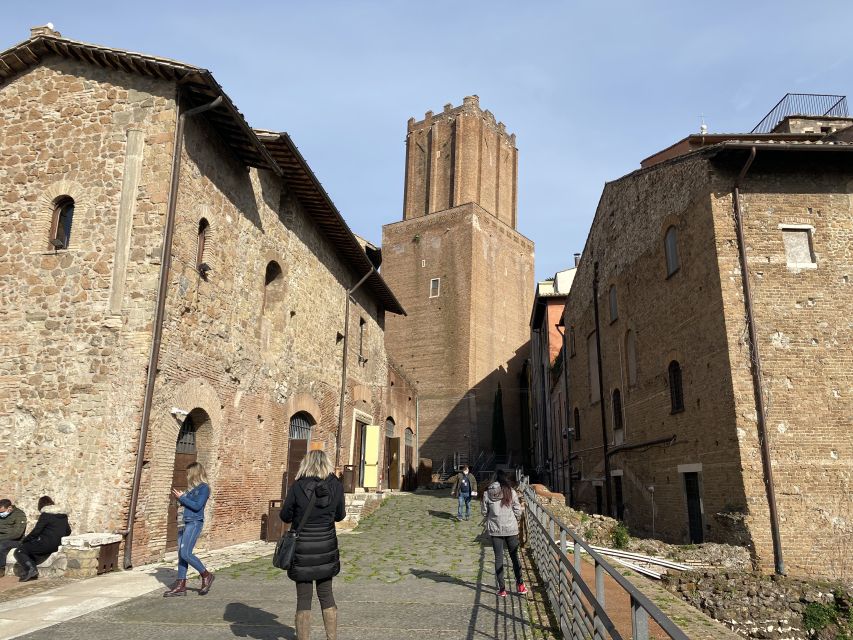
- Trajan Markets were an ancient commercial center: Explore the curved brick complex that once housed shops, offices, and commercial activity during Rome’s Imperial Age.
- The 25-minute video comes first: Computer or multimedia reconstructions help you see how Rome’s forums may have looked before you enter the ruins.
- Four major forums connect the story: The experience covers Caesar’s Forum, Augustus’ Forum, Nerva’s Forum, and the Templum Pacis.
- The museum adds objects, not just architecture: You’ll see ancient artifacts from different cultures, including amphorae and other items linked to daily life and trade.
- The phone app covers more than the site: With over 170 points of interest, it can help you continue exploring Rome beyond Trajan Markets.
- Comfort matters: Wear sturdy shoes, bring a charged smartphone and headphones, and leave large bags, luggage, drones, sprays, and glass objects behind.
Why Trajan Markets are worth your time
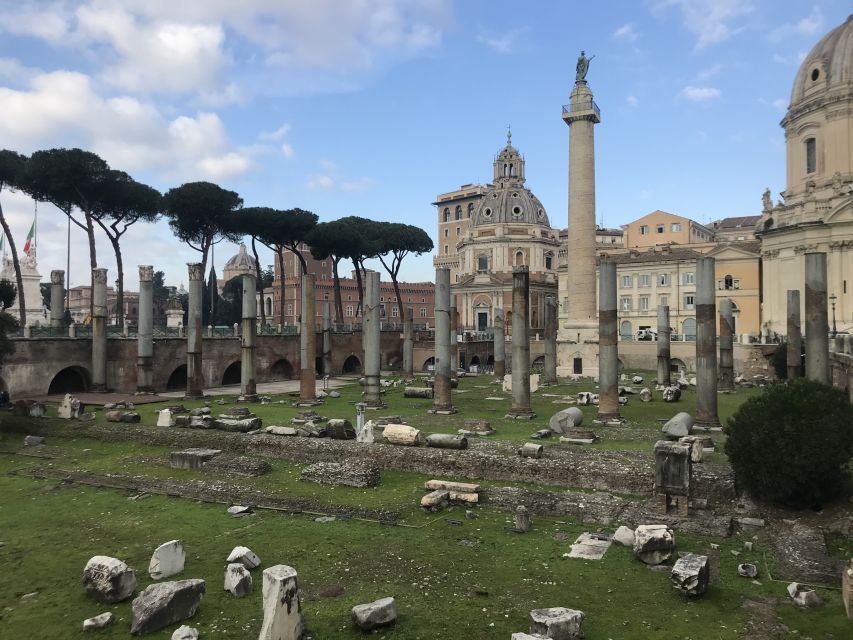
Rome has no shortage of ancient ruins. The appeal here is that Trajan Markets lets you look at the city from a practical angle: how people bought, sold, stored, and moved goods.
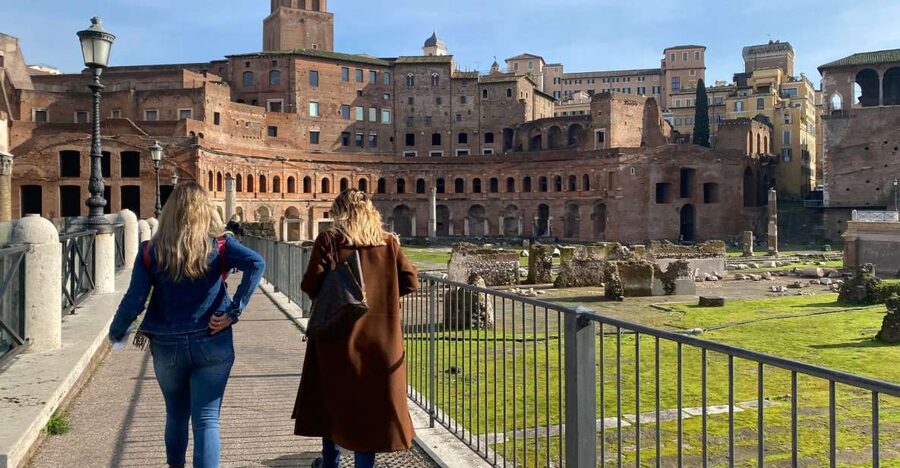
The site is often described as the commercial shopping center of the Roman Empire. That comparison helps, but do not expect a tidy ancient department store with intact shop signs and counters. You’ll see a large archaeological complex built into the slope of the Quirinal Hill, with brick vaults, corridors, terraces, and curved architectural lines.
The semi-circular shape is one of the first things to notice. It gives the complex a strong visual identity and shows how Roman builders adapted large structures to the terrain. Instead of seeing isolated columns in an open field, you move through a connected built environment.
I like this because it makes ancient Rome feel organized and busy. Commerce was not a side issue. It helped shape the city, its roads, its warehouses, its public spaces, and its relationship with the wider empire.
The area also connects directly with the Imperial Forums across the street. That is important. Trajan Markets are not an isolated attraction. They form part of a larger story about how emperors used monumental building projects to display power while creating places for administration, trade, worship, and public gatherings.
A few more market tours around Rome worth a look
- Rome: Colosseum, Roman Forum & Trajan’s Market Exterior Tour
★ 4.3 · 2,038 reviews - Roman Food Tour with Visit to the Trionfale Food Market
★ 5.0 · 471 reviews - Authentic Roman Cooking Class & Market Experience
★ 5.0 · 363 reviews
Starting at Piazza d’Aracoeli 16
Your meeting point is the Touristation Aracoeli office at Piazza d’Aracoeli 16, close to Piazza Venezia. Look for the orange Touristation flags and the fountain in front of the entrance.
This is a busy central part of Rome, so give yourself enough time to find the office. The instructions are clear, but ticket collection may not be instant. One booking experience included a 15-minute wait because the printing process seemed complicated at the desk. That does not ruin the visit, but it is a reason not to arrive at the last second.
Another useful detail: a visitor was able to exchange a voucher in the morning for an afternoon visit and received help from the staff without facing a queue. The process may go smoothly, but I would still keep a small time cushion.
At the office, expect assistance at the meeting point rather than a traditional welcome from a personal guide. You are being set up with entry and digital materials. This distinction matters because the experience is self-guided once you move on.
The 25-minute Ancient Rome video
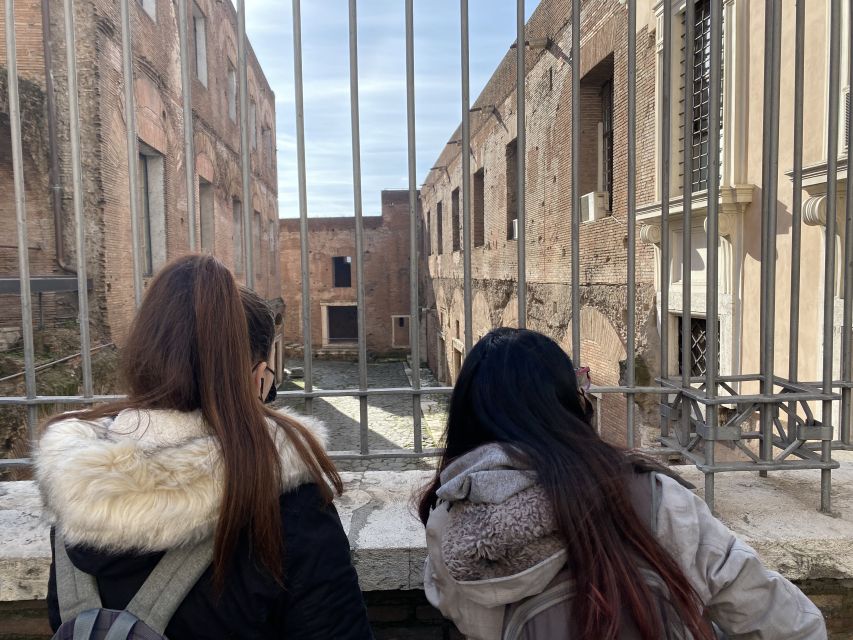
The multimedia presentation is the best preparation for the ruins. It lasts about 25 minutes and uses reconstructions of important Roman monuments to show how the city looked during the Imperial Age.
That matters because the archaeological remains can be hard to read at first. You may see walls, foundations, fragments, and uneven levels without immediately understanding their original purpose. A reconstruction gives those pieces a shape and a setting.
I would pay attention to the relationship between the forums, not just the famous buildings. The video is designed to show Rome as a connected urban center, with monumental spaces placed beside commercial and administrative areas.
The presentation is not a substitute for standing among the ruins. It is a visual aid. You see the polished version first, then compare it with what survives. That contrast is useful, especially if ancient history is not already your strong point.
At 25 minutes, it is long enough to provide context but short enough not to dominate your day. If you are visiting Rome with children or with someone who loses patience during lectures, the visual format should be easier than a long spoken history lesson.
Walking through the Trajan Markets complex
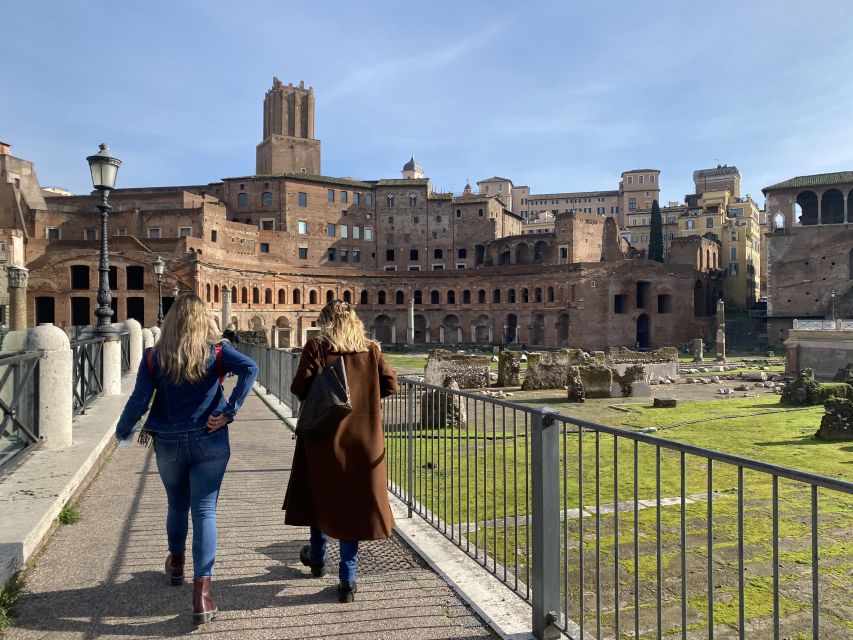
Once inside, take your time with the building itself. The curved arrangement is the main architectural pleasure, and the brickwork gives the site a different mood from Rome’s marble-heavy monuments.
The complex once served commercial purposes, but the exact experience today is about reading the remains. Look for the way rooms connect, how levels change, and how the structure was fitted into the hillside. The shape shows careful planning rather than random construction.
You may find that the attraction feels more architectural than theatrical. There are no recreated shopkeepers, market stalls, or staged scenes in the information provided. Instead, the site asks you to use the app and your own attention to make sense of the spaces.
This is where comfortable shoes matter. The attraction is an archaeological complex, not a smooth indoor museum route. The information specifically advises comfortable footwear, and you should take that seriously.
The Trajan Markets also work well for visitors who enjoy seeing how a city functions behind its grand public image. The Colosseum tells one kind of Roman story. These ruins tell another, focused on buying, selling, meeting, storing, and moving through the city.
Same place, a different set of stalls:
- Taste of Testaccio: Special 15 Year Anniversary Edition
★ 5.0 · 1,658 reviews - Trevi Fountain, Pantheon, and Campo Dei Fiori Market Food and Wine Tour
★ 5.0 · 320 reviews - Rome: Pasta Cooking Class with Market Visit and Wine
★ 4.9 · 277 reviews - Rome: Food Tour with Market Visit
★ 4.9 · 200 reviews
The four forums and the wider Imperial story
The route includes four important forum areas: Caesar’s Forum, Augustus’ Forum, Nerva’s Forum, and the Templum Pacis.
Each name points to a different stage in the development of Imperial Rome. The value of seeing them together is not simply that you collect four famous names. You can observe how public building continued across different rulers and periods, changing the shape of the city over time.
Caesar’s Forum helps place the earliest part of this sequence. Augustus’ Forum reflects the way public space could support both political authority and imperial image. Nerva’s Forum and the Templum Pacis add later layers to the story.
The audio app should help you move between these points without needing to follow a fixed guide. With more than 170 points of interest, it is broader than a single Trajan Markets narration. You can use it as a Rome companion before or after this visit.
Do not expect every point in the app to receive equal attention during your stop. The city is full of sites, and 170 points is a large amount of material. You will get the most from it if you choose the locations that match your interests instead of trying to hear everything.
The app also means your phone becomes part of the visit. That is convenient, but it creates two basic jobs for you: download it in advance if possible, and arrive with a full charge. Bring headphones so you can hear the commentary clearly without holding your phone up the entire time.
The seventeenth-century cistern
One of the more unusual details is a cistern from the 17th century. It shows that the area did not stop mattering when the Roman Imperial Age ended.
A cistern is a practical structure for storing water. Its presence adds a later chapter to the site and reminds you that Rome’s old buildings were reused, altered, and adapted across many centuries.
This is a useful counterpoint to the usual ancient-Rome story. You are not looking only at a preserved Roman monument frozen in time. You are seeing a place with several lives, including a later function that has little to do with imperial commerce.
The cistern may not be the most visually impressive feature, but I would not skip it. Details like this help you understand the long evolution of the city. Rome was not rebuilt once and then left alone. People kept finding new uses for old spaces.
Inside the Fori Imperiali Museum
After the outdoor and archaeological portion, the Fori Imperiali Museum brings you closer to physical objects. The collection includes artifacts from ancient cultures and amphorae.
The amphorae are especially relevant here because they connect objects with trade. These large ceramic containers were used to transport and store goods. Even without knowing the exact contents of every example, they make the commercial side of Roman life easier to picture.
The museum also gives you a change of pace. After walking through walls and terraces, you can focus on smaller objects and details. A museum display lets you look closely at materials, shapes, and workmanship that can be hard to see in large ruins.
A booking experience specifically praised the artifacts in the museum section. That praise fits the structure of the visit: the architecture provides scale, while the collection provides texture.
Do not expect a huge museum visit. The attraction is centered on the Trajan Markets and the Imperial Forums, with the museum as an important part of the same story. If you want several hours of gallery after gallery, this is not that kind of experience. If you want a compact collection that supports the archaeological site, it makes sense.
What $37 gets you
At $37 per person, the value depends on how much use you make of the video, entries, and app.
You are paying for admission to the Trajan Markets archaeological complex, admission to the Fori Imperiali Museum, a 25-minute multimedia presentation, and access to the city audio app. Assistance at the meeting point is included as well.
The video and app add value if you want help interpreting Rome without hiring a private guide. You can see the reconstruction, enter the site, then listen at your own speed. That is a reasonable setup for independent visitors who like information but do not want to follow a group.
The value is weaker if you mainly want a quick look at the ruins from outside. One French booking experience felt that much of the site could already be seen from the street and disliked the ticket collection process and an unwanted marketing package. That is a fair warning: the attraction is not a bargain if you use only the entrance and glance around quickly.
To make the price work, plan to watch the full video, enter the complex, visit the museum, and use at least some of the audio points. The more completely you use the package, the more sensible the cost becomes.
Food, drinks, and hotel transfers are not included. You will need to arrange those yourself, but the central location makes it easy to combine the visit with other sights around Piazza Venezia.
Who will enjoy this experience most
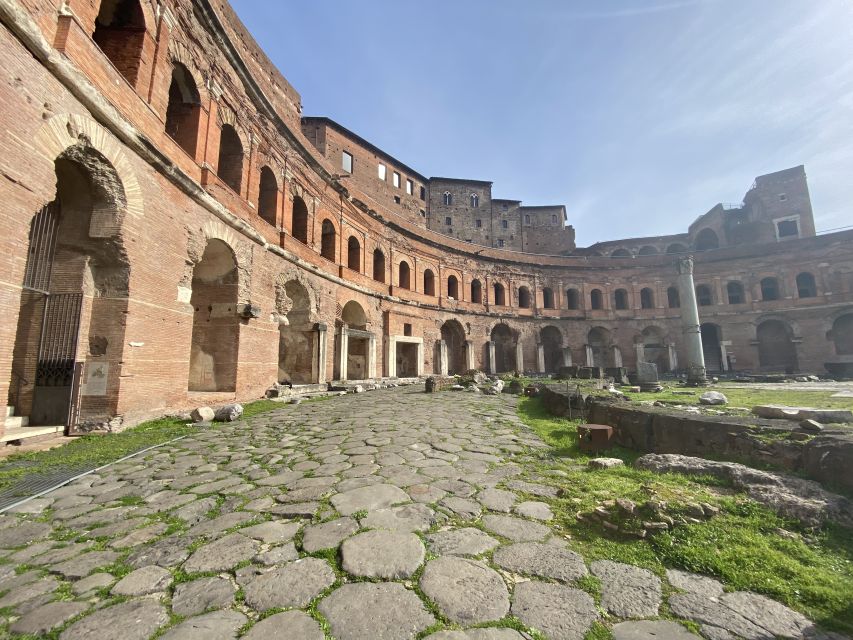
I would choose this for independent visitors who want context without committing to a live guided tour. The digital format gives you control over speed, attention, and subject.
It also suits anyone interested in urban history, architecture, trade, and the practical side of Roman life. You do not need to be an ancient-history expert. In fact, the video may be most useful if you find Roman ruins difficult to read on your own.
Families may appreciate the short visual presentation and the ability to move at their own pace. The site still requires attention and careful walking, so it may be less comfortable for very young children who need a highly active attraction.
This is not suitable for wheelchair users, according to the activity information. The site’s archaeological setting and uneven access are important considerations.
You should also skip it if you dislike using your phone during sightseeing. There is no guided tour included, and the city app is a central part of the experience. Bring your own charged smartphone and headphones.
Large bags and luggage are not allowed. Neither are pets, drones, weapons or sharp objects, alcohol or drugs, sprays or aerosols, and glass objects. Pack light and keep your visit simple.
My verdict on the Trajan Markets experience
I would book this if you want a compact, self-guided introduction to the commercial and architectural side of Imperial Rome. The combination of the video, Trajan Markets, four forum areas, cistern, museum, and audio app gives you more than a basic ruin ticket.
I would not book it expecting a personal guide, a long museum visit, or a completely effortless ticket pickup. The office process can take time, and the site may feel less rewarding if you do not use the digital material.
For the best value, arrive early at the Piazza d’Aracoeli office, wear good shoes, charge your phone, and set aside enough time for both the archaeological complex and museum. If those details suit your travel style, the visit offers a clear, practical look at how Rome worked, not just how its monuments looked.
FAQ
Where is the meeting point?
Meet at the Touristation Aracoeli office at Piazza d’Aracoeli 16, near Piazza Venezia. Look for the orange Touristation flags and the fountain in front of the entrance.
How long is the multimedia video?
The Ancient Rome multimedia presentation lasts 25 minutes.
Is a live guide included?
No. The experience includes assistance at the meeting point and a downloadable city audio app, but it does not include a guided tour.
What does the ticket include?
It includes the 25-minute Ancient Rome video, entry to the Trajan Markets, entry to the Fori Imperiali Museum, and access to the city app audio guide.
What should I bring?
Bring your passport or ID card, comfortable shoes, headphones, and a charged smartphone.
Can wheelchair users take part?
No. The experience is not suitable for wheelchair users.
Just added around Rome
- Testaccio Experience: Street Food, Market and Traditions★ 5.0 · 4 reviews
- Rome: Testaccio Food & Market Tour with Pasta & Wine★ 5.0 · 38 reviews
- Rome: The Vatican Market Experience Tasting and Class★ 4.7 · 10 reviews
- Rome: Taste of Testaccio Food & Market Tour★ 4.9 · 38 reviews
- Rome: Temples, Squares & Markets Guided Walking Tour★ 4.8 · 26 reviews
- Rome: Trajan’s Markets & Museum of The Imperial Fora Tour★ 4.8 · 4 reviews
- Rome: Market and Cooking Class at a Local’s Home★ 4.0 · 3 reviews
- Farmers Market Shopping and Roman Full Course Class – SHARED★ 5.0 · 12 reviews
Market Tours, compared.

Damnoen Saduak Market and Maeklong Railway Market
Read our review →
The Old Siam: Damnoen Saduak and Maeklong Railway Market
Read our review →
Old Town, Creek, Museums, Souks, & Street Food Tour
Read our review →Train Market & Floating Market with Boat Ride
Read our review →
Old Town, Souks, Street Food, Guided Tour & Abra Ride
Read our review →
Ayutthaya & Ayothaya Floating Market Day Trip
Read our review →
Frame Tickets, Creek, Souks & Blue Mosque Guided Tour
Read our review →
Hanoi Cooking Class: Culture, Local Market & Meaning CSR Impact
Read our review →Browse the lists this tour appears in