
Review · INDIA
Bangalore: Walking Tour of Fort, Palaces, and Market
Old Bengaluru rewards curious walkers. This three-hour tour links KR Market, Bangalore Fort, and Tipu Sultan’s Summer Palace with local food and stories about the city’s past. I like the way it shows you the working heart of Bengaluru, not just its polished modern side. I also like the small group size, limited to 10 people, which gives your guide room to answer questions. The main drawback is the traffic, crowds, heat, and uneven pace through narrow market streets.
The tour costs $43 per person and includes a vegetarian South Indian breakfast or snack. That is fair value if you want a guided introduction to old Bengaluru, especially on a short visit. You should still budget for the Summer Palace entrance fee if you decide to go inside, and expect to pay for your own transport to the meeting point.
- Masala dosa and filter coffee: Start with a classic South Indian breakfast or snack, depending on the tour time.
- KR Market: Walk through one of Asia’s largest flower markets, with fresh produce, spices, and heaps of color.
- Bangalore Fort: Hear how the 18th-century fort connects to the rulers of Mysore and the city’s changing fortunes.
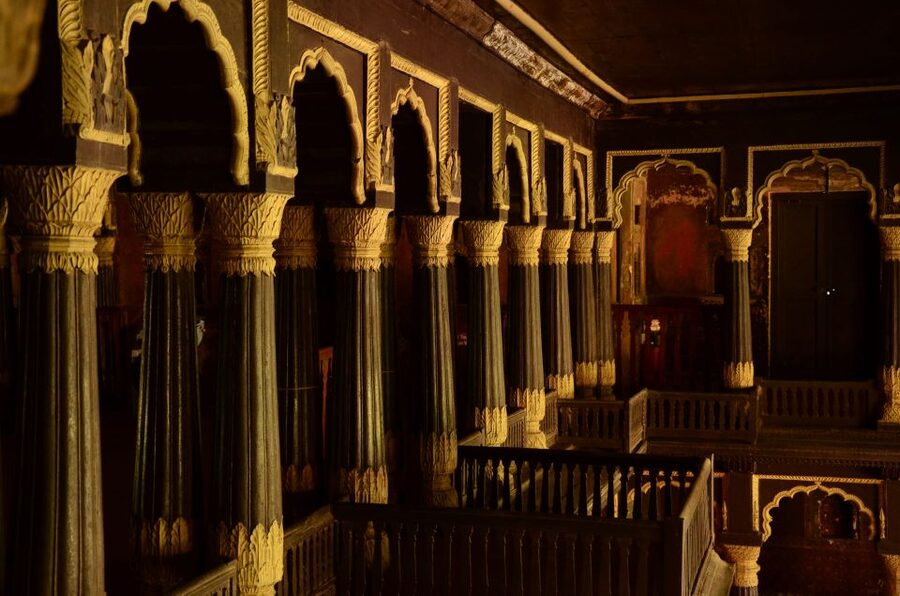
- Tipu Sultan’s Summer Palace: See the teak columns and Indo-Islamic decoration, with entry optional.
- Local storytelling: Guides such as Deepti, Sushma, and Ruchira bring family knowledge and personal views of Bengaluru.
- Small-group format: A maximum of 10 people makes it easier to move through crowded streets and ask questions.
Why Old Bengaluru Makes a Better Introduction Than a City Drive
Modern Bengaluru is known for technology and office towers, but its oldest quarters tell a different story. Here, markets, temples, food stalls, old buildings, and crowded lanes reveal how the city grew from a regional settlement into Karnataka’s capital.
I like this tour because it puts the city’s origins first. You are not simply taken from one sight to the next for a photograph. Your guide connects the streets to the Mysore rulers, British influence, local traditions, and present-day life.
The format suits you if you want context as you walk. A guide can point out details you would probably miss alone, explain how the market functions, and help you cross from one busy area to another without wasting time finding the next stop.
The setting is not calm or polished. KR Market can be noisy and packed, especially on weekends and during festivals. That is part of the point, but it also demands patience. Wear good shoes, carry water, and expect dust, traffic, strong smells, and a fair amount of standing.
Meeting at Kempegowda Road
You meet the guide at the entrance gate of the building marked by the State Bank of India on Kempegowda Road. The spot is reachable by Uber or public transport, but hotel pickup is not included.
Plan to arrive with enough time to identify the meeting point. In a busy part of Bengaluru, a few extra minutes can save stress. Since the tour moves through crowded streets soon after it begins, this is not the kind of experience where you want to arrive already hurried.
The tour is conducted in English. Past guides have included Deepti, Sushma, Ruchira, and Aniketh. The strongest part of the guiding is the personal link to the city. Deepti, for example, is from Bengaluru and has been praised for connecting old stories with everyday life today. Sushma has also been particularly good at sharing food suggestions and ideas for other things to do in the city.
More Market Walking Tours in India
- Bengaluru Pete City Market Half-Day Walking Tour
★ 5.0 · 163 reviews - Bangalore: Palace, Temples, Fort & Markets Walking Tour
★ 4.9 · 97 reviews - Bangalore Walking Tour KR Flower Market,Fort,Tippu palace
★ 5.0 · 8 reviews
A South Indian Breakfast That Sets the Tone
Depending on the start time, you stop for breakfast or a snack. The included food is vegetarian and may include masala dosa, vada, chai, filter coffee, and sweets.
This is more than a convenient meal. South Indian food gives you a quick introduction to local habits, textures, and flavors before the historical sights begin. The dosa is crisp at the edges, soft inside, and usually served with accompaniments such as chutney and sambar. Filter coffee is strong, sweet, and served in the familiar South Indian style.
Several guides have used local canteens or cafes rather than places designed for sightseeing. That matters because a simple meal in a working neighborhood tells you more about daily Bengaluru than a restaurant chosen only for tourists.
The food stop may be one of the tour’s best features, but keep your expectations practical. This is a snack or breakfast, not a full food tour. If you have allergies or strict dietary needs, ask your guide what is available before eating. The included meal is vegetarian, but the supplied details do not promise options for every dietary restriction.
KR Market: Flowers, Produce, and the Working City
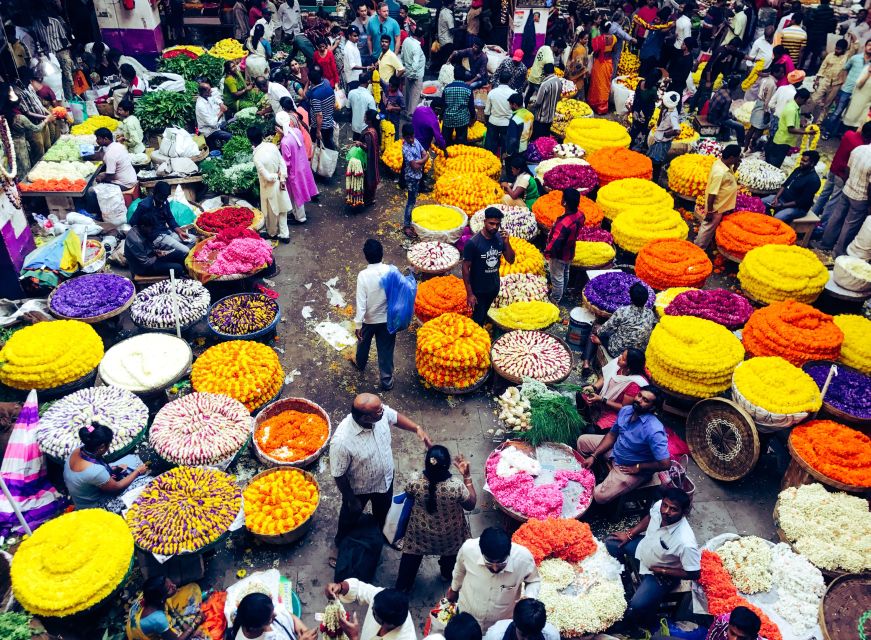
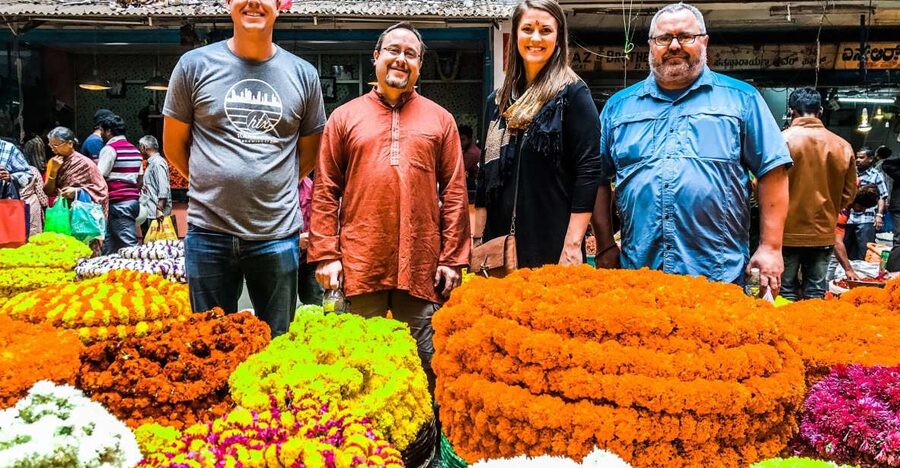
KR Market is the sensory center of the walk. It is described as one of Asia’s largest flower markets, and the flower section is the main attraction. You will see color, smell fresh blooms, and watch the steady movement of sellers and buyers.
The market is also tied to fresh produce and spices, so the experience is not limited to flowers. You may pass through narrow lanes where every part of the street seems to have a purpose. Your guide helps you follow the route and explains what you are seeing instead of leaving you to guess.
I especially like this stop for first-time visitors. A market shows how a city operates in real time. It gives you a look at work, trade, food, religious offerings, and local shopping in one compact area.
The tradeoff is comfort. KR Market is crowded and becomes even busier on weekends and during festivals. Keep your belongings secure, stay close to the group, and follow the guide’s instructions. A mask can be useful near the spice market, where dust and strong aromas may bother some people.
This is also where the walking shoes matter. You may be moving around people, carts, and uneven surfaces rather than strolling along a quiet pavement. Bring sunglasses and an umbrella for protection from the sun, and carry your own water bottle.
Bangalore Fort and the Story of Mysore Rule
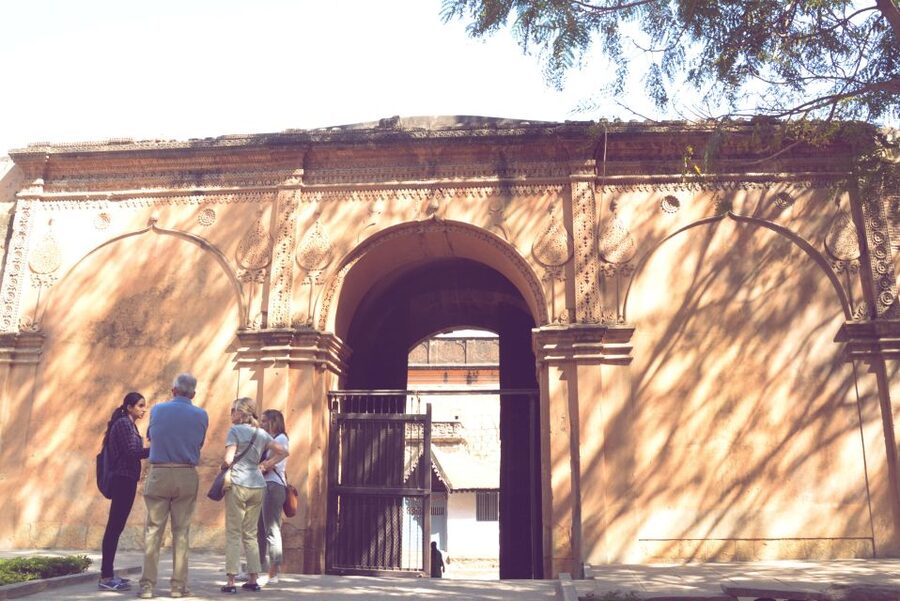
After the market, the walk moves to the ruins of Bangalore Fort. The fort dates to the 1700s and offers a way to discuss the city’s political past, including the South Indian rulers whose power shaped the region.
Do not expect a vast fortress complex like those in Rajasthan. The appeal here is historical rather than grand scale. The remaining structures and surrounding city make sense when your guide explains how the fort fitted into the story of Bangalore and the Mysore rulers.
Old photographs and sketches help bring the site into focus. They allow you to compare what remains with the fort’s former appearance and understand that this area once had a very different role.
The guide’s storytelling is important here. Without explanation, the ruins may seem easy to pass over. With context, they become part of a larger account involving local rulers, colonial power, and the growth of Bengaluru.
Monument entrance charges are not included in the tour price. The supplied details specifically mention a fee of 250 Indian rupees for the Summer Palace, not a separate confirmed fee for every stop. Carry some Indian currency or ask the guide about current payment arrangements if you plan to enter paid sites.
More Market Walking Tours in Bangalore:
- Private Walking Tour into the Oldest Local Market in Bengaluru
★ 5.0 · 5 reviews - Bangkok: City Highlights Temple and Market Walking Tour
★ 4.5 · 3,990 reviews - Tokyo Tsukiji Fish Market Food and Culture Walking Tour
★ 5.0 · 3,184 reviews - Marrakech: Ben Youssef, Secret Garden, & Souks Walking Tour
★ 4.6 · 2,802 reviews
Tipu Sultan’s Summer Palace and the Final View
The final stop is outside Tipu Sultan’s Summer Palace. The tour points out the building’s teak columns and Indo-Islamic influence, including the frescoes.
The walk ends outside the palace, so entry is optional rather than part of the standard experience. If you want to go in, the stated entrance fee is 250 rupees per person. That makes it easy to choose based on your time, budget, and interest in interiors.
I would consider paying the extra fee if you care about architecture or Tipu Sultan’s period. The palace adds detail to the historical story, while the exterior already gives you a sense of the building’s design. If you are tired after the market and fort, you can finish outside without feeling that you have missed the central purpose of the tour.
The Indo-Islamic decoration and wooden structure also provide a useful contrast to the market streets. The tour has moved from food and commerce to military history and royal architecture, all within the older part of the city.
What the $43 Price Really Covers
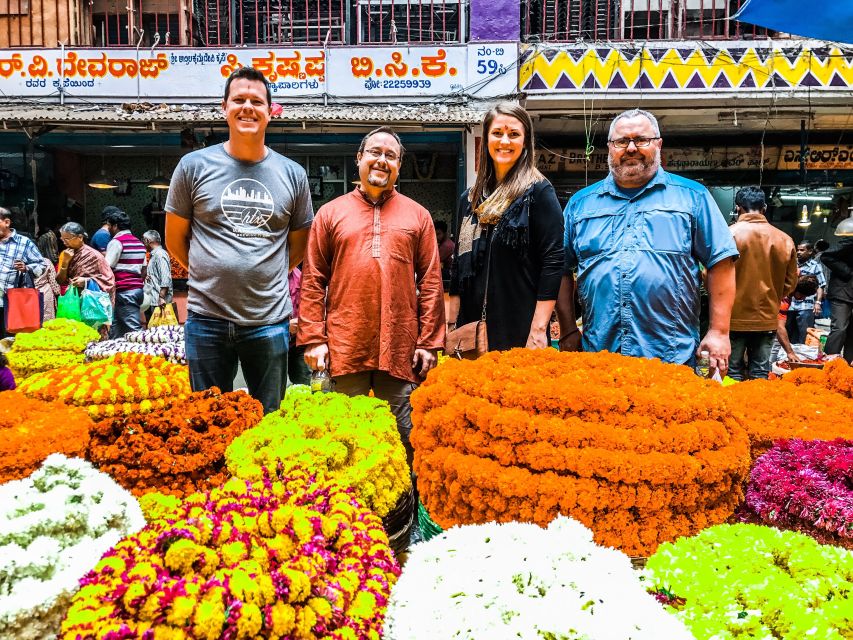
At $43 per person, this is not the cheapest way to walk around Bengaluru. You could visit some areas independently for less. The price makes better sense if you want a guide who can explain the city, lead you through KR Market, arrange the route efficiently, and include breakfast or a snack.
The small group limit of 10 is a real advantage in the market. A large coach group would be awkward here, and a private tour would cost more. This format gives you some personal attention without the full price of a private guide.
The value is strongest for three types of visitors:
- First-time visitors: You get an early orientation to old Bengaluru and practical ideas for the rest of your stay.
- Short-stay visitors: Three hours covers several important areas without requiring a full day.
- Food and history fans: The tour combines a local meal with royal, colonial, and market history.
You receive the guided tour and vegetarian food. You do not receive hotel pickup, drop-off, monument admission, souvenirs, or personal transport. At the end, the guide can help you book a taxi or find public transport, which is useful in an unfamiliar part of the city, but you pay for the ride yourself.
Free cancellation up to 24 hours before the start and the option to reserve now and pay later make the booking less risky. Starting times vary, so check availability before planning your day around it.
Walking Conditions and Practical Preparation
This is a proper walking experience, not a sightseeing trip with short steps between parked vehicles. Wear comfortable shoes that you can remove easily, since footwear must come off at temples or places of worship if one is included in your route.
Modest clothing covering your shoulders and knees is required. That is both a cultural courtesy and a practical rule for religious sites. Carry water, sunglasses, and an umbrella. Bengaluru’s weather can make sun protection useful even during a short morning walk.
Pregnant women are advised not to book this experience. The crowded market, walking distance, narrow streets, and uneven conditions may be uncomfortable.
You should also be ready for a flexible rhythm. The guide may pause to explain a detail, answer questions, or adjust the pace for the group. Reviews of the experience repeatedly praised guides for being patient, including with tired participants, but the tour still requires enough energy to walk for more than three hours.
The Guides Make the Difference
The route is worthwhile on its own, but the guide determines how much you take from it. Deepti has received especially strong praise for linking past and present Bengaluru through stories, adapting the pace to the group, and explaining both history and daily life.
Sushma has been praised for food recommendations and for making the old city easy to approach. Ruchira has led visitors through markets and streets with a calm, helpful style, while Aniketh was noted for making a first visit to India feel comfortable.
These details matter because the tour passes through places that can be hard to interpret alone. The best guide does not simply recite dates. You want someone who can explain why the market matters, how the old neighborhoods developed, and where the city’s past still appears in ordinary life.
The guide can also shape the meal stop and conversation. People have enjoyed asking about Bengaluru, India, and local customs, as well as receiving suggestions for nightlife and other city activities. That personal exchange is one of the reasons this tour feels more useful than a basic sightseeing checklist.
Who Should Book This Bengaluru Walking Tour?
Book it if you want to understand Bengaluru through its oldest streets rather than only seeing modern shopping districts and technology offices. It is a strong choice for solo visitors, couples, and small groups who like food, markets, architecture, and local history in one compact outing.
It is also a smart first activity at the start of a longer stay. You will get your bearings, learn which parts of the old city interest you, and gain food and transport suggestions from someone who lives in Bengaluru.
Think twice if you dislike crowds, strong smells, outdoor heat, or walking on uneven surfaces. The tour does not hide the rough edges of the city, and that is both its appeal and its challenge.
FAQ
How long is the Bangalore Fort, Palaces, and Market tour?
The walking tour lasts three hours. The route includes KR Market, Bangalore Fort, and the outside of Tipu Sultan’s Summer Palace, along with a vegetarian South Indian breakfast or snack.
What food is included?
A vegetarian South Indian breakfast or snack is included. Depending on the start time, this may include masala dosa, vada, chai, sweets, or South Indian filter coffee.
Is hotel pickup included?
No. You meet the guide at the entrance gate of the building marked by the State Bank of India on Kempegowda Road. Hotel pickup and drop-off are not included.
Do I need to pay to enter the Summer Palace?
The tour ends outside the Summer Palace. If you choose to enter, the stated fee is 250 Indian rupees per person.
What should I wear and bring?
Wear modest clothing covering your knees and shoulders, plus comfortable walking shoes. Bring water, sunglasses, and an umbrella. Footwear must be removed at temples or places of worship.
Is this tour suitable for pregnant women?
No. Pregnant women are listed as unsuitable for this experience, which involves walking through crowded market streets and older areas of Bengaluru.
Should You Book It?
I would book this tour if you want a lively, grounded introduction to Bengaluru and do not mind crowded streets. The combination of dosa, flower stalls, fort ruins, royal architecture, and a local guide gives you a strong sense of the city in only three hours.
The best reason to go is the access and interpretation. You can reach these places independently, but a guide such as Deepti or Sushma can help you understand what you are seeing and make the market far easier to navigate. Just bring water, dress modestly, wear sturdy shoes, and allow extra energy for the city’s noise and crowds.
Just added around Bangalore
- Shopping and Bazaar Trail in Bangalore★ 4.5 · 5 reviews
- Bangalore Walking Tours – Flower Market, PETE and more★ 5.0 · 5 reviews
- KR Market Photo Walk★ 5.0 · 12 reviews
- Bangalore: Walk in Historic Ulsoor – Landmarks, Bazaar & Culture★ 5.0 · 9 reviews
- Lalbagh+Bull Temple+Tipu Palace+Market+Lunch=Bangalore City Tour★ 5.0 · 9 reviews
- Experience Bangalore Evening City Walk Tour and Market Visit★ 5.0 · 9 reviews
- Bangalore Evening Food Street Walk and Market Visit★ 5.0 · 32 reviews
- Private Walking Tour into the Oldest Local Market in Bengaluru★ 5.0 · 5 reviews
Walking Tours, compared.
City Highlights Temple and Market Walking Tour
Read our review →
Tokyo Tsukiji Fish Market Food and Culture Walking Tour
Read our review →
Ben Youssef, Secret Garden, & Souks Walking Tour
Read our review →
Air Raid Shelter + St. Nicholas Market Walking Tour
Read our review →
Nishiki Market Brunch Walking Tour (7 Tastings + Brunch)
Read our review →Tsukiji Fish Market Food and Culture Walking Tour
Read our review →Browse the lists this tour appears in