
Review · MOROCCO
Marrakech: Medina, Souks, Artisans Guided Tour with Mint Tea
Marrakech makes shopping feel like theater. This 3 to 4 hour walk takes you from Jemaa el-Fna into the medina’s twisting souks, where you can watch leather workers, dyers, and metalworkers practice old trades. I like the focus on working artisans, and I like that the guide teaches you how to bargain instead of leaving you to fend for yourself among the stalls. The main catch is the amount of walking on uneven streets, so good shoes are not optional.
At $18 per person, this is an inexpensive way to get your bearings before shopping on your own. You can book a private version or a small-group option, and the tea stop gives the route a welcome pause. Just confirm the exact stops with the provider, since one version may include the Secret Garden while the planned route lists Ben Youssef Madrasa.
Key Points Before You Book
- Jemaa el-Fna start: Meet your guide near Café de France, then move from the famous square into quieter market lanes.
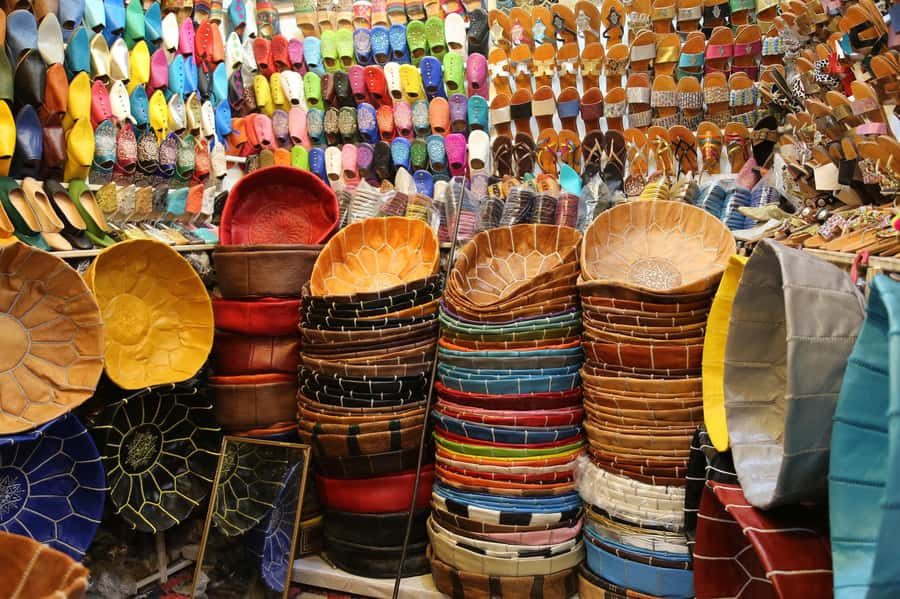
- Working craft quarters: See leather goods, dyed wool, babouche slippers, handmade metalwork, and other Moroccan crafts being made.
- Shopping help included: Your guide can explain bargaining customs, identify products, and offer personal shopping advice.
- Mint tea break: Pause at a quiet terrace and learn why tea is such an important part of Moroccan social life.
- Three to four hours on foot: The route covers a lot of ground, with several stops for photos, shopping, and explanations.
- Guides speak English or French: Private groups are available, and pickup from a medina riad is offered with the private option.
Starting at Jemaa el-Fna, Marrakech’s Great Stage
The meeting point is in front of Café de France on Jemaa el-Fna, the central square of Marrakech’s old city. If you are staying in a riad inside the medina and choose the private option, the guide can meet you at your accommodation’s reception instead.
Jemaa el-Fna is a useful place to begin because it gives you an immediate sense of Marrakech’s scale and mood. It is the city’s social and cultural center, but it can also feel confusing when you first arrive. A guide helps you move from the wide square into the narrow streets without spending the first hour simply trying to figure out where you are.
The opening stop includes time for photos and an explanation of the square. Do not expect a long formal lecture here. The real value is getting oriented, learning how the medina is arranged, and understanding why this public space matters before entering the souks.
The activity provider sends a WhatsApp reminder one or two days before the walk with the guide’s name, meeting point, and useful tips. That small detail matters in Marrakech, where a clear meeting arrangement can save you from confusion at a busy square.
More Coffee and Tea Market Tours in Marrakesh:
- Marrakech: Private Souks Tour with Tea and Traditional Snack
★ 4.6 · 33 reviews - Active Volcano, Rice Field, Hot Spring, Fruit market, Tea Plantation with Lunch
★ 5.0 · 513 reviews - Da Nang Cooking Class with Coffee Tasting and Market Visit
★ 5.0 · 310 reviews
Through the Medina’s Narrow Streets
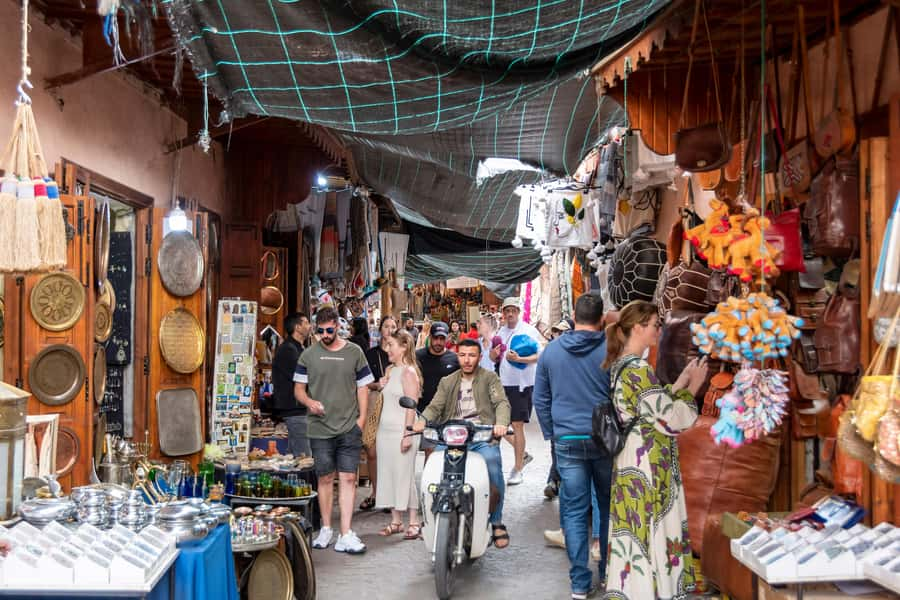
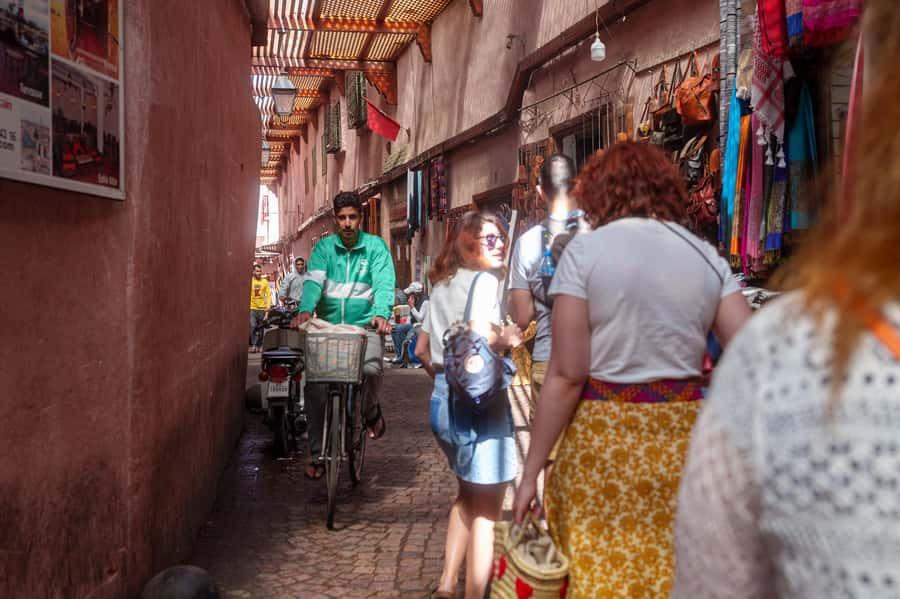
From Jemaa el-Fna, the walk continues through the medina itself. The streets are narrow, winding, and easy to lose yourself in, even if you have a good sense of direction. That is part of the pleasure, but it also explains why a local guide adds real value.
The first stretch takes about 30 minutes and combines sightseeing, walking, and local explanation. You may pass residential lanes, shopfronts, small workshops, and market traffic. The route is not just a shopping crawl. It gives you a look at how the old city functions as a place where people live and work.
This is also the point where you should start paying attention to the ground beneath your feet. You will be walking for several hours, and the route includes uneven surfaces. One visitor specifically advised wearing good shoes because the walk is longer than it may sound on paper. Bring water, sunglasses, sunscreen, and some cash for purchases or small personal expenses.
The tour is described as wheelchair accessible, but the activity also says it is not suitable for people with mobility impairments. Those statements suggest that access may depend on the exact route, group setup, or individual needs. If mobility is a concern, contact the provider before booking and ask about the current path.
Souk Semmarine and the Art of Buying Leather
Souk Semmarine is one of the medina’s main market streets. Here you will find leather goods, textiles, babouche slippers, bags, belts, and other traditional crafts. The route allows about 30 minutes for guided sightseeing and shopping.
I like this part because the guide can help you separate a useful shopping experience from a rushed sales pitch. You can ask how an item is made, what material it uses, and what signs suggest better workmanship. The goal is not to buy something at every stall. It is to understand what you are looking at before you spend money.
The souk is also where bargaining advice becomes practical. Your guide can explain how to negotiate with more confidence and how to keep the process friendly. Bargaining is expected in many of these shops, but you do not need to treat it like a battle. Decide what you are willing to pay, stay polite, and walk away if the price does not suit you.
The shopping time is helpful, but it can also lengthen the tour. If you want to inspect every bag and pair of slippers, expect the walk to run toward the four-hour mark rather than three. Ask about the final price and payment method before agreeing to buy, and keep your cash secure in the crowded lanes.
Souk El Attarine and the Smaller Details
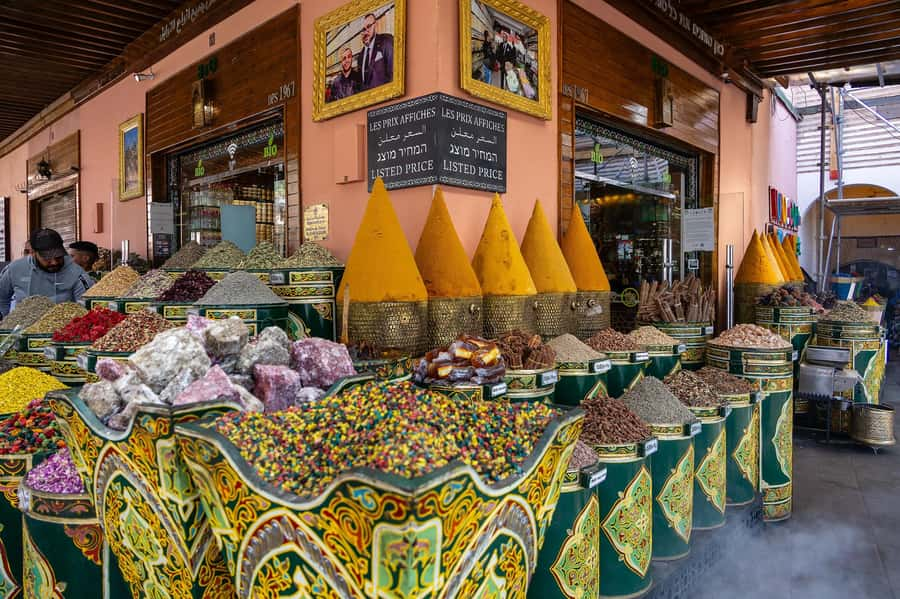
The itinerary includes roughly 20 minutes at Souk El Attarine, another market area with time for photos, shopping, and explanation. This stop adds variety to the route instead of keeping you on one main street.
A good guide can point out the difference between products made for daily use and objects designed mainly for decoration. You might find textiles, small crafts, and practical souvenirs here, but the exact stalls can change. The value is less about one specific shop and more about learning how the souks are organized and how different crafts are grouped together.
This is a useful point to ask questions before buying anything. If you have a particular item in mind, tell the guide early. The included shopping advice is one of the strongest reasons to book this walk, especially if you are new to Moroccan markets or feel uneasy about negotiating.
The tour does not promise discounts or a shopping voucher. It gives you local guidance, access to artisan workshops, and a better sense of what you are buying. At this price, that is a fair exchange.
A few more market tours around Marrakesh worth a look
- Marrakech: Colorful Medina Souks Guided Walking Tour
★ 4.7 · 2,470 reviews - Marrakech: Monuments, Souks and Medina Guided Walking Tour
★ 4.8 · 208 reviews - Marrakech Guided Souks Tour with a Local Insider
★ 4.6 · 109 reviews - Marrakech: Hidden Souks Shopping Tour with Private Guide
★ 4.1 · 53 reviews
The Dyers’ Quarter and Wool Hanging Overhead
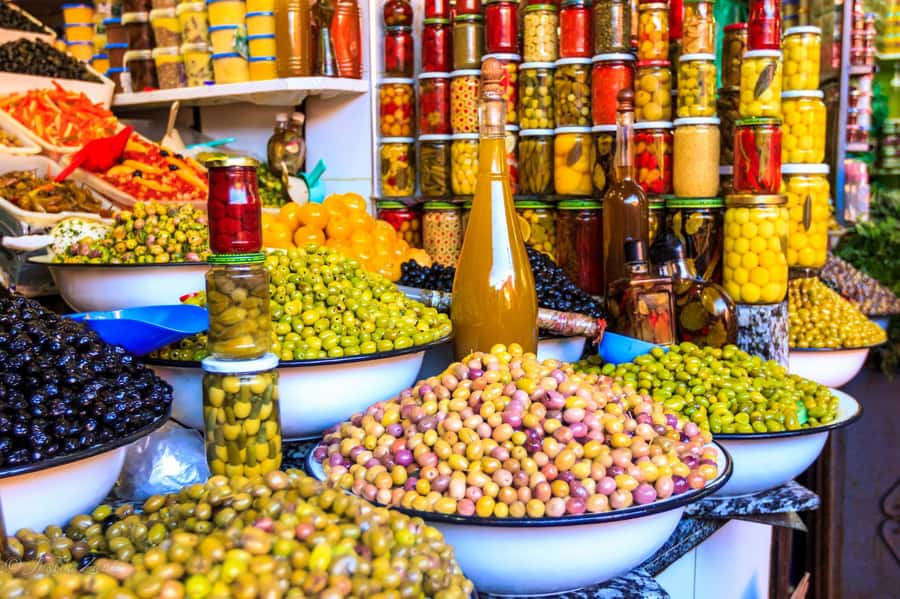
Souk Sebbaghine, also called the souk of the dyers, is one of the most photogenic parts of the walk. Colored wool hangs overhead while artisans work with traditional dyeing methods passed down through generations.
The stop lasts about 20 minutes and includes a break, photos, a visit, and guided explanation. You will see a working craft area rather than a polished museum display. That distinction is important. Workshops can be active, compact, and focused on production, so you may need to watch your step and give workers room.
This stop gives useful context to Morocco’s textile traditions. Instead of seeing a finished scarf or cloth only as a souvenir, you can connect it to the labor and process behind it. If you are shopping for wool or textiles later, you will have more questions to ask and more details to inspect.
The route includes time for shopping here, but do not feel pressured to buy. Some people will find the colors and workshop setting especially appealing. Others may prefer to look, take photos, and wait until the final spice market stop before making decisions.
Mint Tea on a Quiet Terrace
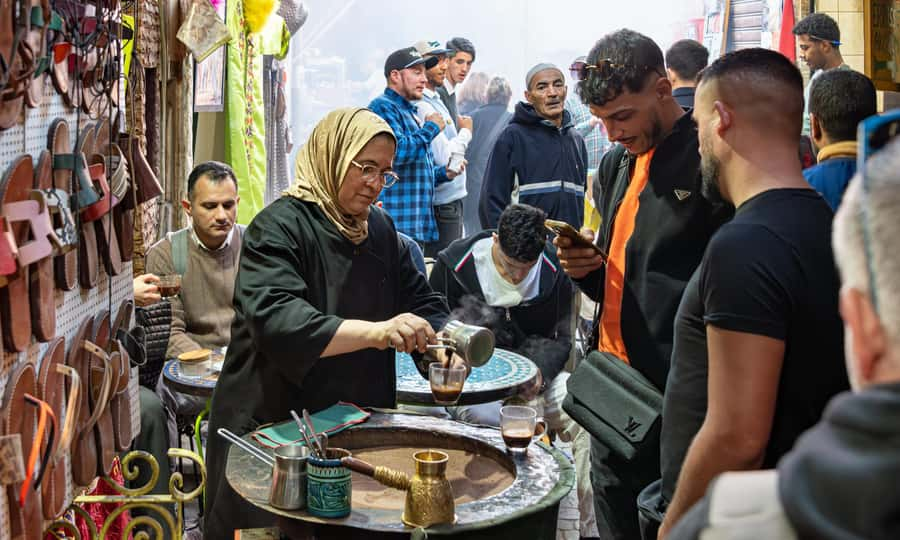
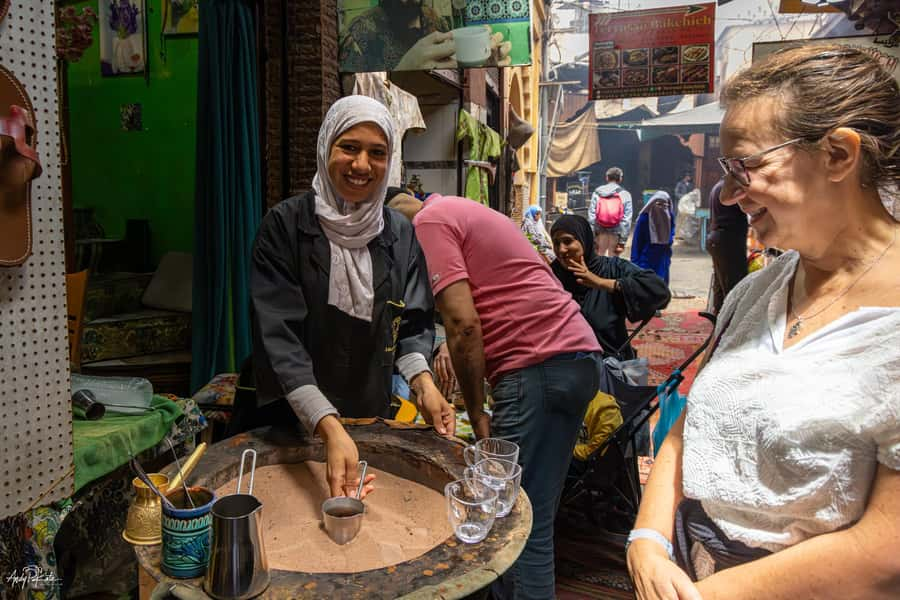
The Moroccan mint tea break is a welcome change of pace. After moving through narrow alleys and busy stalls, you can sit on a quiet terrace, enjoy a refreshing drink, and hear how tea fits into Moroccan hospitality and daily social life.
This is more than a drink stop. Tea is part of how people welcome one another, conduct conversations, and mark time. The pause lets you ask the guide questions that may not come up while walking, including questions about local customs, food, crafts, and life in the medina.
The experience includes Moroccan tea, but it does not promise a full meal. Eat beforehand if you need something substantial, especially if you are taking the longer version of the walk. The break also makes the tour easier to manage in hot weather, though you should still carry water.
I consider the tea stop a strong feature for the price. It breaks up the shopping route and gives the tour a more personal rhythm. You are not simply moving from one store to another.
Souk Haddadine and Traditional Metalwork
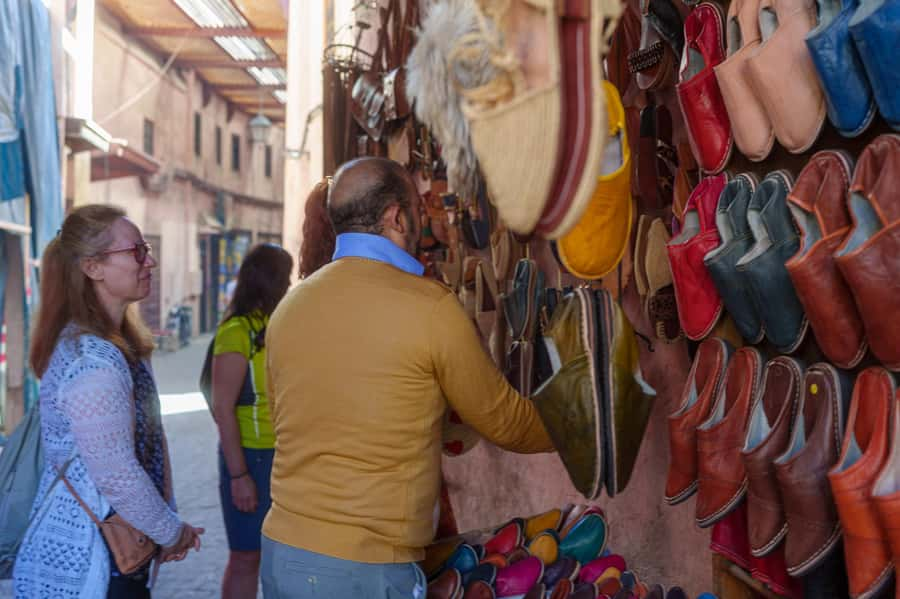
The next craft area is Souk Haddadine, the blacksmiths’ quarter. Here you can watch metalworkers shape tools and decorative items using traditional methods.
This stop helps broaden your view of the medina’s craft economy. Leather and textiles are easy to notice in the shops, but metalwork shows another side of the old city. The artisans’ work is practical as well as decorative, and the guide can explain how these trades remain part of daily medina life.
You should expect noise and activity in a working metal quarter. It is not designed as a quiet sightseeing venue. Keep close to your group, listen for instructions, and avoid stepping into a work area while taking photos.
For shoppers, this is a good place to look at decorative metal objects with more understanding. You can ask how a piece was made and compare handmade work with factory-produced souvenirs. The tour does not guarantee that every artisan will offer a demonstration at the exact moment you pass, but the route is designed to show these traditional workshops in action.
Rahba Lakdima and Marrakech’s Spices
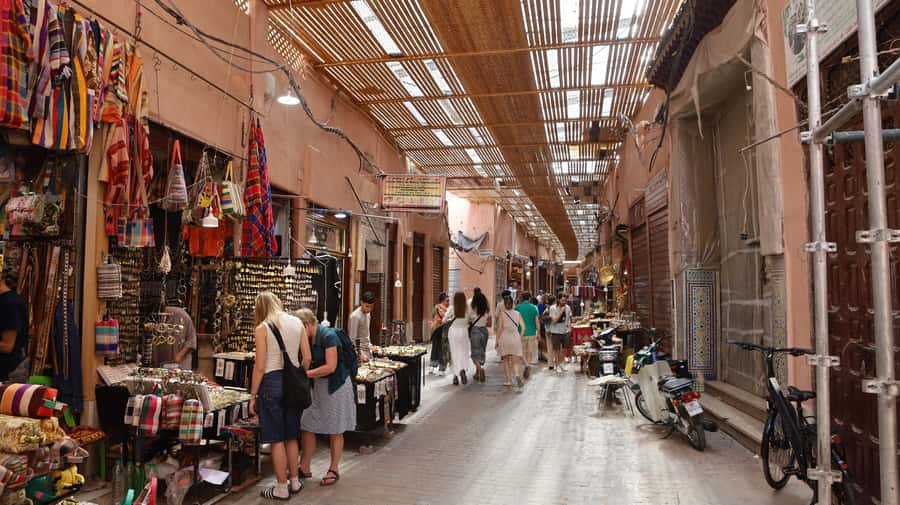
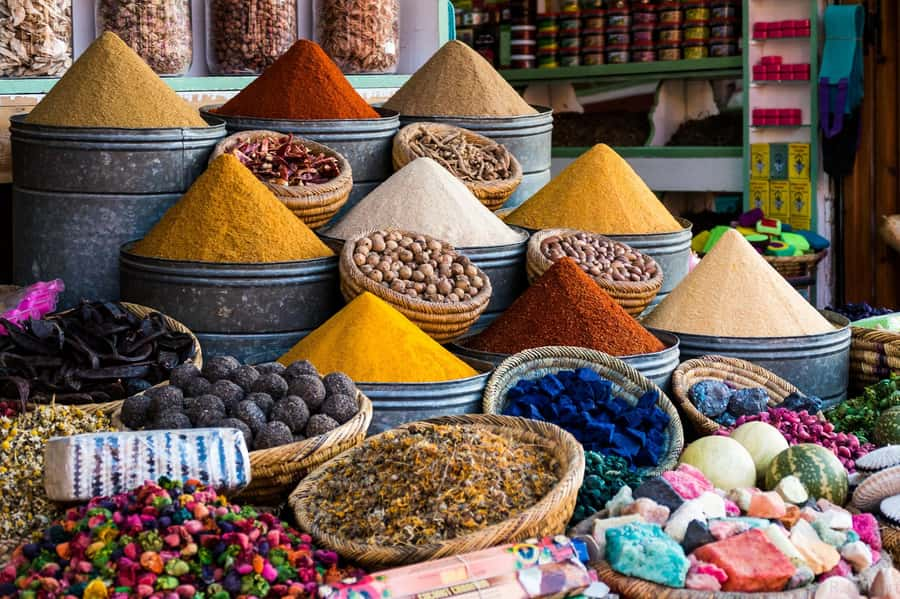
The guided walk finishes at Rahba Lakdima, also known as Spice Square. Stalls here offer spices, herbs, natural products, and other goods connected with Moroccan cooking and home life.
This is where the guide’s product advice can be especially useful. You can learn about the uses of local herbs, ask how Moroccan spices are used in cooking, and discuss how to recognize authentic argan oil. That last point matters because argan oil is widely sold to visitors, and product quality can vary.
You are likely to see attractive displays of colorful powders and dried plants, but do not buy simply because a product looks exotic. Ask what it is used for, how it should be stored, and whether it is intended for cooking or cosmetic use. If you buy argan oil, confirm which type you are getting.
The square is also a natural place to practice the bargaining skills introduced earlier. By this stage, you will have had time to observe prices and sales styles. You can make better choices without feeling rushed.
Ben Youssef Madrasa, Secret Garden, and Route Changes
The scheduled route includes a 40-minute visit at Ben Youssef Madrasa, with time for photos, sightseeing, and free time. The supplied tour details do not state whether admission is included, so ask the provider what your chosen option covers.
There is one point worth confirming before you book. A past experience included the Secret Garden, while another specifically noted that the gardens were not visited. The planned stop lists Ben Youssef Madrasa instead. This may reflect different tour versions, route changes, or guide choices, so do not book solely on the assumption that either site is guaranteed.
That uncertainty does not cancel the value of the tour, but it does affect expectations. If Ben Youssef Madrasa or the Secret Garden is a priority, send a message before the walk and ask for the exact route on your date.
The walk returns toward Jemaa el-Fna, with a final pass through the square before drop-off near Café de France or another stated medina location. After the guided section, you have free time to return to shops, revisit a favorite lane, or continue exploring independently.
What the $18 Price Really Buys You
At $18 per person, this is strong value if you want orientation, craft context, and shopping help in one half-day walk. You are paying for a licensed local guide, a tea break, access to artisan workshops, and advice that can help you avoid aimless browsing or poor purchases.
The price is less compelling if you only want a quick introduction to Jemaa el-Fna. The tour spends several hours on foot and includes multiple craft areas, so you should choose it for depth rather than speed.
Private and small-group formats change the experience. A private tour should give you more control over questions, shopping time, and pace. A small group may cost less per person and provide a social setting, but you may have less freedom to linger at one workshop.
Transportation is not included. Private pickup is available from a riad within the medina, while the standard meeting point is Café de France. If you are staying outside the medina, you will need to arrange your own way to the starting point.
The cancellation policy allows a full refund if you cancel at least 24 hours ahead. You can also reserve now and pay later, which helps if your Marrakech plans are still shifting.
Who Should Book This Walk?
I would choose this tour if you are visiting Marrakech for the first time, want to shop for handmade items, or feel unsure about entering the souks alone. It also suits anyone who enjoys seeing how goods are made rather than only viewing finished products.
The walk is a good match for couples, families with older children, and small groups that want a guide without committing to a full-day excursion. English and French are available, and private groups can make the experience more personal.
I would hesitate if you dislike uneven streets, crowded markets, or sales conversations. This is not a relaxed garden stroll. You will walk for several hours and spend time in active working quarters.
The guide quality can shape the day. Feedback highlights guides such as Ishmael and Saïd for clear explanations, patience, and enthusiasm for Marrakech. That is encouraging, but guide assignments can vary. Ask for the guide’s name when the provider confirms your booking.
Final Verdict: A Smart First Walk in Marrakech
Book this tour if you want a practical introduction to the medina with real craft encounters, a mint tea pause, and help shopping without guesswork. The low price makes it an easy choice for first-time visitors, especially when you consider the time and local guidance included.
Skip it if you already know the souks well or want a fixed sightseeing route with no shopping focus. Also confirm the Ben Youssef Madrasa and Secret Garden details before paying if one of those sites matters to you.
For most visitors, this is a useful first step into Marrakech: long enough to show you how the medina works, focused enough to keep the day manageable, and inexpensive enough to leave room in your budget for a handmade souvenir.
FAQ
How long does the Marrakech medina tour last?
The tour lasts approximately 3 to 4 hours. The final length may depend on the walking pace, shopping time, and selected tour option.
Where does the tour meet?
The standard meeting point is in front of Café de France in Jemaa el-Fna square. For the private option, pickup from a riad within the medina is available.
Is transportation included?
No. Transportation is not included. The tour is primarily a walking experience within the medina.
What languages does the guide speak?
Live guides are available in English and French.
Is Moroccan mint tea included?
Yes. The experience includes a Moroccan tea break at a quiet terrace or authentic location in the medina.
Can I book a private tour?
Yes. A private group option is available. A small-group walking tour is also offered, depending on the option you select.
What should I bring?
Bring comfortable shoes, sunglasses, sunscreen, water, and cash. Good walking shoes are particularly important because the route covers several hours and includes uneven streets.
Is the tour suitable for people with mobility impairments?
The activity is described as wheelchair accessible but is also listed as unsuitable for people with mobility impairments. Contact the provider before booking to discuss your needs and confirm the current route.
Just added around Marrakesh
- Souks tour of Marrakech ( 3 hours )★ 5.0 · 5 reviews
- Marrakech: Hidden Souks Shopping Tour with Private Guide★ 4.1 · 53 reviews
- Marrakech: Half-Day Medina Markets Tour★ 4.5 · 11 reviews
- Edgy 8 Dish Private, Fusion Cooking Class, Menu Plan, Market★ 4.9 · 31 reviews
- Marrakesh: Private Cooking Class & Local Market Shopping★ 4.7 · 15 reviews
- Marrakech: Bahia Palace, Madrassa & Souks Guided Tour★ 4.8 · 47 reviews
- Marrakech: Vibrant Souks, Local Artisans & Medina Experience★ 4.5 · 66 reviews
- Marrakech: Private Souks Tour with Tea and Traditional Snack★ 4.6 · 33 reviews
Coffee & Tea Market Tours, compared.

Active Volcano, Rice Field, Hot Spring, Fruit market, Tea Plantation with Lunch
Read our review →
Da Nang Cooking Class with Coffee Tasting and Market Visit
Read our review →
Nishiki Market Tea Ceremony with Koto Performance
Read our review →
Hungry in Vienna? A Food Lover’s Coffee & Market Walk
Read our review →
Delicious Doughnuts & Tea: Small-Group Borough Market Experience
Read our review →
Mini Hanoi Coffee Workshop: Pick Any Signature Coffee You Like
Read our review →
From rick’s coffee to local markets authentic casablanca
Read our review →
Vienna Eats: Private Foodie Walk with Coffee & Markets
Read our review →Browse the lists this tour appears in