
Review · ALBANIA
Gjirokaster Walk Tour: Old Bazaar, Cfake, Dunavat, AliPasha!
History comes with a climb here. This three-hour walk links Gjirokaster’s Old Bazaar, the old Cfake neighborhood and Ali Pasha Bridge, offering a side of town you will not see by staying on the main stone lanes. I like the route’s mix of old houses and open hills, and I like that the bridge is part of a real water system built for Gjirokaster Castle, not just a pretty photo stop. The main catch is the ground underfoot: this is a hike on uneven paths, with climbing, so good shoes matter.
The $17 price is fair if you want local context and help finding the less obvious route. A good guide can turn a rough walk into a useful lesson in Albanian history and culture. But the quality depends heavily on the guide, and one poor experience reported very little explanation, with too many stops that did not seem to add much.
Key Points Before You Book
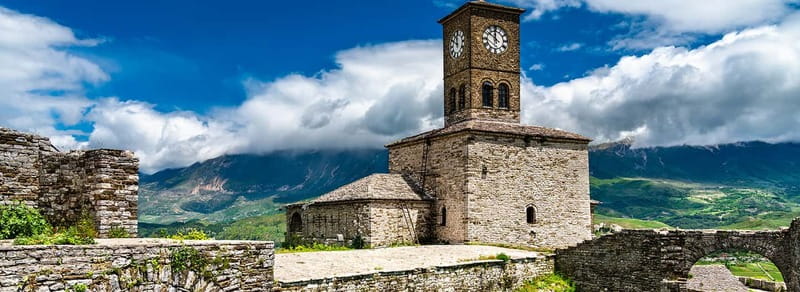
- The route begins at Çerçiz Topulli Square, a central meeting point in Gjirokaster’s old town.
- The Old Bazaar is now a historic neighborhood, not a functioning market, with cobbles and old houses below the castle walls.
- Cfake adds a quieter side of town, including first-category monument houses and a Bektashi tekke.
- Ali Pasha Bridge is part of a 200-year-old aqueduct, built to carry water toward the castle.
- Expect a real walk, not a flat sightseeing stroll. Uneven ground and uphill sections are part of the deal.
- The guide makes the difference, with Albanian and English offered and Besi praised for friendly, helpful guiding.
What This Gjirokaster Walk Really Covers
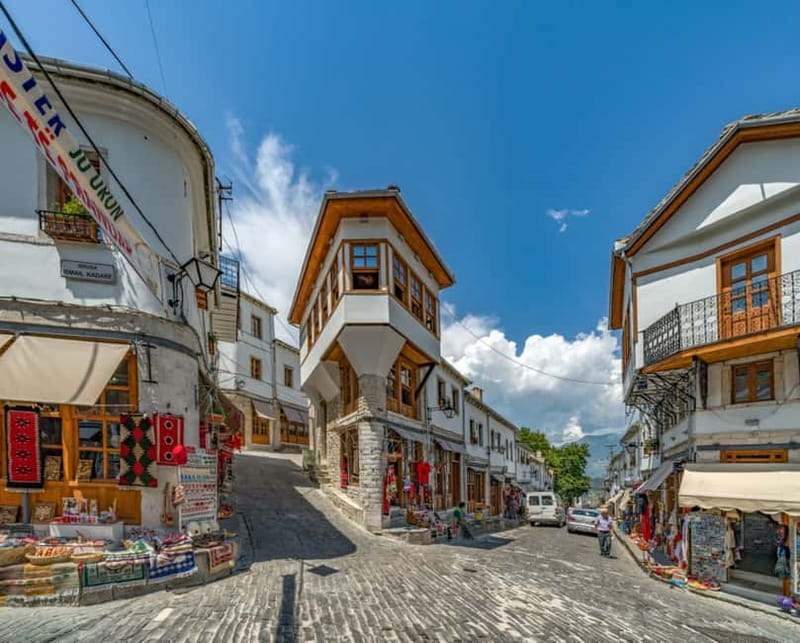
Gjirokaster is often reduced to its castle and steep stone streets. Those are worth your time, but this walk gives you a wider view of how the city developed below and beyond the fortress. You move from the central old town into older residential areas, then out toward a stone bridge surrounded by hills and rural scenery.
The route lasts about three hours and returns to Çerçiz Topulli Square. That makes it easy to fit into a morning, especially with the meeting time set for 9:30 am. You are not being driven between sights. You walk the whole way, and the terrain is an important part of the experience.
I would treat this as a guided hike with cultural stops, rather than a standard town tour. If you want a list of major monuments with polished streets and frequent indoor visits, this may feel too rough. If you want to see how Gjirokaster’s historic quarters connect with the countryside, it offers much more.
A few more market tours around Albania worth a look
- From Tirana: Kruja Castle, Old Bazaar & Sari Salltik View
★ 4.8 · 2,171 reviews - From Durres/Golem: Kruja Castle & Old Bazaar Day Tour
★ 4.9 · 1,317 reviews - Durres/Golem: Kruja Castle & Bazaar with Traditional Lunch
★ 5.0 · 632 reviews
Starting at Çerçiz Topulli Square
The meeting point is the statue of Çerçiz Topulli in the square of the same name. This is a sensible place to begin because it puts you in the center of Gjirokaster’s old town, close to the main routes through the historic district.
The square also gives you a useful sense of direction. From here, the route heads toward the Old Bazaar and then gradually leaves the most familiar part of town. I like this kind of start because you first get your bearings among the city’s better-known streets before moving into quieter quarters.
The start time is 9:30 am. That is early enough to avoid making the entire walk a hot midday outing, though the precise conditions will depend on the season. Bring water, wear shoes with a firm sole and avoid treating this as a casual walk in sandals.
A live guide leads in Albanian or English. That language choice matters here because the value of the walk comes from explanation. The old stones are easy to see on your own. The reasons behind the houses, religious buildings and aqueduct are what you are paying to understand.
The Old Bazaar Beneath the Castle
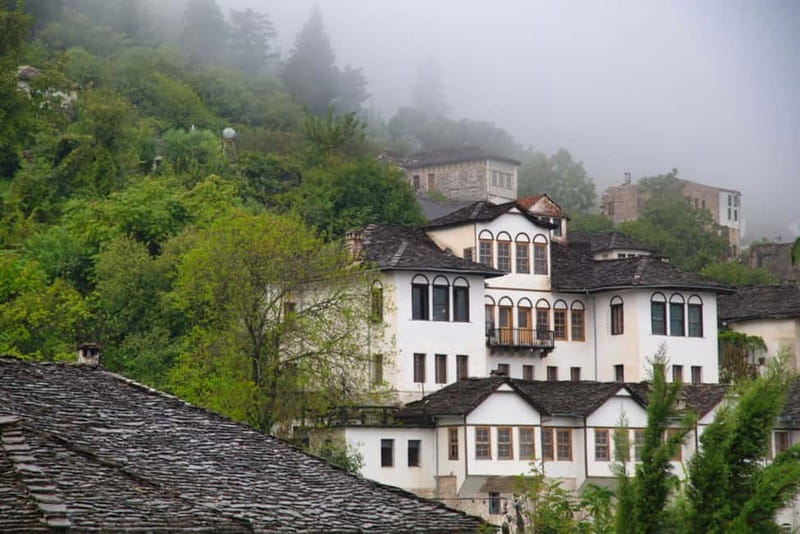
The first major stop is Gjirokaster’s Old Bazaar. The name can mislead you. This is not a modern market filled with active stalls. It is an old neighborhood below the castle walls, shaped by cobbled lanes and traditional houses.
The walk gives you around 30 minutes of guided time here. That is enough for an introduction to the area without making the entire tour stay in the most visited part of town. Look closely at the stonework and the steep lanes. The cobbles are not decorative additions for tourists. They are part of the old character of the quarter, and they also explain why comfortable footwear is essential.
The houses are the real attraction. Some of the oldest buildings in the neighborhood sit along these lanes, and their position under the castle helps you understand the city’s layered layout. The fortress dominates from above, while homes and streets spread down the slope beneath it.
I like that this stop provides context before the route becomes more rural. You begin with a familiar historic quarter, then see how the old city continues beyond its main postcard views. The drawback is that visitors expecting a working bazaar may be disappointed. Think of it as a historic neighborhood, not a shopping stop.
Crossing the Zerzebili Bridge into Cfake
After the Old Bazaar, the route crosses the Zerzebili Bridge and continues toward Cfake. This transition is one of the most useful parts of the walk because it takes you out of the center without abandoning Gjirokaster’s old built character.
Cfake is another ancient neighborhood, but it has a different feel from the bazaar area. The route passes old houses classified as first-category monuments, which signals their architectural and cultural importance. You may find this part more rewarding if you enjoy seeing historic buildings in their neighborhood setting rather than only viewing restored monuments from the outside.
The route also reaches a tekke linked to the Bektashi Order. Bektashism is an important religious tradition in Albania, and this stop adds a cultural layer that you would not get from simply walking between the castle and bazaar. The tour does not promise an extended interior visit, so you should expect an explanation and a look at the setting rather than a long museum-style stop.
This section is also where the walk begins to feel less like a conventional city tour. Old houses sit alongside hills, open ground and rural views. Sheep on the tops of the hills are part of the scene, giving the route a distinctly local feel. You are still close to Gjirokaster, but the pace and surroundings change.
Same place, a different set of stalls:
- Kruja castle, the old Bazaar & Sarisalltik- Departure from Tirana
★ 5.0 · 592 reviews - From Tirana/Golem/Durres: Kruja, Bazaar, Sari Salltik Tour
★ 4.8 · 471 reviews - From Durres/Golem: Kruja Castle, Old Bazaar & Sari Salltik
★ 4.5 · 169 reviews - From Tirana: Krujë Day Trip with Krujë Castle & Old Bazaar
★ 4.8 · 71 reviews
The Hike to Ali Pasha Bridge
The final destination is Ali Pasha Bridge. The name refers to Ali Pasha Tepelena, who built an aqueduct more than 200 years ago to carry water to the castle. The bridge you see today is a remaining part of that system.
That detail makes the stop more interesting than a simple stone crossing. The aqueduct shows how the fortress and city depended on practical engineering, not just defensive walls and grand views. Water had to reach the castle, and this structure is a surviving piece of that effort.
The bridge is reached through a combination of old houses, hills and uneven paths. You should be prepared for climbing and for sections that are not especially comfortable underfoot. One Dutch-language comment described it as a solid hike along unmarked paths and specifically advised good shoes. That is the most useful warning to take seriously.
The setting is a strong reason to choose this tour. You get a view of Gjirokaster’s less polished edges, where historic buildings meet open land and grazing animals. You also gain a physical sense of the distance and terrain involved in supplying the castle with water.
Do not book this expecting a grand, intact aqueduct. The attraction is the surviving bridge and the story attached to it. The route to reach it is part of the experience, but it is also the part most likely to frustrate anyone who wants an easy walk.
The Guide Can Make or Break the Morning
This tour depends more on guiding than on entrance tickets or special facilities. The route itself is free to walk, but a strong guide gives the old houses, tekke and aqueduct a clear connection. Without that explanation, you could cover much of the same ground on your own and wonder what you were meant to notice.
Besi is one guide praised for combining useful information with a friendly and helpful manner. Another guide received credit for explaining Gjirokaster and Albanian history in detail. One guide even took a guest for local food after the tour, which suggests that the best version of this experience can extend beyond the formal route.
There is also a practical point about communication. On one occasion, the start time changed, but the guide was able to notify the group using the phone number provided. That is reassuring, though you should still keep an eye on your messages before setting out.
The feedback is not uniformly positive. One guest felt the tour visited too few places that could not be reached independently, with long pauses and little cultural explanation. That criticism is fair. If your guide does not explain the sites, the $17 fee becomes harder to justify.
Is $17 Good Value?
At $17 per person, this is an inexpensive way to add structure and local explanation to a Gjirokaster morning. You are paying for a three-hour guided walk, not for admission to a castle, transport or food. Since those extras are not included, budget separately for anything you want to see or eat after the walk.
The value is strongest for people who would otherwise miss Cfake and Ali Pasha Bridge. The route reaches places that are less obvious than the main bazaar and castle, and the guide can save you from figuring out the route alone.
The value drops if you mainly want the central sights. You can walk through the Old Bazaar independently, and the bridge itself is not presented as a major museum site with extensive facilities. Your decision should rest on how much you want interpretation and company on the rougher route.
The 4.2 rating from nine published ratings suggests a generally positive experience, with a clear warning about variation in guide quality. I would not book it solely because of the low price. I would book it because the route fits your interests and you are willing to walk on uneven ground.
Who Should Take This Walk?
I would recommend it to you if you enjoy old neighborhoods, religious heritage, rural edges and practical historical details. It suits people who want to see more than the castle and central lanes, especially on a first visit to Gjirokaster.
It is also a good match for anyone who likes a walk with a destination but does not need every minute tightly scheduled. The path includes pauses at the bazaar, the tekke and bridge, but parts of the route may feel informal.
You should think twice if you have difficulty with climbing or uneven ground. The description is direct about the terrain, and the walk has been described as a hike rather than a smooth city stroll.
You may also prefer to explore independently if your main goal is photography, shopping or a flexible pace. The tour does not promise extensive shopping time, and the Old Bazaar is not an active bazaar in the usual sense.
What to Bring and How to Prepare
Wear proper walking shoes. This is the clearest practical advice from the available information, and it matters more than dressing for a typical town tour.
Bring water and allow room in your schedule after the three-hour return to Çerçiz Topulli Square. The tour is planned to finish where it starts, but the terrain can make the walk feel more demanding than the distance suggests.
Keep your phone available in case the starting time changes. The meeting point is the statue at 9:30 am, but direct contact has helped when timing changed in the past.
Most of all, arrive ready to listen. The route’s strongest feature is not a single monument. It is the connection between the castle, the old neighborhoods, Bektashi culture and the aqueduct system. A good explanation turns separate stops into one clear picture of Gjirokaster.
Should You Book It?
Book this walk if you want a guided look at Gjirokaster beyond the castle and central streets, and if a three-hour hike on rough ground sounds appealing. The Old Bazaar, Cfake and Ali Pasha Bridge make a useful trio, with old houses, a Bektashi tekke and a practical piece of Ali Pasha’s water system.
Skip it if you want an easy, highly polished sightseeing route or if you already plan to explore every neighborhood independently. The $17 price is good when the guide, such as Besi, adds real explanation and local warmth. It is less convincing when the guiding is slow or thin.
Free cancellation up to 24 hours before departure and the reserve-now, pay-later option reduce the risk of fitting it into your plans. Still, the key decision is simple: bring good shoes, expect a climb and choose this for the route and stories, not just for a checklist of sights.
FAQ
Where does the Gjirokaster walk begin?
The tour begins at the statue of Çerçiz Topulli in Çerçiz Topulli Square.
What time does the tour meet?
The meeting time is 9:30 am.
How long does the walk last?
The full experience takes approximately three hours.
What places does the route visit?
The route includes Gjirokaster’s Old Bazaar, the Cfake neighborhood and Ali Pasha Bridge.
Does the tour return to the starting point?
Yes. The walk returns to Çerçiz Topulli Square.
Is the Old Bazaar still a working bazaar?
No. It is described as an old neighborhood beneath the castle walls rather than a functioning bazaar.
What is special about Ali Pasha Bridge?
It is a surviving part of an aqueduct built more than 200 years ago by Ali Pasha Tepelena to bring water to the castle.
Is the route easy to walk?
The route includes uneven terrain and climbing. You should be prepared for a hike and wear good shoes.
What languages does the guide speak?
Guides are available in Albanian and English.
Can I cancel for a full refund?
Yes. You can cancel up to 24 hours in advance for a full refund.
Just added around Albania
- Old Bazaar-Cfake-Dunavat-Ali Pasha Bridge Walking Tour★ 4.6 · 5 reviews
- Kruja by Night: Castle & Bazaar Tour from Tirana★ 5.0 · 5 reviews
- Gjirokaster: Old Bazaar and Castle Private Walking Tour★ 5.0 · 6 reviews
- From Tirana/Durres: Kruja, Old Bazaar, Sari Salltik Day Tour★ 3.9 · 5 reviews
- From Tirana/Shkoder: Kruja Castle, Old Bazaar, Sari Salltik★ 4.9 · 6 reviews
- From Tirana/Durres/Golem: Kruja Castle & Old Bazaar Tour.★ 4.7 · 15 reviews
- From Durrës: Kruja Half-Day Tour, Old Bazaar & Holy Mountain★ 5.0 · 2 reviews
- From Durres & Golem: Kruja Castle, Old Bazaar★ 4.8 · 34 reviews
Market Tours, compared.
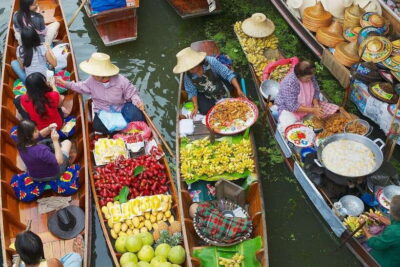
Damnoen Saduak Market and Maeklong Railway Market
Read our review →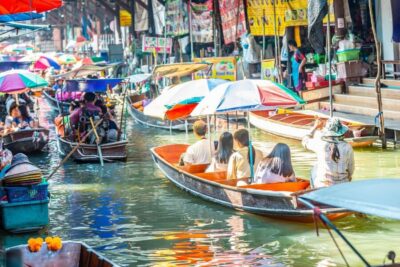
The Old Siam: Damnoen Saduak and Maeklong Railway Market
Read our review →
Old Town, Creek, Museums, Souks, & Street Food Tour
Read our review →Train Market & Floating Market with Boat Ride
Read our review →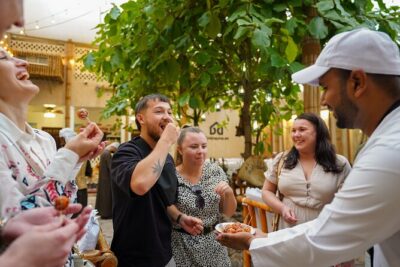
Old Town, Souks, Street Food, Guided Tour & Abra Ride
Read our review →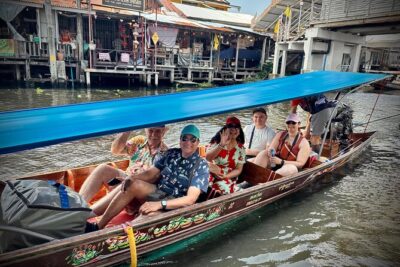
Ayutthaya & Ayothaya Floating Market Day Trip
Read our review →
Frame Tickets, Creek, Souks & Blue Mosque Guided Tour
Read our review →
Hanoi Cooking Class: Culture, Local Market & Meaning CSR Impact
Read our review →Browse the lists this tour appears in