
Review · SPAIN
Santoña: Anchovy Art Gallery with Fishing Port and Market
Anchovies tell Santoña’s story. This experience links the town’s fishing port with the Anchovy Art Gallery at Conservas Ana María, so you see both the trade and the finished product. I like the clear local focus, and I especially like that the visit ends with an actual tasting rather than a polite look at sealed tins.
I also like the guide-led explanation of purse seine boats, ship registrations, and the auction process. Nicolas C. has earned strong praise for his careful explanations and for bringing both physical and online material to help visitors follow the story. The main consideration is simple: this is a specialized tour, so anyone hoping for a broad sightseeing visit around Cantabria may find the subject narrow.
Key points to know before you go
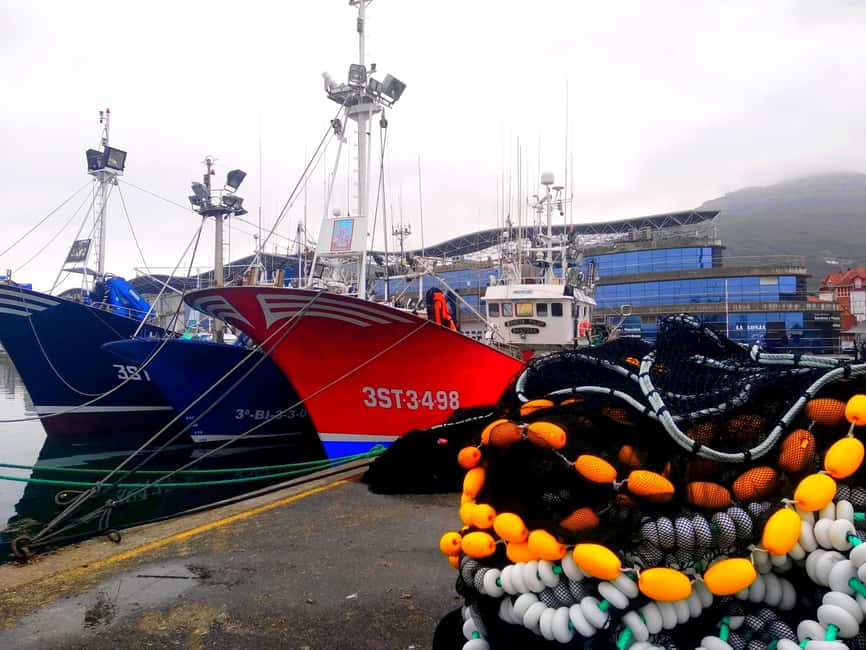
- The port comes first: You begin at the Mirador de las Marismas and Santoña port, where the guide explains how the fishing hub operates.
- You see the trade behind the tin: The visit covers purse seine vessels, ship registrations, and the sale of the day’s catch.
- The gallery has working history: Conservas Ana María displays antique machinery from the early 20th century.
- A filleting demonstration brings the craft to life: A skilled worker shows how anchovies are prepared by hand.
- The tasting is part of the admission: Freshly prepared anchovy fillets are served at the gallery’s bar or shop.
- The guide is a major part of the value: Nicolas C. leads in Spanish, French, or English and is praised for clear, attentive explanations.
Why Santoña is the right place for an anchovy tour
Santoña is not simply a place where anchovies are sold. The town’s identity is closely tied to fishing, preserving, and the people who turn a short-lived catch into a product that can travel far beyond Cantabria.
That connection gives this visit more weight than a standard food tasting. You begin where the fish arrive, then follow the process into the preserving house, and finish by tasting the result. I like that order because it makes the food easier to understand. The anchovy on your plate is no longer an anonymous snack. You have seen the boats, heard about the auction, and watched the careful work behind each fillet.
The experience costs $20 per person. For that price, you receive the port visit, entry to the Anchovy Art Gallery, a guided tour, and a fillet tasting. That is good value if you enjoy local food, working waterfronts, and small-scale industrial history. It is less useful if you want a full-day tour with several unrelated sights, since the activity is focused tightly on Santoña’s fishing and anchovy trade.
The listed duration is one day, but the scheduled gallery portion takes about 40 minutes, with a short photo stop and a guided port visit included. The overall timing should be checked when you book, since the exact starting time depends on availability.
A few more market tours around Spain worth a look
- Cooking Class Hoi An:Local Market, Basket Boat, Fishing & Cooking
★ 5.0 · 3,660 reviews - Hoi An Cooking Class(Local market,Basket Boat,Fishing & Cooking)
★ 5.0 · 1,323 reviews - Hoi An: Market Experience with Optional Fishing and Cooking
★ 4.7 · 928 reviews
Starting at the Mirador de las Marismas and Santoña port
The meeting point is the Mirador de las Marismas, by Santoña’s port. This is a practical starting point because you can begin with an overview before walking into the details of the fishing trade.
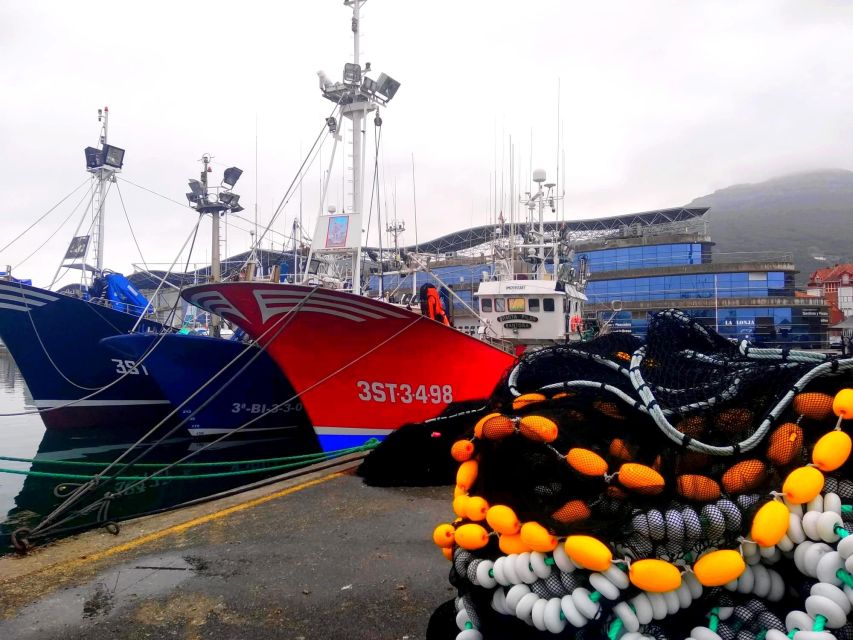
At the port, the guide explains the daily work of one of Cantabria’s largest fishing hubs. You learn how purse seine vessels operate and how to read ship registrations. Those details may sound technical at first, but they help you understand what you are looking at instead of seeing a row of boats with no context.
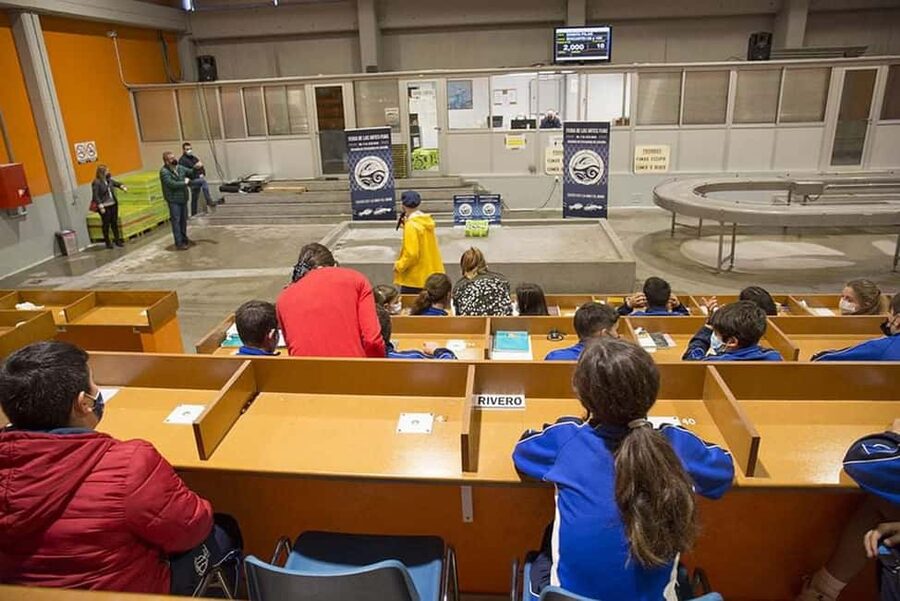
The auction process is another useful part of the visit. Fish arrive, are assessed, and are sold through a system that connects the boats with the wider food industry. The guide’s job here is to explain the rhythm and purpose of the process, not simply point at the harbor.
I appreciate this kind of port visit because it gives you access to the working side of a town. You are not just looking at a pretty waterfront. You are learning how catches move from sea to market and how local businesses depend on that chain.
The port section also has limits. The information provided does not promise access aboard a fishing boat or a chance to watch every stage of an auction in operation. Conditions at a working port can vary, and the exact activity you see may depend on the day and time of your visit. Go for the explanation and setting, not a guaranteed spectacle.
A five-minute photo stop is included at the port. It is brief, but it gives you a moment to take in the boats and surrounding area before moving to the gallery. If you enjoy taking many photographs, you may want to arrive early or plan extra time before or after the tour.
The port lesson: boats, registrations, and the fish auction
The strongest part of the opening walk is the way ordinary details become useful clues. Purse seine vessels are not just fishing boats. Their method of working helps explain how large quantities of fish can be caught and brought into port for sale.
Ship registrations offer another small key to reading the harbor. Once you know what to look for, the boats become part of a larger story about ownership, location, and the fishing system. Nicolas C. is particularly well suited to this sort of explanation. The comments about his guiding repeatedly praise his fluency, care, and ability to explain difficult points clearly.
The auction process links the sea to the market. You gain a sense of how quickly the catch must be handled and sold. That context matters later at the gallery, where anchovy preservation is presented as a skilled trade rather than a factory mystery.
I would pay close attention during this section, even if fishing is not your main interest. It supplies the basic vocabulary for everything that follows. You will understand the product better after seeing where it begins.
Entering the Anchovy Art Gallery at Conservas Ana María
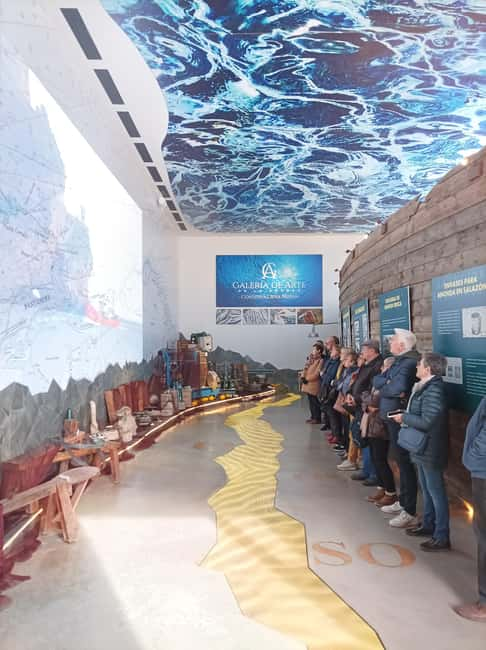
From the port, the experience continues at the Anchovy Art Gallery of Conservas Ana María. The name may sound like a conventional museum, but the appeal comes from its connection to a real preserving business and its collection of antique equipment.
Inside, early 20th-century machinery helps show how anchovies were processed in the past. Old equipment can easily become decoration with a date attached, but here it supports the main subject: the physical labor and tools required to prepare anchovies for sale.
The gallery also explains the Sicilian origins of anchovy filleting in the Cantabrian Sea. This is one of the more interesting historical details in the visit. It shows that food traditions often cross borders, then take on a local character in their new home.
The story is not presented as a simple claim that one place invented everything. Instead, it connects an outside technique with Santoña’s own fishing and preserving identity. That makes the gallery more useful than a display of old machinery alone.
The gallery visit lasts around 40 minutes and includes the food tasting. That is enough time for a focused introduction without asking you to spend half a day reading labels. If you prefer large museums with many rooms and a wide range of subjects, this compact gallery may feel limited. Its strength is concentration.
More Museum Visits in Spain:
- Private Malaga: Alcazaba, Museum, Market, Cathedral & Picasso
★ 5.0 · 28 reviews - Dubai: Old Town, Creek, Museums, Souks, & Street Food Tour
★ 4.8 · 10,816 reviews - Cairo 8 Hour Private Tour of Pyramids, Egyptian Museum and Bazaar
★ 5.0 · 2,931 reviews - Cairo: Female-Guided Pyramids, Sphinx & Museum City Tour
★ 4.8 · 1,614 reviews
Watching anchovy filleting by hand
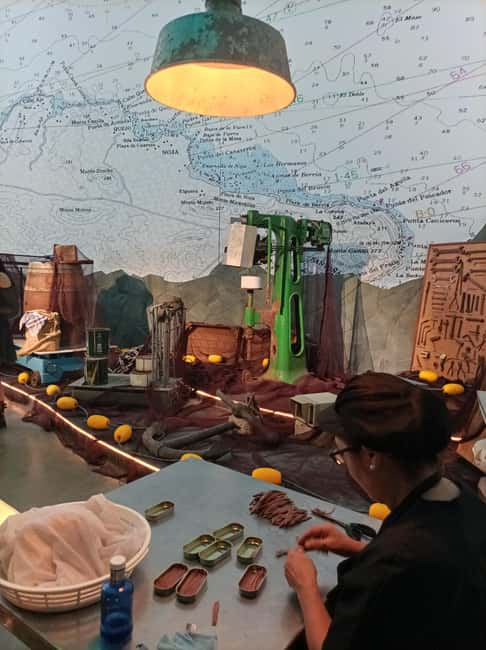
The filleting demonstration is the clearest point of contact with the craft itself. A skilled worker shows how anchovies are filleted, giving you a chance to see the precision involved.
The task may look simple once the finished fillet is on a plate. The demonstration helps correct that impression. Preparing a clean fillet takes care, control, and practice. It also explains why a good preserved anchovy has a texture and shape that cannot be reduced to the fish alone.
I would pay attention to the hands during this part. The movement of the worker says more than a long display label can. You see where the fish is handled, how the fillet is separated, and why careful preparation affects the final bite.
The gallery’s antique machinery and the live demonstration work well together. The machines give you a sense of earlier production, while the worker shows the human skill that remains central to the product. That balance is one reason the visit feels grounded in real work rather than built only for tourism.
Still, the demonstration is short, and the supplied details do not indicate that you will fillet an anchovy yourself. You watch rather than take part. For most people, that is enough, but hands-on visitors should set their expectations accordingly.
The tasting at the bar and shop
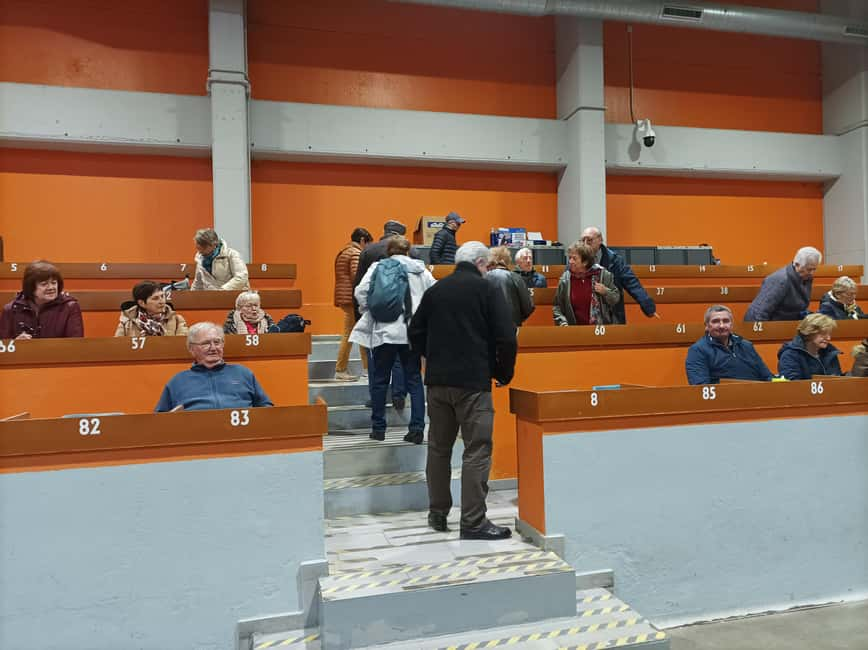
The tour ends with freshly prepared anchovy fillets at the bar or shop inside the Anchovy Art Gallery. This is the payoff, but it also serves a practical purpose. You have just heard about the fishing port, seen the tools, and watched the preparation. Now you can connect those ideas through taste.
Anchovies bring a strong savory flavor, so this may not be the right stop for anyone who dislikes salty fish. If you already enjoy anchovies, the tasting gives you a chance to notice the results of careful preparation. If you are unsure, the small serving is a useful introduction without committing to a full meal.
I like the fact that the tasting is included rather than treated as an optional purchase at the end. It keeps the food tied to the story. The point is not simply to sell you a product. It is to show what the local fishing and preserving tradition produces.
You finish at the same general area where the experience began, at the Mirador de las Marismas and Santoña port. That makes the tour easy to fit into a day in town, especially if you want to continue exploring on your own afterward.
What Nicolas C. adds to the experience
A guide can make or break a specialized tour. Here, Nicolas C. is an important part of the appeal. His explanations have been praised for being clear, detailed, and passionate, and he has used both online and physical material to help people understand the subject.
That matters because the port vocabulary is not always obvious. Purse seine vessels, registration details, auction systems, and filleting methods can feel like separate facts. A good guide connects them into one understandable sequence.
Nicolas also guides in Spanish, French, and English. That language range is useful for mixed-language groups and for anyone who wants to ask questions without relying on a translation app. The strongest praise focuses not just on what he knows, but on how carefully he makes sure the group follows along.
I would choose this experience partly for that human element. A self-guided walk could show you the port and a shop could sell you anchovies, but you would miss the links between the two. The guide provides the local context that gives the visit its point.
Who will get the most from this $20 experience?
I recommend this tour most strongly to people who enjoy food traditions, fishing towns, and working history. It suits curious eaters who want more than a restaurant recommendation and visitors who like to understand how a regional product is made.
It should also work well for:
- People interested in local industry and maritime life
- Visitors who enjoy compact, focused museum visits
- Anyone who wants a tasting connected to a real production story
- English, French, or Spanish speakers looking for a guided experience
- Visitors spending time in Santoña who want an activity rooted in the town
Families may appreciate the boats and machinery, though the amount of interest will depend on the children. The tour includes explanation rather than a large number of interactive activities.
I would be more cautious about booking it if you dislike anchovies, want a broad tour of Cantabria, or expect a long hands-on workshop. The subject is narrow by design. That focus is a strength for the right person and a limitation for everyone else.
Timing, cancellation, and practical value
The activity is valid for one day, with available starting times shown during booking. You can cancel up to 24 hours in advance for a full refund, and you can reserve now and pay later. Those terms are useful when your route through Cantabria is still changing.
The experience is guided in Spanish, French, or English. Entry to the Anchovy Art Gallery and the anchovy fillet tasting are included. The information provided does not list transport, a full meal, or accommodation, so plan to reach the Mirador de las Marismas and Santoña port yourself.
Because the port is a working setting, it makes sense to arrive at the stated meeting point rather than trying to join later. The photo stop is only five minutes, and the gallery portion has a clear schedule, so late arrival could mean missing part of the explanation.
At $20, I see this as a fair purchase for a focused cultural food experience. You are paying not only for the tasting, but also for access to a story that connects boats, auctions, preserving equipment, outside influence, and local identity.
Should you book the Santoña anchovy tour?
Book it if you want to understand why Santoña’s anchovies matter, not just sample them. The port walk gives you the working setting, the gallery adds historical context, the filleting demonstration shows the skill, and the tasting lets you judge the result.
I would especially choose it when Nicolas C. is leading in your preferred language. His careful explanations appear to be one of the experience’s strongest assets. If you have only a short time in Santoña, this is a useful way to meet the town through one clear theme.
Skip it if anchovies are firmly off your menu or if you need a full-day sightseeing program with many different attractions. For everyone else, the $20 price buys a local lesson with a satisfying finish, and that is a good bargain in a town where the food story begins right at the harbor.
FAQ
Where does the tour begin?
The tour begins at the Mirador de las Marismas, by the port of Santoña.
What does the port visit cover?
The guided port visit explains purse seine vessels, ship registrations, the daily work of the fishing hub, and the auction process for the day’s catch.
What is the Anchovy Art Gallery?
It is part of Conservas Ana María and contains antique anchovy-processing machinery dating from the early 20th century.
Is there a filleting demonstration?
Yes. A skilled worker demonstrates how anchovies are filleted.
Is food included?
Yes. The experience includes a tasting of prepared anchovy fillets at the bar or shop in the Anchovy Art Gallery.
Which languages are available?
The live guide is available in Spanish, French, and English.
How much does the experience cost?
The listed price is $20 per person.
Can I cancel the booking?
Yes. You can cancel up to 24 hours in advance for a full refund. You can also reserve now and pay later.
Just added around Spain
- Explore Bilbao’s Flavors Mercado de la Ribera and Old Town★ 4.5 · 3 reviews
- CERTAL Exclusive Tour: LA RIBERA Market + GASTROBARS Bilbao (3h)★ 4.5 · 12 reviews
- Barcelona La Boqueria & Sant Antoni Private Food Experience★ 5.0 · 7 reviews
- Taste of Barcelona: Boqueria Market, Tapas & History Tour★ 4.5 · 22 reviews
- Barcelona Tapas Cooking & Cocktail Class with Veronique & Mattias★ 5.0 · 3 reviews
- Spanish Oysters, Cava and Ibérico Ham at Barcelona’s La Boqueria Market★ 5.0 · 8 reviews
- Private Barcelona Market Tour & Paella Cooking Class with Josh★ 5.0 · 4 reviews
- Food and Market Tapas Tour★ 5.0 · 6 reviews
Museums, compared.
Old Town, Creek, Museums, Souks, & Street Food Tour
Read our review →
Cairo 8 Hour Private Tour of Pyramids, Egyptian Museum and Bazaar
Read our review →
Female-Guided Pyramids, Sphinx & Museum City Tour
Read our review →
Frida Kahlo VIP [Museum Tickets Included] Bike, Markets & Churros
Read our review →
Frida Kahlo VIP [Museum Tickets Included] Walk, Markets & Churros
Read our review →
Day Tour to Giza Pyramids Complex, Egyptian Museum & Bazaar
Read our review →
The Egyptian Museum, the Citadel, Khan Khalil Bazaar & Old Cairo
Read our review →
Browse the lists this tour appears in