Review · INDIA
Old Delhi Temples and Spice Market Tour
Delhi gets loud fast. This $22 Old Delhi tour gives you a smart way into the noise, with a metro ride, tuk tuk trips, packed bazaars, temples, and a local guide to explain what you are seeing. I especially like the visit to the Sikh temple kitchen and the close look at Khari Baoli, one of Asia’s great spice markets. The main drawback is the pace: two and a half hours is short for such a crowded, layered part of Delhi.
I also like that transport is built into the price, including the metro and tuk tuk fares, so you are not stopping to bargain at every turn. Guide Vijay Kumar has earned praise for his calm manner, clear explanations, and willingness to pause for photos or add a little extra time at the Red Fort. Expect uneven walking, traffic, heat, and crowded streets, though, so this is not a gentle outing for anyone with back problems or motion sickness.
Key points at a glance
- Khari Baoli spice market: See Asia’s largest wholesale spice market, with the sharp scents and busy trade that make Old Delhi so memorable.
- Several ways to get around: The tour uses the metro, tuk tuk, walking, and, according to one outing, even a bike cart.
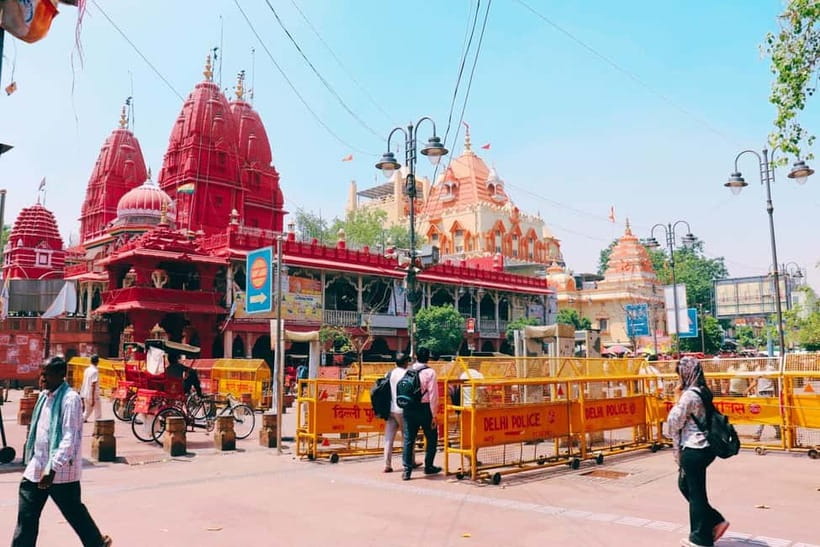
- A Sikh temple with real community work: Visit Sis Ganj Guru Dwara and learn about the free kitchen that feeds thousands each day.
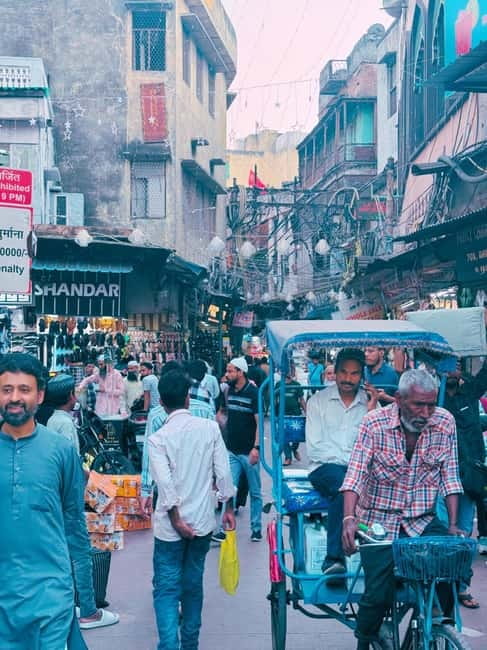
- Markets beyond spices: Kinaari Bazaar brings wedding goods, narrow lanes, and shops selling items you may not expect.
- Strong local guiding: Vijay Kumar is praised for his calm navigation, historical detail, and thoughtful photo stops.
- Good value at $22: Metro tickets, tuk tuk fare, bottled water, and an English-speaking guide are included.
Why this short tour works in Old Delhi
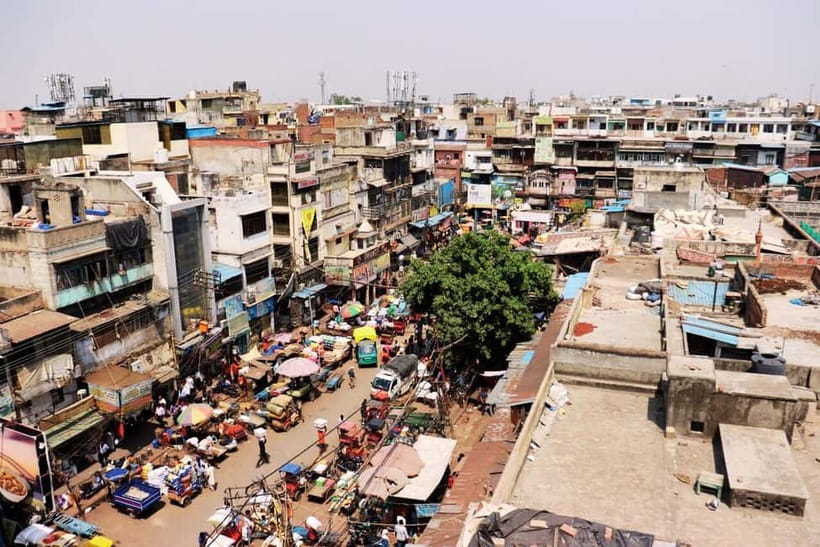
Old Delhi was founded as the Mughal Empire’s capital in 1639. That past is still visible, but it does not arrive in a quiet, museum-like package. You find it among traffic, shop signs, carts, prayer, spice dust, and streets that can feel as if several cities have been pressed into one.
This tour is useful because it links the area’s main themes in a short time. You see Mughal-era landmarks, religious sites connected with Jainism and Sikhism, and working markets where trade still shapes daily life. It is less about standing in front of one famous monument and more about understanding how Old Delhi functions.
The cost is $22 per person. For that price, you receive the English-speaking guide, metro tickets, tuk tuk fare, and packaged water. Food and drinks are extra. That is a fair package for a 2.5-hour outing, especially in a place where transport can become confusing and small fares can slow you down.
Still, keep the time limit in mind. This is an introduction, not a full-day study of Old Delhi. You will see several places, but some stops are guided visits or photo stops rather than long explorations.
More Spice Market and Bazaar Tours in India
- Old Delhi Food-Spice Market-Temples Tour Soon Featured on NETFLIX
★ 5.0 · 304 reviews - Old Delhi Odyssey: A Tour of Religion, Spice Market, & Best Food
★ 5.0 · 284 reviews - Old Delhi & Spice Market Tour
★ 5.0 · 98 reviews
Starting at Rajiv Chowk and riding into Old Delhi
The standard meeting point is Rajiv Chowk Metro Station at Gate 2. Some booking choices may offer pickup, and pickup details are shared after confirmation. If you meet at the station, arrive with enough time to locate the correct gate and find your guide.
The metro ride takes about 25 minutes. This is more than a practical transfer. It gives you a quick look at how Delhi’s modern transport system connects with one of its oldest districts. You leave the polished central area and arrive closer to the dense lanes of Old Delhi.
Metro tickets are included, which keeps the morning simple. You do not need to work out the fare or purchase a ticket while trying to keep up with a group. The tour then shifts from underground travel to the more exposed, hectic movement of Old Delhi.
Khari Baoli, where the spices set the tone
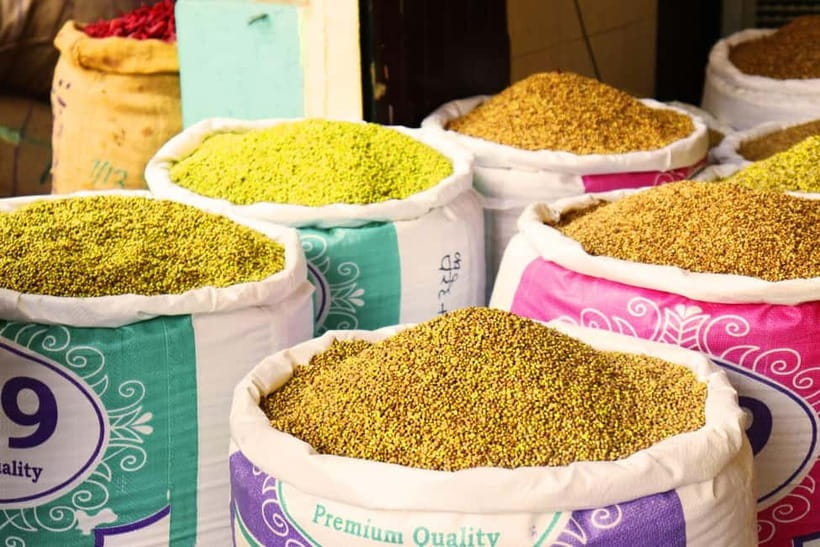
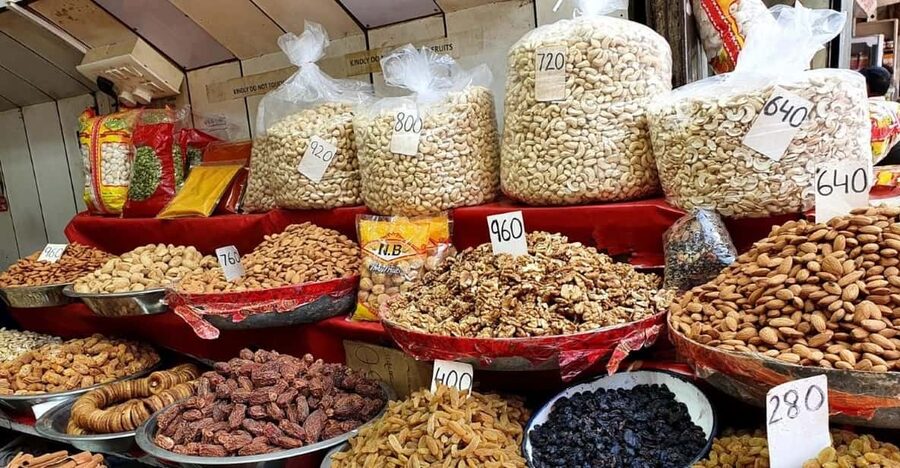
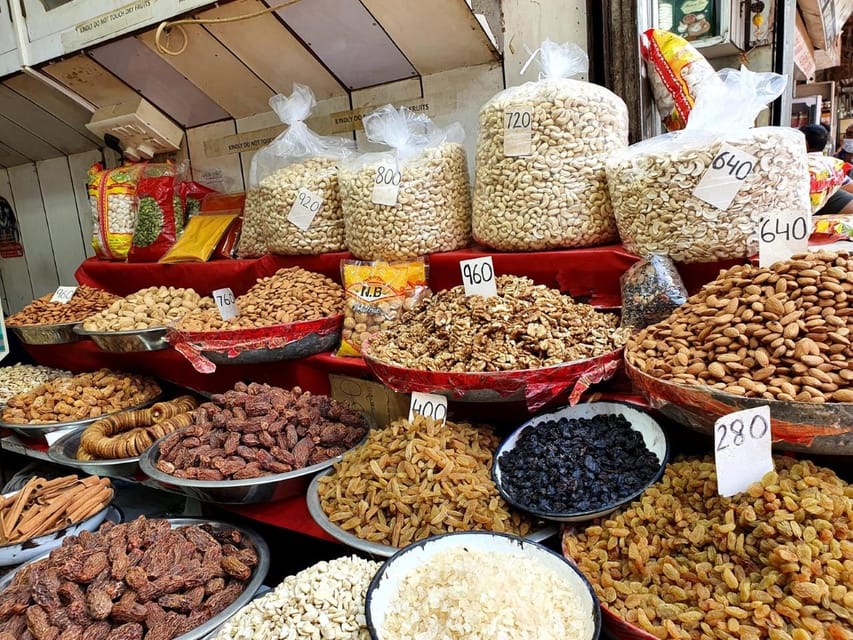
Khari Baoli is the first major market stop. It is known as Asia’s largest wholesale spice market, and the scale helps explain why it is such a strong opening to the walking portion of the tour.
You can expect a busy commercial setting rather than a staged market for sightseeing. Spices, sacks, shops, carts, and passing traffic create a place that is practical first and photogenic second. The smells do much of the storytelling. Even a short visit gives you a sense of the trade that has long helped define this part of Delhi.
One useful feature is the rooftop view after the spice market. From above, you get a chance to pause and see Old Delhi as a whole instead of only experiencing it at street level. That break matters. The market can be crowded and intense, so a higher viewpoint gives your eyes and feet a little rest.
You may also be offered a chance to buy spices. The important point is that this is presented as optional. You can look, ask questions, and move on without treating the shopping stop as an obligation.
Fatehpuri Masjid and the Mughal-era setting
The tour continues by tuk tuk to Fatehpuri Masjid. The tuk tuk ride is part of the charm, though it is also one reason this experience may not suit anyone prone to motion sickness. Old Delhi traffic can be close, noisy, and unpredictable.
At Fatehpuri Masjid, you have a photo stop, a guided visit, and time for sightseeing. Your guide explains the mosque’s place in the old Mughal capital and helps connect the building with the streets around it. You are not simply looking at a religious structure. You are seeing how a historic mosque remains part of an active neighborhood.
The Red Fort is viewed from the exterior during this part of the tour. The fort is one of the key symbols of Mughal Delhi, and its walls help anchor the history lesson. The planned schedule allows a short stop, but guide Vijay Kumar has been praised for adding an extra moment to discuss the Red Fort.
That flexibility is valuable. In a tightly timed city tour, a guide who notices your interest and gives you a little more context can make the outing feel less mechanical. Do not expect a full Red Fort visit or interior tour here. The emphasis is on the exterior, its significance, and the connection between the monument and the old city around it.
More Spice Market and Bazaar Tours in New Delhi
- Delhi: Old Delhi’s Street Food, Temples & Spice Market Tour
★ 5.0 · 30 reviews - Old Delhi Street Food and Spice Market Tour
★ 5.0 · 12 reviews - Delhi Private City Tour With Spice Market In 8 Hours – By Car
★ 5.0 · 9 reviews - Old Delhi: Khari Bawli – Asia’s Largest Spice Market
★ 5.0 · 3 reviews
Lal Mandir and the Jain perspective
The Shri Digambar Jain Atishay Kshetra Lal Mandir offers a different religious and cultural angle. The stop includes a photo opportunity, a guided visit, and some walking.
One of the more unexpected details connected with this stop is the mention of Jain tunnels and shops. That makes the visit feel less predictable than a standard monument route. You get a look at an important Jain site while also seeing how nearby lanes and commercial spaces fit into the daily life of Old Delhi.
This part of the tour is especially useful if you want more than Mughal architecture. Delhi’s story is not one faith or one dynasty. The Jain temple adds another layer, and the guide can help explain what you are seeing without requiring you to arrange a separate temple visit.
Remember that this is a walking tour through an active district. Temple spaces may require respectful behavior, and the narrow streets can be crowded. The pace is not designed for long, quiet contemplation.
Kinaari Bazaar and the surprise of side markets
Kinaari Bazaar receives about 30 minutes of walking and guided touring. It is known for wedding goods and decorative items, and the market adds color and variety after the spice stop.
The useful thing about this section is that it shows Old Delhi as a place of specialized trade. You may see shops connected with weddings, bicycles, and other everyday commercial needs. One outing even included a bike cart, giving the route another local form of transport.
This is a good place to stay alert and let the guide point out details you might otherwise miss. Old Delhi markets can appear like a wall of signs and merchandise when you first enter. A local guide helps separate the wedding market from the spice market and the other shops around it.
The trade-off is crowding. Kinaari Bazaar is not a calm shopping street, and you may have limited time to browse. If you want to buy something, ask the guide how much time is available before making a purchase. The tour is built around seeing and understanding the market, not spending an hour negotiating for goods.
Sis Ganj Guru Dwara and the free kitchen
The final major stop is Sis Ganj Guru Dwara, a Sikh temple. For many people, this becomes the emotional center of the tour.
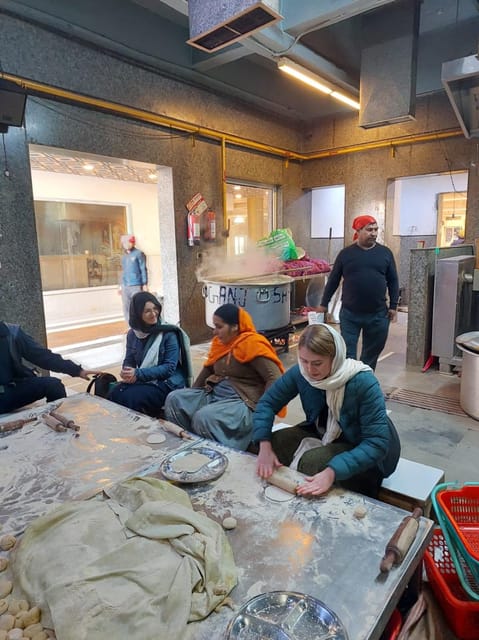
Your guide introduces Sikh beliefs and explains the community’s history in Delhi. The visit also shows the working side of the temple, including the kitchen that feeds thousands of people for free each day. That detail gives the stop real weight. You are not only learning about a religion from a distance. You are seeing how service is put into practice.
The kitchen is a strong example of why guided visits can add value. Without context, you might notice a busy food operation but miss its social and religious meaning. With an explanation, the same space becomes one of the clearest lessons of the day.
Allow yourself to be observant and respectful here. The schedule includes a photo stop, guided visit, sightseeing, and walking, but this remains a functioning place of worship. It is not a performance staged for tour groups.
What the transport adds, and what it demands
The combination of transport is one of the most distinctive parts of this experience. You begin on the metro, move through Old Delhi by tuk tuk, walk through markets, and may use a bike cart during the route.
This variety saves time and gives you a more realistic sense of movement in Delhi. You are not sealed inside a private vehicle for the whole outing. You see the change from modern public transport to narrow market lanes firsthand.
The downside is comfort. Tuk tuk travel can be bumpy, and the streets can be crowded. The tour specifically advises against booking if you have back problems or motion sickness. It is also not suitable for wheelchair users, babies under one year, or anyone over 95 years old.
Wear practical shoes and keep your belongings secure. The tour includes packaged water, but food and drinks are not included, so bring enough water for your own needs if conditions are hot. The supplied information does not give a group size, so you should not assume a private tour or a small group.
Timing, pace, and the best kind of participant
At 2.5 hours, this is a compact experience. It suits you if you have a short stay in Delhi, want a first look at Old Delhi, or prefer a guided introduction before returning on your own for more time in the markets.
It also suits you if you like active sightseeing. You will walk, ride public transport, use a tuk tuk, stop for photographs, and move through crowded commercial areas. The tour does not suit you if you want a slow architectural tour with long visits inside each site.
The strongest fit is someone who values local context over polished comfort. You should be happy with noise, uneven streets, quick changes of scene, and a little uncertainty in the flow. In return, you get a much broader picture of Old Delhi than a simple fort photo stop.
Guide Vijay Kumar is an important part of the experience. He has been praised for being calm, courteous, flexible, and good at knowing when to stop for photos. He also appears to explain the sites in detail rather than rushing from one location to the next. Guides can shape a short tour, and his approach seems particularly helpful in a city that can feel overwhelming at first.
Value at $22 and what is not included
At $22, the tour offers solid value because several small expenses are already covered. Metro tickets and tuk tuk fare are included, along with bottled water and the English-speaking guide.
Food and drinks are not included. That is reasonable for a short tour, but you should plan for your own refreshments. The tour does not promise a meal or a tasting, so do not book it expecting a food tour simply because it visits a spice market.
The biggest value is navigation. You are paying for someone to connect the metro, markets, religious sites, and Mughal landmarks in a single route. In Old Delhi, that organization can save time and reduce the stress of figuring out transport and directions yourself.
Free cancellation is available up to 24 hours before the tour for a full refund, and you can reserve now and pay later. Starting times depend on availability. These terms are useful if your Delhi plans may shift.
Should you book the Old Delhi Temples and Spice Market Tour?
Book it if you want an energetic first look at Old Delhi, especially if the Sikh temple kitchen, spice market, and working bazaars interest you. The low price, included transport, and strong guiding make it a sensible choice for a short visit.
Skip it if you need wheelchair access, dislike tuk tuk rides, struggle with crowded streets, or want extended time inside the Red Fort and temples. This is a brisk introduction, not a slow specialist tour.
For most able-bodied visitors who want history tied to everyday life, I would choose it. The spice market gives you the sensory jolt, the markets show how the city earns its living, and Sis Ganj Guru Dwara gives the tour its most meaningful stop. Add a calm guide such as Vijay Kumar, and $22 buys a useful, memorable way to meet Old Delhi.
FAQ
Where does the tour meet?
The meeting point is Rajiv Chowk Metro Station at Gate 2.
Is hotel pickup available?
Pickup is optional for some booking choices. After confirmation, the driver’s name and contact details are shared with you.
How long does the tour last?
The tour lasts 2.5 hours.
What language does the guide speak?
The live tour guide speaks English.
Are metro tickets included?
Yes. The metro ride is included in the tour price.
Is tuk tuk transportation included?
Yes. Tuk tuk fare is included.
Is food included?
No. Food and drinks are not included, but packaged water is provided.
Does the tour visit the Red Fort?
The tour views the Red Fort from the exterior and includes information about its significance. It does not list an interior visit to the fort.
Is the tour suitable for wheelchair users?
No. The experience is not suitable for wheelchair users.
Can I cancel for a full refund?
Yes. You can cancel up to 24 hours in advance for a full refund. You can also reserve now and pay later.
Just added around New Delhi
- Old Delhi: Khari Bawli – Asia’s Largest Spice Market★ 5.0 · 3 reviews
- Old Delhi Street Food and Spice Market Tour★ 5.0 · 12 reviews
- Delhi: Old Delhi’s Street Food, Temples & Spice Market Tour★ 5.0 · 30 reviews
- Delhi: Half-Day Old Delhi Private Guided Tour with Markets★ 5.0 · 2 reviews
- Delhi Markets: A Cultural Shopping Experience with an Expert★ 4.8 · 13 reviews
- Old Delhi Odyssey: A Tour of Religion, Spice Market, & Best Food★ 5.0 · 284 reviews
- Old Delhi & Spice Market Tour★ 5.0 · 98 reviews
- Private Custom Shopping Tour: Delhi’s Bustling Markets★ 4.5 · 15 reviews
Grand Bazaar & Spice Market Tours, compared.
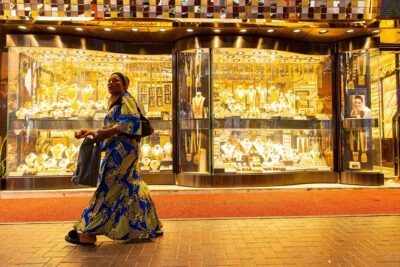
Dubai Half-Day City Tour with Visit to Dubai Gold Souk
Read our review →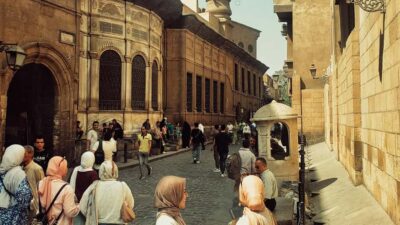
Local Markets & Khan el Khalili Private Shopping Tour
Read our review →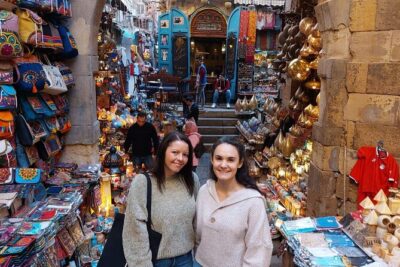
Cairo VIP Guided Tour to Khan El-Khalili Market with Lunch
Read our review →
Istanbul Grand Bazaar: From Rooftops to the Secret Passages
Read our review →
Old Delhi Food-Spice Market-Temples Tour Soon Featured on NETFLIX
Read our review →Old Delhi Odyssey: A Tour of Religion, Spice Market, & Best Food
Read our review →
Old Cairo and Khan El Khalili Bazaar: Private Half-Day Tour
Read our review →