
Review · MEXICO
Mexico: Salsa Making Class in a Market with a Chef
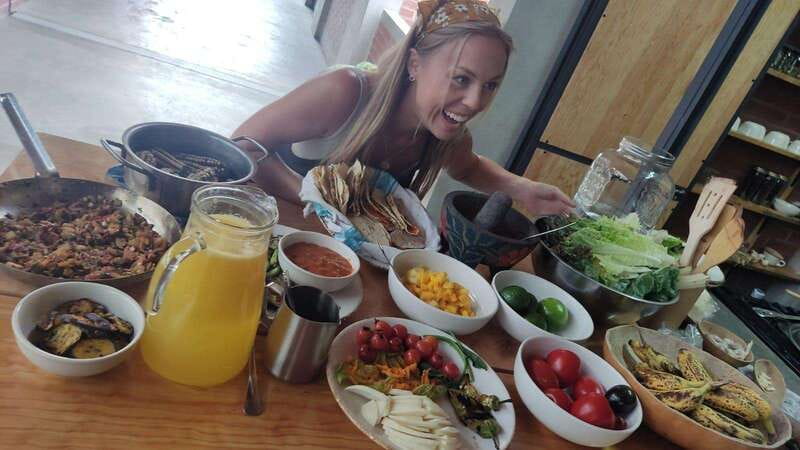
Chiles turn a market visit into lunch. This half-day class combines a guided market walk with hands-on cooking, giving you a useful look at Oaxaca’s food culture rather than a quick demonstration from the sidelines. I especially like the chance to choose fresh ingredients with a chef and prepare five distinct salsas, from a traditional red version to a creamy one. The small group, capped at 10 people, also makes personal help more likely.
I also like that the class takes place around an active local market, not only in a polished cooking studio. Bryan, Talle, and Wendy have all been praised for making the class friendly and easy to follow. The main consideration is heat: this is built around Mexican chiles, so it is a poor fit if you have a chile allergy or strongly dislike spicy food. You will also be walking and carrying ingredients, which may be difficult for anyone with limited mobility.
Key points to know before booking
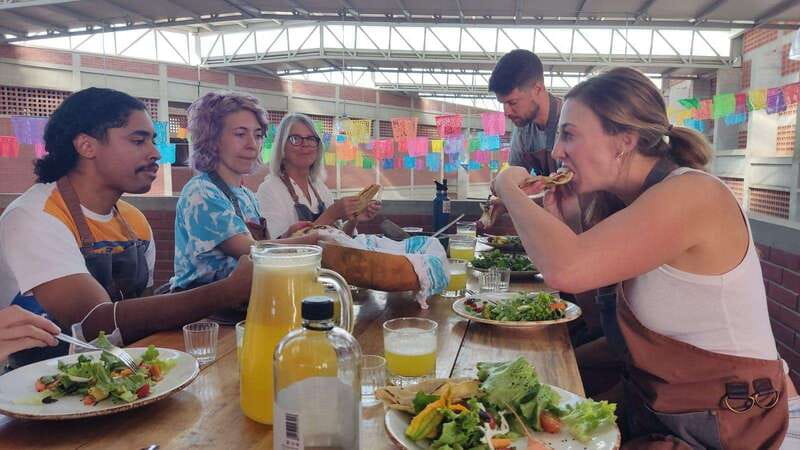
- Five salsa styles in one class: You prepare a traditional red salsa, fruit salsa with chile, dry salsa, fresh salsa, and creamy salsa.
- Market shopping is part of the lesson: You help collect chiles, fruit, spices, and other fresh ingredients before cooking.
- A small group keeps it personal: No more than 10 participants take part, with instruction in English.
- The price includes the useful bits: At $64 per person, the fee covers the guide, ingredients, cooking tools, and tasting.
- You taste everything you make: Each salsa is paired with tortilla chips or fresh tortillas.
- Plan for a walking morning or afternoon: Comfortable shoes, water, sunscreen, and a hat are sensible, especially on hot days.
Starting at Etnofood on Xicoténcatl 609
The class begins at Etnofood, at Xicoténcatl 609 in Colonia Centro, Oaxaca de Juárez. This is more than a place to check in. It is the meeting point for the class and the base for the food activities before you head into the market.
The experience lasts about three and a half hours. That is long enough to cover the market visit, ingredient selection, cooking, and tasting without turning the day into a full-scale culinary course. You should arrive ready to walk, listen, handle food, and carry a few purchases or prepared items.
Transportation to and from the market is not included, so you need to make your own way to Etnofood. The activity does not provide personal shopping either. If you see something tempting in the market, that is your own expense and responsibility to carry.
The group limit of 10 is a useful detail. A market can be noisy and crowded, and a large cooking group would make it harder to see what the chef is doing. With fewer people, you have a better chance of asking about a particular chile, checking your technique, or getting help with a molcajete.
A few more market tours around Mexico worth a look
- Frida Kahlo VIP [Museum Tickets Included] Bike, Markets & Churros
★ 5.0 · 1,072 reviews - Frida Kahlo VIP [Museum Tickets Included] Walk, Markets & Churros
★ 5.0 · 982 reviews - Cabo San Lucas Mexican Cooking Class Experience and Local Markets
★ 5.0 · 915 reviews
Learning why Mexican chiles matter
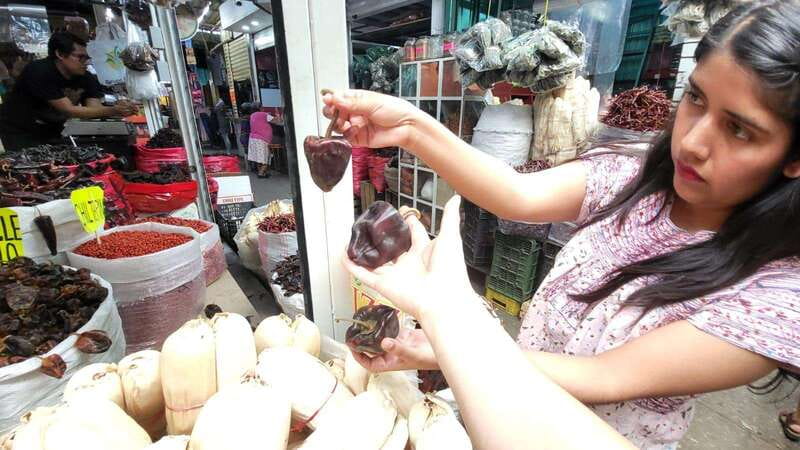
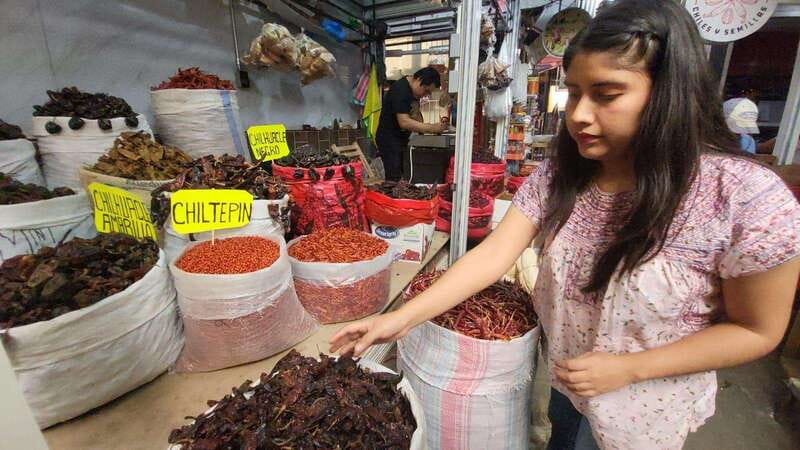
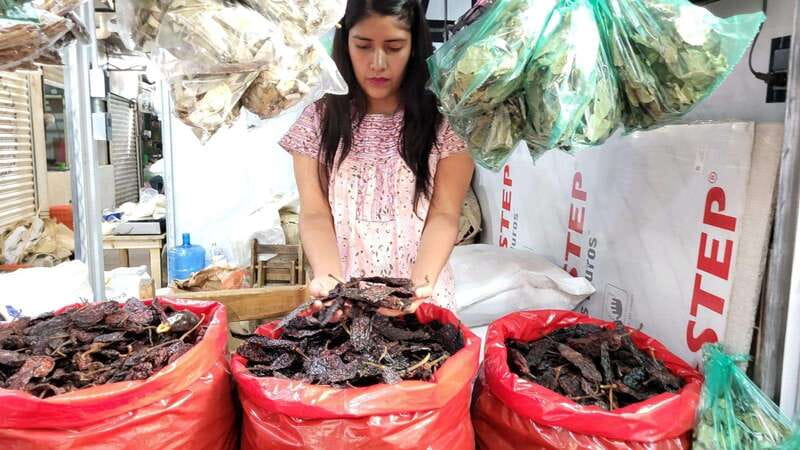
The class starts with an introduction to Mexican chiles and their place in salsa making. This is important because a chile is not simply a measure of heat. Its flavor, texture, preparation, and pairing with other ingredients all shape the final salsa.
You learn how different chiles can be used in different ways. Some may support a red salsa, while others work with fruit, spices, or a dry preparation. The point is not just to copy five recipes. It is to understand how to build a salsa around the character of its ingredients.
That makes this class more useful than a standard cooking demonstration. You are not only watching a chef put food together. You are learning a method you can repeat at home with ingredients available in your own kitchen.
Still, you should be honest about your comfort with spice. The class asks you to work with a range of chiles, and the organizers specifically note that it is not suitable for people with chile allergies. If you are sensitive to heat, ask questions early and taste carefully rather than trying to prove something to the table.
Walking through one of Oaxaca’s major markets
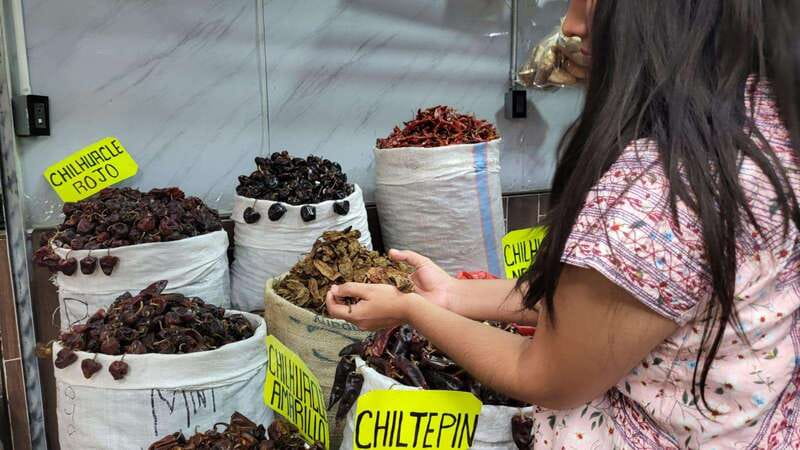
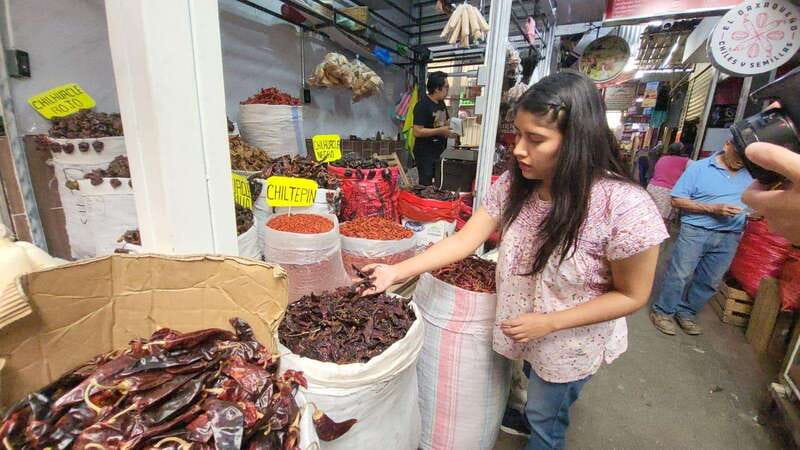
After the chile introduction, you head into the market with the chef and collect ingredients. The market is described as one of the most biodiverse markets in Mexico and Latin America, giving this part of the class a wider purpose than simple grocery shopping.
You will look for fresh chiles along with fruit, spices, and other ingredients needed for the five salsas. This is where the class connects the finished dish to the place where its ingredients are bought. You get to see what is available, how the chef makes choices, and how a recipe begins with raw produce rather than a prepared shopping list.
Bryan has been praised for explaining what the group was buying and for sharing information about the market itself. That kind of guidance matters. A market can be exciting but confusing when you do not know what you are seeing. With an English-speaking instructor, you can ask why one chile was chosen, how fruit changes a salsa, or what makes a dry salsa different from a fresh one.
One especially useful detail is that the market visit has been described as feeling local and less focused on the usual tourist route. I would not book this expecting a quiet, staged food tour. You are entering a working market, so expect walking, activity, and the need to pay attention to your belongings and the ingredients you are carrying.
Wear shoes you can walk in for several hours. A hat, sunscreen, and water are also sensible. Oaxaca can be hot, and the market portion takes place before the seated cooking and tasting.
Five salsas, five different lessons
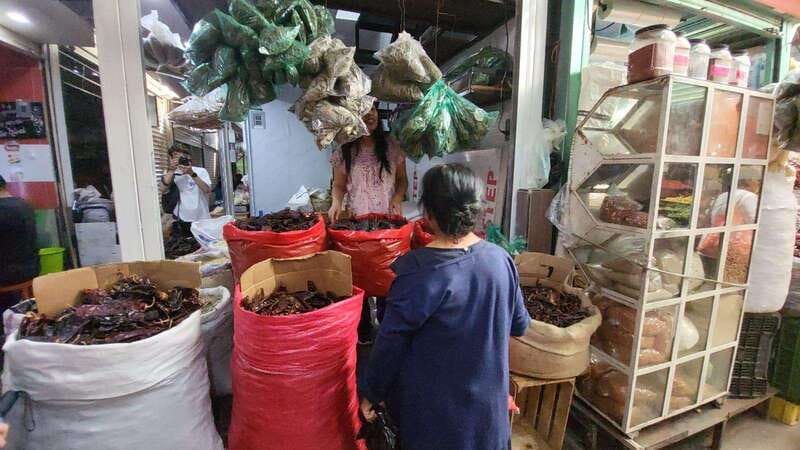
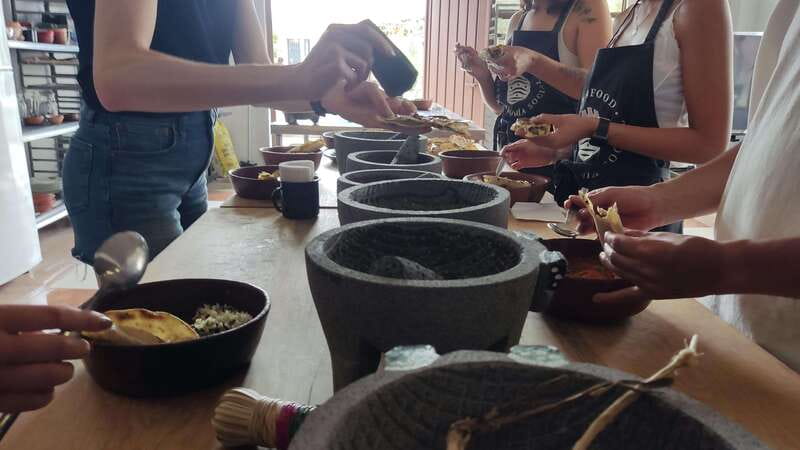
Once the ingredients are gathered, you stay in an area of the market and begin preparing the salsas under the chef’s direction. The class covers five styles, which gives you a broad introduction to how Mexican salsa changes with technique.
Same place, a different set of stalls:
- Cancun Taco Tour, Local Beer and Night Market with Transportation
★ 5.0 · 816 reviews - Cancun Street Food Tour with Food Stalls, Local Market and Murals
★ 5.0 · 723 reviews - Puerto Vallarta Cooking Class Experience with Market Tour
★ 5.0 · 698 reviews - Mexican Cooking Class with Food Market Visit in Mexico City
★ 5.0 · 506 reviews
Traditional red salsa
The traditional red salsa gives you a familiar starting point. It shows how chiles and other ingredients come together in a classic preparation, and it offers a useful reference point for the other four versions.
This is likely the salsa that helps you understand the basic balance of heat, acidity, texture, and seasoning. Even without taking a recipe home, you can watch how the chef handles the ingredients and how the texture changes during preparation.
Fruit salsa with chile
The fruit salsa introduces contrast. Fruit can bring sweetness and acidity, while chile adds heat and depth. This combination is a good reminder that salsa does not have to be strictly savory.
For you, the value is in seeing how an ingredient that seems separate from chile can work with it. The class helps make Mexican cooking feel flexible rather than fixed. You are shown how to use what is fresh in the market and how fruit can shape the whole dish.
Dry salsa
The dry salsa changes the texture and likely the way the ingredients are handled. It gives you a chance to see that salsa is not always a wet mixture served from a bowl.
This version may be particularly helpful if you want to understand how toasted or dried elements affect flavor. The supplied information does not specify the exact ingredients or method, so you should treat the chef’s instruction as the authority on the day rather than expect a fixed recipe from this description.
Fresh salsa
The fresh salsa offers a cleaner contrast to the cooked or dry versions. Fresh ingredients can keep their brightness, and the preparation shows how much flavor can come from simple chopping, mixing, and seasoning.
This is also the style most likely to be easy to repeat at home. The class does not require professional equipment. The main goal is to understand how fresh produce and chiles work together.
Creamy salsa
The creamy salsa rounds out the set with a different texture and feel. After working with fresh, dry, red, and fruit-based preparations, a creamy version shows how ingredients can soften the chile’s effect and create a smoother finish.
Together, these five salsas give the class its real value. You are not learning five nearly identical recipes. You are comparing methods and textures side by side, which helps you remember what you learned.
Using a molcajete instead of only watching
A molcajete is included, along with other pre-Hispanic instruments. That detail matters because the tool changes the way the ingredients are prepared. Crushing ingredients by hand gives you a direct feel for texture and seasoning that you do not get from watching a blender do all the work.
You should expect the chef to guide you through the tools rather than leave you to guess. Since the group is small and the class is hands-on, you have a good chance to take part in the preparation instead of simply standing behind someone else.
The instruments also give the class a clear connection to older Mexican cooking practices. You are not being asked to treat them as museum pieces. You use them as working kitchen tools, which makes the lesson more memorable.
There is a practical tradeoff. Hand preparation can take more effort than modern equipment, and some people may find the work tiring. That is one reason comfortable clothing and shoes matter, even though most of the cooking itself is not a strenuous activity.
Tasting five salsas with tortillas and chips
The final stage is a tasting of everything you prepare. Each salsa is served with tortilla chips or fresh tortillas, so you can compare them in a simple, familiar way.
This is more than a reward at the end. Tasting each salsa immediately after making it helps you understand the effect of texture, chile choice, fruit, cream, and seasoning. You can decide which style you like best and notice how the same basic idea changes from one preparation to the next.
The class also makes a good half-day plan because the tasting gives the experience a natural finish. You do not need to find a separate meal immediately afterward, although appetite and spice tolerance vary from person to person.
The food is prepared during the class, so you should be prepared to taste ingredients that may be hot. If you have allergies or dietary concerns, the information provided only specifically warns against chile allergies. Ask the provider before booking if you need details about any other ingredient.
How the $64 price holds up
At $64 per person, the class is not the cheapest way to eat salsa in Oaxaca. You are paying for more than food, though. The fee includes a guided market tour, expert chef instruction, all salsa ingredients, the cooking session, the molcajete and other tools, and the final tasting.
I see the value in the combination. A market tour on its own gives you context but not much practical skill. A cooking class without the market visit misses the shopping and ingredient-selection lesson. Here, the two parts support each other.
The small group also helps justify the price. Ten people is still a group, but it is small enough for a chef to keep the work moving and answer questions. English instruction adds value if you do not speak Spanish well enough to follow a detailed food lesson.
The price does not include transport to the market or personal purchases. You should also bring your own water and plan for the cost of anything you decide to buy. Even so, the included ingredients and food tasting make the fee reasonable for anyone who wants a practical Oaxaca food experience rather than a simple guided walk.
Who will enjoy this class most
I would recommend this class to you if you like food experiences that teach a skill. It suits curious cooks, people who want to understand Mexican ingredients, and visitors who prefer a small group to a large organized outing.
It is also a good match if you want to see a market from a food buyer’s point of view. The class lets you ask what ingredients are used and why, rather than simply passing through stalls with a guide.
The experience may also suit people who want an activity with a local feel. Nathan from the United Kingdom praised the sense of being away from Oaxaca’s more tourist-focused markets, while Thomas from France valued both the market atmosphere and the chance to test his tolerance for peppers.
I would think twice if you dislike spicy food, have a chile allergy, or want a relaxed activity with very little walking. Pregnant women and people with mobility impairments are specifically listed as unsuitable for this experience.
If you want to bring young children, the available information does not specify an age policy. You should ask Etnofood directly before booking rather than assume the class is designed for children.
Practical tips for a smoother morning or afternoon
Wear comfortable clothes and shoes that can handle a market walk. You may need to carry ingredients or purchases, so leave your hands as free as possible.
Bring a hat, sunscreen, water, and a camera. The market visit is a major part of the class, and the camera can help you remember unfamiliar chiles and ingredients later.
Do not arrive expecting a fixed restaurant meal. You prepare and taste the salsas as part of the class, pairing them with tortilla chips or tortillas. The food is central, but the learning process is the reason to book.
The class is offered in English, and the instructors named in the available information include Wendy, Bryan, and Talle. Wendy has been praised for leading an enjoyable class, while Bryan and Talle have been singled out for their helpful approach. The exact instructor may vary, so confirm if a particular guide matters to you.
Free cancellation is available up to 24 hours before the activity for a full refund, and you can reserve without paying immediately. Those policies give you some flexibility if your Oaxaca plans are still changing.
Should you book the Oaxaca salsa class?
Book it if you want to do more than taste Mexican food. The strongest part of this experience is the link between market shopping, chile instruction, hands-on preparation, and tasting. You leave with a better sense of how five different salsa styles are built, not just a few snapshots and a full stomach.
The class is especially worthwhile for food-minded visitors who want a local market setting and direct help from an English-speaking chef. The $64 price is fair when you count the ingredients, tools, instruction, market tour, and tasting.
Skip it if chiles are a serious problem for you, if walking is difficult, or if you prefer a quiet cooking studio with no market portion. For everyone else, this is a focused, practical way to spend three and a half hours in Oaxaca, with lessons you can use the next time you reach for a chile at home.
FAQ
Where does the salsa class begin?
The class begins at Etnofood, located at Xicoténcatl 609, Colonia Centro, Oaxaca de Juárez, Oaxaca.
How long does the experience last?
The class lasts approximately three and a half hours.
What is included in the $64 price?
The price includes the guided market tour, hands-on salsa class, molcajete and other pre-Hispanic instruments, all salsa ingredients, chef instruction, and tasting of the prepared salsas.
How many salsas will I prepare?
You will prepare five salsas: a traditional red salsa, fruit salsa with chile, dry salsa, fresh salsa, and creamy salsa.
Is the class taught in English?
Yes. The listed instruction language is English.
How large is the group?
The class is limited to 10 participants.
Is transportation to the market included?
No. Transportation to and from the market is not included, so you need to make your own way to the meeting point.
Is the class suitable for people with chile allergies or mobility impairments?
No. The activity is not suitable for people with chile allergies or mobility impairments. Pregnant women are also listed as unsuitable for the experience.
Just added around Mexico
- Experience Cancun’s Hidden Gems, Mayan museum, cenote & Market 23★ 5.0 · 49 reviews
- Lucha Libre, Tacos, Margaritas,Tequila and Night Market Tour★ 5.0 · 64 reviews
- Cancun Street Food, Urban Art and Local Market Experience★ 4.0 · 4 reviews
- Taste of Cancun: Street Food, Local Market and Urban Murals Tour★ 5.0 · 6 reviews
- Cancun Taco & Beer Fiesta: Authentic Mexican Tasting Experience★ 5.0 · 3 reviews
- Cancun Private Foodies Market Tour and Street Food★ 5.0 · 3 reviews
- Flavors of Mexico: Cancun Cooking Class & Market Visit★ 4.5 · 5 reviews
- Cancun Walking Food Tour: Local Food, Markets, and Street Art.★ 5.0 · 49 reviews
Market Tours, compared.
Damnoen Saduak Market and Maeklong Railway Market
Read our review →
The Old Siam: Damnoen Saduak and Maeklong Railway Market
Read our review →
Old Town, Creek, Museums, Souks, & Street Food Tour
Read our review →Train Market & Floating Market with Boat Ride
Read our review →
Old Town, Souks, Street Food, Guided Tour & Abra Ride
Read our review →
Ayutthaya & Ayothaya Floating Market Day Trip
Read our review →
Frame Tickets, Creek, Souks & Blue Mosque Guided Tour
Read our review →
Hanoi Cooking Class: Culture, Local Market & Meaning CSR Impact
Read our review →Browse the lists this tour appears in