
Review · SPAIN
Madrid Gourmet Tour: Local Markets, Tapas & Wine
Markets tell Madrid’s food story. This three-hour walk with Chef Keta links three traditional markets, Spanish tapas, and carefully matched wine in neighborhoods away from the usual tourist circuit. I especially like the small group of eight or fewer and the chance to try regional food beyond paella and sangría. The main consideration is the price: at $200 per person, you should arrive hungry and ready to make the tastings the center of your Madrid day.
I also like the guide’s personal connection to the city. Keta has lived and cooked in Madrid for nine years, so the tour is built around practical food knowledge rather than a quick list of famous dishes. The route begins at Plaza de Colón and finishes at Antón Martín Metro Station, but the exact market stops are not named in advance, so you book the atmosphere and food style more than a fixed list of stalls.
The tour has earned two five-star ratings. Rebecca, visiting from the United States, specifically praised Keta’s friendly manner and informative guidance, while a participant from Mexico highlighted the guide’s expertise and warmth. That praise matters here because good market tours depend as much on the person leading the walk as on the food itself.
Key points at a glance
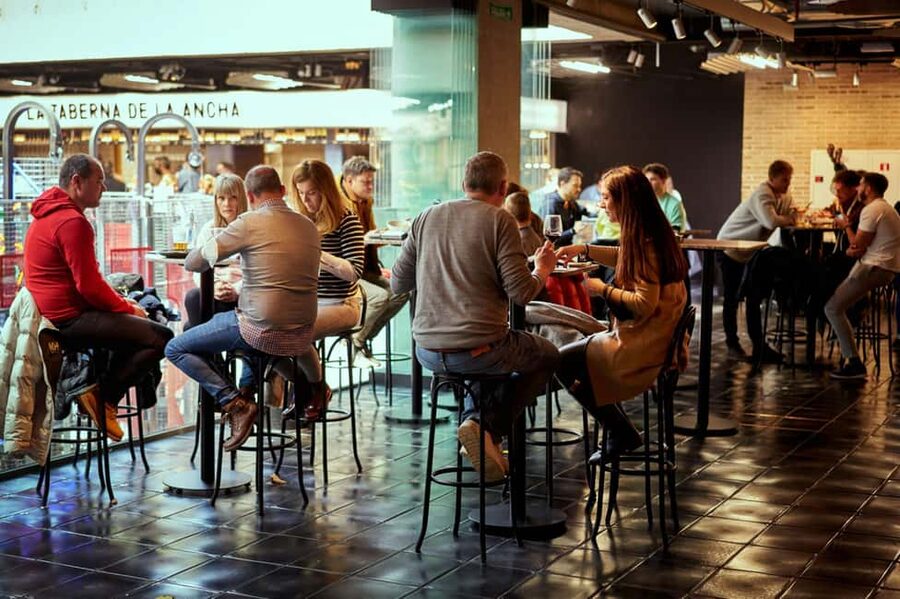
- Three traditional Madrid markets: You move through three neighborhood markets rather than staying in one food hall.
- Food from across Spain: Expect cheeses, tender boiled ham, a modern take on paella, a Canary Islands specialty, and other tapas.
- One drink at each market: Spanish wine is paired with the food at every stop.
- Chef-led commentary: Keta brings nine years of living and cooking in Madrid to the walk.
- Small, accessible format: The group is limited to eight people, and the route is listed as wheelchair accessible.
- Flexible booking: You can cancel up to 24 hours before the tour for a full refund and reserve now without paying immediately.
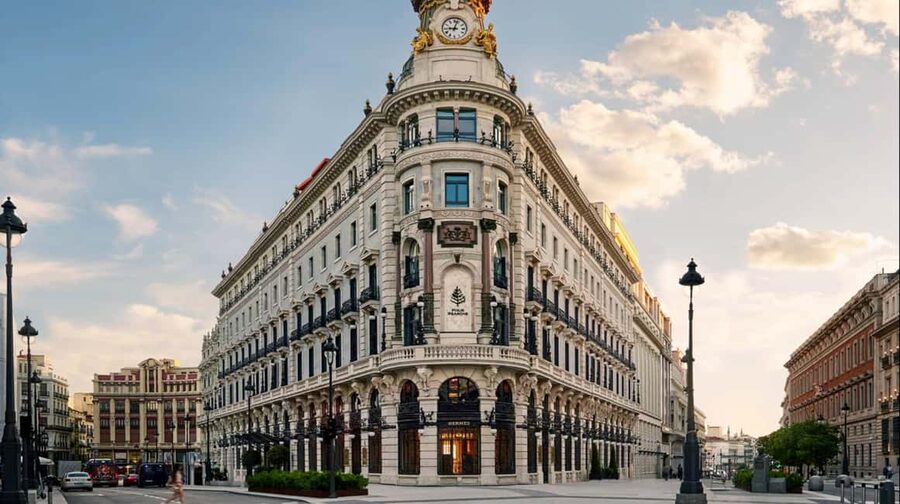
Starting under the Spanish flag at Plaza de Colón
Your meeting point is directly under the Spanish flag at Plaza de Colón. That is a useful landmark in a large city, especially if you are arriving by taxi, metro, or on foot and do not want to hunt for a café entrance or a shop sign.
The tour lasts three hours, with a relaxed walk through central Madrid. Since the finish is at Antón Martín Metro Station, you can continue sightseeing or return to your accommodation without needing to retrace the route.
This starting and ending arrangement also gives the walk a practical shape. You begin in the northern part of the central area and finish farther south, moving through the city rather than circling one square. The route is not presented as a strenuous march, but comfortable shoes still make sense. Food markets involve standing, walking, and stopping often.
Because the group is capped at eight, you should get more direct time with Keta than you would on a large coach-style food outing. That matters when you want to ask about ingredients, regional habits, or how a traditional dish has been changed for modern cooking.
More Wine Tours in Spain:
- Paella Cooking Class, Wine Tasting & Central Market in Valencia
★ 5.0 · 1,150 reviews - San Sebastian Pintxo Food, Wine & Market Foodie Tour(Small Group)
★ 5.0 · 621 reviews - Interactive Paella & Market: Bottomless Wine & Rambla Views
★ 5.0 · 376 reviews
Three markets, three different views of Madrid food
The heart of the tour is the visit to three traditional markets in Madrid neighborhoods. The market names are not specified, so you should not book this expecting a particular famous market or a guaranteed list of vendors.
That lack of a fixed public list is not necessarily a weakness. It suggests the focus is on local market culture and food choices rather than checking off a major attraction. You will move through places where color, aromas, and regional products are part of the setting, with Keta explaining what deserves your attention.
Each market includes a drink, with Spanish wine paired to the tastings. This gives the tour a useful rhythm: walk, look, taste, listen, and then move on. Three wine servings over three hours can add up, so pace yourself and take water when available. The supplied information does not promise unlimited drinks, so think of this as a tasting walk, not an afternoon of heavy drinking.
The market format also lets you compare food in context. A cheese or cured meat tastes different when you know where it comes from and how it is normally served. A regional specialty has more meaning when it is introduced as part of Spain’s wider food culture rather than as a random sample.
What you are likely to taste across Spain
The tasting list covers several types of Spanish food. You can expect outstanding cheeses, tender boiled ham, a modern twist on paella, a Canary Islands specialty, and additional tapas from different parts of the country.
That range is one of the tour’s strongest features. Many first visits to Madrid revolve around familiar names such as paella and sangría, even though paella is associated most strongly with Valencia rather than Madrid. Here, the dish appears in a modern form and sits beside food from other regions. You get a broader picture of Spain at the table.
The phrase modern twist matters. This is not presented as a strict traditional cooking lesson where every dish must follow an old recipe. Instead, Keta appears to use familiar Spanish ideas as a starting point, then show how current cooks are adapting them. If you enjoy food with a classic foundation and a new angle, that should suit you well.
The Canary Islands specialty is another useful touch. It gives the tasting a geographic range that goes beyond the mainland dishes most commonly served to visitors. The available details do not identify the exact specialty, so you should ask Keta about its ingredients and origin when you arrive.
Cheese and ham provide more familiar anchors. They are easy to share in a small group and give you a chance to compare texture, salt, and preparation. The food is not simply a meal placed in front of you. It becomes a reason to talk about how different parts of Spain eat.
Why the guide matters more than the dish list
Chef Keta has lived and cooked in Madrid for nine years. That background is important because a market tour can otherwise become a string of samples with little connection between them.
You are likely to get stories, cultural context, and food commentary as you walk. The guide’s role is not just to point at a plate. It is to explain why a food belongs in the conversation about Spain, how a modern version differs from a traditional one, and what you are tasting.
The strongest praise attached to this experience focuses on Keta personally. Rebecca from the United States described him as very nice and informative, and said the group had a lot of fun. Another participant from Mexico singled out the guide’s friendly manner and strong command of the subject.
That consistency is encouraging, although the sample is still small. Two five-star ratings cannot tell you everything about the tour on every date. They do suggest that Keta’s warmth and food knowledge are central strengths, not minor extras.
The language choice also gives you flexibility. The tour is offered in English, Spanish, French, and Arabic. Make sure you select or request the language you need when booking, since the quality of a food explanation depends on being able to follow the details.
A few more market tours around Spain worth a look
- Barcelona: Paella Cooking Experience & Boqueria Market Tour
★ 4.8 · 3,661 reviews - Barcelona Paella Cooking Class with Market Visit, Tapas & Sangria
★ 5.0 · 2,531 reviews - Valencian paella cooking class, tapas and visit to Ruzafa market.
★ 5.0 · 828 reviews - Spanish Cooking Class & Triana Market Tour in Sevilla
★ 5.0 · 760 reviews
The walking route and its practical rhythm
The route runs from Plaza de Colón to Antón Martín Metro Station over about three hours. It is described as relaxed, which should make it manageable for people who want to eat and explore without racing between stops.
You will need to combine walking with time inside markets. This is different from a restaurant crawl with a seat reserved at every stop. The market setting can be more social and spontaneous, but it may also mean less control over seating and timing.
A small group helps here. Eight people or fewer can stay together more easily, and Keta can answer questions without a microphone or a long pause. If you are traveling alone, this format should feel more personal than a large group. If you prefer to move independently or spend a long time photographing every stall, the fixed three-hour schedule may feel less flexible.
The route is listed as wheelchair accessible, which is an important advantage. Still, market conditions can vary, and the supplied details do not explain the surfaces, restroom access, or seating at each stop. If you have specific mobility needs, contact the provider before booking and ask about the current route.
Is $200 a fair price?
At $200 per person, this is a premium food tour. You are paying for more than the food itself. The price includes tastings at three markets, a drink at each market, a three-hour guided walk, cultural explanations, and the attention of a chef with nine years of Madrid experience.
The small group also affects the value. A group limited to eight gives you a better chance to ask questions and hear the answers. If Keta is the reason you are booking, the price may feel reasonable for a personal food introduction rather than a simple list of samples.
Still, you should be realistic about what $200 buys. The exact number and size of tastings are not specified, and the tour is not described as a full lunch or dinner. If you want the lowest-cost way to eat in Madrid, you can spend far less by ordering tapas independently.
I would choose this tour when I want structure, explanation, and regional variety in one afternoon. I would skip it if I already know Madrid’s markets well, dislike group activities, or want a long sit-down meal. The value improves if you treat the experience as both a tasting and a guided introduction to Spanish food culture.
Who will enjoy this tour most
This tour is a good fit for food-focused visitors who want more than the standard Madrid menu. It suits people who are curious about regional Spanish cooking, enjoy trying small portions, and like having a local expert explain what is in front of them.
It should also work well at the start of a Madrid stay. You can use the food ideas, market names, and regional references from the walk to guide later restaurant choices. Since the route ends at a metro station, it is easy to continue your afternoon elsewhere.
Couples, solo visitors, and small groups of friends should all find the eight-person limit appealing. Families may enjoy the relaxed format, but parents should check the tasting details in advance if children have strong food preferences.
Dietary needs are allowed, but you must tell the provider beforehand. Do not wait until the first market. Advance notice gives Keta a better chance to explain suitable options and avoid ingredients you cannot eat.
What the tour does not promise
It is worth keeping expectations precise. You are not promised a named list of markets, a full meal, unlimited wine, or a particular number of dishes. You are promised a three-hour guided walk, food tastings from across Spain, one paired drink at each market, and commentary from the guide.
That distinction helps you decide. The experience is about variety and interpretation, not about ordering exactly what you want from a menu. Market availability can also shape the food on the day, although no specific substitution policy is given.
The tour is also not designed as a formal cooking class. You will receive food commentary and cultural stories, but there is no stated hands-on cooking session. If you want to learn recipes step by step, choose a dedicated cooking activity instead.
Booking details worth knowing before you go
The meeting point is under the Spanish flag at Plaza de Colón. The finish is Antón Martín Metro Station, and the listed duration is three hours.
You can cancel up to 24 hours before the start for a full refund. The reserve-now, pay-later option lets you hold a place without paying immediately, which is useful if your Madrid plans are still shifting.
The tour is listed as wheelchair accessible, uses a small group of no more than eight participants, and offers English, Spanish, French, and Arabic. Starting times vary, so check availability for the date you want.
The best practical tip is simple: tell the provider about dietary requirements before the tour. Also, arrive ready to eat lightly beforehand, since the tastings are the main event and the overall value depends on being able to enjoy them.
Should you book Madrid Gourmet Tour?
Book it if you want a guided introduction to Spanish food that moves beyond Madrid clichés. The three markets, regional tapas, paired wine, and Chef Keta’s cooking background give the tour a clear purpose. The warm, informative feedback from Rebecca and the Mexico-based participant supports the idea that the guide is a major strength.
Think twice if $200 feels high for a tasting, or if you need a guaranteed restaurant-style meal with exact dishes. The market names and precise tasting portions are not listed, so some flexibility is required.
For food lovers who value context, personal guidance, and a small group, I think this is a strong choice. You are paying for a compact food education in central Madrid, with enough tasting along the way to make the city’s regional cooking feel much bigger than paella and sangría.
FAQ
Where does the Madrid Gourmet Tour begin?
The tour begins at Plaza de Colón. The meeting point is directly under the Spanish flag.
Where does the tour finish?
The walk ends at Antón Martín Metro Station.
How long does the experience last?
The tour lasts three hours.
How many people are in the group?
It is a small-group experience limited to eight participants.
What food is included?
The tastings include Spanish cheeses, tender boiled ham, a modern take on paella, a Canary Islands specialty, and other tapas from across Spain.
Is wine included?
Yes. You receive a drink at each market, with Spanish wine paired with the food.
What languages are available?
The live guide is available in English, Spanish, French, and Arabic.
Can I join with dietary requirements?
Yes. Dietary requirements are allowed, but you must inform the provider beforehand.
Can I cancel or pay later?
You can cancel up to 24 hours in advance for a full refund. You can also reserve now and pay later.
Just added around Spain
- Explore Bilbao’s Flavors Mercado de la Ribera and Old Town★ 4.5 · 3 reviews
- CERTAL Exclusive Tour: LA RIBERA Market + GASTROBARS Bilbao (3h)★ 4.5 · 12 reviews
- Barcelona La Boqueria & Sant Antoni Private Food Experience★ 5.0 · 7 reviews
- Taste of Barcelona: Boqueria Market, Tapas & History Tour★ 4.5 · 22 reviews
- Barcelona Tapas Cooking & Cocktail Class with Veronique & Mattias★ 5.0 · 3 reviews
- Spanish Oysters, Cava and Ibérico Ham at Barcelona’s La Boqueria Market★ 5.0 · 8 reviews
- Private Barcelona Market Tour & Paella Cooking Class with Josh★ 5.0 · 4 reviews
- Food and Market Tapas Tour★ 5.0 · 6 reviews
Wine Tours, compared.
Bologna Food & Market Tour with 6 Tastings, Pasta, Wines & More
Read our review →
Paella Cooking Class, Wine Tasting & Central Market in Valencia
Read our review →
Classic Cooking Class with Market Visit and Wine
Read our review →
Mtskheta Jvari Bazaar, Chronicles of Georgia & Wine
Read our review →
Food Market Visit and Cooking Class with Wine
Read our review →
Paris Cooking Class and Lunch with Wine plus Market Visit Option
Read our review →
Mtskheta,Jvari,Bazaar,wine tasting,Chronicles of Georgia
Read our review →
San Sebastian Pintxo Food, Wine & Market Foodie Tour(Small Group)
Read our review →Browse the lists this tour appears in