
Review · SPAIN
Barcelona Markets Tour
Come hungry and curious. This Barcelona Markets Tour links three important food markets with Las Ramblas, the Gothic Quarter, and El Born, giving you a useful first look at the city through what people buy, cook, and eat. The route takes about two to three hours, costs $35.09 per person, and limits the group to 15 people.
I like the small-group format, which makes it easier to hear your guide and move through crowded market aisles. I also like the mix of two tastings at La Boqueria and an olive oil tasting in El Born. The main drawback is that this is a walking tour with several stops, so it may feel rushed if you want lots of time to shop or sit down for a full meal.
The guides seem to be a major strength. Alberto, Zeynep, Perrine, Cal, Eoghan, Daria, Valentina, Andres, Paul, and Carlos Andrés have all been praised for their clear explanations, good humor, and local recommendations. One useful tip: guides can help you choose local flavors and find better value when buying food at the markets.
Key Points at a Glance
- Three market settings: Compare La Boqueria, Santa Caterina, and the former Born market.
- Two La Boqueria tastings: Small samples introduce you to local food without turning the tour into a full meal.
- Olive oil in El Born: The final tasting gives the route a distinctly Catalan food focus.
- Old Barcelona between the stalls: Las Ramblas, the Gothic Quarter, and El Born add buildings, stories, and street life.
- Groups capped at 15: A practical size for crowded aisles and questions.
- Two to three hours for $35.09: Good value if you want orientation and food advice, less so if you prefer shopping at your own pace.
Why Barcelona’s Markets Make a Good First Tour
Barcelona’s food markets are more than places to buy groceries. They show you how the city connects Catalan cooking, Mediterranean trade, neighborhood life, and modern tourism. A guide helps you notice details that are easy to miss when you are busy taking photographs or trying to decide which snack to buy.
This tour is especially useful early in a Barcelona visit. You get an introduction to local products, then receive suggestions for what to eat later. Several guides have recommended items such as croissants, olives, candy, and other market foods. You will also have time to purchase things yourself, though those extra purchases are not included in the price.
The route is not a food crawl with large portions at every stop. Think of it as a guided introduction with small samples. That distinction matters. If you want lunch, plan another meal afterward. If you want help understanding Spanish and Catalan food, the modest tastings are enough to get you started.
The group limit of 15 is another practical advantage. La Boqueria can be crowded, and a large group would be harder to keep together. A smaller group also gives you a better chance to ask about ingredients, customs, and places to eat later.
A few more market tours around Barcelona worth a look
- Barcelona: Paella Cooking Experience & Boqueria Market Tour
★ 4.8 · 3,661 reviews - Barcelona Paella Cooking Class with Market Visit, Tapas & Sangria
★ 5.0 · 2,531 reviews - Barcelona: Paella Cooking Class with Market Visit and More
★ 4.9 · 711 reviews
La Boqueria: A Busy Start With Small Bites
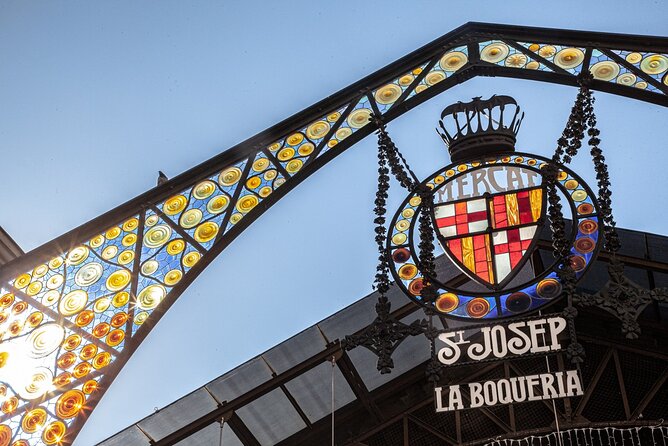
The tour begins at Mercat de la Boqueria on Rambla de Sant Josep at 10:00 a.m. This is Barcelona’s oldest market, and it is the most famous stop on the route.
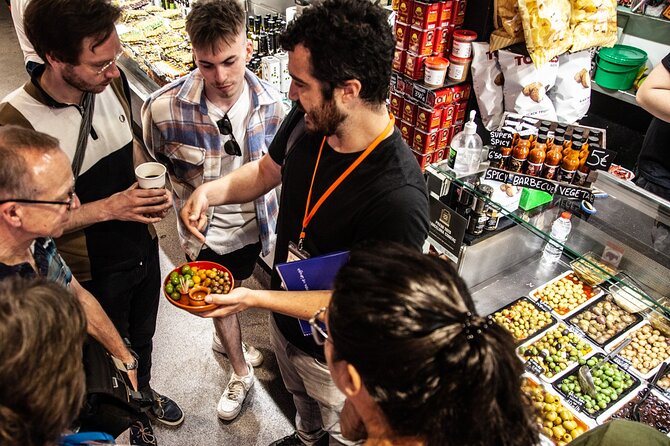
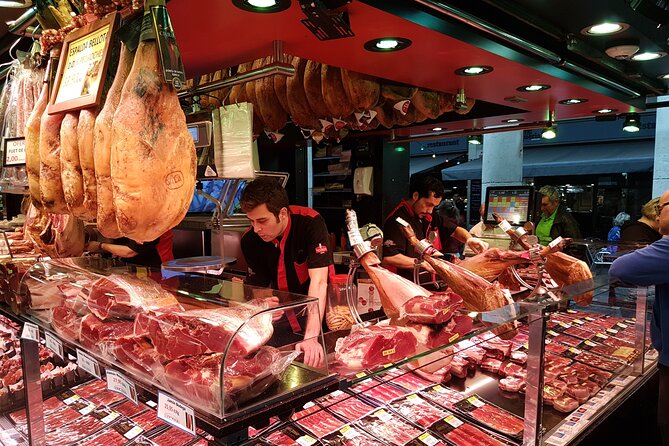
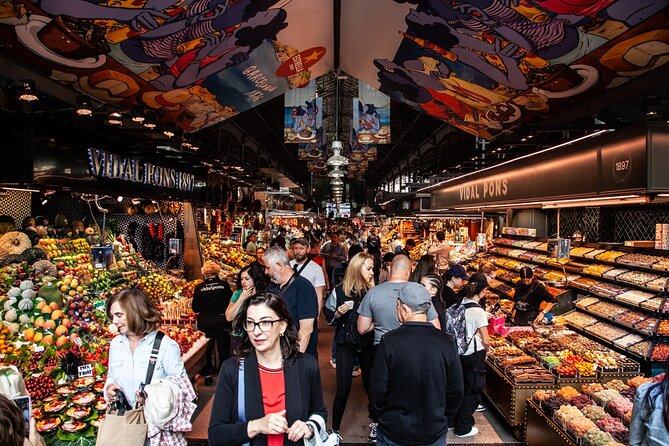
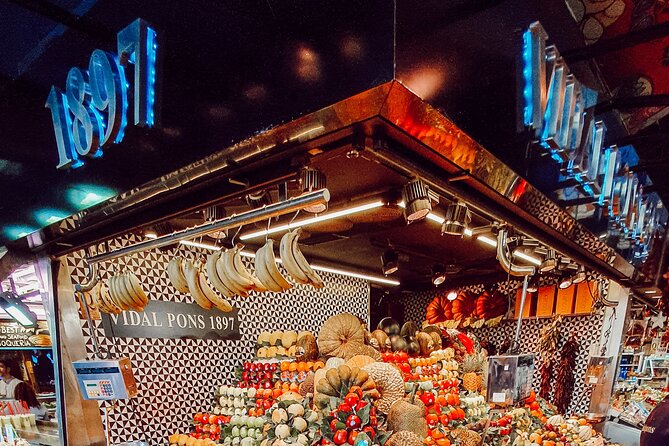
Boqueria is visually intense. Stalls display fruit, sweets, seafood, cured foods, and other ingredients in a compact space. Your guide helps you read the market rather than simply walk through it. The visit lasts about 30 minutes, with two small tastings included.
Those samples are useful because Spanish food can be confusing at first. You may recognize ham, olives, or fruit, but still wonder which version is worth buying. A guide can explain local flavors and point out good-value choices. You will also get a chance to buy food on your own, but remember that purchases are extra.
The short visit is both a strength and a weakness. Thirty minutes keeps the tour moving and prevents the first stop from taking over the morning. However, you will not have time to inspect every aisle, compare many products, or enjoy a leisurely breakfast. I would treat this as an introduction, then return later if Boqueria becomes your favorite market.
A small group matters most here. One guide described how an especially small party made it easier to hear and follow through the crowded market. That is exactly the kind of setting where a guided visit earns its keep.
Las Ramblas: The Famous Walk Between Markets
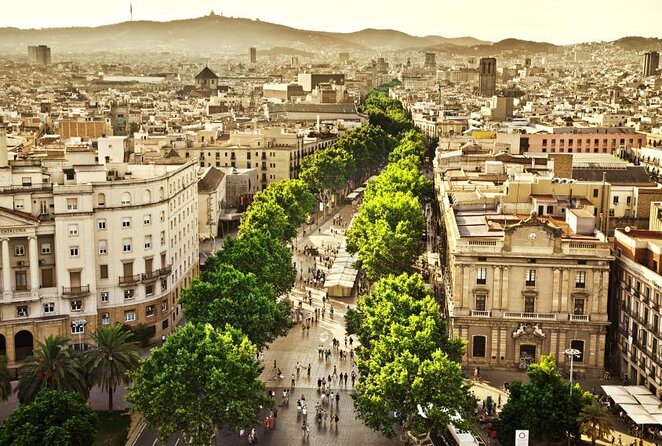
After Boqueria, the group spends about 20 minutes on Las Ramblas. This tree-lined promenade is filled with cafes, shops, and flower stalls, and it connects the first market with the older neighborhoods farther east.
Las Ramblas is famous, but it is not always the place where you will feel most local. It can be busy, commercial, and distracting. Still, it has value as a connecting street and as part of Barcelona’s public life. Your guide can give context to the promenade while leading you toward the next market.
This short stop also helps you understand the route geographically. Instead of jumping by bus or taxi between unrelated sights, you walk through the old center and see how the market districts connect. Several guides have added stories about nearby buildings and squares, making the route feel like more than a series of food stops.
Keep your belongings secure on any crowded city street. The tour data does not promise a quiet walk, and Las Ramblas is one of Barcelona’s busiest public spaces.
Santa Caterina: Architecture Over Shopping Time
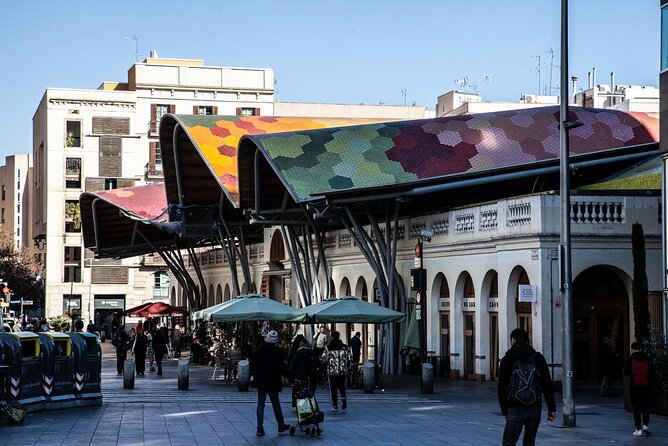
Mercado de Santa Caterina is the second market stop. You spend about 20 minutes admiring its striking architecture before going inside to see the remains of an ancient monastery.
This is an important contrast with Boqueria. La Boqueria is famous for its food displays and central location. Santa Caterina adds a building story, archaeology, and a different sense of place. You are not just looking at what is sold, but also at what came before the current market.
The time here is brief, so expect an overview rather than a full architectural visit. The guide gives the stop meaning, especially if you are interested in how Barcelona’s old neighborhoods have changed over time. One of the strongest features of this tour is that food and city history keep working together.
If your main goal is to shop for ingredients, 20 minutes may not be enough. If your goal is to see more of Barcelona than you would find on a standard food walk, Santa Caterina earns its place.
Same place, a different set of stalls:
- Ultimate Barcelona Food Tour with visit to a Local Market
★ 5.0 · 507 reviews - Half-Day Spanish Cooking Class & Boqueria Market Tour
★ 4.9 · 383 reviews - Interactive Paella & Market: Bottomless Wine & Rambla Views
★ 5.0 · 376 reviews - La Boqueria Market and Paella Cooking Class in Barcelona
★ 5.0 · 229 reviews
Santa Maria del Mar and the Trade Stories of the Gothic Quarter
The group then stops for about 10 minutes at the Basílica de Santa Maria del Mar. Admission is not included, and the itinerary does not promise an interior visit. The stop focuses on the Gothic church and its links to Mediterranean trade.
The church became widely known to many viewers through the Netflix series Cathedral of the Sea. That connection may add interest, but the more useful point is the building’s place in Barcelona’s commercial past. The guide ties the church to merchants, shipping, and the movement of goods around the Mediterranean.
Ten minutes is enough for an exterior explanation and a quick look around. It is not enough for a full church visit, detailed photography, or quiet reflection. If you want to go inside, you should be prepared for a separate admission cost and possibly extra time after the tour.
This stop also marks a shift. The tour is no longer only about food stalls. It uses food trade to explain the city around you, which gives the walk more depth without turning it into a long history lecture.
Caganer.com: A Very Catalan Detour
Botiga Caganer.com is one of the route’s most unusual stops. The shop is described as the world’s largest purveyor of the caganer tradition, a distinctive Catalan custom.
You spend about 10 minutes here, and admission is free. The stop adds humor and local character to the morning. It is also a reminder that Catalan culture includes traditions that may seem strange or funny at first glance.
This is not a food stop, but that is part of its appeal. A tour made only of markets can become repetitive. A quick visit to an unusual local shop breaks up the route and gives you something memorable to discuss later.
The visit will suit you best if you enjoy cultural details that do not appear on a standard sightseeing checklist. If you want every minute devoted to eating, you may see it as a detour.
El Born Centre: A Strong Finish and Olive Oil Tasting
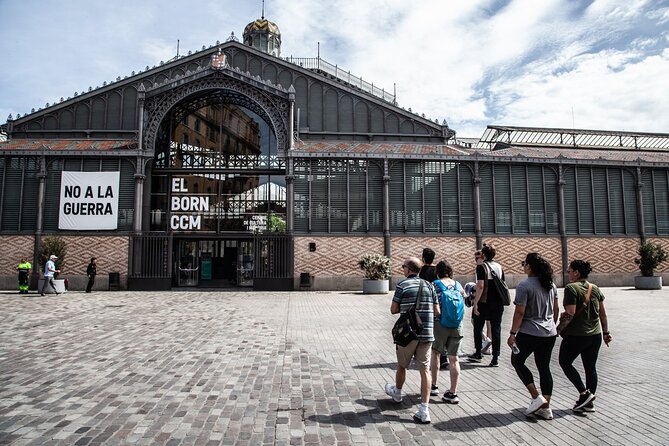
The tour ends at El Born Centre de Cultura i Memoria, located at Mercat del Born on Plaça Comercial. You spend about 20 minutes learning about the former market, once the largest covered market in Europe, before finishing with an olive oil tasting.
This is a fitting final stop. You begin with La Boqueria’s food stalls, move through city streets and old buildings, and finish with a product central to Mediterranean cooking. The olive oil tasting gives you one more practical food lesson instead of ending with a simple goodbye outside a market.
The former market is now a cultural center, so the stop combines food history and urban change. You can see how a working market building can take on a new public role while preserving part of the city’s past.
The ending point is useful for continued sightseeing. The tour finishes in El Born, an area with cultural attractions and access to public transportation. One guide even helped a participant locate the metro afterward, a small but welcome sign of the practical help you can get from a good guide.
Guides, Explanations, and the Human Side of the Tour
The guide can make or break a walking tour, and this experience appears to rely heavily on individual personalities. Alberto has been praised for making food choices less intimidating and for offering many recommendations. Zeynep combined markets, local history, food, and wine in a way that left the morning feeling varied.
Perrine was praised for being professional, warm, and exceptionally informed. Cal brought an easygoing style, with stories about markets and tastings that included olives and candy. Eoghan was especially effective at explaining Spanish and Barcelona history while keeping the group together in crowded spaces.
Valentina used visual aids while explaining Spanish cuisine and Barcelona’s past. Andres gave visitors a wider look at the Gothic Quarter, while Paul added small stories and helped with metro directions. Carlos Andrés was praised for patience, enthusiasm, and making the route enjoyable even for a demanding group.
You cannot choose your guide from the information provided, so expectations should remain sensible. Still, the repeated praise for clear explanations, friendliness, and local recommendations is encouraging. The best guides do more than name foods. They help you understand why a market matters and what to do with that knowledge afterward.
Price, Pace, and What You Actually Receive
At $35.09 per person, the tour offers solid value if you want a guided introduction to several parts of the old city. Your price includes a professional guide, guided walking, two small La Boqueria tastings, and an olive oil tasting in El Born.
The value comes from the range of information rather than the quantity of food. You are paying for market access, orientation, local advice, and stories about Barcelona’s neighborhoods. You are not paying for a full breakfast, lunch, or unlimited samples.
The two to three hour duration fits well into a morning. It leaves time for lunch afterward and gives you ideas for what to eat next. The pace may feel quick at Boqueria and Santa Caterina, especially if you stop often for photos or want to browse every stall.
Wear comfortable shoes and arrive ready to walk. The route moves through markets, promenades, old streets, and cultural sites. Most people can take part, and service animals are allowed. The meeting point is near public transportation, which makes the 10:00 a.m. start fairly practical.
You can cancel for a full refund up to 24 hours before the start time. Cancellations or changes made less than 24 hours before the tour are not accepted for a refund.
Who Should Book This Barcelona Walk?
I would recommend this tour to first-time visitors who want a quick introduction to Barcelona’s food culture and central old town. It also suits you if you enjoy history but do not want a full museum tour, or if you feel unsure about what to order and buy in Spanish markets.
It is a good match for solo visitors, couples, and small groups who value conversation with a guide. Families may also enjoy the unusual caganer stop and the food samples, though the walking pace and crowded market aisles may not suit very young children.
I would hesitate if you want a long, relaxed meal, extensive shopping time, or a tour focused only on one market. The route covers a lot, but each stop receives a short visit. You will gain a broad view rather than an exhaustive look at any single place.
Should You Book the Barcelona Markets Tour?
Book it if you want to get your bearings through food. For $35.09, you see three different market settings, sample local products, learn about Barcelona’s trade and neighborhoods, and finish in El Born with olive oil.
Skip it if you prefer to wander alone or want a full meal included. Otherwise, this is a practical first morning in Barcelona, especially when you want help choosing local foods and understanding what lies beyond the famous stalls of La Boqueria.
FAQ
How long does the Barcelona Markets Tour last?
The tour lasts approximately two to three hours.
What time does the tour start?
The tour starts at 10:00 a.m.
Where does the tour begin?
It begins at Rambla de Sant Josep, 89, in Barcelona’s Ciutat Vella.
Where does the tour end?
It ends at Mercat del Born, Plaça Comercial, 12, in Ciutat Vella.
What food tastings are included?
The tour includes two small tastings at La Boqueria and an olive oil tasting in El Born.
Are market purchases included?
No. Food and other items you choose to purchase at the markets cost extra.
What is the group size?
The tour has a maximum of 15 participants and is offered in English.
Just added around Barcelona
- Barcelona La Boqueria & Sant Antoni Private Food Experience★ 5.0 · 7 reviews
- Taste of Barcelona: Boqueria Market, Tapas & History Tour★ 4.5 · 22 reviews
- Barcelona Tapas Cooking & Cocktail Class with Veronique & Mattias★ 5.0 · 3 reviews
- Spanish Oysters, Cava and Ibérico Ham at Barcelona’s La Boqueria Market★ 5.0 · 8 reviews
- Private Barcelona Market Tour & Paella Cooking Class with Josh★ 5.0 · 4 reviews
- Food and Market Tapas Tour★ 5.0 · 6 reviews
- Market Gourmet Visit and Spanish Culinary Experience in Barcelona★ 5.0 · 34 reviews
- Cook Paella & Tapas + Market Tour in Barcelona (4-Course Meal)★ 5.0 · 2 reviews
Market Tours, compared.
Damnoen Saduak Market and Maeklong Railway Market
Read our review →
The Old Siam: Damnoen Saduak and Maeklong Railway Market
Read our review →
Old Town, Creek, Museums, Souks, & Street Food Tour
Read our review →Train Market & Floating Market with Boat Ride
Read our review →
Old Town, Souks, Street Food, Guided Tour & Abra Ride
Read our review →
Ayutthaya & Ayothaya Floating Market Day Trip
Read our review →
Frame Tickets, Creek, Souks & Blue Mosque Guided Tour
Read our review →
Hanoi Cooking Class: Culture, Local Market & Meaning CSR Impact
Read our review →Browse the lists this tour appears in