Review · VIETNAM
Can Tho: Authentic Floating Market, Wild Canal system, Cocoa
Wake up to boats instead of buses. This 5.5-hour Can Tho outing brings you to Cai Rang Floating Market at its busiest, then moves into quiet canals, a family cocoa farm, and a traditional noodle village. I like the 7:00 to 9:00 AM market timing, which avoids the needless 5:00 AM start sold by many older descriptions. I also like the small group size, capped at eight, and the generous supply of breakfast, drinks, chocolate, and fruit.
The main drawback is that Cai Rang is no longer an untouched trading world. It is still a working market, but tourism is part of the scene, and some moments can feel arranged for visitors. You should also expect a full morning with several stops, rather than a slow, single-focus river cruise.
The strongest part of the outing is the guide. Guides such as Sasa, Clara, Hannah, and Lam have been praised for clear English, local knowledge, warmth, and good humor. At $26 per person, the food alone is a nice bonus, but the real value comes from seeing the Mekong Delta by boat and on foot, with someone who can explain what you are looking at.
Key points to know before you go
- Cai Rang is busiest from 7:00 to 9:00 AM: The 6:45 AM meeting time is designed to put you there at the right moment.
- Breakfast is served on the water: Expect noodle soup or bread, Vietnamese coffee, fruit, and vegetarian food on request.
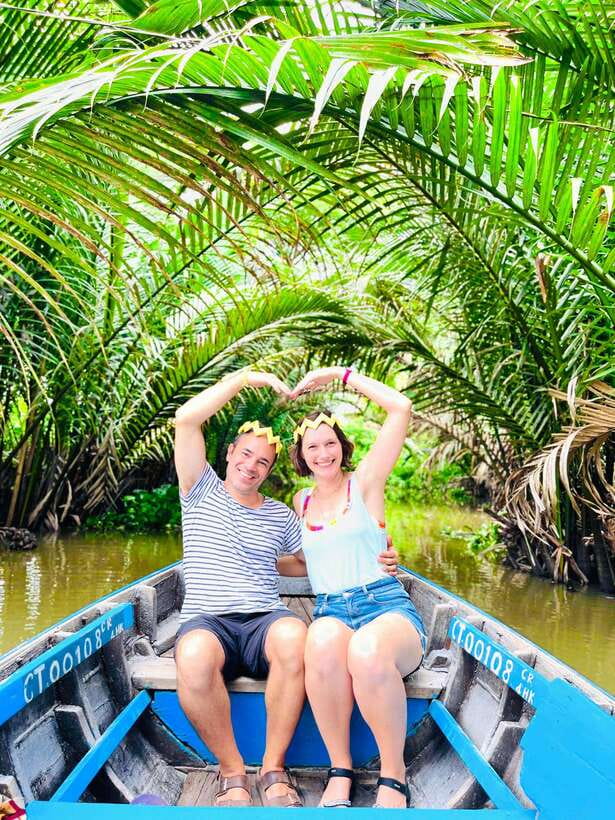
- The boat leaves the main market behind: Narrow canals, water coconut palms, wild plants, and quiet village life provide a useful contrast.
- The cocoa farm is family-run: You see how cacao is grown and turned into handmade chocolate products.
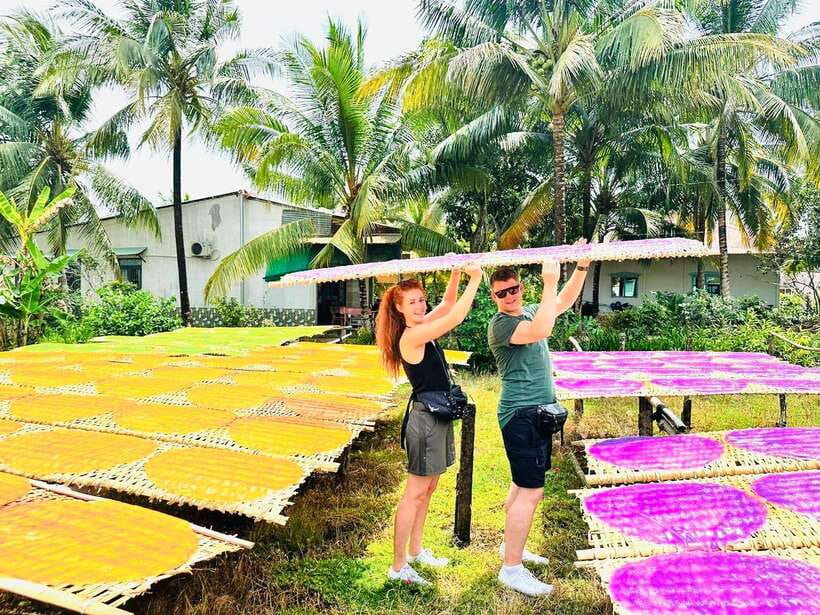
- The noodle stop is hands-on: At Chín Của, you learn about traditional noodle production and may try making noodles yourself.
- The group is limited to eight people: That makes questions, photos, and conversation with the guide easier.
Why this Can Tho morning works so well
Can Tho is the Mekong Delta’s biggest city, but its most memorable scenes happen away from traffic. This experience gives you a compact look at several sides of the region: trade on the river, transport by sampan, family food production, tropical farming, and village life.
The timing is a smart choice. Older travel advice often tells you to leave before dawn for Cai Rang. That was once useful, but the market has changed with Vietnam’s growing economy. Today, the liveliest period is generally between 7:00 and 9:00 AM. You still need to get up early, but you do not have to sacrifice half the night.
The meeting point is in front of An Binh Market at 6:45 AM. Use the full name, An Binh Market, ĐT923 Street, An Binh Ward, Ninh Kieu District, Can Tho, when checking directions. This matters because Can Tho has several markets, and arriving at the wrong one would be a poor start.
The experience lasts 330 minutes, or five and a half hours. With a maximum group of eight, it feels more personal than a large coach excursion. The transport is by local boat and sampan, and an English-speaking guide stays with you through the stops.
More Floating Market Tours in Can Tho
- Can Tho: Floating Market & Mekong’s Legacy( About 6 Pax)
★ 5.0 · 1,438 reviews - Can Tho: A Real Mekong Tour, Floating Market, Cacao & Life’s
★ 4.9 · 574 reviews - Largest Floating Market, Wild Small Canal System & Organic cocoa
★ 5.0 · 564 reviews
Cai Rang at the right hour
The first major stop is Cai Rang Floating Market, the largest floating market in the Mekong area. You arrive during the useful part of the morning, when vendors are still selling produce and boats are moving between buyers and sellers.
Look for pineapples, mangoes, rambutans, and watermelons. Large boats often display their goods on tall poles so buyers can see what is available from a distance. That simple system makes more sense once you are on the water, surrounded by boats rather than standing beside a road.
This is not only a wholesale market. Some boats serve noodle soup, coffee, and other breakfast items. Your guide can help you order from a floating vendor, giving you a chance to eat as local people do, surrounded by the sounds and movement of the river.
Breakfast may include noodle soup or bread, and vegetarian food is available. Vietnamese coffee is strong and sweet, so it is a good match for the early start. Fresh pineapple is another highlight, usually cut for you on the boat. Drinks may also include coconut water or other refreshments.
The market is worth seeing, but keep your expectations realistic. It is not a sealed-off time capsule. Boats now serve visitors, and some activity is clearly shaped by tourism. One honest description compared parts of the scene to a human safari, which is a fair warning if you want a completely private look at local life.
Still, a boat is the best way to understand Cai Rang. From the bank, you see only a strip of water and distant traffic. On a boat, you move among the vendors, see how goods are displayed, and watch people live and work on the river. That physical perspective is the reason to come.
The quiet canals after the market
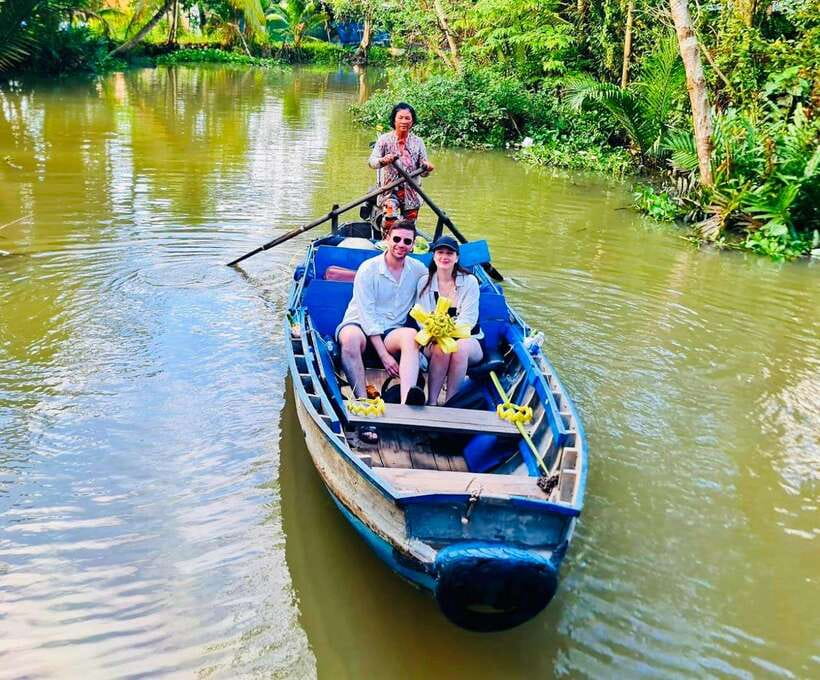
After the market, the mood changes quickly. The boat heads into smaller canals lined with wild plants, water coconuts, and tropical greenery. This is the calmer half of the morning, and it gives you time to listen, take photographs, and watch the banks pass slowly.
The contrast is the point. Cai Rang shows the Delta as a place of trade and movement. The smaller canals show how water still shapes everyday life. You may see homes, boats, gardens, fruit trees, and people going about ordinary tasks along the banks.
This part is not a high-speed adventure. It is a peaceful ride, with the guide explaining the plants, waterways, and local way of life. Guides are also happy to take photographs, which is useful for solo visitors and couples who do not want to rely on strangers for every picture.
The word wild in the tour description should be understood loosely. This is a lived-in canal system, not untouched wilderness. You will see signs of settlement and daily work, but the narrow waterways are far quieter than the main market.
Bring sunglasses, a sun hat, and sandals. A raincoat is supplied according to the tour information, but light rain can still make boat rides less comfortable. Loose clothing and protection from the sun will make the morning easier.
Handmade noodles at Chín Của
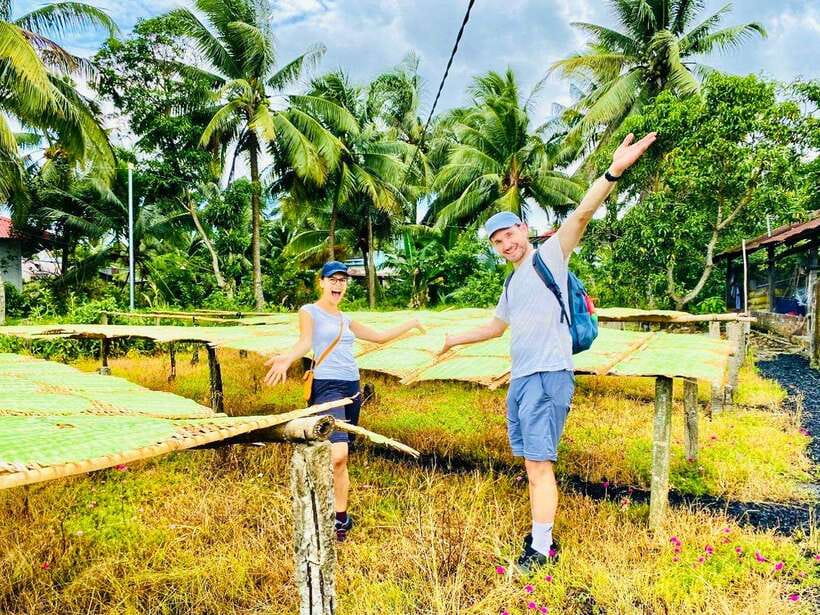
The stop at Lò hủ tiếu Chín Của introduces one of the Delta’s familiar foods. Families have passed down noodle-making methods through generations, and the visit shows how a basic bowl of noodles begins long before breakfast reaches your table.
You learn about the process and may have a chance to make noodles yourself. That hands-on element helps the stop feel less like a quick photo opportunity. You see the work behind a food you may already have eaten at the floating market.
The stop is planned for about an hour. That is enough time to understand the craft without turning the morning into a technical class. Your guide can also connect the production process to local food habits, farming, and family work.
Expect a working family operation rather than a polished museum. Conditions may be simple, and the presentation may vary depending on the day. That is part of the appeal, but visitors who want a highly staged attraction may find it less slick.
More Floating Market Tours in Vietnam
- The hidden Fabulous Floating Market and Small Canal
★ 5.0 · 253 reviews - Cai Rang floating market, Cacao & hidden small canal
★ 5.0 · 244 reviews - CAN THO: Floating Market & Mekong’s Legacy (About 6 Pax)
★ 5.0 · 235 reviews - Mekong Delta and Cai Rang Floating Market 5-Hours Tour
★ 5.0 · 183 reviews
Cocoa from a Mekong family farm
The visit to Vườn Ca Cao Mười Cương is one of the more unusual parts of the morning. Cacao is not the crop most people associate with the Mekong Delta, which makes the farm an interesting detour from the usual fruit-and-rice story.
The family’s history with cacao began when the owner’s father brought plants back from Malaysia in 1960. You learn how the fruit grows, how the beans are processed, and how the family makes chocolate by hand.
You are also given cacao and chocolate to taste. The exact products may vary, but the stop can include chocolate drinks or handmade treats. It is a useful lesson in how a small farm can turn an unfamiliar crop into a local specialty.
This is not a large chocolate factory. The attraction is the family scale and the connection between plant and finished food. I like that you get to see the crop in its local setting rather than only buying a packaged souvenir.
The farm visit takes about an hour. If you are sensitive to heat, plan for a warm stop and bring water, although drinks are included during the outing.
Fruit trees and village life in Mỹ Khánh
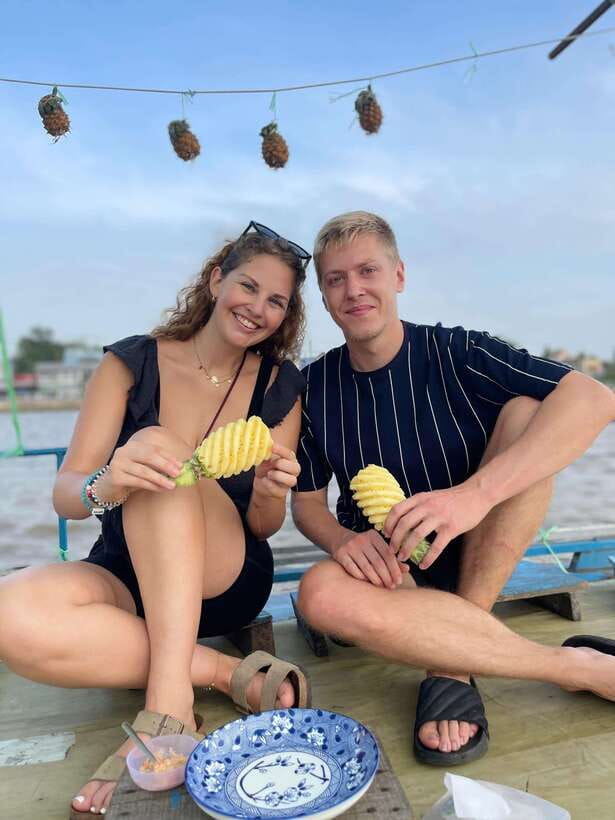
The Mỹ Khánh portion adds time on land. You walk through local village areas and see tropical fruit trees while the guide explains cultivation, harvest seasons, and the traits of different fruits.
The tasting is generous. You may try mango, jackfruit, star apple, pineapple, and other tropical fruit, including water coconut. Star apple is especially worth trying if it is available, since its soft texture and sweet flavor are unlike the standard fruit plate served in many hotels.
This stop makes the morning feel more personal. Markets can be crowded and noisy, while a walk among fruit trees gives you a better sense of where the food comes from. The guide can also help identify fruit you might otherwise pass without noticing.
Mỹ Khánh is listed as a one-hour stop, and it also provides a useful break from sitting in the boat. You should expect walking on village paths and time outside, so sandals with a secure strap are more useful than delicate city footwear.
The guides make the difference
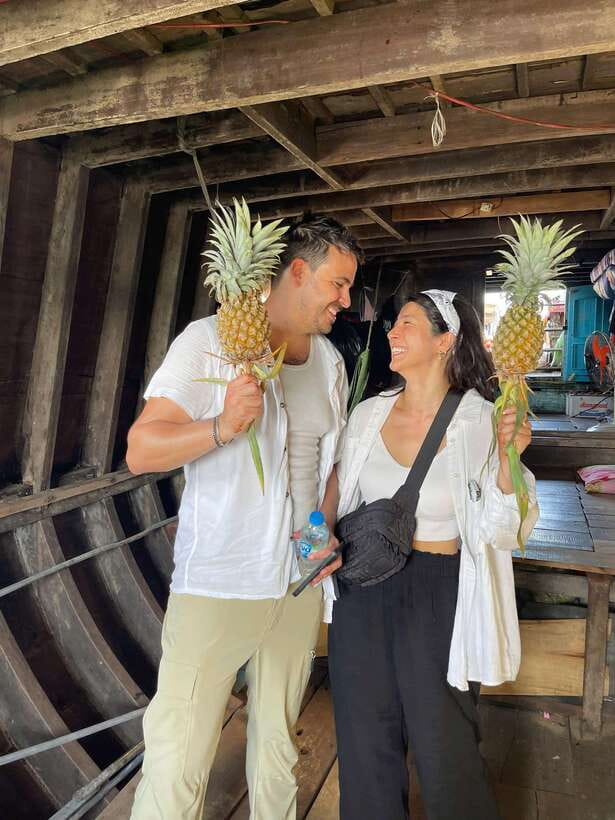
The published guide profile is a little unusual: local guides from the millennial generation, with university backgrounds and interests that include Vietnamese history, culture, economics, and politics. In practice, the best guides bring those subjects down to earth.
Sasa is praised for including everyone in the conversation and taking good photographs. Clara is known for humor, strong English, and personal connections in the area. Hannah receives repeated praise for warmth, energy, and explanations about local life. Lam is described as funny, caring, and able to answer questions about the Delta.
Guide assignments change, so you cannot book a particular person based on those examples. Still, the pattern is useful: this experience depends heavily on the guide. A good one turns a sequence of stops into a connected story about food, work, water, and family life.
The small group helps. With no more than eight people, you can ask about ingredients, farming, history, or local customs without shouting across a crowded boat. It also makes it easier for the guide to help with photos and food choices.
What $26 really gets you
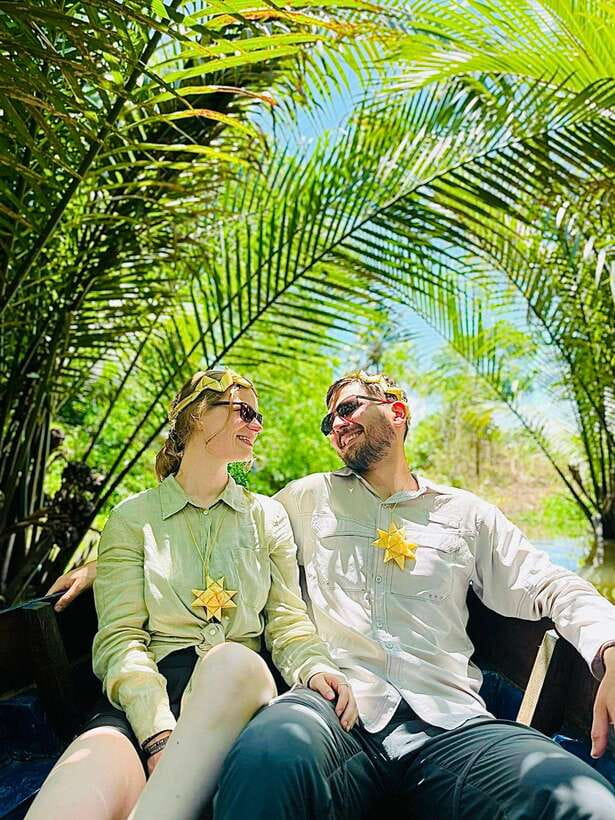
At $26, this is strong value if you want more than a short market ride. The price includes the English-speaking guide, sampan transport, breakfast, coffee, coconut, chocolate, and several rounds of tropical fruit. Vegetarian food is available, which removes one common worry at a food-focused outing.
You are paying for a full half-day with several forms of transport and multiple stops. A private boat would offer more control, but likely at a higher cost. This small-group option gives you a middle ground: more personal attention than a large group, without the price of a private tour.
The food adds real value, not just decoration. You get a bowl of noodles or bread at the market, drinks, pineapple, cacao products, and fruit later in the morning. Some people may find the amount of food surprisingly generous for the price.
The tradeoff is pace. You visit a market, canals, noodle workshop, fruit-growing area, and cocoa farm in one morning. If you prefer to sit quietly on the river for hours, this will feel busy. If you want a broad introduction to the Delta, the variety is a strength.
Who should book this experience
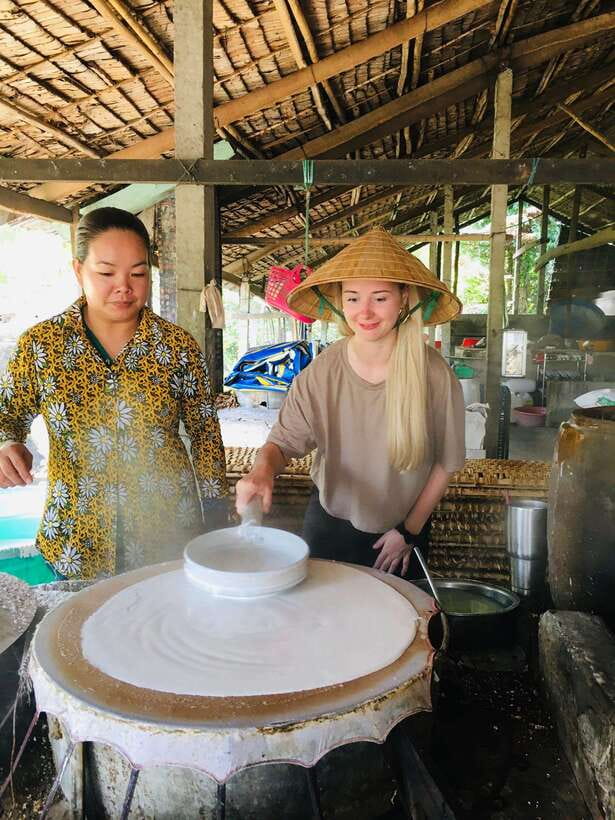
I would choose this tour if you are staying in Can Tho and want an efficient introduction to the Mekong Delta without a pre-dawn departure. It suits first-time visitors, food lovers, photographers, couples, solo visitors, and small groups who enjoy asking questions.
It is also a good choice if you want both water and land experiences. You see the market from a boat, travel through narrow canals, walk in village areas, and visit two small family food operations.
You may want another option if you are over 70, have altitude sickness, or dislike boats, heat, walking, and a fairly full schedule. Alcohol and drugs are not allowed, and the activity is conducted in English.
Free cancellation is available up to 24 hours ahead, and you can reserve while paying later. Those terms are useful if your Mekong plans depend on weather or changing transport arrangements.
Should you book the Can Tho floating market tour?
Yes, if you want a well-priced morning that combines Cai Rang with quieter, more local settings. The market alone is worth seeing, but the cocoa farm, noodle-making stop, canal ride, and fruit tasting give you a fuller picture of the Delta.
Book it knowing that Cai Rang is a working market shaped partly by tourism. The reward is not a fantasy of untouched river life. It is the chance to see how trade, food, farming, and family businesses fit together today, with a guide who can help you notice the details.
FAQ
What time does the tour meet?
You meet at 6:45 AM in front of An Binh Market, also called Chợ An Bình, on ĐT923 Street in An Binh Ward, Ninh Kieu District, Can Tho.
How long does the activity last?
The experience lasts 330 minutes, or five and a half hours.
How large is the group?
The group is limited to a maximum of eight travellers.
What food is included?
Breakfast includes noodle soup and bread at the floating market. Vegetarian food is available.
Are drinks included?
Yes. Included drinks may include coffee, coconut, and chocolate.
What fruit will I try?
The fruit selection can include mango, pineapple, jackfruit, star apple, water coconut, and other tropical fruits.
What language does the guide speak?
The tour has a live English-speaking local guide.
What should I bring?
Bring sunglasses, a sun hat, and sandals. Alcohol and drugs are not allowed.
More Market Boat Trips in Can Tho
- Can Tho: Authentic Mekong Delta – Real Local Life Tour.
★ 5.0 · 149 reviews - From HCM: Mekong Delta Can Tho Floating Market 2-Day Tour
★ 4.7 · 84 reviews - Can Tho: Mekong Delta and Cai Rang Floating Market Tour
★ 4.8 · 47 reviews - Can Tho: Floating Market, Canal, Cacao Farm & Mekong’ Life
★ 5.0 · 45 reviews
Just added around Can Tho
- Tra Su Cajuput Forest An Cairang Floating Market★ 5.0 · 4 reviews
- Private ecotour in Can Tho: floating market-nature reserved★ 5.0 · 23 reviews
- Cai Rang Floating Market Tour -Amazing Can Tho★ 5.0 · 106 reviews
- Hau River Floating Market and Con Son Islet Adventure★ 5.0 · 3 reviews
- Explore Floating Market with Local People★ 5.0 · 7 reviews
- Floating Market & Hidden Canals – Small Group Morning Boat Tour★ 5.0 · 34 reviews
- Cai Rang floating market, see sunrise, CaCao orchard, small canal★ 5.0 · 44 reviews
- Can Tho Floating Market and Fruit Garden Tour★ 5.0 · 40 reviews
Floating Market Tours, compared.
Damnoen Saduak Market and Maeklong Railway Market
Read our review →
The Old Siam: Damnoen Saduak and Maeklong Railway Market
Read our review →Train Market & Floating Market with Boat Ride
Read our review →
Ayutthaya & Ayothaya Floating Market Day Trip
Read our review →
Half-Day Railway Market and Floating Market Tour in Thailand
Read our review →
Cooking Class Hoi An:Local Market, Basket Boat, Fishing & Cooking
Read our review →