Review · EGYPT
Private Tour To Islamic Cairo and Khan El-Khalili Tourist Bazaar
Cairo’s old city rewards curious walkers. This private tour pairs hotel pickup in a modern, air-conditioned vehicle with a guided walk through Islamic Cairo, from Fatimid gates to the Khan El-Khalili bazaar. I like the direct transport and the chance to shape the outing around your interests. I also like the useful mix of major monuments, small architectural details, and time for a drink at El Fishawi café. The main drawback is time: four to six hours goes quickly in a district filled with mosques, markets, and side streets.
A private guide can make a real difference here. Hamada, one guide associated with this experience, is praised for being flexible, polite, and attentive to personal interests. You should still expect traffic, crowds, shopkeepers, and uneven walking conditions in the old city. The private format helps, but it does not turn Cairo’s medieval quarter into a quiet museum.
Key points to know before you book
- Fatimid gates frame the walk: Bab al-Futuh and Bab Zuweila show the scale and defensive design of old Cairo.
- Muizz Street is the main spine: This roughly one-kilometer street links a dense run of medieval buildings and historic quarters.
- Your guide adjusts the focus: Ask for more architecture, religious history, photography advice, or shopping time.
- Transport saves energy: Hotel pickup and return mean you avoid arranging the metro or dealing with Cairo traffic yourself.
- Khan El-Khalili is a short but lively finale: Thirty minutes gives you a taste of the bazaar, not unlimited browsing.
- The price reflects privacy: At $80 per person, the value is strongest when your group wants a guide and private vehicle.
Why Islamic Cairo is worth your time
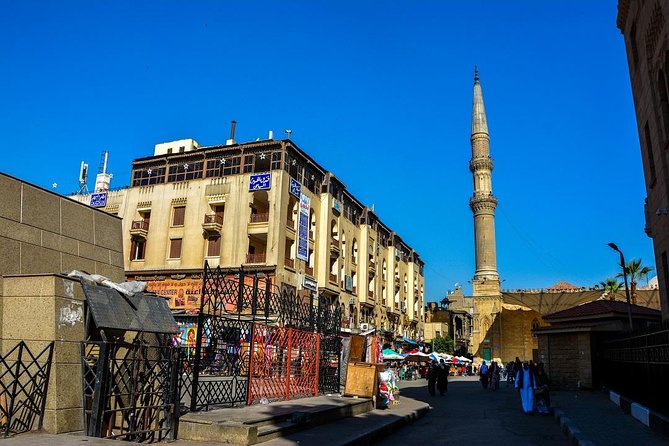
Islamic Cairo is not one single monument. It is an old section of central Cairo around the former walled city and the Citadel area, filled with mosques, madrasas, tombs, mansions, caravanserais, and fortifications from the Islamic era.
UNESCO recognized Historic Cairo as a World Heritage site in 1979. The district reached a high point in the 14th century, but the walking route also brings in Fatimid, Mamluk, and Ottoman-era buildings. That mix gives the area its appeal. You are not simply walking from one isolated sight to another. You are moving through a working city built around centuries of worship, trade, education, and defense.
I find a guide especially useful here because many important details sit above eye level or behind plain-looking doorways. A trained Egyptology guide can explain architectural features, point out good photo angles, and help you understand why a gate, courtyard, or carved facade matters.
The route is listed at four to six hours, with about two hours assigned to Islamic Cairo itself. That is enough for a strong introduction. It is not enough to see every mosque or spend long periods inside each major complex, so tell your guide what interests you most at the start.
More Private Market Tours in Cairo
- Cairo 8 Hour Private Tour of Pyramids, Egyptian Museum and Bazaar
★ 5.0 · 2,931 reviews - Cairo: Private Pyramids, Museum & Bazaar Tour with Lunch
★ 4.6 · 744 reviews - Cairo: Local Markets & Khan el Khalili Private Shopping Tour
★ 4.6 · 614 reviews
Hotel pickup turns a complicated day into an easy one
The tour includes pickup and drop-off from hotels across Cairo. A private chauffeur brings you to the old city in an air-conditioned vehicle, then returns you after the walk. Onboard Wi-Fi and bottled mineral water are also included.
That transport is more than a comfort feature. Cairo traffic can make even a simple cross-town trip tiring, and finding the right entrance to the old city can take time. With a private vehicle, you avoid negotiating public transport before you begin walking. You also have a place to cool down between the hotel and the historic quarter.
The wide range of departure times is useful if you have a late arrival, an evening flight, or another Cairo visit planned. You can fit the experience around your schedule rather than giving up most of a day to a fixed departure.
Still, private transport does not remove every delay. Traffic can be heavy, and the walking section takes place in a busy urban district. Plan on a flexible pace rather than a minute-by-minute schedule.
Muizz Street, Cairo’s medieval main street
Sharia Al Muizz Li-Din Allah, often called Muizz Street, is the central thread of this tour. The street runs for about one kilometer between Bab al-Futuh in the north and Bab Zuweila in the south. It is named for Al-Muizz li-Din Allah, the fourth caliph of the Fatimid dynasty.
A United Nations study identified Muizz Street as having one of the highest concentrations of medieval architectural treasures in the Islamic world. That helps explain why the walk feels packed with detail. You may pass mosques, schools, fountains, market buildings, and old residences within a short distance.
The street underwent major renovation beginning in 1997. Historical buildings, paving, modern structures, and drainage systems were repaired as part of the effort to turn the route into an open-air museum. The result is a more accessible historic corridor, though it remains part of a real city rather than a sealed heritage park.
Your guide can help you read the street as a connected place. Look for how religious buildings, commercial spaces, and residential quarters sit close together. A short walk here can give you a better sense of old Cairo than a quick stop at one famous mosque.
Bab al-Futuh and the northern approach
Bab al-Futuh, or the Conquest Gate, dates to 1087. It is one of only three surviving gates from the walls of old Cairo and marks the northern end of Muizz Street.
The gate was part of the fortifications built under Badr al-Jamali, commander and vizier to the Fatimid caliph Al-Mustansir. Its rounded towers were designed as a stronger defense than the square towers of nearby Bab al-Nasr. Look for the arrow slits and the openings used to pour boiling water or burning oil on attackers. Vegetal and geometric decoration softens what was, in practical terms, a military structure.
You get about thirty minutes here. That is enough for an explanation, photographs, and a close look at the stonework. If you enjoy military architecture, tell your guide. Bab al-Futuh rewards a slower look at its towers and defensive design.
More Private Market Tours in Egypt
- Old Cairo and Khan El Khalili Bazaar: Private Half-Day Tour
★ 4.6 · 251 reviews - Private Tour: Giza Pyramids, Sphinx, Egyptian Museum, Khan el-Khalili Bazaar
★ 4.5 · 170 reviews - Cairo: Private Half-Day Local Market and Souq Tour
★ 4.1 · 167 reviews - Private Guided Tour to Giza Pyramids Egyptian Museum & Khan El Kahlili Bazaar
★ 5.0 · 147 reviews
Qalawun Complex and Bayt Al-Suhaymi
The broader Islamic Cairo portion includes the 13th-century Qalawun Complex and the 16th-century Bayt Al-Suhaymi boarding house. These two stops help show that the old city was not built for one purpose.
The Qalawun Complex represents the grand religious and charitable building tradition of medieval Cairo. The complex is associated with Sultan Al-Mansur Qalawun and includes major architectural elements that reflect the importance of rulers, faith, education, and public service.
Bayt Al-Suhaymi offers a different view. Rather than focusing only on monumental religious architecture, it brings attention to domestic and residential life. The building dates from the 16th century and is described as a boarding house. Together, these sites give you a more varied look at the district than a route focused only on grand mosques.
Admission is included for the listed stops. Even so, the amount of time at each site can depend on traffic, walking speed, and your guide’s choices. If one building matters most to you, say so early.
Sultan Al-Ghuri Complex and the Wekalet El Ghouri Arts Center
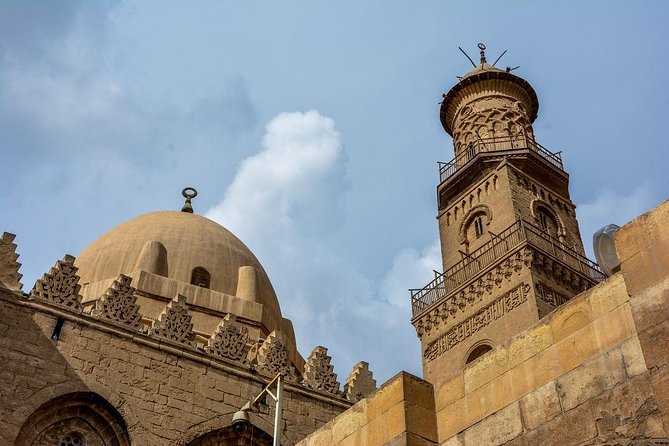
The Sultan Al-Ghuri Complex was built between 1503 and 1505 on both sides of Muizz Street. Its parts include a khanqah, mausoleum, sebil-kuttab, mosque, and madrasa.
That arrangement gives you a useful lesson in how Cairo’s historic complexes worked. A khanqah was linked to religious life, a mausoleum served as a burial place, and the sebil-kuttab combined a water fountain with education. The mosque and madrasa added worship and learning to the same architectural group.
The Wekalet El Ghouri Arts Center is assigned about thirty minutes. That is a short visit, but it gives your guide time to explain the complex and point out how the buildings face one another across the street.
This is one of the places where a guide’s photo advice can help. Courtyards, doorways, carved stone, and repeated geometric patterns can be difficult to frame in a narrow urban setting. You do not need to be an architecture specialist to enjoy it, but you will get more from the stop if you pause over the details instead of treating it as a quick photo stop.
Bab Zuweila and the southern end of the route
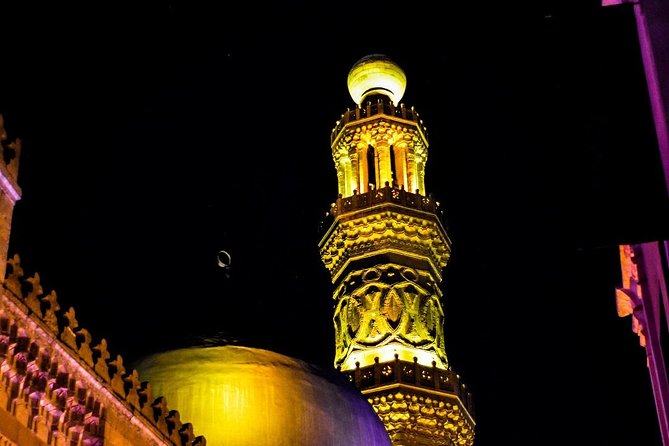
Bab Zuweila is the last remaining southern gate of Fatimid Cairo’s old walls. It is also one of the city’s major landmarks.
The name combines bab, meaning door, with Zuwayla, the name of a Berber tribe from the western desert whose members were assigned to guard the gate. During the Ottoman period, the gate was also known as Bawabbat al-Mitwali.
The tour allows about thirty minutes here. The stop works well after Muizz Street because it gives you another chance to compare Cairo’s surviving gates. Bab al-Futuh’s rounded towers emphasize defense from the north, while Bab Zuweila marks the southern edge of the old walled city.
As with Bab al-Futuh, your experience depends on how much time you want for photographs and explanation. A private tour gives you a better chance to ask questions or linger briefly, but the overall schedule still has several major stops.
Khan El-Khalili: shopping, color, and patience
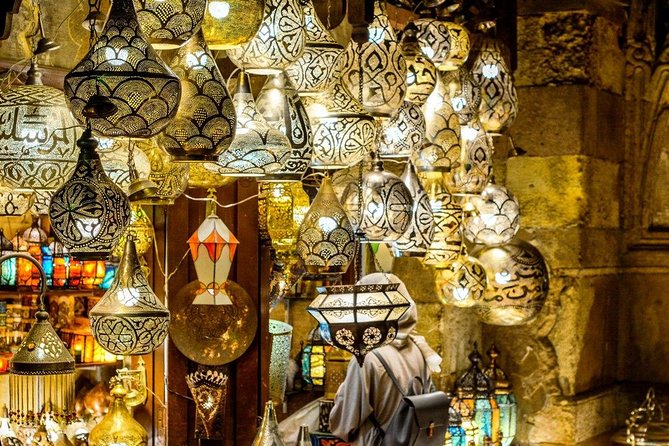
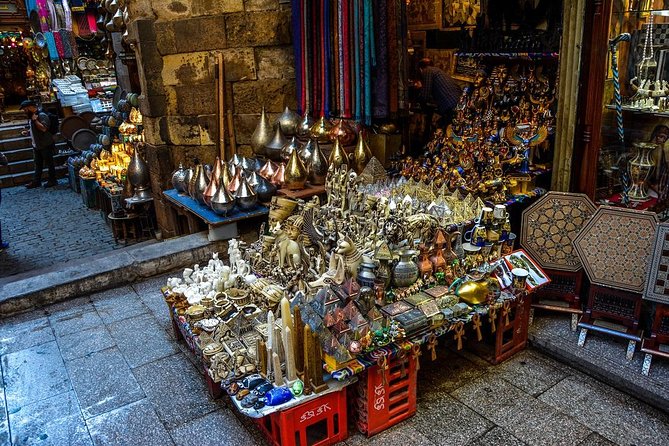
Khan El-Khalili is Cairo’s best-known historic bazaar and one of the city’s main attractions. The tour gives you about thirty minutes here, which is enough to get a first taste of its narrow lanes and market stalls.
Expect the bazaar to feel more commercial than the monuments along Muizz Street. You may find souvenirs, crafts, jewelry, spices, and other goods, but the exact selection and sales approach can vary. Your guide can help you move through the market and may offer practical advice about where to look and how to handle bargaining.
Thirty minutes is not a long shopping period. If you want to browse at length, ask whether the schedule can be adjusted. The private format gives you some flexibility, but extra market time may reduce time at another stop.
The best approach is to treat Khan El-Khalili as a lively finish to the walking route, not as a dedicated shopping excursion. Keep your expectations clear, and you are more likely to enjoy the atmosphere without feeling pressured to buy.
El Fishawi café and the value of a pause
The experience includes a non-alcoholic drink at the heritage El Fishawi café. This short pause matters because the route includes several hours of walking through a dense historic district.
El Fishawi is associated with the Khan El-Khalili area and gives you a place to sit, cool down, and watch the market activity around you. The drink is included as a cultural break rather than a full meal.
Lunch is not included. You can arrange an optional Egyptian meal at a local restaurant, with choices based on your preferences. If you want lunch, confirm how much extra time is available. A meal can make the outing more relaxed, but it may also push the experience toward the longer end of the four to six hour range.
What $80 per person gets you
At $80 per person, this is not the cheapest way to see old Cairo. You are paying for a private experience rather than joining a larger group, and that changes the value calculation.
The price includes a licensed Egyptology guide, private transportation, an air-conditioned vehicle, bottled water, Wi-Fi, hotel pickup and return, admission for the listed visits, and the non-alcoholic café drink. For a small group that wants direct transport and personal attention, those inclusions make the price easier to justify.
The value is strongest if you want to ask questions, adjust the focus, or avoid spending time arranging taxis and public transport. It is less compelling if you only want a short walk through the bazaar or if you are comfortable exploring historic Cairo independently.
Group discounts may be available, which can improve the cost for families or friends booking together. The activity is private, so only your group participates. That privacy is particularly useful if your party includes people with different interests or walking speeds.
Who should book this private Cairo walk?
I would recommend this experience to first-time Cairo visitors who want an organized introduction to Islamic Cairo without giving up personal attention. It also suits families, couples, and small groups who prefer hotel transport and a flexible guide.
The tour is a good fit if you want architecture, old city gates, and market life in one half-day outing. It works especially well for anyone who wants help with photo angles, background stories, and navigating the old quarter.
You may want something else if you prefer a slow, unstructured day spent browsing every lane of Khan El-Khalili. The schedule covers a lot, and the short visits mean you will see an overview rather than study every building at length.
The activity is near public transportation, and most people can participate. Still, you should expect substantial walking through an old urban district. Ask for a pace suited to your group, especially if you plan to add lunch.
FAQ
How long does the private Islamic Cairo tour last?
The experience lasts approximately four to six hours. The exact length can vary based on the route, traffic, walking pace, and whether you add optional lunch.
What is the price per person?
The listed price is $80 per person. Group discounts may be available.
Does the tour include hotel pickup and drop-off?
Yes. Pickup and return are offered directly from hotels across Cairo.
Is transportation included?
Yes. Private transportation in an air-conditioned vehicle is included, along with onboard Wi-Fi.
Is this a private tour?
Yes. Only your group participates in the activity.
Which main places are visited?
The route includes Islamic Cairo, Muizz Street, Bab al-Futuh, the Wekalet El Ghouri Arts Center, Bab Zuweila, and Khan El-Khalili. It also includes the Qalawun Complex and Bayt Al-Suhaymi as part of the Islamic Cairo visit.
Are admission tickets included?
Admission is included for the listed stops.
Is lunch included?
No. Lunch is optional and can be arranged at a local restaurant based on your preferences.
Can I cancel for a full refund?
Yes, if you cancel at least 24 hours before the experience start time. Cancellations or changes made within 24 hours are not refunded or accepted.
Should you book it?
Book this tour if you want to see several major parts of Islamic Cairo in one organized outing, with a private guide, hotel transport, and help handling the city’s traffic and market areas. The strongest reasons are the flexible format, the varied route, and the chance to shape the walk around your interests.
At $80 per person, it is best for people who value convenience and personal guidance. If you mainly want independent shopping or a very slow architectural study, choose a narrower plan. For a first look at Cairo’s old city, this tour offers a practical balance of monuments, gates, street life, and market time.
More Spice Market and Bazaar Tours in Egypt
- Cairo Sightseeing Highlights Tour Visiting Egyptian Museum Citadel with Mohamed Ali Mosque and khan khalili Bazaar
★ 5.0 · 56 reviews - Day Tour Cairo Egyptian Museum Coptic Cairo and Khan El Khalili Bazaar from Giza
★ 5.0 · 46 reviews - CairoPrivate Felucca on the Nile River and Khan El Khalili Bazaar
★ 4.5 · 32 reviews - Private Cairo City Tour: Giza Pyramids, Egyptian Museum and Khan Khalili Bazaar
★ 4.5 · 30 reviews
More Spice Market and Bazaar Tours in Cairo
- Cairo VIP Guided Tour to Khan El-Khalili Market with Lunch
★ 5.0 · 431 reviews - Visiting Egyptian Museum Citadel and Old market of Khan Khalili
★ 4.5 · 141 reviews - Full Day Tour To Giza Pyramids Egyptian Museum and Khan Khalili Bazaar
★ 5.0 · 96 reviews - Full Day Tour to Giza Pyramids, Sphinx, Egyptian Museum, Khan el-Khalili Bazaar
★ 5.0 · 73 reviews
Just added around Cairo
- Cairo layover tour Giza pyramids Egyptian museum local bazaars Camel ride Lunch★ 4.5 · 2 reviews
- Private Tour Giza Pyramids ,Egyptian Museum and Local Market★ 5.0 · 3 reviews
- Private Walking Tour in ElMoez Street & Khan Elkhalili Market★ 5.0 · 15 reviews
- VIP guided Tour Khan El Kahili Market Private Tour and Shopping★ 5.0 · 4 reviews
- Unusual Tour To The Camel Market Of Birqash★ 5.0 · 2 reviews
- Private Cairo City Tour: Giza Pyramids, Egyptian Museum and Khan Khalili Bazaar★ 4.5 · 30 reviews
- Private tour to the Pharaonic Village and Khan El Khalili Market★ 4.5 · 9 reviews
- Shopping tour In Governmental Bazaars include guide’s advisor★ 5.0 · 8 reviews
Grand Bazaar & Spice Market Tours, compared.
Dubai Half-Day City Tour with Visit to Dubai Gold Souk
Read our review →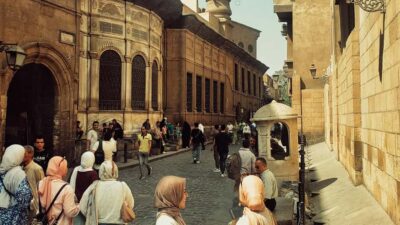
Local Markets & Khan el Khalili Private Shopping Tour
Read our review →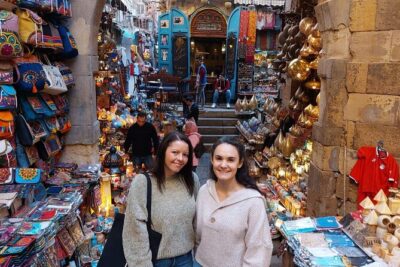
Cairo VIP Guided Tour to Khan El-Khalili Market with Lunch
Read our review →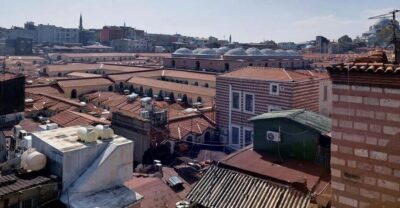
Istanbul Grand Bazaar: From Rooftops to the Secret Passages
Read our review →
Old Delhi Food-Spice Market-Temples Tour Soon Featured on NETFLIX
Read our review →Old Delhi Odyssey: A Tour of Religion, Spice Market, & Best Food
Read our review →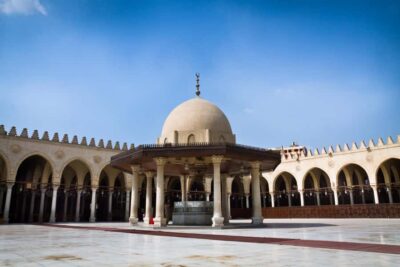
Old Cairo and Khan El Khalili Bazaar: Private Half-Day Tour
Read our review →