
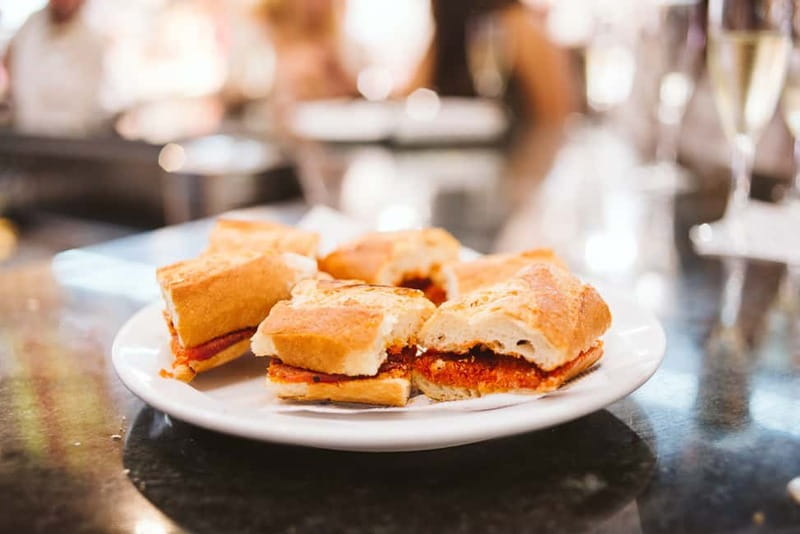
Review · SPAIN
Barcelona: Hidden Markets, Tapas & Paella Food Tour
Barcelona tastes better on foot. This three-hour food walk links Santa Caterina Market, El Born, and Barceloneta through seven family-run food stops, with more than 12 samples and three local drinks. I especially like the market start, where olives, cheeses, cured meats, and jamón ibérico introduce Catalan food in a real working setting. I also like the satisfying finish: seafood paella and wine at Can Ramonet, a long-running restaurant in the old fishermen’s quarter.
The main consideration is pace. You cover several neighborhoods and eat what amounts to breakfast and lunch in three hours, so this is not a slow, linger-over-every-bite outing. The stop for a bomba and vermouth can feel rushed when the restaurant is preparing to open, and the walk is not suitable for wheelchairs, strollers, or anyone who struggles with moderate walking.
Key points at a glance
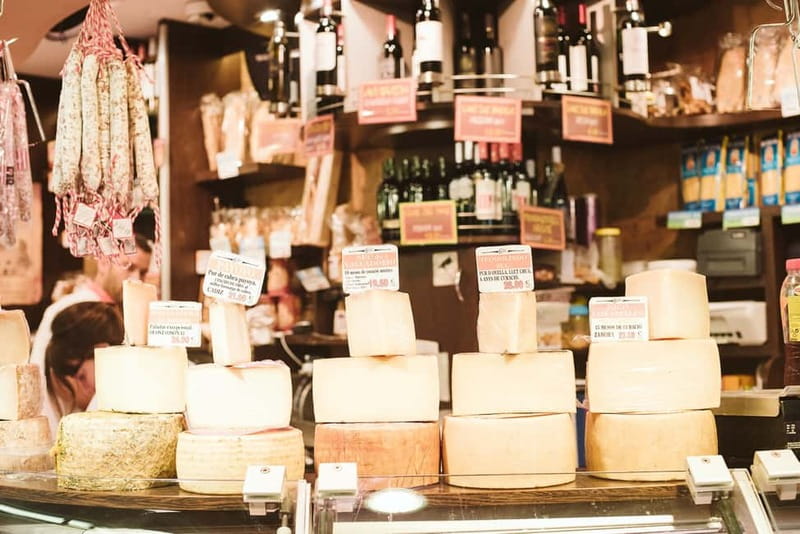
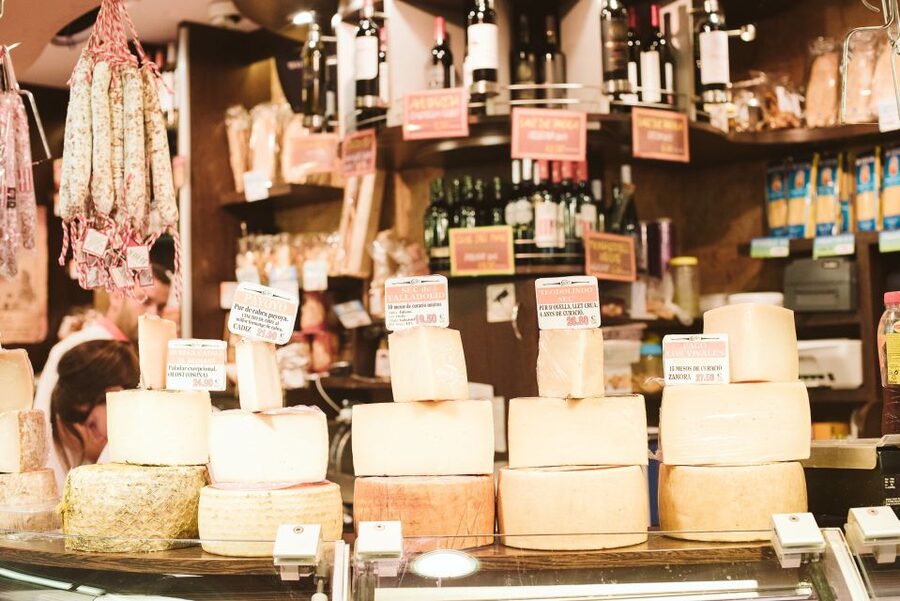
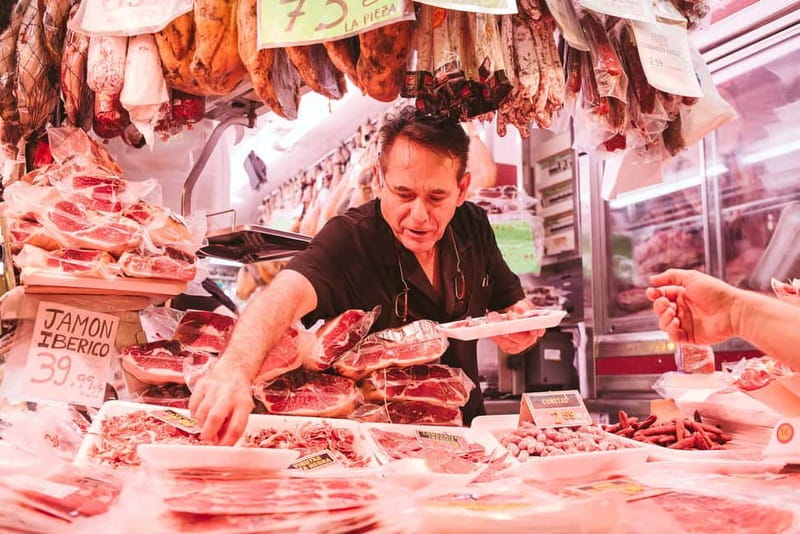
- Santa Caterina Market first: Family-run stalls provide olives, Spanish cheeses, cured meats, jamón ibérico, and a useful introduction to local shopping habits.
- Seven stops, 12-plus samples: The food adds up to a full meal, not just a string of tiny nibbles.
- El Born and Barceloneta on foot: You get neighborhood history alongside bakeries, specialty shops, bodegas, and seaside-district streets.
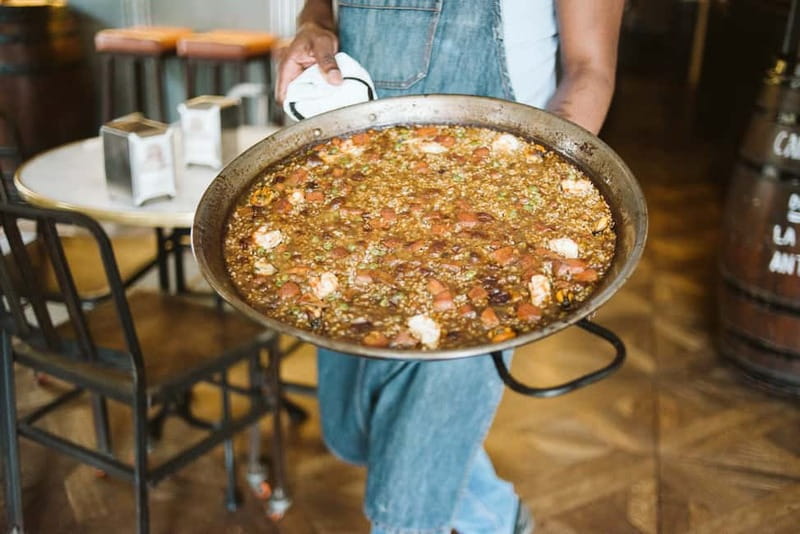
- Paella at Can Ramonet: The final meal features seasonal seafood paella and a local wine in a restaurant serving the area since the 1950s.
- Small English-speaking group: The group is limited to nine people, giving the guide room to answer questions and manage tastings.
- Best for flexible eaters: Vegetarian, pescatarian, gluten-free, non-alcoholic, and pregnancy-friendly adjustments are possible, but replacement food is not guaranteed at every stop.
Why this food tour works as a first taste of Barcelona

Barcelona has plenty of food tours, but this one earns its price by connecting food with place. You are not simply seated at a restaurant and handed a succession of dishes. You move from a market to a bakery, through medieval streets, into a bodega, and finally to a restaurant in Barceloneta.
That route matters. Spanish food makes more sense when you see where people buy ingredients, how local shops survive, and which dishes belong to a particular neighborhood. The guide explains customs and food traditions as you go, so you learn how to recognize and order familiar dishes later in your trip.
I also like the small group size. With a maximum of nine people, you should be able to hear the guide in a crowded market and ask questions without turning the walk into a private tour. Several guides have received especially warm praise for mixing food knowledge, city history, and humor. Alex, Jessica, Arianna, Hector, Valentina, Dom, and others have been singled out for making the experience friendly and easy to follow.
The tour receives a 4.8 rating from 47 reviews, with especially strong praise for its guides, food range, and local context. That does not mean every stop will suit every palate. It does mean the basic format has worked well for people looking for a broad introduction rather than a single-dish tasting.
More Street Food Market Tours in Barcelona
- Ultimate Barcelona Food Tour with visit to a Local Market
★ 5.0 · 507 reviews - Barcelona Food Tour: Market & Gothic Quarter with Expert Guide
★ 4.5 · 85 reviews - Barcelona: Street Food & Sightseeing Tour with Local Market
★ 4.9 · 84 reviews
Starting at Santa Caterina Market
Meet at the main entrance of Mercado de Santa Caterina, on Av. de Francesc Cambó, 16. Arrive 15 minutes early and look for a guide carrying a red bag or Devour Tours sign.
Santa Caterina is a good starting point because it feels connected to daily life. The market stalls have remained within families for generations, and the guide uses them to explain quality, produce, and local buying traditions. You are not just looking at displays. You move through the stalls while tasting products selected from the market.
The first hour includes specialty olives, Spanish cheeses, cured meats, and jamón ibérico. A glass of cava is also part of the tasting sequence. This is a generous opening, and it gives you a useful vocabulary for the rest of your time in Spain.
The market section may be the strongest part of the tour for curious eaters. You can compare salty, creamy, cured, and preserved flavors while hearing how these foods fit into local habits. It also gives you practical ideas for buying picnic supplies or edible gifts later.
There is one practical point to remember: markets can be crowded and noisy. Stay near the guide, especially if your group is spread around a stall. Comfortable shoes matter from the first minute because the tour keeps moving after the market.
Walking through medieval El Born
After the market, the route enters El Born. Today, the neighborhood has fashionable bars, boutiques, and restaurants, but the narrow streets still show an older Barcelona.
The history talk adds value here. Instead of treating El Born as a backdrop between tastings, the guide explains what you are seeing and places the streets in the city’s wider story. Guides such as Jessica and Arianna have been praised for combining local history with food in a way that stays lively rather than turning into a formal lecture.
This is also a useful transition between the market and the next food stops. The walking gives you time to settle after the first round of samples, though you should not expect a long pause. The itinerary is tightly timed, and the tour covers more ground than a market-only tasting.
I would consider El Born one of the best reasons to schedule this experience near the beginning of your stay. You get an early orientation to central Barcelona, then can return later to explore streets or shops that caught your eye. The food guide supplied after the tour can also help you continue eating with more confidence.
Brunells and a taste of old Barcelona baking
The next stop is Brunells, a bakery founded in the mid-19th century. Its croissants are presented as a house specialty, and the tasting gives you a look at one of Barcelona’s long-running baking traditions.
A bakery stop is a smart contrast to the savory market food. After olives, cheese, and meat, a sweet pastry changes the rhythm and shows that Barcelona’s food identity is not limited to tapas and seafood. The age of the bakery also gives the guide another way to discuss how neighborhood food businesses persist across generations.
The listed stop lasts about 25 minutes. That is enough time for a tasting and explanation, but not a leisurely café break. You should think of it as a focused visit rather than time to order a full coffee and watch the street go by.
If you are hungry, the pace will feel welcome. If you prefer to savor one pastry slowly, you may wish the stop lasted longer. The tour is designed as a full food day in miniature, so every stop has a job to do.
More Street Food Market Tours in Spain
- Barcelona Market Food Tour, Local & Artisanal Tastings
★ 4.7 · 30 reviews - Tasty Barcelona Street Food Tour With Local Market Visit
★ 4.5 · 24 reviews - Barcelona: 4-Hour Private Market & Foodie Tour
★ 4.9 · 15 reviews - Barcelona: Boqueria Market & Barrio Gotico Street Food Tour
★ 5.0 · 12 reviews
La Campana and Barcelona’s specialty-shop tradition
At Torrons i dolços La Campana, you try products from one of Barcelona’s specialty shops. The tour description identifies it as one of the last shops of its kind, making this stop useful beyond the sweets themselves.
This part of the route adds a bit of food history that is easy to miss when you explore alone. Specialty shops often tell you what a city values, preserves, and sells as a treat. Here, the guide explains the shop’s place in Barcelona’s food culture while you taste some of its best-selling products.
The visit lasts around 15 minutes, so it is brief. That is not necessarily a weakness. A short sweets stop keeps the overall tour moving and prevents the meal from becoming too heavy before the main course. It does mean you should not expect a detailed workshop or a long explanation of every product.
Together, Brunells and La Campana give the middle of the tour a pleasant change of pace. You see how food businesses can function as living links to the past, not simply as places designed for sightseeing.
Vermouth and the famous Barceloneta bomba
The route then heads toward Barceloneta, the former fishermen’s district beside the sea. This part of the walk provides another view of Barcelona, with the guide pointing out corners of the neighborhood before the food resumes.
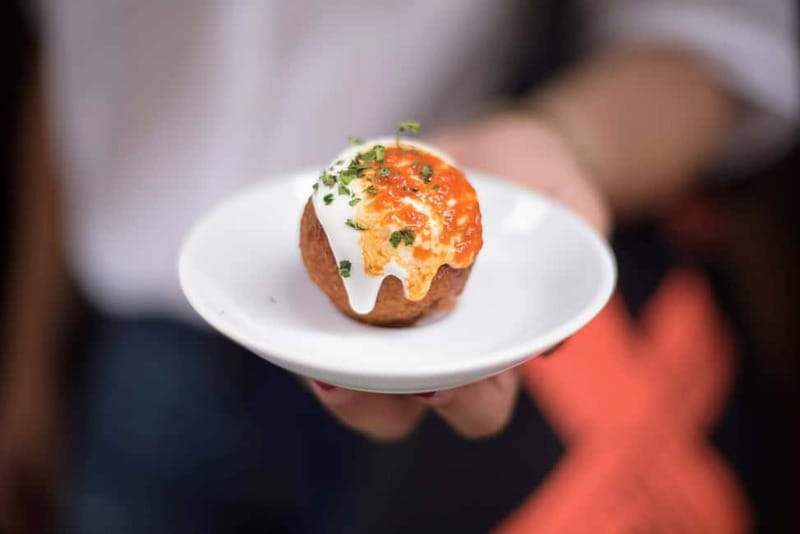
At Bodega La Peninsular, you learn about the Spanish aperitif tradition over a glass of vermouth. The tasting also includes a bomba, a Barcelona specialty often associated with Barceloneta. The dish is a fried potato-based tapa with a filling and sauce, though the supplied details do not specify the exact preparation served that day.
This is an important stop because it shows how a small drink and a simple tapa can carry local identity. Vermouth is not just an alcoholic beverage here. It belongs to a social ritual, a pause before a meal, and a way of meeting friends at a neighborhood bodega.
The main caution comes from timing. One detailed account found the bomba and vermouth stop rushed because the restaurant was preparing to open to the public. That may not happen every time, but you should be ready to eat promptly and listen closely while the guide explains the dish.
Non-alcoholic options are available, and the tour can adapt for pregnant participants. Still, the food alternatives may differ from stop to stop. If you have strict dietary needs, ask before booking rather than assuming every tasting can be replaced.
Seafood paella at Can Ramonet
The final stop is Restaurante Can Ramonet, where you sit down to a traditional Spanish meal. The restaurant has served locals since the 1950s and is located in the fishermen’s district, which makes it a fitting place to finish a food walk centered on Barcelona’s coastal identity.
The meal features seafood paella made with seasonal ingredients and paired with local wine. Several detailed comments praise both the paella and the wine, and this is likely the point where you will feel the tour has delivered a full lunch rather than a collection of samples.
Paella is also a dish where setting matters. Eating it in Barceloneta, after walking through the neighborhood and learning about its connection to fishing, gives the meal more meaning than ordering a generic version anywhere in the city. The guide can explain the dish and its place in local food culture while you eat.
The final tasting lasts about 50 minutes, the longest single stop after the market. That time allows you to sit, eat, and talk with the group. It is a welcome change after the walking portions, though anyone expecting a long, relaxed restaurant meal may find the schedule still somewhat brisk.
The tour ends at Mercat de la Barceloneta. Hotel pickup is not included, so you will make your own way to the meeting point and continue independently after the final stop.
What the $105 price gives you
At $105 per person, this is not the cheapest way to eat in Barcelona. The value comes from combining a substantial amount of food with a guide, neighborhood walks, market access, and local drinks.
You receive seven tasting stops, more than 12 samples, and three local drinks. The food covers breakfast and lunch, so you may not need to budget for another full meal during the same period. That matters when comparing the price with a market snack, a bakery visit, several tapas, a drink, and paella purchased separately.
You are also paying for the route and the explanation. Anyone can order paella, but a good guide helps you understand why a market stall, bakery, bodega, and fishermen’s restaurant belong in the same story. The strongest guide comments praise Alex, Hector, Jessica, Arianna, Valentina, and Dom for making that connection clear and entertaining.
I would call the value good for visitors who want structure and context. It is less attractive if you already know Barcelona’s food scene, dislike group schedules, or prefer to choose every dish yourself. The small group improves the experience, but it does not turn the tour into a private meal.
Who should book this experience
I would recommend this tour to first-time Barcelona visitors who want an early orientation through food. It suits people who enjoy walking, tasting several kinds of food, and learning how neighborhoods shape what appears on the plate.
It also works well for couples, friends, and families with older children or teenagers. A family with two adults and three teens found the mix of history, food, and movement engaging, which suggests the route has enough variety to hold attention.
You should be comfortable walking at a moderate pace for three hours. The tour is not suitable for people with mobility impairments, wheelchair users, or strollers. Bring comfortable shoes, water, and a passport or ID card.
The tour can adapt to vegetarian, pescatarian, gluten-free diets that are not related to celiac disease, non-alcoholic preferences, and pregnancy. It is not recommended for vegans, and people with gluten intolerance are specifically excluded from the suitability guidance. Because substitutions are not guaranteed at every stop, contact the provider before reserving if your diet is strict.
How to make the most of the three hours
Schedule this tour early in your Barcelona stay if you want its food advice and neighborhood orientation to guide later meals. Arrive early at Santa Caterina Market, stay close to the group, and keep your appetite open because the tastings build from savory market foods to sweets, vermouth, tapas, and paella.
Do not eat a large breakfast beforehand. The market begins with enough food to set the pace, and the tour description specifically treats the experience as covering breakfast and lunch.
If you drink alcohol, you will have opportunities to try cava, vermouth, wine, and possibly other local drinks included in the three-drink total. If you prefer not to drink, non-alcoholic options are available, but ask the guide at the start so expectations are clear.
The tour operates in English with a live local guide. Cancellation is free up to 24 hours before the start, and you can reserve while paying later, useful if your Barcelona plans are still shifting.
Should you book Barcelona’s Hidden Markets, Tapas and Paella Food Tour?
Book it if you want a well-filled introduction to Barcelona’s food culture, especially if this is your first visit. The market, bakery, specialty shop, bodega, and paella restaurant give you more range than a standard tapas crawl, while the walks through El Born and Barceloneta add useful local context.
Skip it if you need a slow meal, have serious dietary restrictions, or cannot walk at a moderate pace. The bomba stop may feel hurried, and the three-hour schedule leaves little room for lingering.
For most food-minded visitors, the combination of 12-plus samples, three drinks, two historic neighborhoods, and a full paella meal makes the $105 price reasonable. Come hungry, wear good shoes, and expect a busy morning that finishes with lunch.
FAQ
Where does the Barcelona food tour begin?
It begins at the main entrance of Mercado de Santa Caterina, Av. de Francesc Cambó, 16, 08003 Barcelona. Arrive 15 minutes before the start and look for a red bag or Devour Tours sign.
Where does the tour finish?
The tour ends at Mercat de la Barceloneta after the paella meal at Can Ramonet.
How long does the food tour last?
The experience lasts three hours. Starting times vary, so check availability when booking.
What food is included?
The tastings include specialty olives, Spanish cheeses, cured meats, jamón ibérico, bakery items, sweets, a bomba, seafood paella, and more than 12 samples in total.
Are drinks included?
Yes. Three local drinks are included. The tastings specifically include cava, vermouth, and wine, with non-alcoholic options available.
Is the tour suitable for vegetarians or people with dietary restrictions?
The tour can adapt for vegetarians, pescatarians, gluten-free diets that are not celiac, non-alcoholic preferences, and pregnancy. A replacement item may not be available at every stop. The tour is not recommended for vegans or people with gluten intolerance.
Is the tour accessible for wheelchairs or strollers?
No. It is not suitable for people with mobility impairments, wheelchair users, or strollers. You should be able to walk at a moderate pace without difficulty.
What should I bring?
Bring a passport or ID card, comfortable shoes, and water. No hotel pickup or drop-off is included, and entrance tickets to monuments are not part of the experience.
More Food Trips in Barcelona
- Barcelona Food Markets Private Tour with Tastings
★ 5.0 · 8 reviews - Barcelona La Boqueria & Sant Antoni Private Food Experience
★ 5.0 · 7 reviews - Barcelona Street Food Tour with Local Market & City Center Visit
★ 4.5 · 7 reviews - Food and Market Tapas Tour
★ 5.0 · 6 reviews
More Food and Drink Trips in Barcelona
- Barcelona: La Boqueria Food, Wine & History Walking Tour
★ 5.0 · 126 reviews - Boqueria & St Caterina Markets with Food & Tapas Small Group Tour
★ 4.5 · 73 reviews - Barcelona: Market, Tasty Tapas/Food and Gothic History Tour
★ 4.7 · 48 reviews - Boqueria and Santa Caterina Markets with Food and Tapas Private Walking Tour
★ 4.5 · 13 reviews
Just added around Barcelona
- Barcelona La Boqueria & Sant Antoni Private Food Experience★ 5.0 · 7 reviews
- Taste of Barcelona: Boqueria Market, Tapas & History Tour★ 4.5 · 22 reviews
- Barcelona Tapas Cooking & Cocktail Class with Veronique & Mattias★ 5.0 · 3 reviews
- Spanish Oysters, Cava and Ibérico Ham at Barcelona’s La Boqueria Market★ 5.0 · 8 reviews
- Private Barcelona Market Tour & Paella Cooking Class with Josh★ 5.0 · 4 reviews
- Market Gourmet Visit and Spanish Culinary Experience in Barcelona★ 5.0 · 34 reviews
- Cook Paella & Tapas + Market Tour in Barcelona (4-Course Meal)★ 5.0 · 2 reviews
- Food and Market Tapas Tour★ 5.0 · 6 reviews
Street Food Market Tours, compared.
Old Town, Creek, Museums, Souks, & Street Food Tour
Read our review →
Old Town, Souks, Street Food, Guided Tour & Abra Ride
Read our review →
London Bridge & Borough Market Food Tour with 7 Authentic Dishes
Read our review →
Old Town, Souks, Street Food, Guided Tour & Abra Ride
Read our review →
Small Group Cooking Class & Market Food Tour in Florence
Read our review →
Browse the lists this tour appears in