
Review · SPAIN
Paella & Sangria Class with Tapas and Market Visit
A good meal can explain a city. This Alicante cooking class pairs a walk through the Mercado Central with hands-on paella, tapas, and sangria preparation, making it a useful choice if you want more than a restaurant meal. I like the chance to shop for local ingredients with a guide, and I like that you can choose seafood, meat, or vegetarian paella. The main consideration is that the class centers on shared cooking and a traditional rice-focused paella, so anyone expecting a plate piled high with seafood may be disappointed.
The experience is led by hospitality professionals, with Federico, Fred, or Freddy often guiding the group and a chef helping in the kitchen. The atmosphere sounds friendly and relaxed, but the group size can vary. The published details give a maximum of 15 participants in one place and 16 in another, so ask ahead if a small class matters to you.
The details that matter most
- Market first, kitchen second: You begin at Plaza 25 de Mayo and enter Alicante’s Central Market to select ingredients before cooking.
- Three paella choices: Pick seafood, meat, or vegetarian paella, a useful option for mixed groups.
- Real kitchen setting: The cooking takes place in a working local restaurant kitchen rather than a staged demonstration space.
- Everyone gets involved: You may help prepare the broth, salmorreta, seafood, sangria, salad, and paella.
- A full meal is included: Along with paella and sangria, the spread can include Iberian ham, mountain sausage, tomato salad with salted fish, olives, crisps, and fruit.
- Good value for a half day: At $59.26 per person, the price covers about three and a half hours of food, instruction, market shopping, and a shared meal.
Meeting at Plaza 25 de Mayo
The class begins at Plaza 25 de Mayo, at the edge of Alicante’s Mercado Central. This is a practical meeting point because it puts you directly beside the first part of the experience, not at a distant restaurant or hotel pickup location.
Allow yourself enough time to find the plaza without rushing. Your guide may be easy to spot, but the market area can feel confusing if you arrive at the last second. The activity ends back at the same meeting point, which simplifies your plans for the rest of the day.
The class lasts about three and a half hours. That is long enough for a proper market visit, food preparation, cooking, and a sit-down meal. It is not a quick demonstration you can squeeze between two sightseeing stops. I would schedule it on a morning or afternoon when you can give the food your full attention.
A few more market tours around Spain worth a look
- Barcelona: Paella Cooking Experience & Boqueria Market Tour
★ 4.8 · 3,661 reviews - Barcelona Paella Cooking Class with Market Visit, Tapas & Sangria
★ 5.0 · 2,531 reviews - Paella Cooking Class, Wine Tasting & Central Market in Valencia
★ 5.0 · 1,150 reviews
Shopping inside Alicante’s Central Market
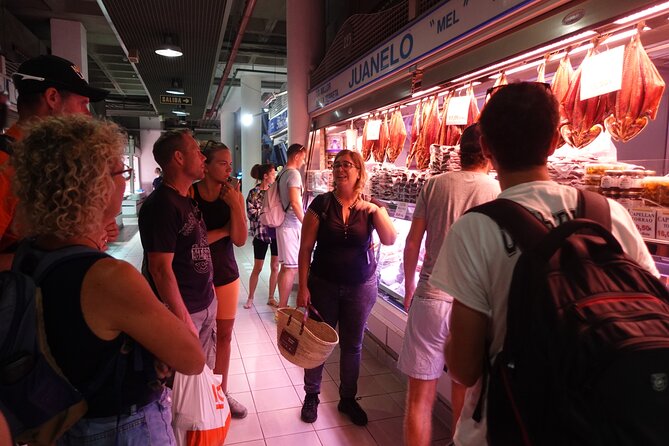
The first part is more than a short look at market stalls. Your guide takes you through the Mercat Central d’Alacant and helps select the fresh ingredients needed for the meal.
This is where the class gains much of its local character. You learn about Mediterranean produce, seafood, olives, Iberian ham, salted fish, and the ingredients that give Alicante cooking its identity. The guide may explain how to choose shrimp, discuss the difference between seafood from the bay and larger ocean varieties, and point out local products you might otherwise pass without noticing.
The market visit also gives you a practical lesson in Spanish food shopping. Instead of seeing paella as a finished dish, you watch the ingredients come together one by one. That makes the later cooking easier to understand. Rice is only one part of the dish. The stock, sofrito base, seafood, meat, vegetables, and seasoning all matter.
The market stop can take about an hour, according to the experience details. That is a generous amount of time for browsing and instruction, though it may feel slow if you are mainly interested in eating. I think this portion suits curious cooks and food-minded visitors best. If you would rather reach the kitchen quickly, this may test your patience.
Learning the local ingredients before cooking
A particularly useful feature is the attention given to ingredients that are often treated as decoration. Your guide may discuss the quality and preparation of Iberian ham, the brining of olives, local shrimp, squid, cuttlefish, and the seafood used in the stock.
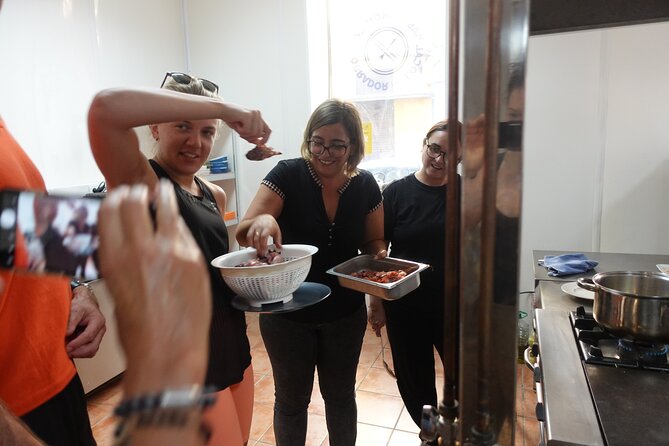
The class also introduces salmorreta, the cooked pepper and tomato base used in many Alicante-style rice dishes. You prepare it as part of the paella process, rather than receiving a pre-made sauce with no explanation.
That matters because paella varies across Spain. Alicante has its own traditions, and the class tries to show the local method rather than offering a generic dish loaded with every possible topping. The guiding idea is simple: the flavor belongs in the rice and the stock, not just in a heap of large seafood pieces.
One unhappy food experience focused on small shrimp, modest portions of seafood, and a sangria that seemed too diluted. The response from the provider explained that the shrimp were local Mediterranean shrimp, which are smaller than ocean varieties, and that the class uses them for flavor and freshness. It also explained that sepionet, or baby squid, can be a higher-quality ingredient than ordinary squid.
That explanation may not change your personal preference. If you want large prawns and lots of seafood on the plate, tell yourself clearly that this is a traditional cooking lesson, not a luxury seafood feast. If you care more about local ingredients and technique, the smaller seafood makes better sense.
Cooking paella from broth to rice
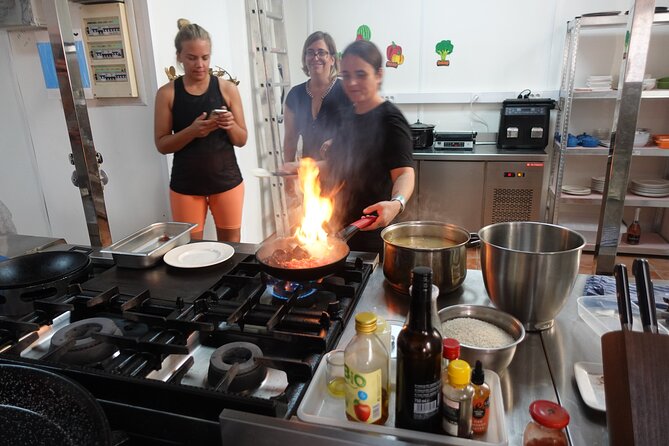
After shopping, the group walks a few blocks to a working kitchen inside a local restaurant. This change of setting is important. You are not simply watching a chef perform while standing behind a counter. You take turns preparing ingredients and helping with the cooking.
The class covers the main stages of paella preparation:
- Making a seafood broth
- Preparing the salmorreta
- Handling the chosen seafood, meat, or vegetables
- Balancing the flavors
- Adding and cooking the rice
- Watching the paella simmer until ready
The exact tasks can vary by group and dish, but the format is strongly hands-on. People describe using a blowtorch to prepare fish, working on dried fish, chopping ingredients, stirring or preparing the paella, and taking turns at different jobs.
That shared format works well for people who like to participate. It also helps a mixed group settle in. You may arrive as strangers, but food preparation gives everyone something useful to do and talk about.
The chef and guide keep the process moving. Federico is frequently praised for clear English, humor, patience, and his ability to switch between English and Spanish. Some groups also work with a chef named Maria. The strongest part of the instruction is not flashy technique. It is the steady explanation of why each step matters.
Same place, a different set of stalls:
- Valencian paella cooking class, tapas and visit to Ruzafa market.
★ 5.0 · 828 reviews - Spanish Cooking Class & Triana Market Tour in Sevilla
★ 5.0 · 760 reviews - Seville: 3.5-Hour Spanish Cooking Class & Triana Market Tour
★ 4.9 · 751 reviews - Valencia: Paella Cooking Class with Central Market Tour
★ 5.0 · 721 reviews
Seafood, meat, or vegetarian paella
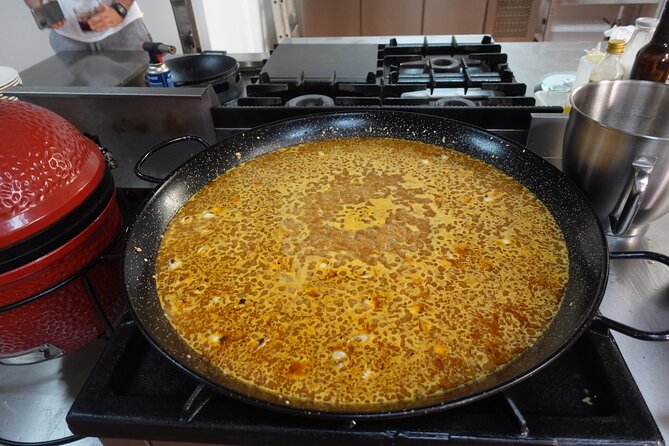
You can choose seafood, meat, or vegetarian paella. This is one of the class’s best practical features because groups do not all eat the same way.
The seafood version may use local shrimp, fish, squid, or cuttlefish. The meat option gives people another route into the same cooking method. The vegetarian choice makes the activity workable for people who do not eat meat or seafood, though the available details do not specify every vegetable used.
If you are booking for a group, make sure each person’s choice is recorded clearly. One group prepared two versions, fish and meat, which suggests the kitchen can handle more than one style when needed. Still, the more variations a class takes on, the more important it is to listen carefully when your guide explains which pan or ingredient belongs to which dish.
The class’s philosophy is traditional rather than showy. You should not expect chorizo, seafood, meat, and vegetables all crowded into one pan simply because that looks generous. The focus is on the rice, stock, and the balance of the dish.
Tapas, tomato salad, and a homemade sangria
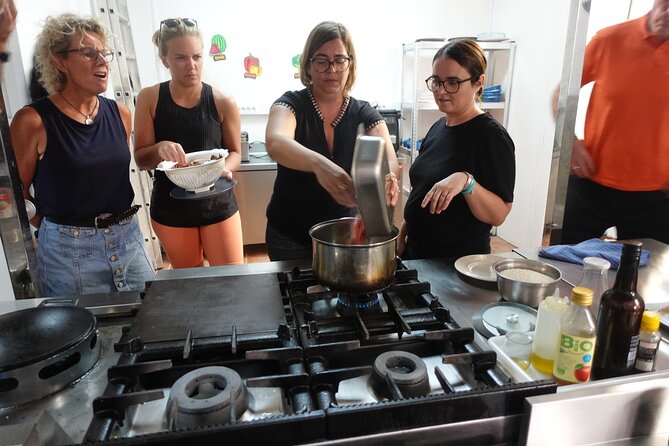
While the paella cooks, you prepare and enjoy other food. The spread can include Iberian ham, cured sausage from the mountains, olives, crisps, fresh fruit, and a tomato salad with salted fish.
The tomato and salted-fish salad is especially useful for understanding the local table. It gives you a taste of the salty, fresh, simple combinations that work well beside rice dishes. The ham and sausage also turn the cooking period into a proper shared meal rather than a wait beside the pan.
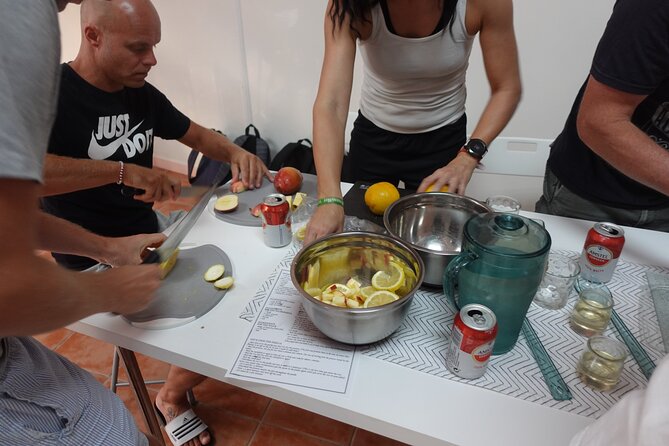
You also make sangria. The class may use wine from a barrel along with orange juice, soda, syrup, liqueur, and fruit. If you prefer a dry glass of wine, this may taste too sweet or light. But that is the traditional approach being taught here. Sangria is not merely wine poured over ice, and adding juice and soda is part of the recipe.
The drink has an alcohol requirement. You must be at least 18 to consume it. The supplied details do not say whether a nonalcoholic alternative is available, so ask before booking if that matters to you.
Eating together at the end
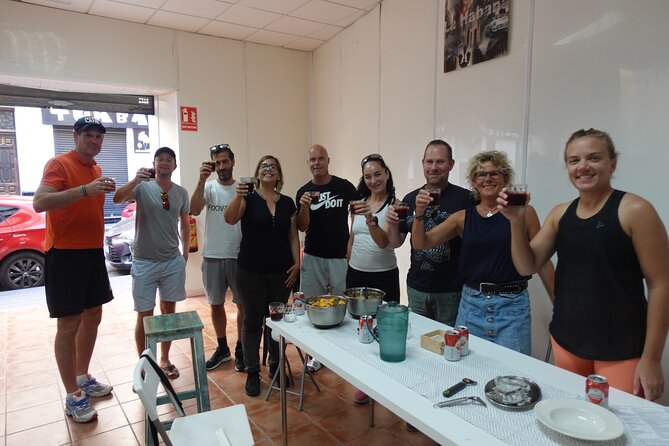
The final meal is the payoff, but it is also part of the lesson. You sit down with the group and eat the paella you helped prepare, along with sangria, tapas, and the other dishes.
This shared table is one reason the experience works well for solo visitors and couples who want a social activity. The class brings together people from different places, and the preparation gives you an easy way to meet them without forced conversation.
Food quality can depend on your expectations. Most groups find the meal delicious, with praise for the fresh ingredients and well-cooked rice. One person found the seafood quantities disappointing and disliked the sangria style. I would take that as a useful warning: the meal is designed around an authentic local method and a group cooking experience, not individual restaurant portions customized to every preference.
If you judge paella by the quality of its rice, stock, and seasoning, you are more likely to appreciate the class. If you judge it by the size of the shrimp, you may not.
How much value do you get for $59.26?
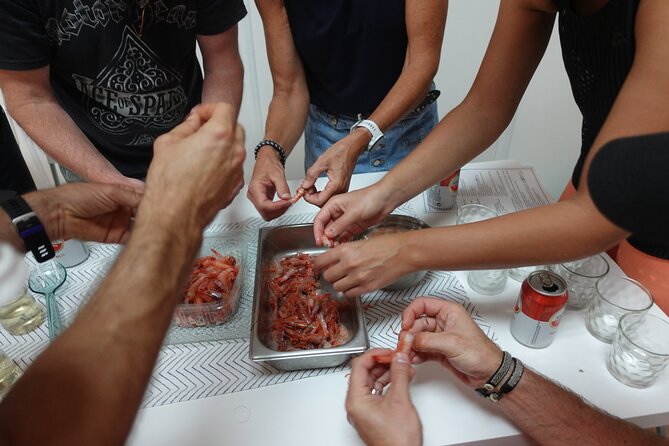
At $59.26 per person, the price is reasonable for a three-and-a-half-hour activity that includes a market tour, professional instruction, cooking, drinks, tapas, and a full meal.
You are paying for more than ingredients. Two hosts may help with the group, one focused on guiding and one on kitchen work. You also receive explanations about local food traditions, practical cooking steps, and recipes to take home in some sessions.
The value is strongest if you enjoy participation. A passive observer may see the cost as high for a meal. A person who wants a market visit, cooking lesson, cultural context, and lunch or dinner in one booking gets considerably more.
The maximum group size is listed as 15 in the main details and 16 in the additional information. Some sessions have been much smaller, with five, seven, or eight people. A small group gives you more time at the market and more chances to handle the food. A full group can still work, but you may spend more time waiting for your turn.
The activity is offered in English and includes a mobile ticket. It is also near public transportation, so you can reach the meeting point without arranging a private transfer.
Who will enjoy this Alicante food class?
I would recommend it most strongly to:
- First-time visitors who want a food-based introduction to Alicante
- Couples and solo visitors who enjoy meeting people over a shared meal
- Families with older children, provided the alcohol issue is understood
- Beginner cooks who want clear guidance rather than advanced culinary training
- People who want to visit the Central Market with some context
- Anyone choosing between seafood, meat, or vegetarian cooking
It may suit you less if you dislike group activities, do not want to handle raw ingredients, or expect a restaurant-style seafood platter. The experience is social, practical, and fairly active.
You should also allow for the full three-and-a-half-hour commitment. The market portion is not optional sightseeing before the real activity. It is part of the class, and skipping it would remove one of the best parts.
Booking advice and cancellation terms
The experience is often reserved about 19 days ahead, so I would not leave it until the last day of a short Alicante visit. This matters especially if you need a particular date or want the best chance of a smaller group.
Free cancellation is available if you cancel at least 24 hours before the start time. Cancellations or changes made within 24 hours are not refunded or accepted. If the minimum number of participants is not reached and the activity is canceled, you are offered another date, another experience, or a full refund.
Should you book the paella and sangria class?
Yes, if you want a social, food-centered way to understand Alicante. The Central Market visit, local ingredients, salmorreta, seafood stock, shared cooking, and final meal give the experience real substance. Federico and the other hosts also seem to be a major part of its success, bringing humor and clear instruction to the kitchen.
Book with the right expectations. This is not a luxury cooking school or a seafood banquet. The paella is built around the rice and stock, local Mediterranean seafood may be smaller than you expect, and the sangria includes juice and soda. For most people, the combination of market, cooking, tapas, and a shared table makes $59.26 good value.
FAQ
Where does the paella and sangria class begin?
It begins at Plaza 25 de Mayo, 03004 Alicante, beside the Mercado Central.
Where does the activity end?
The activity ends back at the meeting point.
How long does the experience last?
It lasts approximately three hours and 30 minutes.
What paella choices are available?
You can choose seafood, meat, or vegetarian paella.
Is the experience offered in English?
Yes, the experience is offered in English.
How many people can join the class?
The details list a maximum of 15 participants in one place and 16 travelers in another. Group sizes can be smaller.
Can I cancel for a full refund?
Yes. You can receive a full refund if you cancel at least 24 hours before the experience begins. Changes and cancellations within 24 hours are not accepted or refunded.
Just added around Spain
- Explore Bilbao’s Flavors Mercado de la Ribera and Old Town★ 4.5 · 3 reviews
- CERTAL Exclusive Tour: LA RIBERA Market + GASTROBARS Bilbao (3h)★ 4.5 · 12 reviews
- Barcelona La Boqueria & Sant Antoni Private Food Experience★ 5.0 · 7 reviews
- Taste of Barcelona: Boqueria Market, Tapas & History Tour★ 4.5 · 22 reviews
- Barcelona Tapas Cooking & Cocktail Class with Veronique & Mattias★ 5.0 · 3 reviews
- Spanish Oysters, Cava and Ibérico Ham at Barcelona’s La Boqueria Market★ 5.0 · 8 reviews
- Private Barcelona Market Tour & Paella Cooking Class with Josh★ 5.0 · 4 reviews
- Food and Market Tapas Tour★ 5.0 · 6 reviews
Market Tours, compared.
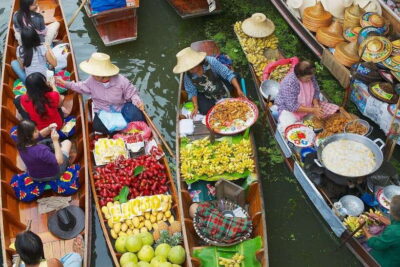
Damnoen Saduak Market and Maeklong Railway Market
Read our review →
The Old Siam: Damnoen Saduak and Maeklong Railway Market
Read our review →
Old Town, Creek, Museums, Souks, & Street Food Tour
Read our review →Train Market & Floating Market with Boat Ride
Read our review →
Old Town, Souks, Street Food, Guided Tour & Abra Ride
Read our review →
Ayutthaya & Ayothaya Floating Market Day Trip
Read our review →
Frame Tickets, Creek, Souks & Blue Mosque Guided Tour
Read our review →
Hanoi Cooking Class: Culture, Local Market & Meaning CSR Impact
Read our review →Browse the lists this tour appears in