
Review · FRANCE
Sarlat Gourmet Tour & Market Visit with Tastings
Sarlat tastes better on foot. This two-hour walk pairs the town’s medieval streets with three local tasting stops, giving you a quick, flavorful introduction to Dordogne food and wine. I especially like the small group of up to eight and the way the route combines Sarlat’s major sights with practical food advice.
The tasting lineup can include duck, foie gras, cheese, walnuts, walnut wine, and regional desserts, with portions designed for sampling rather than a full meal. The main drawback is that the walking route and bite-sized servings may feel limited if you want a long market visit or a substantial lunch.
Key points to know before you book
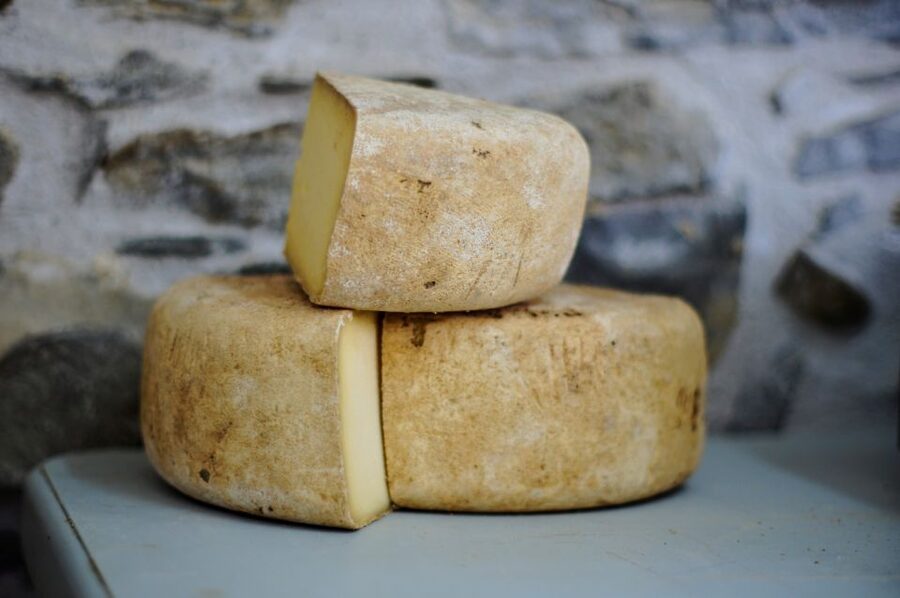
- Three food stops in two hours: Tastings may include cheese, duck products, wine, walnut specialties, and seasonal dishes.
- A compact Sarlat introduction: The route includes the Lantern of the Dead, Saint Sacerdos Cathedral, Saint Mary church and covered market, and La Boétie’s house.
- Small-group format: With no more than eight participants, the tour should feel easier to follow than a large city walk.
- Market-day setting: You move through colorful stalls while learning how Dordogne ingredients fit into local cooking.
- English only: The tour is led in English, and the guide returns you to Place Pasteur.
- Come ready to walk: Comfortable shoes are important, the route operates in rain or shine, and the tour is not suitable for wheelchair users.
Why this Sarlat food walk works so well
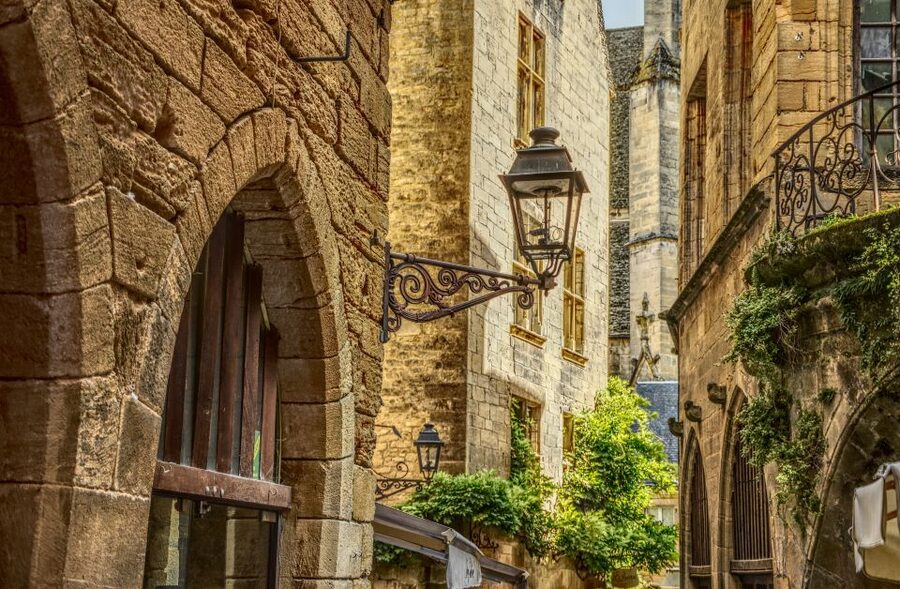
Sarlat-la-Canéda is the sort of town where food and architecture belong together. You can admire a honey-colored stone building, turn down a narrow lane, and then find yourself beside a stall piled with walnuts, cheese, duck products, or pastries. This tour makes that connection clear instead of treating the market and the old town as two separate sights.
The starting point is Place Pasteur, near the bus stop. That is useful if you are arriving in Sarlat by public transport, though you should allow enough time to locate the exact meeting place. The tour ends at the same spot, so you do not need to work out a second pickup location.
The group is limited to eight people. That matters on a market day, when tight lanes and crowded stalls can make a large group awkward. A small party gives you a better chance of hearing the guide, asking about ingredients, and staying close together while the route winds through the center.
The tour lasts two hours, so you should think of it as an introduction rather than a full culinary outing. I like that length for a first morning or afternoon in Sarlat. You get local context, several tastes, and a clear sense of where you are without giving up half the day.
A few more market tours around France worth a look
- Versailles Palace Bike Tour with Market & Marie-Antoinette hamlet
★ 5.0 · 2,680 reviews - Versailles Bike Tour with Market, Gardens & Guided Palace Tour
★ 5.0 · 1,121 reviews - Paris Cooking Class and Lunch with Wine plus Market Visit Option
★ 5.0 · 1,024 reviews
Sarlat’s old streets and the first layer of local history
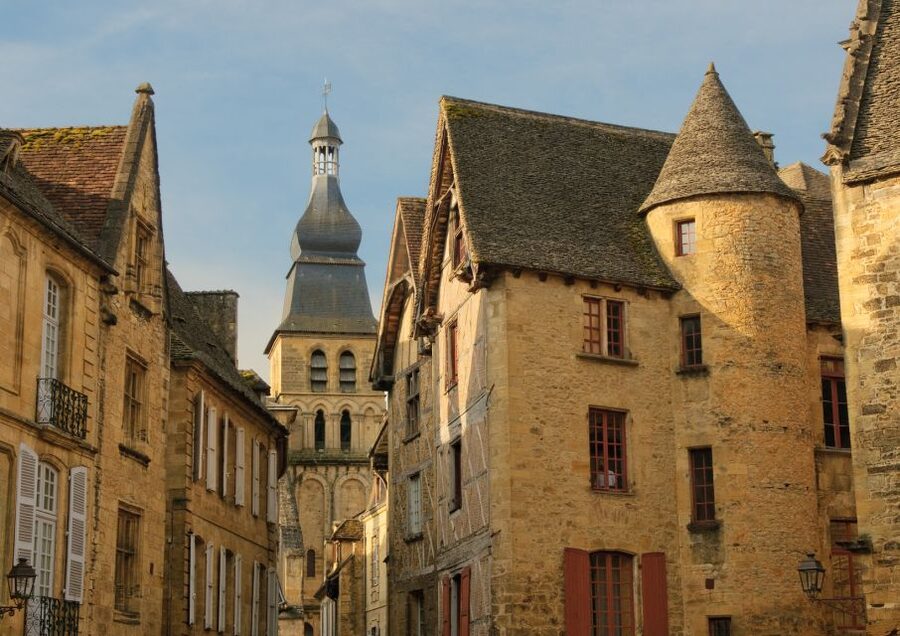
The walking portion covers the main sights in Sarlat’s historic center. The guide introduces the Lantern of the Dead, Saint Sacerdos Cathedral, Saint Mary church and its covered market, the house of La Boétie, and other notable buildings along the way.
You should not expect long interior visits. Entry fees to monuments, museums, and attractions are not included, and this is primarily a guided street walk. That is not necessarily a weakness. In two hours, you can see more of the town from outside and keep the focus on how Sarlat functions today.
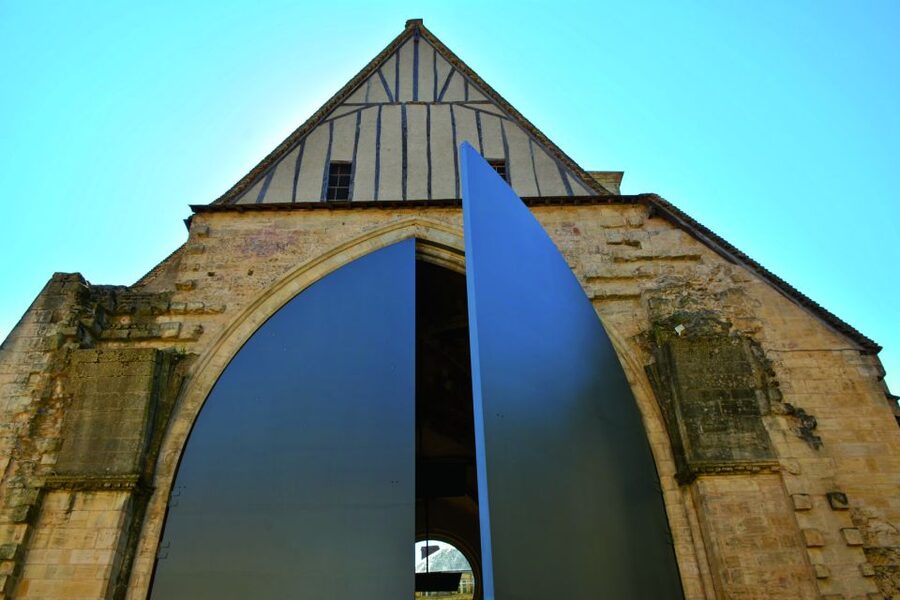
The Lantern of the Dead is one of the more unusual stops. Its name alone gives the guide a good opening to explain Sarlat’s older religious and civic setting. Saint Sacerdos Cathedral provides a different point of reference, while Saint Mary church and the covered market connect the town’s past to its daily food trade.
La Boétie’s house adds another historical marker to the walk. Even if you do not know the name beforehand, it helps show that Sarlat is more than a pretty collection of stone façades. The town’s architecture, markets, churches, and literary associations all sit within a compact walking area.
The history is presented as part of the route, not as a formal lecture. That approach suits the schedule. You can ask questions as you go, then move on before the details start to blur together.
The market is the heart of the tour
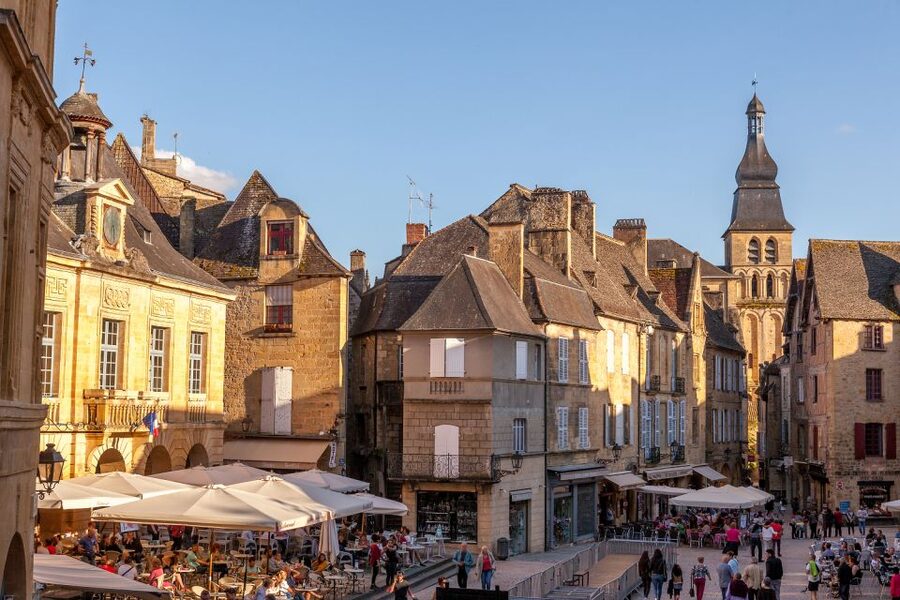
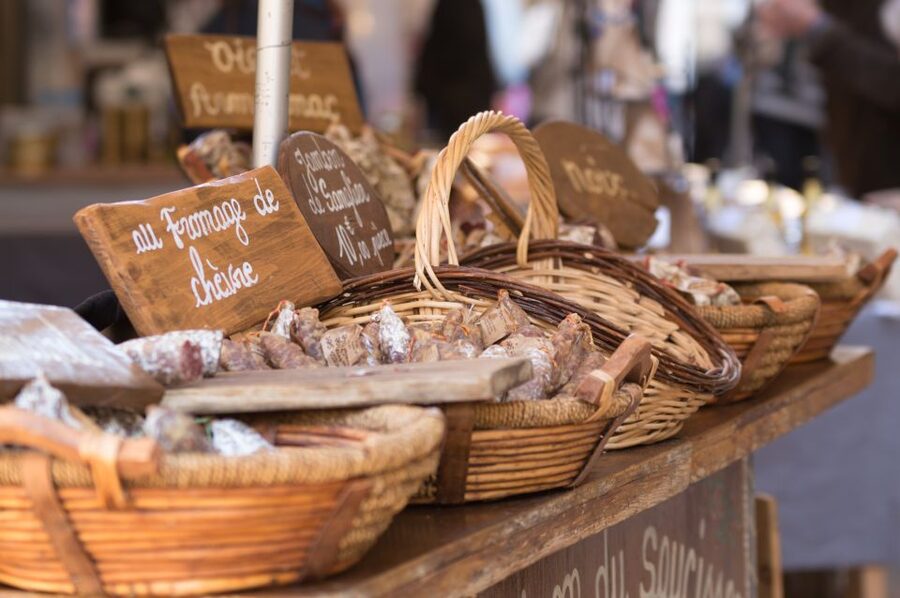
The market visit gives the walk its strongest sense of place. You pass through stalls while the guide explains the foods associated with the Dordogne and the Périgord. This is where the tour feels most useful for anyone who wants to eat well after the two hours are over.
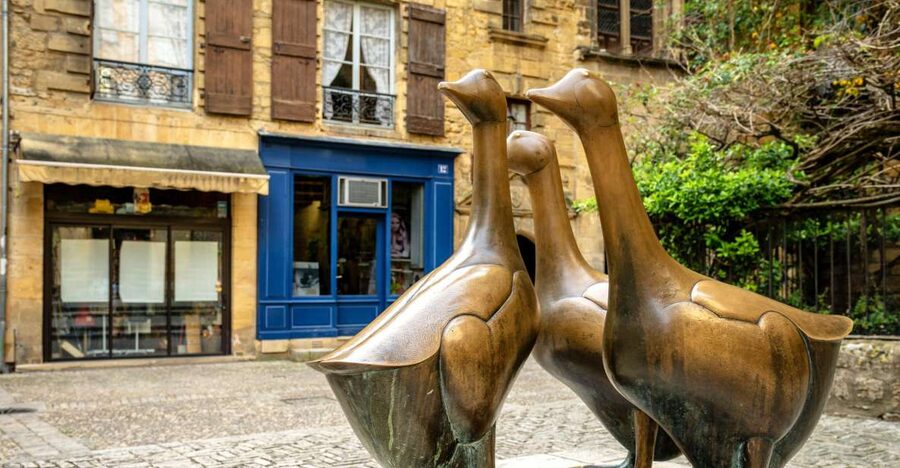
The Dordogne’s traditional cooking leans heavily on products such as foie gras, duck and goose, black truffles from the Périgord, chestnuts, walnuts, and local strawberries. Some of these may appear in the market or tastings, depending on the season. The point is not just to name famous products, but to understand why they matter in this part of France.
Walnuts receive particular attention. Périgord walnuts have their own AOC designation, a French quality label tied to origin and production standards. That small detail makes the market stops more meaningful. You are not simply sampling a generic nut product, but learning why walnuts are treated as a regional specialty.
Season matters here. The tour description allows for changing tasting items, so you should not book expecting one fixed menu. A summer outing and a cooler-season outing can have different produce and different emphasis. This flexibility is a benefit, though it means you should keep your expectations broad.
A guide can also point you toward restaurants worth considering later. That practical advice is one of the better uses of a food tour. Sarlat has plenty of menus aimed at short-term visitors, and a recommendation based on the local specialties can help you choose more wisely.
Stop one: cheese and the flavors of the Périgord
The first tasting stop may focus on regional cheeses. One tasting included four types of cheese, which makes this a useful chance to compare texture and flavor rather than simply take one bite and move on.
Do not expect a cheese course large enough to replace lunch. The portions are small, sometimes just a morsel, but they are meant to introduce products you might later buy or order. If you are serious about French cheese, you may wish the samples were more generous. Still, three different tasting locations in two hours require a little restraint.
This stop also gives you a chance to ask how the cheese is made, where it comes from, and what local foods pair well with it. The value is in the explanation as much as the food. I would pay close attention to names and ingredients you want to remember, then return to a shop or market stall after the tour.
There is no purchase pressure at the tasting stops. That is worth noting because food walks can sometimes feel like sales visits. Here, you can sample, ask questions, and move on without being expected to buy.
Same place, a different set of stalls:
- Paris Evening Cooking Class French Dinner and Market Visit Option
★ 5.0 · 430 reviews - Toulouse Victor Hugo Market Small Group Tasting Tour
★ 5.0 · 337 reviews - Luberon Market & Villages Day Trip from Aix-en-Provence
★ 5.0 · 250 reviews - Versailles Full-Day Electric Bike Tour : Market, Picnic & Palace
★ 5.0 · 239 reviews
Stop two: wine, duck, and walnut flavors
The second stop may be the most distinctly Dordogne-focused. A sample lineup included three wines, including walnut wine, accompanied by foie gras, pork tenderloin cooked in duck fat and garlic, and cheese with a walnut-wine-soaked rind.
That combination shows how local cooking uses rich ingredients in several forms. Duck is not just a main course here. Duck fat can flavor meat, foie gras brings a smoother and more luxurious note, and walnuts appear in both drinks and food. You begin to see the region’s cuisine as a set of connected products rather than a list of separate specialties.
The wine discussion includes Bergerac and Monbazillac. The area produces thirteen AOC wines, made from grape varieties grown close to the better-known wine country around Bordeaux. You do not need to be a wine expert to enjoy this section. The guide’s job is to give you enough context to understand what you are tasting and what to look for on a menu.
The inclusion of walnut wine is especially memorable because it is not the sort of regional drink you are likely to encounter in every French town. If you enjoy unusual aperitifs, this may be the tasting that stays with you. If you prefer light, simple flavors, the foie gras, duck fat, and walnut-based items can feel heavy in a short sitting.
Wine is served as a tasting, not as a full winery visit. The tour does not include transportation to vineyards or a separate cellar experience. That keeps the program focused on Sarlat, but it also means wine enthusiasts may want a separate Bergerac or Monbazillac visit.
Stop three: walnuts and Dordogne sweets
The final stop may turn toward desserts and baked specialties. One menu included walnut cake, walnut crocante cookies, and a walnut and caramel tart.
This is a fitting finish because walnuts are one of the clearest food symbols of the area. The desserts also give you a different sense of the ingredient. Instead of tasting walnuts in a savory dish or drink, you get their crunch, sweetness, and toasted flavor in pastry.
Again, the serving sizes are small. Think of these as samples that help you decide what to seek out later, not as a dessert plate. If you have a sweet tooth, you may want to buy a larger portion after the tour.
The three-stop structure works because each tasting has a different role: cheese, savory regional foods and wine, then sweets. It keeps the food from becoming repetitive and gives the guide several ways to explain local habits.
How the guide shapes the experience

The guide makes a major difference on a compact walking tour. You need someone who can explain history without slowing the route, manage tastings without rushing, and keep the group together in narrow streets.
Benoît has led some departures. His style is pleasant and low-key, with solid information about Sarlat and Périgord food. He also takes time to suggest restaurants, which adds practical value. If you prefer a calm guide who does not dominate the group, that style may suit you well.
If you want theatrical storytelling or a high-energy food host, the presentation may feel understated. The information is there, but the delivery is not always full of sparkle. That is a fair trade for some people, especially when the main goal is to understand the town and taste local products rather than watch a performance.
The tour operates in English only. That makes it straightforward for English-speaking participants, but you should not book it expecting a multilingual format. The guide’s explanations cover both the history of Sarlat and the food traditions of the wider Dordogne area.
Is $100 a fair price?
At $100 per person, the tour is not a bargain walking tour. You are paying for a live English-speaking guide, a small group, three tasting stops, and a planned route through Sarlat’s central sights. The tastings are included, and there is no need to budget for separate sample fees.
The value depends on how you use the two hours. If you want a quick orientation and would otherwise have trouble choosing what to taste, the price can make sense. The food advice and restaurant suggestions may also help you make better choices later in your stay.
If you mainly want a large meal, the price will feel high. The servings are bite-sized, and transportation, museum admission, and monument entry are not included. You are buying guidance and access to several samples, not lunch and not a full-day food excursion.
I see the tour as good value for a first visit, particularly if your time in Sarlat is short. If you already know the town well, speak French comfortably, and enjoy shopping independently, you may prefer to visit the market on your own and spend the $100 on a longer meal.
Practical details that affect your day
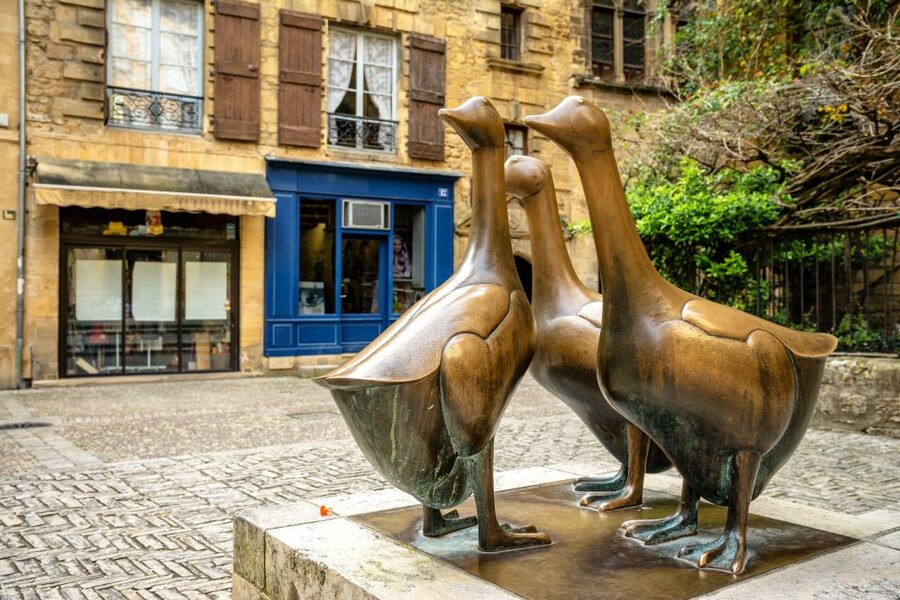
Wear comfortable walking shoes. The route follows old streets, and the tour operates rain or shine. A wet-weather forecast does not cancel the activity automatically, so bring suitable clothing rather than assuming the walk will move indoors.
Bring a passport or identity card. Children under four cannot join, and the tour requires at least two adults to operate. Pets are not allowed, and the route is not suitable for wheelchair users.
There is no included transportation. You make your own way to Place Pasteur and return there at the end. The same starting and finishing point is convenient if you are exploring Sarlat on foot afterward.
You can cancel up to 24 hours ahead for a full refund, and the reserve-now, pay-later option keeps your plans flexible. Check the available start times before booking, since the tour runs for two hours but does not list one fixed departure time.
Who should book this Sarlat food tour?
I would choose this tour if you want to combine food and sightseeing without giving up an entire day. It suits first-time visitors, couples, solo participants, and small parties who like having a guide but do not want to trail behind a large crowd.
It is also a good fit if you are curious about duck, walnuts, regional cheese, foie gras, and local wine but do not know where to begin. The three stops provide enough variety to help you identify the flavors you want to pursue later.
You may want to skip it if you need a wheelchair-accessible route, are traveling with a child under four, dislike walking in poor weather, or expect a full meal. People who want lively, highly theatrical guiding may also find the calm presentation a little subdued.
Should you book it?
Book this tour if you want a well-sized introduction to Sarlat and the food culture of the Dordogne. The best parts are the small group, the mix of old-town sights and market stops, and the chance to sample regional products without pressure to buy.
Go in with the right expectations. You will get three compact tastings, not a feast, and a two-hour overview, not an exhaustive history of Sarlat. For a first afternoon or morning in town, that balance makes the tour a useful and enjoyable choice.
FAQ
Where does the Sarlat Gourmet Tour begin?
The tour begins at Place Pasteur, at the bus stop in Sarlat-la-Canéda.
Where does the tour finish?
The walking tour returns to Place Pasteur.
How long does the tour last?
The tour lasts two hours.
What food and drink might be included?
Depending on the season, samples may include duck, foie gras, cheese, walnuts, walnut wine, regional wine, walnut cake, walnut cookies, and walnut-caramel tart.
Is wine included in the tastings?
Wine tasting is included among the three stops, with Bergerac, Monbazillac, or other regional selections possible depending on the season.
Is the tour conducted in English?
Yes. The tour is operated in English only and includes a live English-speaking guide.
Is the tour suitable for children and wheelchair users?
Children under four cannot join, and the activity is not suitable for wheelchair users. Comfortable walking shoes are recommended.
Just added around France
- Cannes Ooh La La Food Tour★ 5.0 · 10 reviews
- Bordeaux Old Town & Market Local Food with Wine Tastings Tour★ 4.0 · 56 reviews
- Bordeaux Market Tasting by Food Lover Tour★ 5.0 · 13 reviews
- Sarlat Gourmet Tour and Market Visit★ 5.0 · 49 reviews
- Luberon Market & Villages from Avignon★ 5.0 · 4 reviews
- Provençal Morning Farmers Market & Food Discovery Tour★ 5.0 · 7 reviews
- Provençal Farmers market tour★ 5.0 · 15 reviews
- Strasbourg Christmas Market tour★ 3.1 · 13 reviews
Market Tours, compared.
Damnoen Saduak Market and Maeklong Railway Market
Read our review →
The Old Siam: Damnoen Saduak and Maeklong Railway Market
Read our review →
Old Town, Creek, Museums, Souks, & Street Food Tour
Read our review →Train Market & Floating Market with Boat Ride
Read our review →
Old Town, Souks, Street Food, Guided Tour & Abra Ride
Read our review →
Ayutthaya & Ayothaya Floating Market Day Trip
Read our review →
Frame Tickets, Creek, Souks & Blue Mosque Guided Tour
Read our review →
Hanoi Cooking Class: Culture, Local Market & Meaning CSR Impact
Read our review →Browse the lists this tour appears in