
Review · MOROCCO
Marrakech: Vibrant Souks, Local Artisans & Medina Experience
Marrakech reveals itself one alley at a time. This walking tour is a good way to get your bearings in the medina, especially because it combines Ben Youssef Medersa with the souks, artisan workshops, and the peaceful Secret Garden. I like the cultural range, from spices and leather goods to Islamic architecture, and I like the practical help of guides such as Youness and Hassan, who have been praised for explaining the city clearly without overloading the tour. The main drawback is that the pace can feel quick, and entrance fees for the two major sights are extra.
At $24 per person, this is a useful first-day introduction to Marrakech. You walk rather than ride, so you see the medina at street level and learn how its shopping quarters fit together. Just bring sturdy shoes, water, sunglasses, and cash, and be ready for a few hours of noise, crowds, sales pitches, and uneven walking.
Key points at a glance
- Meet at Djemaa el Fna: The tour begins in front of Cafe de France, giving you an easy landmark in the city’s famous central square.
- Ben Youssef Medersa needs extra cash: Admission is 50 MAD per adult, and the former Quranic school is one of the tour’s strongest architectural stops.
- The Secret Garden offers a needed pause: Entry costs 100 MAD, but its gardens and traditional irrigation system provide relief from the busy lanes.
- Artisan work is part of the route: You may see pottery, metalwork, and carved wood being made by hand, not just displayed for sale.
- Shopping is optional: Your guide is paid for guiding, so you are not required to buy spices, carpets, leather, silver, or other goods.
- Best for a first day: The route helps you find your way around the souks and can make later independent exploring less confusing.
Starting beneath the minarets at Djemaa el Fna
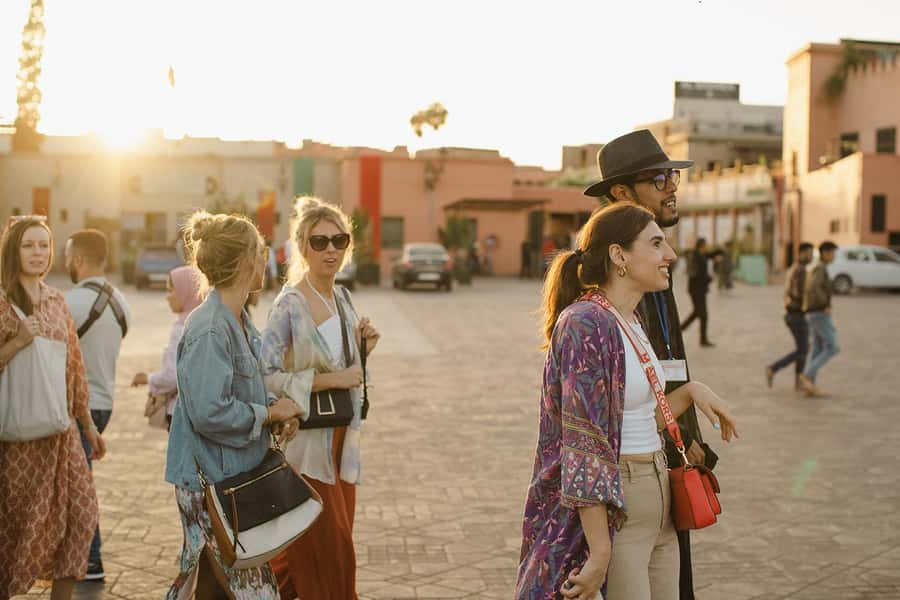
Your meeting point is in front of Cafe de France in Djemaa el Fna, the broad square at the center of Marrakech’s old city. It is a sensible place to begin because most visitors can locate it, and the activity provider contacts you a day or two before the walk with the guide’s name, meeting details, and reminders.
Once you meet your guide, you get an introduction to the layout of the medina. This matters more than it may sound. Marrakech’s old city is a maze of lanes, covered market passages, courtyards, workshops, and small squares. A guide can help you understand which parts are mainly for spices, rugs, clothing, metalwork, or household goods.
Djemaa el Fna is also a lively place, so allow time to find Cafe de France without rushing. Keep your phone and wallet secure, stay close to the meeting point, and wear shoes that can handle several hours on foot. The tour ends back at the same meeting point, which makes it easy to continue exploring or return to your riad afterward.
A few more market tours around Marrakesh worth a look
- Marrakech: Bahia Palace, Saadian Tombs, Souk and Medina Tour
★ 4.7 · 4,974 reviews - Marrakech: Ben Youssef, Secret Garden, & Souks Walking Tour
★ 4.6 · 2,802 reviews - Marrakech: Colorful Medina Souks Guided Walking Tour
★ 4.7 · 2,470 reviews
Riad Zitoun el Jdid and the first look at shopping culture
The walk continues toward Riad Zitoun el Jdid, an area with antique shops, spice sellers, woven rugs, and decorative goods. This is where the tour begins to feel less like a list of monuments and more like a lesson in how Marrakech trades and creates.
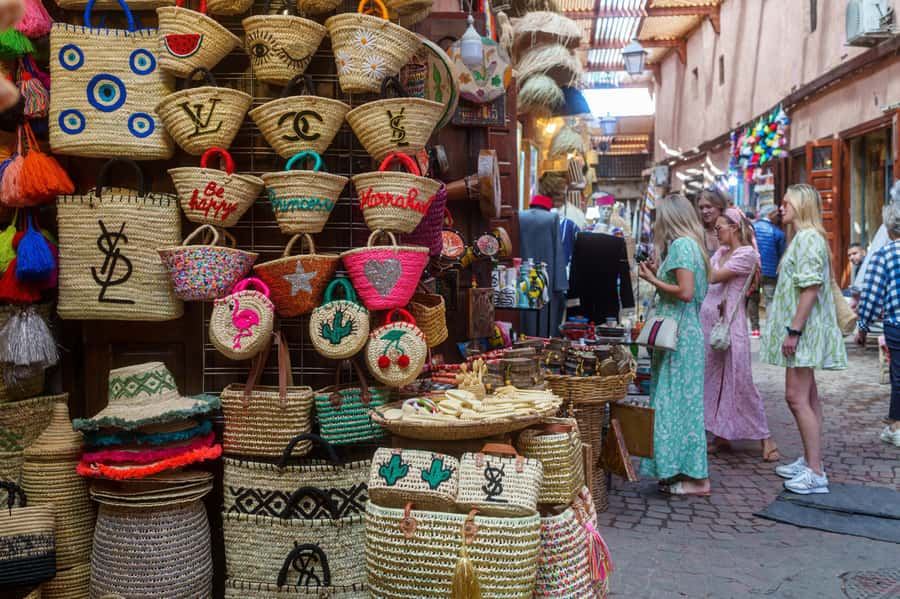
You can browse for souvenirs, silver items, leather goods, argan oil, spices, and handmade crafts. The useful part is having someone explain what you are seeing. A good guide can help you tell the difference between a practical household object, a decorative item, and a product made mainly for visitors.
Shopping in the souks takes patience. Prices are not always fixed, and bargaining is part of the process. You should not feel pressured to purchase. The tour makes clear that your guide receives payment for guiding, so buying something is not a condition of the visit. That point is worth remembering when you enter a workshop or shop with a group.
One advantage of exploring with a guide is that the sales pressure may feel easier to manage. One previous participant particularly appreciated feeling less hassled while moving through the souks as part of a group. That does not mean every shop visit will be quiet, but having a guide nearby can make the experience more comfortable.
Ben Youssef Medersa and its careful decoration
Ben Youssef Medersa is the architectural centerpiece of the route. This former Quranic school dates back to the 14th century and was later restored by the Saadians. Inside, the courtyard displays the kind of decoration that makes Moroccan architecture so memorable: geometric zellij tilework, carved plaster, and detailed cedar wood.
Take your time here. The details reward a slow look, especially around the courtyard and its surrounding rooms. The building is not simply a pretty stop. It helps explain the importance of Islamic education and shows how mathematics, craftsmanship, and religious design came together in Moroccan buildings.
The tour includes free time to explore monuments at your own pace, but admission is not included. Ben Youssef Medersa costs 50 MAD per adult. The supplied details also describe skip-the-line access, yet you should still budget for the ticket itself. The guide can add context, then give you room to look without having to stay beside the group every second.
This stop earned especially strong praise from people who enjoyed the guides’ explanations of the medersa. Youness was singled out for his clear presentation of the building, while Hassan was praised for connecting the historic sites with Moroccan culture and Islam. That kind of explanation is valuable here because the decoration can blur into a sea of patterns if nobody points out what to notice.
Souk El Attarine: spices, perfumes, and everyday Morocco
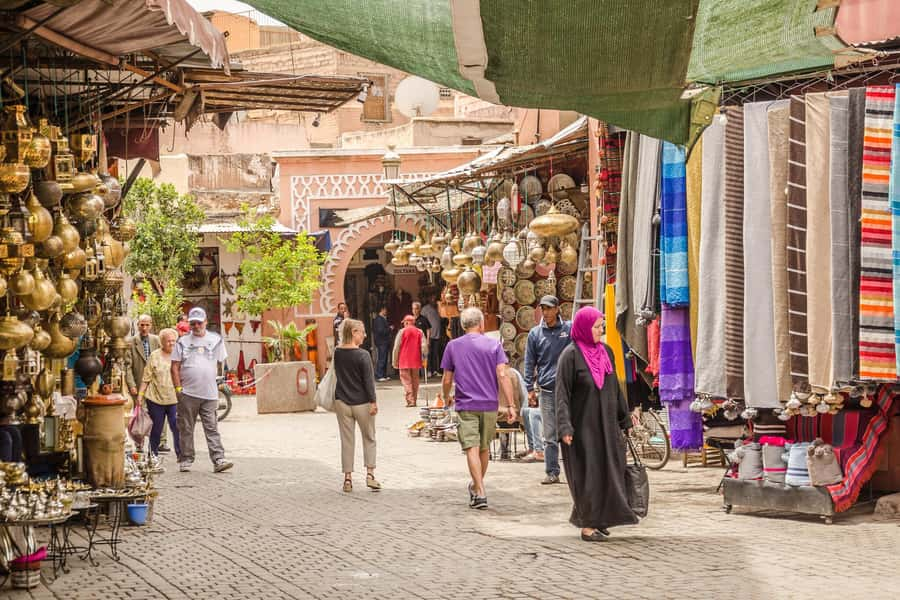
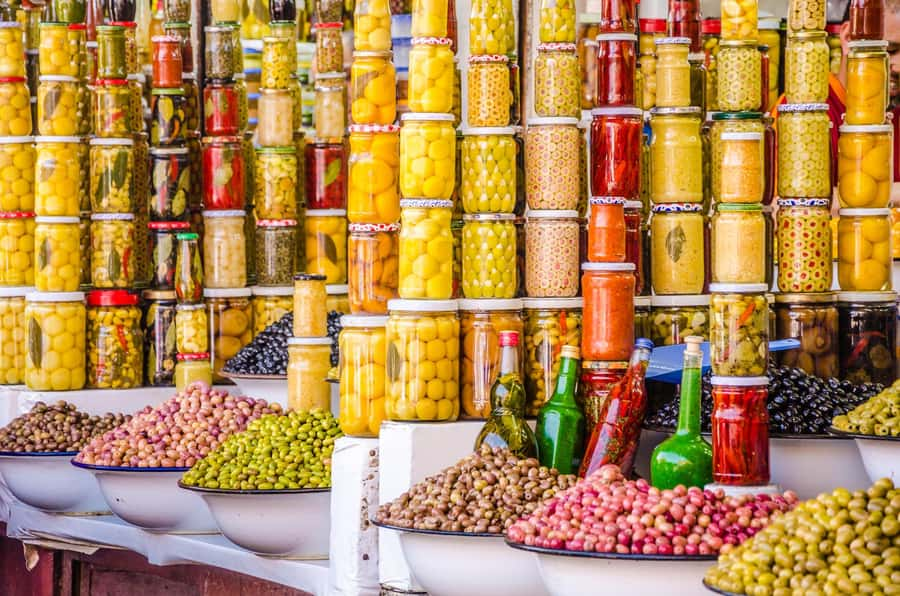
Next comes Souk El Attarine, known for spices, perfumes, and natural beauty products. This is a feast for the senses, but the guide’s role is more useful than simply pointing out colorful piles of powder.
You learn how spices and oils fit into daily Moroccan life, along with the cultural traditions connected to them. Argan oil, perfumes, and beauty products are common items to browse, but you should ask questions about how each product is used and what form you want before buying. If you do purchase something, carry cash and keep your receipts if provided.
The smells here can be intense, especially if you are not used to concentrated spices and fragrance oils. Sunglasses and water are listed as useful items for the whole walk, and both are sensible in Marrakech. Take small breaks when you can, particularly if the afternoon is hot.
This part of the route also shows why an introductory visit helps. Once you understand the basic layout of the souks, you can return later with a clearer idea of where to look. You may still get turned around, but you are less likely to spend your entire independent outing simply trying to find the way out.
Same place, a different set of stalls:
- Marrakech: Traditional Moroccan Cooking Class & Market Visit
★ 4.8 · 1,861 reviews - Marrakech Monuments & Souks 3-Hour Tour
★ 3.8 · 1,540 reviews - Marrakech: Saadian Tombs, Bahia Palace, Medina and Souk Tour
★ 4.7 · 673 reviews - Marrakech: Bahia Palace, Ben Youssef Medersa, & Souks Tour
★ 4.3 · 554 reviews
Artisan workshops where the work happens
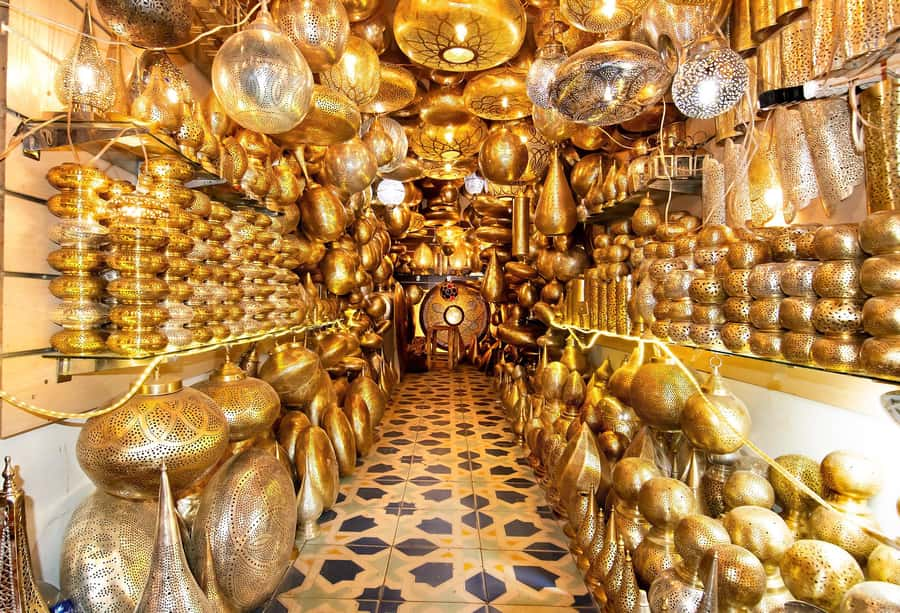
The tour includes visits to traditional workshops making pottery, metalwork, and hand-carved wood. This is one of the most worthwhile parts for anyone who wants more than shopping.
A finished object tells you very little about the labor behind it. Seeing artisans work helps you understand why handmade Moroccan goods vary in shape, finish, and price. The point is not only to find a souvenir. It is to see techniques passed down through families and working communities.
You may find these workshops more interesting than the sales displays because they show production rather than presentation. Look at the tools, repeated patterns, and small differences between pieces. If you like practical crafts, this portion may become the most memorable section of the walk.
At the same time, workshop visits often lead naturally toward shopping. That is not automatically a problem, but you should set your own budget before the tour. You can look, ask questions, and leave without buying. The operator specifically states that purchases are not required.
A quiet pause inside the Secret Garden
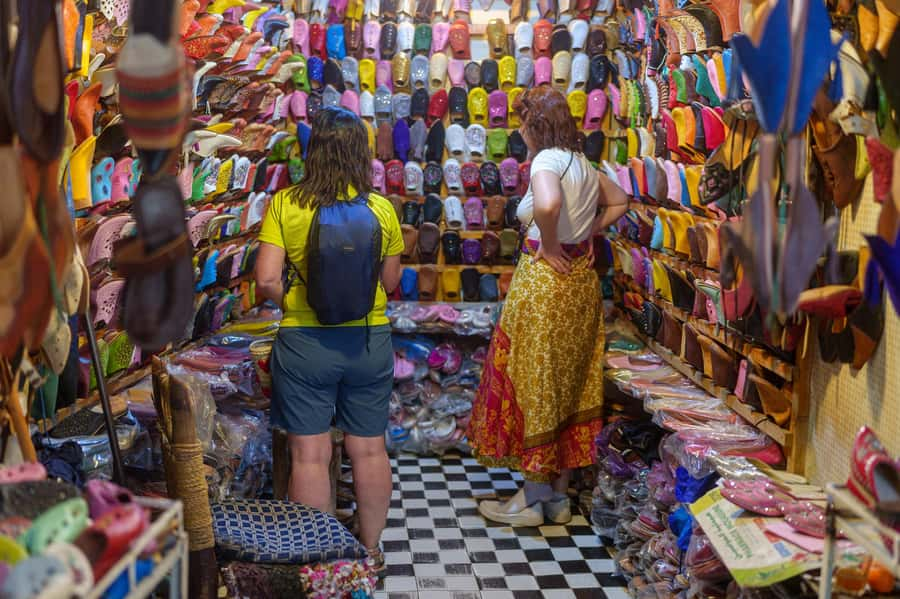
After the market lanes and workshops, the Secret Garden provides a change of mood. Behind the medina walls, you find greenery, Islamic architecture, and a calmer setting where you can catch your breath.
The garden is not just a break from noise. The guide explains its irrigation system, which gives you a practical look at how water has been managed in a dry climate. That detail adds meaning to the planting and layout. You are not only looking at flowers and paths, but also at the engineering that allows a garden to exist in Marrakech.
Admission costs 100 MAD, and this fee is separate from the tour price. For some people, that will feel like a worthwhile addition. For others, especially anyone keeping costs tight, it may be the easiest stop to skip. If you do enter, use the time to slow down and reset before returning to the market streets.
The Secret Garden also gives the itinerary a helpful rhythm. Without a pause, a walking route through the medina could become tiring and repetitive. Here, you get a quieter interlude before the final shopping section.
Souk El Kebir and the last chance for carpets
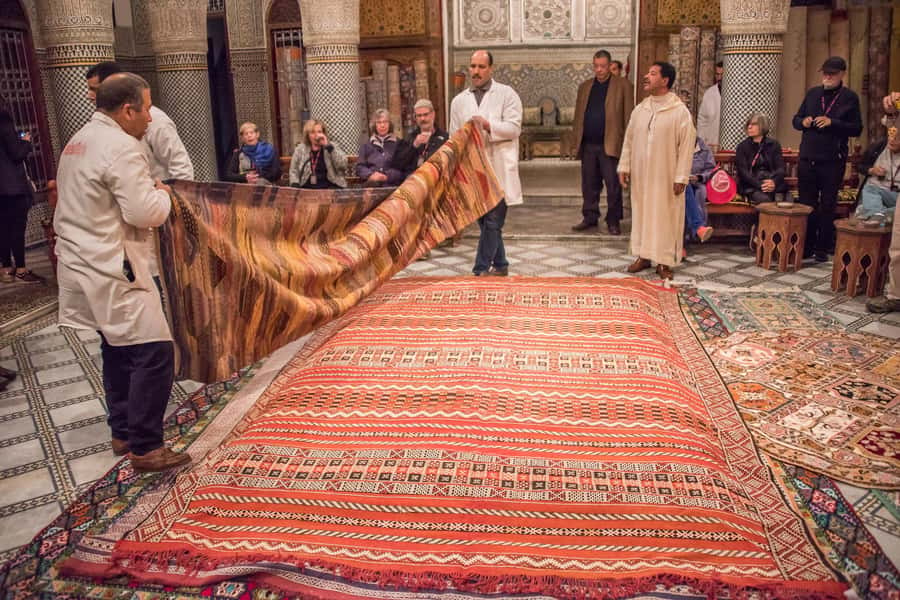
The final section takes you to Souk El Kebir, known for carpets and woven textiles. This is the place to browse larger, more expensive souvenirs, though you should not feel obliged to buy one.
Carpet shopping can take longer than expected. Look closely at the weave, colors, size, and condition. Ask what the item is made from and how it should be transported or cared for. If you are considering a purchase, think about your luggage space before bargaining begins.
The guide can help you understand the setting, but personal judgment still matters. A beautiful carpet is not a bargain if you do not have room for it or do not truly want it. The same applies to leather, silver, and decorative objects earlier in the walk.
Ending at the souks rather than at a single monument suits the theme of the tour. You finish with a better sense of how Marrakech’s craft economy works, and you can return later to a shop or market section that caught your eye.
What the $24 price really covers
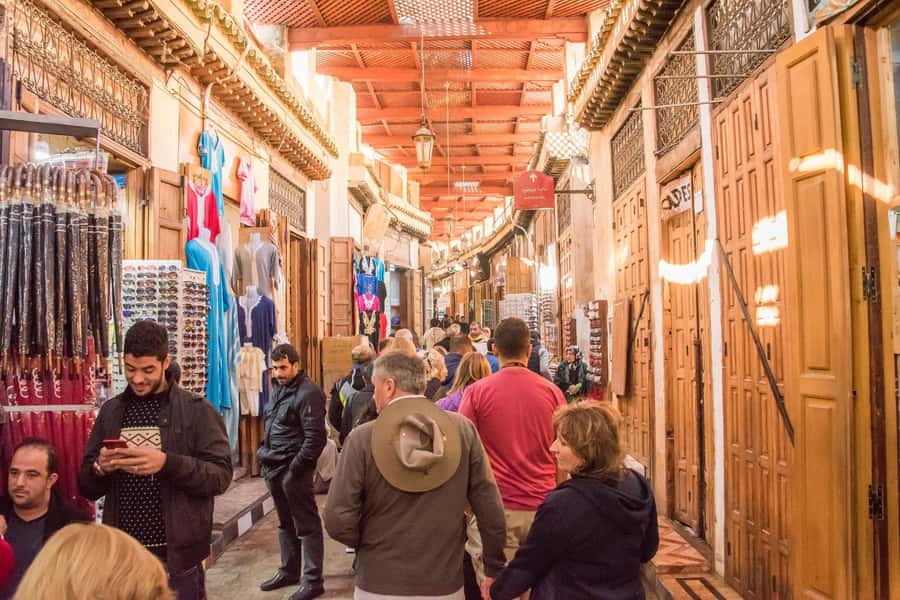
The $24 price is reasonable for a guided introduction to the medina, particularly if you are visiting Marrakech for the first time. You are paying for a licensed local guide, a private or small-group format depending on the option you select, cultural explanations, route planning, and help navigating streets that can be confusing on your own.
The value is strongest if you want orientation. People who used the tour early in their stay found it useful for locating sights they wanted to revisit and for feeling more comfortable in the medina later. That is a real benefit. A short guided walk can save time during the rest of your trip.
Still, the advertised price is not the complete sightseeing cost. You need to add 50 MAD for Ben Youssef Medersa and 100 MAD for the Secret Garden if you enter both. Transportation is not included, except for hotel pickup from your riad within the medina when you choose the private option.
The activity is offered in English and French. The guide’s name, meeting point, and helpful reminders arrive through WhatsApp before the tour. That small communication detail reduces uncertainty, especially if you are staying in a riad whose entrance is difficult to find.
Pace, group size, and comfort
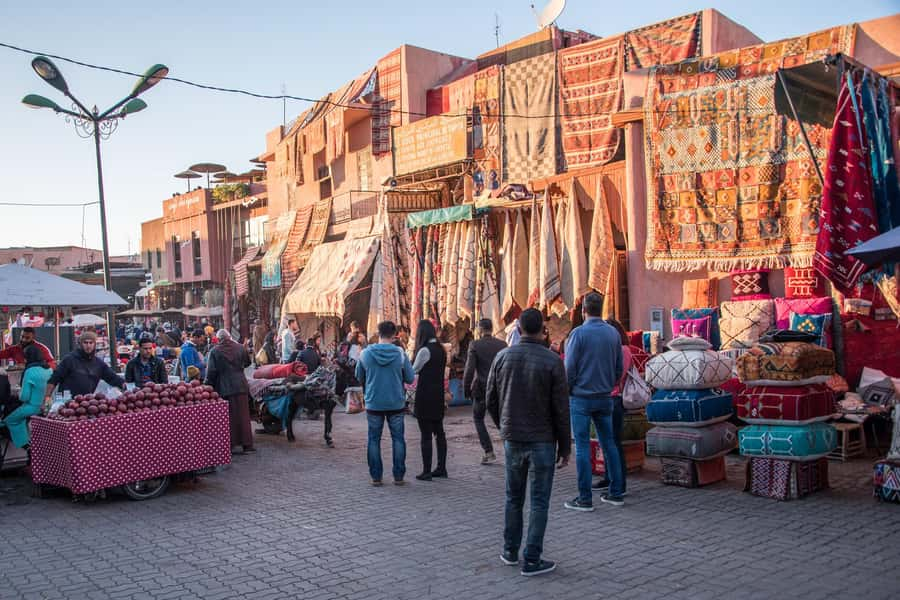
This is a walking tour, not a relaxed cafe-to-cafe outing. Comfortable shoes are essential, and the experience is not suitable for people with mobility impairments. You should expect uneven surfaces, market lanes, and a fair amount of standing and walking.
A private option gives you more personal attention and includes pickup from your medina riad. The small-group option may cost less or offer a more social atmosphere, depending on the booking choice. Group size affects the feel of the souks: a group can provide comfort and make sales pitches less intense, but it may also move less quickly through narrow passages.
The tour has been described as a whistle-stop introduction by one participant. That is useful if you want an overview, but it also sets expectations. You will see many places, yet you may not have long, unhurried time at every one. If Ben Youssef Medersa or the Secret Garden matters most to you, plan to return independently if your schedule allows.
Guides such as Youness and Hassan have received particular praise for clear English, humor, cultural explanations, and good timing. The strongest comments focus on their ability to explain without giving too much information at once. That balance matters in a city where every doorway seems to carry a story.
Who should book this Marrakech walk?
I would choose this tour for a first day in Marrakech, especially if you are staying in or near the medina and want a practical orientation before exploring alone. It also suits anyone who wants architecture, shopping, craft, and cultural background in one outing rather than a tour focused only on monuments.
You will get the most from it if you enjoy walking, browsing, asking questions, and learning how local products are made. It is less suitable if you want a slow photography tour, a luxury shopping experience, or a completely private pace without any sales-oriented stops.
Book it if you want help finding your way, prefer a local guide, and are happy to pay the two separate entrance fees. Skip it if you already know the medina well or would rather choose each sight and shop at your own speed.
FAQ
Where does the Marrakech medina tour begin?
You meet your guide in front of Cafe de France in Djemaa el Fna square. The activity provider contacts you a day or two before the tour to confirm the arrangements.
Where does the tour end?
The walk ends back at the original meeting point in Djemaa el Fna square.
Are entrance fees included in the tour price?
No. Admission to the Secret Garden costs 100 MAD, and Ben Youssef Medersa costs 50 MAD per adult.
Is transportation included?
Transportation is not included. Hotel pickup from a riad within the medina is included only with the private option.
What languages are available?
The tour is available in English and French.
Do I have to buy something in the souks?
No. Your guide is compensated for guiding, so you are not required to purchase anything from shops or workshops.
What should I bring?
Bring comfortable shoes, sunglasses, water, and cash. The tour is not suitable for people with mobility impairments.
Just added around Marrakesh
- Souks tour of Marrakech ( 3 hours )★ 5.0 · 5 reviews
- Marrakech: Hidden Souks Shopping Tour with Private Guide★ 4.1 · 53 reviews
- Marrakech: Half-Day Medina Markets Tour★ 4.5 · 11 reviews
- Edgy 8 Dish Private, Fusion Cooking Class, Menu Plan, Market★ 4.9 · 31 reviews
- Marrakesh: Private Cooking Class & Local Market Shopping★ 4.7 · 15 reviews
- Marrakech: Bahia Palace, Madrassa & Souks Guided Tour★ 4.8 · 47 reviews
- Marrakech: Private Souks Tour with Tea and Traditional Snack★ 4.6 · 33 reviews
- Marrakech: private Guided tour Of Vibrant Souks★ 3.8 · 24 reviews
Market Tours, compared.
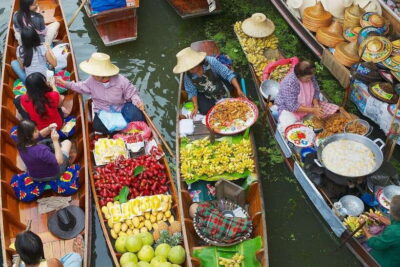
Damnoen Saduak Market and Maeklong Railway Market
Read our review →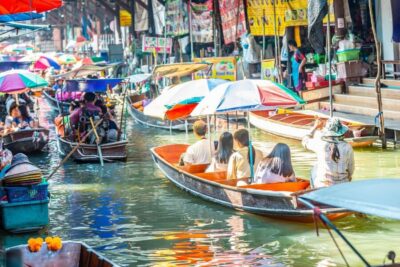
The Old Siam: Damnoen Saduak and Maeklong Railway Market
Read our review →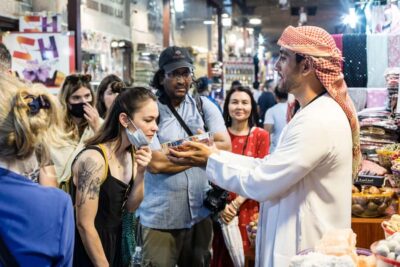
Old Town, Creek, Museums, Souks, & Street Food Tour
Read our review →Train Market & Floating Market with Boat Ride
Read our review →
Old Town, Souks, Street Food, Guided Tour & Abra Ride
Read our review →
Ayutthaya & Ayothaya Floating Market Day Trip
Read our review →
Frame Tickets, Creek, Souks & Blue Mosque Guided Tour
Read our review →
Hanoi Cooking Class: Culture, Local Market & Meaning CSR Impact
Read our review →Browse the lists this tour appears in