
Review · SPAIN
Malaga: Taste Andalusian Flavours & Local Market Delights
Taste Malaga one bite at a time. This 3.5-hour food walk brings you through the Old Town and Atarazanas Market for more than 10 Andalusian tastings, including Iberian ham, seafood, cheeses, sweets, and Malaga wine. I like the focus on small local eateries rather than a parade of tourist restaurants, and the mix of food with stories about Malaga’s past.
The tour also gives you a useful introduction to ingredients you may see throughout Andalusia, especially olive oil, olives, anchovies, fried fish, and regional cheeses. Ricardo, the guide praised in both available reviews, set a good pace and clearly enjoyed explaining the food and history. The main caution is practical: you will walk quite a bit, and the experience is not suitable for wheelchair users or people with mobility impairments.
- More than 10 tastings in 3.5 hours: Expect food and drinks ranging from a Malaga pastry to gazpacho, Iberian ham, fried eggplant, and local wine.
- Atarazanas Market visit: See seafood, produce, olives, and regional goods in one of Malaga’s best-known food markets.
- Ten-plus extra virgin olive oils: This unusual tasting gives you a better sense of how much flavor can vary between oils.
- Traditional Andalusian stops: Family-run eateries and old-style bodegas add a local feel beyond the main restaurant streets.
- Food with cultural context: Your English-speaking guide connects Malaga’s dishes with Moorish influences, Mediterranean habits, and present-day local life.
- A flexible menu: The food and route may change according to weather, opening hours, and ingredient availability.
Starting in Malaga’s Centro Histórico
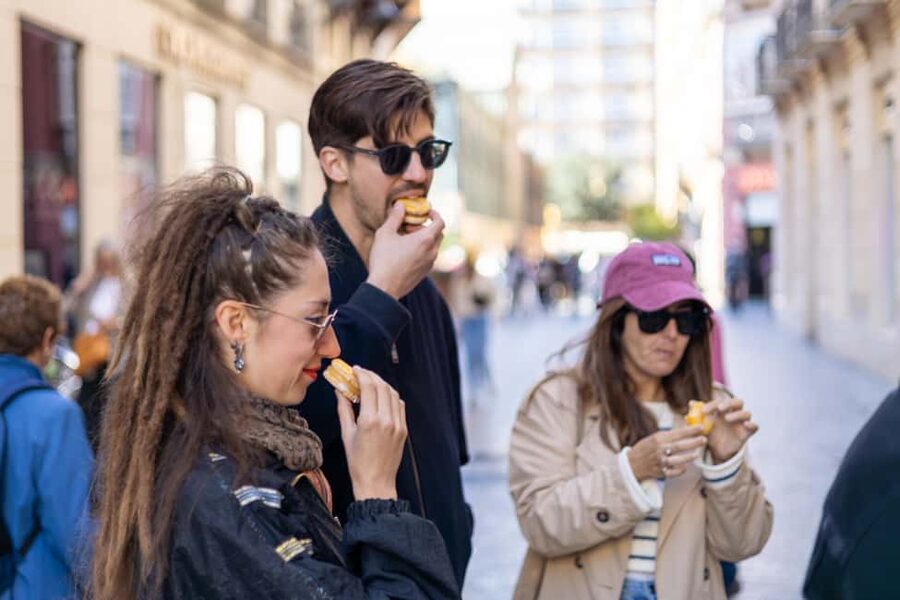
Meet your guide at Plaza Enrique García-Herrera, where an orange umbrella makes the group easy to spot. The location puts you close to Malaga’s Centro Histórico, so the tour begins in the middle of the city rather than requiring a taxi ride to an outlying neighborhood.
That matters if you are fitting the food walk between other plans. You can reach the meeting point on foot from much of central Malaga, though the exact walking time depends on where you stay. Pickup and drop-off are not included, so you handle your own way to and from the plaza.
The tour is in English, and the guide leads the group through the historic center on foot. You should wear comfortable shoes. Three and a half hours is long enough for a proper meal’s worth of tasting, but the time passes through a series of stops rather than one long restaurant sitting.
Ricardo is the guide name attached to the available feedback. Felix from the United States specifically praised his pace, food choices, and obvious interest in Malaga’s history. Ingrid from the Netherlands also singled him out for explaining the food and drinks clearly. Those details are useful because a food walk can easily become either a rushed snack hunt or a history lecture with too little to eat. Here, the guide seems to keep both parts moving.
A sweet beginning before the savory food
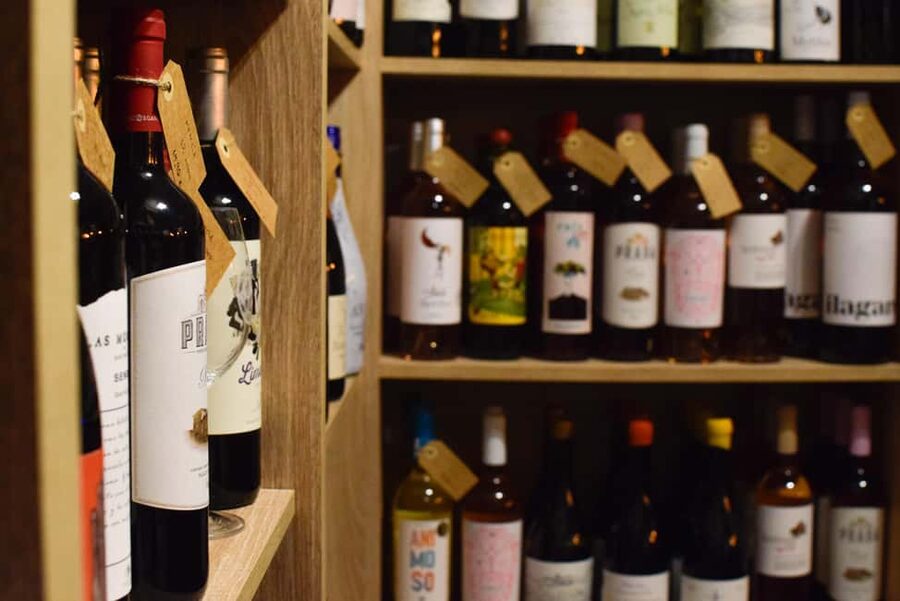
The tour starts with a traditional Malaga pastry. That is a smart opening because Andalusian food is not only about tapas, ham, and seafood. Local sweets show another side of the region’s cooking, with techniques and flavors shaped by centuries of Mediterranean and Moorish influence.
The exact pastry is not specified, and the menu can change. You should treat the first taste as an introduction to Malaga’s sweet side rather than expect one fixed signature item every time.
Later, you may also try Malaga-flavored gelato. Together, the pastry and gelato give the food walk a pleasing rhythm. You are not simply moving from one salty plate to another, and the sweet stops can be welcome breaks between richer foods such as chorizo and Iberian ham.
More Farmers Market Tours in Spain
- Paella Cooking Class, Wine Tasting & Central Market in Valencia
★ 5.0 · 1,150 reviews - Valencia: Paella Cooking Class with Central Market Tour
★ 5.0 · 721 reviews - Ultimate Barcelona Food Tour with visit to a Local Market
★ 5.0 · 507 reviews
Atarazanas Market and the city’s food pantry
Atarazanas Market is the central food stop. Inside, your guide introduces you to stalls selling fresh seafood, seasonal produce, olives, and regional specialties. This is where the tour shifts from prepared dishes to the ingredients that shape everyday cooking in Malaga.
A market visit is valuable because it gives you a better idea of how local food reaches the table. You can see the emphasis on seafood and produce rather than hearing about them only after they have been turned into tapas. Your guide also has a chance to explain local products while you are looking at them, which makes the information easier to remember.
The market is also one of the liveliest parts of the route. You should expect people shopping, vendors working, and movement around the stalls. If you prefer a quiet, slow museum visit, this may feel busy. If you like food markets as working places rather than decorative photo stops, it is likely to be one of the strongest parts of the morning or afternoon.
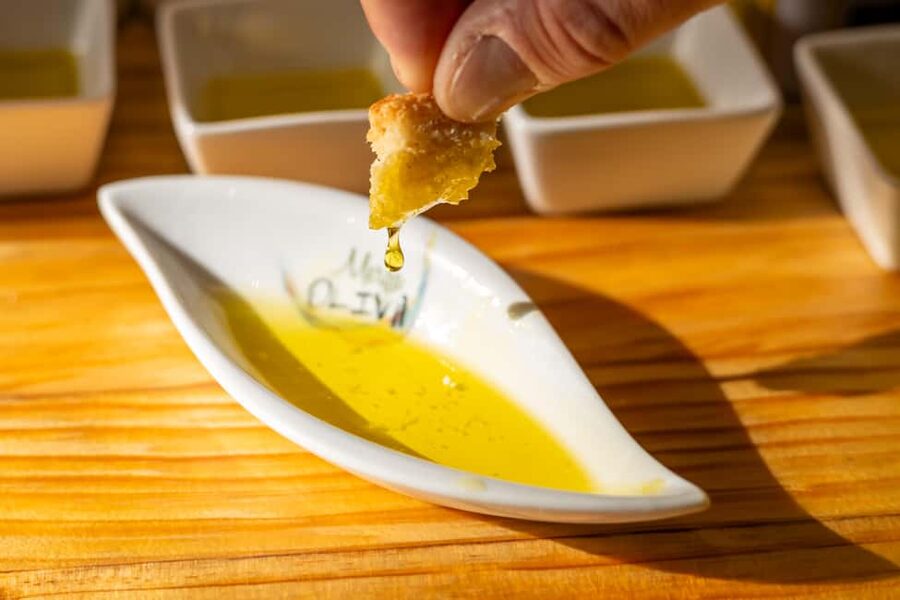
The tour includes a tasting of more than 10 types of extra virgin olive oil. That is an unusual feature. Olive oil is often treated as background seasoning, but tasting several types side by side can show differences in fruitiness, bitterness, peppery heat, and overall strength. I would pay close attention here, since you may later want to use those comparisons when shopping for oil elsewhere in Andalusia.
Olives are also included. The pairing makes sense: oil and table olives are related products, but they offer different textures and flavors. It is a small lesson in how much variety can come from one basic crop.
Ham, cheese, and Andalusian cured meats
The savory tastings bring together several classic Spanish products. Iberian ham is paired with Manchego cheese, while Malaga-style salami and seasoned chorizo with blood sausage add a stronger, more rustic note.
This section is especially useful if you are new to Spanish food. You get to compare a cured ham with a firm sheep’s milk cheese, then move into spiced and seasoned meats. The portions are described as tastings, not full plates, so the point is comparison rather than eating a large serving of one item.
These foods can be salty and filling. That is one reason the pacing matters. Ricardo’s good pace, noted in the feedback, is encouraging here. A guide who gives you time to taste and explain each item can make the difference between appreciating the contrasts and simply collecting snacks.
If you have dietary restrictions, contact the operator before the tour. The menu may be adjusted as well as possible, but no specific substitutions are guaranteed in the information provided. Anyone avoiding pork, dairy, gluten, or meat should raise the issue in advance rather than wait until the first stop.
Gazpacho and the cool side of Andalusia

Gazpacho brings a lighter course to the food list. This cold Andalusian soup is usually associated with tomatoes, vegetables, olive oil, and vinegar, though the precise preparation on this tour is not specified.
Its place in the lineup is important. After cured meats and cheese, a cold vegetable dish resets your palate and shows how Andalusian cooking can be fresh and restrained, not only fried or heavily seasoned. It also connects directly with the region’s warm climate and reliance on produce.
You should not assume every dish appears in a fixed order. Weather, venue availability, and other circumstances can change the route and menu. Still, the advertised range suggests a good spread of textures and temperatures.
Same place, a different set of stalls:
- Barcelona: Paella Cooking Experience & Boqueria Market Tour
★ 4.8 · 3,661 reviews - Barcelona Paella Cooking Class with Market Visit, Tapas & Sangria
★ 5.0 · 2,531 reviews - Valencian paella cooking class, tapas and visit to Ruzafa market.
★ 5.0 · 828 reviews - Spanish Cooking Class & Triana Market Tour in Sevilla
★ 5.0 · 760 reviews
Seafood, fried fish, and Malaga’s coastal character
Malaga sits on the Costa del Sol, so seafood belongs in any serious introduction to its food culture. The tour includes anchovies and Andalusian-style fried fish, giving you two different ways to taste the coast.
Anchovies bring a concentrated salty flavor, while fried fish is more about crisp coating, tender flesh, and the casual style of eating associated with southern Spanish seafood. These are not just random bar snacks. They help explain why fish remains such a common part of local meals.
As with all fried food, this can be one of the heavier moments of the tour. You may want to keep breakfast modest, but you should still arrive hungry. The experience includes enough food and drink that you should not plan a large meal immediately afterward.
Fried eggplant, molasses, and sweet-savory contrast
Fried eggplant with molasses is one of the more distinctive tastings. The dish combines soft eggplant with a sweet finish, creating a contrast that is different from the better-known ham and seafood stops.
This is the sort of taste that makes a food walk useful. You can read about Andalusian ingredients in a guidebook, but a sweet and savory eggplant dish gives you a clearer sense of the region’s cooking style. It also reflects the way southern Spanish cuisine often balances frying with sweetness, acidity, or fresh produce.
The wording specifies molasses, but not the exact type or recipe used at the stop. Expect the general combination rather than a guaranteed presentation.
Malaga wine, vermouth, beer, and the social side of eating
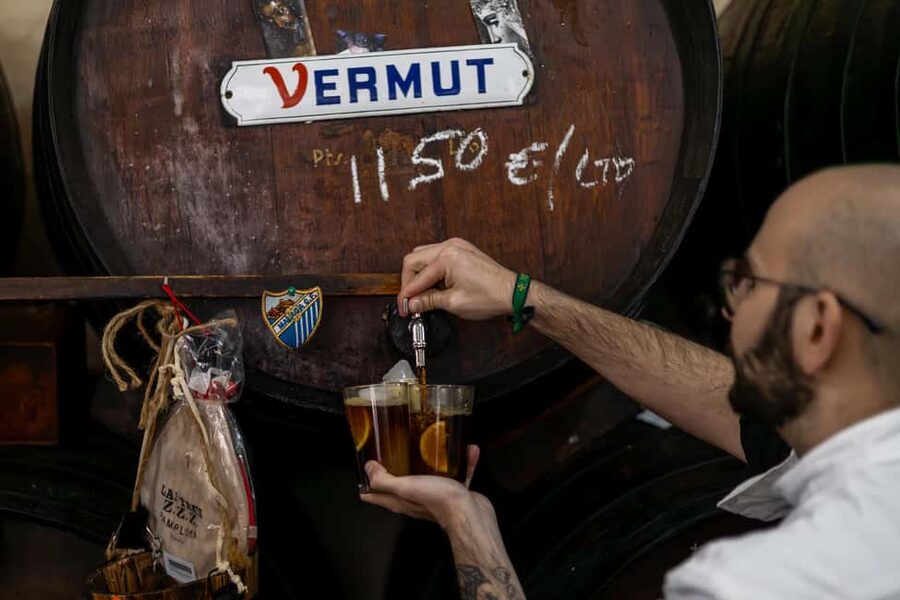
The drinks are not an afterthought. You receive vermouth, red wine, beer, and water, with sweet Malaga wine specifically part of the experience. The drink selection lets you see how locals may pair different foods with different kinds of refreshment.
Malaga wine is particularly relevant because it gives the tour a clear local marker. You are not only sampling Spanish wine in general. You are trying a drink associated with the province and with Malaga’s long wine-making tradition.
Vermouth and beer suit the informal tavern side of the experience, while red wine fits the cured meats and cheese. Water is included too, which is welcome during a walk with several tastings.
Alcohol is part of the tour, so you should keep that in mind when planning the rest of your day. The pace should help, but you are still sampling several drinks over three and a half hours. If you do not drink alcohol, contact the operator about dietary or drink requirements before booking, since the available information does not promise specific nonalcoholic replacements beyond water.
Family-run spots away from the main tourist path
The route includes traditional bodegas and family-run places where locals have eaten for generations. The appeal is not that these locations are secret in a dramatic sense. It is that they offer a different setting from a restaurant chosen only for its location beside a major sight.
Small eateries also give your guide a chance to explain local habits: how people share plates, how a drink can lead to a snack, and how food fits into social life in Malaga. The experience is designed around this connection between eating and conversation.
Still, you should keep expectations sensible. The exact businesses are not named, and the stops can change. The description of places away from tourist paths does not mean you will have a private dining room or an empty bodega. It means the food program aims to include local-style places rather than relying only on restaurants built for sightseeing groups.
What the $95 price really covers
At $95 per person, this is not a cheap snack walk. The value depends on how much you want from the guide as well as from the food.
You receive more than 10 tastings, several alcoholic drinks, water, a market visit, and three and a half hours with an English-speaking guide. If you paid separately for a pastry, ham, cheese, seafood, fried dishes, dessert, and multiple drinks, the bill could rise quickly. You also avoid the work of choosing unfamiliar places and ordering enough dishes to sample this range on your own.
The bigger value is the interpretation. A plate of Iberian ham is easy to buy, but knowing what you are tasting and how it fits into Andalusian food culture adds something. Ricardo’s positive feedback about pacing and history suggests that the guiding is a meaningful part of the price, not just a way to lead you from one bar to the next.
The cost makes less sense if you mainly want one large meal or if you do not drink and cannot receive suitable alternatives. It also may not suit a very tight budget. Think of it as a guided food lesson with substantial samples rather than a simple lunch.
Who should book this Malaga food walk
I would recommend this tour to first-time visitors who want an easy introduction to Malaga’s food customs. It is also a good fit if you like markets, small eateries, local drinks, and trying several foods without having to research every stop yourself.
Food-focused visitors will appreciate the oil tasting, market produce, Iberian ham, Manchego, seafood, and regional wine. Culture-minded visitors get more than a list of dishes because the guide links food with the city’s past and daily life.
You should think twice if you have serious mobility limitations. The tour involves a fair amount of walking and is not suitable for wheelchair users or people with mobility impairments. Dietary needs may be accommodated as well as possible, but you must contact the operator ahead of time.
The menu and route can change because of weather, venue availability, and other conditions. That flexibility is normal for a food tour, but it means you should not book with one particular dish as the entire reason for going.
Is this Malaga tour worth booking?
Book it if you want a broad, guided taste of Andalusia in one afternoon or morning, especially if Atarazanas Market, local taverns, and regional drinks appeal to you. The strongest reasons are the wide range of tastings, the unusual olive oil comparison, and the guide’s reported ability to keep a good pace while explaining local history.
Skip it if you want a quiet seated meal, need a fully accessible route, or prefer to choose every dish yourself. At $95, the experience earns its price through variety, drinks, and guidance rather than through one luxurious meal.
Arrive hungry, wear good walking shoes, and contact the operator early about dietary needs. If you follow that advice, this food walk offers a practical and flavorful way to get your bearings in Malaga’s Old Town.
FAQ
Where does the Malaga food tour meet?
The meeting point is Plaza Enrique García-Herrera in Malaga’s Old Town. The guide will have an orange umbrella and a big smile.
How long does the experience last?
The food tour lasts 3.5 hours. Starting times depend on availability.
What language is the tour conducted in?
The live tour guide speaks English.
How many tastings are included?
The experience includes more than 10 Andalusian tastings.
Is Atarazanas Market included?
Yes. The route includes a visit to Atarazanas Market, where you explore stalls with seafood, produce, olives, and regional specialties.
What foods are included?
Included foods can include a traditional Malaga pastry, olives, Iberian ham, Malaga-style salami, Manchego cheese, seasoned chorizo with blood sausage, gazpacho, Andalusian-style fried fish, fried eggplant with molasses, Malaga-flavored gelato, and a secret dish.
What drinks are included?
Vermouth, red wine, beer, water, and sweet Malaga wine are included in the advertised tastings.
Is hotel pickup included?
No. Pickup and drop-off are not included. You need to make your own way to the meeting point and leave from the final stop.
Can the menu change?
Yes. The itinerary and menu may change because of location availability, weather, and other circumstances.
Is the tour suitable for wheelchair users?
No. The tour is not suitable for wheelchair users or people with mobility impairments, and it involves a fair amount of walking.
Just added around Spain
- Explore Bilbao’s Flavors Mercado de la Ribera and Old Town★ 4.5 · 3 reviews
- CERTAL Exclusive Tour: LA RIBERA Market + GASTROBARS Bilbao (3h)★ 4.5 · 12 reviews
- Barcelona La Boqueria & Sant Antoni Private Food Experience★ 5.0 · 7 reviews
- Taste of Barcelona: Boqueria Market, Tapas & History Tour★ 4.5 · 22 reviews
- Barcelona Tapas Cooking & Cocktail Class with Veronique & Mattias★ 5.0 · 3 reviews
- Spanish Oysters, Cava and Ibérico Ham at Barcelona’s La Boqueria Market★ 5.0 · 8 reviews
- Private Barcelona Market Tour & Paella Cooking Class with Josh★ 5.0 · 4 reviews
- Cook Paella & Tapas + Market Tour in Barcelona (4-Course Meal)★ 5.0 · 2 reviews
Local & Farmers Market Tours, compared.
Hanoi Cooking Class: Culture, Local Market & Meaning CSR Impact
Read our review →
Cooking Class and Lunch at a Tuscan Farmhouse with Local Market Tour from Florence
Read our review →
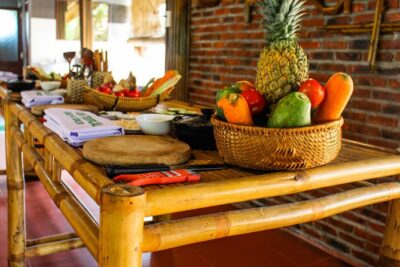
Cooking Class Hoi An:Local Market, Basket Boat, Fishing & Cooking
Read our review →
London Bridge & Borough Market Food Tour with 7 Authentic Dishes
Read our review →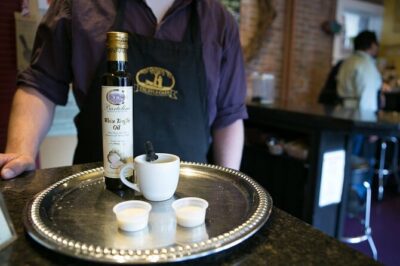
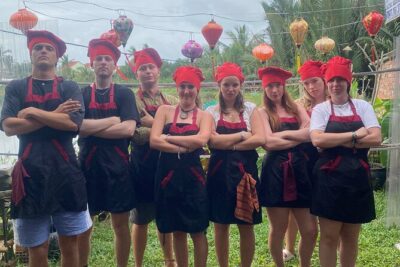
Hoi An Cooking Class(Local market,Basket Boat,Fishing & Cooking)
Read our review →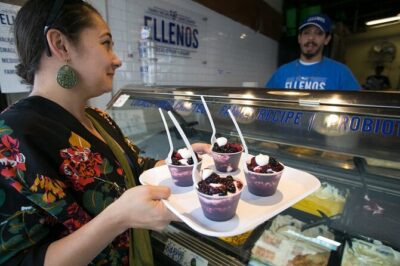
Browse the lists this tour appears in