
Review · INDIA
Heritage Walk, Local Markets & Food Tasting – Non Touristy
Old Udaipur tastes better on foot. This 2.5-hour walk links local food stops with old temples, markets, craft workshops, and backstreet neighborhoods that many first-time visitors miss. I like the safe, vegetarian tasting plan, and I like the chance to see working communities such as potters, bamboo artists, and makers of biodegradable plates. The main caution is pace: three kilometers, several food stops, and plenty of conversation can feel rushed if your group wants to stop everywhere.
The tour costs $24 per person and includes food, sweets, tea, bottled water, and a guide. That is a fair price for Udaipur, especially because you are paying for more than snacks. You get a local introduction to food customs, architecture, markets, festivals, and everyday life. The walk finishes where it begins, near Jagdish Temple, which makes it easy to fit into your first day in the city.
Key points to know before booking
- Seven or more food stops: Expect samosa, kachori, poha, gulab jamun, masala chai, lassi, juices, and other local tastes.
- A three-kilometer old-city route: The walk begins near Jagdish Temple and reaches Ghanta Ghar, markets, temples, craft areas, and narrow lanes.
- Working craft communities: You may see pottery, bamboo art, glass inlay work, and makers of leaf or biodegradable plates.
- A useful first-day introduction: The guide can help with restaurant, shopping, sightseeing, and street-food suggestions for the rest of your stay.
- Small-group or private format: This suits people who want time for questions and a more flexible pace.
- Comfort matters: Wear practical shoes and light cotton clothing, especially if you take the default 10:00 am start.
Starting near Jagdish Temple
The meeting point is Ganesh Art Emporium, diagonally opposite Jagdish Temple at Jagdish Chowk, in the direction of the clock tower. This is a central and practical place to begin, since Jagdish Temple is one of the best-known markers in Udaipur’s old city.
The exact meeting point can change if your group needs it, so confirm before setting out. Transportation to the start is not included, and you arrange your own way there. The tour itself is on foot, with the route covering about three kilometers.
I would book this early in your Udaipur stay. The walk gives you useful orientation, and the guide can point you toward restaurants, markets, and places to visit later. It is also a good way to learn which foods you want to try again and which ones you would rather leave as a one-time experiment.
The default start is 10:00 am, but the time and date are flexible. If that hour does not suit you, send a message before booking is finalized. English and Hindi are available.
More Street Food Market Tours in India
- Mumbai: Street Food and Night Markets Tour
★ 4.9 · 719 reviews - Jaipur Bazaar & Food Walking Tour
★ 5.0 · 281 reviews - Mumbai Street Food & Night Markets
★ 5.0 · 225 reviews
Rao Ji ka Hata Road and the first food stops
The walk moves through Rao Ji ka Hata Road, where the focus shifts quickly from monuments to ordinary city life. This is where the experience earns its non-touristy label. You are not simply walking past grand buildings while a guide recites dates. You are looking at shops, kitchens, market stalls, homes, lanes, and small businesses that keep the old city functioning.
Food is introduced gradually. A typical tasting menu includes samosa with mint and coriander chutney, kachori with mango and tamarind chutney, poha, gulab jamun, lassi, juices, and masala chai. There is also a chance to see how some traditional snacks are made and to learn about their ingredients and basic preparation.
The food is vegetarian, and the stops are described as tried, tested, safe, and hygienic. That matters in a city where you may not know which stall has a good turnover or how to judge a snack counter at first glance. The guide’s role is not just to hand you food. It is to explain what you are eating and help you make better choices for the rest of your trip.
Still, this is a tasting walk, not a full meal. The portions are spread across several stops, and you should arrive ready to sample rather than expecting one large lunch. If you have allergies or strong dietary restrictions, tell the guide before the walk begins. The supplied details confirm vegetarian food, but they do not promise special menus.
Masala chai, sweets, and the social side of food
Masala chai is one of the more useful stops because you learn about both the drink and its preparation. Chai is not merely a warm pause in the itinerary. It is a chance to watch a familiar Indian routine and ask questions about spices, milk, brewing, and local habits.
The sweets stop includes gulab jamun, while other tastes may include lassi or fresh juices. These give the walk a nice range. Samosa and kachori offer crisp, savory flavors, poha brings a lighter breakfast-style dish, and gulab jamun closes the sweet side with a syrupy dessert.
Food also creates easy contact with local people. The experience may include visits to small shops and conversations with people working in the old city. One especially appealing part is the chance to meet makers rather than only shopkeepers. A potter may let you try the wheel, and local residents may offer a more personal look at daily life. These moments cannot be guaranteed minute by minute, but they are part of the experience’s character.
The food is one of the tour’s strongest features, yet it can also be its limitation. If you prefer a quiet architectural walk, seven or more stops may feel like too much. If you enjoy trying small portions and asking questions, the variety is a major advantage.
Jagdish Chowk, old lanes, and local architecture
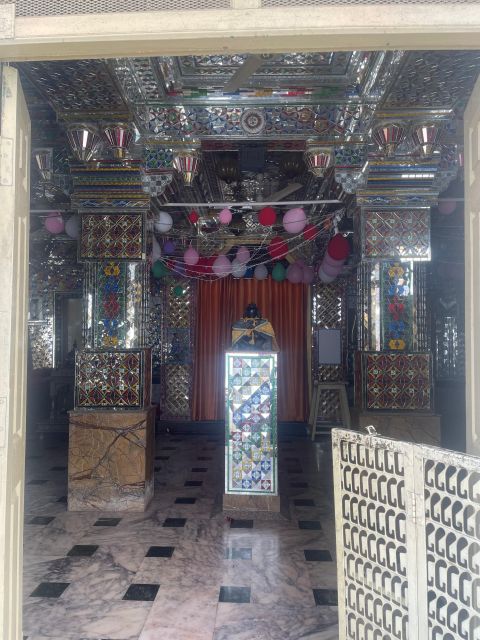
Jagdish Chowk provides the visual and historical center of the walk. From here, the route moves into older streets and buildings, including a haveli where the guide explains architectural details.
A haveli is more than a photogenic façade. Look for how doors, balconies, courtyards, decorative surfaces, and street-facing rooms relate to one another. The guide connects these features to local life, art, and the way older buildings were used. That kind of explanation helps you see Udaipur as a living city rather than a collection of postcard views.
You also discuss local festivals, culture, food traditions, and modern Udaipur. The questions can range widely, from why cows are considered holy and why they appear on the streets to arranged marriage, caste, education, politics, karma, child marriage, and the history of sati. These are broad subjects, so the value depends heavily on how clearly and thoughtfully your guide handles them.
Guide quality matters here. The experience is offered by Harsh Mundra, while recent bookings have identified guides as Harsh, Happy, and Vishal. The names are not presented consistently, so confirm who will lead your walk. The strongest descriptions focus on guides who answer questions patiently, explain with warmth, and show genuine care for Udaipur.
Same place, a different set of stalls:
- Private Heritage Walking Tour in Jaisalmer Fort and Old Bazaar
★ 5.0 · 306 reviews - Old Delhi Food-Spice Market-Temples Tour Soon Featured on NETFLIX
★ 5.0 · 304 reviews - Old Delhi Odyssey: A Tour of Religion, Spice Market, & Best Food
★ 5.0 · 284 reviews - Private Jaipur Full-Day Tour with Block Printing
★ 5.0 · 206 reviews
The step well and historic Jain temple
The route includes a step well and a historic Jain temple. These are the kinds of places that can be easy to miss if you stay on the main sightseeing circuit.
At the step well, the interest comes from both design and function. It was built to provide access to water through changing seasons, and its structure shows how practical needs shaped Indian architecture. The guide can place it within the wider story of the old city.
The Jain temple adds another layer to Udaipur’s religious life. You learn about its importance and the Jain tradition connected with it. This is a useful counterpoint to the more familiar Hindu sites around Jagdish Chowk.
Dress respectfully at religious places and follow the guide’s instructions. The supplied details do not specify a formal dress code, but cotton clothing and comfortable shoes are recommended. The route includes walking through old streets, so sandals that slip or hard-soled shoes may become annoying after a while.
Clock Tower and Ghanta Ghar food stop
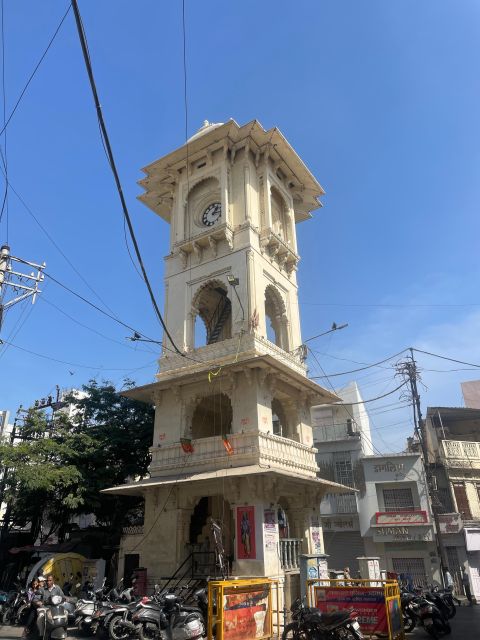
The walk continues toward the clock tower, or Ghanta Ghar, one of Udaipur’s recognizable old-city landmarks. The area brings together movement, commerce, food, and historic streets.
The Ghanta Ghar stop lasts about 15 minutes and focuses on street food tasting. It is a shorter stop than the market sections, so treat it as a quick flavor of the area rather than a long tour of the clock tower itself.
This part of the route helps you understand the contrast between Udaipur’s major sights and its working center. The clock tower is easy to photograph, but the food stalls and surrounding streets give the place its daily purpose. Keep your phone and belongings secure in crowded areas, and stay close to the group if the lanes become busy.
Markets, makers, and the old city at work
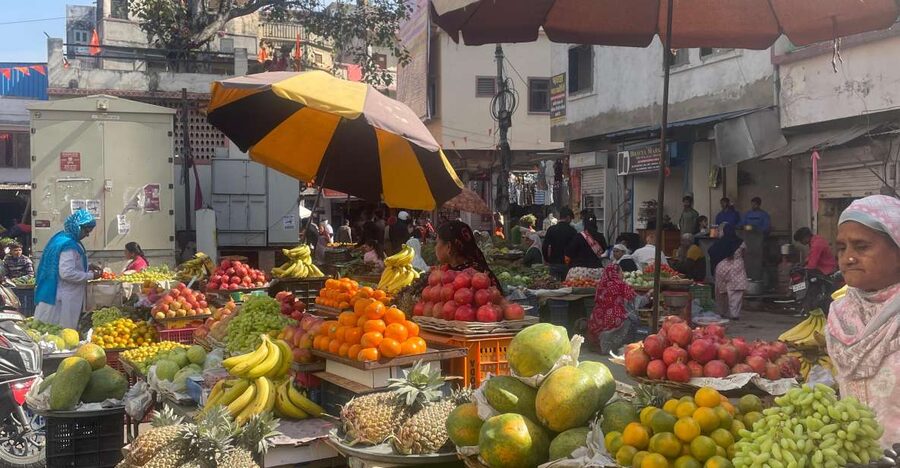
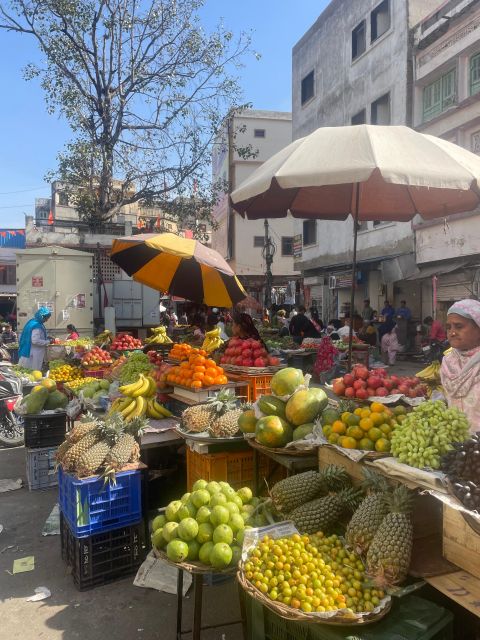
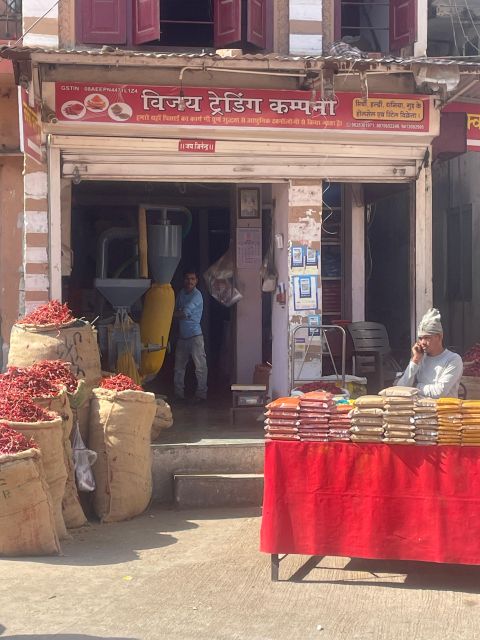
The market portion is where the walk becomes most useful for shopping and orientation. You visit fruit and vegetable sellers, spice and grain merchants, and other local businesses. The guide explains ingredients and may share advice about buying spices or finding reliable places to eat.
The spice and grain market is particularly valuable if you want to understand the building blocks of Indian cooking. Instead of seeing spices only as colorful packets in a tourist shop, you see them as part of everyday trade. Ask about the spices you have tasted during the walk. This is a good moment to connect the food on your plate with the raw ingredients around you.
The route also includes a bamboo art community, potters, glass inlay work, and makers of biodegradable bowls and plates. These stops broaden the walk beyond food. You see how small-scale craft and practical production continue within the old city.
The craft visits are not presented as formal museum demonstrations. They are working places, so the exact interaction may vary. That is part of the appeal, but it also means you should not expect a polished performance or a guaranteed purchase opportunity at every stop.
Photography is encouraged, and the route offers many opportunities for strong street scenes. Ask before photographing people, homes, workshops, or religious activity. That small courtesy makes a difference.
What $24 gets you
At $24 per person, the value is good if you use the tour as both a food tasting and a city orientation. Included are bottled mineral water, all food tastings, more than five dishes, sweets, tea, and a live guide. You are not paying extra at each snack stop, which makes the experience simple to budget.
The price is less attractive if you only want to eat. You could likely spend less on individual snacks, but then you would miss the explanation, the market route, the craft communities, and the help choosing safe and popular food places.
Private and small-group options are available. A smaller group is useful here because old-city lanes can be tight, and conversation is central to the experience. A private walk may also give you more control over questions and pacing, although the details of group size and any private-group price should be confirmed before booking.
Alcohol is not included. Transport to Ganesh Art Emporium is also not included. Free cancellation is available up to 24 hours in advance, and you can reserve now and pay later, which helps if your Udaipur schedule is still changing.
Timing, comfort, and who should book
Plan on 2.5 to 3 hours, depending on how many questions the group asks and how long the food and craft stops take. The published route can feel full for the time available. One booking had to skip a couple of stops because the group spent longer along the way, so I would not schedule a major attraction immediately afterward.
The walk suits first-time visitors, curious eaters, photographers, shoppers, and anyone who wants context before exploring Udaipur alone. It is also a good fit for people who enjoy conversation. You can ask about local customs, food, festivals, religion, family life, and modern city issues.
It may be less suitable if you have trouble walking three kilometers, dislike street food, or want a slow, formal monument tour. One booking included a guide who arranged a tuk-tuk when a participant’s knee became painful, which shows helpful flexibility, but you should still mention mobility concerns before starting.
Wear comfortable shoes and breathable cotton clothing. The walk includes markets, old streets, food shops, temples, and craft areas, so practical clothes are more useful than dressing for a formal sightseeing tour.
Should you book this Udaipur walk?
I would book it if you want to see how Udaipur works beyond the lake views and palace façades. The best parts are the safe vegetarian tastings, the access to local markets and makers, and the guide’s willingness to answer questions about Indian life without keeping the conversation narrowly focused on monuments.
Book it early in your stay, especially if you want restaurant and shopping advice for later. Allow the full three hours, arrive hungry but not starving, and keep your schedule loose afterward.
Skip it if your priority is a quiet, highly structured historical tour or if a three-kilometer food walk sounds tiring. For most visitors who want local food, useful orientation, and a more personal view of old Udaipur, $24 is a sensible spend.
FAQ
Where does the Udaipur heritage walk start?
It starts at Ganesh Art Emporium, diagonally opposite Jagdish Temple at Jagdish Chowk, toward the clock tower.
How long does the experience last?
The walk lasts about 2.5 to 3 hours, depending on the group’s questions and time spent at each stop.
How far do you walk?
The route covers about three kilometers on foot.
What time does the walk usually start?
The default starting time is 10:00 am, but the date and time can be adjusted if needed.
What food is included?
Tastings can include samosa with mint and coriander chutney, kachori with mango and tamarind chutney, poha, gulab jamun, masala chai, lassi, juices, and other local snacks.
Is the food vegetarian?
Yes. The street-food tasting is vegetarian.
Are drinks included?
Masala tea and other drinks such as lassi, chai, or juices are included. Bottled mineral water is also provided.
Is transportation included?
No. Transportation to the starting point is not included. The walk itself is on foot.
Is the tour available in English?
Yes. The available guide languages are English and Hindi.
Can I cancel or pay later?
You can cancel up to 24 hours before the experience for a full refund. Reserve now and pay later is also available.
More Food Trips in India
- Food Trail Through Sowcarpet Market: A Taste of Chennai
★ 5.0 · 38 reviews - Bangalore : Evening Food Street Walk and Market Visit
★ 5.0 · 34 reviews - Bangalore Evening Food Street Walk and Market Visit
★ 5.0 · 32 reviews - Delhi: Old Delhi’s Street Food, Temples & Spice Market Tour
★ 5.0 · 30 reviews
More Food and Drink Trips in India
- Mumbai Street Food and Evening Bazaar Tour
★ 5.0 · 172 reviews - Experience Bangalore – City Tour, Authentic Food & market (Food/Culture/History)
★ 5.0 · 156 reviews - Agra: Street Food Walking Tour, Spice Market, & Tuk-tuk Ride
★ 4.9 · 102 reviews - Mumbai Street Food Tour with Evening Bazaar Walk
★ 4.9 · 79 reviews
Just added around India
- Shopping and Bazaar Trail in Bangalore★ 4.5 · 5 reviews
- Bangalore Walking Tours – Flower Market, PETE and more★ 5.0 · 5 reviews
- KR Market Photo Walk★ 5.0 · 12 reviews
- Bangalore: Walk in Historic Ulsoor – Landmarks, Bazaar & Culture★ 5.0 · 9 reviews
- Lalbagh+Bull Temple+Tipu Palace+Market+Lunch=Bangalore City Tour★ 5.0 · 9 reviews
- Experience Bangalore Evening City Walk Tour and Market Visit★ 5.0 · 9 reviews
- Bangalore Evening Food Street Walk and Market Visit★ 5.0 · 32 reviews
- Private Walking Tour into the Oldest Local Market in Bengaluru★ 5.0 · 5 reviews
Street Food Market Tours, compared.

Old Town, Creek, Museums, Souks, & Street Food Tour
Read our review →
Old Town, Souks, Street Food, Guided Tour & Abra Ride
Read our review →

London Bridge & Borough Market Food Tour with 7 Authentic Dishes
Read our review →
Old Town, Souks, Street Food, Guided Tour & Abra Ride
Read our review →
Small Group Cooking Class & Market Food Tour in Florence
Read our review →
Browse the lists this tour appears in